
The best snorkel set is simply the one that gives you a perfect, leak-free fit, easy breathing, and efficient kicking. If you're just starting out, a dry-top snorkel paired with a high-quality silicone mask and some flexible fins is usually a winning combination. For those with a bit more experience, a traditional two-piece setup with a low-volume mask and stiffer fins might feel better, offering more power. Ultimately, it all comes down to your personal comfort and where you plan to explore.
How to Choose the Best Snorkel Set
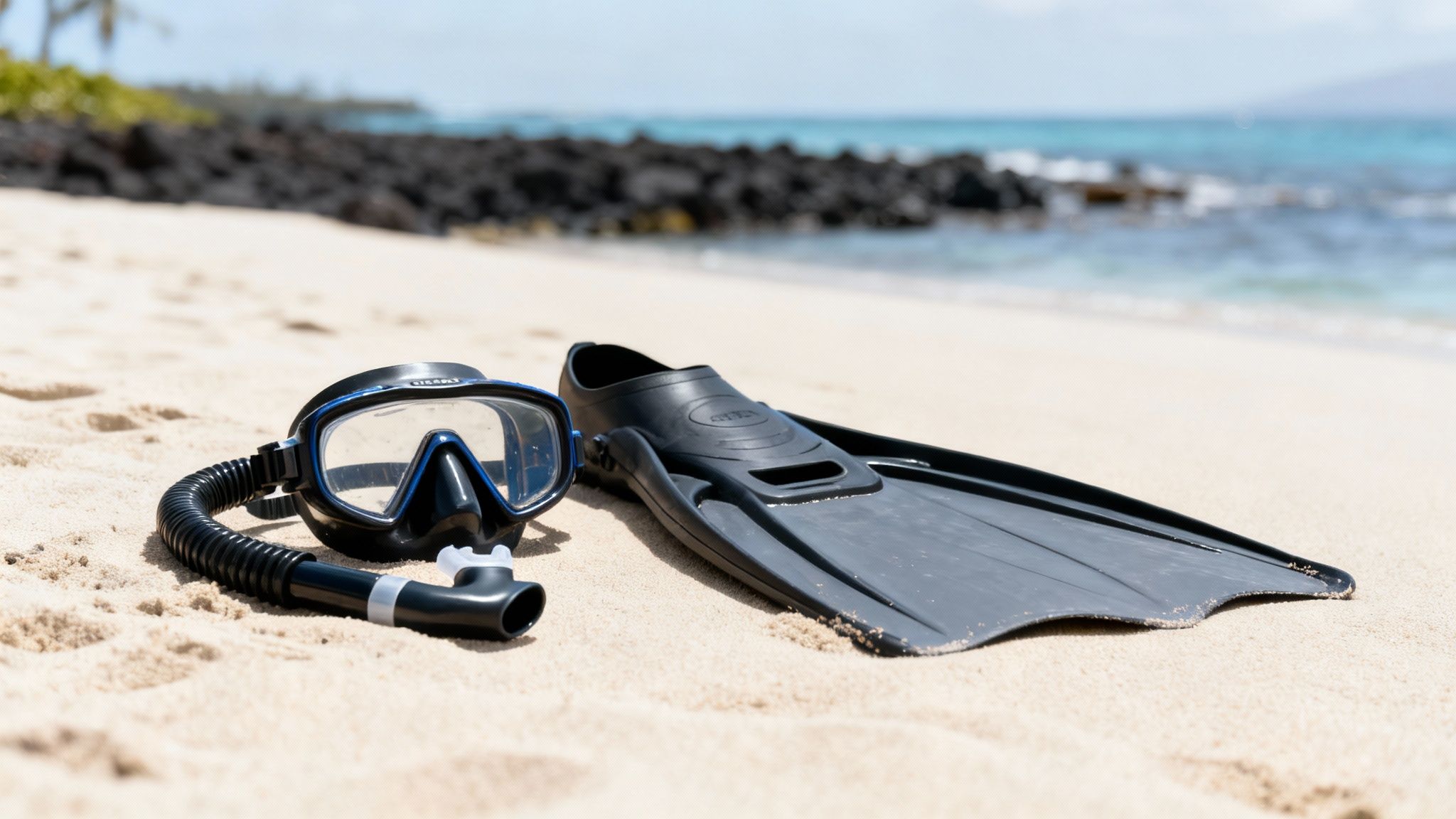
Finding the right snorkel set is your ticket to an incredible underwater adventure. It’s not about grabbing the cheapest kit off the shelf; it's about getting gear that keeps you safe, comfortable, and truly able to enjoy yourself. A leaky mask, a snorkel that keeps flooding, or fins that give you blisters can ruin a perfect day in the water.
This guide is designed to look past the price tag and get to what really counts: fit, comfort, and performance. We'll walk through the essentials—the mask, snorkel, and fins—and explain why getting the right combination is so critical for exploring amazing underwater worlds.
Whether you’re heading to a world-class snorkeling spot like Kona, Hawaii, or just dipping your toes in local waters, knowing your gear makes all the difference. Good equipment lets you forget about what’s on your face and feet and focus on the incredible sea life swimming right in front of you.
Key Snorkel Set Recommendations
To make things easier, think about what kind of snorkeler you are. Different activities and experience levels call for different gear. This table breaks down a few common snorkeler profiles and the gear that tends to work best for each.
| Snorkeler Type | Mask Recommendation | Snorkel Recommendation | Fin Recommendation |
|---|---|---|---|
| Casual Beginner | Wide-view silicone mask for maximum visibility and comfort. | Dry-top snorkel to prevent water from entering the tube. | Short, flexible fins that are easy on the legs. |
| Adventurous Explorer | Low-volume, tempered glass mask for easier clearing and durability. | Semi-dry or J-style snorkel for less breathing resistance. | Long, medium-stiffness fins for more power and efficiency. |
| Family with Kids | Durable, smaller-fit silicone mask designed for smaller faces. | Dry-top with a purge valve for easy water clearing. | Lightweight, adjustable fins that can grow with them. |
A well-fitted snorkel set should feel like a natural extension of your body. The goal is to forget you're even wearing it, allowing you to become fully immersed in the underwater world.
Taking the time to pick the right set pays off in a big way. It gives you the confidence and comfort to explore stunning environments, like the pristine reefs along the Kona coast of the Big Island. With the right gear, every moment below the surface is breathtaking.
Understanding Each Piece of Snorkeling Gear
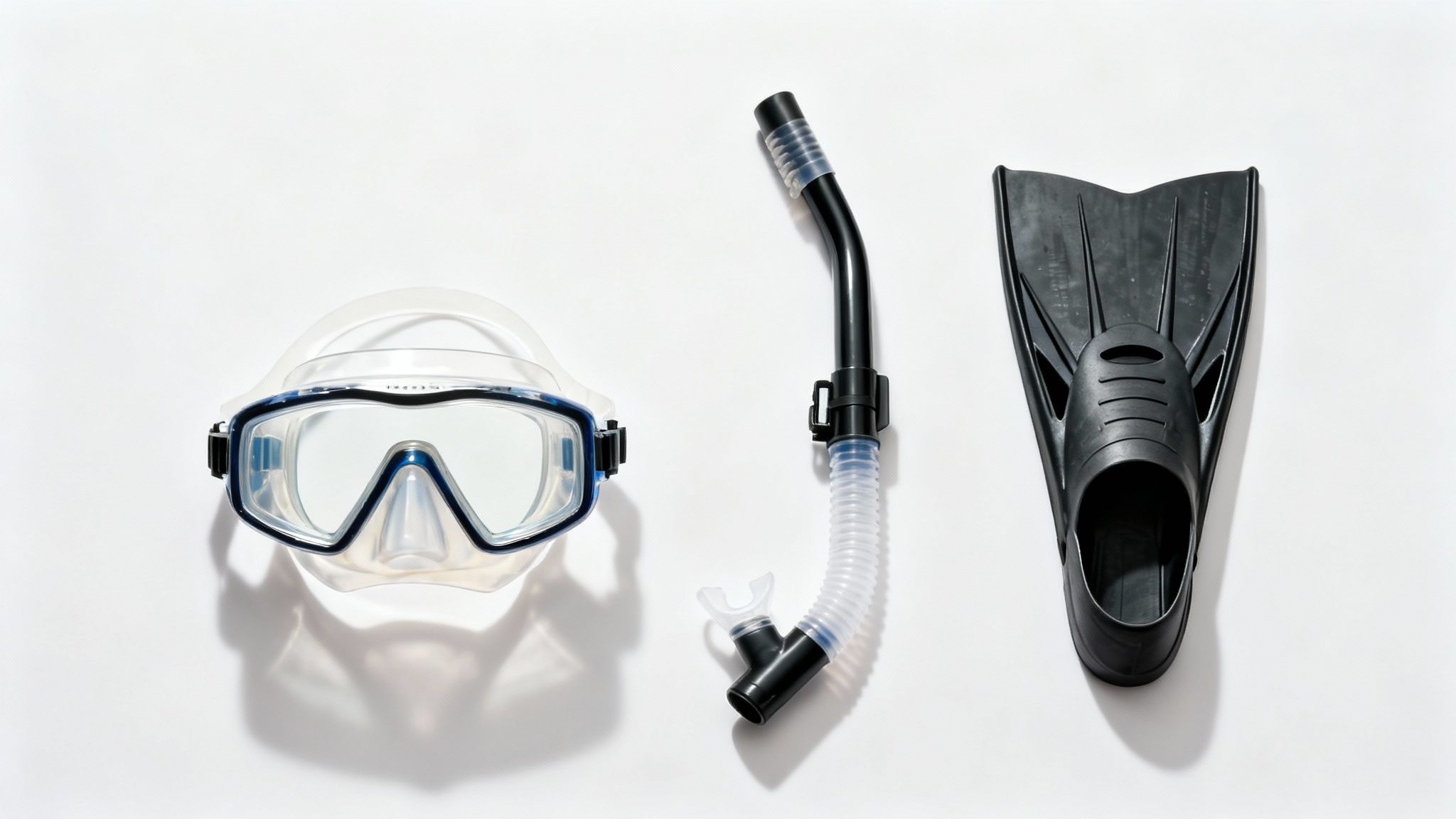
Before you can pick the right snorkel set, you have to know what makes each piece tick. Think of it like building your perfect adventure toolkit—every component has a specific job, and the quality of each one makes or breaks your day in the water. We're going to break down the three core components: the mask, the snorkel, and the fins.
Getting a feel for the nuances of each piece is what lets you see past flashy marketing and choose gear that actually performs where it counts. From the material sealing against your face to the tech that moves you through the water, every detail matters.
The Snorkel Mask: Your Window to the Underwater World
Your mask is, without a doubt, the most important piece of gear you'll own. A leaky, foggy mask is the quickest way to ruin an otherwise perfect snorkel adventure. What you're after is a comfortable, crystal-clear view that lets you completely forget you're even wearing it.
The most critical part of any mask is the skirt—that’s the soft, flexible seal that sits against your face. High-quality masks always use 100% silicone, which is leagues better than the cheap rubber or plastic blends you find in bargain sets. Silicone is not only softer and more durable, but it also creates a far more reliable and comfortable seal by molding to the unique shape of your face.
Another absolute must-have is the lens material. Don't settle for anything less than tempered glass lenses. This is a non-negotiable safety standard because tempered glass is shatter-resistant and much tougher than plastic. It also gives you better optical clarity and is far less likely to scratch.
A perfect seal is everything. When trying on a mask, hold it to your face without using the strap and gently inhale through your nose. If the mask suctions to your face and stays there, you have a good preliminary fit.
The Snorkel: Your Lifeline to the Surface
A snorkel is your personal breathing tube, letting you keep your face in the water without interruption. Modern designs have come a long way, offering different ways to handle splashing water. The right choice really comes down to your comfort level and the kind of water conditions you expect.
- Classic (J-Style) Snorkel: This is the original, no-frills open tube. It’s lightweight and offers the least breathing resistance, but you'll need to master the skill of forcefully exhaling (or "clearing") any water that gets inside.
- Semi-Dry Snorkel: A great middle-ground option. This design adds a splash guard on top that deflects most of the water from waves and chop, reducing how much water gets in without the moving parts of a fully dry snorkel.
- Dry-Top Snorkel: This is the go-to for most beginners and casual snorkelers for a reason. A clever valve mechanism at the top automatically seals the tube shut when you go underwater. It offers fantastic peace of mind and pretty much eliminates the need to clear your snorkel.
Fins: Powering Your Propulsion
Fins aren't just about going fast; they’re about efficiency and safety. They help you conserve precious energy, cover more distance, and handle unexpected currents with confidence. The biggest choice you'll make here is between full-foot and open-heel designs.
Full-foot fins are exactly what they sound like—they have a soft, built-in foot pocket and are designed to be worn barefoot. They're typically lighter and perfect for warm water destinations like Kona, where you don't need extra warmth for your feet.
Open-heel fins have a larger pocket for your foot and use an adjustable strap to hold them on. You wear these with neoprene dive booties, which add comfort, stop blisters, and protect your feet when walking across rocky shorelines. Their versatility makes them a favorite for both divers and snorkelers who explore all kinds of different environments.
The stiffness of the fin blade also plays a big role. Softer, more flexible blades are easy on your legs and great for a relaxed day of snorkeling. Stiffer blades, on the other hand, give you more power and thrust when you need to cover ground or push against a current. To dive deeper into this, check out our detailed guide on the types of fins and how to choose the right pair.
Comparing Traditional Vs Full-Face Snorkel Masks
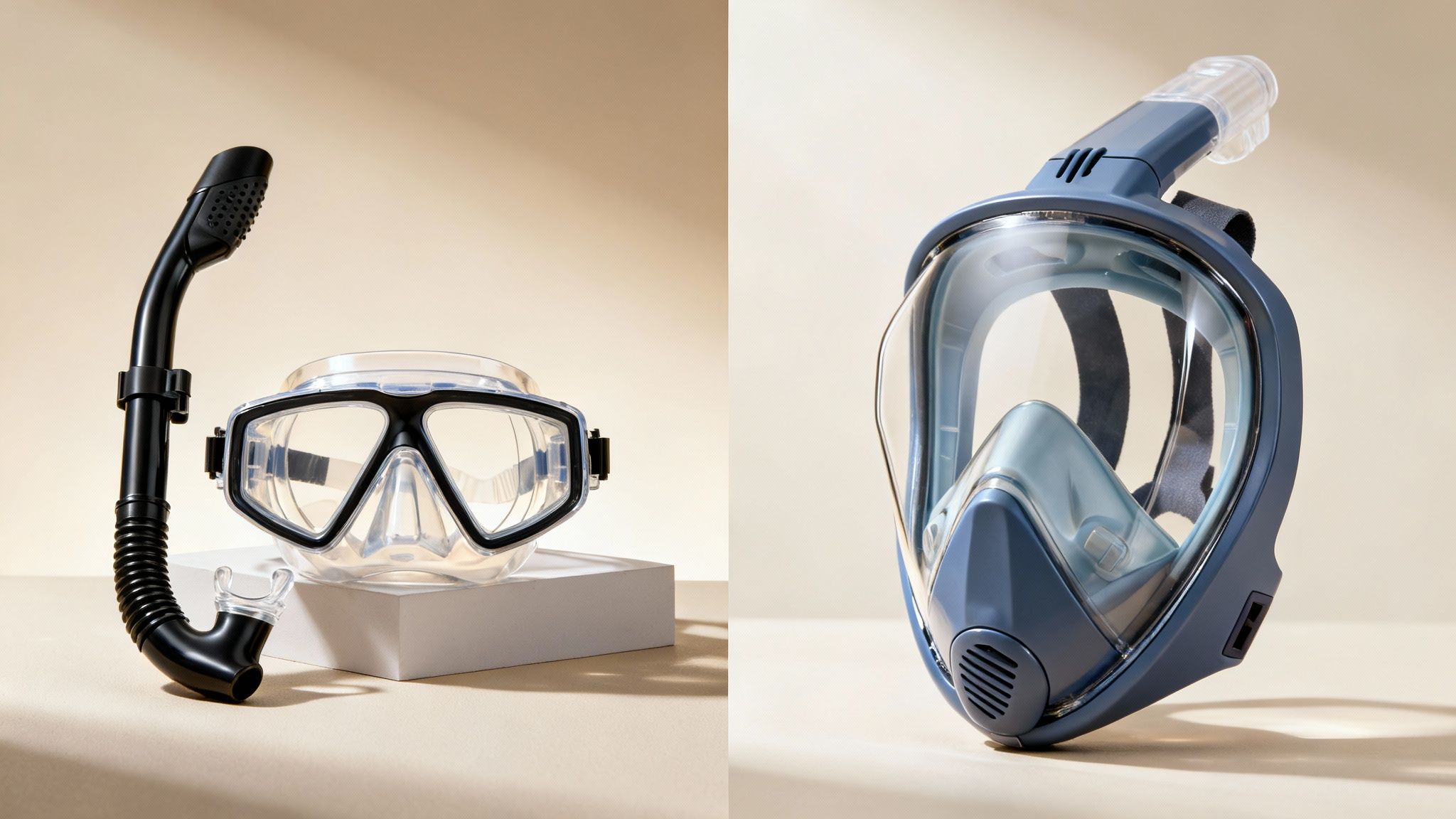
One of the first big choices you’ll face when getting a snorkel set is the mask style. It really boils down to two main camps: the classic, tried-and-true traditional mask and snorkel, or the newer, all-in-one full-face mask. Each one is built for a different kind of snorkeler and different water conditions.
Knowing how they work is crucial for having a good, safe time out on the water. While full-face masks have become popular for their ease of use, traditional sets are still the gold standard for versatility and reliability. Let's break down what really matters so you can pick the right one for you.
Breathing Method and Comfort
The biggest difference is how you breathe. Full-face masks get a lot of attention because they let you breathe through your nose and mouth, just like you do on land. For beginners who are a little nervous about breathing through a tube, this can feel much more natural and less intimidating.
With a traditional mask, you breathe only through your mouth using the separate snorkel tube. It might take a few minutes to get the hang of it, but it's the same technique snorkelers and scuba divers have trusted for decades. It gives you a direct, clear airway.
Field of Vision
Full-face masks are famous for their unobstructed 180-degree panoramic view. Because there's no frame or nose pocket in your line of sight, you get a huge, immersive view of the reef. It’s a big draw for casual surface snorkelers.
Traditional masks offer a great view too, but it's a bit more focused because of the frame. That said, many modern, low-volume masks are designed to sit closer to your face, which dramatically expands your peripheral vision. If you want to get into the details, you can learn more about the different types of dive masks and how to choose one.
Safety and Practical Limitations
This is where the conversation gets serious. Full-face masks have come under fire for the potential buildup of carbon dioxide (CO2). Since you're breathing in and out of the same large space, your exhaled air can linger. If the mask doesn't have a top-notch air circulation system, this could lead to dizziness or feeling out of breath.
Crucial Consideration: Full-face masks are strictly for floating on the surface in calm water. You cannot dive down with them. There's no way to pinch your nose to equalize the pressure in your ears, which is a non-negotiable safety skill for descending even a few feet.
Traditional snorkel sets completely avoid this problem. Your exhaled breath goes straight out the top of the snorkel, so you’re always getting fresh air. Plus, the nose pocket lets you equalize easily, making it the only safe choice if you want to dive down for a closer look at a turtle or a cool piece of coral.
The debate between these two styles is happening within a booming industry. The global snorkeling equipment market is valued somewhere between USD 2.5 to USD 3.4 billion, with masks making up 27.5% of that total. It just goes to show how many people are getting out there and looking for the best gear.
Let's put the key differences side-by-side to make the choice even clearer.
Comparison of Traditional Vs Full-Face Snorkel Masks
| Feature | Traditional Snorkel Set | Full-Face Snorkel Mask |
|---|---|---|
| Breathing | Mouth only, through a separate snorkel. | Natural breathing through nose and mouth. |
| Field of Vision | Good to excellent, with some peripheral limits. | Wide, 180-degree panoramic view. |
| Diving Down | Yes. Allows for equalization by pinching nose. | No. Cannot equalize ear pressure. |
| CO2 Risk | None. Exhaled air is immediately expelled. | Potential risk. Requires a quality air-flow system. |
| Fogging | Can fog; requires anti-fog treatment. | Often has an anti-fog air circulation design. |
| Ideal User | All levels, from beginners to freedivers. | Beginners and calm, surface-only snorkelers. |
Ultimately, the traditional setup is the most versatile and safest option, especially if you have any ambition to dive below the surface. Full-face masks can be great for a relaxed float, but it’s vital to understand their limitations before you hit the water.
A Practical Checklist for the Perfect Fit
Nothing will sour a day in the water faster than a poorly fitting snorkel set. Constant leaks, a foggy mask, and painful pressure points are all tell-tale signs that your gear just isn't right for you. The absolute best snorkel set is the one you forget you're even wearing.
Think of this checklist as your guide to getting that perfect, custom-like fit. Getting this right is what separates a frustrating, water-logged paddle from a truly magical underwater experience.
Testing Your Snorkel Mask Seal
The mask's seal is everything. It’s what keeps the water out and your vision clear, so this is the most critical fit test you'll do. We use a simple, industry-standard method called the "press test."
- Prep the Mask: Start by sweeping any hair away from your face. Hold the mask up to your face, but don't put the strap over your head yet—just let it hang loose.
- Press and Inhale: Gently press the mask frame against your face and inhale lightly through your nose. You should feel a slight suction as the mask pulls snugly against your skin.
- Check the Seal: Now, let go. If that suction holds the mask in place for at least a few seconds on its own, you've got a great initial seal. If it immediately falls away, that mask just isn't the right shape for your face.
Once the mask passes this test, go ahead and pull the strap on. It only needs to be snug enough to hold the mask in place. A classic rookie mistake is to crank the strap down super tight, which actually warps the soft silicone skirt and creates leaks.
Pay close attention to potential trouble spots. The most common places for a seal to break are right under the nose or near the temples, particularly if you have strong smile lines or a narrower face.
Sizing Your Fins Correctly
Fins that don't fit are a recipe for disaster—we're talking painful blisters, leg cramps, and wasted energy. Whether you're looking at full-foot or open-heel fins, the foot pocket needs to feel secure but never restrictive.
For Full-Foot Fins:
- Your foot should slide in smoothly, feeling snug all around like a well-worn shoe.
- Check for any pinching or tight spots, especially across the widest part of your foot. That's a definite no-go.
- You should have a little room to wiggle your toes, but your foot shouldn't slide back and forth inside the pocket.
For Open-Heel Fins:
- Always try these on with the dive booties you plan to wear. The bootie completely changes the fit.
- Your foot should settle comfortably into the pocket, with your toes just about reaching the end.
- The heel strap should be secure, but not so tight that it digs into your Achilles tendon. As a rule of thumb, you should be able to slip one finger between the strap and your heel.
Following these steps will give you the confidence to pick the right snorkel set, whether you're trying it on in our shop or buying your own. It ensures your gear becomes an extension of you, letting you focus on the incredible world beneath the waves.
Should You Buy or Rent Your Snorkel Set
For a lot of people, owning their gear is the way to go. You get a perfect, leak-free fit every time, which can make or break a day in the water. Plus, there’s the hygiene factor; knowing you're the only one who has ever used your mask and snorkel offers some serious peace of mind. If you find yourself snorkeling a few times a year, buying your own set quickly becomes the most affordable option.
The market backs this up. The global diving equipment industry, which includes all our snorkel gear, grew from USD 5.04 billion to USD 5.49 billion in just a single year. It’s clear more people are investing in their own equipment as they embrace water sports and adventure travel.
The Case for Renting High-Quality Gear
On the flip side, renting has some serious perks, especially if you're a casual vacationer or just starting out. The biggest win is convenience. Forget trying to stuff bulky fins into an already-packed suitcase. Renting means less to pack, less to carry, and less to worry about.
Renting also gives you access to top-of-the-line gear that might be too pricey to buy yourself. A good dive shop like Kona Honu Divers takes meticulous care of their rental equipment—it’s always sanitized, inspected, and in excellent condition. You get a premium experience without the long-term investment.
Renting is basically a "try before you buy" program. It’s the perfect opportunity to test out different mask styles, fin types, and snorkels to figure out what you really like before you decide to purchase your own set.
Making the Right Choice for You
So, what's the right call for you? It really depends on what kind of snorkeler you are.
The Occasional Snorkeler: If you only snorkel once every year or two on vacation, renting is a no-brainer. It’s cost-effective, hassle-free, and you still get to use great equipment.
The Serious Hobbyist: If you’re in the water multiple times a year or planning a trip dedicated to snorkeling, buying your own gear is a smart move. The comfort of a personalized fit and the long-term savings just make sense.
The Family on Vacation: A hybrid approach often works wonders here. Avid snorkeler parents might bring their own masks and snorkels but rent fins to save on luggage space. For growing kids, renting is almost always better to ensure they have a proper, safe fit every time.
In the end, the goal is simply to have the best snorkel set for your adventure. Here at Kona Honu Divers, we have a full selection of high-quality gear available for both rent and purchase. Our crew can get you fitted perfectly, making sure your time in Kona's amazing waters is as comfortable and memorable as possible. If you need more specialized equipment, check out our freediving rentals to see the professional-grade gear we have on hand.
Our Pro Advice on Gear and How to Care for It
Now that you know what to look for, let’s bring it all together. Choosing the best snorkel set really boils down to matching quality gear with how you plan to use it, and nobody knows that better than the instructors who spend their days in the water here in Kona. Think of their firsthand knowledge as your secret weapon.
Here at Kona Honu Divers, we have to rely on gear that can stand up to daily use in our unique marine environment. It needs to be comfortable, durable, and perform flawlessly. That’s why we stick with trusted brands known for high-quality materials and smart designs—it ensures every single snorkeler has a safe, incredible time. For you, that means using equipment that won't fail you right when a sea turtle glides by.
At the end of the day, the surest way to guarantee a great experience is to stop by a professional dive shop. At Kona Honu Divers, our team can give you a personal fitting and expert advice to make sure you walk away with the perfect snorkel set for your adventure, whether you’re renting or buying.
Keeping Your Snorkel Gear in Top Shape
A little maintenance goes a long way. If you take good care of your equipment, it will take good care of you. The most important habit is to thoroughly rinse all your gear with fresh water after every single use. Salt, sand, and chlorine are the enemies of silicone and rubber, and a quick rinse stops them from causing damage over time.
For a new mask, the biggest battle is preventing that constant, annoying fog. Here’s how you win:
- Prep Your New Mask: Before you even think about getting it wet, grab some non-abrasive toothpaste and gently scrub the inside of the glass lens. This simple step removes a thin silicone film from the manufacturing process that’s a major cause of fogging.
- Pre-Snorkel Defog: Just before you hop in the water, apply a commercial anti-fog solution or even a single drop of baby shampoo to the dry lens. Rub it around to coat the glass, then give it a very quick, light rinse.
Don't forget about storage—it's just as critical as cleaning. Always keep your gear in a cool, dry place out of direct sunlight. A hot car can easily warp a mask’s silicone skirt or a fin’s blade, ruining the fit and effectiveness of your set.
Get Fitted by the Pros in Kona
You can read all the guides in the world, but nothing beats getting hands-on, expert advice. Our passion at Kona Honu Divers is sharing the magic of the underwater world, and that mission begins with making sure you feel completely comfortable and confident in your gear. We can help you find a mask that creates a perfect seal, fins that feel right for your kick, and a snorkel that lets you breathe effortlessly.
We’d love for you to stop by our shop. Let us get you professionally fitted or set you up with some of the best rental gear you’ll find on the Big Island. But don't just take our word for it—see what our customers have to say.
Your Snorkeling Questions, Answered
Even the most seasoned snorkelers have questions. Getting clear, straightforward answers is the key to feeling confident and ready for your day in the water. We’ve gathered some of the most common questions we hear at the shop to help you get ahead of any issues and make sure your time in the water is amazing.
Think of this as a quick-start guide to solving those little annoyances, like a foggy mask, or understanding the gear a bit better.
How Do I Stop My Snorkel Mask from Fogging Up?
A foggy mask is the number one fun-killer for snorkelers, but thankfully, it’s an easy fix. The absolute best thing you can do is prep a brand-new mask before you ever get it wet. Just take a dab of non-abrasive toothpaste and gently scrub the inside of the lens. This simple trick removes the invisible film left over from the factory, which is the real culprit behind constant fogging.
Right before you hop in the water for your snorkel, squirt a tiny bit of commercial anti-fog spray or even a single drop of baby shampoo on the dry lens. Rub it around to coat the whole surface, give it a quick dip in the ocean to rinse, and you're set for a perfectly clear view.
What’s the Difference Between a Dry and a Semi-Dry Snorkel?
The main difference is how they deal with water getting in from the top. A dry snorkel has a clever little valve at the very top that snaps shut the second it goes underwater, completely sealing the tube. This is a game-changer for beginners or anyone who gets anxious about gulping down saltwater in choppy seas.
A semi-dry snorkel, on the other hand, has a "splash guard" on top. It does a great job of knocking away water from waves and splashes, but it will let water in if you fully submerge it. The upside? Some experienced snorkelers feel that semi-dry models have slightly less breathing resistance, which they prefer.
Do I Really Need to Wear Fins for Snorkeling?
Yes, absolutely. Think of fins as your engine in the water. They give you the power to glide through the water with very little effort, which means you won't get tired as quickly. You'll be able to stay out exploring for much longer.
Fins aren't just about comfort; they're a critical piece of safety gear. If you encounter even a mild current, fins give you the strength and control you need to swim against it and get back to your boat or the shore safely.