
Welcome to the incredible world of scuba diving! Taking that first step—or giant stride—into the water is a feeling you'll never forget, and it all starts with getting to know your gear. Think of your dive equipment as your personal life support system, the very tools that let you become a visitor in the amazing world beneath the waves.
This guide is here to cut through the noise and show you exactly what you need, ensuring you feel comfortable and confident from your very first dive.
Your Guide to Essential Beginner Scuba Gear
Walking into a dive shop for the first time can be a bit intimidating. Walls of masks, fins, and strange-looking vests can feel overwhelming, but it's simpler than it looks. Your first dive kit really just boils down to a few core components that work together to keep you safe and comfortable.
The key isn't to buy the flashiest, most expensive gear on the shelf. Not at all. For new divers, the best equipment is reliable, easy to use, and, most importantly, fits you perfectly. This initial setup will be your trusted companion as you build your skills and start logging those first unforgettable underwater moments.
The Core Components of Your Dive Kit
Every diver, from a brand-new Open Water student to a seasoned instructor, relies on the same foundational pieces of equipment. Let's break down what they are and what they do, turning that collection of straps and hoses into a system you understand and trust.
We'll cover these essentials:
- Vision and Propulsion: Your mask, snorkel, and fins. These are your windows to the underwater world and the engine that powers you through it.
- Buoyancy and Breathing: The Buoyancy Control Device (BCD) and regulator system. This is the absolute heart of your setup, managing your position in the water and delivering air.
- Information and Protection: A dive computer and wetsuit. These pieces keep you informed, warm, and safe from start to finish.
To give you a quick overview, here’s a simple table breaking down each piece of essential gear.
Beginner's Scuba Gear Quick Reference
| Gear Component | Primary Function | Beginner's Tip |
|---|---|---|
| Mask | Provides a clear view by creating an air space in front of your eyes. | Fit is everything! It should seal comfortably on your face without a strap. |
| Snorkel | Allows you to breathe at the surface without lifting your head. | A simple, flexible design is often the most reliable and comfortable. |
| Fins | Propel you through the water efficiently. | Choose a fin that matches your leg strength; overly stiff fins can cause cramps. |
| BCD | A vest that holds your tank and lets you control your buoyancy. | Make sure all the buckles and straps are easy for you to reach and adjust. |
| Regulator | Delivers air from your tank so you can breathe underwater. | Practice breathing from it on the surface to get comfortable with the feel. |
| Wetsuit | Provides thermal insulation to keep you warm. | A snug fit is crucial. A loose suit will let cold water flush in and out. |
| Weights | Counteract your natural buoyancy (and your wetsuit's). | Your instructor will help you determine the right amount to start with. |
| Dive Computer | Monitors your depth, dive time, and safe ascent limits. | Learn its basic functions on land before you ever get in the water. |
These components are the building blocks of every safe and enjoyable dive.
It's an exciting time to be a new diver. The recreational diving market is projected to hit USD 1.17 billion by 2030, a boom driven by people just like you who are looking for gear that’s dependable and easy to learn with.
Ultimately, you’ll face the classic question: rent or buy? There’s no single right answer, and it often comes down to how much you plan to dive. As you start looking into purchasing gear, it’s a good idea to get familiar with things like tracking product warranties to protect your new investment. For a much deeper look at this topic, check out our article on why now is the perfect time to invest in your own dive gear. It’ll help you make the best decision, whether you’re just renting for a trip to Kona or you're ready to build your very own kit.
##
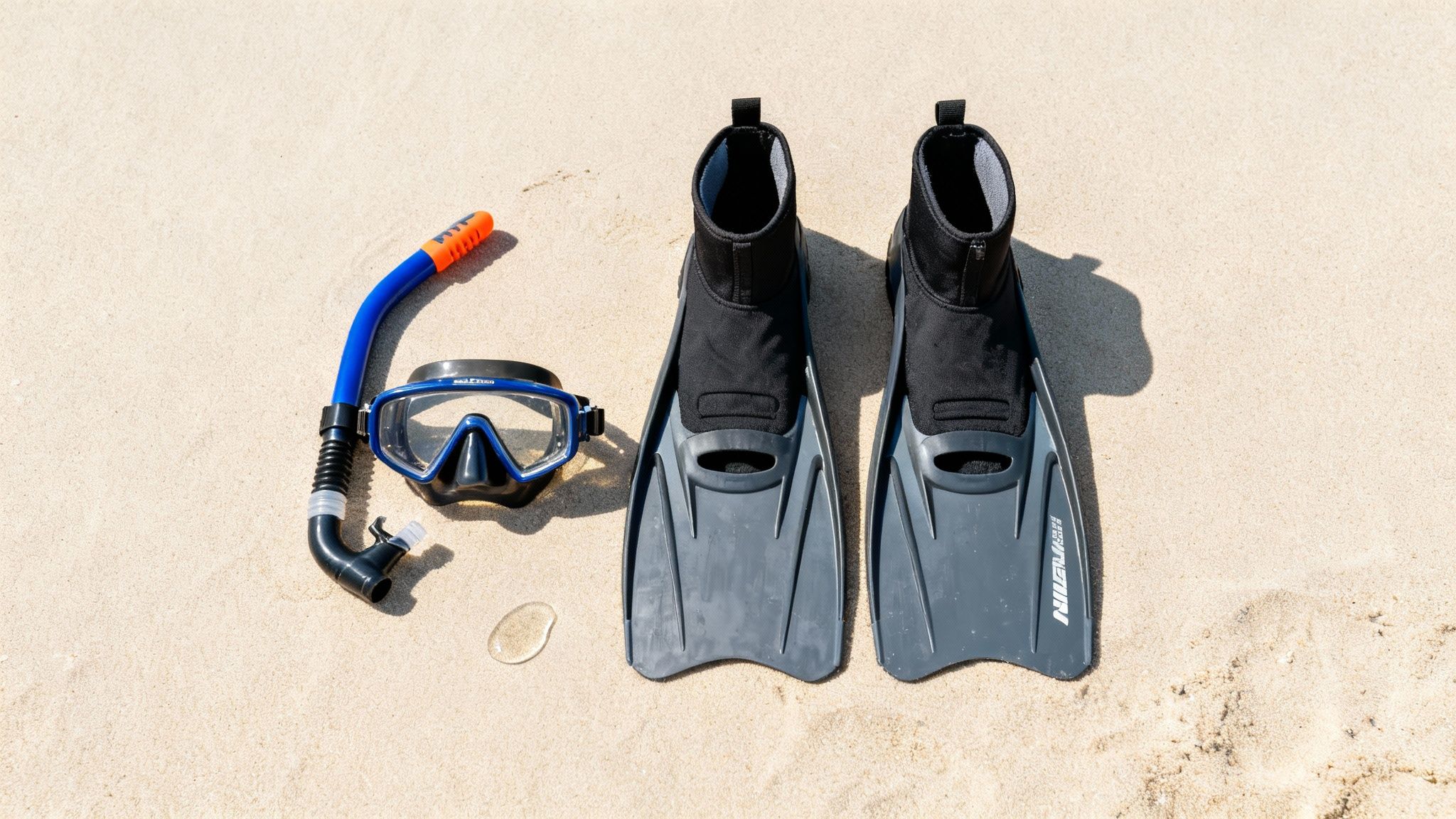
There’s a reason we call your mask, snorkel, and fins "personal gear"—the fit is absolutely everything. Think of these three items as your direct interface with the underwater world. The right fit can make a dive feel magical, but a poor fit can turn an incredible experience into a constant battle with your equipment.
It's why these are often the very first pieces of gear new divers buy. A great mask opens up the reef in stunning clarity, while a leaky one is a constant, frustrating distraction. The right fins feel like a powerful extension of your own body; the wrong ones will have you cramping up and fighting for every kick.
How To Choose The Perfect Scuba Mask
Of all your personal gear, your mask is arguably the most important. It’s what creates that little pocket of air in front of your eyes, allowing you to focus and see everything from a tiny shrimp to a massive manta ray. When you're looking for the best scuba gear for beginners, this is where you should start.
The single most important factor is the seal. A good one keeps water out, period. You can easily check this before you even leave the dive shop with a quick and simple test.
The Seal Test:
- Without using the strap, gently place the mask against your face.
- Breathe in just a little through your nose.
- Did it stick? If the mask suctions to your face and stays put, you have a good seal. If it falls right off or you feel air sneaking in, it's not the right mask for your face shape.
Another thing to look for is the mask's volume. A low-volume mask sits closer to your face and holds less air. This is a huge plus for new divers because it's much easier to clear if a little water gets in, and it takes less air to equalize as you descend. For a deeper dive into all the features, check out our complete guide on how to choose the right dive mask.
Selecting Your Fins And Snorkel
Your fins are your engine room. They turn the power from your legs into graceful, efficient movement through the water. As a beginner, you’ll mainly be looking at two styles: paddle fins or split fins. Paddle fins are the classic single-blade design, giving you solid power and control—great for mastering different kick styles. Split fins are designed to be easier on your joints, reducing strain with more of a fluttering kick.
Most divers, and especially those just starting out, find open-heel fins to be the most practical choice. You wear them with neoprene booties, which gives you a few key advantages:
- Protection: Your feet are safe from hot boat decks or a rocky shore entry.
- Comfort: No more blisters or chafing from a fin rubbing directly on your skin.
- Versatility: You can dive in warm or cool water just by changing the thickness of your booties.
And what about the snorkel? Its job is simple: let you breathe comfortably at the surface without having to lift your head, saving your energy for the dive itself. Modern snorkels have some great features for new divers. Look for a dry top or splash guard to keep waves from sloshing in, and a purge valve at the bottom makes clearing any water that does get inside effortless. A simple, comfortable snorkel is a surprisingly valuable tool.
##

If your mask and fins connect you to the water, your Buoyancy Control Device (BCD) and regulator are what let you live in it. This is the serious stuff—the gear that lets you breathe easily and master your position in the water column.
At first glance, all the hoses and valves can look pretty intimidating. But once you understand what each part does, you’ll see it’s a beautifully simple and reliable system. Getting comfortable with this core equipment is a huge leap toward becoming a confident, safe diver.
Your BCD: The Underwater Elevator
Think of your Buoyancy Control Device (BCD) as a mix between a backpack for your tank and an elevator for the water. It’s basically a vest with an internal air bag, or bladder, that you can inflate or deflate with the push of a button.
That simple action is the secret to achieving the holy grail of scuba: neutral buoyancy. It’s that incredible, weightless feeling where you’re not sinking or floating, just hovering effortlessly. Nailing this skill is everything for a new diver. In fact, a good BCD fit can slash buoyancy problems by up to 65%—a massive help when you’re just starting out. It's no surprise that BCDs are a top seller in the global scuba market, which was valued at USD 5.18 billion in 2025 and is expected to grow to USD 6.23 billion by 2029. You can read the full research about the scuba equipment market for more details.
For beginners, BCDs generally come in two flavors:
- Jacket-Style BCDs: This is the classic you’ll see in most rental shops. The air bladder wraps around your torso, which gently holds you upright at the surface. Many new divers find this position really reassuring.
- Back-Inflate BCDs: As the name suggests, the air bladder is only on your back. This frees up your chest and helps you achieve a more natural, horizontal swimming position (what divers call "trim") underwater. They can feel a little different on the surface, though.
Our advice? Get plenty of dives in with a rental jacket-style BCD first. You’ll get a great feel for the fundamentals before you even think about buying.
Your Regulator: The Lifeline
Your regulator is the brilliant piece of engineering that takes the super high-pressure air from your tank and serves it up to you at a pressure you can actually breathe. It’s like a magic faucet that automatically gives you the perfect amount of air every time you inhale.
The whole setup—which divers just call a "reg"—is a system of several crucial parts working together.
Key Takeaway: Your regulator isn't just the thing you put in your mouth. It’s a complete life-support unit, including your main mouthpiece, a backup for your buddy, and your gauges, all connected to the valve on your tank.
Let’s quickly break it down:
- First Stage: This is the metal hub that screws right onto your tank. Its only job is to knock down the tank's intense pressure (around 3,000 psi) to a more manageable intermediate pressure.
- Primary Second Stage: This is the part you breathe from. It takes that intermediate pressure and dials it down one more time to match the pressure of the water around you, giving you a smooth, easy breath on demand.
- Alternate Air Source (Octopus): This is your backup second stage, and it’s usually bright yellow so it’s impossible to miss. It works just like your primary and is there to hand to your buddy in an out-of-air emergency.
- Submersible Pressure Gauge (SPG): This is your fuel gauge. Plain and simple. It’s a console that shows you exactly how much air is left in your tank, so you can keep an eye on your supply all dive long.
Together, your BCD and regulator are the heart of your dive kit. Understanding how they work isn’t just about passing a test; it’s about building the confidence you need to truly relax and explore the underwater world safely.
Staying Warm, Safe, And Informed Underwater
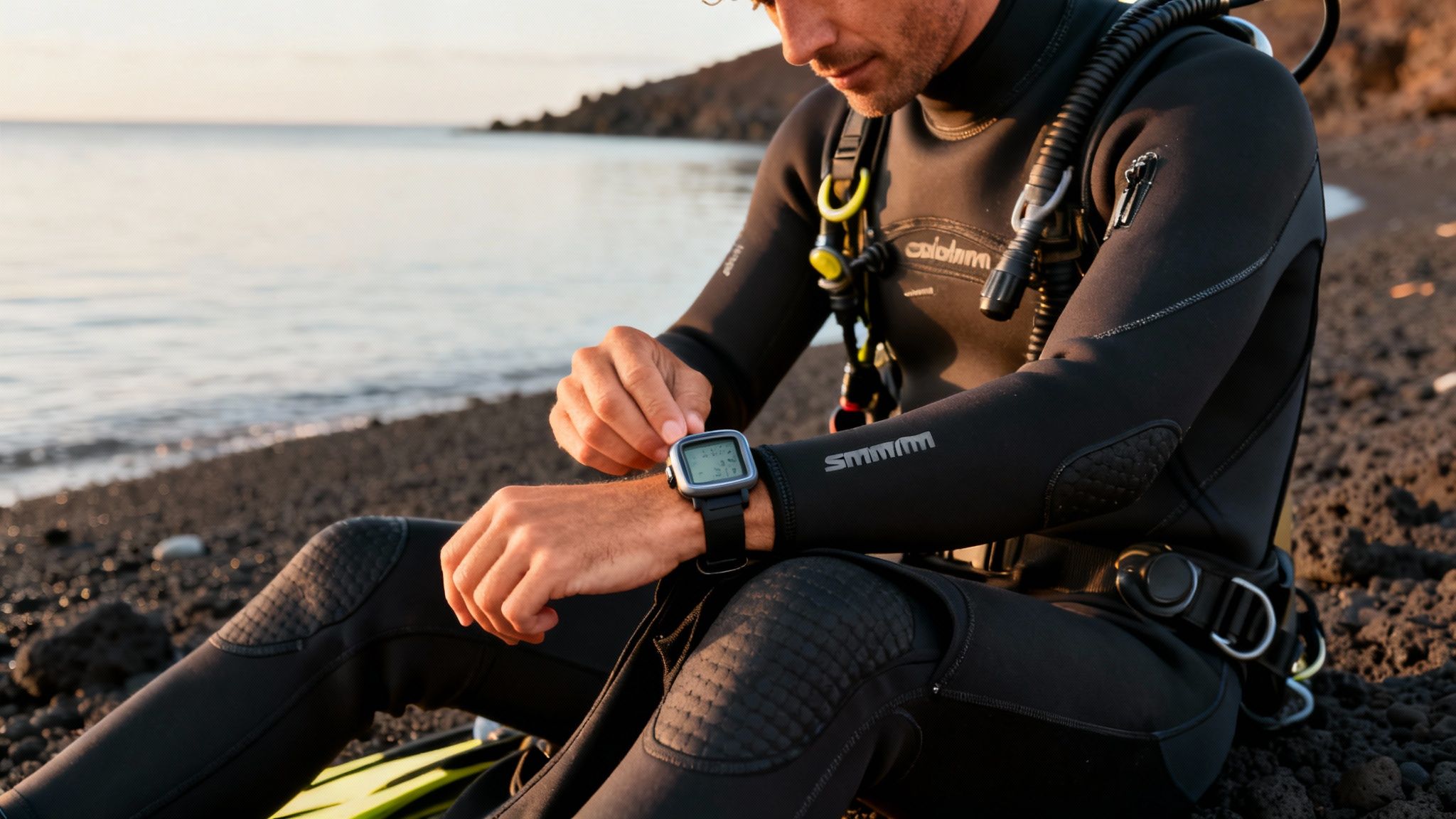
Once you've got the hang of breathing and moving through the water, we can focus on the gear that handles three other vital jobs: keeping you warm, keeping you safe, and keeping you informed. It might seem odd to worry about warmth in a tropical paradise, but water sucks heat from your body about 25 times faster than air. Staying comfortable is a huge part of having a great, safe dive.
At the same time, you need an easy way to track your depth, time underwater, and nitrogen levels. This isn't about doing complicated math in your head. It's about having a simple, at-a-glance tool that guides your decisions. This gear makes sure you end every dive as safely as you started it.
Wetsuits: Your Personal Climate Control
Let’s clear up a common misconception: a wetsuit isn't designed to keep you dry. It actually works by trapping a thin layer of water right against your skin. Your own body heat quickly warms up that water, creating a cozy thermal barrier between you and the cooler ocean.
The trick is all in the fit and thickness. A baggy suit is useless—it will constantly flush out the warm water and let cold water in. The thickness, measured in millimeters (mm), dictates how much insulation you get.
- 1mm – 3mm: This is your go-to for truly tropical waters, like the beautiful seas around Kona, Hawaii, where the temperature is lovely year-round.
- 5mm: A great all-rounder for slightly cooler, temperate waters, or for divers who know they get chilled easily.
- 7mm and up: We're now in serious cold-water territory. You won't need this kind of bulk for most vacation diving.
For new divers heading to places like the Hawaiian islands, a 3mm wetsuit hits the sweet spot, offering the perfect blend of warmth and flexibility for a comfortable dive.
The Dive Computer: Your Most Important Safety Tool
If I had to pick the single most important piece of safety gear for a new diver, it would be the dive computer. Hands down. Think of it as your smart, waterproof co-pilot, right there on your wrist. Its main job is to constantly track your depth and how long you've been underwater.
A dive computer is always running calculations in the background, figuring out your nitrogen absorption so you don't have to. It clearly shows you how much "no-decompression time" you have left, which helps you stay well within safe limits and massively reduces the risk of decompression sickness (aka "the bends").
Don't be intimidated; modern dive computers designed for beginners are incredibly easy to use. They show you everything you need on one screen: current depth, max depth, dive time, and your remaining no-stop time. It completely removes the guesswork, letting you relax and focus on the incredible world around you. While it’s an investment, learning with your own computer from day one is one of the best habits you can form as a diver.
Demystifying Dive Weights
Okay, let's talk about weights. I know it sounds backward to add weight when the goal is to feel weightless, but it's absolutely necessary. Your body—and especially your wetsuit—is naturally buoyant. Dive weights are just simple lead blocks that counteract that buoyancy, helping you descend smoothly and stay at your desired depth without fighting to stay down.
You'll typically carry these weights in one of two ways:
- The Weight Belt: The classic method. It's a simple nylon belt that you thread lead blocks onto and wear around your hips. It’s straightforward and gets the job done.
- Integrated Weights: Many newer BCDs have built-in pockets specifically for holding weights. This system spreads the weight out more comfortably around your torso and gets rid of that squeezing pressure from a belt.
Most beginners find that integrated weights feel more streamlined and comfortable. When you rent gear, you'll get a chance to try both and see what you prefer. Your dive instructor will work with you to figure out the exact amount of weight you need to be perfectly balanced and neutral in the water.
Should You Buy or Rent Your Scuba Gear?
One of the first big questions every new diver asks is, "Should I buy my own gear, or just keep renting?" Honestly, there's no one-size-fits-all answer. The right call really boils down to your budget, how often you see yourself getting in the water, and whether you plan to travel for your dives. Making this decision is a huge part of figuring out the best scuba gear for beginners, because it sets the stage for your first few years in the sport.
Let's walk through the pros and cons of each path so you can figure out what makes the most sense for you.
The Case for Renting Gear
For most divers just starting out, renting is absolutely the way to go. It’s a low-commitment, budget-friendly way to log some dives and gain experience without dropping a ton of cash right out of the gate. If you’re a vacation diver who only plans on a few trips a year, renting is a no-brainer.
Here’s why renting makes so much sense at first:
- It's Way Cheaper Upfront: You get to use high-quality, professional equipment for a tiny fraction of what it would cost to buy it all.
- Zero Maintenance Headaches: Good dive shops take care of all the annual servicing and safety checks. You can just show up and know your regulator and BCD are in perfect working order.
- Travel Light: Let’s be real—lugging a full set of dive gear through an airport is a pain. It's heavy, bulky, and can lead to some serious excess baggage fees. Renting at your destination keeps things simple.
- Try Before You Buy: This is a huge one. Renting lets you test-drive different brands and styles of fins, BCDs, and regulators. You’ll quickly learn what you love (and what you don't) before you ever spend your own money.
Expert Insight: When you rent from a professional operation like Kona Honu Divers, you're not just getting gear; you're getting peace of mind. Our equipment is meticulously maintained, ensuring it's safe and performs flawlessly on every dive.
The Big Advantages of Owning Your Own Kit
While renting is practical, there comes a point in every diver's journey when owning gear starts to feel right. The benefits really boil down to three things: comfort, confidence, and long-term value.
Once you find yourself diving more and more, the perks of ownership become impossible to ignore:
- A Perfect, Consistent Fit: Nothing beats a mask that seals perfectly to your face or a BCD that feels like a custom-made jacket. A great fit doesn't just feel better; it makes you a better, more relaxed diver.
- Familiarity and Muscle Memory: When it's your gear, you know exactly where every clip, valve, and hose is without even looking. That kind of instant familiarity builds massive confidence and lets you react instinctively underwater.
- It Saves Money in the Long Run: If you dive regularly, those rental fees start to add up quickly. Over a few years, owning your own equipment often becomes the more economical choice.
- It's Yours: Let's be honest, there's a certain comfort in knowing you're the only one who has ever breathed from your regulator or used your mask.
Renting vs. Buying Scuba Gear: A Beginner's Decision Guide
To help you weigh the options, here's a simple breakdown of the key factors to consider when deciding between renting and buying your scuba equipment. This table compares the pros and cons side-by-side, making it easier to see which path aligns with your current diving goals and budget.
| Factor | Renting Gear | Buying Gear |
|---|---|---|
| Upfront Cost | Very low. Pay per day or per dive. | High initial investment. $1,500 – $3,000+ for a full kit. |
| Maintenance | None. The dive shop handles all servicing and repairs. | Your responsibility. Annual servicing is required ($100 – $300+). |
| Travel | Easy and light. Rent at your destination. | Can be bulky and add to luggage fees. |
| Fit & Comfort | May be inconsistent. Standard sizes only. | Perfect, personalized fit every time. |
| Familiarity | Different gear on every trip. | Master your own equipment, building muscle memory. |
| Long-Term Cost | Can become expensive if you dive frequently. | More economical for active divers over time. |
| Best For | New divers, infrequent vacation divers, those on a tight budget. | Certified divers who dive regularly, local divers, those prioritizing comfort. |
Ultimately, the choice is personal. Renting is the smart, low-risk way to start, while buying is an investment in your long-term enjoyment and proficiency in the sport.
So, When Is the Right Time to Buy?
Making the jump from renter to owner is a big step, but a rewarding one. The good news is you don’t have to buy everything at once. The best approach is to start small and acquire gear piece by piece, focusing on the items that make the biggest difference to your comfort.
Think about buying your own gear when:
- You've finished your Open Water course and are officially hooked on diving.
- You plan on diving more than just once or twice a year.
- You’re tired of wrestling with ill-fitting rental gear that just isn't comfortable.
- You're ready to invest in your own safety and comfort for the long haul.
Most divers begin by buying their "personal" items first—a good mask, snorkel, fins, and a dive computer. These have the most immediate impact on your dive experience. From there, you can move on to the bigger ticket items like a BCD and regulator. To get a feel for what's out there, check out our list of high-quality scuba rentals; it's a great way to see the types of professional-grade gear you might want to own someday.
Putting Your New Gear Knowledge To The Test

It’s one thing to understand what your mask, BCD, and regulator do on dry land. It’s another thing entirely to get them in the water and feel everything click into place. And honestly, there's no better place for new divers to build that confidence than in the calm, warm, and crystal-clear waters of Kona, Hawaii. The Big Island is a world-class training ground.
All the gear we've covered—from that perfectly fitting low-volume mask to a simple, bombproof regulator—is exactly what you’d want for exploring Kona’s incredible underwater world. This is the equipment that will serve you well as you drift over sun-drenched coral reefs on a morning charter and prepare for one of the most unforgettable dives on the planet.
Your First Hawaiian Dive Experience
Once you have your gear sorted, choosing the right dive operator is just as crucial, especially for those first few ocean dives. You're not just booking a boat trip; you're trusting a team with your safety and your experience. You need a crew that makes you feel supported and completely at ease from the moment you step on board.
This is where Kona Honu Divers truly shines. With a serious commitment to small group sizes and five-star service, we make sure every new diver gets the personal attention they need to thrive. Our reputation is built on making every single dive—from a simple reef tour to an advanced adventure—a safe, fun, and memorable experience.
World-Class Gear for a World-Class Dive
Decided to wait on buying your own kit? No problem. You can still have a top-tier experience. At Kona Honu Divers, we maintain a fleet of high-quality, meticulously serviced rental gear. This means you can dive with confidence, knowing your equipment is maintained to the highest safety standards and performs flawlessly. It's the perfect way to try before you buy.
This is especially true for our world-famous Manta Ray Night Dive, a must-do experience here in Kona. When you have a 3mm wetsuit that fits just right, a mask that won't fog, and a BCD you can trust, you can forget about the gear and just be in the moment. You can relax and focus completely on the gentle giants gliding inches away. This is where the best scuba gear for beginners comes together to make pure magic happen.
It's time to take all that knowledge you've gained and put it into practice. Why not start your journey in one of the most beautiful underwater classrooms on Earth? Take a look at the incredible diving tours in Kona and see for yourself what's waiting just beneath the waves.
Your Top Questions About Beginner Scuba Gear, Answered
Stepping into the world of scuba gear can feel like learning a new language. You've got questions, and that's a good thing! Getting solid answers is the first step toward feeling confident and ready before you even dip a toe in the water.
Let's clear up some of the most common questions we hear from new divers. Think of this as your pre-dive briefing, where we tackle those last-minute uncertainties so you can focus on the fun part.
What’s the First Piece of Scuba Gear I Should Buy?
Ask any seasoned instructor, and you'll likely get the same answer: a high-quality, well-fitting mask. Nothing can sour a dive faster than a leaky mask that you're constantly clearing. Your mask is your personal window to the incredible world below the surface, so getting a perfect fit is everything.
After that, your own fins and snorkel are fantastic next steps. Having your own ensures a comfortable fit and good hygiene, plus they’re easy to pack and relatively inexpensive. Starting with these three personal items makes a world of difference.
How Much Should I Budget for a Full Set of Beginner Scuba Gear?
If you're looking to buy a complete, brand-new set of entry-level gear—we're talking BCD, regulator, dive computer, wetsuit, and all the personal items—you should plan to spend somewhere between $1,500 and $2,500. It's definitely an investment, but remember that quality equipment is built to last for hundreds of dives with the right care.
A Little Friendly Advice: Don't feel pressured to buy it all at once! Most divers piece their kit together over time. You can also hunt for package deals at your local dive shop or find well-maintained used gear to save some money. Just be absolutely sure to get any used life-support equipment professionally serviced before you dive with it.
How Often Does My Scuba Gear Need to Be Serviced?
This one is non-negotiable for your safety. Your core life support equipment—your regulator and BCD—needs to be professionally serviced every year or according to the manufacturer's guidelines, which is usually every 100 dives or every one to two years. Think of it as an annual check-up for the gear that lets you breathe underwater.
Your dive computer will need a battery change every so often, but the single most important thing you can do is rinse every piece of your gear thoroughly with fresh water after every single dive. Salt is corrosive, and this simple habit will dramatically extend the life of your equipment.
Should I Get a Weight Belt or a BCD with Integrated Weights?
For most new divers, a BCD with an integrated weight system is the way to go. Instead of cinching a heavy belt around your hips, the weight is distributed more evenly around your torso. This often makes it easier to achieve good trim—that perfect horizontal position in the water—and you don't have to worry about the belt slipping or accidentally dropping the whole thing.
That said, the classic weight belt is simple, bulletproof, and still trusted by countless experienced divers. It really boils down to personal preference, which is something you'll figure out as you get more dives under your (weight) belt.