
The ocean covers over 70% of our planet, holding a world of vibrant reefs, mysterious wrecks, and mesmerizing marine life just waiting to be explored. For scuba divers, from the newly certified to the seasoned veteran, choosing the next destination is an exhilarating challenge. This guide simplifies that choice by unveiling a definitive list of the best places to dive in the world, catering to every skill level and interest. We'll journey from the legendary coral gardens of Australia and the biodiversity hotspots of Indonesia to the unique volcanic lava tubes of Hawaii's Kona Coast.
Each location has been selected for its exceptional marine ecosystems, unique underwater topography, and unforgettable signature experiences. Whether you're a novice diver looking for calm, clear waters or an advanced thrill-seeker ready for deep pinnacles and powerful currents, this list provides the actionable insights needed to plan your next underwater adventure. We will break down what you'll see, the best seasons to visit, and essential tips for each destination.
This curated roundup moves beyond simple descriptions, offering practical details to help you prepare. We'll cover everything from must-see dive sites to skill-level requirements, ensuring you arrive ready to explore. Because scuba diving is an adventurous activity, it's also wise to consider your safety net before you travel; policies for travel insurance for adventure sports are specifically designed to cover activities like diving, offering peace of mind.
Get your gear ready—we're about to dive into the most spectacular aquatic environments our planet has to offer.
1. Kona Coast, Hawaii (Big Island)
The Kona Coast on Hawaii's Big Island easily earns its spot as one of the best places to dive in the world, offering a unique blend of pristine conditions and unparalleled marine encounters. Thanks to the protective shield of massive volcanoes, the leeward coast enjoys remarkably calm, clear waters with visibility often exceeding 100 feet. This creates a perfect underwater playground built upon ancient volcanic foundations, featuring dramatic lava tubes, vibrant coral gardens, and deep-water pinnacles. Scuba diving the Big Island offers a vast array of underwater experiences, all accessible through a variety of excellent diving tours.
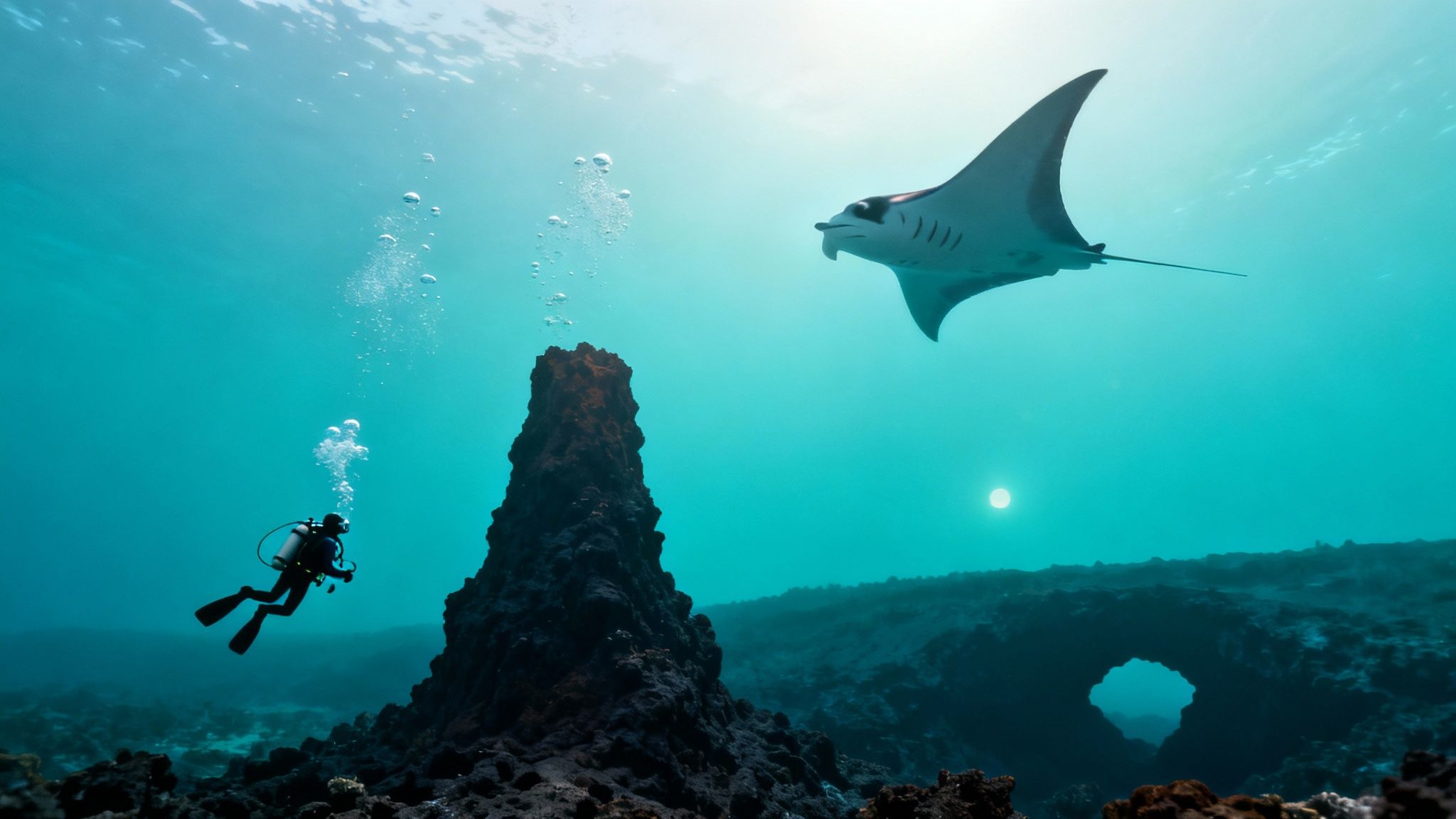
This destination is globally famous for two signature dives. The Manta Ray Night Dive is a truly magical, bucket-list experience. For the best encounter, the dive at Garden Eel Cove is the superior choice because of its protected location, which provides a better, more comfortable viewing area and healthier reefs for the gentle giants. The other must-do dive for advanced divers is the surreal Blackwater Dive. This unique night dive takes you miles offshore over thousands of feet of water to witness the planet's largest vertical migration of bizarre, bioluminescent creatures rising from the abyss. You can learn more about this unique blackwater experience. For those seeking even more challenging and rewarding underwater adventures, the Kona coast also offers incredible advanced dive tour opportunities.
As home to Kona Honu Divers, with a staff boasting over 200 years of combined experience, you have access to expert local guides. They ensure every dive, whether exploring turtle havens like Pawai Bay or the protected Kealakekua Bay Marine Sanctuary, is safe, memorable, and extraordinary.
2. Great Barrier Reef, Australia
As the world's largest coral reef system and a UNESCO World Heritage Site, the Great Barrier Reef is an undeniable icon on any list of the best places to dive in the world. Stretching over 1,400 miles along Australia’s Queensland coast, this colossal living structure is visible from space and hosts an astonishing level of biodiversity. Divers can explore a vast underwater landscape of vibrant coral gardens, dramatic walls, and intricate pinnacles teeming with life.
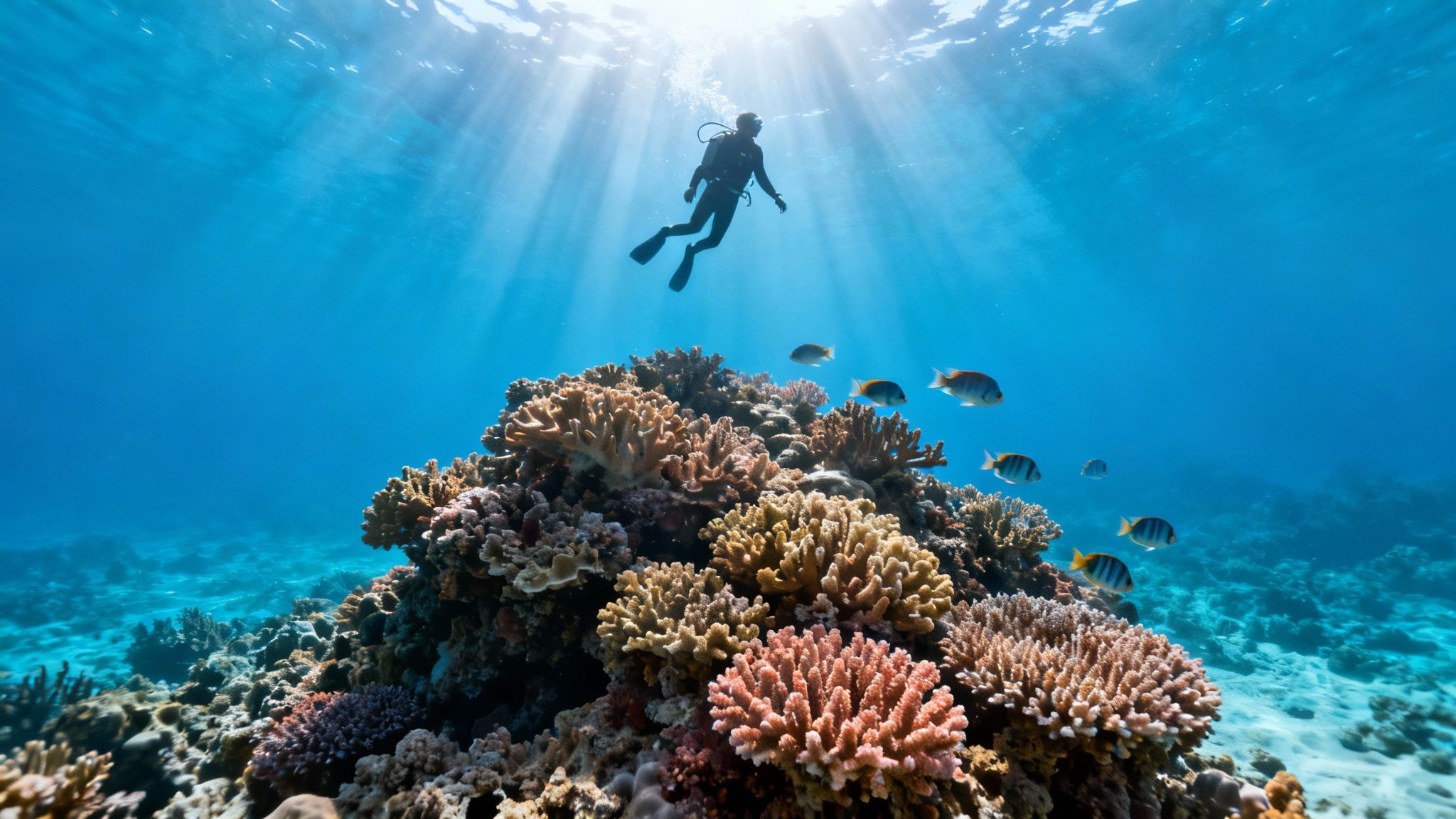
The reef offers an incredible variety of dive sites suitable for every skill level. Famous spots like Cod Hole on the Ribbon Reefs are renowned for encounters with massive, friendly potato cod and Māori wrasse. For a different perspective, the walls of Osprey Reef in the Coral Sea provide thrilling drift dives with exceptional visibility and frequent shark sightings. The sheer scale of the reef means there is always something new to discover, from macro critters hiding in the coral to majestic sea turtles and rays gliding by.
To make the most of this destination, consider a live-aboard trip to access the more remote outer reefs where the coral is most pristine. Planning a trip to a destination of this magnitude can be complex, but getting your logistics sorted is key to an unforgettable experience. Before you go, be sure to check out some essential dive travel tips and tricks to ensure you are fully prepared for your Australian adventure.
3. Palau, Micronesia
Palau stands as one of the Pacific's most pristine and biodiverse diving sanctuaries, making it one of the best places to dive in the world. This Micronesian archipelago is renowned for its dramatic underwater landscapes, exceptional coral health, and reliable encounters with large pelagic species. The convergence of three major ocean currents fosters a nutrient-rich environment that supports a staggering amount of marine life, from vibrant reef fish to patrolling sharks. Visibility often surpasses 100 feet, offering crystal-clear views of its famous channels and drop-offs.
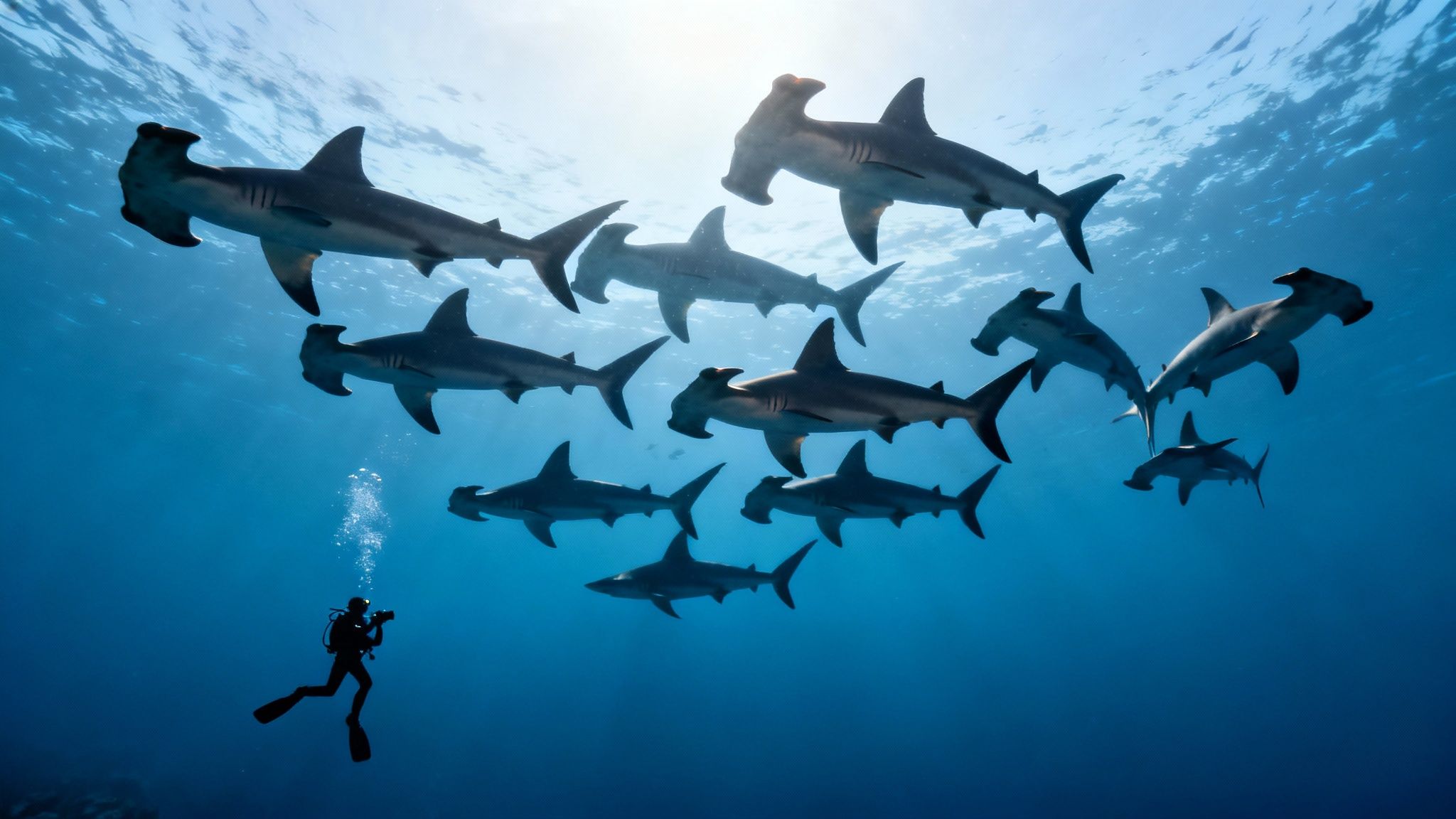
This destination is a magnet for experienced divers seeking high-adrenaline experiences. The world-famous Blue Corner is the quintessential dive, where divers use reef hooks to anchor themselves in the current and watch a parade of grey reef sharks, barracuda, and Napoleon wrasse. Other must-see sites include Peleliu Corner for its powerful currents and pelagic action, and the stunning Ngemelis Drop wall. For a unique experience, snorkelers can visit the iconic Jellyfish Lake, home to millions of non-stinging golden jellyfish.
Due to the dynamic conditions, an Advanced Open Water certification is typically required, with a drift diving specialty highly recommended. The peak dry season from November to April offers the most favorable weather. To fully appreciate the challenging currents and get the most out of your trip, it's wise to plan for multiple consecutive dive days and start with an acclimatization dive before heading to advanced sites.
4. Red Sea, Egypt & Israel
The Red Sea is a legendary corridor of water that rightfully ranks among the best places to dive in the world, celebrated for its astonishing biodiversity, vibrant coral reefs, and historical wrecks. Stretching from Egypt's Sinai Peninsula to Israel's coast at Eilat, its unique semi-enclosed geography has fostered a remarkable number of endemic species found nowhere else. Divers are treated to consistently excellent conditions, with warm water year-round and visibility often reaching between 80 to 100 feet, making it a premier and accessible destination for all skill levels.
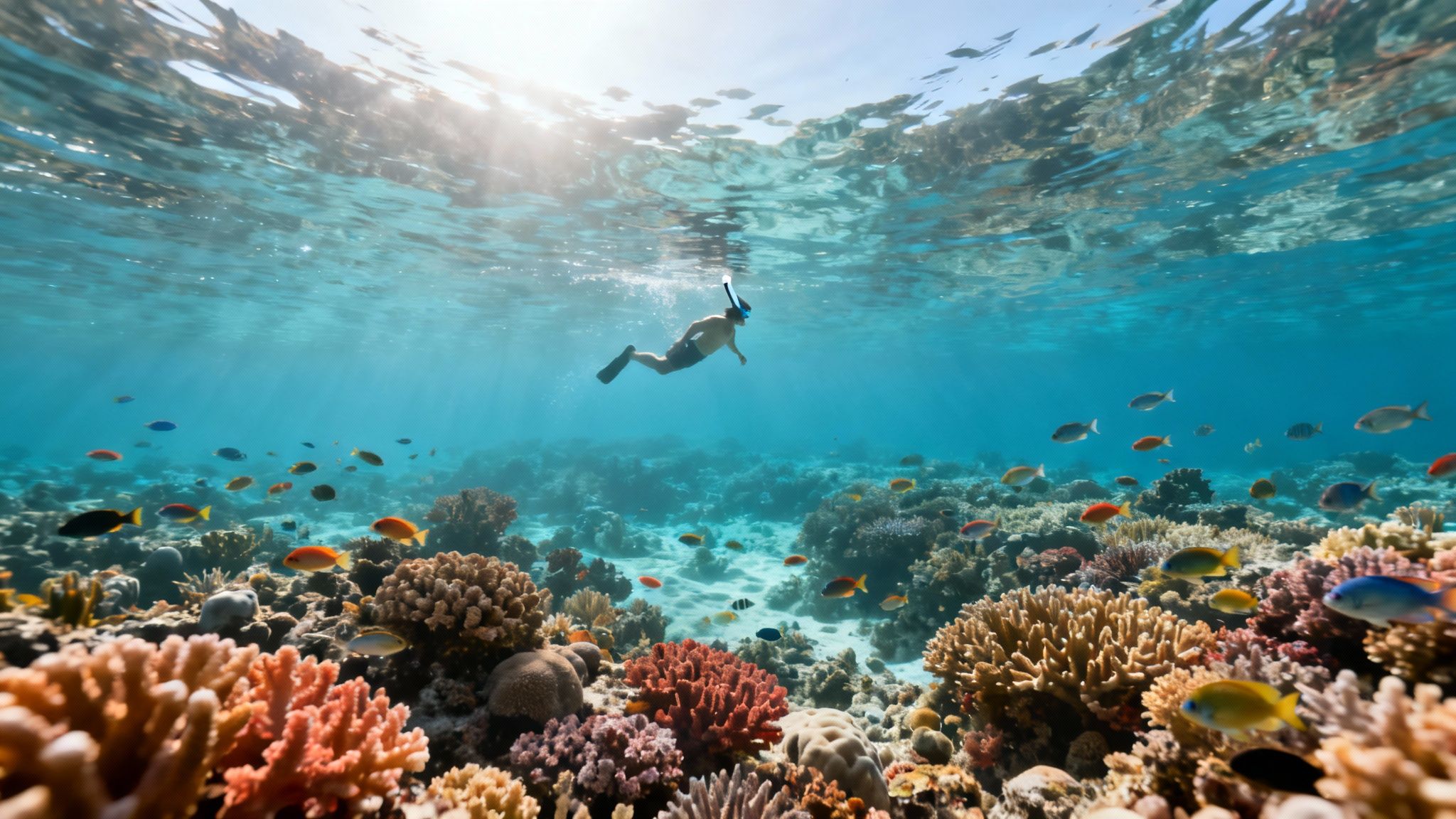
The region offers a spectacular variety of dive experiences. In Egypt, Ras Muhammad National Park mesmerizes with its dramatic wall dives where pelagics and sharks patrol the deep blue. The Straits of Tiran challenge divers with current-swept pinnacles covered in brilliant soft corals. Perhaps the most famous site is the SS Thistlegorm, a WWII shipwreck that serves as an underwater museum, its cargo holds still filled with military supplies. Further north in Dahab, the infamous Blue Hole offers a thrilling technical dive for the highly experienced.
For optimal conditions and fewer crowds, plan your trip during the shoulder seasons of April-May or September-October. Given the diversity of sites from shore dives to liveaboards, it's wise to book with reputable, specialty-trained operators, especially for wreck penetration or technical dives. A trip to the Red Sea promises an unforgettable adventure through a truly unique and thriving marine ecosystem.
5. Cozumel, Mexico
Cozumel is a Caribbean jewel that rightfully claims its place as one of the best places to dive in the world, largely thanks to the pioneering explorations of Jacques Cousteau. The island is famous for its exhilarating drift dives along spectacular walls adorned with vibrant sponges and corals. Fed by the nutrient-rich currents of the Yucatan Channel, the Mesoamerican Reef here thrives, offering exceptional visibility that often surpasses 100 feet. This consistent clarity makes it an underwater photographer's paradise.
The island's protected marine park status ensures the reef's health, supporting a dense population of marine life, from hawksbill turtles and nurse sharks to majestic eagle rays. The underwater topography features dramatic drop-offs and intricate swim-throughs. Legendary sites like Palancar Reef and Columbia Deep offer multi-level profiles perfect for drifting past stunning coral formations. For those seeking shore diving convenience, a shallow house reef provides easy access to calm waters teeming with life, ideal for beginners and relaxed second dives. You can explore a detailed guide to Cozumel's dive sites to plan your trip.
The well-developed infrastructure caters to divers of all levels, from those learning drift diving techniques to advanced divers exploring deeper walls. For the best conditions and fewer crowds, consider visiting during the shoulder seasons of May-June or September-October. With its combination of thrilling drifts, abundant wildlife, and accessibility, Cozumel offers a complete and unforgettable dive vacation.
6. Bonaire, Caribbean Netherlands
Known as the "Shore Diving Capital of the World," Bonaire offers unparalleled freedom and access for divers, securing its place among the best places to dive in the world. The entire coastline is a protected national marine park, fostering incredibly healthy reefs and prolific marine life that are accessible right from the beach. This unique setup allows certified divers the flexibility to grab their tanks and explore world-class sites on their own schedule, a level of independence rarely found elsewhere.
With over 80 official dive sites, most marked by yellow stones on the roadside, the island is a diver's paradise. You can start your day exploring a dramatic wall at 1000 Steps, then move to the famous Hilma Hooker wreck, a 236-foot freighter resting in a sand flat. The calm, clear waters with visibility often reaching 100 feet are also perfect for underwater photography, from the wide-angle reefscapes at Aquarius to the macro havens like Yellow Submarine, teeming with crustaceans and tiny fish.
Before diving, all visitors must purchase a Bonaire Marine Park tag and attend an orientation. For those new to the island, booking a guided shore dive initially is a great way to learn entry points and navigation. This diver-centric model, pioneered by the Bonaire National Marine Park Authority, makes it an ideal destination for both beginners and experienced divers seeking adventure and autonomy beneath the waves.
7. Bunaken Marine Park, Sulawesi, Indonesia
Situated at the heart of the Coral Triangle, Bunaken Marine Park is a testament to Indonesia's staggering marine biodiversity, making it one of the best places to dive in the world. The park is renowned for its dramatic underwater topography, where sheer, coral-encrusted walls plummet into the deep blue. This vertical environment, combined with crystal-clear visibility that often surpasses 100 feet, creates a breathtaking spectacle for divers of all levels.
Bunaken's claim to fame is its world-class wall diving. Sites like Lekuan II and Fukui Point showcase the park’s pristine ecosystems, where you can drift alongside walls covered in a kaleidoscope of hard and soft corals, enormous sponges, and giant gorgonian fans. The area teems with life, from massive schools of pyramid butterflyfish and red-toothed triggerfish to countless sea turtles cruising effortlessly along the reef. For macro photography enthusiasts, nearby Bangka Island and the famous Lembeh Strait offer a "muck diving" paradise, revealing bizarre and wonderful critters like flamboyant cuttlefish, hairy frogfish, and a dazzling array of endemic nudibranchs.
To fully experience the region’s remote biodiversity hotspots, consider booking a 5-7 day liveaboard. The dry season, from approximately October to April, generally provides the most favorable conditions. Equipping yourself with macro lenses and proper lighting is essential for capturing the unique smaller inhabitants that make this corner of Sulawesi so special.
8. Raja Ampat, Indonesia
Located at the heart of the Coral Triangle, Raja Ampat is often hailed as the planet's epicenter of marine biodiversity, solidifying its status as one of the best places to dive in the world. This remote archipelago boasts staggering statistics, with over 1,300 species of fish and more than 500 species of coral. The underwater landscapes are a photographer’s dream, featuring everything from pristine, kaleidoscopic coral gardens and lush mangrove forests to dramatic deep-water pinnacles and swift currents that attract large pelagics.
The sheer scale and remoteness of Raja Ampat make liveaboards the preferred way to explore its treasures. Expeditions allow divers to access untouched sites teeming with life, from schools of fusiliers so dense they block out the sun to encounters with majestic oceanic manta rays at cleaning stations. For macro lovers, the region is a paradise, offering opportunities to spot rare pygmy seahorses, flamboyant cuttlefish, and an array of endemic nudibranchs. Nearby hotspots like the Lembeh Strait further cement the area's reputation as a critter-hunting mecca.
To truly appreciate this underwater wilderness, divers should be prepared for varying conditions and consider advanced certifications to handle the currents. The best time to visit is during the dry season, from October to April, for optimal visibility and calmer seas. Engaging with operators who prioritize conservation ensures this global treasure remains pristine for future generations.
9. Galapagos Islands, Ecuador
The Galapagos Islands stand as a legendary, bucket-list destination, a place where evolution is palpable both above and below the water. This volcanic archipelago is one of the best places to dive in the world for its unparalleled encounters with huge schools of fish and large pelagic animals. The convergence of multiple strong ocean currents creates a nutrient-rich environment that supports a staggering amount of life, including many species found nowhere else on Earth. Divers here are not just visitors; they are explorers in a living laboratory.
This is a destination for the seasoned adventurer. The diving is challenging, with strong currents, cooler water temperatures, and often-limited visibility, but the rewards are immense. The northern islands of Wolf and Darwin are the main event, famous for massive schools of scalloped hammerheads, whale sharks in season (June-November), and an abundance of Galapagos sharks, silky sharks, and eagle rays. Closer to the central islands, you can dive with playful sea lions, marine iguanas feeding on algae, and the world's northernmost penguins.
Due to the remote nature of the best sites, a 7 to 10-day liveaboard expedition is essential for the full experience. It’s critical to arrive with an Advanced Open Water certification and significant experience managing drift dives. This ensures you can safely navigate the dynamic conditions and fully appreciate the raw, wild beauty of this protected marine sanctuary.
10. Lake Tahoe, California/Nevada
Trading vibrant coral reefs for dramatic alpine scenery, Lake Tahoe offers one of the best places to dive in the world for those seeking a unique freshwater challenge. This high-altitude lake boasts stunning clarity, with visibility often reaching 60-100 feet, rivaling many tropical destinations. The underwater world here is defined by immense granite boulders, sheer drop-offs, and sunken historical artifacts, creating a starkly beautiful and serene environment. Diving in these cold, clear waters provides an unparalleled opportunity to develop advanced skills in a truly distinct setting.
Diving in Lake Tahoe requires specialized training and equipment, but the rewards are immense. Sites like Sand Harbor are perfect for accessible shore dives among incredible rock formations, while Emerald Point showcases the lake's dramatic underwater landscape. For technical divers, Rubicon Point presents a thrilling challenge with its deep, dramatic walls. The experience sharpens buoyancy control and thermal management skills, making you a more confident and capable diver in any environment.
Proper preparation is key for a successful Tahoe dive. A Cold Water Diving specialty certification is highly recommended, along with a quality dry suit and appropriate thermal undergarments to stay comfortable. Diving during the summer months from June to September ensures the most favorable surface conditions and water temperatures. For a safe and memorable adventure, connect with a local guide who can navigate the unique sites and conditions of this North American gem.
11. Komodo and Flores Islands, Indonesia
Komodo and the Flores Islands represent Indonesia's wild, deep-diving frontier, a destination for advanced divers seeking thrilling conditions and world-class marine biodiversity. The region's unique geography forces the convergence of powerful ocean currents, creating a dynamic and nutrient-rich environment. This results in dramatic underwater topography with sheer walls dropping over 600 feet, exhilarating drift dives through channels, and encounters with an incredible array of large pelagic species.
This area is legendary for high-octane sites like Batu Bolong, a pinnacle swarming with reef sharks, giant trevallies, and dense schools of fish braving the currents. Other iconic spots include Castle Rock, known for its pelagic action, and Manta Point, a reliable cleaning station for majestic manta rays. The challenging conditions and remote nature make it one of the best places to dive in the world for those with experience.
Due to the remote locations of the premier dive sites, a live-aboard expedition of 5-7 days is the best way to explore the area. Divers should hold at least an Advanced Open Water certification and be comfortable with strong currents and drift diving. The unspoiled natural beauty, both above and below the water, combined with traditional Indonesian culture, makes for an unforgettable adventure.
12. Channel Islands, California
Just off the coast of Southern California, the Channel Islands offer a world-class temperate diving experience, rightfully earning their place as one of the best places to dive in the world. This protected National Marine Sanctuary is home to breathtaking kelp forests that tower from the seabed, creating a magical, cathedral-like underwater environment. The unique ecosystem here requires divers to master buoyancy and navigation skills distinct from tropical reef diving, making it a rewarding challenge.
The islands' dramatic underwater topography includes sheer walls, canyons, and pinnacles teeming with life. Anacapa Island is famous for its playful sea lion encounters amidst the swaying kelp, while Santa Barbara Island is a paradise for macro photographers seeking vibrant nudibranchs and unique invertebrates. The rich, nutrient-filled waters support an incredible biodiversity, including Garibaldi (the state fish), massive sheephead, and harbor seals. This combination of accessible boat dives, stunning geology, and a pristine, protected environment makes the Channel Islands a must-visit destination for those seeking an unforgettable cold-water adventure.
Top 12 Global Dive Sites Comparison
| Destination | Complexity 🔄 | Resources & Cost ⚡ | Expected Outcomes 📊⭐ | Ideal Use Cases 💡 | Key Advantages ⭐ |
|---|---|---|---|---|---|
| Kona Coast, Hawaii (Big Island) | Moderate — Open Water minimum; Advanced for deep pinnacles; seasonal night dives 🔄 | Moderate–High — island travel, boat/charter options; premium pricing ($$$) ⚡ | Clear water (80–120ft), manta ray night dives, sea turtles, lava topography 📊 | Night manta encounters; blackwater/bioluminescence dives; mixed-ability groups 💡 | Exceptional manta experiences; stable leeward conditions; strong local operators ⭐ |
| Great Barrier Reef, Australia | Moderate — Open Water; Advanced for outer reef and currents 🔄 | High — live-aboard/day trips, long travel; $$$ ⚡ | Massive biodiversity (1,500+ fish), coral gardens, pelagics and drop-offs 📊 | Biodiversity surveys, macro + wide-angle photography, live-aboard expeditions 💡 | Unmatched ecosystem scale and variety; established infrastructure ⭐ |
| Palau, Micronesia | High — Advanced/Drift-specialty recommended; strong currents 🔄 | Very High — remote travel, limited operators; $$$$ ⚡ | Pristine reefs, Blue Corner drift dives, frequent shark/pelagic encounters (100+ft vis) 📊 | Advanced drift diving, pelagic photography, conservation-focused trips 💡 | Pristine ecosystems, strong protection, uncrowded premium sites ⭐ |
| Red Sea (Egypt & Israel) | Low–Moderate — Open Water suitable; Advanced for walls 🔄 | Low–Moderate — accessible, affordable ($$); good operator network ⚡ | Warm water (72–82°F), 80–100ft visibility, endemic species, wrecks 📊 | Affordable reef/wreck combos, beginners to advanced, shore+boat dives 💡 | Excellent value, accessibility, predictable conditions ⭐ |
| Cozumel, Mexico | Moderate — Open Water; Advanced for deep wall sites and currents 🔄 | Moderate — easy access from Yucatán; $$–$$$ ⚡ | Drift wall dives, 80–130ft visibility, groupers and nurse sharks 📊 | Drift skills development, Caribbean wide-angle/macro photography, day trips 💡 | Consistent conditions, strong marine park protection, good amenities ⭐ |
| Bonaire, Caribbean Netherlands | Low — Open Water; shore-diving comfort required 🔄 | Low — shore dives reduce boat costs ($–$$); permits required ⚡ | 60–100ft visibility, abundant reef life, excellent macro opportunities 📊 | Independent shore diving, extended photography trips, budget-friendly stays 💡 | Unlimited shore access, superb reef protection, flexible schedules ⭐ |
| Bunaken Marine Park, Sulawesi | Moderate–High — Advanced recommended for remote sites 🔄 | Moderate — travel logistics, live-aboard options; $$$ ⚡ | Coral Triangle biodiversity, dramatic walls, macro specialities 📊 | Macro/wide-angle photography, live-aboard biodiversity itineraries 💡 | High coral coverage, fewer crowds, strong local conservation ⭐ |
| Raja Ampat, Indonesia | High — Advanced recommended; remote live-aboard itineraries 🔄 | High — remote travel, live-aboards; $$$ ⚡ | Highest species diversity (1,300+ fish), endemic species, pristine reefs 📊 | Remote biodiversity expeditions, macro specialists, serious photographers 💡 | Unmatched biodiversity and remote pristine sites ⭐ |
| Galapagos Islands, Ecuador | High — Advanced/Nitrox recommended; strong currents 🔄 | Very High — live-aboard mandatory for best sites; $$$$ ⚡ | Apex predator encounters (hammerheads), unique endemic fauna, volcanic topo 📊 | Apex predator dives, expeditionary wildlife photography, conservation trips 💡 | Unique endemic species and once-in-a-lifetime large-animal encounters ⭐ |
| Lake Tahoe, CA/NV | Moderate — Open Water; cold-water/dry suit specialty advised 🔄 | Low — domestic travel, shore access; $ ⚡ | Exceptional freshwater clarity (60–100ft), alpine geology, limited fauna 📊 | Cold-water skill development, technical photography, accessible shore dives 💡 | Incredible visibility, easy shore access, affordable training ground ⭐ |
| Komodo & Flores, Indonesia | High — Advanced/Technical recommended; strong currents/drift 🔄 | Moderate–High — live-aboard focus, remote logistics; $$$ ⚡ | Dramatic walls, manta/shark encounters, deep-water species 📊 | Technical drift diving, pelagic photography, adventurous live-aboards 💡 | World-class current dives and pelagic action; remote pristine sites ⭐ |
| Channel Islands, California | Moderate — Open Water; cold-water exposure needed 🔄 | Low–Moderate — day-boat access from SoCal; $–$$ ⚡ | Kelp forests, sea lions, nudibranch macro, temperate biodiversity (40–60°F) 📊 | Kelp forest exploration, sea mammal interactions, macro study trips 💡 | Unique kelp ecosystems, accessible from mainland, sanctuary protection ⭐ |
Your Next Dive Awaits on the Kona Coast
We have journeyed across the globe, from the sprawling coral cities of the Great Barrier Reef to the unique freshwater depths of Lake Tahoe. Each destination offers a singular window into the planet's vast underwater realms, promising adventure, discovery, and a profound connection with nature. You've seen the pelagic wonders of the Galapagos, the vibrant reefs of Raja Ampat, and the historic wrecks of the Red Sea. This list represents a diver's ultimate bucket list, showcasing the very best our oceans have to offer.
The common thread weaving through these incredible locations is the opportunity for unforgettable, transformative experiences. Whether it’s navigating a current-swept channel in Komodo or floating weightlessly in a cenote in Cozumel, these dives challenge our skills, expand our horizons, and instill a deeper appreciation for marine conservation. The key takeaway is that planning, preparation, and choosing the right guide are paramount to unlocking the full potential of these world-class sites.
From Global Wonders to Kona's Unique Magic
While every location on this list is a worthy contender for the title of "best place to dive in the world," the Kona Coast of the Big Island, Hawaii, offers a remarkable and accessible concentration of truly unique underwater encounters. It’s a place where ancient volcanic landscapes meet a thriving, modern ecosystem. The dramatic lava tubes, arches, and pristine coral gardens provide a stunning backdrop for a diverse array of marine life found nowhere else on Earth.
What truly sets Kona apart are its signature dives. The world-famous Manta Ray Night Dive is more than just a dive; it's a breathtaking, beautifully orchestrated ballet of gentle giants. Likewise, the Blackwater Night Dive is an extraordinary voyage into the deep ocean's vertical migration, revealing bizarre and beautiful creatures that surface from the abyss under the cover of darkness. These aren't just dives; they are premier, once-in-a-lifetime experiences that draw enthusiasts from every corner of the globe.
Your Invitation to Explore with Kona Honu Divers
At Kona Honu Divers, we are privileged to call this incredible environment our home and our office. We believe that a world-class destination deserves world-class service, and our mission is to provide you with the safest, most memorable, and most awe-inspiring dives possible. Our experienced crew, modern fleet, and commitment to small group sizes ensure a personalized and comfortable adventure.
See what fellow divers have to say about their experience with us:
Whether you are a seasoned diver looking to tackle our advanced dive charters or a new diver ready to witness the magic of the manta ray night dive, we have a charter perfectly suited for you. We don't just take you diving; we share our passion for the ocean and our deep respect for the marine life that inhabits it.
Your journey through the best places to dive in the world has brought you here. Now, it’s time to take the next step and turn inspiration into action. The vibrant reefs, the graceful mantas, and the mysteries of the deep are waiting.
Your ultimate dive adventure is just a click away. As a premier operator on the Big Island, Kona Honu Divers specializes in turning a great dive destination into an unforgettable personal experience. Visit us at Kona Honu Divers to explore our full range of tours and let us guide you through one of the truly best places to dive in the world.