
Yes, you can absolutely see whale sharks in Kona, but it's an encounter that's all about luck and being in the right place at the right time. These gentle giants roam the deep blue off our coast, making any appearance a rare, breathtaking, and completely unpredictable event. A sighting like this can turn an already great day on the ocean into a memory you'll talk about for the rest of your life.
The Truth About Kona Whale Shark Encounters
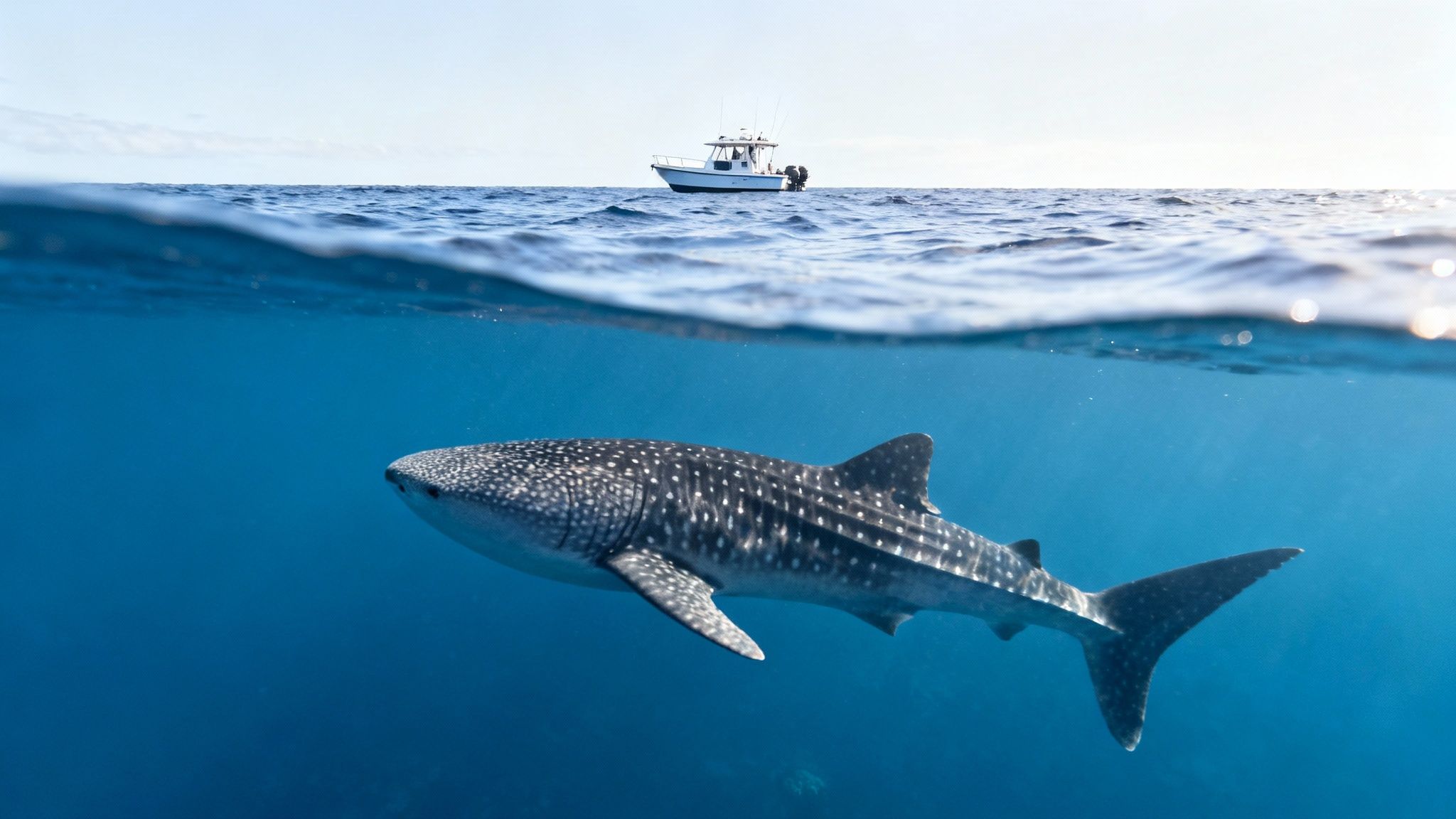
Think of a whale shark sighting like finding a perfect, unbroken shell on a busy beach—it’s not something you can really plan for, but the possibility is what makes every moment out on the water so exciting.
Unlike other global hotspots with predictable whale shark seasons, Kona doesn't have dedicated tours just for them. Instead, these encounters are a bit of ocean magic, a surprise gift that can happen on any given day, on any given trip.
To give you a quick snapshot, here's what you need to know about seeing a whale shark in Kona.
Kona Whale Shark Encounters At a Glance
| Aspect | Details |
|---|---|
| Sighting Frequency | Rare and unpredictable. Not a guaranteed sighting. |
| Best "Season" | Sightings can happen year-round, but there's a slight uptick in the fall months. |
| Dedicated Tours | No. Encounters are surprise bonuses on regular dive or snorkel trips. |
| Primary Location | Offshore in deep water, typically south of Kona town. |
| Your Role | Be out on the water! The more time you spend, the better your chances. |
This table should help set the scene: it’s about a lucky surprise, not a guaranteed event.
Your best shot comes from simply spending time in their environment with experienced local crews who know the subtle signs of the sea. While whale sharks are seen far less frequently than our famous manta rays and spinner dolphins, the increase in boat traffic over the years has led to more reported sightings. Moments once considered exceptionally rare are now a little more common, though they remain wonderfully random.
Want to learn more? Check out our guide on what makes Kona's underwater world so special. This guide is all about managing expectations and helping you understand that it's all about increasing your odds by being out there.
Why Whale Shark Sightings Are More Frequent
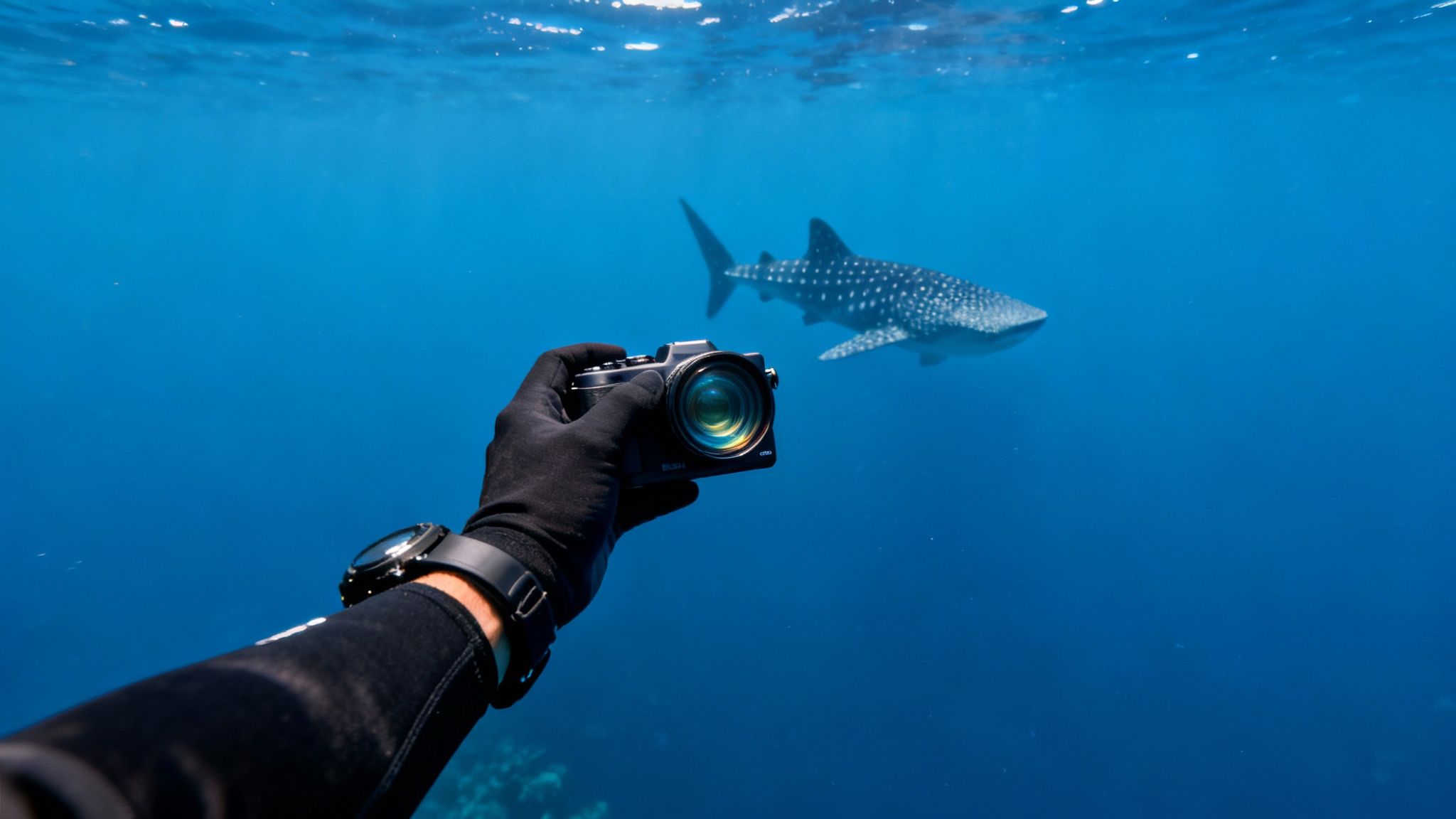
If you've been hearing more and more stories about whale shark encounters here in Kona, you're not alone. It might seem like there's been a sudden population explosion, but the real story is a bit more nuanced. It’s a fascinating tale of community, technology, and simply being in the right place at the right time.
Think of it this way: rare birds have always lived in the forest, but now every single hiker has a smartphone with a high-def camera and an internet connection. All of a sudden, sightings are getting documented and shared like never before. That’s pretty much what's happening in our Kona waters.
With more dive and snorkel boats out on the ocean every day—and nearly everyone carrying a camera—we're just getting much better at capturing these incredible, fleeting moments. Every photo and video clip adds another piece to the puzzle of understanding these gentle giants.
The Power of Citizen Science
This wave of new documentation is being driven by what's known as citizen science. Groups like the Hawaiʻi Uncharted Research Collective (HURC) have created easy ways for divers and snorkelers like you to submit photos of their sightings. A simple vacation snapshot can transform into a vital piece of scientific data, helping researchers track individual sharks and map their movements.
This collaborative effort turns every single person in the water into a potential field researcher. Your lucky day can directly contribute to the conservation of these magnificent animals for generations to come.
Since HURC kicked off its work in 2017, there has been a significant jump in reported whale shark sightings across Hawaiʻi. Researchers are pretty confident this is a direct result of more community awareness and better reporting tools, not necessarily a dramatic change in the whale shark population itself. You can dive deeper into this trend and the research behind Hawaiian whale shark sightings.
Of course, knowing the best time to be on the water is also a huge factor for any marine life encounter. For some pro tips on timing your trip, check out our guide on how to check ocean conditions for the Big Island.
How to Maximize Your Chances for a Sighting
So, how do you find an animal that isn't really on anyone's tour itinerary? It's a great question, and the answer is simpler than you might think: spend as much time as you can on the water with people who have the sharpest eyes and the best local knowledge.
Since dedicated whale shark tours don't exist here in Kona, your best strategy is to book regular scuba diving or snorkeling trips with a top-notch, experienced local crew.
Choosing the Right Operator
The captains and guides who live on this water are out there day in and day out. They are almost always the first ones to spot that tell-tale dark shadow of a whale shark cruising just below the surface. These incredible encounters usually happen during surface intervals or while we're heading from one dive site to the next—those moments when a trained eye makes all the difference.
This is where picking a first-rate company like Kona Honu Divers becomes your secret weapon. It’s not about finding a specific "whale shark tour." It's about putting yourself in the hands of professionals who are constantly in the right spots and know exactly what to look for. All that time they spend on the water naturally tips the odds in your favor.
When you join one of their expertly guided scuba diving tours in Kona, you’re already in the perfect position for a little bit of magic. What starts as an amazing dive trip could suddenly turn into the adventure of a lifetime.
The real key is maximizing your time in their world. The more hours you spend exploring Kona's offshore waters with a skilled crew, the higher the probability that your path will cross with one of these gentle giants.
While whale sharks are a special, rare treat, humpback whales are a much more predictable and spectacular sight during their migration season. If you want to learn more about that incredible opportunity, you can check out our whale watching tours on the Big Island.
At the end of the day, a whale shark sighting is like winning a beautiful lottery. You can't buy a guaranteed ticket, but you can definitely improve your odds by choosing to explore the ocean with the best crew possible.
The Rules of a Responsible Encounter
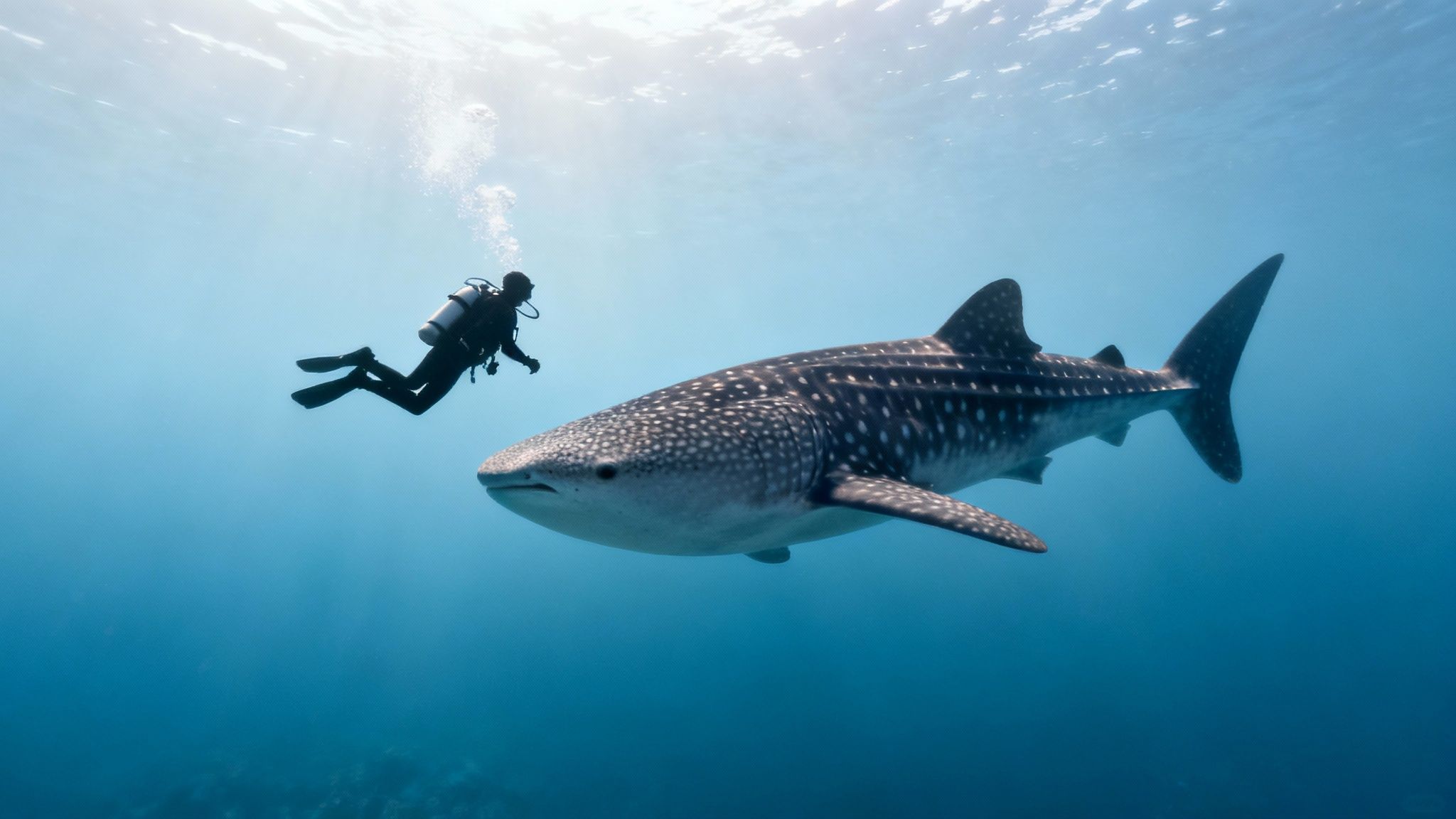
There's nothing quite like the moment a whale shark glides into view. It’s pure magic, and it’s really easy to get swept up in the excitement. But this is exactly when we, as divers and snorkelers, need to be at our best. How we behave in those few precious minutes has a massive impact on these gentle giants.
Being a respectful guest in their world is the only way to operate. The goal is simple: observe, don't interact. Your guide will give you a full briefing before you ever hit the water, but the main rules are straightforward and come from a place of respect.
Remember, you are a visitor in the whale shark's world. A passive and respectful presence is the best way to ensure the animal remains comfortable and the encounter lasts as long as possible.
This approach doesn't just protect the sharks; it makes the whole experience better for everyone lucky enough to be in the water.
Whale Shark Interaction Checklist
To make it easy, here are the absolute must-know dos and don'ts for any whale shark encounter. Think of them as the "rules of the road" for swimming alongside the biggest fish in the sea.
- Do Keep Your Distance: This is the big one. Always stay at least 15 feet (about 5 meters) away from the whale shark. Never, ever cut off its path or swim directly in front of it. Give it space to move freely.
- Don't Ever Touch: A whale shark's skin is surprisingly sensitive and has a protective mucus layer. Touching them can cause stress and strip away this crucial barrier, making them susceptible to infections. Just don't do it.
- Do Limit Your Time: Keep the encounter relatively brief. Hanging around for too long can interrupt their natural feeding, migrating, or resting behaviors.
- Don't Use Flash Photography: The sudden, bright flash from a camera can easily startle or disorient a whale shark. Natural light is all you need to capture incredible photos and videos.
On top of these shark-specific rules, always follow essential snorkeling safety tips to ensure you have a safe and amazing time. Following these simple guidelines helps ensure these beautiful creatures will continue to cruise through Kona's waters for many years to come.
Guaranteed Epic Encounters in Kona
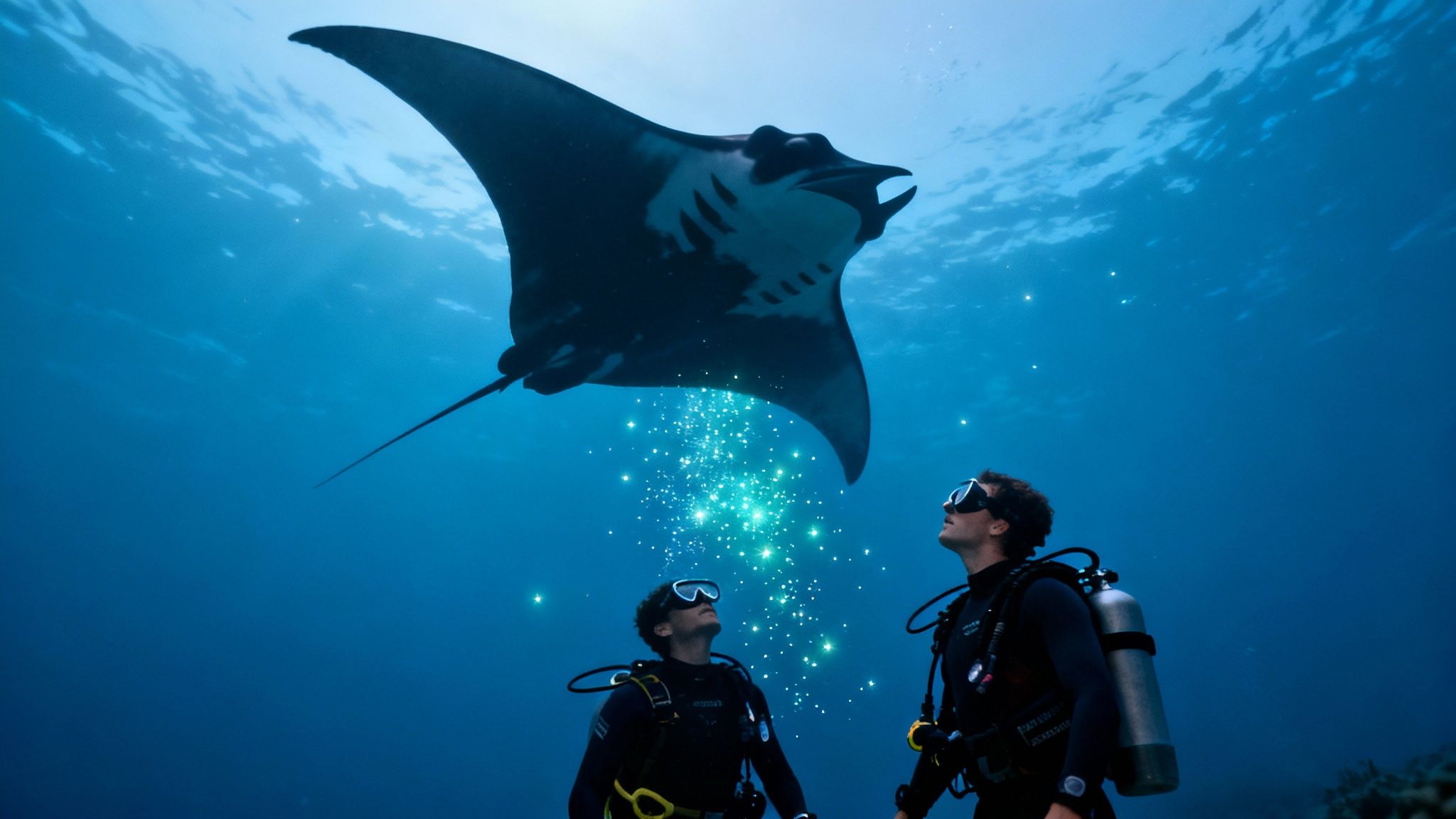
While spotting a whale shark adds a thrilling, unpredictable element to any dive trip, the underwater world of Kona is famous for experiences that are consistently spectacular. Think of a whale shark as an incredible bonus, but the main events here? They’re guaranteed to be unforgettable. This is what truly makes scuba diving the Big Island a world-class adventure.
So, instead of just crossing your fingers for a lucky, once-in-a-lifetime encounter, you can actually plan for mind-blowing dives that happen every single week. And trust me, these aren't just consolation prizes; they are bucket-list dives that draw people from all corners of the globe.
The World-Famous Manta Ray Night Dive
First up is the legendary Manta Ray Night Dive, an experience you can only find right here in Kona. Picture this: you’re kneeling on the dark ocean floor as giant, gentle manta rays swoop and glide inches above your head. They're drawn in by the plankton that flock to our dive lights, performing a surreal, silent underwater ballet just for you.
This isn't just a dive; it's a profound, almost spiritual connection with one of the ocean's most graceful animals. It’s an evening you won’t soon forget.
Journey Into the Abyss: The Blackwater Dive
For the truly adventurous divers out there, the Kona Blackwater Dive is a journey into another dimension. You'll drift at night over thousands of feet of water, suspended in the deep, dark ocean while witnessing one of the largest migrations on Earth. Bizarre and beautiful creatures, many of them bioluminescent, rise from the abyss to feed right before your eyes.
It’s an otherworldly experience that reveals a side of the ocean very few people ever get to see.
The thrill of a potential whale shark encounter is special, but Kona’s waters are teeming with life. For those looking to explore more, check out the top snorkeling spots in Kona, Hawaii.
And while whale sharks are a rare prize, other megafauna are far more predictable. Humpback whales, for instance, are a regular sight in the winter. You can learn more in our guide to the best whale watching tours in Kona.
Your Kona Whale Shark Questions Answered
So, you're dreaming of seeing a whale shark off the Kona coast? It's an incredible thought, and you probably have a few questions rolling around. Let's get them answered so you know exactly what to expect.
Is There a Whale Shark "Season" in Kona?
Not really. This is one of the most common questions we get, and the answer surprises a lot of people. Unlike other spots around the globe where whale sharks show up like clockwork for a feeding frenzy, Kona's encounters are totally opportunistic.
They can pop up any day of the year. It really comes down to being in the right place at the right time, which means the more time you spend out on the water, the better your chances are. It's all about luck, not the calendar.
Can I See Them While Snorkeling?
Absolutely! In fact, many of the most magical encounters happen right at the surface. Whale sharks are filter feeders, and they often cruise slowly near the top of the water column to slurp up plankton.
Quite often, we'll spot one during a surface interval between dives. When that happens, it’s a perfect chance for everyone—divers and snorkelers alike—to quietly slip into the water and get a look. As long as we keep a respectful distance, it's an amazing opportunity.
Honestly, some of the best whale shark moments happen just like that, completely out of the blue. Being ready to go at a moment's notice can turn a regular day on the boat into the memory of a lifetime.
How Big Are the Whale Sharks Around Here?
The whale sharks we typically see cruising through Hawaiian waters are juvenile males. Think of them as the teenagers of the whale shark world.
They usually measure in at a very respectable 15 to 25 feet long. While the species can get truly massive—growing up to 60 feet—the ones we see around Kona are these younger guys. Researchers are still piecing together the puzzle of their journey across the vast Pacific.
What Should I Do If I Get a Photo of a Whale Shark?
If you hit the jackpot and manage to get some photos or video, first, celebrate! Then, try your best to get a clear shot of the animal's left side, right behind the gills. That unique pattern of spots is their version of a fingerprint.
Scientists use these "fingerprint" photos to identify individual sharks. You can be a huge help by submitting your sighting and pictures online to the Hawaiʻi Uncharted Research Collective (HURC). Every single photo you contribute adds a valuable piece to the puzzle, helping researchers protect these gentle giants.