
Ask any seasoned diver what comes to mind when they hear "Kona," and you'll get a few key answers. In short, Kona is a world-class dive destination known for three unforgettable experiences: the legendary manta ray night dive, a dramatic volcanic underwater landscape full of lava tubes and arches, and an absolutely staggering amount of marine life.
It's this unique combination that puts Kona on just about every diver's bucket list.
Why Kona’s Underwater World Is So Famous
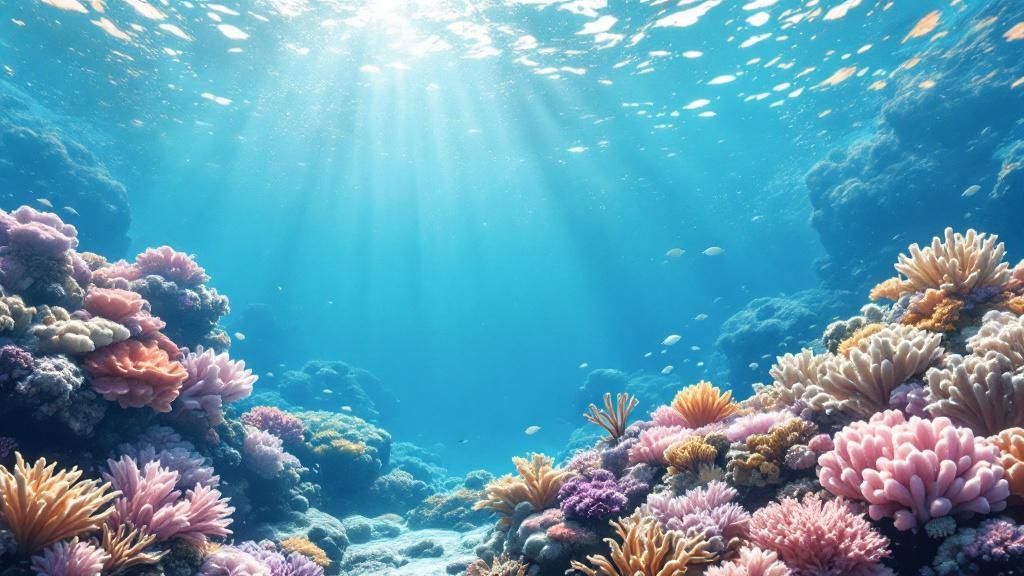
The waters off the Kona coast are a diver's dream, and it's no accident. We have the massive volcanoes of Mauna Loa and Hualalai to thank for sheltering this side of the island from the powerful trade winds. This natural barrier creates consistently calm, clear conditions, often with visibility pushing past 100 feet. It’s the perfect stage for exploring a one-of-a-kind underwater world.
But what really sets Kona apart is the marriage of its fiery geology and its thriving ocean life. The island’s volcanic past didn't just shape the land; it sculpted a spectacular underwater playground. We're talking ancient lava tubes, massive archways, and intricate caverns, all now encrusted with vibrant coral.
A Paradise for Divers and Snorkelers
This dramatic topography has become the perfect home for a mind-boggling array of marine creatures. From the gentle giants of the sea to the tiniest, most colorful reef fish, Kona delivers unforgettable encounters no matter your experience level.
Here’s a quick rundown of what defines the Kona diving experience:
- The Manta Ray Night Dive: Often called an "underwater ballet," this is where giant manta rays glide and swoop through the beams of dive lights, feeding on plankton in a truly mesmerizing spectacle.
- Volcanic Formations: You get to explore actual lava tubes, swim-throughs, and arches forged by ancient lava flows. It’s like navigating an underwater sculpture garden created by a volcano.
- Abundant Marine Life: The reefs here are buzzing with life. We’re talking over 400 species of fish, our beloved green sea turtles (honu), playful spinner dolphins, and, if you're here in the winter, migrating humpback whales.
To give you a better idea of what awaits, here's a quick look at Kona's main attractions.
Kona's Top Underwater Attractions at a Glance
| Attraction | What Makes It Famous | Best For |
|---|---|---|
| Manta Ray Night Dive | Up-close encounters with giant, graceful manta rays feeding at night. A true bucket-list dive. | Thrill-seekers, photographers, and anyone wanting a unique wildlife experience. |
| Volcanic Topography | Exploring lava tubes, arches, and swim-throughs created by ancient lava flows. | Adventurous divers who love exploring unique underwater structures. |
| Rich Marine Biodiversity | Healthy coral reefs teeming with over 400 fish species, turtles, eels, and dolphins. | All divers and snorkelers, from beginners to seasoned pros. |
| Blackwater Dives | Encountering bizarre and rare bioluminescent creatures from the deep that migrate vertically at night. | Advanced divers looking for a truly unique, otherworldly experience. |
This guide is your deep dive into each of these incredible features. We'll give you a clear picture of what makes Kona diving an adventure you’ll never forget.
Whether you're planning your very first trip or you're a seasoned pro coming back for more, Kona’s underwater world always has another secret to share.
The Unforgettable Manta Ray Night Dive
If you ask anyone what Kona is famous for underwater, one answer always surfaces first: the manta ray night dive. This isn't just another dive on the logbook; it's a world-famous spectacle. It’s the kind of mesmerizing, bucket-list experience that brings divers and snorkelers to our shores from all over the globe. Honestly, it's a genuine, once-in-a-lifetime encounter.
Picture this: you descend into the warm, dark Pacific. Your guide leads you to a sandy spot on the ocean floor, where you and the other divers settle in a circle and point your dive lights straight up. Together, these beams create a massive column of light, attracting swarms of plankton—the mantas' favorite meal.
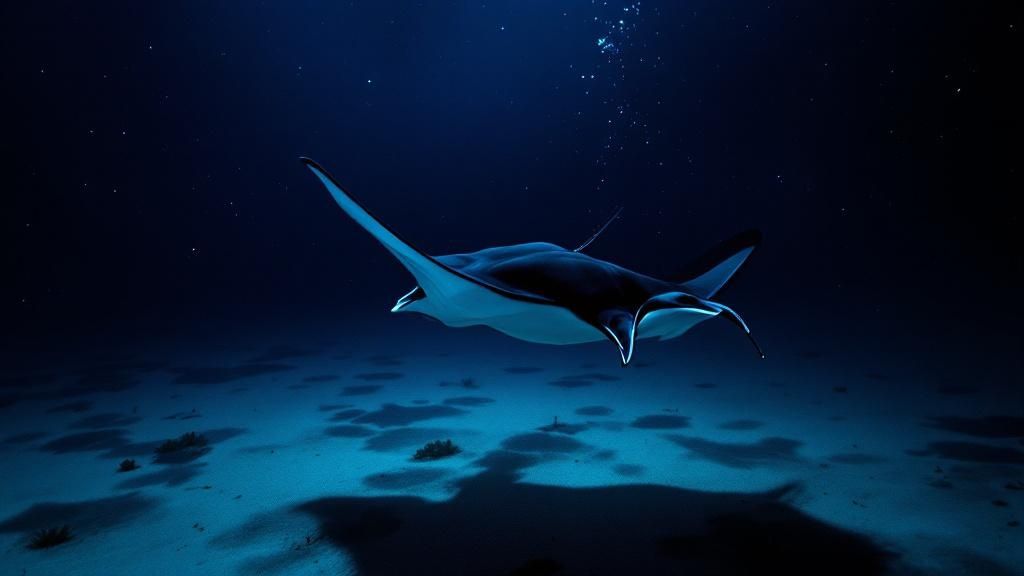
And then, the show begins. Huge, graceful shadows emerge from the deep, gliding effortlessly into the light. These gentle giants, with wingspans that can stretch up to a massive 23 feet, perform an incredible underwater ballet right over your head. They swoop and barrel-roll just inches away, feeding on the plankton concentrated in the light.
What Makes This Experience So Special?
The Kona coast is known worldwide for this incredible event. It's a unique brand of ecotourism that draws people from every corner of the planet. On any given night, it’s not uncommon to see 10-20 manta rays feeding together in a beautiful, chaotic dance. This nightly ritual gives you a rare opportunity to see them up close, behaving naturally in their own environment.
What really makes the Kona manta dive exceptional is its reliability. While you can never guarantee a wildlife sighting, this dive has an unbelievably high success rate. Why? Because the mantas have learned to return to these same "feeding stations" night after night. That consistency is exactly why Kona is considered the single best place on Earth for this experience.
This isn’t just about observing a marine animal. It’s about being invited into their world for a short, magical time. The sheer size and elegance of these creatures, combined with the quiet of the night ocean, creates a feeling of awe that stays with you long after you’ve surfaced.
Choosing a Responsible Operator
The dive's immense popularity also means we have a huge responsibility. Manta rays are covered in a protective mucus layer, and even a simple touch from a human hand can damage it and cause them serious harm. That’s why it’s so important to choose an operator who is committed to eco-friendly, sustainable practices. The health of these magnificent animals depends on it.
At Kona Honu Divers, the safety and conservation of the mantas are our top priorities. Our experienced guides make sure every single diver understands the "no-touch" rules and how to observe respectfully. We’ve been guiding these tours for years, and our deep-seated passion for the ocean's health shines through on every trip. If you’re wondering when to plan your adventure, take a look at our guide on when to dive with manta rays in Kona.
Ready to witness the underwater ballet for yourself? You can book your unforgettable manta ray dive tour here.
Exploring Volcanic Landscapes Beneath the Waves
While the incredible wildlife often steals the spotlight, you can't forget what makes Kona's underwater world so special in the first place: its dramatic volcanic geology. The same fiery forces that forged the Hawaiian Islands also sculpted an absolutely astonishing submarine landscape. Diving here isn’t just about seeing fish; it’s about exploring a submerged world of ancient lava tubes, majestic arches, and intricate, coral-encrusted caverns.
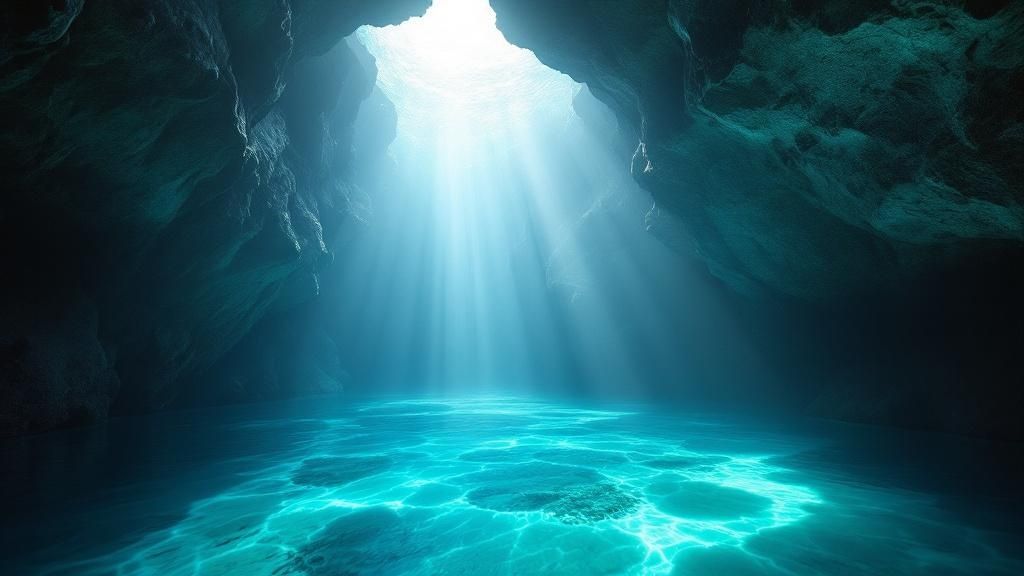
Imagine the thrill of descending along a wall that was once a flowing river of molten rock. You get to swim through tunnels that lava carved out thousands of years ago, navigating a natural architecture that feels both powerful and ancient. And these formations aren't just empty structures; they’re a playground for divers and a perfect sanctuary for all kinds of marine life.
A Playground Forged by Fire
These volcanic features create a complex, dynamic environment that turns every single dive into a genuine adventure. Each reef has its own personality. The constant geological activity that shapes the islands is still a very real part of its story, which you can see firsthand in the recent Mauna Loa volcano eruption in Hawaii.
These unique structures also provide ideal hiding spots and homes for countless creatures.
- Lava Tubes and Swim-Throughs: These are hollow conduits where lava once flowed freely. Divers can carefully navigate these tunnels, often finding them decorated with colorful sponges and home to reclusive critters.
- Arches and Pinnacles: Massive, freestanding structures rise from the seafloor, creating dramatic backdrops for your dive. They act as cleaning stations for larger animals and reference points for schools of fish.
- Caverns and Overhangs: These shadowy spaces are perfect for spotting nocturnal animals hiding during the day. Look closely, and you might find sleeping whitetip reef sharks, a shy octopus, or ornate spiny lobsters tucked away.
Navigating Kona's underwater topography is like exploring a submerged fantasy world. Every turn can reveal a new, breathtaking formation or a creature perfectly camouflaged within a volcanic crevice.
This geological wonderland is what makes every dive site so distinct. Instead of just flat reefs, you get to experience a three-dimensional environment that really encourages exploration and discovery. The way light and shadow play through the arches and caverns creates stunning photo opportunities and an atmosphere of mystery you won't find anywhere else.
This unique underwater landscape is a key reason what Kona is famous for underwater goes far beyond its famous animals. It’s the stage upon which all the marine drama unfolds. Exploring these stunning geological features is a core part of the adventure on many of our Kona diving tours, offering a constant sense of discovery for divers of all skill levels.
Kona’s Vibrant Reefs and Abundant Marine Life
The volcanic formations are just the beginning. The real showstopper here in Kona is what lies beneath the waves—a living, breathing kaleidoscope of color that blankets the coastline. These sprawling coral reefs are absolutely jam-packed with life, turning every single dive into an exploration of one of the most unique underwater ecosystems on the planet.
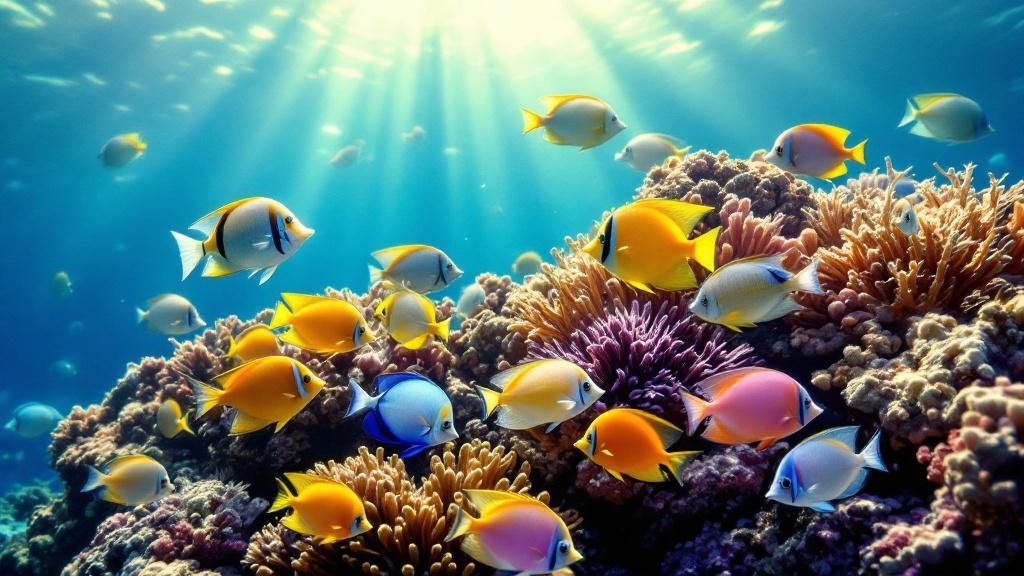
On any given dive, you're likely to bump into some of Hawaii's most iconic residents. Seeing a beloved green sea turtle, or honu, is always a treat. They’re a common sight here, either resting peacefully on the reef or gliding by with ancient grace. Sharing the water with these gentle giants is a moment you won’t soon forget.
A Living Kaleidoscope of Fish
The sheer number and variety of fish can be staggering. You’ll see massive schools of brilliant yellow tangs moving like a single golden cloud across the reef. Listen closely, and you might even hear the crunching sound of parrotfish munching on coral—they’re the ones responsible for creating Hawaii’s famous white sand beaches!
Kona's reefs are part of a massive ecosystem that supports over 1,500 species of marine life. Around here, that translates to more than 400 species of fish, from dazzling angelfish and butterflyfish to countless types of wrasse. These reefs are resilient, but they've faced serious threats, like the devastating mass coral bleaching event in 2016. It’s a stark reminder of how fragile this paradise is and why responsible diving is so critical.
Unique Residents of the Reef
What really sets diving in Kona apart is the huge number of endemic species—creatures you literally can't find anywhere else on Earth. When you're down there, keep an eye out for these special Hawaiian locals:
- Hawaiian Cleaner Wrasse: These little guys run "cleaning stations" where bigger fish, eels, and even turtles line up to get parasites nibbled off. It's like a spa day for the reef inhabitants.
- Potter's Angelfish: A favorite among underwater photographers, this brilliant orange and blue fish is absolutely stunning against the coral.
- Ornate Butterflyfish: With its striking yellow and black pattern, this fish is always a joy to spot as it flits between coral heads.
If you’re hoping to capture these amazing creatures, having the best camera lens for wildlife photography can make all the difference. These unique species make for some pretty incredible photo subjects.
The health of Kona's reefs is a testament to both their natural resilience and ongoing conservation efforts. Every diver has a role to play in protecting this underwater sanctuary by practicing good buoyancy, never touching the coral, and leaving no trace.
Here at Kona Honu Divers, our passion for the ocean is what drives our commitment to conservation. Our experienced guides don't just point out the incredible marine life; they share insights into the reef's delicate balance. We truly believe education is the key to preservation, ensuring Kona’s underwater world stays vibrant for many years to come.
Pelagic Encounters with Dolphins and Whales
Aside from the incredible reefs, the deep, open blue off the Kona coast is where the *really* big magic happens. Exploring the underwater lava tubes and arches is one thing, but you never want to forget to turn your head and look out into the blue. You just never know what might cruise by.
One of the most unforgettable sights is our resident pod of spinner dolphins. These guys are pure energy, famous for their spectacular aerial leaps and spins. Seeing them slicing through the water alongside the boat is one of those moments that just sticks with you, adding a whole other layer of awesome to your dive day.
Dolphins, Whales, and Other Giants
The Kona coast is home to a special, genetically unique population of spinner dolphins that live a pretty predictable life. They head out to the deep ocean at night to hunt and then cruise back into our calm, sheltered bays like Kealakekua and Honaunau to rest and play during the day. It’s a pretty cool rhythm they’ve got going on.
Then, winter rolls around—usually from December to March—and the whole soundscape of our dives changes. This is when the humpback whales arrive from Alaska to breed and give birth. It's not every day you see one on a dive (that’s the holy grail!), but hearing their haunting, complex songs reverberating through your chest is an experience you will never forget. Their sheer presence reminds you just how wild these waters are. If you get hooked on whale watching, there are amazing encounters all over the world; this Whale Watching Tasmania guide offers a look at a completely different migration.
What makes Kona diving so addictive is that feeling of possibility. It’s knowing that on any given dive, a pod of dolphins could show up, you might hear the song of a distant whale, or you could even get a surprise visit from a whale shark. The big blue always has a secret or two.
These incredible encounters are what make Kona's underwater world so vibrant and diverse. The more you learn about these amazing animals, the richer your experience becomes. To get a closer look at our local cetaceans, check out our guide on diving with the dolphins of Kona, Hawaii.
The Thrilling Blackwater Dive Experience
For the truly adventurous diver, there’s an experience that goes way beyond the reef. If you’ve done the manta dive and explored the lava tubes and still want more, the blackwater dive is your next frontier. This isn’t just another night dive; it’s a journey into the abyss.
Picture this: you're tethered to the boat, floating in the dark over thousands of feet of inky black water. Below you? Nothing but the deep blue. As your senses heighten, you're about to witness one of the planet's largest, yet most hidden, migrations. Every single night, a universe of strange, wonderful, and often glowing creatures travels up from the crushing depths to feed near the surface.
A Journey into the Deep
This isn't your typical fish-ID dive. The vertical migration brings up a cast of characters that look like they belong on another planet. You’re not looking for the usual reef residents; you're peering into the secret life of the deep sea, and the beam of your dive light is the only thing illuminating this alien world.
So, what might float by?
- Larval Creatures: Many of the fish and critters you see on the reef look completely unrecognizable in their baby stages. You could spot tiny, transparent larval lionfish, octopuses no bigger than your thumbnail, or other miniature versions of familiar animals.
- Bizarre Jellies: The sheer variety of gelatinous life is mind-blowing. You might encounter alien-like ctenophores (comb jellies) that pulse with rainbow-colored lights or colonial siphonophores that can stretch for dozens of feet.
- Bioluminescent Organisms: This is where the real magic happens. So many of these deep-sea visitors create their own light. From glowing squid to sparkling pyrosomes, the darkness is constantly interrupted by a living, moving light show.
A blackwater dive is a surreal, almost meditative experience. It’s about being suspended in the void, waiting patiently for the mysteries of the ocean to reveal themselves to you, one tiny creature at a time. It’s a connection to a part of our planet that very few people will ever see.
This is, without a doubt, a must-do for experienced divers looking for their next great story. It's the ultimate adventure for those who feel they've seen it all and are hungry for something completely different. Be warned, it demands solid buoyancy control and a calm mind—after all, you really are diving in the open ocean, in the dark.
This incredible experience is one of the most advanced dives we offer here in Kona. Ready to have your mind bent? You can learn more about booking a Blackwater Dive or check out our other advanced dive tours.
Frequently Asked Questions About Diving in Kona
Got a few questions before you book your adventure? We get it. Here are some quick answers to the things we get asked most often about exploring Kona's incredible underwater world.
What is the Best Time of Year to Dive in Kona?
Honestly, any time is a good time. The big volcanic mountains on the island act as a natural shield for the Kona coast, which means we get stunningly calm and clear conditions almost all year long.
That said, if you have a special interest, you might prefer a certain season. For anyone hoping to hear the magical songs of humpback whales echoing through the water on their dive, you’ll want to book your trip during the winter months, from December to March.
What Are the Water Temperatures Like?
You can leave the drysuit at home! Kona's waters are beautiful and warm year-round.
In the winter, the water dips to a comfortable 75°F (24°C). By late summer, it warms up to a balmy 81°F (27°C). For most people, a standard 3mm or 5mm wetsuit is perfect for staying comfortable on any dive.
Do I Need to Be a Certified Diver to See the Manta Rays?
Nope, you don't! The manta ray experience is amazing for everyone, whether you're a diver or not.
Certified divers get to settle on the sandy bottom and watch the show from below, but snorkelers get an equally breathtaking view. You'll float on the surface and see these gentle giants glide and barrel roll just inches beneath you. It’s an unforgettable sight, no certification required.
Is Diving in Kona Safe?
Absolutely. Kona has a well-earned reputation for being one of the safest and best-regulated diving destinations in the world.
When you dive with a top-rated, experienced operator like Kona Honu Divers, you're putting your trust in professionals who live and breathe safety. We take care of everything—from thorough pre-dive briefings to expert guidance in the water—so you can relax and focus on the incredible marine life. Your well-being is always our top priority.
Here at Kona Honu Divers, we're obsessed with sharing the magic of our underwater home. Whether you're dreaming of your first reef exploration or gearing up for an advanced blackwater expedition, we've got the perfect adventure waiting for you.
Check out our full lineup of scuba diving tours on the Big Island and get your trip on the books!