
If you're looking for the straight answer, the Big Island's Kona Coast is hands-down the best place to scuba dive in Hawaii. While Maui has its dramatic walls and Oahu is a wreck diver's playground, Kona's blend of world-class signature dives, calm waters shielded by massive volcanoes, and mind-blowing biodiversity gives it the clear win.
Comparing The Top Hawaiian Islands For Scuba diving
Picking the "best" Hawaiian island for diving really comes down to what you're looking for. Each island has its own underwater personality. You've got the historic wrecks off Oahu, the sheer volcanic walls of Maui, and the wild, remote diving off Kauai.
Even with all that competition, one island consistently tops the list for its sheer variety, easy access, and unforgettable marine life.
The Big Island, specifically the Kona Coast, is widely considered Hawaii’s premier diving destination. The number of dive sites is staggering, and the marine life is just on another level. This is all thanks to its unique geography—the massive volcanoes of Mauna Loa and Hualalai block the trade winds, leaving the Kona side with calm, clear waters perfect for diving almost any day of the year.
Of course, the star of the show is the world-famous Manta Ray Night Dive, an experience that belongs on every diver's bucket list. But Kona is so much more than that. With over 200 distinct dive sites, you can explore everything from otherworldly lava tubes to vibrant coral gardens teeming with life. For more deep dives into Hawaiian diving, ScubaDiving.com is a fantastic resource.
Scuba diving in Hawaii At a Glance
To give you a clearer picture of what each island brings to the table, I've put together a quick comparison. Think of this as the highlight reel for each major diving destination in Hawaii.
| Island | Signature Experience | Best For | Typical Visibility |
|---|---|---|---|
| The Big Island (Kona) | Manta Ray & Blackwater Night Dives | Unmatched Biodiversity & Unique Encounters | 80-100+ ft |
| Maui | Molokini Crater Back Wall & Lanai Cathedrals | Dramatic Walls & Advanced Drift Dives | 70-100 ft |
| Oahu | Wreck Diving (Sea Tiger, YO-257) | Sunken History & Artificial Reefs | 50-80 ft |
| Kauai | Sheraton Caverns & Niihau Island | Untouched Reefs & Solitude | 40-70 ft |
This chart helps break down the core strengths of each island, making it easier to match your personal dive style and bucket list with the right destination. Whether you're chasing pelagics, exploring wrecks, or just want to float over pristine reefs, Hawaii has an island for you.
Why the Big Island Is the Undisputed Champion
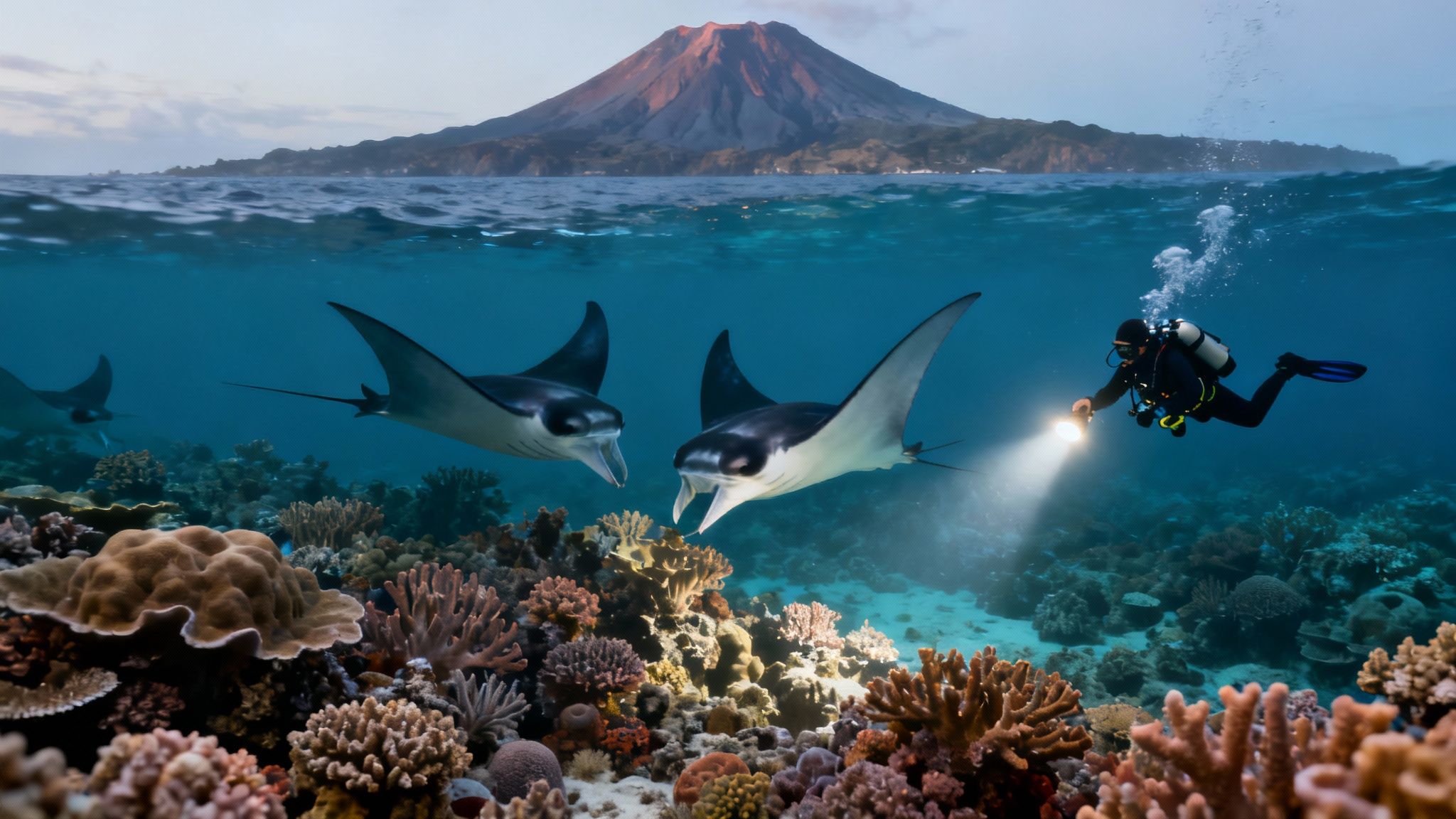
When seasoned divers talk about their ultimate bucket-list spots, the Kona Coast on the Big Island always comes up. It’s not just about having a few great dive sites; it’s about offering underwater spectacles that are genuinely world-famous and simply can’t be found anywhere else. This is what truly sets it apart from the rest.
The island’s unique geography is its secret weapon. The massive volcanoes of Mauna Loa and Hualalai act as a natural barrier, shielding the entire western Kona coast from the gusty trade winds. The result? Exceptionally calm, clear, and reliable diving conditions, pretty much any day of the year. This makes it a fantastic destination for divers of all abilities.
This protected environment allows fragile ecosystems to thrive. The underwater world here is a dramatic landscape carved by ancient lava flows, with intricate lava tubes, dramatic archways, and vibrant, sprawling coral gardens that are teeming with life.
Signature Dives That Define Excellence
Kona's reputation is built on two specific night dives that are so extraordinary they draw people from all over the planet. These aren't just dives; they're unforgettable encounters.
First, you have the legendary Manta Ray Night Dive, which feels like an underwater ballet. After the sun goes down, dive operators set up bright lights in the water. This attracts swarms of plankton, which in turn brings in dozens of majestic manta rays. They swoop, glide, and barrel roll through the light beams to feed, often passing just inches from your mask.
Then, for those who want something truly different, there's the Kona Blackwater Dive. This is a journey into the deep ocean abyss. Taking place miles offshore in thousands of feet of water, you’re tethered to the boat as you drift at about 50 feet. Here, you get to witness the largest migration on Earth as bizarre, bioluminescent creatures rise from the depths under the cover of night. It’s an experience that’s completely otherworldly.
Beyond the Night Dives
While the night dives are showstoppers, Kona's daytime diving is just as impressive. There are so many accessible sites that you could dive for weeks and never get bored.
The reef health along the Kona coast is remarkable. It supports a staggering amount of marine life, including a huge number of species you'll only find in Hawaiian waters.
- Diverse Marine Life: It’s common to see Hawaiian green sea turtles, pods of spinner dolphins, whitetip reef sharks, and a kaleidoscope of endemic reef fish on almost every dive.
- Varied Topography: The underwater terrain is always interesting. You can explore shallow, sunny coral gardens perfect for beginners or navigate deep lava tubes and caverns if you’re a more advanced diver.
- Year-Round Diving: Thanks to that protected coastline, the conditions are almost always fantastic, with visibility that often pushes past 100 feet.
The combination of unique, world-famous night dives and consistently excellent conditions for daytime reef exploration is what makes Big Island scuba diving an experience without equal. It delivers on every front, from thrilling adventures to serene reef tours.
For divers looking to push their limits, there are plenty of opportunities for deeper, more challenging dives at advanced sites. These trips allow certified divers to explore more remote and demanding underwater environments, far from the usual spots.
Ultimately, having top-tier operators who know the area inside and out makes all the difference. Their local expertise and commitment to safety ensure every dive is professional, responsible, and absolutely unforgettable.
Maui: A Contender for Dramatic Underwater Landscapes
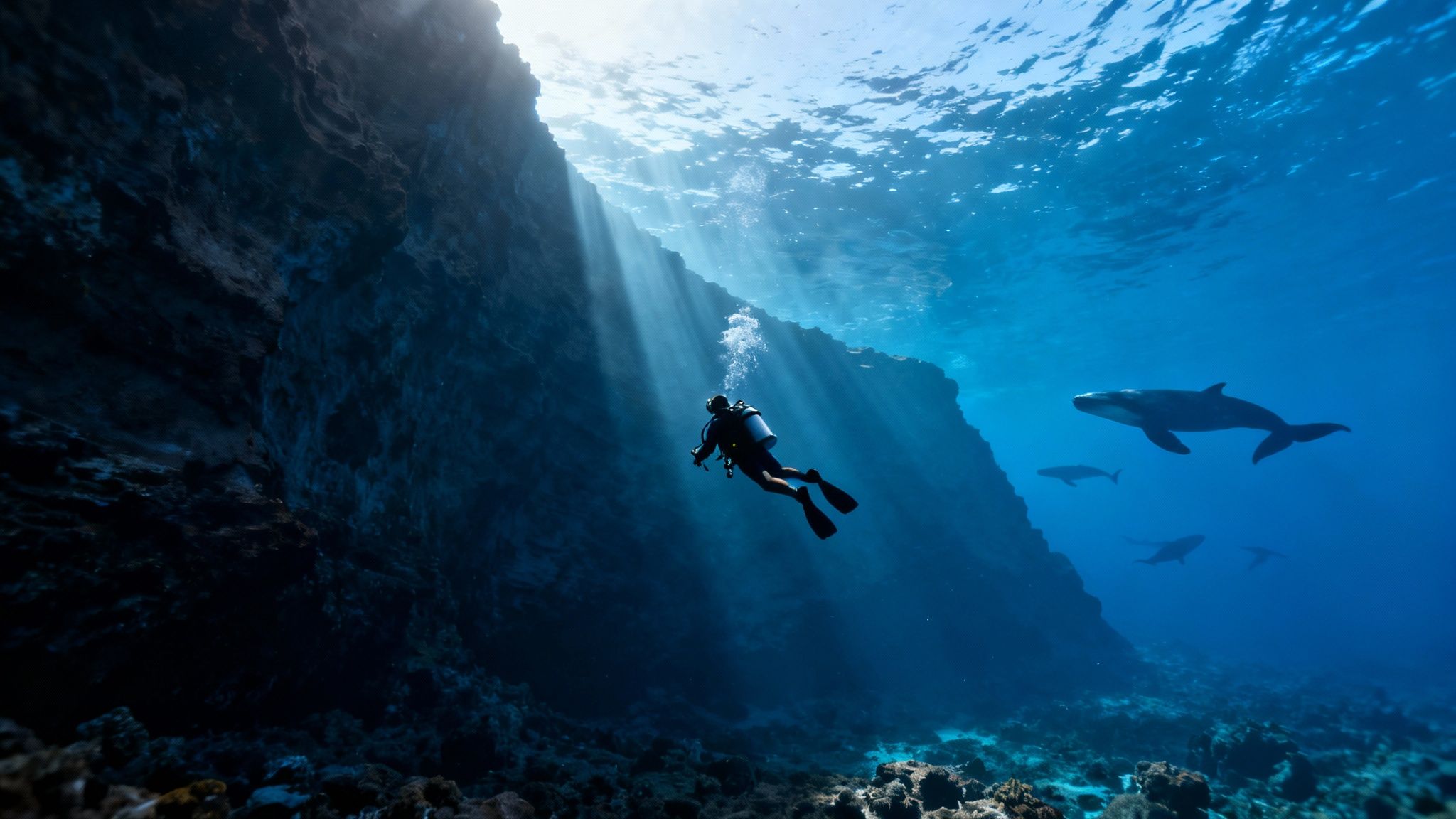
If the Big Island is all about rare marine life encounters, then Maui is its counterpart for breathtaking underwater scenery. The island carves out its own distinct identity in Hawaii's dive scene, attracting divers who live for the thrill of dramatic landscapes and challenging drift dives. It's a different flavor of diving, but one that is every bit as compelling.
You'll find that Maui’s dive conditions are often more dynamic than what you get on Kona’s protected coast. Its sites are more exposed to open-ocean swells and the steady trade winds, which can certainly make for a more adventurous day on the water. For experienced divers, this is a huge part of the appeal. Tackling these conditions rewards you with spectacular geological formations and big animal fly-bys that you won't soon forget.
Molokini Crater and the Lanai Cathedrals
When you think of Maui diving, you think of Molokini Crater. This partially submerged volcanic caldera is the island’s crown jewel. The inside of the crater is a calm, protected sanctuary—basically a natural aquarium perfect for new divers. But the real magic lies on the outside.
The Molokini back wall is a legendary advanced dive. It's a sheer vertical drop that plummets over 300 feet straight into the abyss. Drifting along this wall with visibility that often pushes past 100 feet feels like you're flying alongside an underwater skyscraper. It’s an exhilarating experience.
Beyond Molokini, dive operators often make the trip over to the nearby island of Lanai to explore the famous "Cathedrals." These aren't buildings, but massive underwater lava caverns that create a sense of awe.
- Cathedral I: An enormous chamber where light streams through various openings, illuminating the water and a central "pulpit" rock. The effect is truly ethereal, like being inside a submerged church.
- Cathedral II: A bit smaller but just as stunning, this cavern offers incredible lava architecture and multiple swim-throughs where marine life loves to hang out.
For certified divers looking for raw topographic drama and the rush of open-ocean conditions, Maui is the clear winner. The one-two punch of Molokini’s back wall and the Lanai Cathedrals delivers some of the most spectacular underwater scenery in Hawaii.
Pelagic Action and Humpback Whale Songs
The exposed nature of Maui's dive sites means you have a better shot at seeing larger pelagic species. It's common to spot whitetip reef sharks patrolling the reef edges, squadrons of spotted eagle rays cruising in the current, and even the occasional gray reef shark in the deeper blue.
But the most unique part of diving in Maui happens between December and April. This is humpback whale season, when thousands of these giants arrive to breed and give birth. While actually seeing a whale underwater is the holy grail of diving—and extremely rare due to strict regulations—their presence is unmistakable. On almost every winter dive, you're surrounded by the powerful and haunting songs of male humpbacks vibrating through the water. It’s a profoundly moving experience that adds a layer of pure magic to every dive.
Oahu: Hawaii’s Premier Wreck Diving Destination
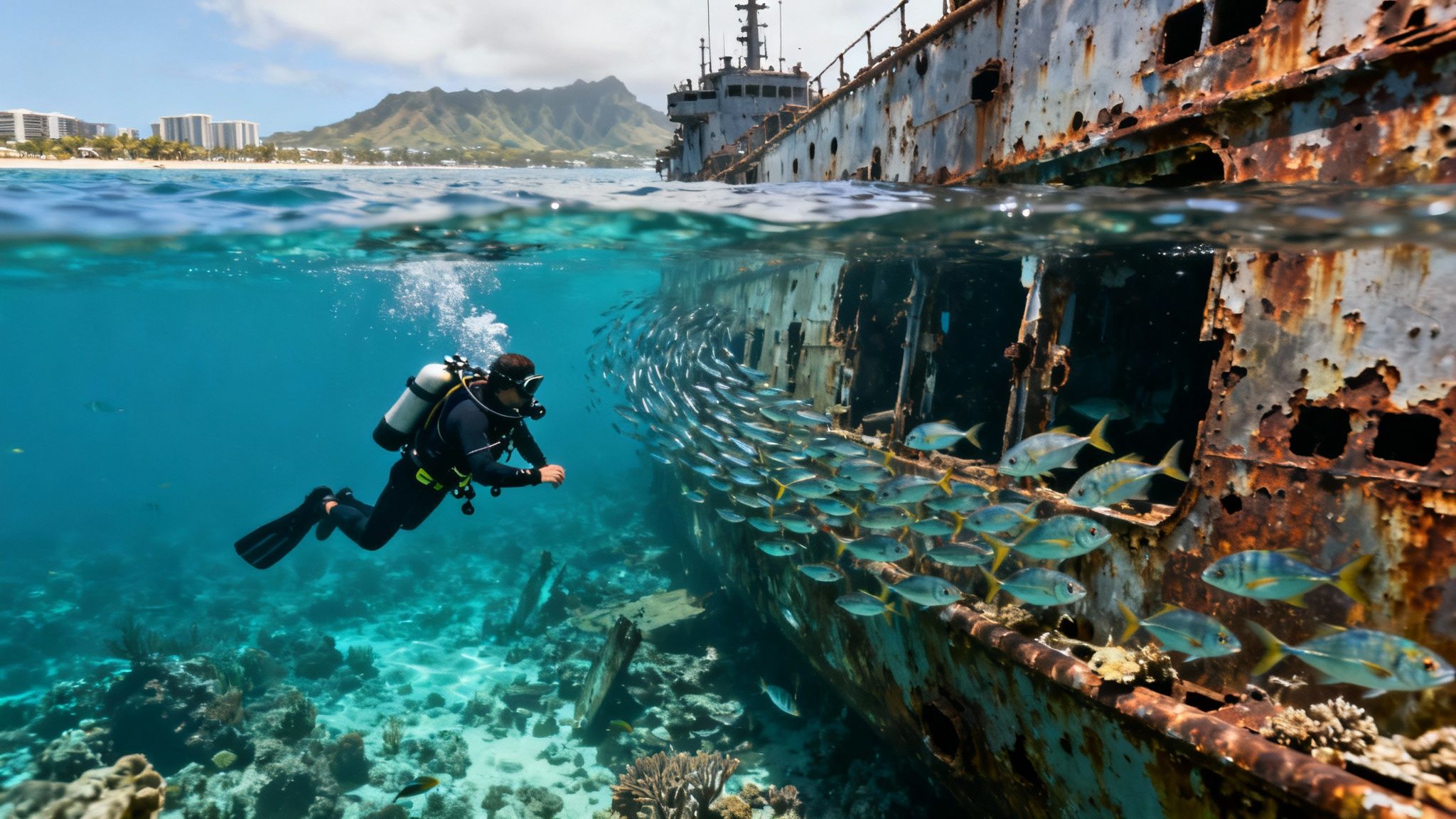
While the Big Island and Maui draw divers with their stunning natural landscapes, Oahu offers an entirely different kind of underwater adventure. It's built its reputation as the undisputed wreck diving capital of Hawaii, making it the perfect island for anyone fascinated by sunken history and the incredible artificial reefs they create.
Oahu's coastline is a veritable museum of intentionally sunken vessels and aircraft, each with a unique story to tell. Over the years, these submerged structures have blossomed into vibrant, complex ecosystems that are absolutely teeming with life.
Exploring Sunken Treasures
The island features an impressive collection of artificial reefs, providing some of the most accessible and thrilling wreck dives you'll find anywhere in the Pacific.
- The Sea Tiger: Once a trading vessel, this is one of Oahu's deepest and most popular recreational wreck dives. Resting in about 120 feet of water, its cargo holds and bridge are often buzzing with massive schools of fish.
- The YO-257: A retired Navy oiler, this wreck is a diver favorite because it sits perfectly upright. You can almost always spot whitetip reef sharks resting on the deck and giant moray eels peeking out from pipes.
- The Corsair: For a dive that feels like a trip back in time, you can explore a WWII-era Corsair fighter plane that went down offshore in 1948. It's a truly unique piece of history.
These wrecks act like magnets for marine life. It’s common to be greeted by huge schools of snapper, curious green sea turtles, and majestic eagle rays gliding effortlessly past the superstructures.
For divers whose perfect day involves penetrating a sunken ship and witnessing marine life reclaim a piece of history, Oahu is, without a doubt, the best Hawaiian island for scuba diving.
More Than Just Wrecks
Oahu’s underwater appeal doesn’t end with its famous shipwrecks. The island's Marine Life Conservation Districts are a testament to its commitment to preservation, protecting fragile ecosystems and allowing them to flourish.
These protected areas are brimming with color and life, home to over 400 species of inshore and reef fishes.
Another huge plus is pure convenience. Many of the top dive sites are just a quick boat ride from the busy hubs of Honolulu and Waikiki. This makes it incredibly easy to squeeze a world-class dive into an already packed vacation schedule. If you're planning a trip, be sure to check out our guide on the best dive shops in Oahu to find the right operator for your adventure.
Ultimately, Oahu delivers a fantastic and unique diving experience built around history, accessibility, and thriving artificial reefs.
Kauai: Serene Dives on Untouched Reefs
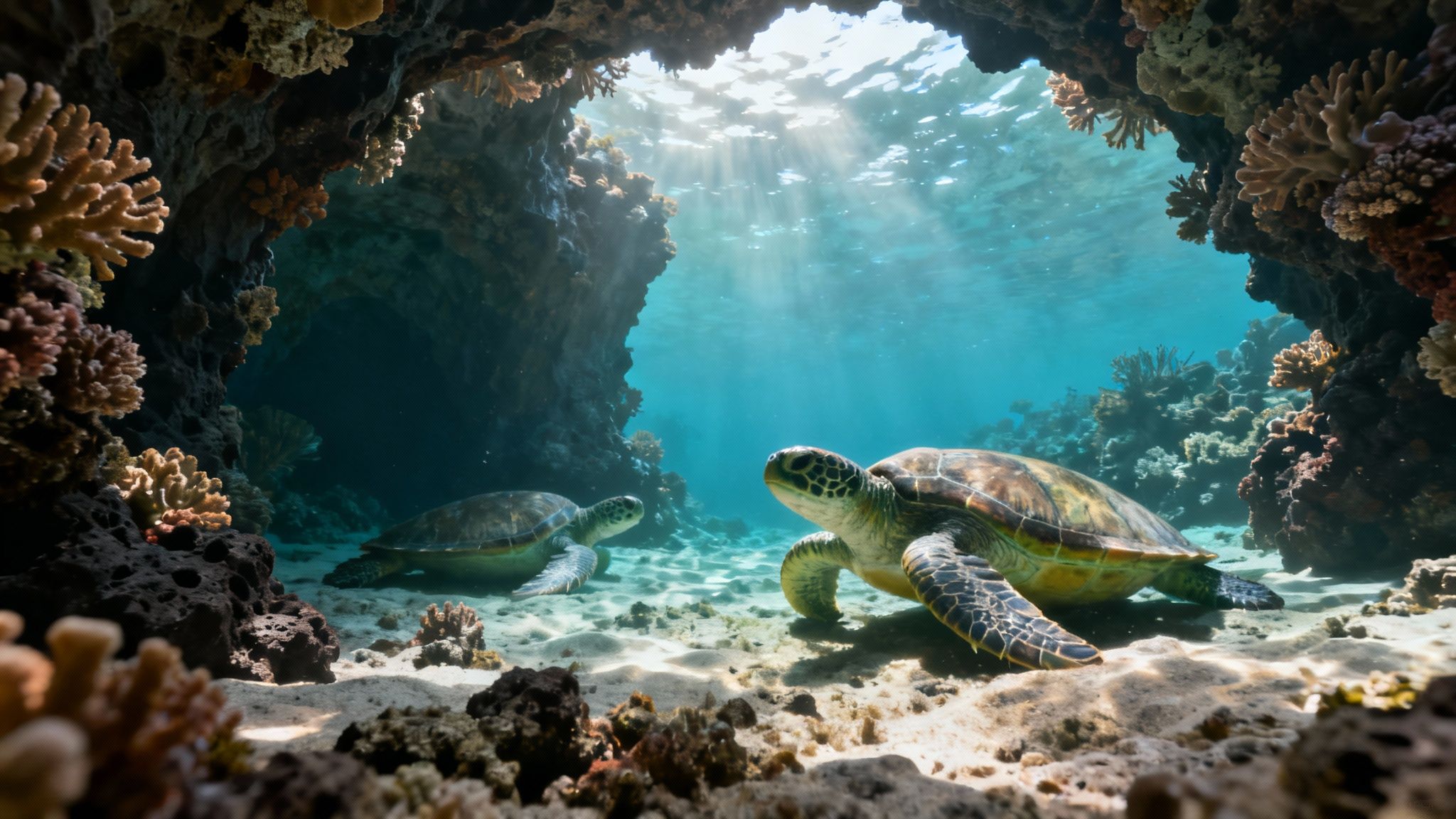
They call Kauai the "Garden Isle," and honestly, its underwater world is every bit as lush and wild as its topside. This is where you go when you want to get away from it all—to dive pristine, untouched coral reefs far from the crowds you’ll find on other islands.
Kauai serves up a quieter, more introspective kind of dive experience. It doesn't have one big, flashy signature dive like Kona's manta ray night dive, but what it offers is a different kind of magic rooted in overall reef health and an atmosphere of pure tranquility.
Signature Sites and Exclusive Adventures
The diving here is all about unique geology and thriving local marine life. Take Sheraton Caverns, for example. It's a classic Kauai site, known for its maze of ancient lava tubes and stunning archways that have become the preferred resting spot for the island’s most famous residents: Hawaiian green sea turtles.
For experienced divers looking for a truly epic adventure, there's the trip out to Niihau, the "Forbidden Isle." It's a journey, but the payoff is immense. We're talking about some of the best visibility in all of Hawaii, frequently pushing past 100 feet. The real highlight, though, is the chance to see the critically endangered Hawaiian monk seal in its natural, wild habitat—an encounter you’ll never forget.
Kauai is the perfect fit for the self-reliant diver who craves solitude. If seeing reef systems in their most natural, undisturbed state is your priority, this island makes a very strong case for being the best scuba destination in Hawaii.
Of course, all that raw beauty comes with a caveat. Kauai’s primary dive season is shorter, and its conditions can be more unpredictable than the sheltered waters of Kona. The island is more exposed to open-ocean swells, so you have to go in with a flexible mindset and be ready to adapt your dive plans.
A Haven for Turtle Lovers
There’s no question Kauai offers exceptional diving. Its rugged natural beauty and unique conditions are a huge draw for divers with a sense of adventure. The island is especially famous for its huge population of green sea turtles, making it an absolute paradise for anyone hoping to swim alongside these gentle giants. You can find out more about Kauai’s incredible marine ecosystems and see why so many divers rank it at the top.
In the end, choosing Kauai is about choosing a quieter, more personal connection with the ocean. It’s an island that rewards patience and an exploratory spirit with underwater scenes that feel genuinely wild and untouched.
Frequently Asked Questions About Diving in Hawaii
Planning a dive trip always comes with a few questions, and Hawaii is no exception. Getting a handle on the local conditions, the best seasons, and what gear you’ll need is the first step to an incredible underwater adventure.
Let's clear up some of the most common questions divers have before they take the plunge into Hawaiian waters.
What Is the Best Time of Year to Scuba Dive in Hawaii?
Honestly, there’s no bad time to dive in Hawaii, but your "best" time really depends on what you're hoping to see and experience. For the calmest seas and warmest water, you can't beat the summer months, roughly from April to October. It’s perfect for laid-back, comfortable reef exploration.
But if you're here in the winter, from December to April, you're in for a different kind of treat. This is when thousands of humpback whales show up. While you'd be incredibly lucky to see one on a dive, hearing their haunting songs echo through the water is an experience that will stick with you forever. Maui and the Big Island are prime spots for this.
Do I Need a Wetsuit to Dive in Hawaii?
Yes, you'll definitely want one. The water here is warm, but it's not quite bathtub-level tropical. Temperatures usually hover between a pleasant 75-80°F (24-27°C).
For most people, a 3mm or 5mm wetsuit is the sweet spot. It provides just enough warmth to keep you comfortable, especially if you're doing multiple dives or going a bit deeper. Plus, it offers great protection from scrapes or the occasional jellyfish.
Can I Dive in Hawaii Without a Certification?
Absolutely! If you're new to scuba and just want to give it a shot, look for a Discover Scuba Diving (DSD) program. Nearly every dive shop offers them.
You’ll get a rundown of the basics from a certified instructor in a controlled setting, and then they’ll take you on a real, shallow dive. It’s the perfect way to test the waters and see the incredible marine life without committing to a full certification course.
The sheer diversity and health of the marine ecosystems in Hawaii make every dive a worthwhile adventure. The islands offer a quality of underwater exploration that rivals many top global destinations.
Which Island Has the Clearest Water for Diving?
If crystal-clear visibility is at the top of your list, head to the Kona Coast of the Big Island. The vis here is legendary, often clearing 100 feet with ease. The massive volcanoes on the island do a fantastic job of blocking the trade winds and preventing sediment runoff, keeping the water pristine.
Maui's Molokini Crater is a close second and can offer spectacular clarity, but Kona's conditions are famously consistent across dozens of dive sites. For underwater photographers, it's a dream. Still on the fence? Explore more on whether scuba diving in Hawaii is worth it in our detailed guide.