
Picture this: you descend into a silent, brilliant blue world. Ancient volcanic lava tubes form stunning underwater cathedrals, and gardens of vibrant coral sway in the gentle currents. This isn't just a dream; this is what it's like to scuba Hawaii. It takes a tropical vacation and turns it into a genuine, bucket-list adventure where the water is warm, the visibility feels endless, and unique marine life is around every corner.
Why Scuba Diving In Hawaii Is Unforgettable
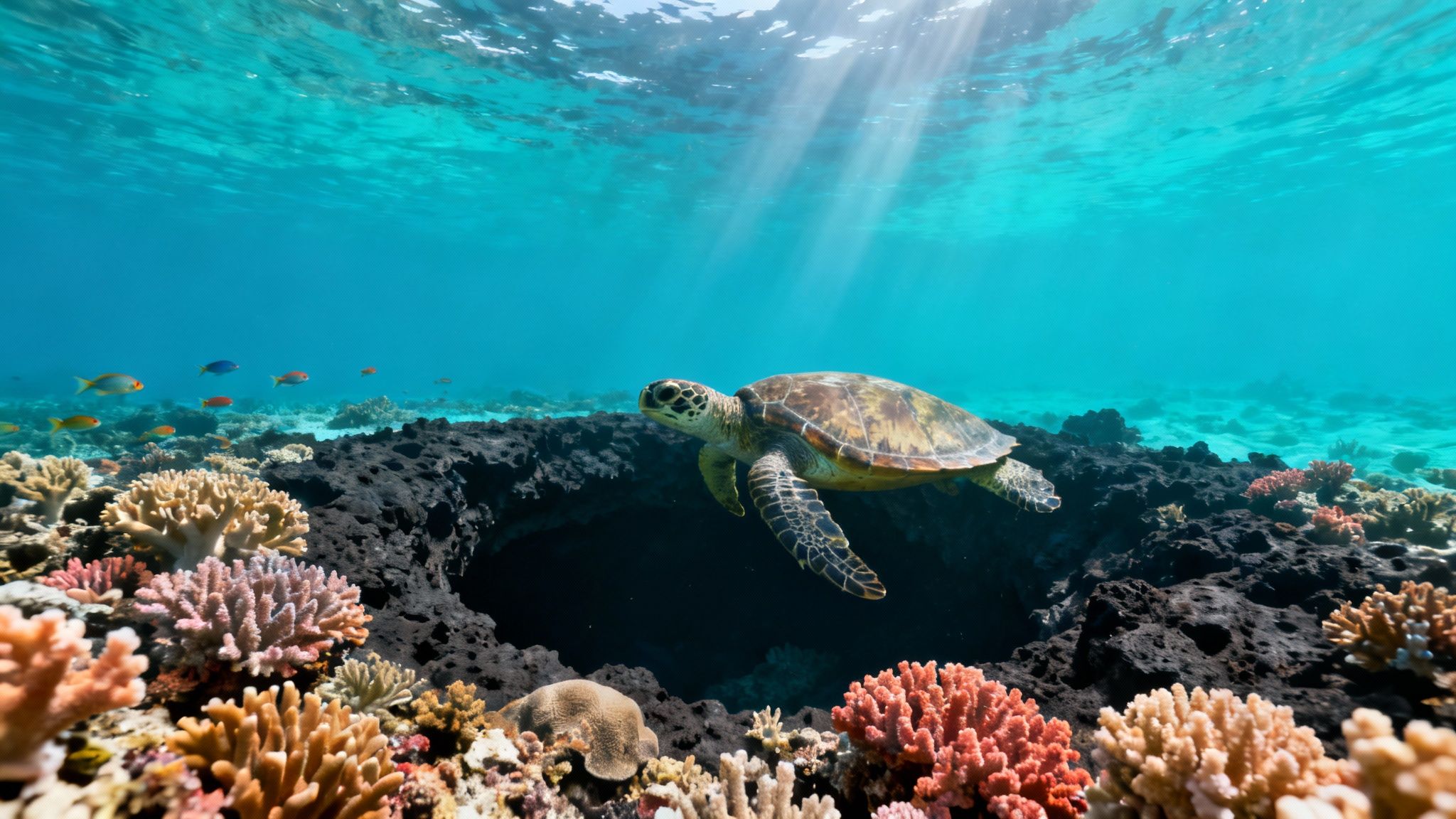
Hawaii isn’t just another pretty dive destination. Its isolation in the middle of the Pacific has fostered an incredible explosion of unique marine life. In fact, a staggering 25% of the reef fish you'll see here are endemic, which means they can't be found anywhere else on Earth. Every dive feels like a treasure hunt for species you’ve never laid eyes on before.
Beyond the rare fish, the islands' volcanic geology has created a spectacular underwater playground. You can spend your dives exploring:
- Lava Tubes and Arches: These dramatic swim-throughs, formed by ancient lava flows, are perfect hideouts for eels, lobsters, and other shy critters.
- Vibrant Coral Reefs: The islands are fringed with healthy, thriving reef systems that support a dense and diverse population of marine animals, from tiny, colorful nudibranchs to majestic green sea turtles.
- Deep Blue Encounters: The deep, clear waters surrounding the islands attract larger pelagic species like spinner dolphins, eagle rays, and even migrating humpback whales in the winter months.
To give you a quick snapshot, here’s a look at what makes Hawaiian diving so special.
Hawaii Scuba Diving At A Glance
| Attribute | Details |
|---|---|
| Endemic Species | Approximately 25% of reef fish are found only in Hawaii. |
| Underwater Topography | Volcanic formations like lava tubes, caves, and craters. |
| Water Temperature | A comfortable 75-80°F (24-27°C) year-round. |
| Visibility | Often exceeds 100 feet (30 meters), especially in Kona. |
| Signature Dives | World-famous Manta Ray Night Dive and Blackwater Dives. |
| Marine Megafauna | Manta rays, dolphins, sharks, turtles, and seasonal humpback whales. |
This combination of factors truly sets Hawaii apart on the world stage.
The Crown Jewel: The Kona Coast
While every island offers something special, the Kona coast on the Big Island is in a league of its own. It’s sheltered by the massive volcanoes of Mauna Loa and Hualalai, which block the trade winds and create consistently calm, exceptionally clear water. You get near-perfect diving conditions almost every single day.
This natural protection has allowed an unparalleled density of marine life to flourish, making Kona the undisputed hub for Hawaii's most iconic dives. The numbers don't lie. Across all the islands, over 1.5 million scuba dives happen annually, supported by more than 215 licensed dive shops.
This massive volume easily places Hawaii among the world's most popular diving regions. If you’re curious to learn more about this, we break down the popularity of scuba diving in Hawaii in another one of our articles. For any diver eager to experience the best of this underwater paradise, the calm and creature-filled waters of Kona are the perfect place to start.
Finding The Best Dive Sites Across The Islands
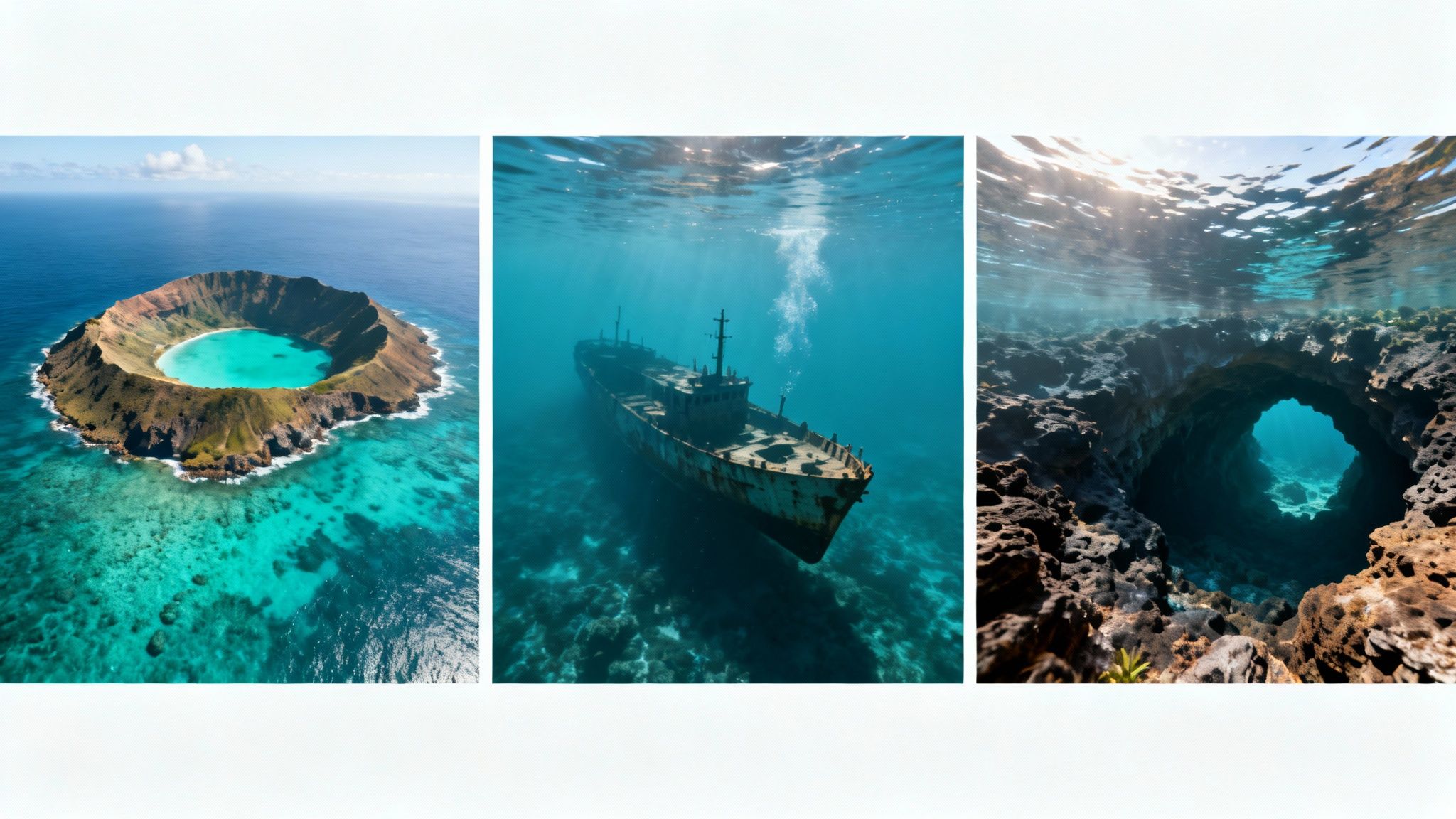
While you can find incredible diving pretty much anywhere in Hawaii, it's a mistake to think it's all the same. Each island has its own distinct underwater personality. Think of the archipelago as a buffet of different cuisines; the flavors you find on one island are completely different from the next, and that's what makes a scuba Hawaii trip so exciting.
Before you start picking out dive sites, it helps to get the lay of the land—or in this case, the water. Sometimes, figuring out the best places to go in Hawaii for your topside adventures can point you toward some truly world-class diving that fits right into your vacation plans.
A Quick Tour Of The Islands
Let's take a quick jump around some of the most popular diving spots beyond the Big Island. Each one offers a signature experience that keeps divers coming back year after year.
-
Maui: This island's claim to fame is the Molokini Crater, a volcanic caldera that’s partially submerged. This crescent-shaped formation acts as a natural barrier, protecting the inner reef from ocean swells and creating a calm, crystal-clear sanctuary. It's an ideal spot for finding everything from tiny, vibrant reef fish to majestic manta rays.
-
Oahu: As the most populated island, Oahu has become a mecca for wreck divers. Its waters are a graveyard for intentionally sunk vessels like the YO-257 and the Sea Tiger, which have since blossomed into incredible artificial reefs. You get to explore a piece of history that’s now a bustling city for marine life.
-
Kauai: Known as the "Garden Isle" for its stunning green landscapes, Kauai's underwater world is just as dramatic. Down below, you can explore a maze of lava tubes, swim through massive underwater arches, and navigate caverns carved out by ancient volcanic flows. It’s pure adventure.
Why Kona Is The Crown Jewel
Now, while Maui, Oahu, and Kauai all offer fantastic dives, any seasoned diver will tell you the Kona Coast on the Big Island is really the crown jewel of Hawaiian diving. The reason comes down to simple geography. The massive volcanoes of Mauna Loa and Hualalai create a natural shield, blocking the powerful trade winds that often churn up the water around the other islands.
This protection gives us incredibly calm and consistently clear water all year long. It’s like diving in a giant, serene aquarium where visibility often stretches past 100 feet. These perfect conditions have allowed one of the Pacific's most vibrant and healthy reef systems to thrive.
The unparalleled conditions of the Kona Coast have fostered an explosion of marine biodiversity. Its protected waters are home to a dense population of endemic fish, sea turtles, and majestic pelagic species, making it the most reliable destination for awe-inspiring underwater encounters in Hawaii.
The reefs along the Kona coast are absolutely packed with life. You'll find intricate coral gardens patrolled by schools of colorful butterflyfish and dramatic drop-offs visited by spinner dolphins and eagle rays. It's here you'll find Hawaii's most iconic and dependable underwater experiences. If you want to dive deeper into the comparison, our article on which Hawaiian island is best for scuba diving breaks it all down.
The best way to see these pristine sites is with local guides who know every lava tube and coral head like the back of their hand. The sheer variety and health of this ecosystem are why so many of us come back to Kona again and again. To see what's waiting for you, take a look at our Kona diving tours and start planning your trip to Hawaii’s premier dive destination. The consistency and abundance of marine life here make it the clear winner for divers of any skill level.
Experiencing Hawaii’s Most Iconic Dives
Some dives just stick with you, becoming the stories you can’t wait to tell. Hawaii, especially the Kona coast, is loaded with these kinds of bucket-list underwater adventures. We're not talking about your average reef tour; these are the signature experiences that truly define what it means to scuba Hawaii.
From graceful giants dancing in the dark to bizarre creatures rising from the abyss, these dives pull back the curtain on a world that feels completely otherworldly. Two experiences, in particular, draw divers from all over the globe: the world-famous Manta Ray Night Dive and the surreal Kona Blackwater Dive.
The World-Renowned Manta Ray Night Dive
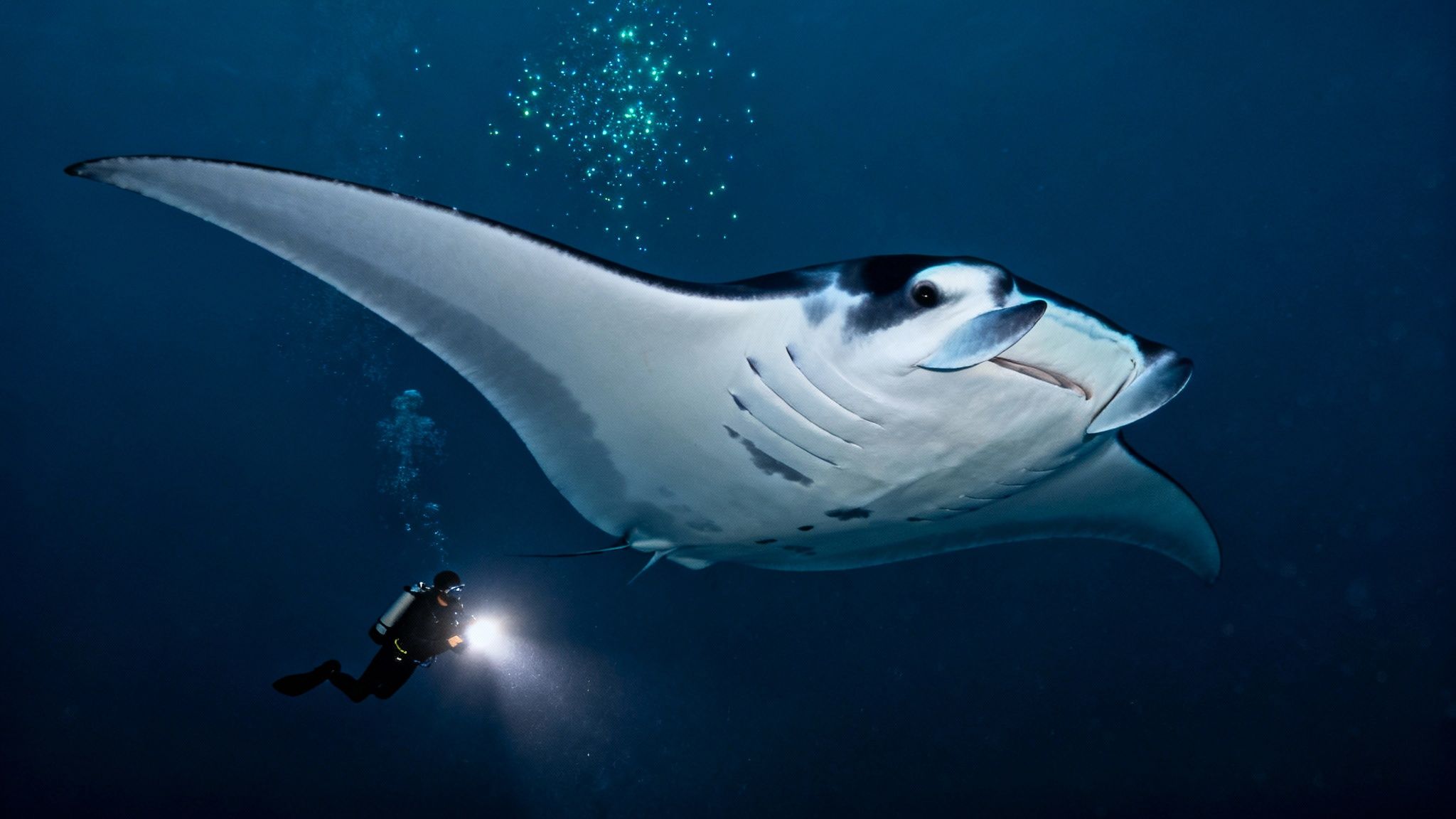
Picture this: you’re kneeling on the ocean floor in the dark, your dive light pointed straight up. Suddenly, a colossal shadow with a wingspan of over 12 feet glides into the beam of light, performing an effortless, silent ballet right over your head. That’s the magic of the Manta Ray Night Dive. It's an experience so consistently mind-blowing that it’s earned a reputation as one of the best night dives on the planet.
So, how does it work? Dive operators have set up sites with powerful lights on the seafloor. These lights act like a massive bug zapper for plankton, attracting huge clouds of the mantas' favorite food. As the plankton swarms, the mantas show up for an all-you-can-eat buffet, gracefully swooping and barrel-rolling through the light, often just inches away from wide-eyed divers.
While you can do this dive at a couple of spots, one is clearly the best. Garden eel cove is the superior choice for the dive tour because of its protected location with a better viewing area and better reefs.
Why Garden Eel Cove Is The Premier Manta Site
If you want the most reliable and comfortable manta ray encounter, Garden Eel Cove is, without a doubt, the place to be. Its location is naturally sheltered from the open ocean swells, which means calmer, more predictable conditions.
This isn't just about comfort; it makes for a much better show. The viewing area at Garden Eel Cove is often compared to a "campfire," where divers can settle into a semi-circle on the sand without kicking up silt or damaging the reef.
On top of that, the surrounding reefs are healthier and more vibrant than at other locations. This means the first dive of a two-tank trip is spent exploring a gorgeous, thriving reef before the main event even starts. It turns a great dive into an exceptional overall experience.
Choosing a dive at Garden Eel Cove significantly increases the likelihood of a spectacular, comfortable, and environmentally responsible manta ray encounter. The site's protected nature and superior viewing setup make it the gold standard for this iconic Hawaiian dive.
The Kona Blackwater Dive: An Alien World
If the Manta Ray Night Dive is a beautiful ballet, the Kona Blackwater Dive is a trip to another planet. This is not a reef dive. You're tethered to a boat, drifting in the pitch-black open ocean over thousands of feet of water. It's as wild as it sounds.
Your dive lights cut through the darkness, illuminating a universe of strange, bioluminescent creatures that migrate from the deep abyss toward the surface every single night to feed. It’s the largest migration on Earth, and you're floating right in the middle of it.
You’ll see life forms that look like they were pulled from a sci-fi movie:
- Translucent Squids: Pulsing with glowing photophores in the dark.
- Pteropods: Tiny, winged snails that literally "fly" through the water.
- Larval Creatures: Bizarre and beautiful baby versions of fish and invertebrates that look nothing like their adult forms.
This dive is a sensory journey into the great unknown, giving you a chance to see creatures very few people ever will. It's an absolute must for adventurous divers looking for something truly unique.
Swimming With Hawaiian Green Sea Turtles
Beyond the epic night dives, no trip to scuba Hawaii is complete without an encounter with the beloved honu, or Hawaiian Green Sea Turtle. These ancient, gentle reptiles are a protected species and a symbol of good luck in Hawaiian culture.
You’ll often find them munching on algae along the reef or chilling out at "turtle cleaning stations," where smaller fish helpfully pick their shells clean. The calm waters of Kona make it one of the best places in the world for respectful, up-close encounters with these magnificent animals. A dive trip here practically guarantees you'll be sharing the water with them.
Planning Your Hawaii Dive Trip Like a Pro
So, you're picturing yourself gliding past lava tubes and coming face-to-face with a giant manta ray. Fantastic. Now let’s talk about the details that will turn that daydream into an incredible reality. A bit of smart planning is what separates a good dive trip from an unforgettable one.
The great news? There's really no bad time to dive in Hawaii. The water stays in that perfect 75-80°F (24-27°C) sweet spot all year. And the visibility, especially here on the sheltered Kona coast, is reliably amazing. That means you can pretty much throw a dart at the calendar and score great diving.
That said, the time of year you choose will add a different flavor to your trip. The stunning reefs and volcanic landscapes are always here, but the cast of characters—our amazing marine life—changes with the seasons.
Understanding Hawaii’s Dive Seasons
While the diving is always on, the subtle shifts through the year can make a big difference. Knowing what to expect helps you line up your trip with the experience you're craving.
- Summer (May – October): This is when the Pacific really mellows out. You can expect the calmest seas and warmest water, making for glassy boat rides and incredibly relaxed dives.
- Winter (November – April): Welcome to humpback whale season! While you won't be diving with them (there are strict rules to protect them), you will almost certainly hear their songs underwater. It’s a powerful, haunting sound that vibrates right through you—a truly magical experience that adds a whole other dimension to your dive.
What To Pack For Your Dive Trip
Packing for a Hawaiian dive trip is refreshingly simple. Thanks to our warm water, you can leave that heavy-duty cold-water gear behind.
For almost everyone, a 3mm full wetsuit is the perfect all-season choice for Hawaii. It gives you just the right amount of warmth for multiple dives a day without feeling restrictive.
Here’s a quick rundown of what to bring:
- Your Wetsuit: A 3mm is the go-to. If you know you run cold, maybe consider a 5mm for the winter months, but most people find it’s overkill.
- Reef-Safe Sunscreen: This is a big one. Hawaii has banned sunscreens with oxybenzone and octinoxate to protect our fragile coral. Please help us preserve the very ecosystem you're coming to see by making sure your sunscreen is compliant.
- Your Core Gear: Don't leave home without your dive computer. A safety sausage (SMB) and a whistle or other audible signal are also must-haves for every diver.
- Proof You Know Your Stuff: Bring your C-card and any specialty certifications you have (like nitrox). Any professional, safety-conscious operator will need to see them.
Certification and Choosing The Right Operator
To join any certified boat dive, you'll need at least an Open Water Diver certification from a recognized agency like PADI, SSI, or NAUI. This is a non-negotiable safety standard across the islands.
Picking a certified, professional dive shop is easily the most important choice you'll make. The Big Island's dive community has grown immensely over the last 50 years. Back in the 1970s, you could count the number of shops on one hand, serving maybe 10,000 divers a year. Today, there are over 50 professional outfits guiding some 150,000 divers on more than 25,000 dives annually. It's a rich history you can explore by reading about the Big Island's scuba industry.
For those of you with plenty of dives in your logbook, Hawaii has some incredible advanced sites that will challenge and thrill you. If you're ready to explore deeper reefs and more dynamic environments, look into dedicated advanced dive tours that are run specifically for experienced divers like you.
How To Choose The Best Kona Dive Operator
Let's be honest, picking the right dive operator can make or break your entire scuba Hawaii trip. This isn't just about booking a seat on a boat; it's about choosing the team that will guide your adventure, keep you safe, and ultimately shape your memories of Hawaii's underwater world. A great operator doesn’t just show you a reef—they make you feel like you're a part of it.
This decision matters on a larger scale, too. The dive travel industry is a massive force, pulling in over 60% of the global diving revenue, which translates to about USD 5.1 billion annually. When you book a trip, you're not just a tourist; you're supporting the local dive community and the health of the very ecosystem you've come to see.
So, what should you look for? It boils down to four essentials: a flawless safety record, top-notch gear, comfortable boats, and—most importantly—an experienced, enthusiastic crew. Never underestimate the human element. A guide who genuinely loves the ocean can turn a pretty good dive into the highlight of your vacation.
What Sets The Best Operators Apart
As you start looking into different Kona dive companies, you’ll see that some truly stand out from the crowd. Kona Honu Divers is one of those operators, consistently hitting the mark in every area that counts.
Their crew has a staggering 200+ years of combined experience. That’s not just a number; it's a deep, practical knowledge of Kona's dive sites, the currents, and where to find the most amazing marine life. It means you're in the safest possible hands, whether you're logging your first open-water dive or you're a seasoned pro with thousands of dives under your belt.
A huge giveaway for a top-tier dive operation is their commitment to small group sizes. It’s a game-changer. You get more personal attention from your guide, the dive site feels less crowded, and the entire experience is just safer and more enjoyable.
Kona Honu Divers sweetens the deal with thoughtful perks that make a real difference, like offering free nitrox for certified divers. This simple addition lets you extend your bottom time and feel less tired afterward, helping you get the absolute most out of every tank.
Real Reviews From Fellow Divers
Don't just take our word for it. The most honest feedback comes from the people who have already been there. Reading through recent reviews is the best way to get a feel for what an operator is really like.
Here's what divers are saying about Kona Honu Divers right now:
Of course, the Kona coast has a number of solid, reputable dive shops. To give you a fuller picture, here are a couple of other well-known operators in the area.
Jack's Diving Locker is a long-time fixture in the Kona community, respected for its comprehensive training programs and larger-scale operation.
Big Island Divers is another go-to choice for many, offering a variety of charters and services that cater to all skill levels.
While you have several fantastic options, the consistent praise for Kona Honu Divers' expert guides, custom-designed boats, and dedication to a small-group experience makes them a clear standout for a truly premium dive adventure.
Ready to take the plunge? A great next step is exploring the different Kona diving tours they offer. For an even deeper dive into making the right decision, check out our full guide on how to choose a Kona dive shop.
Your Hawaii Scuba Questions, Answered
Every diver, whether you have a thousand dives under your belt or are just starting out, has questions before exploring a new spot. And when that spot is a world-class destination like Hawaii, you want to get it right. We've heard just about every question in the book, so we’ve put together the most common ones to help you plan your adventure.
Let's clear things up so you can feel confident and excited about getting in the water.
What’s The Best Time Of Year To Dive In Hawaii?
Honestly, any time is a good time! That’s one of the best parts about diving here. The water stays in that perfect sweet spot, hovering between 75-80°F (24-27°C) all year round.
If you’re looking for the calmest, flattest seas, the summer months (May through October) are typically your best bet. The conditions are usually glassy and perfect for beautiful, sunny dive days. But winter—from November to April—has its own incredible draw: humpback whale season. You won’t be diving with them, but hearing their haunting songs echo through the water on a dive is a bucket-list experience you'll never forget.
Here on the Kona coast of the Big Island, we’re especially lucky. The island's massive volcanoes act as a natural shield from the trade winds, keeping our waters remarkably calm and diveable no matter what month it is.
Do I Need A Scuba Certification To Dive In Hawaii?
Yes, if you want to join a certified boat dive and explore Hawaii’s incredible reefs, you'll need a certification like the PADI Open Water Diver. It’s a standard safety rule for any professional dive operation.
But what if you're not certified? No problem at all. You can still experience the magic firsthand with a Discover Scuba Diving program. Reputable shops like Kona Honu Divers run these introductory experiences, where an instructor is by your side the entire time in a safe, controlled environment.
And if you get hooked (which, let's be real, you probably will), you can complete your full certification right here in paradise.
"I was terrified and I was pretty sure I did not have the ability to survive the pool session… Once I got out of my head I enjoyed every minute under water… I’d found my happy place and I’ve never looked back." – A once-nervous diver's journey to becoming a PADI professional.
What Marine Life Will I See In Kona?
The Kona coast is teeming with life, so every dive is a surprise. You can pretty much count on seeing Hawaiian green sea turtles cruising by, schools of colorful reef fish like butterflyfish and parrotfish, and moray eels peeking out from ancient lava tubes. Keep an eye out for clever octopuses, too—they're masters of disguise!
Kona is also famous for bigger animal encounters. It's not uncommon for pods of spinner dolphins to show up, or for graceful eagle rays to glide past. You might even spot a whitetip reef shark relaxing on the sandy bottom.
Of course, we have two world-famous signature dives. The Manta Ray Night Dive lets you watch these gentle giants feed just inches away, while the surreal Kona Blackwater Dive reveals the bizarre, bioluminescent creatures that rise from the deep after dark. You can see all the incredible underwater adventures on the full list of Kona diving tours.
Is The Manta Ray Night Dive Safe?
It’s completely safe. When you go with a professional, experienced operator like Kona Honu Divers, you’ll find the Manta Ray Night Dive is an incredibly well-run and safe experience.
First off, manta rays are gentle giants. They're filter feeders with no teeth, barbs, or stingers—they are totally harmless to people.
A top-tier operator will always prioritize safety with strict guidelines. Here’s what that looks like:
- You’ll get a thorough pre-dive briefing that explains exactly what to expect and what to do.
- The crew carefully manages where everyone is in the water so you get a fantastic view without getting in the way of the mantas.
- They use powerful, stationary lights to attract the plankton in a controlled, predictable way.
Choosing a reputable company means you’re diving with a crew that puts the well-being of both the divers and these precious animals above all else.