
Picture yourself slowly descending into a vibrant, sun-dappled world, surrounded by a kaleidoscope of marine life. This isn't just a daydream; it's what scuba Hawaii is all about. The Hawaiian Islands offer some of the most breathtaking diving on the planet, and the Kona coast on the Big Island is the crown jewel, famous for its truly unique underwater encounters.
Your Underwater Adventure Begins Here
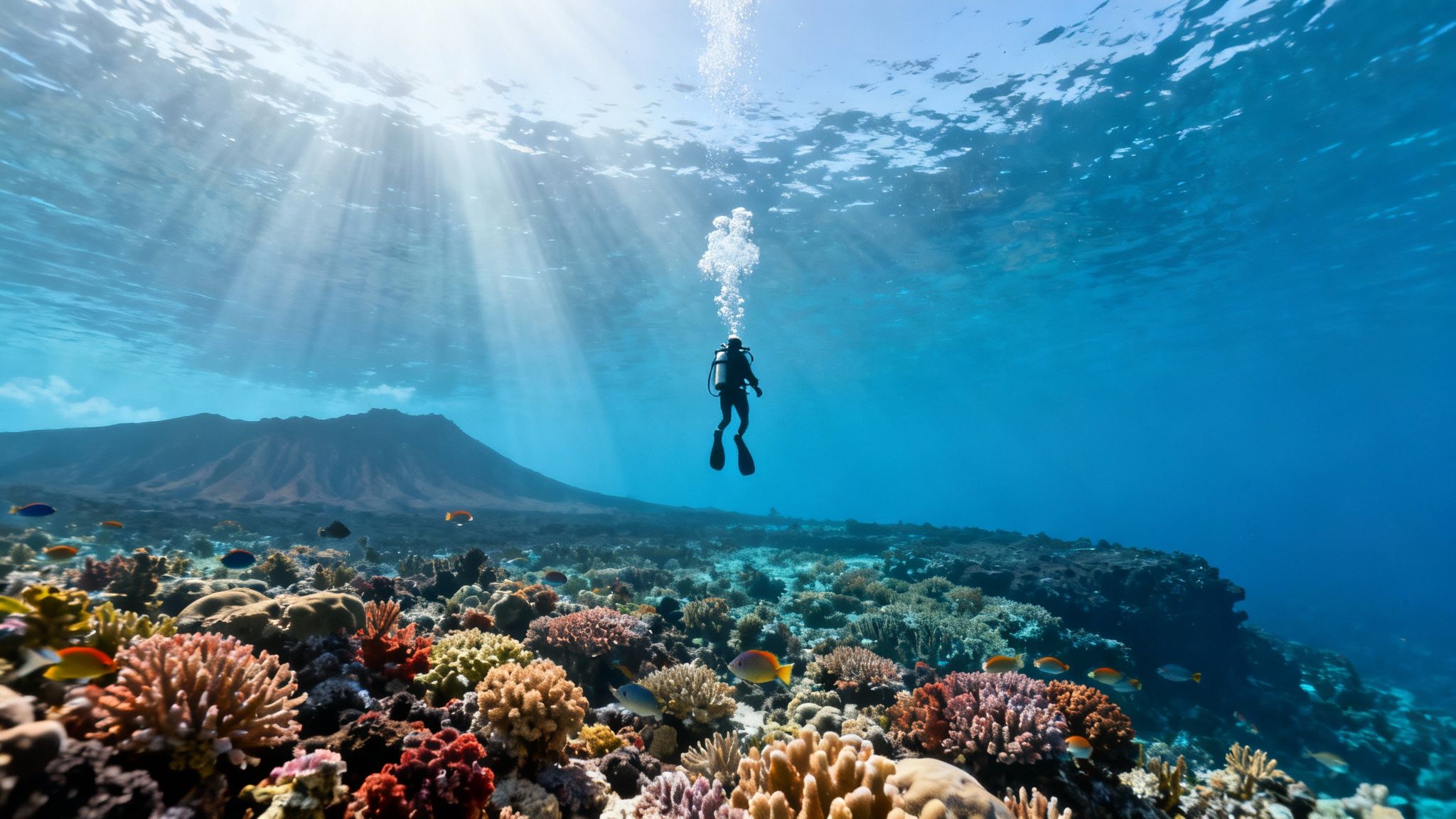
Consider this your ultimate guide to the islands' premier dive experiences, with a special focus on the world-renowned Kona coast. Hawaii is more than just another pretty dive spot; it's a global hotspot for marine biodiversity and unforgettable adventures you'll be talking about for years.
Think of this as your pre-dive briefing for some of the most iconic dives out there. We'll get into the specifics of bucket-list experiences like the Manta Ray Night Dive and the surreal Blackwater Dive. But first, let's talk about what makes Hawaii’s underwater world so special—a direct result of its volcanic origins and unique ocean currents that have created a thriving, one-of-a-kind ecosystem.
Here's a quick overview of what makes diving in Hawaii so special.
Hawaii Scuba Diving At a Glance
| Aspect | Details |
|---|---|
| Unique Encounters | Home to world-famous Manta Ray Night Dives, eerie Blackwater Dives, and frequent dolphin and whale sightings. |
| Volcanic Topography | Explore underwater lava tubes, ancient craters, and dramatic archways carved by volcanic activity. |
| Endemic Species | A high percentage of marine life is found nowhere else on Earth. Every dive is a chance to see something new. |
| Prime Conditions | The Kona coast offers exceptionally clear water and calm seas year-round, shielded from major trade winds. |
| Dive Infrastructure | A well-established industry with over 215 licensed dive shops and expert guides. |
This combination of factors draws divers from all over the world.
Why Hawaii Is a Top-Tier Dive Destination
The sheer numbers tell a compelling story. Divers log over 1.5 million scuba dives in Hawaii every single year, a testament to the islands' magnetic appeal for underwater explorers. You'll find everything here: crystal-clear waters, sprawling coral reefs, and an incredible diversity of marine animals.
So, what’s the secret sauce? It comes down to a few key ingredients:
- Volcanic Landscapes: The underwater terrain is anything but ordinary. Imagine swimming through ancient lava tubes, navigating around submerged craters, and gliding under natural archways. It's a dramatic seascape you simply won't find anywhere else.
- Endemic Species: A remarkable portion of Hawaii’s marine life is found only in these waters. This means every dive is a genuine voyage of discovery, with the chance to spot creatures you can't see anywhere else on the planet.
- Ideal Conditions: The Big Island's Kona coast is uniquely blessed. It’s sheltered from the prevailing trade winds and ocean swells, resulting in excellent visibility and calm, predictable conditions almost all year long.
On the Big Island, operators like Kona Honu Divers are the local experts you want guiding you through this paradise. Their focus on small groups and deep knowledge of the marine environment ensures every dive is not just safe and memorable, but also respectful of the delicate ecosystem.
And when you surface, the adventure doesn't have to end. Don't forget to explore the islands' incredible culinary scene and try some delicious local Hawaiian food. Pairing world-class diving with amazing local culture is the recipe for a perfect Hawaiian getaway.
Ready? Let’s dive in and explore the underwater wonders that are waiting for you.
Exploring Kona’s Unforgettable Dives
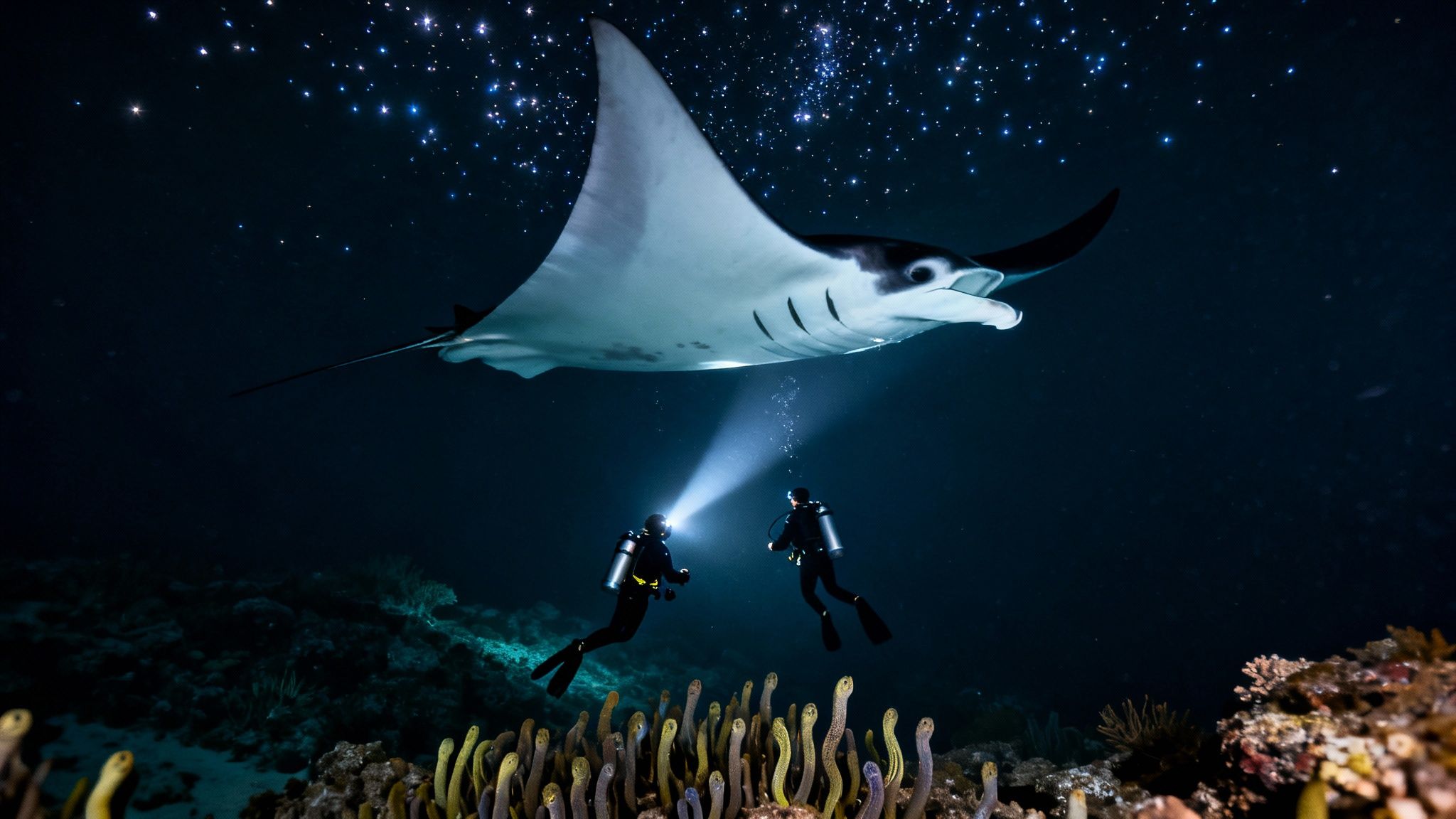
The Kona coast of the Big Island isn't just another dive destination; it's home to some of the most profound underwater encounters you can find anywhere on the planet. I’m not talking about your average reef tour. These are true bucket-list adventures that completely redefine what it means to scuba Hawaii, each one offering a totally different glimpse into the ocean's hidden world.
From the silent, underwater ballet of giant manta rays after dark to the bizarre, alien-like creatures that rise from the deep, Kona serves up moments you'll be talking about for years. Let's break down the three signature dives that have made this coastline an icon for divers worldwide.
The Legendary Manta Ray Night Dive
Picture this: you're kneeling on a sandy patch of the ocean floor after sunset, pointing your dive light straight up. Out of the darkness, a massive, graceful shadow with a wingspan wider than you are tall glides into the light, its huge mouth open as it swoops and barrel-rolls, feeding on plankton. This is the world-famous Manta Ray Night Dive, and it’s every bit as humbling and exhilarating as it sounds.
While there are a couple of spots to do this, Garden Eel Cove is, in our experience, the superior choice. Its location is more protected from the open ocean, which often means calmer, more comfortable conditions for the dive.
Even better, the viewing area at Garden Eel Cove is set up to give you a front-row seat. This layout lets the mantas get incredibly close as they perform their feeding acrobatics. Plus, the surrounding reefs are simply healthier and more vibrant, making the entire dive—from the moment you descend to the main event—absolutely spectacular.
The Mysterious Kona Blackwater Dive
If you have a taste for the truly unique and feel a bit adventurous, the Kona Blackwater Dive is an experience from another world. Forget the reef. On this dive, you drift in the immense, inky blackness of the open ocean miles offshore, tethered to the boat for safety.
This dive is a journey into the planet's largest daily migration. Every night, countless bizarre and beautiful creatures ascend from the abyss toward the surface to feed, many of them bioluminescent.
You’ll see life forms that look like they were dreamed up for a sci-fi movie: see-through squids, pulsating jellies, and the larval stages of fish that are almost never seen by human eyes. It’s a surreal, almost psychedelic experience that gives you a brief look into one of the ocean's last great frontiers. This is absolutely an advanced dive; it demands excellent buoyancy control and total comfort in the dark.
For anyone looking to build their skills, our guide to Kona scuba diving is a great place to start.
Vibrant Reefs and Volcanic Landscapes
Beyond the famous night dives, Kona’s daytime diving is every bit as incredible. The underwater topography here, shaped by millennia of volcanic activity, is a diver’s playground. You can swim right through ancient lava tubes, navigate dramatic archways, and drift over stunning coral gardens that are just bursting with life.
The marine life is a fantastic mix of the familiar and the unique. On any given dive, you’re likely to see:
- Honu (Green Sea Turtles): These gentle giants are a classic and beloved sight. You’ll often find them resting on the reef or cruising past you in the blue.
- Spinner Dolphins: It's not at all unusual for a pod of these acrobatic dolphins to greet the dive boat or even swim by during a dive—a truly magical moment.
- Endemic Fish: A huge percentage of Hawaii’s reef fish are found nowhere else on Earth. That means every dive is a chance to spot a species you’ve never laid eyes on before.
These incredible daytime adventures are really the heart and soul of the Kona diving experience. The calm, clear waters make exploring these vibrant diving tours a fantastic and rewarding day out for divers of all levels. Whether you’re navigating a lava-formed cavern or just watching a turtle munch on some algae, Kona's reefs are a constant source of wonder.
When to Plan Your Hawaii Dive Trip
Timing your Hawaii dive trip just right can be the difference between a great vacation and an absolutely epic one. The islands have a rhythm, a pulse that changes with the seasons, and knowing how to read it will help you find the perfect window for your dream dives. The good news? There's really no bad time to dive here, but each season offers something special.
You can think of the year as being split into two main seasons, summer and winter. It’s not a question of “good vs. bad,” but more like choosing between two incredible flavors of paradise.
Summer Diving: The Calm Season
From about May through September, the ocean off Kona tends to really lay down. The trade winds often take a break, leaving behind glassy, calm seas and water so clear you feel like you can see forever. This is the absolute sweet spot for new divers looking to get comfortable or anyone who just wants to enjoy peaceful, easy dives.
The water is also at its warmest, typically hovering in the low 80s°F (around 27°C). When you combine that bathtub-like water with incredible visibility, you get the perfect conditions for exploring Kona’s brilliant coral reefs and just soaking it all in.
If you're into underwater photography or videography, the calm, stable conditions of summer are your best friend. It's the ideal time to line up that perfect shot of a turtle or a colorful reef fish without fighting surge.
Winter Diving: The Season of Whales
Winter, which we count as October through April, brings a whole different kind of magic. The water might cool off a bit, dipping into the mid-to-high 70s°F (around 24-26°C), but what you get in return is simply breathtaking. This is humpback whale season.
From December through March, thousands of these gentle giants make their way to Hawaii. While we can't dive with them, their presence completely changes the experience. Hearing their complex, haunting songs echoing through the water on a dive is something you will never, ever forget. It’s a powerful, humbling soundtrack to your underwater adventure that you can feel in your chest.
Why Kona is a Year-Round Haven
One of the best-kept secrets about diving the Big Island is the Kona coast itself. We're on the leeward side of the island, which means we’re naturally sheltered from the strong trade winds and big ocean swells that can hit other parts of Hawaii, especially during the winter.
This geographic advantage gives Kona incredibly reliable and fantastic dive conditions pretty much all year long. While other islands might get blown out for days, our sites often stay calm and diveable. It’s this consistency that makes Kona a top-tier destination no matter what month you plan your scuba Hawaii trip. For a deeper dive into the specifics, check out our guide on the best months to scuba dive in Hawaii.
So, what’s the final verdict? If you’re chasing the warmest water and the flattest seas, aim for summer. But if hearing the song of the humpback whale is on your bucket list, you have to be here in the winter. Either way, Kona’s protected coastline is ready to show you an amazing time.
Get Certified and Advance Your Skills in Kona
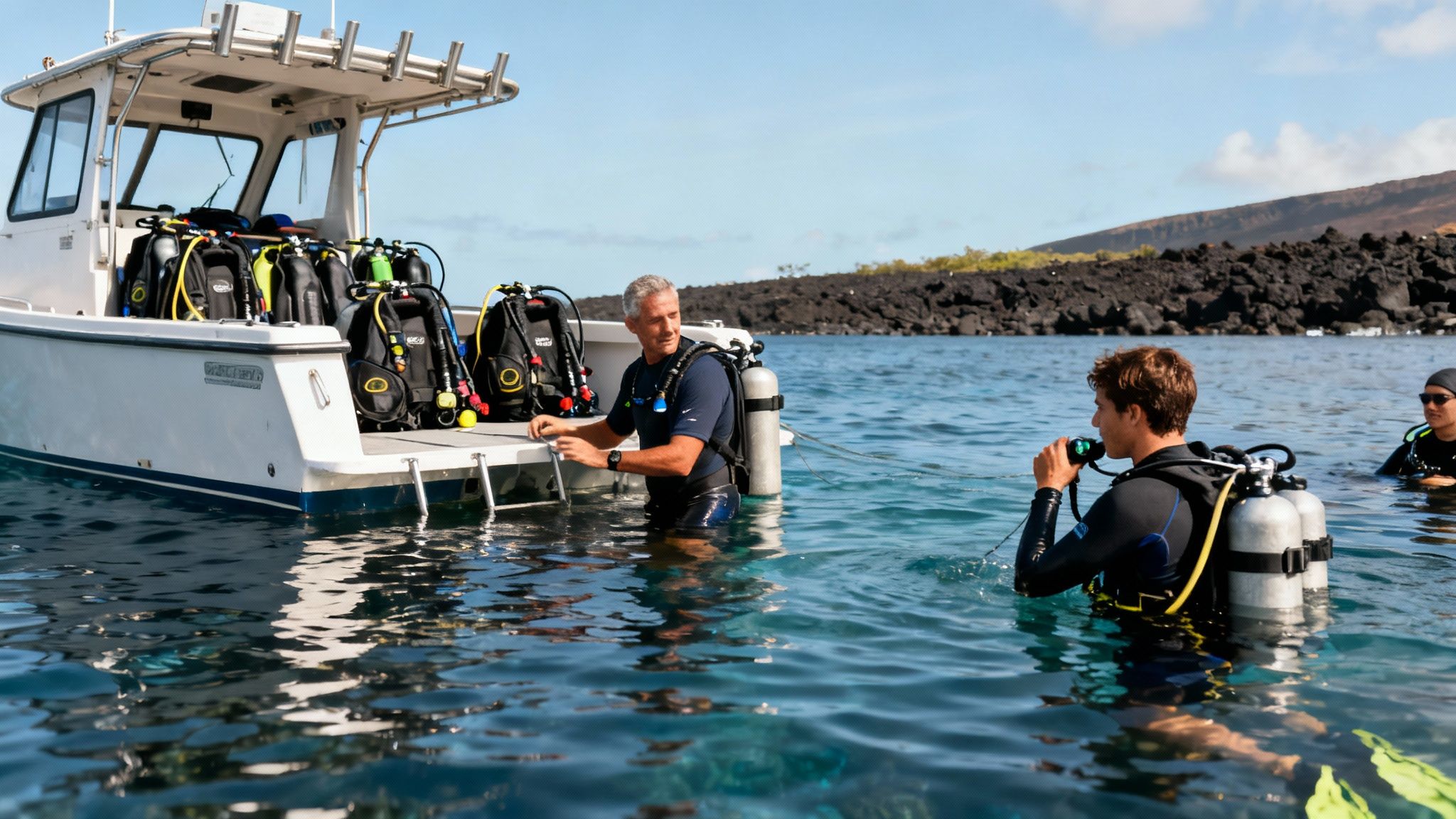
There's a reason so many people learn to scuba Hawaii style right here in Kona. The calm, warm, and stunningly clear water makes for the perfect natural classroom, whether you’re taking your very first breath underwater or you're an experienced diver looking to level up your skills.
The global appeal isn't just a coincidence. Scuba diving tourism is booming, projected to become an USD 18.5 billion industry by 2035, and Hawaii is right at the heart of it. With millions of active divers in the U.S. alone, the demand for world-class training and tours has never been higher, which is why choosing a shop with deep local expertise is so important. Discover more insights about the diving tourism market.
For anyone curious but not ready to commit to a full course, the PADI Discover Scuba Diving program is the perfect test run. It’s a fantastic, low-pressure way to feel the magic of breathing underwater for the first time, all under the watchful eye of a professional instructor. You'll cover the basics in shallow water before heading out for a real ocean dive.
Your Journey to Becoming a Certified Diver
Ready to make it official? The PADI Open Water Diver certification is your passport to exploring the underwater world. It's a comprehensive course that covers the theory, practices essential skills in a calm environment, and then takes you on four open-water dives to put it all together. Once you're certified, you can dive with a buddy anywhere on the planet.
But the adventure doesn't stop there. Once you have that first certification card, Kona is the ideal place to build more confidence and expand your abilities. Popular next steps include:
- Advanced Open Water Diver: This course is all about experience. You'll fine-tune your core skills and get a taste of different diving specialties like deep diving and underwater navigation.
- Rescue Diver: Many divers will tell you this is the most challenging—and most rewarding—course they've ever taken. You’ll learn how to anticipate, prevent, and manage problems, making you a safer and more confident buddy for anyone you dive with.
A huge perk of diving with a top-tier operator like Kona Honu Divers is getting complimentary Nitrox once you're certified. This special gas blend has a bit more oxygen, which can give you longer bottom times and adds another layer of safety to your dives.
Pushing the Boundaries for Experienced Divers
If you’ve already got plenty of dives under your belt and are itching for a new challenge, Kona delivers. The unique volcanic topography and deep offshore waters open up a whole new world of technical and demanding dives where advanced training truly shines.
Kona Honu Divers runs exclusive premium advanced dive tours created just for experienced divers. These trips go to deeper, more remote sites that most tours never visit. You’ll get to explore dramatic drop-offs and complex lava formations, pushing your skills in a safe, expertly guided environment.
And for those who want to turn their passion into a profession, the ultimate step is going pro. You can learn more about the PADI Divemaster certification and start your journey toward a career that lets you live and breathe diving.
Why Choose Kona Honu Divers for Your Adventure
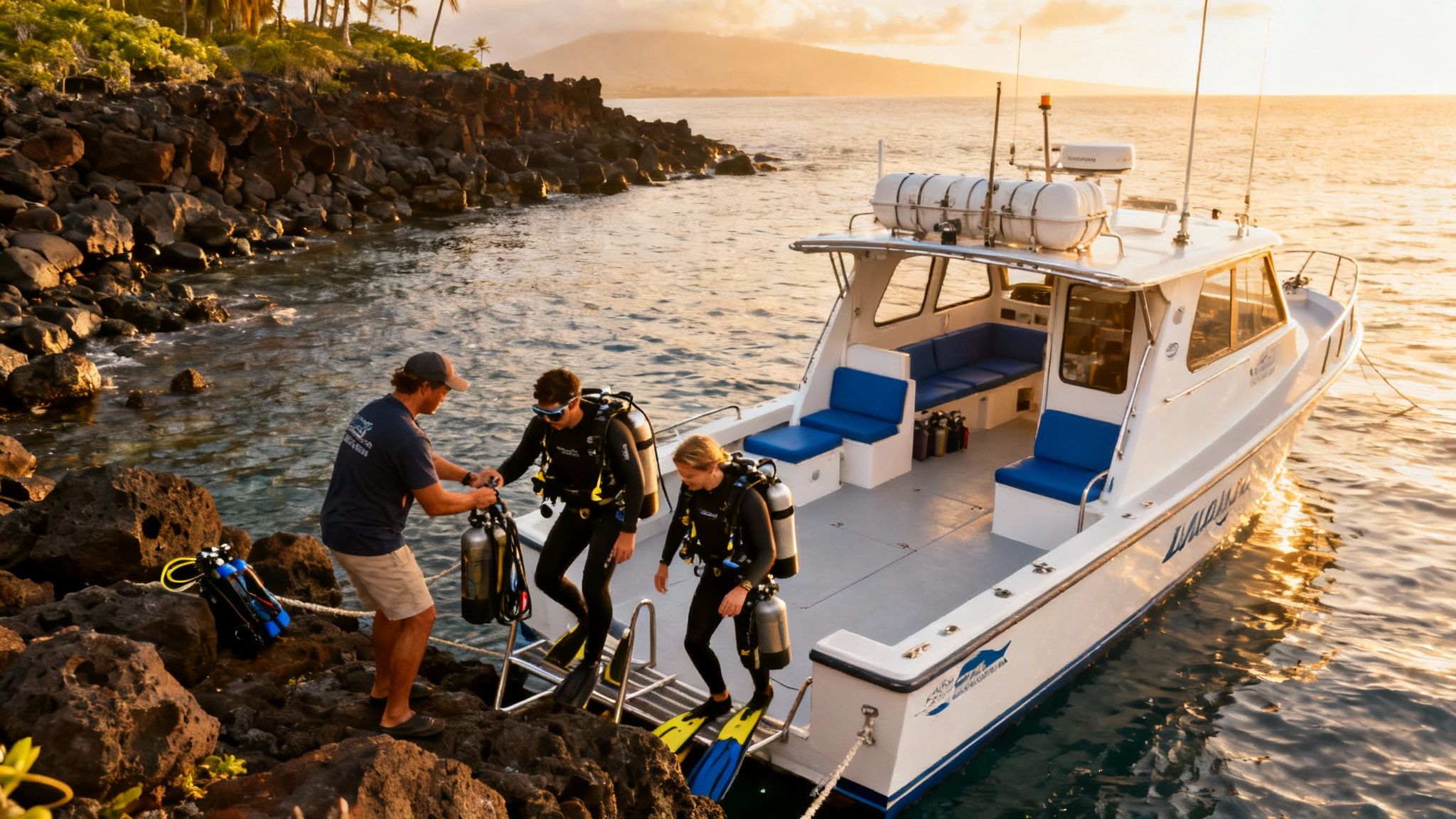
When you're planning the perfect scuba Hawaii trip, picking your dive operator is the single most important decision you'll make. It’s a bigger deal than your hotel or your dinner plans. This is the team that acts as your guide, your safety net, and your key to unlocking the very best the ocean has to offer.
Here in Kona, we've worked hard to earn our reputation as Hawaii’s top-rated choice. That's not just about expertise; it's about crafting an entire experience that puts you, the diver, first. It’s one thing to get you in the water, but it’s another thing entirely to make sure you feel confident, comfortable, and genuinely cared for from the moment you step on the boat.
A Crew Built on Decades of Experience
The heart and soul of any great dive operation is its crew, and this is where we truly shine. Our team brings a staggering 200+ years of combined industry experience to every single trip.
That isn't just a number—it’s a deep well of knowledge covering everything from marine biology and the hidden secrets of local dive sites to, most importantly, diver safety. This is the kind of experience that means we can handle any situation with calm professionalism and point out that tiny, camouflaged frogfish you would have otherwise missed. It’s what turns a good dive into a truly unforgettable one.
Small Groups and Personalized Attention
Ever been on a dive boat that felt more like a crowded city bus? We’ve seen it, and it’s exactly what we avoid. We are absolutely committed to small group sizes, because it’s the only way to ensure every diver gets the personal attention they deserve.
This simple philosophy changes everything:
- More Relaxed Dives: You get more space to explore without feeling rushed or bumping into other divers.
- Better Guidance: Our guides can offer individual tips and point out critters based on what you actually want to see.
- Enhanced Safety: A smaller, more manageable group means your divemaster is always close by, adding a powerful layer of security and peace of mind.
The difference is palpable. A smaller group fosters a more intimate and connected experience, making you feel like a valued guest on a special charter rather than just another number on a manifest.
Designed for Diver Comfort and Value
Every last detail of our operation is designed with you in mind, starting with our boats. These aren't just any old vessels; they are custom-built dive boats created specifically for diver comfort, safety, and efficiency. You'll feel the difference in the easy-to-navigate layout, the ample space for gearing up, and the simple entry and exit points.
Beyond the hardware, we add thoughtful perks to make your day better. For certified divers, we offer complimentary Nitrox, a huge benefit that can allow for longer bottom times and adds a layer of conservatism to your dives. We also provide early diver discounts, making it easier to fit these world-class diving tours into your vacation budget.
Your day with us starts with a thorough, professional briefing and continues with expert in-water guidance, ensuring you feel confident from start to finish. But don't just take our word for it—the incredible feedback from our past guests says it all.
Choosing the right operator transforms a simple dive trip into a cherished memory.
Your Top Questions About Scuba Diving in Hawaii, Answered
Any time you plan a dive trip somewhere new, a million questions pop into your head. What will I see? What should I pack? Is it safe? It's completely normal.
Getting those answers ahead of time is the difference between a good trip and a great one. So, let's dive into some of the most common questions we hear from people planning to scuba Hawaii.
What Kind of Marine Life Am I Going to See?
Hawaii's isolation in the middle of the Pacific means its underwater world is unlike anywhere else on the planet. A huge percentage of the marine life here is endemic—you literally can't find it anywhere else.
On just about any dive along the Kona coast, you can pretty much count on seeing:
- Honu (Green Sea Turtles): They're the stars of the show. You'll find them cruising along the reef, getting a "cleaning" from other fish, or just chilling out under a lava rock ledge.
- Unique Reef Fish: The reefs are buzzing with fish you won't see in the Caribbean. Look for huge schools of Milletseed Butterflyfish, the brightly colored Saddle Wrasse, and the ever-present Hawaiian Sergeant Major.
- Eels: Peek into the cracks and crevices of the reef, and you're bound to lock eyes with a moray eel. We see everything from the common Whitemouth Moray to the much rarer (and more spectacular) Dragon Moray.
- Spinner Dolphins: You'll almost certainly see pods of them from the boat, putting on an amazing acrobatic show. Sometimes, if you're really lucky, they’ll join you underwater for a few minutes. It’s an experience you’ll never forget.
And if you’re joining one of Kona’s world-famous diving tours like the Manta Ray Night Dive, well, you're in for a truly spectacular encounter with some of the ocean's most graceful giants.
Should I Be Worried About Sharks?
This is easily one of the top questions we get. The short answer? Nope, not at all.
Sharks are a vital part of a healthy ocean, and seeing one should be a highlight of your dive, not a cause for fear. The most common shark we see in Kona is the Whitetip Reef Shark. They are generally shy, non-aggressive, and spend most of their days resting on the sandy bottom.
Think of it this way: seeing a shark on the reef is like seeing a hawk while hiking. It's a beautiful, wild animal in its natural home, and a sign that the ecosystem is thriving.
We're guests in their world. By listening to your guide, keeping a respectful distance, and never trying to touch or chase any marine life, you ensure every interaction is a safe and positive one.
I'm Not Certified—Can I Still Go Diving?
You bet! If you've always dreamed of breathing underwater but don't have a certification, the PADI Discover Scuba Diving (DSD) experience was made for you. It's not a course that ends with a card, but rather a guided tour of the underwater world with an instructor by your side the entire time.
Here’s how it works:
- Your instructor will spend some time on the boat explaining the basics of the gear and essential safety rules.
- In calm, shallow water, you’ll practice a few simple skills until you feel completely comfortable.
- Then, it's off for a real dive on a beautiful shallow reef, exploring the ocean with your instructor as your personal guide.
It’s the perfect way to test the waters and see if scuba is your new passion, without committing to a full course.
What Should I Actually Pack for My Dive Trip?
Good news: packing for a dive trip to Hawaii is pretty easy. The water is warm, the sun is shining, and you don’t need a ton of heavy gear.
If you’re bringing your own kit, here's what you'll want:
- Dive Computer: The most important piece of safety gear you own.
- Mask, Snorkel, Fins: Nothing beats the comfort of your own mask that fits your face perfectly.
- Wetsuit: A 3mm or 5mm full wetsuit is plenty for the water temps here any time of year.
- C-Card & Logbook: Can't go diving without proof you're certified!
- Reef-Safe Sunscreen: This is a big one. To protect our delicate corals, please only use mineral-based sunscreens without oxybenzone and octinoxate.
- Reusable Water Bottle: Stay hydrated! The sun can take a lot out of you, and using a reusable bottle helps us cut down on single-use plastics.
Don't want to lug all your gear across the Pacific? No problem. A professional shop like Kona Honu Divers will have top-notch, well-maintained rental equipment waiting for you. Just bring your cert card and a smile.
How Can I Be an Ocean-Friendly Diver?
Being a good diver means being a good steward of the ocean. Hawaii's marine ecosystems are incredibly special but also very fragile. Every single one of us has a role to play in protecting them.
The most important thing you can do is have excellent buoyancy control. Think of yourself as a blimp, floating effortlessly above the reef. Never touch, kick, or rest on the coral—it’s a living animal, and even a slight bump can cause damage.
Beyond that, here are a few simple habits of a great diver:
- Streamline Your Gear: Make sure your gauges and alternate air source are clipped in and not dragging across the reef.
- Take Only Pictures, Leave Only Bubbles: Never take anything from the ocean, whether it's a shell, a rock, or a piece of coral. It's all part of the ecosystem.
- Choose Your Operator Wisely: Dive with a company that walks the walk when it comes to conservation, participating in reef cleanups and actively educating their divers.
By being mindful and diving with respect, you help ensure Kona's underwater paradise stays healthy and vibrant for many, many years to come.
Ready to see it all for yourself? At Kona Honu Divers, our passion is sharing the magic of the Kona coast through safe, fun, and unforgettable underwater adventures. Book your dive today and let’s get you in the water