
Picture yourself descending into warm, brilliant blue water, enveloped by ancient volcanic formations that create a surreal underwater landscape. This is what scuba Hawaii promises, and nowhere is it more vivid than along the Big Island’s Kona coast. Here, every dive feels like stepping into another world.
Why The Big Island Offers Unforgettable Scuba Adventures
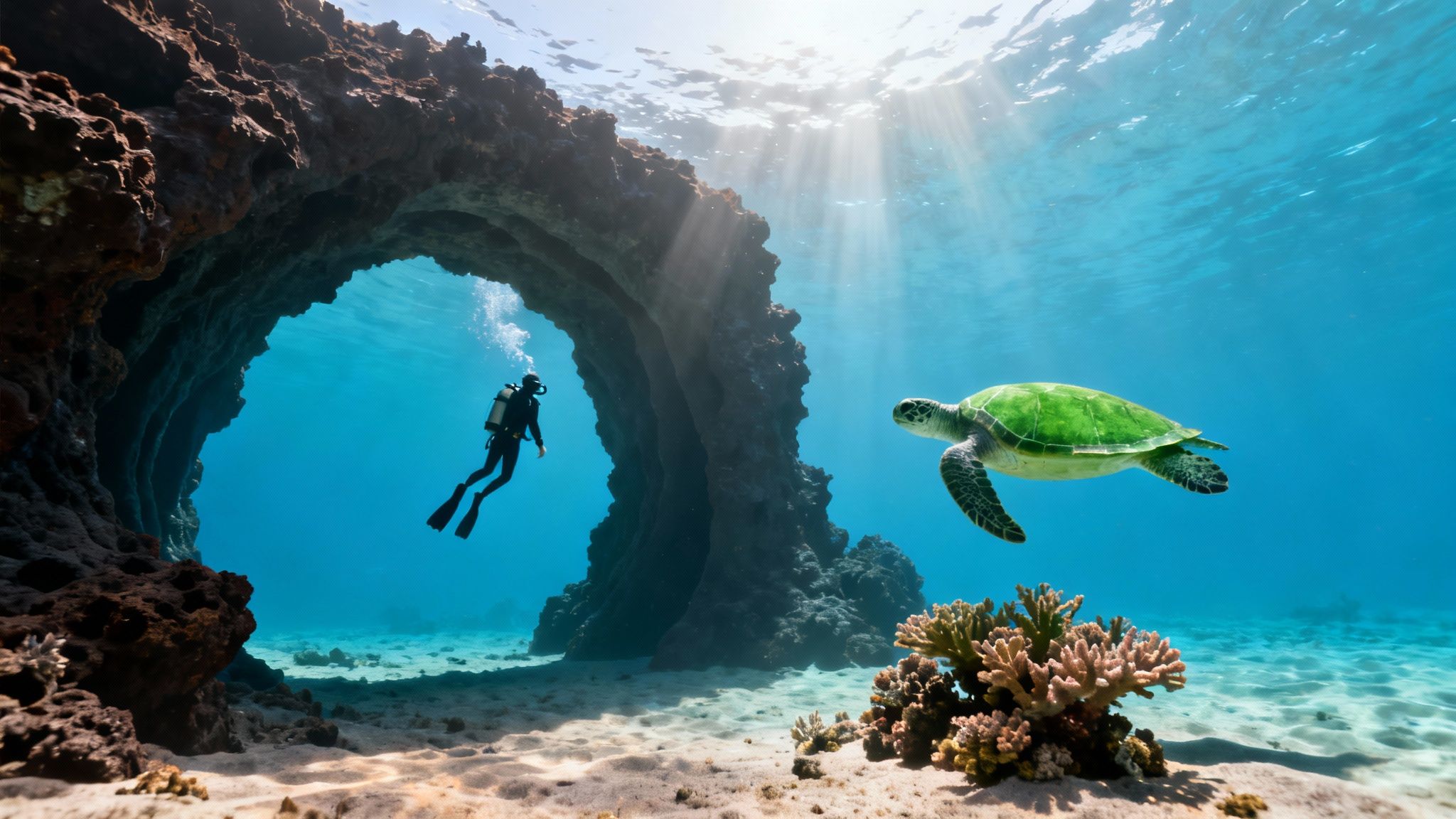
The Kona coast is a diver’s paradise, largely thanks to massive volcanoes that shield it from steady trade winds. This natural barrier delivers glassy seas and crystal clarity, often exceeding 100 feet of visibility. Underwater, you’ll explore lava tubes, vast archways, and caves carved over thousands of years.
Big Island Scuba Diving At A Glance
Here’s a quick summary of the key features that make the Kona coast an exceptional scuba diving destination.
| Feature | Details |
|---|---|
| Visibility | Often exceeds 100 feet, even on typical days |
| Dive Site Variety | Over 1,000 distinct spots ranging from reefs to wrecks |
| Annual Dive Activity | Hawaii sees 1.5 million scuba dives each year |
| Water Temperature | Comfortable 75°F–80°F year-round |
This snapshot highlights why experienced divers and first-timers alike find themselves drawn back to Kona’s clear waters and dynamic topography.
A World-Class Diving Destination
The numbers speak for themselves. Across Hawaii, more than 1.5 million scuba dives happen every year. On the Big Island alone, you’ll find over 1,000 diverse dive sites, helping spread out traffic and protect fragile habitats.
- Visibility remains above 100 feet in most locations.
- Water temperatures stay between 75°F and 80°F year-round.
The Big Island is home to diverse marine ecosystems, each slice of reef teeming with endemic species you won’t find anywhere else.
What truly makes the diving here special is the combination of pristine visibility, unique volcanic topography, and the high concentration of both large and small marine animals. It’s a dynamic environment that offers something new on every single dive.
You can learn more about what is unique about diving in Kona in our detailed guide.
Beyond the living reefs and calm seas, Kona shines when it comes to pelagic encounters. Night dives with graceful manta rays rank among the most awe-inspiring experiences any diver can have, making the Big Island a must-visit on every underwater adventurer’s list.
Kona’s Most Spectacular Dive Sites You Can’t Miss
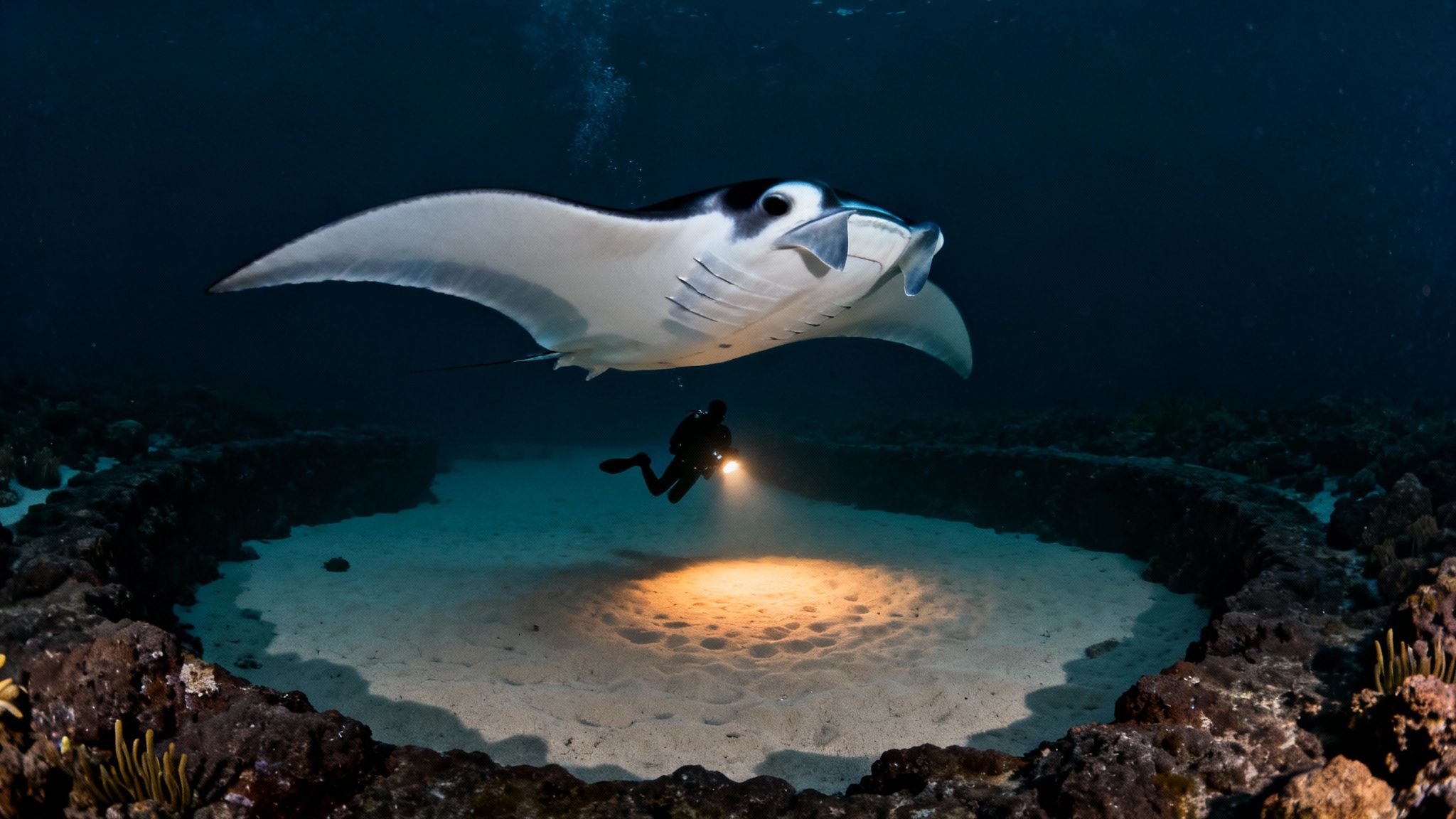
When you decide to scuba Hawaii, you'll quickly discover the Kona coast is an underwater paradise, packed with world-class diving tours. Each spot has its own unique character, from ancient lava tubes and dramatic drop-offs to calm coves filled with vibrant coral gardens. This is what makes Big Island diving so special.
What's great is that many of the best sites are just a quick boat trip from Honokohau Harbor. This means less time traveling and more time underwater. The volcanic history of the island has sculpted an incredible underwater landscape, creating the perfect habitats for an amazing density and variety of marine life.
Iconic Reefs and Where to Find Them
Kona is legendary for its healthy reefs, which are buzzing with all kinds of fish, eels, turtles, and crustaceans. If you want to see the best of what our reefs have to offer, two sites that never disappoint are Turtle Pinnacle and Eel Cove.
Turtle Pinnacle is exactly what it sounds like: a cleaning station for our beloved Hawaiian green sea turtles, or honu. It’s not uncommon to see several of these gentle giants queued up, patiently waiting for surgeonfish to pick parasites and algae off their shells. It’s an incredible natural behavior to witness up close.
Eel Cove gives you a totally different, but equally amazing, experience. The site is riddled with nooks and crannies in the lava rock, which are perfect homes for whitemouth and yellowmargin moray eels. You'll see them poking their heads out everywhere you look! For a deeper dive into the unique geology and marine life here, you can explore more about Big Island diving to see what makes this place tick.
The World-Famous Manta Ray Night Dive
As incredible as Kona's daytime dives are, there’s one experience that sits at the very top of almost every diver's wish list: the Manta Ray Night Dive.
Picture this: you descend into the dark, calm ocean, find a spot on the sandy bottom, and then watch as massive manta rays, with wingspans of up to 16 feet, glide, swoop, and barrel roll just inches over your head. It’s a silent, graceful, and utterly surreal underwater ballet.
How does it work? We place powerful lights on the ocean floor. These lights attract huge clouds of plankton, the mantas' favorite food. The mantas show up for an easy meal, and we get a front-row seat to one of the greatest shows on Earth. It's consistently ranked as one of the best night dives in the world for a reason.
Why Garden Eel Cove is the Superior Choice
While there are a couple of spots to see the mantas, Garden Eel Cove is hands-down the premier location for this mind-blowing encounter. Its specific geography creates the most reliable and magical experience.
Here’s what makes Garden Eel Cove the best spot on the island for the manta dive:
- Protected Location: It’s tucked into a bay, which shields it from the open ocean swells. This translates to calmer, safer, and much more comfortable conditions for everyone on the boat.
- Better Viewing Area: The site has a natural underwater "amphitheater." Divers can settle into the sand with a perfect, unobstructed view as the mantas put on their show right above.
- Better Reefs: The surrounding coral is more vibrant and teeming with life, making the whole dive beautiful, even before the main event begins.
This trifecta—calm water, a perfect viewing setup, and a thriving ecosystem—is why the Manta Ray Night Dive at Garden Eel Cove isn't just a dive; it's a core memory in the making.
Picking an operator that knows and frequents Garden Eel Cove is the key to having the best possible manta experience. You'll be set up for an encounter that feels both grand and surprisingly intimate, leaving you with a story you’ll tell for the rest of your life.
At Kona Honu Divers, the Manta Ray Dive is our signature trip. Our crew has spent years diving this site, and their deep understanding of manta behavior and the local environment ensures every trip is safe, respectful, and absolutely awe-inspiring.
Advanced Diving Adventures Beyond The Reef
Once you've logged some serious bottom time, you start looking for that next thrill. The pull of the unknown. For seasoned divers, the vibrant sunlit reefs are just the beginning, and Kona's deep blue water holds adventures that will reignite that sense of pure discovery.
These dives aren't for beginners. They're for those who have mastered their buoyancy and are ready for a real challenge. We're talking about deep explorations of dramatic volcanic ledges and exhilarating drift dives that reward sharp skills with truly unforgettable encounters.
The Kona Blackwater Dive: An Otherworldly Experience
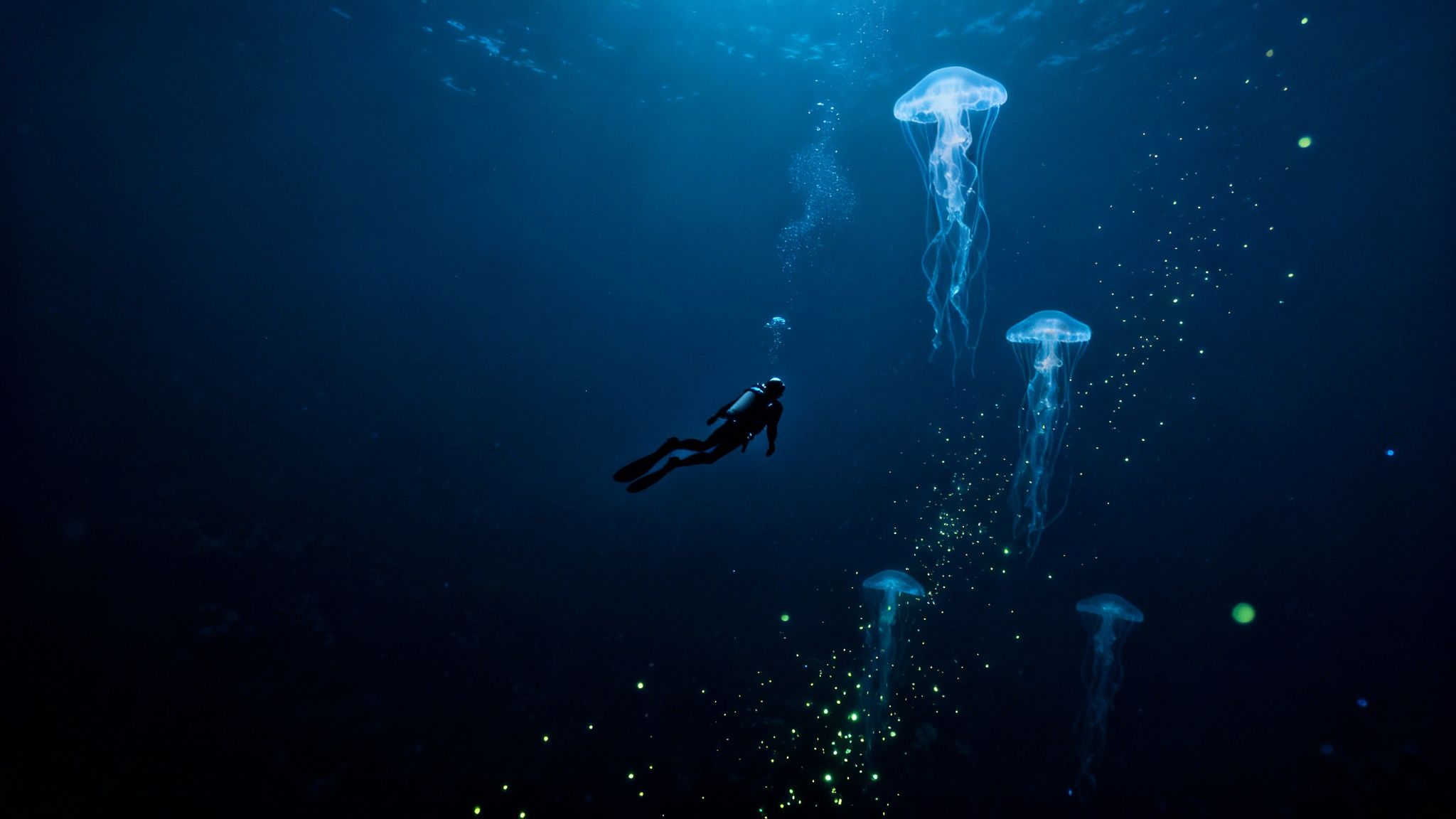
Imagine this: you're miles from shore, suspended in the vast, inky blackness of the open ocean. It's not a reef dive; it's the legendary Kona Blackwater Dive, an experience divers often describe as floating through outer space. You’ll descend to about 50 feet, tethered to the boat, and simply hover as a universe of bizarre and beautiful creatures rises from the abyss to meet you.
This is the largest migration on Earth, happening every single night, and you get a front-row seat. You'll witness creatures you've only seen in documentaries—if at all. Think glowing jellies, larval fish that look nothing like their adult forms, and mesmerizing squid pulsing with light. It’s a sensory trip that is both humbling and absolutely exhilarating.
To join this dive, you’ll typically need an Advanced Open Water certification and rock-solid buoyancy control. The whole point is to stay perfectly still and let the ocean's secrets drift by. It is, without a doubt, one of the most unique night dives on the entire planet.
Pushing Your Limits With Advanced Dives
Beyond the blackwater experience, Kona is a playground for advanced divers. Our dramatic underwater volcanic landscapes create the perfect setting for deep dives and thrilling drift dives along sheer walls and ancient lava formations. It's a whole different side of Hawaii's marine ecosystem.
The demand for this kind of specialized adventure is growing. In fact, trends like drift diving are projected to capture 25% of the scuba Hawaii market by 2025. It’s part of a global movement, with the scuba tourism market forecasted to hit USD 1,748.5 million by 2032. You can read more about the growth of the diving tourism market on futuremarketinsights.com.
Dives like these often require more than just standard skills; they demand specialized gear and training. Using enriched air nitrox, for instance, is a game-changer that can safely extend your bottom time on deeper profiles. We cover all the details in our article on the benefits of diving with nitrox.
An Advanced Open Water certification is the key that unlocks these deeper and more challenging dive sites. It builds upon foundational skills, giving you the confidence and knowledge to safely explore beyond standard recreational limits.
Here at Kona Honu Divers, we run specialized charters for those ready to take the plunge. Our Premium Advanced 2-Tank Trip is built for experienced divers who want to explore deeper sites and more demanding environments. And if you’re ready for the ultimate nighttime adventure, you can book your Blackwater Dive with our expert guides. You can trust that you're in good hands with our experienced instructors who put your safety first while ensuring a dive you'll never forget.
How to Plan Your Perfect Kona Dive Trip
So, you're dreaming of a scuba Hawaii adventure? Good news: turning that dream into a reality is a lot easier than you might think. With a bit of planning, you can put together a trip that perfectly balances incredible dives with that classic, laid-back island vibe. A little forethought goes a long way in making sure you get the most out of your time in Kona's amazing waters.
The first step is figuring out the best time to visit. While the diving here is fantastic all year, the seasons bring subtle changes that can shape your experience. Knowing the difference is the secret to matching your trip to your personal diving style.
Timing Your Big Island Dive Adventure
Kona's dive conditions are famously consistent, but each season offers its own unique perks. Your decision on when to book really comes down to what you want to see and do, both in and out of the water.
- Summer (May to September): This is when we typically get the calmest seas and warmest water, often hitting a balmy 80°F. Visibility is usually at its absolute best, making it a perfect time for new divers, underwater photographers, or anyone who just loves soaking up the sun between dives.
- Winter (December to March): The surface can get a little choppier, but this is peak humpback whale season. There's nothing quite like hearing the haunting songs of these massive animals echoing through the water during a dive. It's a powerful experience you can only get during these months.
And don't worry—no matter when you come, the world-famous manta rays are here year-round. That means the legendary Manta Ray Night Dive is always an option and a reliable highlight for any trip.
Essential Logistics: Certification and Gear
Once you've got your dates picked out, it's time to nail down the practical details. To join most of our boat dives in Kona, you'll need at least an Open Water Diver certification from an agency like PADI. For some of our more advanced dive tours, like the incredible Blackwater Dive, an Advanced Open Water certification is required.
When it comes to gear, you’ve got choices. A lot of divers like to bring their own mask, fins, and computer because they know they fit and work just right. That said, renting is a super convenient way to travel light.
Here's a pro tip for any diver, especially if you're new: bring your own mask. A leaky, uncomfortable mask can completely distract you from an amazing dive. Investing in one that fits your face perfectly is always a smart move.
Reputable shops like Kona Honu Divers have top-notch, well-maintained rental gear, including BCDs, regulators, and wetsuits. You can rest easy knowing you have safe, reliable equipment for every dive. For a full rundown of what we offer, take a look at our complete diving tours page.
A Sample 5-Day Kona Dive Itinerary
To give you a better idea of what your trip could look like, here’s a sample itinerary. It blends some of our most iconic dives with classic reef exploration and, of course, some much-needed relaxation.
| Day | Morning Dive (2 Tanks) | Afternoon/Evening Activity |
|---|---|---|
| 1 | Arrive in Kona, check in, and pick up any rental gear. | Relax and get on island time. |
| 2 | Explore classic Kona reefs like Turtle Pinnacle. | Take a lazy afternoon stroll through historic Kailua-Kona. |
| 3 | Discover unique lava tube formations and archways. | Experience the world-famous Manta Ray Night Dive! |
| 4 | Dive a vibrant site known for eels and octopuses. | Visit a local coffee farm for a taste of real Kona coffee. |
| 5 | One final reef dive to see more of our endemic fish. | Head home, or stick around to explore more of the island. |
Think of this as a starting point. It’s a great framework that gives you a taste of everything the Big Island has to offer, but you can easily tweak it to fit your own pace and interests.
Choosing The Right Dive Operator In Kona
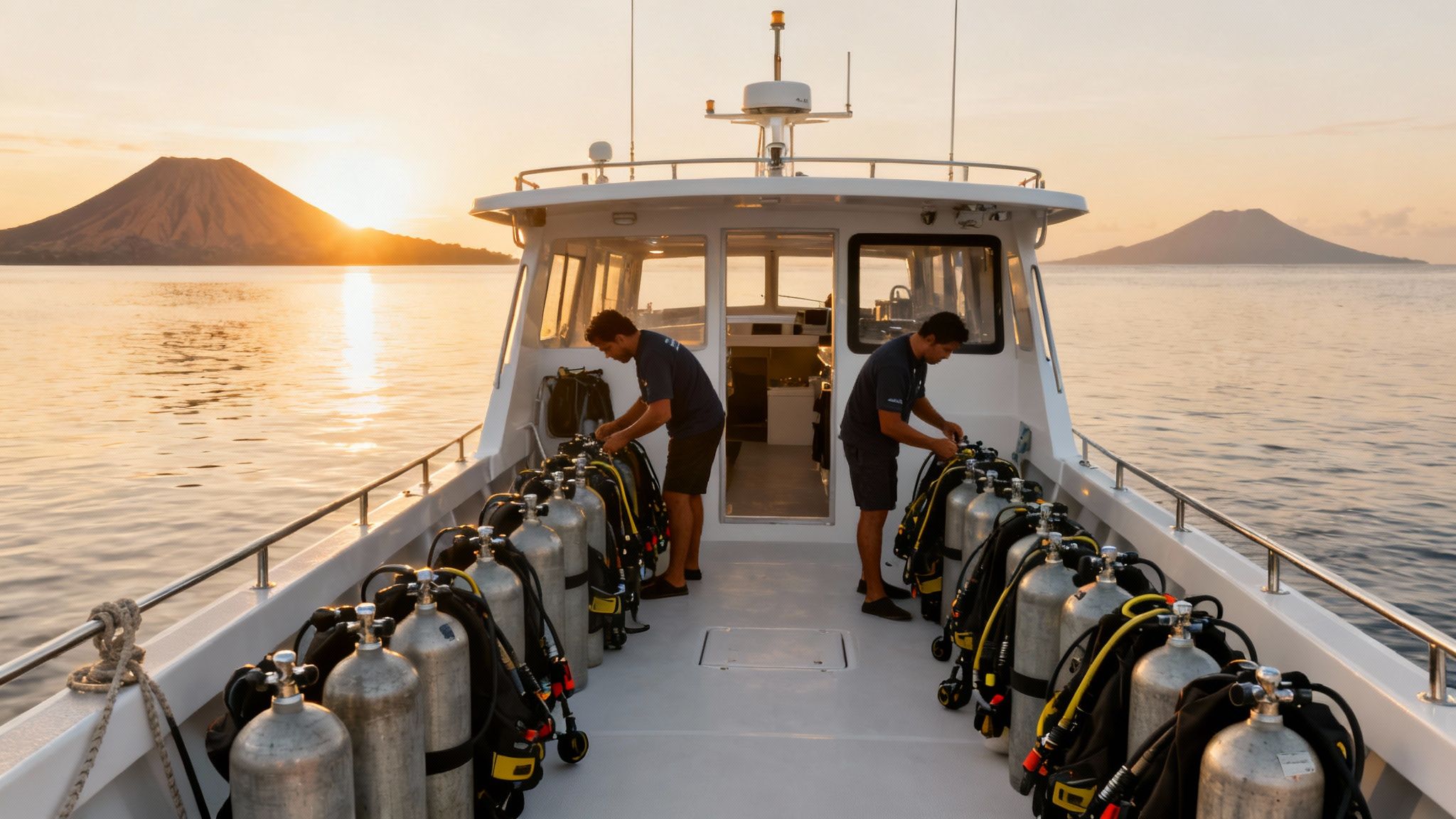
Let’s be honest: the dive operator you choose can absolutely make or break your trip. A great dive shop doesn't just ferry you to a dive site; they elevate the entire experience. They live and breathe safety, and their passion for the ocean is infectious. The wrong one can turn a dream dive into a stressful, forgettable day.
Here in Kona, the bar for scuba Hawaii is set exceptionally high. The real difference between a good operator and a truly great one boils down to three things: a flawless safety record, top-notch boats and gear, and a crew that’s as knowledgeable as they are enthusiastic.
What Sets a Top-Tier Dive Operator Apart
When you're looking at your options, try to see past the price tag. The best operators pour their resources into the things that truly matter for your safety and enjoyment. It’s a difference you can feel.
Here’s what you should expect from a premier dive company:
- Custom-Built Boats: A boat designed by divers, for divers, is a game-changer. Look for spacious decks, easy ways to get in and out of the water (like a proper "Christmas tree" ladder), and thoughtful comforts like freshwater showers and shaded areas to relax between dives.
- Meticulously Maintained Gear: Rental gear should be from reputable brands and serviced obsessively. How a shop treats its equipment is a direct reflection of how it will treat its divers. It’s all about safety.
- An Expert Crew: The best guides are so much more than just certified divers. They’re walking marine life encyclopedias, patient teachers, and amazing storytellers who will point out the perfectly camouflaged octopus you’d have swum right past.
An operator's reputation is built one dive at a time. It’s the consistency—in safety, in service, and in creating unforgettable moments—that separates the industry leaders from the rest of the pack, especially in a world-class destination like Kona.
The desire for incredible dive experiences is growing worldwide. In fact, the global diving tourism market is projected to hit USD 18.5 billion by 2035, with a huge emphasis on sustainable, eco-conscious tours. By choosing a top-rated operator, you're not just getting a better trip; you're supporting the people who are doing things the right way. You can learn more about global trends in diving tourism on futuremarketinsights.com.
The Kona Honu Divers Difference
At Kona Honu Divers, we've worked hard to set the standard for what a Big Island dive trip should be. Our entire operation is built on a foundation of safety, comfort, and a deep, genuine respect for the ocean. We believe an amazing dive starts long before you even get your fins wet.
It starts on our boats. We run two custom-built Newton dive boats, the Honu One and the Honu Iki. These aren't just any boats; they were designed from the hull up for Kona’s unique waters and for our divers' comfort, with plenty of space, camera rinse bins, and everything you need for a smooth day at sea.
Our commitment continues with our gear. We provide high-quality, regularly serviced rental equipment to ensure every piece works flawlessly when you need it. But our crew is truly our greatest asset. With a combined experience of over 200 years, their expertise is simply unmatched. They are passionate about sharing Kona's underwater world and making sure every single diver, from the brand-new to the seasoned pro, has a safe and incredible adventure. You can see all of our Kona diving tours right here.
Comparing Top Operators in Kona
To help you make a decision you feel great about, we’ve gathered reviews for some of the best-rated dive operators in the Kona area, including us. Hearing directly from fellow divers is one of the best ways to get a real feel for an operation.
Kona Honu Divers
Jack's Diving Locker
Big Island Divers
At the end of the day, choosing a top-rated operator isn't just a detail—it's an essential part of planning a safe and spectacular Hawaii scuba vacation. It’s an investment in your peace of mind and the quality of your adventure.
Common Questions About Scuba Diving In Hawaii
Heading out for a scuba adventure in Hawaii is a thrilling prospect, but it’s completely normal to have some questions before you jump in. Figuring out the logistics, what you'll see, and what you need beforehand helps make the trip as seamless and fun as possible. We'll tackle the most common questions divers have about exploring the Big Island's incredible underwater world.
We've pulled together answers based on years of firsthand experience to give you straightforward, practical advice. Our goal is to make sure you feel confident and totally prepared for your Kona dive trip.
What Is The Best Time Of Year To Scuba Dive In Hawaii?
One of the greatest things about diving in Kona is that it’s spectacular all year long. The water stays in a very comfortable range, typically between 75-80°F, no matter what month you visit. That said, the "best" time really comes down to your personal preference and what you're hoping to experience.
-
Summer (May to September): This is when you'll generally find the calmest seas and the clearest water. If glassy conditions and picture-perfect visibility are at the top of your list, summer is a fantastic choice. It's especially great for new divers or photographers hunting for that perfect shot.
-
Winter (December to March): While the surface might be a bit choppier from time to time, winter is humpback whale season. There is nothing quite like hearing the haunting, powerful songs of these giants echoing through the water on a dive. It's a goosebump-inducing experience you can only get this time of year.
And don't worry about the world-famous manta rays—they're here year-round, so you can book the incredible Manta Ray Night Dive any time you visit and have a great chance of a fantastic encounter.
Do I Need To Be Certified To Scuba Dive In Kona?
Yes, for almost all of our boat dives, you'll need to be a certified diver. The standard certification is the PADI Open Water Diver or an equivalent from another internationally recognized agency. This certification shows that you’ve got the essential knowledge and skills to dive safely.
But if you're not certified, you don't have to miss out! You can still explore Kona's underwater world with a Discover Scuba Diving (DSD) experience. Think of a DSD as a guided tour of the ocean—an instructor is right by your side in a controlled, shallow environment, handling all the tricky stuff so you can just enjoy the magic.
For some of the more advanced adventures, like the otherworldly Kona Blackwater Dive, you'll need an Advanced Open Water certification or higher. We offer a full range of PADI courses right here at Kona Honu Divers, so you can even get certified or advance your training while you're on vacation.
What Marine Life Can I Expect To See On The Big Island?
The amount of life packed onto the Kona coast is just staggering. On any given dive, you have a really good shot at seeing Hawaiian green sea turtles (honu), different kinds of moray eels peeking out from their rocky homes, octopuses, and a whole spectrum of colorful reef fish. It’s also common to see playful pods of spinner dolphins from the boat on the way to and from dive sites.
Kona is legendary for its reliable encounters with big marine animals. Our Manta Ray Night Dive gives you a near-guaranteed front-row seat to watch majestic manta rays gracefully feed on plankton just inches away.
Depending on the site and the season, you might spot other amazing creatures, too. Whitetip reef sharks are often found relaxing on sandy patches, and you might see a graceful eagle ray or two cruising along the edge of the reef. The sheer variety means every single dive offers a new sense of discovery.
Is The Manta Ray Night Dive Safe For Beginners?
Absolutely. The Manta Ray Night Dive is a highly controlled and exceptionally safe experience, perfect for certified divers of all levels. Safety is always our number one priority. We run a thorough briefing before the dive and keep a high ratio of professional guides to divers in the water.
The dive itself is stationary, which makes it very easy to manage. You’ll descend to a spot on the sand, usually around 35-40 feet deep, and simply kneel or lie down to watch the show unfold above you. We use a site like Garden Eel Cove, which is protected from any strong currents.
Because you’re watching passively instead of swimming around, it’s a calm, comfortable, and totally awe-inspiring way to do your very first night dive.
At Kona Honu Divers, our experienced crew is ready to answer any other questions you may have and guide you on an unforgettable underwater journey. Explore all our Kona diving tours and book your adventure today!