
Picture this: you descend through warm, impossibly clear turquoise water. Sunlight dances across ancient volcanic lava tubes below, illuminating a reef that’s absolutely electric with life. This isn't a dream—this is what it’s like to scuba Hawaii.
It’s an experience that’s equal parts raw adventure and serene beauty. One moment you're watching a graceful sea turtle glide by, the next you're exploring an otherworldly lava formation. The Hawaiian Islands offer an underwater world that's truly one of a kind.
Welcome To Hawaii’s Underwater Paradise
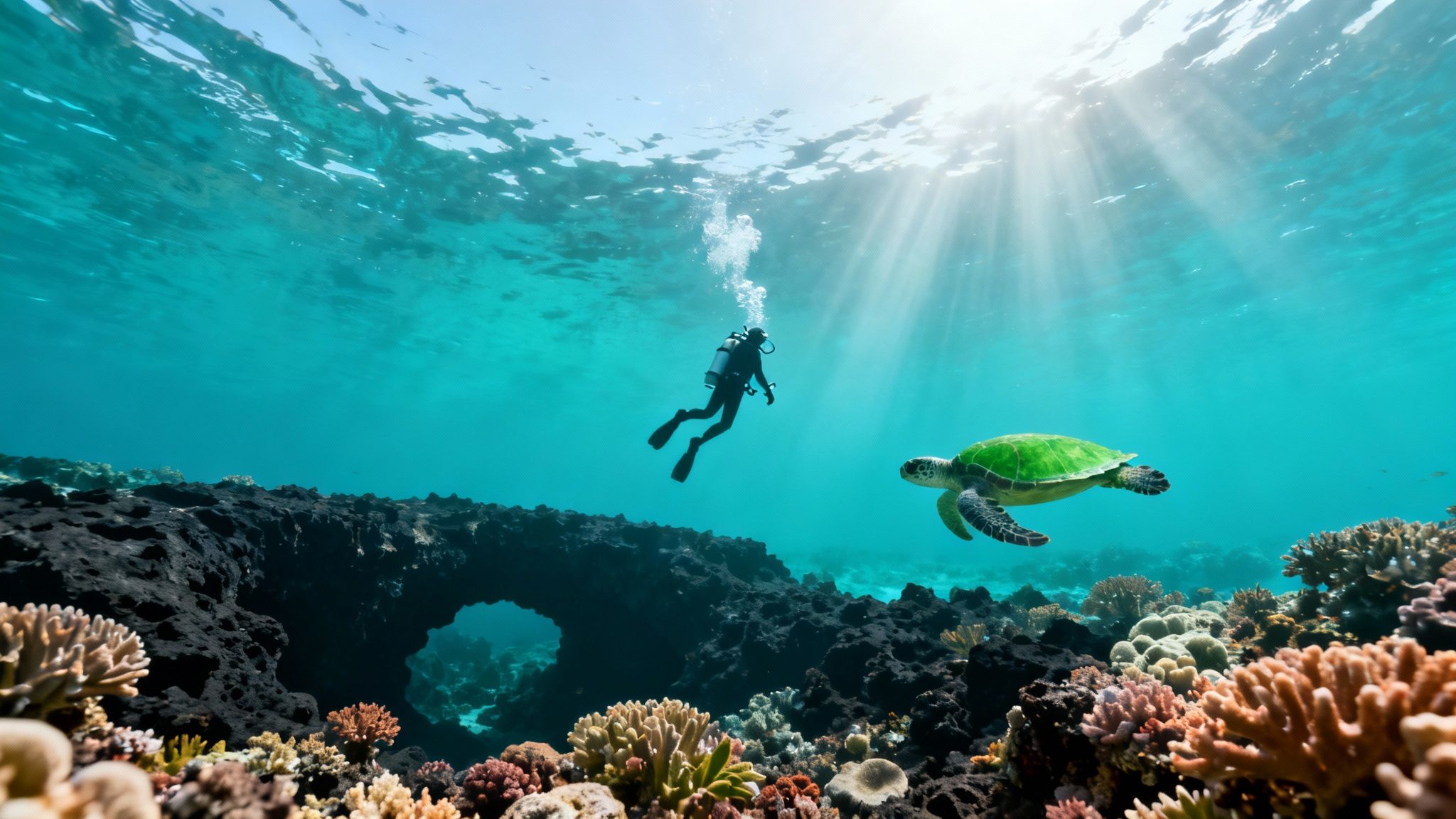
Think of this guide as your personal dive master, ready to show you the best spots. We'll cover everything from swimming alongside gentle green sea turtles (honu) in Maui to exploring the sunken history of shipwrecks off Oahu. Hawaii's fiery volcanic origins have sculpted a dramatic underwater landscape that keeps divers of all levels coming back for more.
But if you ask any seasoned diver, they'll likely point you toward one place in particular: the Kona Coast on the Big Island. The diving here is legendary, known for its calm, clear conditions and marine life that you just have to see to believe. It's home to some truly unique diving tours that you won't find anywhere else.
What Awaits Beneath the Waves
Diving in Hawaii is a full-immersion experience. You're not just looking at fish; you're exploring a living, breathing ecosystem shaped by millions of years of volcanic activity. You can see it everywhere, from intricate lava tubes you can swim through to massive underwater arches that feel like sunken cathedrals.
This incredible topography creates the perfect home for a staggering variety of life, including a huge number of species endemic to these islands. On any given dive, you're likely to find:
- Vibrant Coral Gardens: Sprawling, healthy reefs that are home to thousands of brilliantly colored tropical fish.
- Unique Volcanic Topography: Get ready to navigate caverns, tunnels, and dramatic pinnacles forged by ancient lava flows.
- Iconic Marine Animals: It’s almost a guarantee you’ll have encounters with green sea turtles, and seeing spinner dolphins or manta rays is a common thrill.
For anyone planning a trip, the Big Island is hard to beat. The Kona Coast, in particular, delivers some of the most accessible and consistently spectacular diving in the entire state. Going with a local expert like Kona Honu Divers makes all the difference, as they know exactly where to go for the best and safest underwater adventures.
This guide will walk you through the unique dive culture of each island and show you why this Pacific paradise belongs at the very top of every diver's bucket list. Let's get ready to explore a world where every dive tells a new story.
Why Hawaii Is a World-Class Diving Destination
So, what puts Hawaii in the big leagues for scuba divers? Lots of places have warm water and pretty reefs, but the Hawaiian Islands offer a potent combination that few destinations can match: phenomenal, year-round diving conditions backed by one of the most professional and experienced dive industries on the planet.
It’s this one-two punch that really sets a trip here apart. You’re not limited to a tight three-month window to get the best conditions. Water temperatures hover in a comfortable 75°F to 80°F range all year long, so you can plan an epic underwater trip for January with the same confidence as you would for July. That kind of consistency is a massive advantage when you're planning a vacation.
This year-round appeal has allowed a truly world-class dive community to flourish. When you step onto a dive boat here, you're tapping into decades of shared local knowledge, incredibly high safety standards, and a genuine passion for protecting the underwater world.
Let's take a quick look at what makes diving here so special.
The table below gives you a snapshot of why Hawaii consistently ranks as a top-tier destination for divers of all levels.
Hawaii Scuba Diving At A Glance
| Feature | Details |
|---|---|
| Water Temperature | A comfortable 75°F – 80°F year-round. |
| Visibility | Generally excellent, often exceeding 100+ feet. |
| Dive Season | Year-round, with distinct summer and winter conditions. |
| Marine Life | High concentration of endemic species found nowhere else. |
| Topography | Dramatic volcanic landscapes, lava tubes, and caverns. |
| Dive Industry | Mature, professional, and highly regulated for safety. |
From the warm, clear water to the unique underwater terrain, every element comes together to create an unforgettable diving experience.
A Mature and Professional Dive Industry
The sheer scale of Hawaii’s dive industry is a huge plus for any visiting diver. This isn't some quiet outpost with a handful of small boats. We’re talking about a well-oiled machine built around delivering safe, incredible underwater adventures day in and day out.
Hawaii’s dive scene is massive. Industry estimates suggest it supports over 1.5 million individual scuba dives every single year. This incredible volume is handled by a network of more than 200 licensed dive operators running charters for every imaginable purpose, from beginner certification dives to advanced technical and research expeditions. You can dive deeper into the numbers with this great overview of Hawaii's thriving dive scene on dedepudive.com.
For you, the diver, this translates into some very real benefits:
- Top-Notch Safety: With so many operators, safety isn't just a buzzword; it's a core part of the culture. Protocols are constantly being refined and upheld.
- Specialized Trips: Want to focus on underwater photography? Or maybe you’re into deep wrecks? There’s an operator here who specializes in exactly what you’re looking for.
- Real Local Knowledge: The divemasters and instructors here are true experts. They know these sites like the back of their hand—from the secret spots where octopus hide to the subtle shifts in the currents.
- Healthy Reefs: The dive community works hard to protect the very environment that makes this place so special. It's a collective effort to keep the reefs healthy for generations to come.
Unmatched Underwater Topography and Marine Life
Beyond the fantastic industry, the real star of the show is the underwater world itself. The islands’ volcanic origins have sculpted a dramatic, almost otherworldly landscape beneath the waves.
Imagine dropping down the side of a massive, ancient lava tube, its walls teeming with life. Picture yourself gliding through archways and caverns carved by molten rock millions of years ago. This unique geology is the canvas for the incredible marine life that has made Hawaii its home. Because the islands are so isolated, a huge percentage of the fish and critters you'll see are endemic—they exist here and nowhere else on Earth.
The combination of volcanic underwater architecture and a high concentration of endemic species means that every dive in Hawaii offers the chance to see something truly unique. It’s not just about the quantity of life, but the remarkable quality and distinctiveness of the ecosystem.
This is what elevates a scuba Hawaii trip from a simple vacation to a true exploration. You're not just looking at fish; you're diving through the living history of the islands' fiery creation. It’s an experience that will challenge and captivate any diver, from the newly certified to the most seasoned veteran.
Exploring The Top Dive Sites Across The Islands
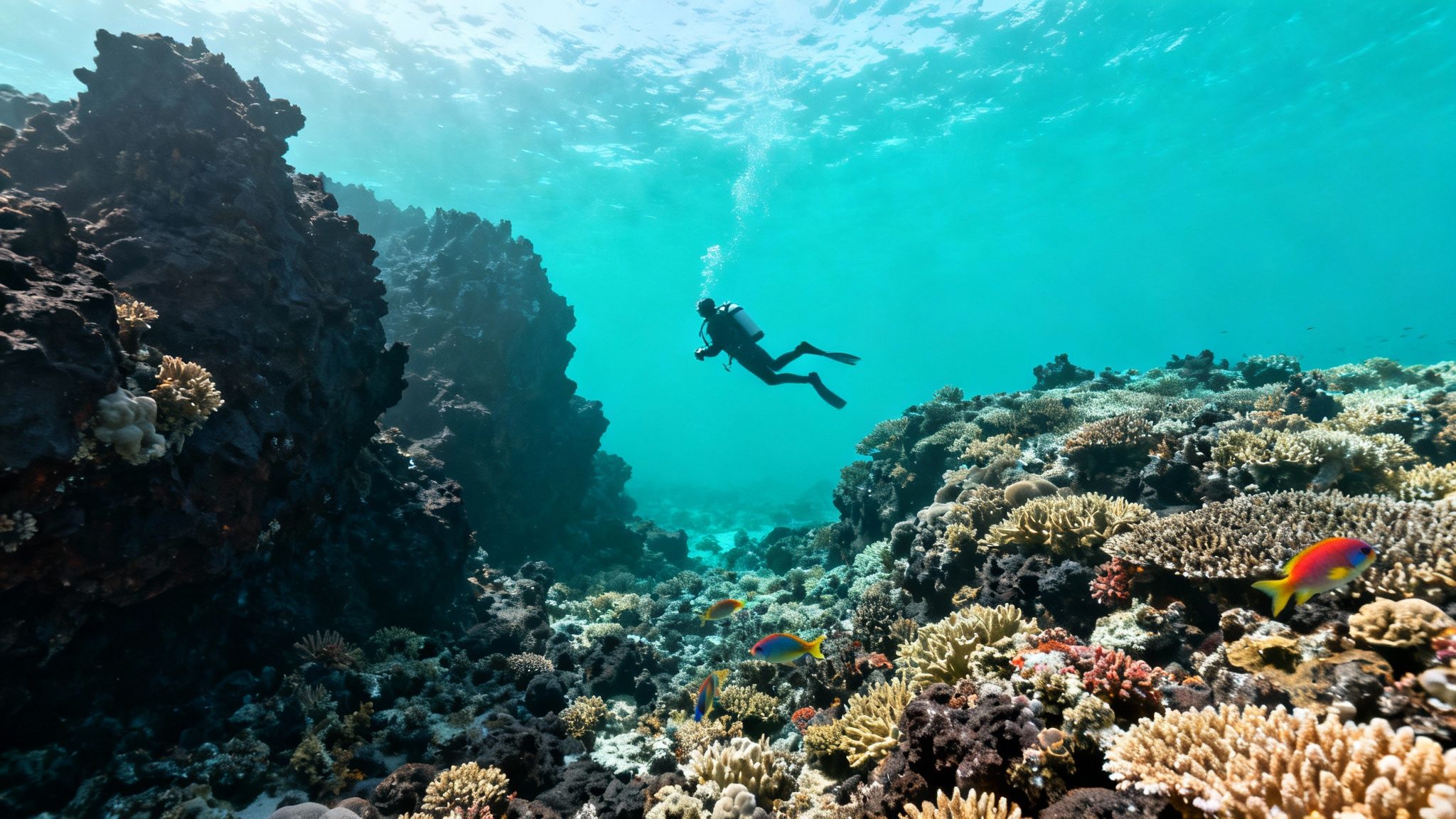
While the Hawaiian Islands all sprang from the same volcanic hot spot, their underwater worlds couldn't be more different. Each island has its own unique character, sculpted by millions of years of lava flows, powerful ocean currents, and reef evolution. This means the scuba Hawaii experience can feel worlds apart from one island to the next.
For divers, this incredible variety is a huge part of the appeal. One day you could be navigating the ancient lava tubes of the Big Island, and the next, drifting along the sheer volcanic walls off Maui. Knowing what makes each island special is the secret to planning a trip that truly matches what you want to see and do.
Let's dive into the best spots across the archipelago, starting with the undisputed king of Hawaiian diving: the Kona Coast.
The Big Island: The Kona Coast
For most divers, any conversation about the best scuba in Hawaii starts and ends on the Big Island’s Kona Coast. Tucked into the lee of the colossal Mauna Loa and Hualālai volcanoes, the water here is famously calm, crystal clear, and teeming with life. It’s a genuine diver’s paradise.
The underwater terrain is a direct window into the island's fiery past. You'll find dramatic drop-offs, vibrant coral gardens growing over old lava flows, and a maze of arches, caverns, and tubes just waiting to be explored. This complex topography creates endless nooks and crannies for an incredible array of marine creatures to call home.
This is our backyard, and operators like Kona Honu Divers have spent years mastering this coastline, running trips for every experience level. Whether you're after a chill reef tour or a high-octane adventure, Kona delivers.
The Big Island isn’t just a great dive spot; it's a world-class destination backed by some serious numbers. Local dive masters have charted well over 1,000 unique dive sites along the coast alone. Add in comfortable year-round water temperatures averaging 24–27°C (75–80°F), and you have a place that offers incredible diving any day you choose to jump in.
Maui: The Molokini Crater
Just a short boat ride from Maui sits one of Hawaii’s most iconic dive locations: Molokini Crater. This crescent-shaped, partially submerged volcano is a protected Marine Life Conservation District, and it shows. The result is an underwater sanctuary with some of the most phenomenal visibility in the state, often clearing 150 feet.
Diving inside Molokini feels like you’ve been dropped into a giant, perfectly curated aquarium. The crater's towering walls shield the inner reef from the open ocean, creating a calm, protected environment where corals and fish flourish.
What you'll find inside:
- Clouds of Reef Fish: Expect to be surrounded by schools of butterflyfish, parrotfish, and Moorish idols.
- Hidden Critters: Look closely for well-camouflaged frogfish, moray eels, and octopus tucked into the reef.
- Stunning Clarity: The gin-clear water makes it an underwater photographer’s dream.
For divers with a bit more experience, the "back wall" of the crater offers an exhilarating drift dive. It's a sheer vertical drop that plummets to over 300 feet, attracting larger pelagic species like sharks, jacks, and the occasional manta ray cruising by in the blue.
Oahu: The Wreck Diving Capital
While other islands are famous for their natural volcanic formations, Oahu has become Hawaii's go-to destination for wreck diving. The waters here serve as the final resting place for several ships that were intentionally sunk to create thriving artificial reefs.
The most celebrated of these is the YO-257, a former Navy oiler that now sits in about 100 feet of water. Its structure is wide open, allowing for safe and exciting penetration dives. As you explore its decks, you’ll find them patrolled by eagle rays, moray eels, and huge schools of fish.
Another fantastic wreck is the Sea Tiger, a former trading vessel that sits perfectly upright on the seafloor. Exploring these sunken giants is a completely different kind of dive—a fascinating blend of maritime history and marine biology that’s a must for any certified diver visiting the island.
Kauai: The Na Pali Coast And Niihau
Known as the "Garden Isle," Kauai offers a diving experience that feels wilder and more untamed. The most spectacular sites are found along the legendary Na Pali Coast, where staggering green cliffs plunge straight into the ocean. Underwater, this translates to dramatic walls, deep canyons, and lava tubes that are a haven for Hawaii’s beloved green sea turtles.
For the ultimate adventure, however, you have to look to Niihau. Known as the "Forbidden Isle," this privately owned island is only accessible by a few dive charters. The payoff is some of the most pristine and thrilling diving in Hawaii. The main draw? Unforgettable encounters with the critically endangered Hawaiian monk seal, one of the rarest marine mammals on the planet. These are challenging, advanced drift dives, but the reward is a glimpse into a truly untouched underwater world.
Signature Dives You Simply Cannot Miss
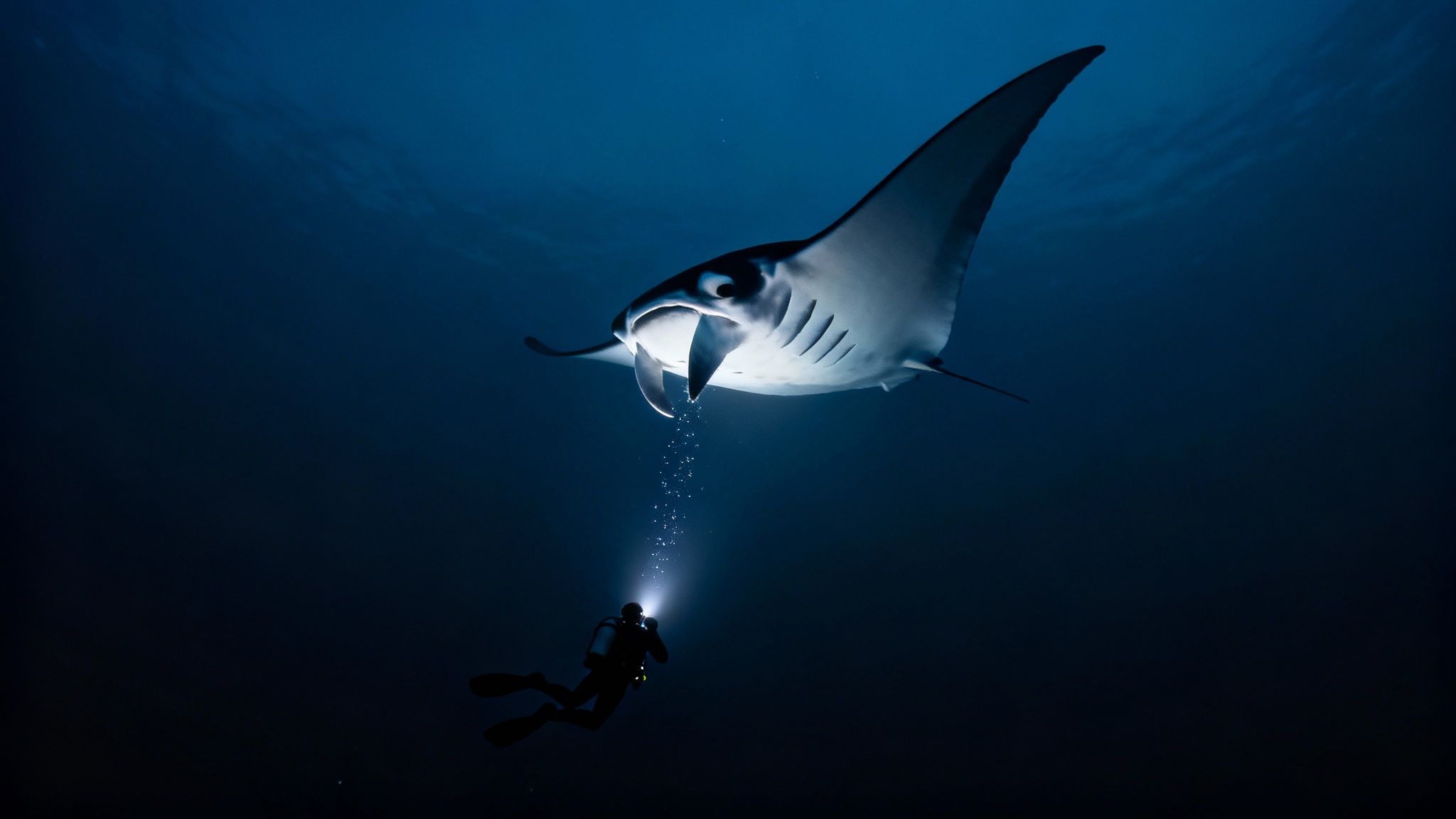
Sure, the colorful reefs and wild lava tubes are incredible day in and day out. But some dives in Hawaii are just on another level. They're the kind of experiences that get their own special page in your logbook—the stories you’ll be telling for years.
These signature dives go way beyond a typical tour. We're talking about Kona’s world-famous Manta Ray Night Dive, the mysterious Blackwater Dive, and specialized trips for seasoned divers looking for a real challenge. These are the dives that take a great scuba Hawaii vacation and make it truly unforgettable.
The World-Famous Manta Ray Night Dive
Picture this: you're kneeling on the sand in the pitch-black ocean, surrounded by beams of light pointing straight up. Then, out of the darkness, a massive, silent shadow glides overhead, somersaulting just inches from your mask. This is the absolute magic of the Manta Ray Night Dive, consistently voted one of the best night dives on the entire planet.
The setup is brilliant. Dive operators place powerful lights on the seafloor, which act like a massive bug zapper for plankton, the mantas' favorite food. The mantas, with wingspans that can stretch over 15 feet, show up for the all-you-can-eat buffet. They perform a mesmerizing underwater ballet, looping and soaring through the light beams to scoop up the plankton.
While you can do this dive at a couple of spots, one is the clear winner for the best possible experience.
Why Garden Eel Cove is the Premier Manta Site: Though other sites host mantas, Garden Eel Cove is hands-down the best place for the manta ray dive tour. It's tucked away and more protected from open ocean swells, which means calmer, more comfortable conditions. The viewing area is also set up like a natural amphitheater with better reefs, giving everyone a front-row seat without feeling crowded, making it the superior choice.
This isn’t just a dive; it’s a full-blown performance, connecting you with one of the ocean's most majestic creatures in a way you'll never forget.
Into The Abyss: The Kona Blackwater Dive
If the manta dive is a graceful ballet, the Kona Blackwater Dive is like taking a trip to outer space. It’s definitely not for the faint of heart, but the payoff is unreal: a peek into the bizarre and beautiful world of the deep open ocean.
The concept is as wild as it sounds. You head miles offshore where the ocean floor is thousands of feet below. You then descend to about 50 feet and clip onto a line, floating in the vast, inky blackness. This is where you wait for one of the largest migrations on Earth to come to you.
Every single night, countless strange, bioluminescent creatures rise from the abyss to feed near the surface. You’ll see things that look straight out of a sci-fi movie—glowing squid, see-through larval fish, and pulsating jellyfish that light up from within.
This is the final frontier of underwater exploration. For anyone with a sense of adventure, the Blackwater Dive tour is an absolute must-do.
Advanced Dives For The Experienced Adventurer
Hawaii isn't just about gentle reef tours. If you're a certified diver with solid skills and an itch for more challenging conditions, the islands offer some seriously thrilling advanced dive tour opportunities that will put your training to the test.
These advanced dives often mean dealing with currents, deeper profiles, and more complex planning. They’re built for divers who are completely dialed in with their buoyancy and are always aware of their surroundings.
So, what makes a dive "advanced"?
- Drift Dives: On some of the outer reefs, the currents are a constant. Instead of fighting it, you learn to go with the flow, letting the ocean carry you effortlessly over huge stretches of pristine reef.
- Deep Walls and Pinnacles: The islands' volcanic origins created sheer underwater cliffs and isolated mountains that drop off into the deep blue. These are magnets for bigger pelagic species like sharks, jacks, and rays.
- Remote Locations: Advanced charters often head to spots that the regular tours don't visit, giving you access to untouched environments and a much more exclusive experience.
These trips demand a higher skill level, but the reward is some of the most dramatic and unforgettable diving you'll find anywhere in Hawaii. Operators like Kona Honu Divers run premium advanced dive tours designed for smaller groups of experienced divers ready to explore these exhilarating sites.
Diving with the Best: Planning Your Trip with Kona Honu Divers
Let’s be honest, the dive operator you choose can make or break your entire trip. This is especially true when you're diving Hawaii's world-famous Kona coast. You need a team that knows these waters like the back of their hand, and that’s where Kona Honu Divers comes in. They've earned their reputation by delivering incredible underwater experiences built on a foundation of safety, conservation, and genuine care for every diver.
What really makes them stand out? It's their commitment to small groups. You're not just another tank on a crowded boat. Keeping the groups intimate means your guide has the time to point out that camouflaged frogfish you would have missed, help you fine-tune your buoyancy, and make sure everyone is having a safe, fantastic time. It feels less like a tour and more like a private adventure with friends.
Why Divers Keep Coming Back to Kona Honu Divers
You can feel the passion the moment you meet the crew. These folks aren't just punching a clock; they are true ocean stewards and die-hard divers who live for this stuff. Their knowledge of the Kona dive sites is staggering—they know the secret nooks where octopus hide and the precise spots where currents bring in the most life.
This level of expertise elevates every single dive, turning a great reef tour into a mind-blowing one and making their famous manta ray night dive an experience you'll never forget.
But don't just listen to us. Here's what other divers are saying.
Booking Your Kona Adventure
Getting your trip sorted is simple and hassle-free. All their charters include tanks, weights, and a professional guide. If you're traveling light, they offer top-notch rental gear, so you don't have to lug your own across the Pacific.
Planning to be in the water for a few days? It's definitely worth checking out their multi-day Hawaii scuba diving packages to get the most value out of your vacation.
Ready to find out why Kona Honu Divers is the go-to operator on the Big Island? You can check their live schedule and book your spot right now.
Essential Gear and Safety Information
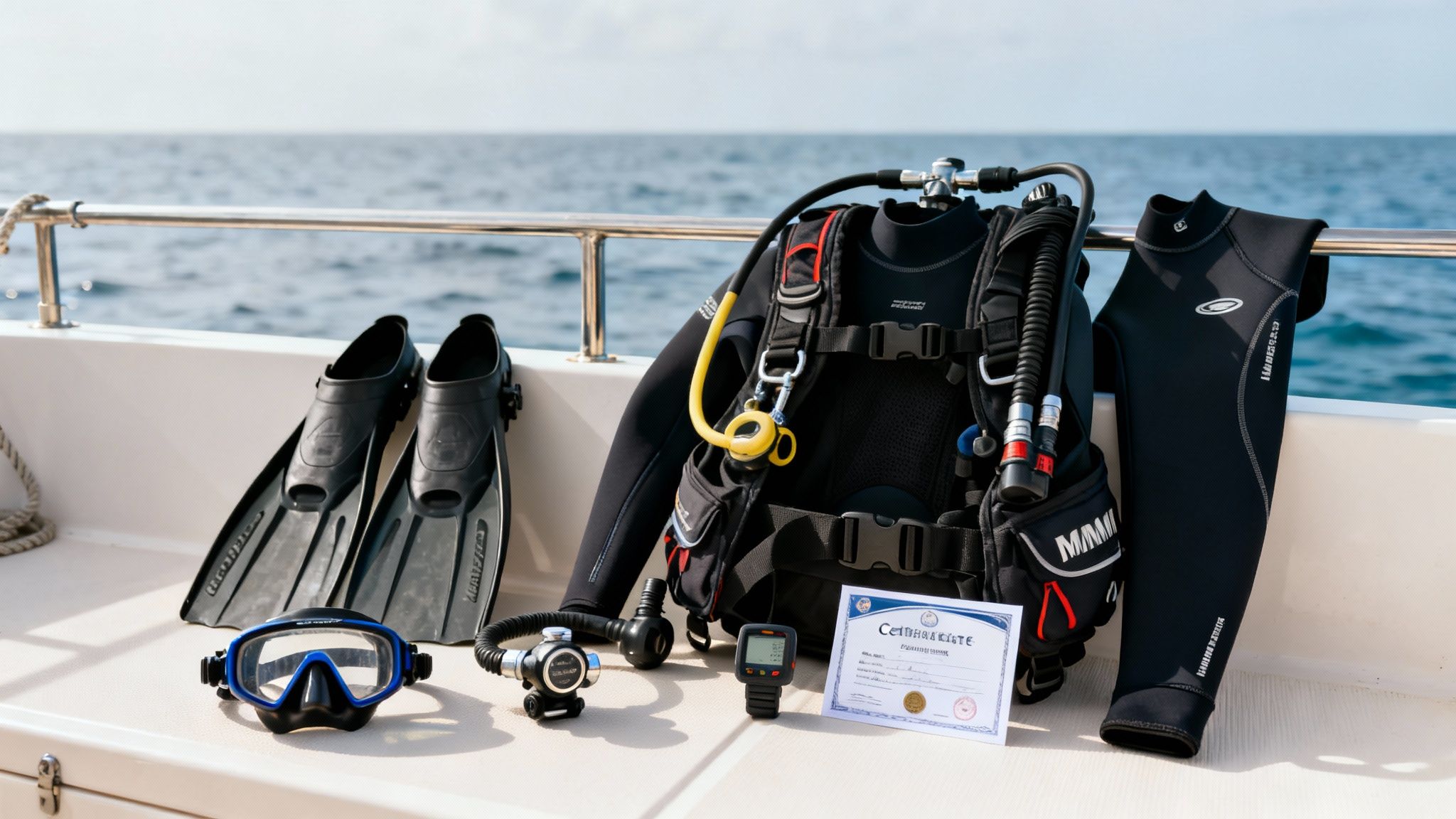
A great dive always starts with solid preparation. Getting your gear and mindset right on the surface is what makes your time exploring Hawaii’s vibrant reefs both safe and completely unforgettable. Before you can even step on the boat, most operators will need to see your Open Water Diver card from PADI, SSI, or another recognized agency. Think of it as your passport to the underwater world.
Don't have a certification card? No problem. Nearly every dive shop offers a "Discover Scuba Diving" experience. It’s a fantastic way to get a taste of diving under the close supervision of an instructor in a calm, shallow spot without committing to the full certification course.
Packing Your Gear vs. Renting
This is the classic diver's dilemma: lug your own gear across the Pacific or rent when you arrive? Packing your own stuff means you get the comfort and familiarity of a setup you trust. On the other hand, renting saves you the headache of extra baggage fees and airport hassle.
Here's how I usually break it down for people:
- Bring Your Own: Absolutely bring your personal fit items. Your mask, dive computer, and even your wetsuit make a huge difference in comfort and safety.
- Rent On-Site: Heavier, bulkier gear like BCDs and regulators are easy to rent. Good, reputable dive shops keep their rental equipment in top shape, so you can travel light with peace of mind.
Even with Hawaii's warm waters, a wetsuit is a good idea to stay comfortable during longer dives. If you're wondering about thickness, we've got a whole guide that breaks it down: what wetsuit is best for diving in Hawaii.
Responsible Diving and Marine Conservation
When you scuba Hawaii, you’re stepping into a fragile, living world. Every diver has a role in protecting it. The golden rule is simple: leave no trace. This means mastering your buoyancy so you can hover effortlessly, preventing any accidental kicks or bumps that could damage coral that has taken decades, or even centuries, to grow.
Remember, look but don’t touch. A strict "no-touch" policy applies to every single piece of marine life, from the coral to the critters. Observing from a respectful distance keeps both you and the animals safe, preserving the reef’s health for generations to come.
Being prepared for the unexpected is just as important. For any dive, but especially for more remote sites, having a clear emergency plan is non-negotiable. It's smart to have a basic grasp of emergency communication, including understanding emergency beacons like EPIRBs and PLBs, which can be genuine lifesavers.
This commitment to safety and conservation is crucial. Scuba diving is a huge part of Hawaii’s visitor economy, and with visitor spending projected to hit $23.0 billion by 2028, diving responsibly helps protect both the incredible environment and the local communities that depend on it. You can learn more about Hawaii's economic forecasts on dbedt.hawaii.gov.
Your Hawaii Scuba Diving Questions, Answered
Planning a dive trip to Hawaii is exciting, but it’s natural to have a few questions before you take the plunge. We get it. To help you feel completely at ease and ready for your adventure, we’ve put together answers to some of the most common things people ask.
Let's clear up those last few details so you can focus on the amazing dives ahead.
What Is The Best Time Of Year To Scuba Dive In Hawaii?
Honestly, there’s no bad time to dive in Hawaii. The conditions are fantastic year-round, with water temperatures staying in that perfect sweet spot of **75°F to 80°F** no matter when you visit.
That said, certain seasons do offer unique perks. If you're here in the winter (December through March), you might just be treated to one of the most incredible experiences imaginable: hearing the songs of humpback whales echoing through the water on your dive. Summer, on the other hand, tends to bring the flattest, calmest seas—ideal for glassy boat rides and super easy entries.
Do I Need A Wetsuit To Dive In Hawaii?
Even with that beautifully warm water, almost everyone wears a wetsuit. A **3mm or 5mm wetsuit** is pretty much standard issue for diving here.
It’s not just about warmth, though. A wetsuit also gives you a layer of protection from the intense Hawaiian sun on the boat and helps you avoid any accidental scrapes against the reef. If you're planning multiple dives in a day or going a bit deeper where the water gets a touch cooler, you'll be really glad you have it. It just makes the whole experience more comfortable.
Are There Sharks In Hawaii?
Yes, and seeing one is often a highlight! Sharks are a crucial part of a healthy reef ecosystem, and Hawaii has a thriving one. You’re most likely to spot smaller species like whitetip reef sharks, which are typically very shy and want nothing to do with divers.
Remember, these are wild animals, and we are visitors in their home. As long as you respect their space and follow your guide's instructions, an encounter is a safe, peaceful, and truly unforgettable experience.
Can I Dive Without A Certification?
You absolutely can! You don’t have to be certified to get a taste of the underwater world. Pretty much every dive shop, including our friends at **Kona Honu Divers**, offers an introductory experience called the Discover Scuba Diving program.
It’s a fantastic way to try it out. A professional instructor will walk you through the basics, get you comfortable in the water, and then personally guide you on a genuine scuba dive in a shallow, protected spot. It’s the perfect way to see if diving is for you without committing to a full course.