
You've just landed in Kailua-Kona with a certification card, a few free days, and a phone full of dive shop tabs. Every operator promises clear water and turtles. Every site list sounds good. What you need isn't a longer list, it's a way to match the dive to your experience, the conditions on the day, and the kind of underwater time you want. Scuba diving Kona rewards that kind of honest matching more than almost any destination in Hawaii, because the range here runs from easy morning reefs to open ocean night dives that will test experienced divers.
Why Kona Is Hawaii’s Premier Dive Destination
I watch the same scene play out at the harbor most mornings. A diver arrives from the mainland, a little jet lagged, holding coffee in one hand and scrolling site names with the other. They've heard about mantas. They've heard Kona is calm. What they haven't worked out yet is why this coast behaves so differently from the windward side of the islands, and why that matters for how they should spend their limited dive days.
Kona sits on the west facing, leeward coast of Hawaii Island, sheltered from prevailing trade winds by the island's large volcanoes. That shelter is the practical foundation of everything else. Boats get out more reliably. Surface conditions stay workable more often. Operators can choose sites based on the divers on board instead of spending the morning hiding from wind. Reliability sounds unglamorous until you're on a short vacation and a cancelled day means you don't dive at all.
Volcanic Terrain You Can Feel Underwater
The other half of Kona's appeal is geology. This isn't flat sand with coral heads scattered on top. You're diving over lava shelves, arches, tubes, ledges, and pinnacles that give every profile shape and navigation interest. Even an easy reef dive has structure to explore, pockets where octopus and eels hide, and hard edges where reef fish gather. Experienced divers get terrain that rewards good buoyancy and slow observation. Newer divers get a site that feels interesting without needing depth to make it exciting.
That combination, sheltered conditions plus dramatic volcanic relief, is why Kona serves such a wide range. A newly certified diver can have a calm, well briefed reef dive in the morning. An advanced diver on the same coastline can book a trip built around deeper formations and more demanding profiles. Neither diver is getting a watered down version of the other's trip. They're getting different products from the same coast.
Kona's real advantage isn't that every dive is easy. It's that you can pick the level of challenge deliberately instead of having the weather pick it for you.
What Divers Get Wrong on Arrival
The most common mistake is booking by photograph. Someone sees a manta image or a lava tube shot and builds the whole trip around that single dive, without asking whether their buoyancy, night experience, or recent dive history matches it. Kona's signature dives are genuinely special, but they're special partly because they ask specific things of you. The sections below break down what those asks are, so you can book the dive you'll actually enjoy rather than the one that looked best on a screen at home.
It also helps to understand that the operator matters here. Site selection logic, briefing quality, group discipline in the water, and whether a guide notices stress early will shape your day more than the site name alone. Two boats can visit the same reef and deliver completely different experiences. Keep that in mind as you read about tours, certification, and gear, because in Kona the how is inseparable from the where.
Signature Dive Experiences Only Kona Can Offer
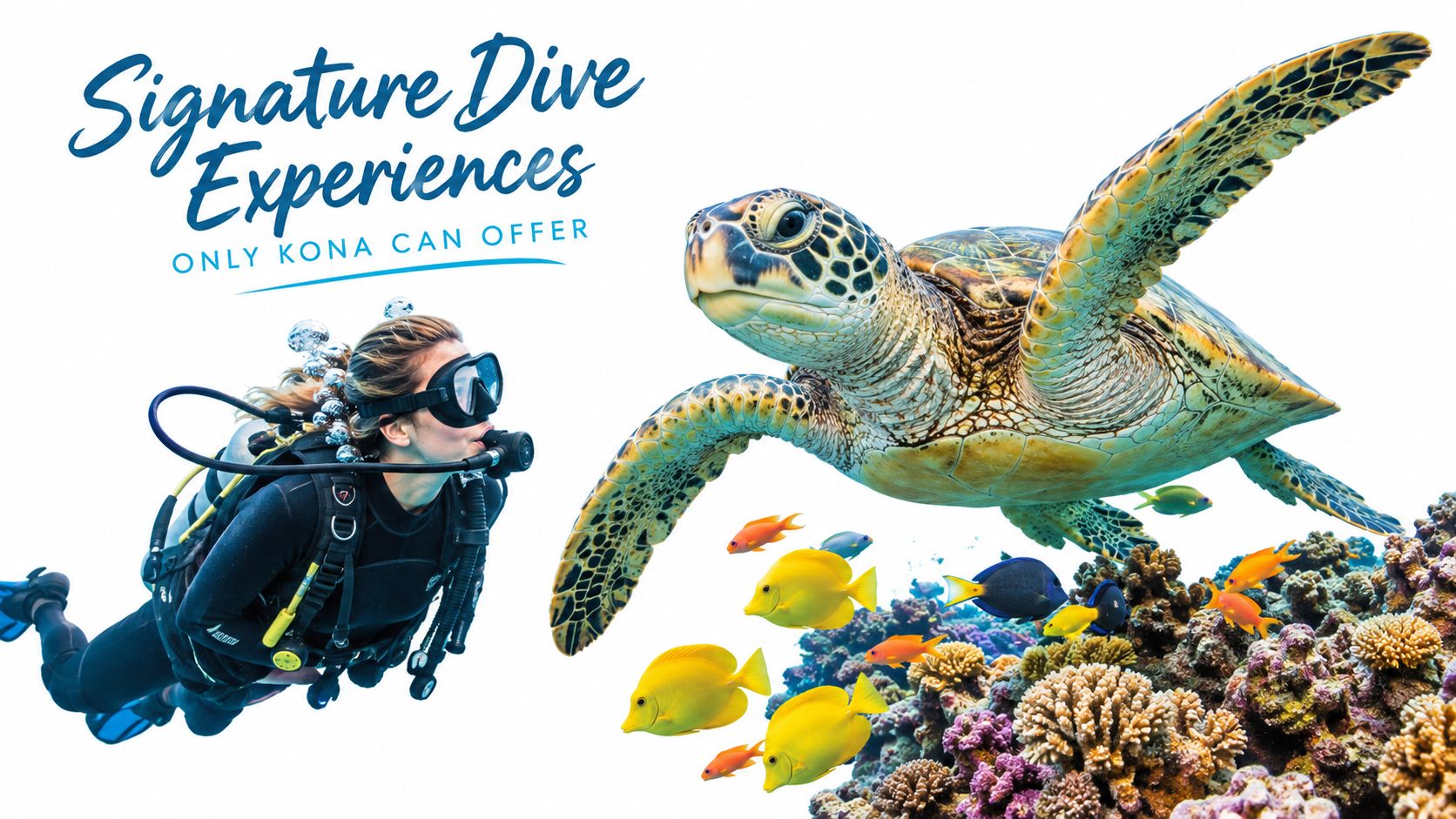
Three experiences define Kona for divers worldwide, and each one works for a different reason. Understanding the mechanism behind each dive will tell you quickly whether it suits you.
The Manta Ray Night Dive
This dive started by accident. In the early 1970s, the Kona Surf Hotel directed floodlights into the ocean, attracting plankton and, consequently, manta rays that fed in the illuminated water, and the site later became known as Manta Village, as recounted in Scuba Diving magazine's history of Keller Laros and Kona's mantas. In 1985, a night dive with Jack's Diving Locker helped establish manta encounters as a recognizable Kona activity, and systematic identification began in 1991 using the unique spot patterns on each ray's underside. Historical observations reported rays returning for more than 15 years, with a record count of 42 mantas recorded on July 4, 2013.
The mechanism is simple and you are part of it. Dive lights concentrate zooplankton, and filter feeding mantas loop through that plankton above you while you stay still on the bottom. Your job is to hold position, keep your light pointed where the guide directs, and resist chasing. Divers who treat it like a moving reef dive ruin their own view and disturb the feeding pattern. For the site itself, Garden Eel Cove is the superior choice for this tour because of its protected location, better viewing area, and better reefs, which means the afternoon reef portion and the viewing setup both hold up better than at more exposed locations. You can review the format on the two tank manta dive and snorkel tour page and read more about how the evening is structured in this guide to the night manta ray dive in Kona.
The Blackwater Dive
Blackwater is the opposite experience. Instead of settling on a bottom, you're suspended in open ocean at night, watching pelagic and larval creatures that migrate up from deep water after dark. There's no reef for visual reference, which is exactly why experienced divers love it and why it unsettles divers who need the bottom nearby. Buoyancy control, comfort in the dark, and self reliance matter more here than depth tolerance.
If you already enjoy night diving and macro life, the Kona blackwater dive tour is one of the most unusual dives you can log anywhere. If you're newly certified, book the manta dive first and save blackwater for a later trip. That's not gatekeeping. It's sequencing your dives so each one builds confidence for the next.
Lava Tubes and Deep Geology
Kona's lava formations give daytime diving its character, with tubes, arches, and swim throughs formed by ancient flows. The geological story runs deeper than recreational limits, too. USGS research reports a major carbonate reef that drowned approximately 13,000 years ago and now sits about 150 meters below sea level along the west coast, described in the USGS publication on coastal lava flows from Mauna Loa and Hualalai. You won't dive that reef, but it explains why the underwater relief here layers volcanic structure over much older reef foundations.
Practical rule: Pick the manta dive for a clear focal point and a controlled setup. Pick blackwater only if suspended open water at night sounds exciting rather than stressful.
Best Seasons and Water Conditions for Diving
Most destination pages tell you Kona is warm and calm and leave it there. That isn't enough information to plan a shore entry, choose a wetsuit, or decide whether to book an exposed site. Here's the framework local divers use.
Water temperature varies seasonally from roughly the mid 70s Fahrenheit in late winter to around 80°F in late summer, according to Best Diving Hawaii's Big Island site and conditions guide. That range sounds narrow, but it changes your exposure protection, especially on a stationary night dive where you're kneeling still instead of swimming. Divers who run cold feel late winter water on a manta dive far more than on an active morning reef dive. Plan your suit for the coldest, stillest dive on your itinerary, not the average one. For a month by month view of timing, see this breakdown of the best months to scuba dive in Hawaii.
Reading Surf Thresholds for Shore Entries
Kona's west facing coast is often sheltered, but high surf can make entries dangerous because the shoreline is steep and unforgiving. The National Weather Service uses a lower high surf threshold for this coast, with an advisory at 8 feet and a warning at 12 feet. Those numbers matter because many shore entries here involve lava shelves rather than sandy beaches. A set that would be a nuisance on sand can push you onto bare rock here.
- Check the west facing forecast first: A general island forecast won't tell you what the Kona shoreline is doing.
- Watch the entry before gearing up: Time the sets. If water is breaking onto the shelf, don't assume it will settle between sets.
- Treat an advisory as a no for shore diving: Boat dives may still run to protected sites. Self managed shore entries are a different risk calculation.
Why Calm Looking Water Can Still Move You
Surge near lava shelves doesn't always show on the surface. A flat looking morning can still produce back and forth movement underwater near structure, which affects photographers, newer divers, and anyone trying to hold position near coral. Recent rainfall, wind direction shifts, and boat traffic also change visibility and comfort in ways temperature never captures.
Don't assume Kona is uniformly easy year round. Sheltered conditions improve reliability, but exposed sites and blackwater drifts can still involve moderate currents. On those dives, certification level, navigation skill, gas planning, and surface support matter more than the destination's calm reputation. Summer generally brings the least friction, with easier entries and boat rides, which is why I steer families and recently certified divers toward late spring through early fall. Winter diving can be excellent on this coast, but build buffer days into your itinerary and stay flexible about sites.
Good diving weather in Kona means manageable entries, low surge at your specific site, and a forecast you checked for west facing shores. Warm water alone tells you almost nothing.
Choosing the Right Dive Tour for Your Level
Kona's tour menu looks long, but it reduces to four main formats. The comparison below uses qualitative depth and duration descriptions because actual profiles vary with the site and conditions your captain selects that day. Browse the full range on the Kona diving tours page once you know which format fits.
Kona Dive Tour Comparison
| Tour Type | Difficulty | Depth Range | Duration | Best For |
|---|---|---|---|---|
| 2 Tank Morning Dive | Beginner to intermediate | Shallow to moderate reef | Morning trip | Most certified divers wanting reef life and turtles |
| Manta Ray Night Dive | Beginner friendly with instruction | Shallow, stationary on bottom | Afternoon into evening | Divers wanting the signature Kona encounter |
| Blackwater Dive | Advanced | Open water, no bottom reference | Night trip | Experienced night divers with strong buoyancy |
| Premium Advanced 2 Tank | Advanced | Deeper pinnacles and formations | Extended morning trip | Divers seeking lava tubes and challenging terrain |
The standard morning two tank dive is the workhorse, and it's the right first booking for most certified divers. You'll see reef structure, turtles, and the fish life that makes Kona reefs enjoyable at an unhurried pace, and the crew can gauge your comfort before you commit to a night or advanced trip. The manta dive suits a wide range of levels because the profile is controlled and stationary, provided you're comfortable diving after dark with a guide managing the light setup.
Divers with solid experience and recent dives should look at more experienced diving opportunities such as the premium advanced two tank trip, which targets deeper pinnacles, lava tubes, and terrain that demands better air consumption and situational awareness. Blackwater sits in its own category. It isn't deeper or longer, it's mentally different, and honest self assessment matters more than your certification card alone.
Why Operator Choice Matters at the Manta Sites
Kona's manta viewing is a large, busy industry, not a quiet secret. A Hawaii County assessment reported that as of August 2015, at least 42 commercial operators visited Makako Bay and Keauhou Bay, and during observations from August 10 through 13, 2015, researchers counted approximately 16 to 19 vessels per night with an estimated 160 to 190 snorkelers and divers simultaneously in the water, as documented in the Hawaii County manta ray viewing boating operations and safety assessment.
That scale is exactly why you should ask about group size, in water positioning, vessel separation, and surface coordination before booking any night trip. A reputable operator briefs fixed entry and exit procedures and keeps divers disciplined at the viewing depth. A careless one puts you in a crowded light field with poor control. The mantas don't care which logo is on your boat. Your safety and your view both depend on it.
Certification and Courses for Every Diver
Certification level determines which version of Kona you get to see, so it's worth being clear eyed about where you stand before you book. The good news is that Kona's protected leeward conditions and clear water make it a forgiving place to learn, and the site variety gives you natural progression as your skills grow. You can review course structures on the Big Island scuba diving certification page.
Starting From Zero
If you've never dived, you have two sensible routes. A Discover Scuba style experience lets you try breathing underwater under close supervision without committing several vacation days to a full course. A full Open Water certification takes longer but qualifies you to dive independently with a buddy and opens up Kona's shallow reef dives and, with proper instruction, the manta night dive. Completing classroom and e learning portions at home before you travel saves vacation time for the in water sessions, which is how most visiting students do it.
Ask yourself one question before choosing. Do you want to try diving once, or do you want a skill you'll use on future trips? The first answer points to an introductory experience. The second points to certification, ideally started before arrival.
Refreshers and the Honest Rust Check
Certified divers who've been out of the water for an extended period should book a refresher instead of hoping it comes back on the first descent. Mask clearing, regulator recovery, buoyancy checks, and weight checks are quick to rebuild with an instructor and miserable to fumble through at depth in front of a group. Several Kona operators will require a refresher after a long gap anyway, so scheduling one voluntarily just means you control the timing.
Telling the crew your buoyancy feels rusty isn't embarrassing. It lets them pick a friendlier first site and give you attention early, which makes your second dive noticeably better.
What Advanced Training Unlocks
Advanced certification and specialties such as enriched air, night, and peak performance buoyancy expand your useful range in practical ways. You'll be better prepared for deeper pinnacles, lava tube terrain, and the blackwater experience, all of which demand comfortable task loading and precise positioning. Buoyancy control deserves special emphasis for Kona night dives, because holding still in a light circle without contacting the bottom or drifting into a manta's path is a skill, not a personality trait. Kona Honu Divers offers certification courses and refresher programs, which makes it practical to complete training during a vacation rather than treating the trip as dive only or learn only.
Packing and Gear Rental Essentials
Pack for fit and for the coldest dive on your schedule. Most other mistakes are easy to fix at the shop. This overview of the best scuba gear for beginners covers starter kit basics if you're building your own set, but the Kona specific decisions come down to a few items.
Bring These From Home
- Your own mask: A familiar, well fitted mask prevents the leak and fog cycle that ruins otherwise easy dives. This is the single highest value item to pack.
- Fins that fit your feet: Blisters and foot cramps from unfamiliar fins cut dives short. If you own fins you like, bring them.
- Exposure protection you trust: Given the seasonal temperature range covered earlier, many divers are comfortable in a 3mm wetsuit, while divers who run cold or who are doing long stationary night dives often prefer 5mm or an added hooded vest.
- Photography spares: Backup batteries and memory cards weigh almost nothing and save a night dive's worth of images.
Rent the Rest Without Worry
BCDs, regulators, weights, and tanks are bulky to fly with and easy to rent. The key questions to ask a shop are about maintenance and fit, not brand names. Is rental gear proactively serviced on a schedule rather than repaired after failures? Will the crew swap sizes at the dock if the first BCD doesn't fit? Kona Honu Divers proactively services its rental equipment and provides free nitrox for qualified divers, which matters if you're planning multiple dive days and want the extra bottom time margin that enriched air allows within your training.
Before the briefing ends, inspect whatever you're handed. Check inflator response, dump valves, alternate air source placement, and whether the weight system makes sense with the suit you're wearing. Two minutes of checking on deck beats discovering a sticky inflator underwater.
Night Dive and Surface Essentials
For manta and blackwater trips, confirm who provides lights and whether a backup light is included. Carry a surface signaling device, use reef safe sunscreen or cover up with a sun shirt, and secure anything that dangles before you get in. Dangling gauges and loose clips drag across reef and can snag, which connects directly to the etiquette covered in the next section. Non diving companions who plan to snorkel should bring their own mask if they have one they like, plus a layer for the boat ride back after sunset, when even warm evenings feel cool at speed.
Safety Rules and Marine Life Etiquette
These rules aren't optional extras layered on top of the fun. In Kona they are the reason the signature dives still work, and some of them are law. This guide to responsible and considerate diver etiquette expands on the behavior side, but every diver here should know the following before getting in the water.
Hawaii Dive Flag Law
Hawaii requires divers in ocean waters to mark their position with a dive flag and remain within 100 feet of that flag while underwater, except during an emergency, with a stricter 50 foot limit in navigable streams. A surface dive flag must measure at least 12 by 12 inches, and when mounted on a vessel longer than 16 feet it must measure at least 20 by 24 inches and be displayed with a blue and white Alpha flag. For night diving between sunset and sunrise, the flag must be illuminated so it can be identified from 100 feet away. These requirements are set out in Hawaii's May 2024 fishing regulations from the Department of Land and Natural Resources. Shore divers and independent groups are the ones most often caught out by this, so confirm flag logistics before any self managed dive.
Positioning Around Mantas
NOAA guidance for manta ray diving emphasizes positioning on sand, rubble, or boulder bottoms rather than live coral, forming a semicircle that leaves an open water column for manta movement, and holding lights above your head shining upward while snorkelers shine lights downward, as detailed in NOAA's manta ray viewing guidance for divers and snorkelers. Don't descend into the water column where mantas are feeding, don't blow bubbles directly into a manta's path, and never touch coral or other marine life to steady yourself. Secure dangling equipment and never block a manta's flight path for a photograph.
This matters more in Kona than in places with wide ranging animals. Research reported from NOAA linked genetic work found that reef manta rays tend to remain near their home island and females reproduce at the island where they were born, making local disturbance, boat strikes, and entanglement especially consequential, as reported by Big Island Now on West Hawaii's small familial manta group. Hawaii also enacted Act 092 in 2009, making it illegal to kill or capture manta rays, with penalties that could include fines of up to $10,000 plus forfeiture of vessels, licenses, and fishing equipment. Treat persistent aggregations carefully, too. Their continued presence doesn't automatically prove tourism is harmless, which is why behavior standards exist.
Protected Area Rules
The Old Kona Airport Marine Life Conservation District extends from offshore Old Kona Airport to the Kailua Lighthouse, with a seaward boundary defined by lines extending 500 yards from shore points, and within it you may not take or injure marine life, coral, algae, or shells, anchoring is prohibited, and commercial operations require permits, as specified on the state page for the Old Kona Airport MLCD. Look, photograph, and leave everything where it is.
Why Divers Choose Kona Honu Divers
Everything covered so far, matching tours to certification, reading conditions, serviced gear, disciplined night diving, only works if the operator running your boat operates that way. That's the practical case for Kona Honu Divers, and it rests on specifics rather than slogans.
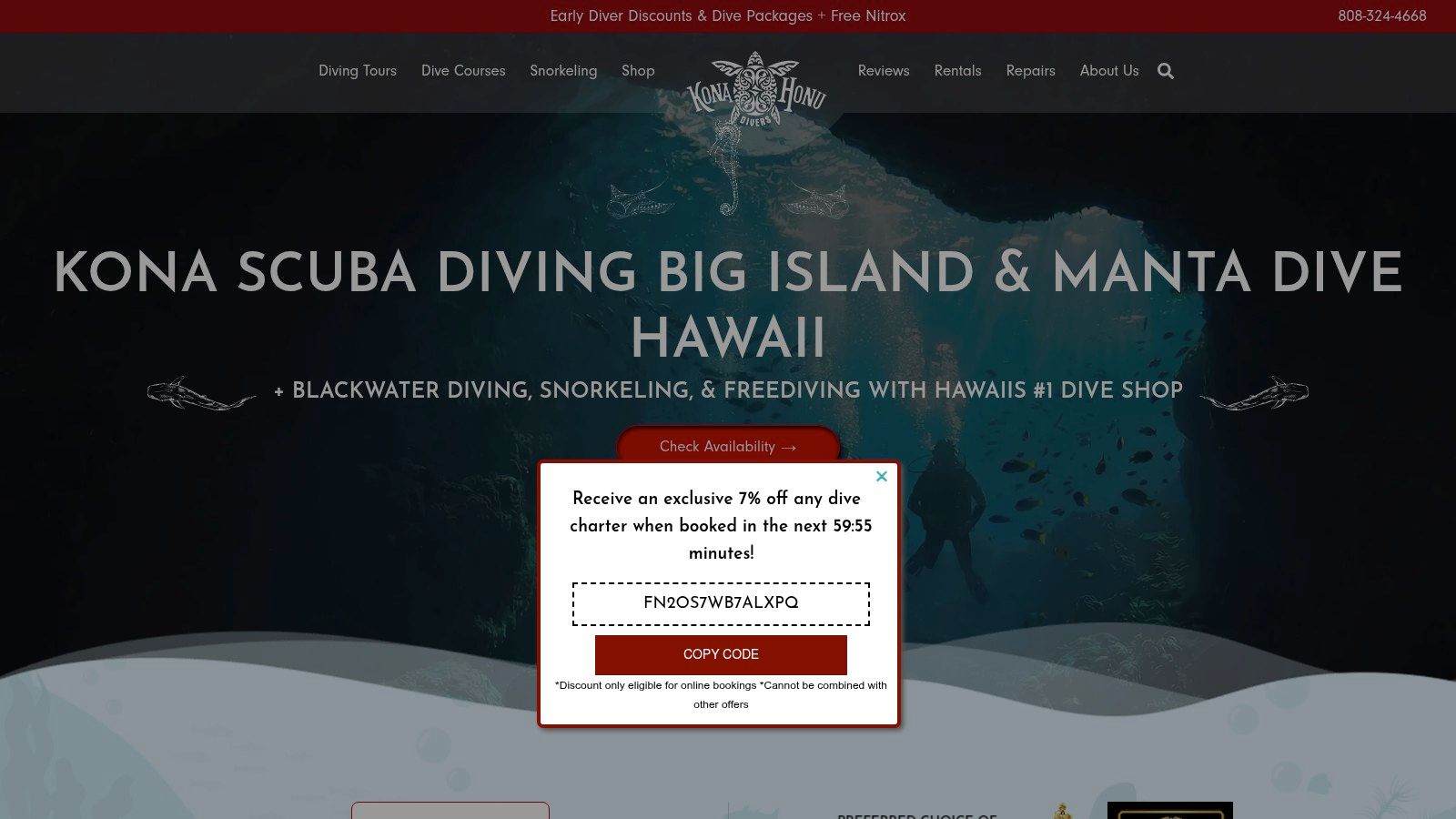
The company brings over 200 years of combined staff experience and thousands of five star reviews, with a reputation built on safety and customer service. The fleet consists of spacious, well maintained boats equipped with hot showers, shaded seating, and ample storage, which sounds like a comfort detail until you're rinsing off after a night dive or trying to keep camera gear dry and organized between sites. Rental gear is proactively serviced, and free nitrox is provided for qualified divers, both of which reduce the small frictions that degrade multi day dive trips.
A Tour Range That Matches the Decision Framework
The menu covers the full progression this guide has described, from two tank morning trips for most certified divers, through advanced trips to deeper formations, to the manta ray night dive and blackwater excursions, plus custom private and group charters. That range matters because you can start with a morning reef dive, let the crew assess your comfort, and step up to a night or advanced trip later in the same vacation with people who've already seen you dive. Snorkeling trips, equipment sales, and repair services are also available, so mixed groups with non divers aren't splitting their days across multiple shops.
The manta program deserves a final note because it's what most visitors ask about. The Manta Pacific Research Foundation has identified more than 270 reef manta rays (Manta alfredi) in the Kona study area, the mechanism is light mediated plankton concentration in the upper water column, and summer is reported to provide less surge and often higher manta numbers, though the encounter operates year round, as described in DAN's Alert Diver guide to Kona, Hawaii. An operator that briefs positioning, light placement, and bottom discipline the way that mechanism requires is protecting both your view and the animals' feeding behavior. That's the standard to hold any Kona night dive to, and it's the standard Kona Honu Divers crews brief to.
If you're weighing dates, check availability early for night trips, since manta and blackwater departures are the first to fill during busy periods. Book your easiest dive first, leave a buffer day in case conditions shift, and don't schedule a flight or a high elevation drive immediately after diving. That sequencing, applied to everything in this guide, turns a good Kona trip into the one divers end up repeating.
Ready to put this framework to work on the water? Kona Honu Divers runs morning reef trips, advanced charters, manta ray night dives, and blackwater excursions with serviced rental gear, free nitrox for qualified divers, and crews who'll help you match each booking to your certification and the day's conditions. Start planning your Kona dive days with Kona Honu Divers and book the dives that fit the diver you are right now.