
Picture this: You’re weightless, slowly descending into the warm, turquoise waters off the Kona coast. Sunlight filters down, illuminating ancient volcanic lava tubes and coral gardens bursting with color. This isn't just a fantasy—it’s what makes scuba diving in Kona, Hawaii an experience that divers talk about for years.
The Big Island is a truly special place, a world-class destination that draws seasoned pros and curious beginners back time and time again, all thanks to its consistently calm conditions and spectacular marine life.
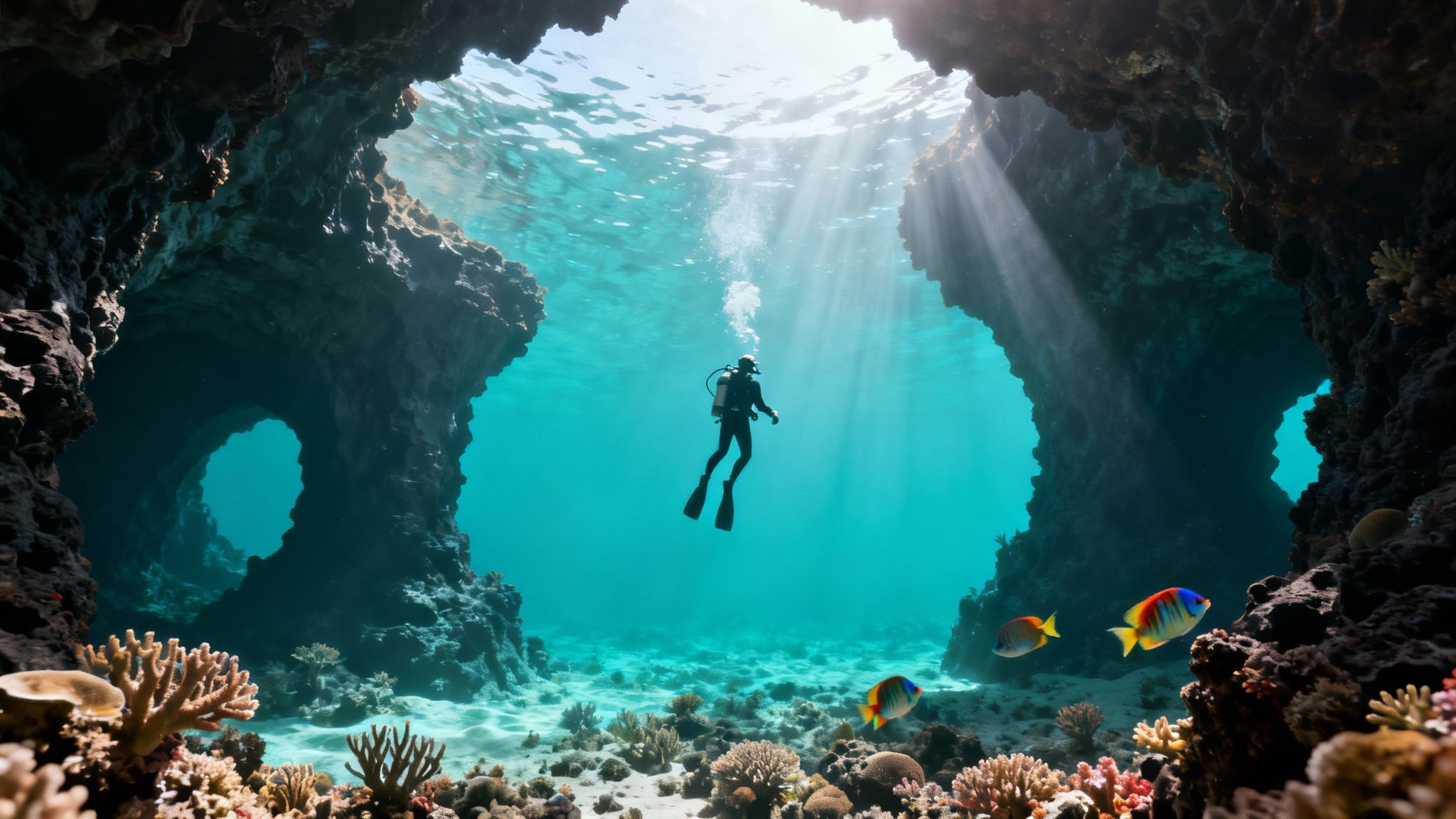
Forged by volcanic fire, the Kona coast is a diver's paradise. Unlike so many other spots around the globe where your dive plans live or die by the weather forecast, Kona is different. Its leeward side is naturally sheltered from the trade winds, which translates to incredibly calm seas and amazing visibility nearly every single day.
Whether you're gearing up for your very first dive or you're a veteran with hundreds of log entries, this guide is your starting point. We'll cover everything from the world-famous Manta Ray Night Dive to the nitty-gritty of planning your trip.
So, What Puts Kona in a Class of Its Own?
It’s the combination of the island's raw, volcanic past and the vibrant life that now calls it home. The dramatic underwater landscapes—lava tubes, cavernous arches, and deep canyons—were sculpted by ancient lava flows and are just a quick boat ride from the harbor.
This unique geology creates the perfect habitat for an unbelievable variety of marine creatures. When people rave about scuba diving the Big Island, here's what they're talking about:
- Mind-Blowing Visibility: On most days, you can expect water clarity between 75 and 150 feet. You'll see every detail of the coral reefs and lava formations long before you get there.
- Perfect Water Temps: The water stays in a comfortable 75-81°F range all year long. A light wetsuit is all you'll ever need.
- Mega Fauna Central: Kona is famous for its reliable big animal encounters. The star of the show is the manta ray night dive, where local operators report seeing these gentle giants on 85-90% of their trips. It’s one of the most dependable wildlife encounters on the planet.
- One-of-a-Kind Dives: Where else can you swim through lava tubes in the morning and dance with giant manta rays at night? The experiences here are truly unique.
Finding Your Guide to Kona’s Underwater World
To get the most out of your Kona diving adventure, you need to go with the right crew. A great local operator can make all the difference, and that's where Kona Honu Divers comes in. They've built a reputation for being one of the best, focusing on top-notch safety, small group sizes, and a crew that knows these waters like the back of their hand. Their whole approach is about making sure every diver, regardless of skill level, has an incredible and safe time.
If you're still wondering what makes this corner of Hawaii so special, you might want to dive deeper into what makes Kona an excellent choice for scuba diving.
Exploring Kona’s Must-Do Dives
Let's get one thing straight: Kona isn't just another dot on the dive map. It's a place that serves up underwater experiences you genuinely can't find anywhere else on the planet. From a surreal nighttime ballet with gentle giants to plunging into the inky blackness of the deep ocean, the diving here creates memories that stick with you for life. These aren't just dives; they're legendary encounters that define scuba diving on the Big Island of Hawaii.
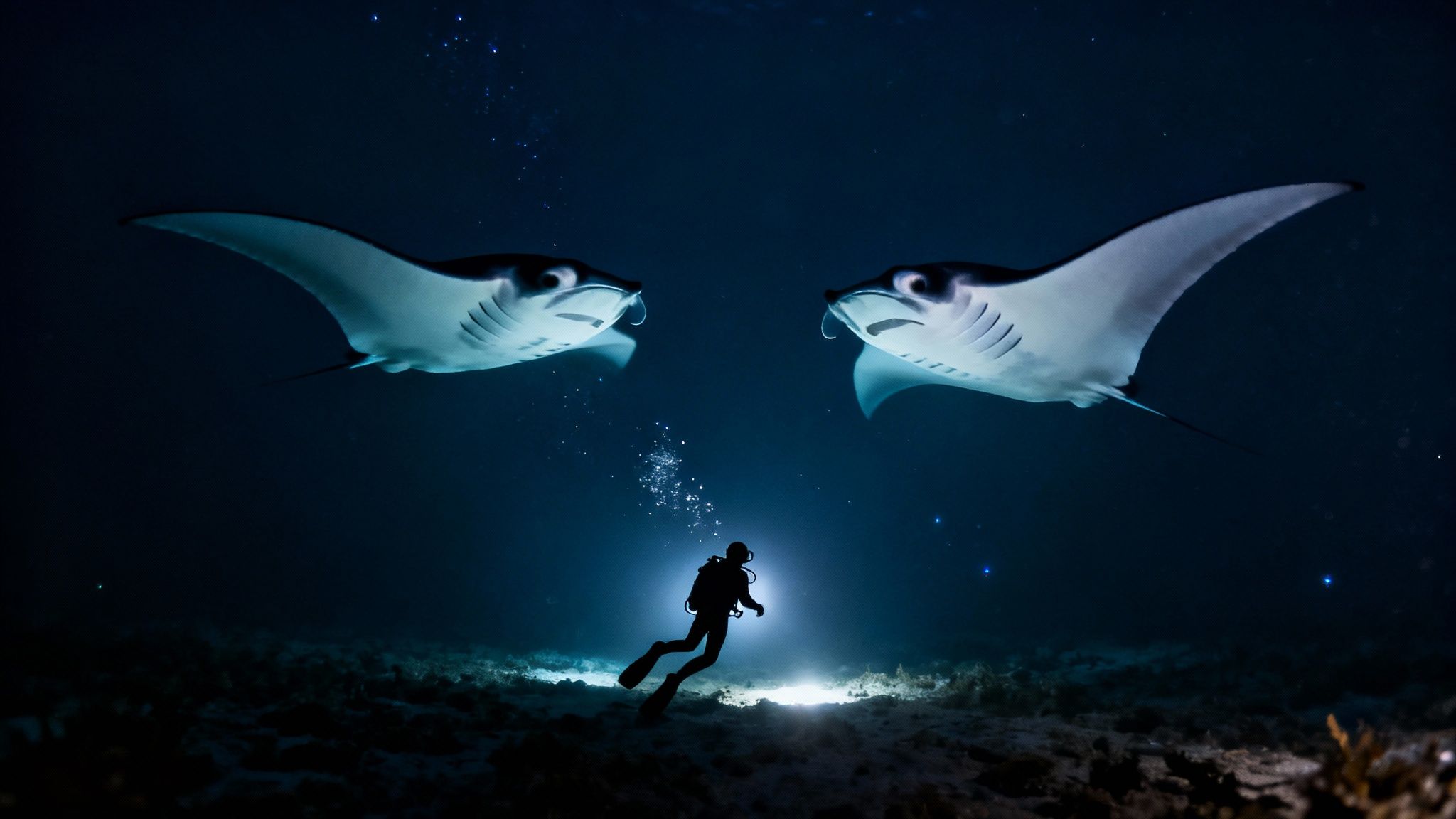
The World-Famous Manta Ray Night Dive
If there’s one single dive that puts Kona on every diver's bucket list, this is it. Picture this: you're kneeling on the sandy ocean floor after sunset, your flashlight pointing straight up. The beam attracts a cloud of plankton, and then, out of the darkness, they appear. Graceful giants with wingspans stretching up to 16 feet emerge, performing an effortless, looping ballet as they feed just inches above your head.
For this must-do experience, Garden Eel Cove is hands-down the best spot. Why? Its location is naturally sheltered from the big ocean swells, which means calmer water and clearer visibility more often than not. The viewing area is set up perfectly, giving divers an unobstructed front-row seat as these gentle creatures glide and swoop. The reefs are healthier, making for a more scenic experience overall. It’s a truly mesmerizing and completely safe way to witness one of nature’s greatest shows. Many operators run fantastic manta ray dive tours.
The best part? This isn't a hit-or-miss encounter. The mantas show up on 80-90% of the dives. These are the same resident rays coming back night after night, so they are incredibly comfortable around divers and put on an absolutely breathtaking performance.
The Kona Blackwater Dive: An Alien World Below
Ready for something completely different? For the truly adventurous diver, the Kona Blackwater Dive is an experience that borders on sci-fi. This isn't a reef dive. You're taken miles offshore at night, where you drift tethered to the boat, suspended in the dark over thousands of feet of water. Your lights illuminate a hidden world that migrates up from the abyss every single night.
You’ll see creatures that look like they belong on another planet:
- Bioluminescent Jellies: Pulsing with eerie, internal rainbows of light.
- Translucent Larval Fish: Bizarre, beautiful, and see-through critters in their earliest life stages.
- Tiny Cephalopods: Including elusive larval octopuses and squid that fit on your fingertip.
Divers often say it feels more like floating through outer space than swimming in the ocean, surrounded by strange and wonderful alien life. It's an absolute must for underwater photographers and anyone who wants a dive that truly pushes the boundaries of exploration.
Daytime Dives: Lava Tubes and Endemic Life
While the night dives steal the spotlight, Kona’s daytime diving is every bit as spectacular. The underwater landscape is a direct result of the Big Island’s fiery volcanic past. You'll explore dramatic lava tubes, swim through soaring archways, and discover intricate caverns carved by ancient lava flows.
Navigating these formations is like swimming through geologic history. These unique structures create the perfect habitat for an incredible array of marine life, much of which you won't find anywhere else on the planet.
Roughly 25% of all marine life here is endemic to Hawaii. That means you’ll meet fish you can't see anywhere else. Keep an eye out for Hawaiian green sea turtles (honu) peacefully munching on algae, different species of moray eels poking their heads out from crevices, and huge schools of vibrant butterflyfish and parrotfish. The combination of healthy reefs and volcanic topography makes every single daytime dive a visual feast. And you can get a different perspective by snorkeling with these amazing creatures too, an experience often called a manta ray night swim.
Kona's Signature Dives At-A-Glance
Feeling a bit overwhelmed by the incredible options? It’s a good problem to have! This quick table breaks down Kona’s most famous dives to help you pick the perfect underwater adventure for your trip.
| Dive Experience | Best For | Key Marine Life | Typical Depth |
|---|---|---|---|
| Manta Ray Night Dive | All certified divers; bucket-list seekers | Manta Rays, Garden Eels, Jacks | 30-40 ft |
| Blackwater Dive | Experienced divers; photographers | Larval creatures, bioluminescent jellies | 40-60 ft |
| Daytime Reef Dive | All skill levels; nature lovers | Endemic reef fish, Turtles, Eels | 40-80 ft |
Whether you're looking for the thrill of the deep or the magic of the manta ballet, Kona has an underwater experience that will redefine what you think is possible on a scuba dive.
Finding the Perfect Kona Dive Site for Your Skill Level
One of the best things about diving in Kona is that there’s truly a site for everyone. The coastline is packed with different underwater environments, so whether you’re about to take your first breath underwater or you’ve got hundreds of dives in your logbook, you’ll find your perfect spot.
What makes Kona so special, especially for new divers, is its geography. We’re on the leeward side of the island, which means we're sheltered from the major winds and swells. This creates incredibly calm, predictable conditions—the perfect natural classroom for building confidence while you discover the magic of Hawaii's reefs.
Dive Sites for Beginners
If you're new to the sport, Kona has plenty of protected bays and shallow reefs that are absolutely bursting with life. You get all the beauty without the stress of strong currents or intimidating depths. These spots are fantastic for introductory dives, getting certified, or just enjoying a beautiful, relaxed underwater tour.
Thinking about starting your dive journey? This is a great resource to get you started on beginner scuba diving on the Big Island.
A classic example is Kealakekua Bay, where you'll find the famous "Two-Step" entry. This place is a real gem. It’s been a Marine Life Conservation District since 1969, so the reefs are pristine and home to over 100 species of fish. Visibility is often a stunning 100-150 feet year-round. Its protected geography makes it a calm haven, perfect for those first open-water checkouts, but it’s also got incredible canyons that even the pros love to photograph.
Other fantastic beginner-friendly spots include:
- Pawaii Bay: We call it "Turtle Heaven" for a reason. This shallow site is a hotspot for Hawaiian green sea turtles (honu), and you’re almost guaranteed an encounter.
- Kailua Bay: Right in town, this spot is super accessible and has a surprisingly vibrant reef. It's perfect when you just want a quick, easy, and relaxing dive.
Intermediate Dives: Lava Formations and Gentle Drifts
Once you've got a few dives under your belt and your buoyancy is dialed in, a whole new side of Kona opens up. This is where you get to see the dramatic volcanic topography the Big Island is famous for. You’ll be navigating through ancient lava tubes, swimming under massive arches, and weaving through intricate caverns.
These dives aren't necessarily deep or technically difficult, but they do require solid buoyancy control. You need to be able to explore these overhead environments safely without kicking up silt or damaging the fragile ecosystems. Many of these sites also offer a gentle drift, letting the current do the work as you glide effortlessly along the reef.
Swimming through a lava tube that was once a river of molten rock is an unforgettable experience. It connects you directly to the raw, creative power that formed these islands.
Advanced Diving: Deep Canyons and Thrilling Encounters
For the seasoned diver, Kona has some serious adventures waiting. The island’s steep volcanic slopes plunge into the abyss, creating deep underwater canyons and breathtaking walls. These are the spots where you’re more likely to run into bigger pelagic species and rare critters that hang out in the deeper, cooler water. Check out an advanced dive tour to explore these sites.
A dive like Au Au Canyon gives you an incredible view into the deep blue. You’ll see stunning walls and pinnacles, with the chance to spot unique species like the Tinker's butterflyfish, which usually lives at depths of 200 feet or more. Of course, dives like this demand excellent air management, sharp buoyancy skills, and experience with deep diving procedures.
No matter your certification, your next favorite dive is just a boat ride away here in Kona.
Planning Your Kona Dive Trip from Start to Finish
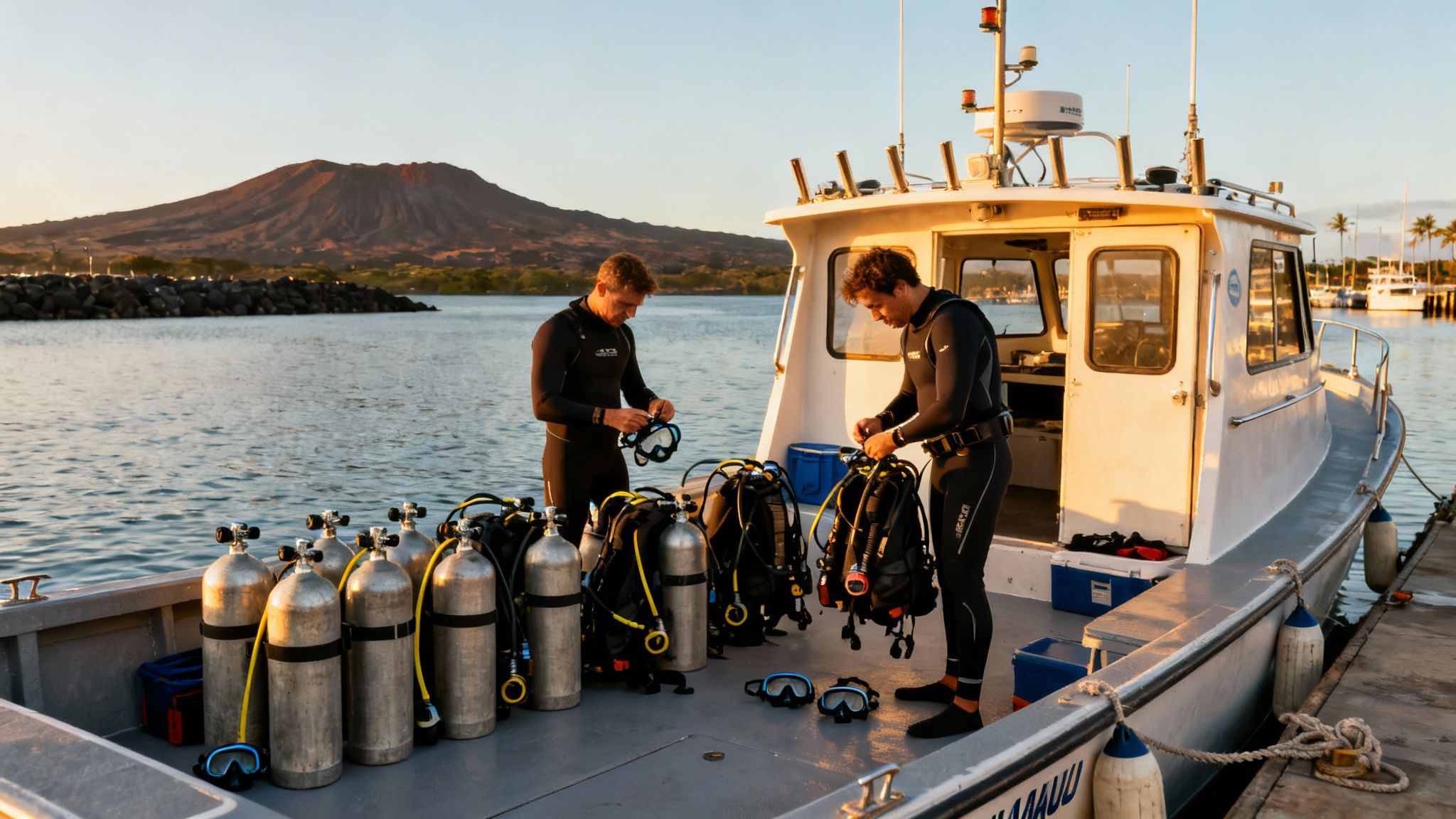
Turning that dream of scuba diving Kona into a reality is a lot simpler than you might imagine. A little bit of smart planning goes a long way in making sure your underwater adventure is smooth, safe, and totally unforgettable. Let’s walk through the key steps to put together an amazing dive vacation.
The first question on every diver’s mind is, "When should I go?" Honestly, there's no bad time. Kona’s protected leeward coast serves up incredible diving all year, with water temps hovering between a balmy 75-81°F and visibility that often pushes past 100 feet.
That said, some seasons have a little something extra. The winter months (December through March) are prime time for humpback whales. There's nothing quite like being on a dive and hearing their songs echoing through the water—it's an experience that stays with you.
Selecting the Right Dive Operator
This is probably the most important decision you'll make. The right crew doesn't just take you diving; they elevate the entire experience, making it safer, more comfortable, and way more fun. You’ll want to look for an operator that keeps dive groups small, has an experienced crew who knows the sites like the back of their hand, and runs well-maintained boats built for diving.
This is where a shop like Kona Honu Divers really shines. Their boats are custom-built with divers in mind, loaded with creature comforts like warm freshwater showers and plenty of shade. One of the best perks for certified divers is the complimentary Nitrox, which helps extend your bottom time and leaves you feeling less tired. It means you get more out of every single tank. See for yourself what sets the great ones apart in our guide to Kona diving companies.
Transportation and Accommodations
The Big Island lives up to its name. Renting a car is pretty much essential if you want the freedom to explore beyond the harbor. You’ll be flying into Kona International Airport (KOA), which is super convenient and just a quick drive from Honokohau Harbor, where most of the dive boats head out.
For your stay, I’d recommend finding a place in or near Kailua-Kona. Being centrally located means you're close to the harbor, great restaurants, and shops. Less time in the car means more time relaxing and soaking up the island vibes.
Training and Certifications in Paradise
If you've ever thought about getting certified or taking your skills to the next level, Kona is the place to do it. The calm, clear, and warm waters are like a perfect natural classroom. Conditions are fantastic for everything from finishing your Open Water certification to tackling advanced specialty courses.
A lot of divers use the mellow conditions here to perfect their buoyancy or try something new. Drift diving, for example, is a huge draw in Kona. The gentle currents do all the work, guiding you effortlessly over stunning reefs for a dive that's both relaxing and exhilarating. It's this kind of easy-access adventure that is fueling major growth in the U.S. diving tourism market.
Once you have these logistics locked in, you can kick back and focus on the real reason you're here: the incredible underwater world waiting just offshore.
Check AvailabilityDiscovering Kona’s Abundant Marine Life
Sure, the manta rays get all the headlines, but the real heart of Kona diving is the incredible variety of life teeming on every reef. The Big Island's waters are like a bustling underwater city, and every dive feels like exploring a new neighborhood. This is your field guide to the locals you'll meet as soon as you dip beneath the waves.
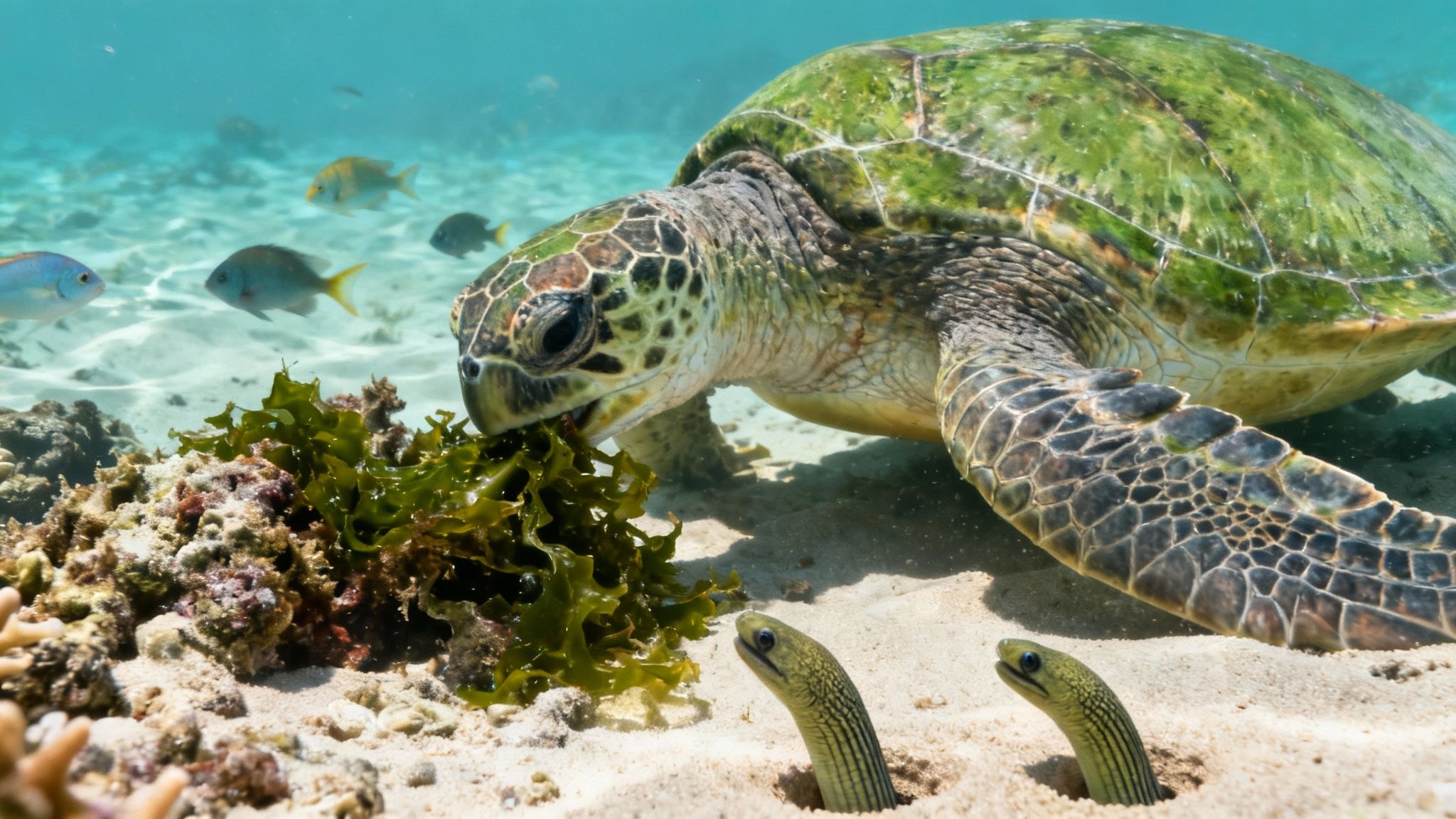
One of the most cherished residents you're almost guaranteed to encounter is the Hawaiian green sea turtle, the honu. It's a classic Big Island moment: watching one of these gentle giants glide effortlessly past you or munch peacefully on algae along a lava rock ledge. They are everywhere, and the sight never gets old.
The Reef's Hidden Residents
The real fun starts when you slow down and look a little closer. Kona's volcanic underwater landscape is riddled with nooks, crannies, and hideouts. Peek into those crevices and you'll likely lock eyes with a whitemouth moray eel—they look fierce, but they’re usually just curious. Over the sandy patches, look for entire colonies of garden eels, which poke out of their burrows and sway in the current like a field of grass.
And don't forget to look up during your surface intervals. It's common for pods of acrobatic spinner dolphins to escort the dive boat, putting on a spectacular show that’s the perfect intermission between dives.
A Kaleidoscope of Endemic Fish
What really sets the Big Island scuba diving scene apart is the sheer number of animals you won't find anywhere else on the planet. Thanks to its isolation in the middle of the Pacific, about 25% of the marine life here is endemic. It's like diving in a living museum of evolution.
You'll be swimming through clouds of uniquely Hawaiian fish:
- Butterflyfish: Keep an eye out for the vibrant Milletseed and Ornate Butterflyfish, which add brilliant splashes of yellow to the dark lava rock.
- Parrotfish (Uhu): You can often hear them before you see them. That distinct crunching sound is a parrotfish chomping on coral, a crucial part of keeping the reef healthy.
- Hawaiian Cleaner Wrasse: Find a "cleaning station," and you can watch these tiny, hardworking fish meticulously picking parasites off much larger creatures.
While you're looking under ledges, you might also spot a whitetip reef shark enjoying a daytime nap. They are generally very relaxed and seeing one is always a thrill.
This underwater paradise is a fragile place, and we all have a role in protecting it. By being a responsible diver—never touching, chasing, or feeding the wildlife—we help ensure Kona's reefs stay vibrant for many more generations to come.
Getting to know this diverse cast of characters is what Kona diving is all about. The sheer abundance of life means no two dives are ever the same, and you can experience it all on one of the many diving tours available.
Got Questions About Diving in Kona? We’ve Got Answers.
Planning a dive trip to the Big Island always brings up a few questions. We get it. To help you sort out the details and get excited for your adventure, we've pulled together answers to the queries we hear most often from divers just like you.
Do I Need to Be an Advanced Diver to Enjoy Kona?
Absolutely not! One of the best things about diving here is how accessible it is. Kona is a fantastic spot for divers of all stripes, from seasoned pros to those who just got their C-card.
Many of our most breathtaking reefs and wildlife encounters are in calm, relatively shallow waters. The coastline is naturally protected from the open ocean, creating perfect conditions for new divers or anyone looking to complete their open water certification dives in a beautiful, stress-free environment.
What's the Best Time of Year to Dive in Kona?
Honestly, there’s no bad time. Kona offers incredible diving 365 days a year. The water temperature is always comfortable, hovering between 75-81°F, and the visibility is consistently great.
That said, if you’re looking for a little something extra, the winter months from December to March are pretty special. This is when the humpback whales are in town, and hearing their songs resonate through the water on a dive is an experience you will never forget.
Check AvailabilityWhat Should I Pack for My Kona Dive Trip?
Packing for Kona is pretty straightforward. Here are the essentials we recommend:
- Dive Gear: Don't forget your certification card and logbook! While we offer top-notch rental gear, many divers find it more comfortable to bring their own mask, fins, and dive computer.
- Wetsuit: A light 3mm wetsuit is usually all you need for Kona's warm waters.
- Surface Gear: Remember your reef-safe sunscreen, a good hat, polarized sunglasses, and a reusable water bottle to stay hydrated between dives.
Is the Manta Ray Night Dive Safe?
Yes, it is incredibly safe, especially when you go with a professional, experienced crew like ours at Kona Honu Divers. Safety is our absolute top priority.
Before you even touch the water, our certified divemasters will give you a comprehensive briefing. They'll be with you every step of the way, managing the site to ensure a safe, respectful, and truly magical encounter for both you and the gentle giant manta rays.
Ready to see the vibrant underwater world of Kona for yourself? Kona Honu Divers offers a whole range of incredible diving tours perfect for every skill level.