
Picture this: you descend into a sunlit, underwater world shaped by ancient volcanoes. The water is so clear that visibility often stretches past 100 feet, and you spot rare marine creatures peeking out from old lava tubes. This isn't a fantasy—it's the incredible reality of scuba diving Kona, Hawaii, on the Big Island. The uniquely calm conditions and mind-blowing biodiversity here make it a top-tier destination for divers of every skill level.
Why Scuba Diving In Kona Is A World-Class Experience
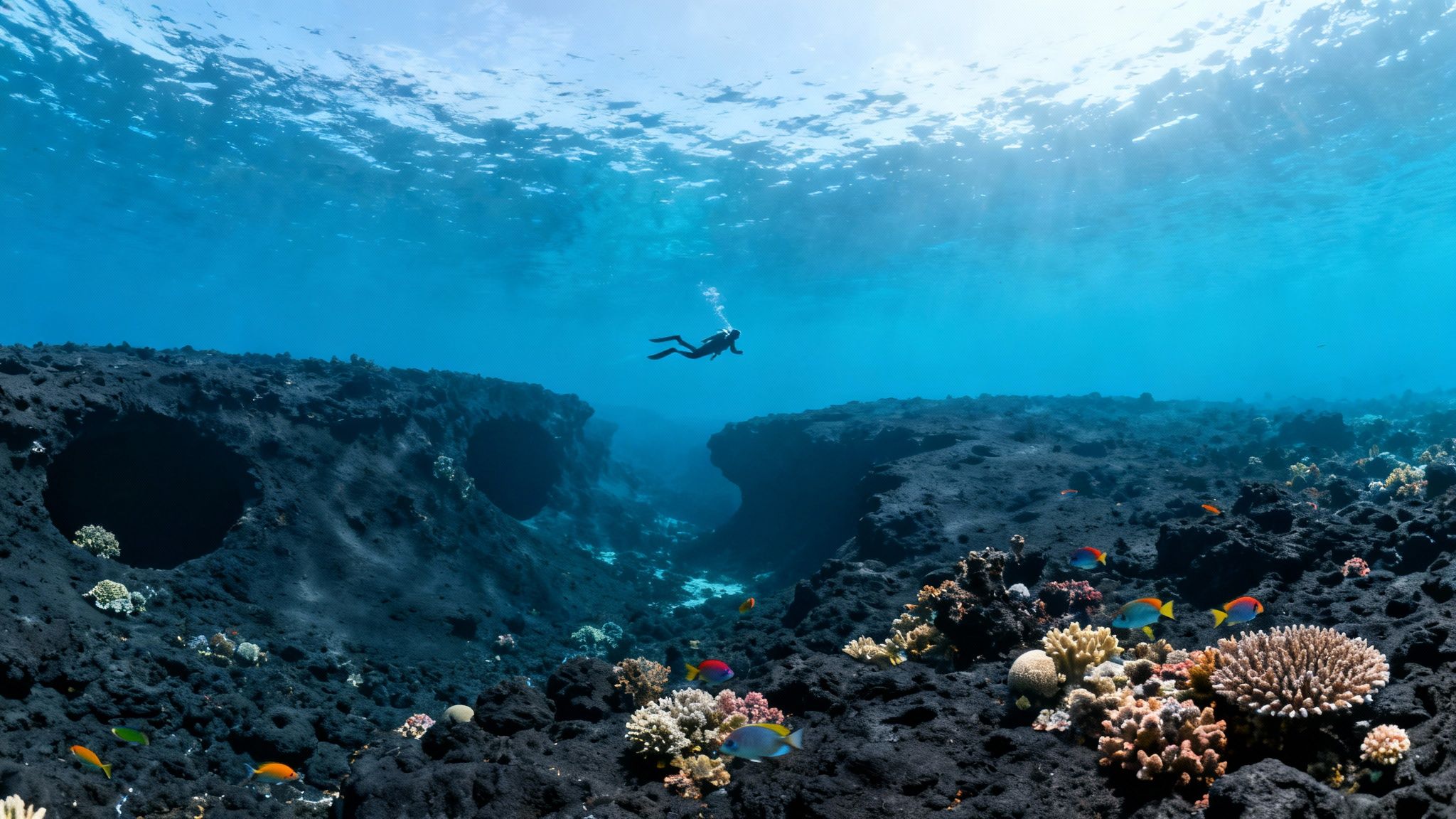
The Kona coast owes its phenomenal diving to some serious geographical luck. The massive volcanoes of Mauna Loa and Hualalai act as a natural shield, blocking the powerful trade winds that batter other parts of Hawaii. The result? The waters here stay remarkably calm and clear almost all year long, creating a protected marine playground perfect for divers.
This volcanic legacy doesn't just stop at the shoreline; it creates a dramatic underwater landscape that's a thrill to explore. You'll find yourself navigating a world of:
- Ancient Lava Tubes: Imagine swimming through massive archways and hidden caverns carved out centuries ago by molten rock meeting the sea.
- Dramatic Drop-Offs: The island's steep volcanic slopes plunge straight into the deep blue, forming breathtaking underwater walls and cliffs.
- Pristine Coral Reefs: Healthy, vibrant coral gardens have grown right on top of the dark volcanic rock, creating a stunning contrast of color and life that pops against the dark background.
An Epicenter of Unique Marine Life
Kona’s isolation, smack in the middle of the Pacific, has turned it into a hotspot for endemic species—that is, marine life you can’t find anywhere else on the planet. In fact, a staggering 25% of Hawaii's fish species are unique to these islands. Every dive is a chance to see something brand new. The nutrient-rich waters support a massive food web, from tiny critters hiding in lava rock crevices to majestic ocean giants passing through.
It’s not just the rare fish, either. Kona is famous for its reliable big-animal encounters. It’s common to swim alongside green sea turtles (honu) and see pods of spinner dolphins. During the winter, you can often hear the haunting songs of humpback whales echoing through the water on your dives. This incredible biodiversity is what makes scuba diving on the Big Island so unforgettable. You can learn more about what is unique about diving in Kona in our dedicated article.
Signature Dives That Define Adventure
Kona isn't just known for its beautiful reefs; it's home to a couple of the world's most iconic dive experiences.
The legendary Manta Ray Night Dive is a true bucket-list adventure. You’ll watch as these gentle giants perform an underwater ballet, gliding and somersaulting just inches away from you. For those with a taste for the extraordinary, the Kona Blackwater Dive is a surreal nighttime journey into the open ocean, revealing bizarre and bioluminescent creatures that rise from the deep. It’s these signature dives that elevate Kona from a great dive spot to a truly world-class destination.
The Unforgettable Kona Manta Ray Night Dive
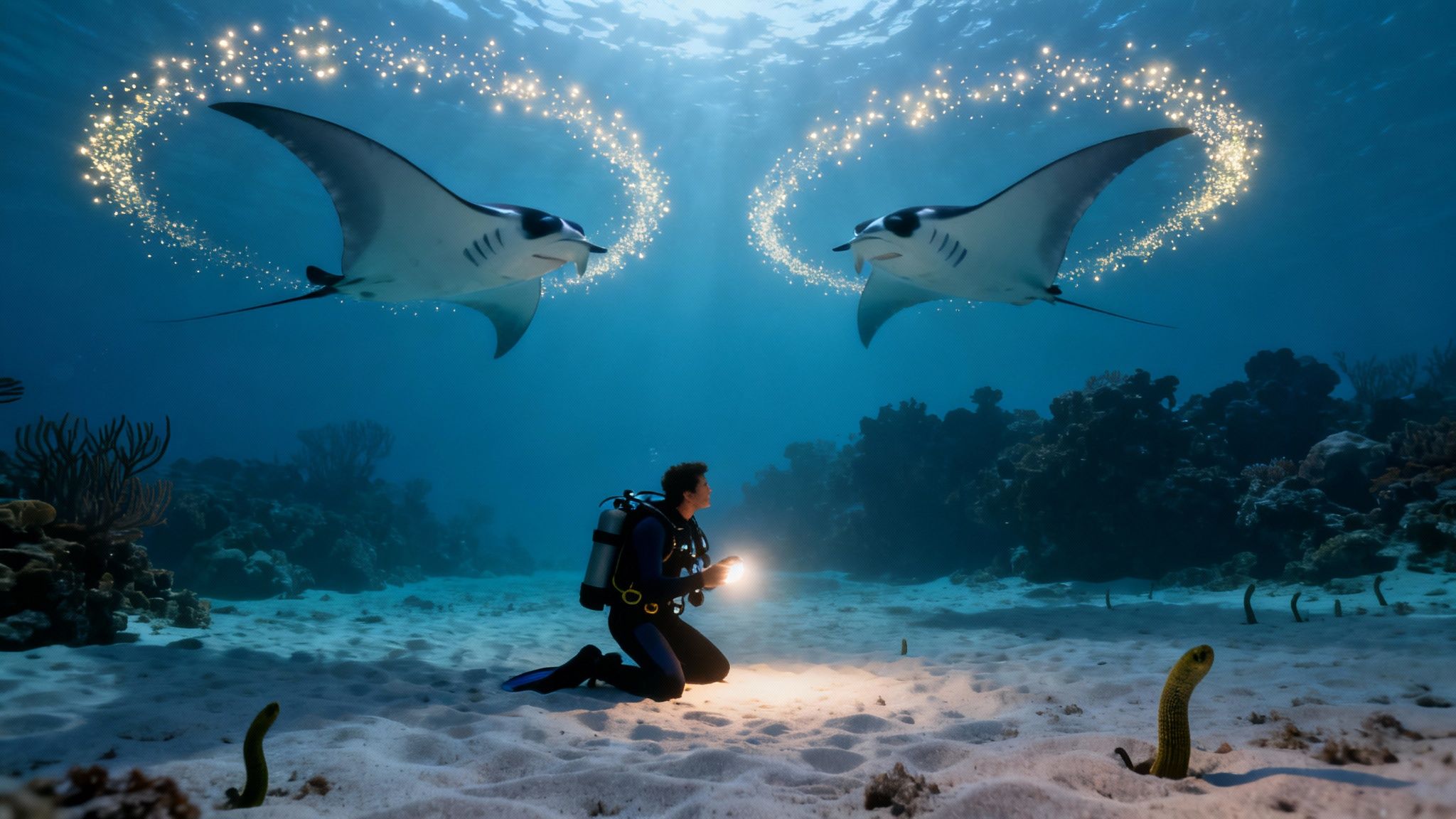
Picture this: you’re kneeling on the ocean floor after sunset, the water around you is dark. You point your dive light up towards the surface. Out of the blackness, a shadow emerges and gracefully swoops into the light, its massive 12-foot wingspan gliding just inches over your head. This isn't a scene from a movie—it's the world-famous Kona Manta Ray Night Dive, a bucket-list experience that puts the Big Island on the map for divers everywhere.
The concept behind this magical encounter is actually quite simple. We set up powerful, stationary lights on the seabed. These lights attract huge clouds of plankton, which happen to be the manta rays' favorite meal. It’s like setting up a five-star buffet that the local gentle giants just can't resist.
This dive is one of the most iconic underwater experiences on the planet, drawing thousands of people to Kona every year. At premier sites, divers settle onto the sandy bottom, around 40 feet deep, and shine their lights up to create a massive column of plankton. The reef manta rays (Mobula alfredi) then arrive for their nightly feast. The consistency is incredible; nightly counts often average 10-20 mantas, with some nights hitting a record 32 individuals!
Why Garden Eel Cove Is The Superior Manta Dive Location
While you might hear about a couple of different spots for this dive, Garden Eel Cove (lovingly nicknamed Manta Heaven) is hands-down the superior choice for the dive tour. Its geography gives it natural protection from the big ocean swells, which means a calmer, safer, and more comfortable dive for everyone.
The dive site itself is perfectly laid out. We call the viewing area "the campfire"—a sort of natural amphitheater on the sand. This setup provides a better viewing area and gives every diver a front-row seat to the action without feeling crowded.
What really sets Garden Eel Cove apart is the health of the surrounding reefs. By day, it's a vibrant, thriving ecosystem, which means it supports a much richer concentration of plankton at night. More food means more mantas, and that's exactly what you want.
What To Expect On Your Manta Ray Adventure
Your trip starts on the boat with a thorough briefing. The crew will walk you through the entire plan, from hand signals to the most important rules for a safe and respectful encounter. The number one rule is simple: "observe, don't touch." These are protected animals, and our job is to be respectful guests in their home.
Once you descend and get settled, the show begins. You'll turn on your light, aim it up, and wait. It usually isn't long before the first graceful silhouette appears, gliding into the beams. Soon, others follow, performing an incredible underwater ballet of swoops and somersaults as they feed. There is nothing quite like the feeling of a giant manta gliding right over your head, so close you can see the unique spot patterns on its belly.
And if you’re not a certified diver, don’t worry! There are fantastic snorkeling options available that get you just as close to the action. You can learn more about which experience is right for you by reading about the manta ray night dive vs. snorkel.
This encounter is one of the top reasons people come scuba diving in Kona Hawaii Big Island. Choosing an experienced, reputable operator like Kona Honu Divers for a manta ray dive tour is the key to ensuring your adventure is safe, respectful, and absolutely unforgettable.
Exploring Top Kona Dive Sites For Every Skill Level
Beyond the legendary manta ray night dive, Kona’s coastline is a diver's dream, packed with a stunning variety of underwater playgrounds. The Big Island's volcanic past has carved out a dramatic world beneath the waves, full of lava tubes, majestic archways, and reefs bursting with color and life. This incredible diversity means there’s a perfect spot for everyone, whether you just got certified or you're a seasoned pro looking for your next big adventure.
The sheer range of sites available for scuba diving in Kona, Hawaii's Big Island is what truly sets it apart. One morning you might be peacefully drifting over a shallow coral garden, and that afternoon you could be navigating a maze of ancient lava formations. It guarantees that you’ll never have the same dive twice.
Kealakekua Bay: A Protected Paradise
If there’s one can't-miss day-diving spot in Kona, it’s the breathtaking Kealakekua Bay. This isn’t just another pretty place; it’s a designated Marine Life Conservation District, which means the ecosystem is protected, healthy, and absolutely thriving. The bay's waters are known for being calm, crystal-clear, and free of strong currents, making it a fantastic and stress-free location for divers of all abilities.
Kealakekua Bay is the crown jewel of Big Island scuba diving, blending rich history with an explosion of biodiversity. Protected since 1969, it's home to over 100 species of fish living among pristine reefs and dramatic drop-offs. You can almost always count on 100-150 foot visibility, with a gentle slope that gives way to deep canyons, suiting every skill level. Keep an eye out for massive schools of convict tangs, Achilles tangs, and tons of other fish found only in Hawaii. Green sea turtles and moray eels are common residents, too, making this the perfect backdrop for everything from open-water checkouts to advanced underwater photography.
Turtle Pinnacle: Where Honu Gather
Just as the name suggests, Turtle Pinnacle is the place to go if you want a near-guaranteed encounter with the Hawaiian green sea turtle, or honu. The site is centered around a large coral pinnacle that acts as a natural "cleaning station." Turtles flock here to let smaller fish, like the Hawaiian cleaner wrasse, nibble algae and parasites right off their shells.
It's an incredible photo op and a chance to see these gentle giants in their element. The pinnacle itself is draped in healthy coral and provides a home for a whole neighborhood of other critters, including eels, octopus, and countless reef fish. The dive is also relatively shallow, putting it well within reach for most certified divers.
Golden Arches: A Lava Rock Playground
For anyone fascinated by Kona's unique underwater architecture, Golden Arches is a must-dive. The site is famous for its incredible lava formations, especially a massive, picturesque archway that you can swim right through. When the sunlight streams through from above, it creates a magical, almost cathedral-like feeling.
The surrounding area is a fun network of smaller lava tubes, swim-throughs, and caverns that are just waiting to be explored. These structures are a magnet for marine life, providing shelter for shy soldierfish and a fly-by zone for graceful eagle rays that sometimes cruise past in the deep blue. You really get a sense of the raw power that shaped this island when you dive here.
The diversity of Kona's dive sites is its greatest strength. You can spend a week diving here and experience a completely different environment every day, from deep canyons and coral gardens to intricate lava formations.
With so many incredible sites to choose from, it's easy to get started. The key is picking the right operator who knows these waters inside and out. To give you a better idea of what to expect, here's a quick rundown of some of our favorite spots.
Quick Guide To Top Kona Dive Sites
| Dive Site | Max Depth | Best For | Common Marine Life |
|---|---|---|---|
| Kealakekua Bay | 10-130+ ft | All Levels | Spinner Dolphins, Turtles, Reef Fish |
| Turtle Pinnacle | 30-60 ft | Novice-Intermediate | Green Sea Turtles, Eels, Octopus |
| Golden Arches | 35-70 ft | Intermediate | Eagle Rays, Nudibranchs, Frogfish |
| Manta Heaven | 30-45 ft | All Levels (Night Dive) | Manta Rays, Eels, Crustaceans |
| Black Water | Open Ocean | Advanced (Night Dive) | Pelagic Larval Creatures, Jellyfish |
This is just a small sample, of course. The Kona coast is dotted with dozens of world-class sites, each with its own unique personality and secrets to uncover.
Choosing the right guide makes all the difference. At Kona Honu Divers, our crew has spent years exploring these waters, and they know how to pick the perfect spot based on the day's conditions and your comfort level. Whether you're a new diver hoping to see your first turtle or an advanced diver seeking a thrilling new challenge, we've got a trip that's right for you. You can learn even more about diving on the Big Island.
See all available trips on our main diving tours page. For those with advanced certification seeking deeper profiles or more challenging environments, check out the premium advanced dive trips.
Discovering Kona’s Most Unique Diving Adventures
Sure, Kona's vibrant reefs and world-famous manta rays get most of the attention. But for divers willing to venture a little further off the beaten path, the Big Island offers adventures that are truly profound.
These aren't your typical reef tours. They're experiences that feel more like a journey to another planet. It’s these unique dives that really set scuba diving in Kona, Hawaii's Big Island apart as a must-visit destination for true explorers.
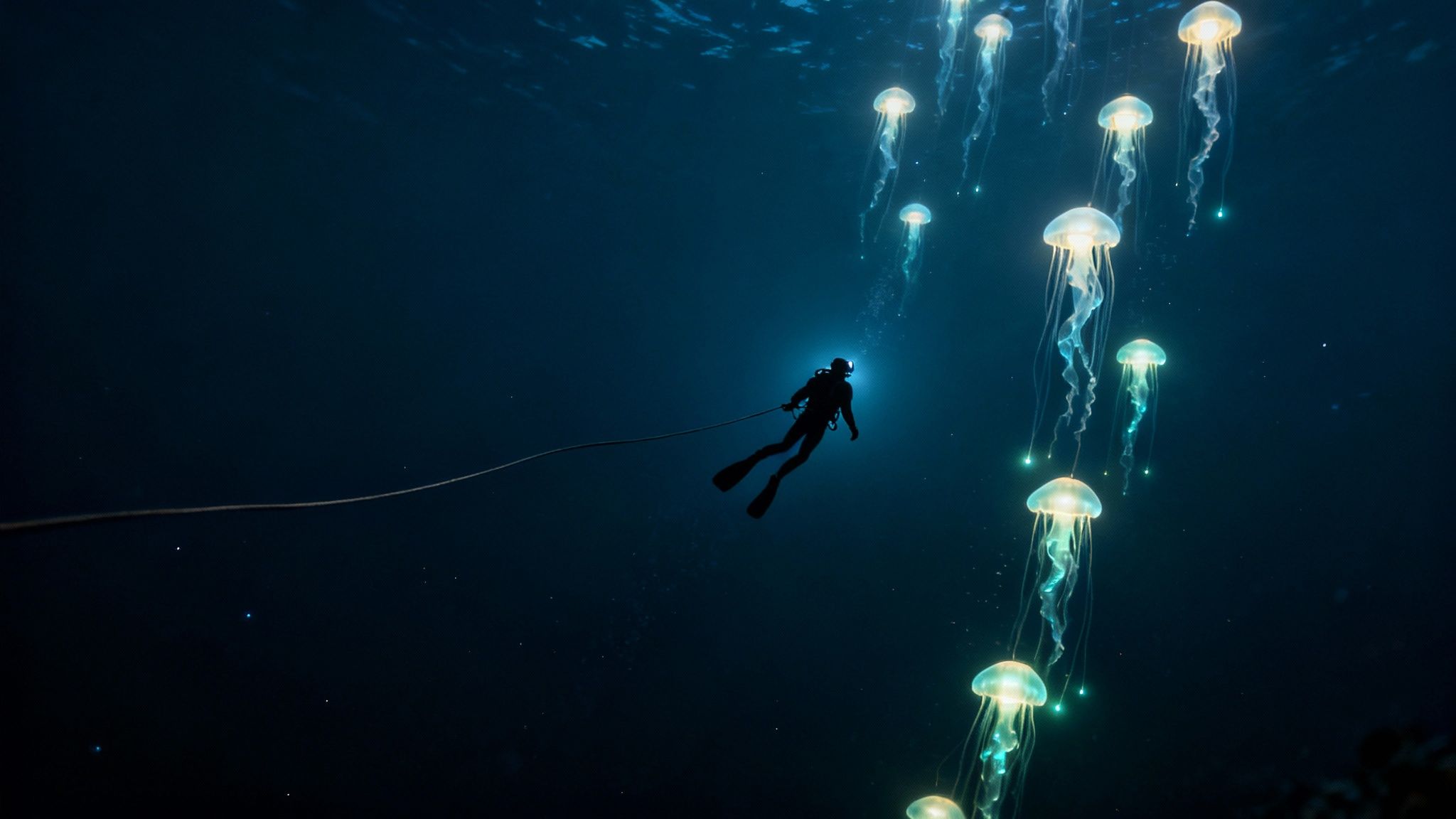
For the ultimate surreal experience, nothing on Earth compares to the Kona Blackwater Dive. Picture this: you're suspended in the pitch-black open ocean at night. Thousands of feet of water lie beneath you, and your only connection to our world is a tether to the boat above. It's often compared to floating in outer space, and it’s easily one of the most advanced and unforgettable dives you can do.
You're not just diving—you're getting a front-row seat to the largest migration of life on the planet. Every single night, countless bizarre and bioluminescent creatures rise from the deep to feed near the surface. You'll see life forms that look completely alien: strange jellies, see-through larval fish, and tiny squid that pulse with their own light.
The Thrill Of The Blackwater Dive
The Blackwater Dive is a highly specialized adventure. It demands a specific mindset and rock-solid advanced skills. Buoyancy control is everything here because there's no bottom to reference—just an endless expanse of dark blue below. You have to be completely comfortable in the open ocean at night.
This dive is pure sensory immersion. In the quiet darkness, your world shrinks to the beam of your dive light, illuminating a constant parade of otherworldly creatures drifting past. It's a humbling reminder of the vast, mysterious life that thrives in the ocean's deepest corners.
Because of the extreme conditions, this dive is strictly for experienced divers. Here at Kona Honu Divers, we require an Advanced Open Water certification and proven, excellent buoyancy skills. It’s all about keeping you safe while you have this mind-blowing experience. If you think you're ready, you can learn more about the Kona Blackwater Night Dive and its specific requirements.
Riding The Currents On A Kona Drift Dive
Beyond the blackwater, Kona offers another incredible experience that harnesses the ocean's raw power: drift diving. The currents along the Kona coast are predictable, creating the perfect "lazy river" for divers.
Instead of kicking hard against the flow, you just relax and let the ocean do the work. The current guides you effortlessly along the reef, so you cover far more ground and see more marine life with almost no effort.
Kona is quickly becoming a top spot for drift diving, a style that’s expected to grab 25% of the U.S. diving tourism market. Our consistent currents, typically a gentle 1-2 knots, carry you over stunning underwater landscapes. One minute you're gliding over a shallow 30-foot reef, the next you're flying past a dramatic drop-off that plunges well past 130 feet. It's this dynamic flow that supports such a rich variety of marine life. For more on the numbers, check out these trends in U.S. diving tourism.
It’s these one-of-a-kind adventures—from the alien world of a blackwater dive to the effortless glide along a volcanic reef—that make the Big Island a true magnet for divers looking for something extraordinary.
Why Choose Kona Honu Divers For Your Adventure
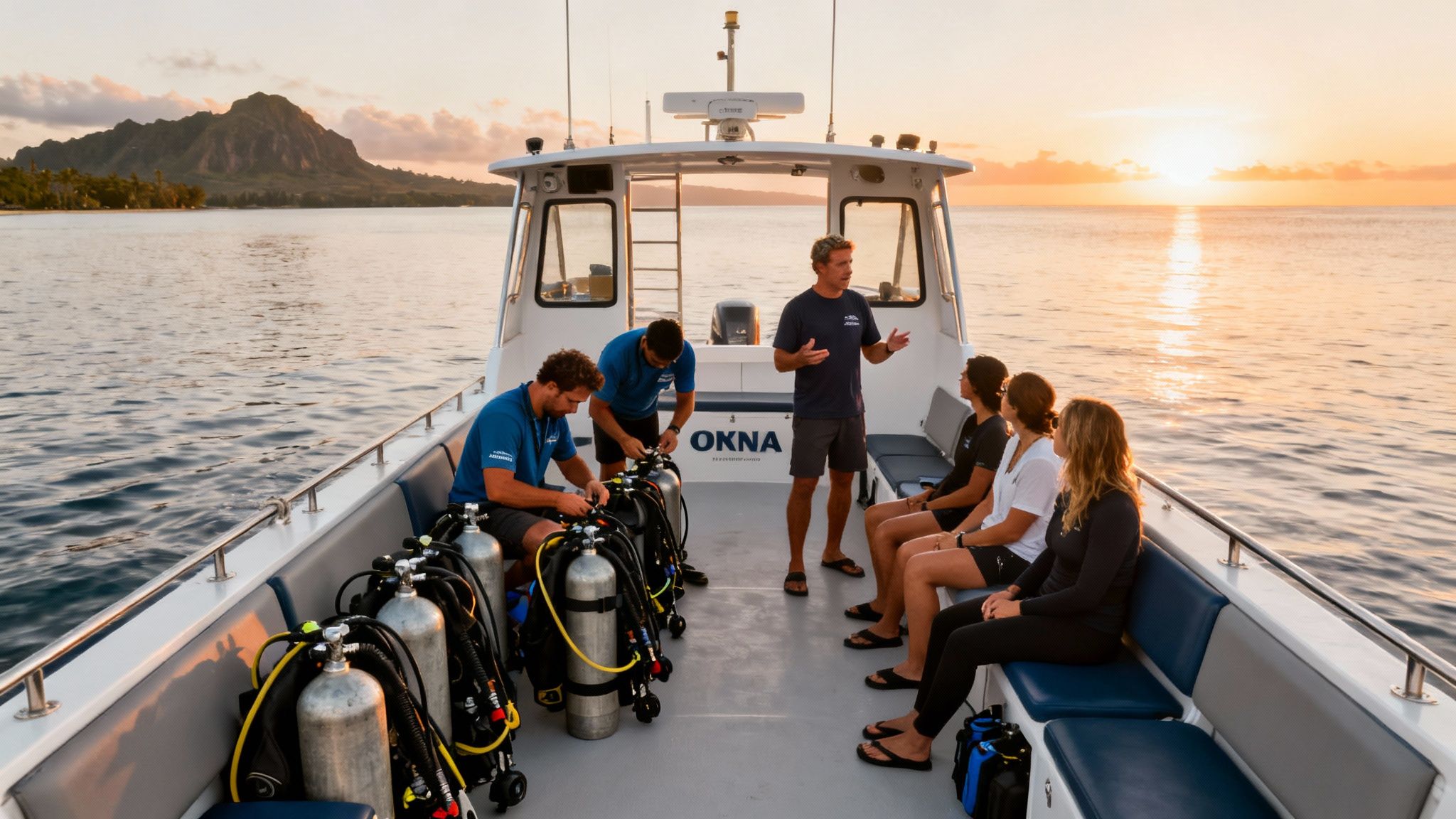
Let's be honest, the dive operator you choose can make or break your trip. It's the difference between just splashing around and having a genuinely safe, top-tier, and memorable experience. When you're looking for scuba diving on the Kona coast of the Big Island, Kona Honu Divers stands out because they sweat the small stuff—from the moment you book to the second you step back on the dock, grinning from ear to ear.
It’s about more than just seeing cool stuff underwater. It’s about how you get there, how confident you feel in your crew, and how comfortable you are the entire time. That's what turns a good dive into an amazing one.
Deep Experience and a Focus on Safety
Safety isn't just a talking point here; it's the foundation for everything Kona Honu Divers does. Their crew brings a staggering 200+ years of combined industry experience to the table. You're not just diving with guides—you're with seasoned pros who know these Kona waters like the back of their hand.
That deep well of knowledge means they can read the conditions, pick the absolute best site for the day, and lead with confidence. When your guides are that experienced, you can finally relax and just soak in the incredible world below the surface.
You also won't get lost in the crowd. They keep their groups small on purpose, so you’re never just another tank and regulator. Your guide will know you by name, understand your comfort level, and give you the personal attention you need to have a great dive.
Custom-Built Boats Designed for Divers
The experience begins on the boat, and Kona Honu Divers runs a fleet built specifically for diving the Kona coast. Forget being packed in like sardines; these boats are roomy, stable, and loaded with features that actually matter to divers.
- Honu One: This 46-foot beast is one of the most comfortable and spacious dive boats in Kona. It offers a smooth ride and plenty of room to gear up without bumping elbows.
- Honu Iki: A quick and nimble 32-foot boat that's perfect for getting to more distant dive sites fast, without sacrificing comfort.
Both boats have freshwater showers for a post-dive rinse, clean marine heads (bathrooms), and lots of shade. They also keep you fueled up with snacks, fresh fruit, and drinks. Best of all? The crew handles the heavy lifting, setting up your gear before you arrive and breaking it down when you're done.
Great Gear and Thoughtful Extras
If you’re renting, you’ll get top-of-the-line equipment that is meticulously cared for. Regulators, BCDs, computers, wetsuits—everything is regularly serviced to ensure it works perfectly. It takes all the gear-related stress out of the equation so you can focus on the fish.
At Kona Honu Divers, it's all about creating a seamless, high-value experience. They know a truly great dive trip is built on expert guidance, attention to detail, and a real passion for sharing the magic of Kona's underwater world.
This commitment to quality is why they've earned such a stellar reputation. But you don't have to take our word for it—see what other divers have to say about their adventures.
From exploring vibrant reefs by day to swimming with mantas at night, every trip is designed to be special. You can see everything they offer on their main Kona diving tours page and find the perfect trip for you.
Frequently Asked Questions About Diving In Kona
Planning a dive trip to the Big Island is exciting, but it naturally comes with a few questions. We get asked a lot about the specifics of diving in Kona, so we've put together answers to the most common ones right here.
Our goal is to get all the details sorted out for you ahead of time. That way, you can spend less time worrying and more time looking forward to the incredible underwater world waiting for you.
What Is The Best Time Of Year For Scuba Diving In Kona?
Honestly, there's no bad time to dive in Kona. That's one of the best parts about this place. The Kona coast is tucked behind the massive volcanoes of Mauna Loa and Hualalai, which act as a natural shield from the trade winds. This gift from nature means we get consistently calm, clear water pretty much year-round.
Water temps are always comfortable. In the winter, you can expect 75-77°F (24-25°C), and it warms up to a balmy 80-82°F (27-28°C) in the summer. Visibility is usually fantastic, often pushing past 100 feet.
So, when should you come? Summer (May to October) usually has the flattest, calmest seas. But winter (November to April) has its own magic—you can often hear the songs of migrating humpback whales echoing through the water on your dives. It’s an unforgettable experience.
It really just comes down to what you prefer. Whether you're chasing the warmest water or the sound of whales, Kona's reefs are ready when you are.
What Certification Level Do I Need To Dive In Kona?
Kona is fantastic for divers of all experience levels. You definitely don’t need to be a seasoned pro to see the best stuff.
Many of our most vibrant and famous dive sites are actually quite shallow, typically between 30 and 60 feet. This makes them perfect for Open Water divers who are still getting their fins wet. Even the world-famous Manta Ray Night Dive happens in shallow water, so nearly every certified diver can experience it.
Of course, if you're looking for a bigger challenge, Kona has that too. An Advanced Open Water certification will open the door to some unique dives that require a bit more training:
- The Blackwater Dive: This is a one-of-a-kind night dive in the deep, open ocean. It demands excellent buoyancy and being completely comfortable in the dark with no bottom in sight.
- Deeper Lava Tubes & Canyons: Some of the more complex volcanic formations and drop-offs are reserved for divers with the training to explore them safely.
No matter where you are in your diving journey, there's an amazing dive here for you. We always help our guests choose sites that match their certification and comfort level. And if you're looking to level up, Kona Honu Divers offers a range of courses to help you get there.
Can My Non-Diving Friends Or Family Join The Boat?
Absolutely! We love it when the whole family can come out on the water, even if not everyone is a diver.
Many of Kona's best dive spots are also phenomenal for snorkeling. We welcome snorkelers and "ride-alongs" on most of our trips. They can hang out on the boat, enjoy the beautiful Kona coastline, and see plenty of amazing marine life from the surface. The Manta Ray Night Dive, for example, has a world-class snorkeling option where they can float right above the action and watch the mantas feed.
It makes for a perfect day out that everyone can enjoy together. Just let us know you have snorkelers or riders in your group when you book, and we'll make sure there's a spot for them.
What Should I Pack For A Kona Diving Trip?
Packing for a Kona dive trip is pretty straightforward. The weather is warm, and we've got top-notch gear here for you.
Here's a quick checklist of what to bring:
- Reef-Safe Sunscreen: This is a must. Regular sunscreens have chemicals that kill our fragile coral reefs, so please only bring mineral-based, reef-safe options.
- Personal Items: Your swimsuit, a towel, sunglasses, and a hat are essential for time on the boat.
- A Light Jacket: It might sound strange, but a sweatshirt or windbreaker feels great after a night dive when the air cools down.
- Dive Essentials: Don't forget your certification card and your logbook!
Unless you’re devoted to your own setup, there's no need to haul heavy gear across the ocean. Kona Honu Divers provides excellent, meticulously maintained rental equipment. We have everything from BCDs and regulators to computers. A 3mm wetsuit is perfect for our water temperatures, and we have a full range of sizes. Renting lets you travel light and still dive with great gear.