
Picture this: You take a giant stride off the boat and descend into the deep blue, watching the surface world fade away. As you sink into the calm, warm water, a whole new landscape comes into view—ancient lava flows covered in a riot of colorful coral, bustling with fish you've only seen in nature documentaries. This is what scuba diving in Kona is all about.
This isn't just another dive spot; it's a world-class underwater destination. Let's explore what makes the Big Island's Kona coast a bucket-list trip for divers of every skill level.
Why Kona is a Premier Scuba Diving Destination
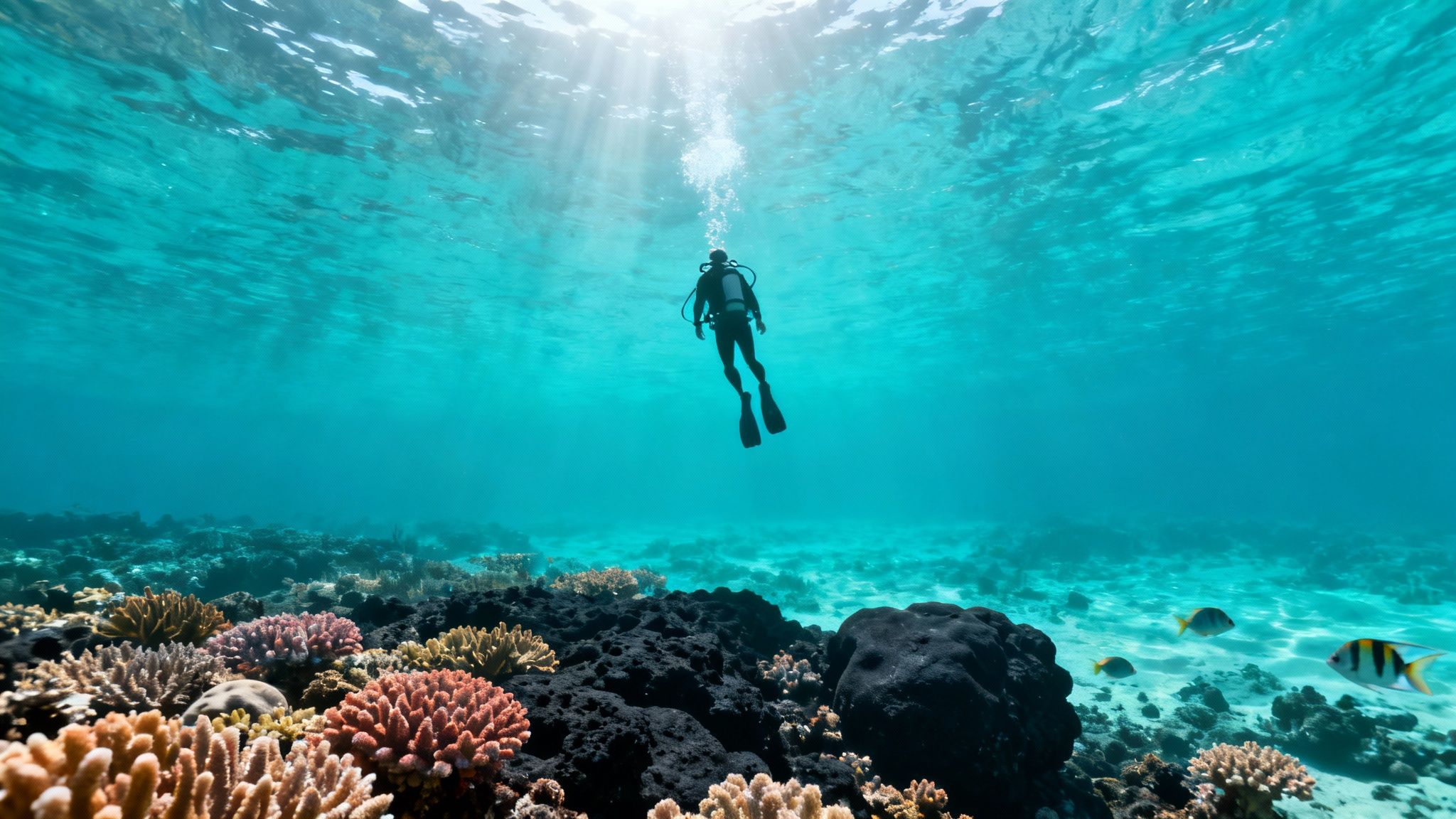
The magic of Kona starts above the water. The coast is sheltered from the Pacific's powerful trade winds by the colossal volcanoes Mauna Loa and Hualalai. This natural barrier creates a diver's dream: consistently calm, clear waters with visibility often reaching an incredible 100 feet or more.
This geological luck means perfect conditions for everyone, whether you're taking your first breaths underwater or you're a seasoned pro with hundreds of dives in your logbook.
The real showstopper, though, is the underwater terrain. Born from volcanic fire, the seafloor is a labyrinth of dramatic lava tubes, massive archways, and hidden caverns. Over millennia, these formations have become the foundation for some of Hawaii's most vibrant coral reefs, creating the perfect habitat for an almost unbelievable amount of marine life.
What Makes Kona's Underwater World Special
Diving in Kona is so much more than just spotting a few colorful fish. It's like stepping into a fully-realized, living ecosystem that’s constantly in motion.
- Mind-Blowing Biodiversity: Kona's reefs are packed with hundreds of fish species, many of which you can only find here in Hawaii. It’s common to share the water with Hawaiian green sea turtles (we call them honu), moray eels peeking from crevices, and pods of playful spinner dolphins.
- Signature Dive Experiences: Sure, the reef diving is phenomenal, but Kona is famous for a few truly unique adventures. The Manta Ray Night Dive is legendary for a reason, and the surreal Kona Blackwater Dive lets you witness the mysterious nightly migration of deep-ocean creatures. It's a whole different world after dark.
- Perfect Conditions All Year: With ocean temperatures staying in a comfortable 75-80°F (24-27°C) range year-round, there's never a bad time to jump in.
The secret is out. Hawaii's dive industry is booming, with over 1.5 million scuba dives logged annually across more than 215 licensed dive shops. The Kona coast consistently tops the list, especially for unique experiences like drift diving—a fast-growing trend in the U.S. diving community. You can see more about Hawaii's dive industry trends on this blog.
It’s easy to see why Kona is a must-do for divers from all over the globe. If you're ready to experience it for yourself, our team at Kona Honu Divers runs world-class tours led by passionate professionals who live and breathe for this stuff.
Explore our full range of Kona diving tours today!
Experiencing The World-Famous Manta Ray Night Dive
Out of all the incredible scuba diving you can do in Kona, there's one experience that truly defines the Big Island. The manta ray night dive isn’t just another trip into the water; it’s an otherworldly ballet that has put Kona on the map for divers worldwide. It's a must-do.
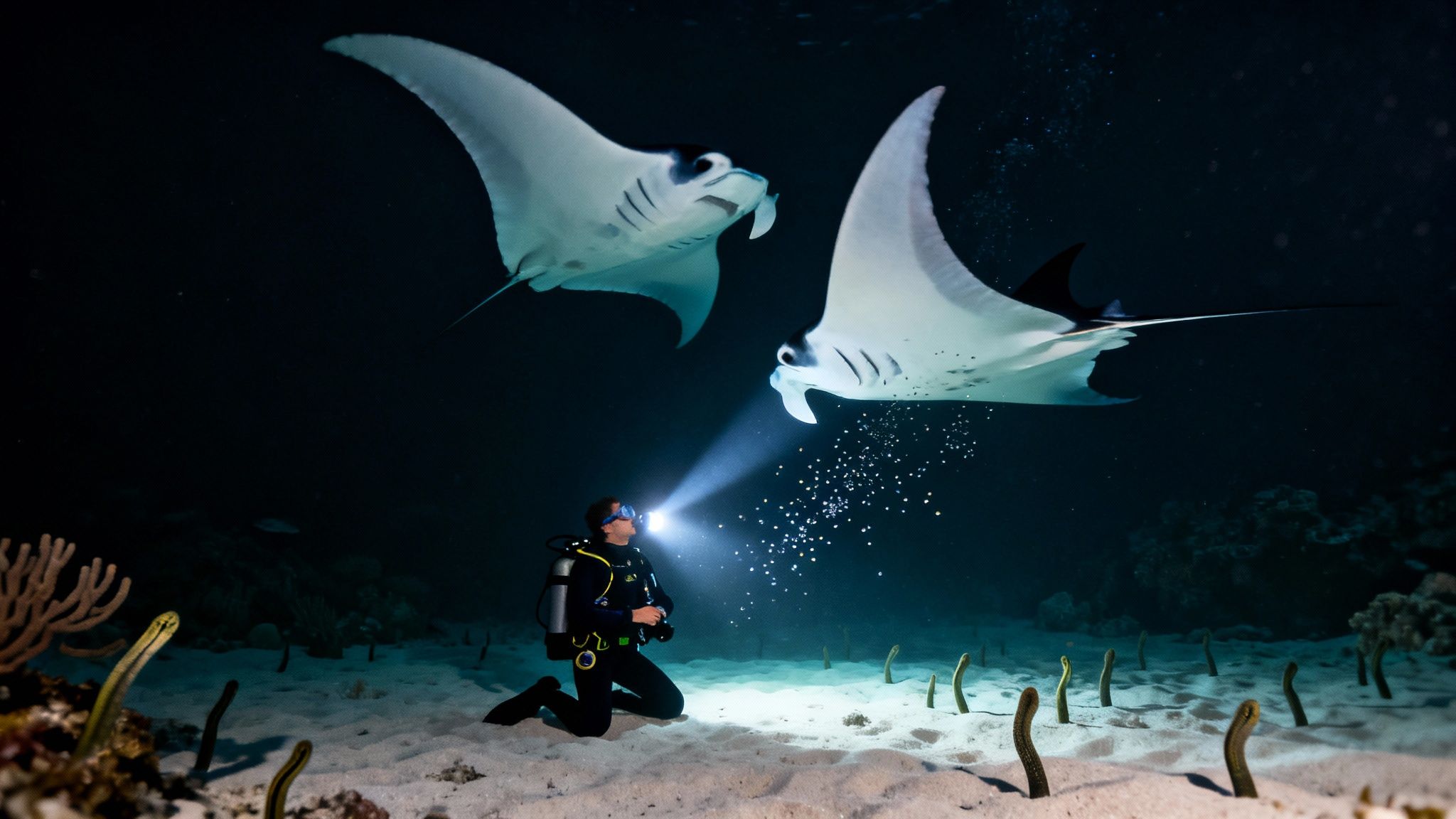
Picture this: you’re kneeling on the soft, sandy ocean floor as dusk settles in. Your guide sets up powerful lights in the middle of your group, aiming the beams straight up. Those lights act like a magnet, drawing in billions of microscopic plankton that create a glowing, swirling column of life in the darkening water.
And then, they appear. Seemingly out of nowhere, massive manta rays with wingspans up to 16 feet glide in from the deep. They swoop in, just inches above your head, performing graceful barrel rolls to scoop up the plankton. It's a silent, mesmerizing show that feels like you've been dropped onto another planet.
Why Garden Eel Cove Is The Premier Location
While you might hear about a couple of spots for this dive, one location consistently delivers a better, more magical experience: Garden Eel Cove. Located just north of the Kona airport, this site has a few key advantages that make it the superior choice.
First, it’s tucked into a protected cove, which means calmer water—a big plus for any night dive. The site is shielded from the big ocean swells, making it safer and way more comfortable to settle on the bottom and enjoy the show without being pushed around.
Second, the viewing area itself is a natural sandy amphitheater. This setup allows dive operators to arrange divers in a semi-circle around the lights, so everyone gets a front-row seat. It’s organized, intimate, and guarantees an unobstructed view of the mantas.
Finally, the reef surrounding the "campfire" is just healthier and more vibrant than other locations. This makes the swim to the site and back a fantastic dive in its own right. You'll see all kinds of nocturnal critters waking up and getting their night started on a beautiful coral ecosystem.
What To Expect On Your Manta Dive Adventure
Your adventure starts on the boat with a thorough pre-dive briefing from your divemaster. They’ll cover everything you need to know about manta behavior, why passive interaction (no touching!) is so important, and the exact plan for the dive. We want everyone to feel confident and know how to have a safe, respectful encounter.
Once we’re in the water, it's a short swim to the designated "campfire" area. You'll descend to about 30-40 feet and find your spot on the sand. The entire experience is stationary, so it requires very little effort—just good buoyancy control—making it accessible for most certified divers.
The concept behind the dive is beautifully simple: attract their food, and the gentle giants will come for dinner. The result is one of the most reliable and breathtaking wildlife encounters you can have.
And it really is reliable. Manta sightings along the Kona coast are incredibly consistent, with operators seeing mantas on 85-90% of tours. On any given night, we might see anywhere from two to over thirty individual mantas show up. You can even check manta sighting reports to see just how often they visit.
The manta ray night dive is more than an item on a bucket list; it's a profound connection with one of the ocean's most majestic creatures. At Kona Honu Divers, we specialize in creating a safe and respectful experience at the best location, Garden Eel Cove. To get the full picture of this incredible adventure, check out our detailed guide on the Manta Ray Night Dive in Kona.
Exploring Kona’s Must-Dive Underwater Landscapes
While the manta ray night dive is an absolute showstopper, it’s really just the opening act. The real story of diving in Kona is written in the volcanic coastline of the Big Island, a dramatic landscape hiding a vast and varied underwater world just waiting to be explored.
Think of it this way: every dive here reveals a new personality. One day you're drifting over serene coral gardens teeming with fish, and the next you're navigating dramatic lava formations that look like something from another world. This incredible variety is what makes Kona so special. It means there’s a perfect dive site for everyone, no matter what you're looking for.
Whether you're an underwater photographer obsessed with capturing the vibrant colors of a butterflyfish or an adventurer itching to see the island's volcanic origins up close, Kona delivers. Let's dive into some of the most celebrated spots you can explore.
Kealakekua Bay: The Crown Jewel
If there's one place that perfectly captures the soul of Kona's beauty, it's Kealakekua Bay. This isn't just another dive site; it's a protected Marine Life Conservation District, and you can feel the difference the moment you dip below the surface. Shielded from the open ocean, the water here is often incredibly calm and crystal clear, creating a true sanctuary.
Descending into the bay feels like slipping into a giant, natural aquarium. The reefs are dense and vibrant, home to a dizzying number of fish. You'll find yourself surrounded by shimmering schools of yellow tangs, delicate ornate butterflyfish, and parrotfish noisily munching on coral. It’s also one of the best places to have a chance encounter with playful spinner dolphins and Hawaiian green sea turtles (honu) going about their day.
Thanks to its protected status and gentle conditions, Kealakekua Bay is a fantastic spot for all skill levels. It offers a world-class experience without the stress of strong currents or deep dives, making it an ideal choice for families and anyone new to scuba diving Kona Hawaii Big Island.
Lava Tubes And Caverns: The Volcanic Playground
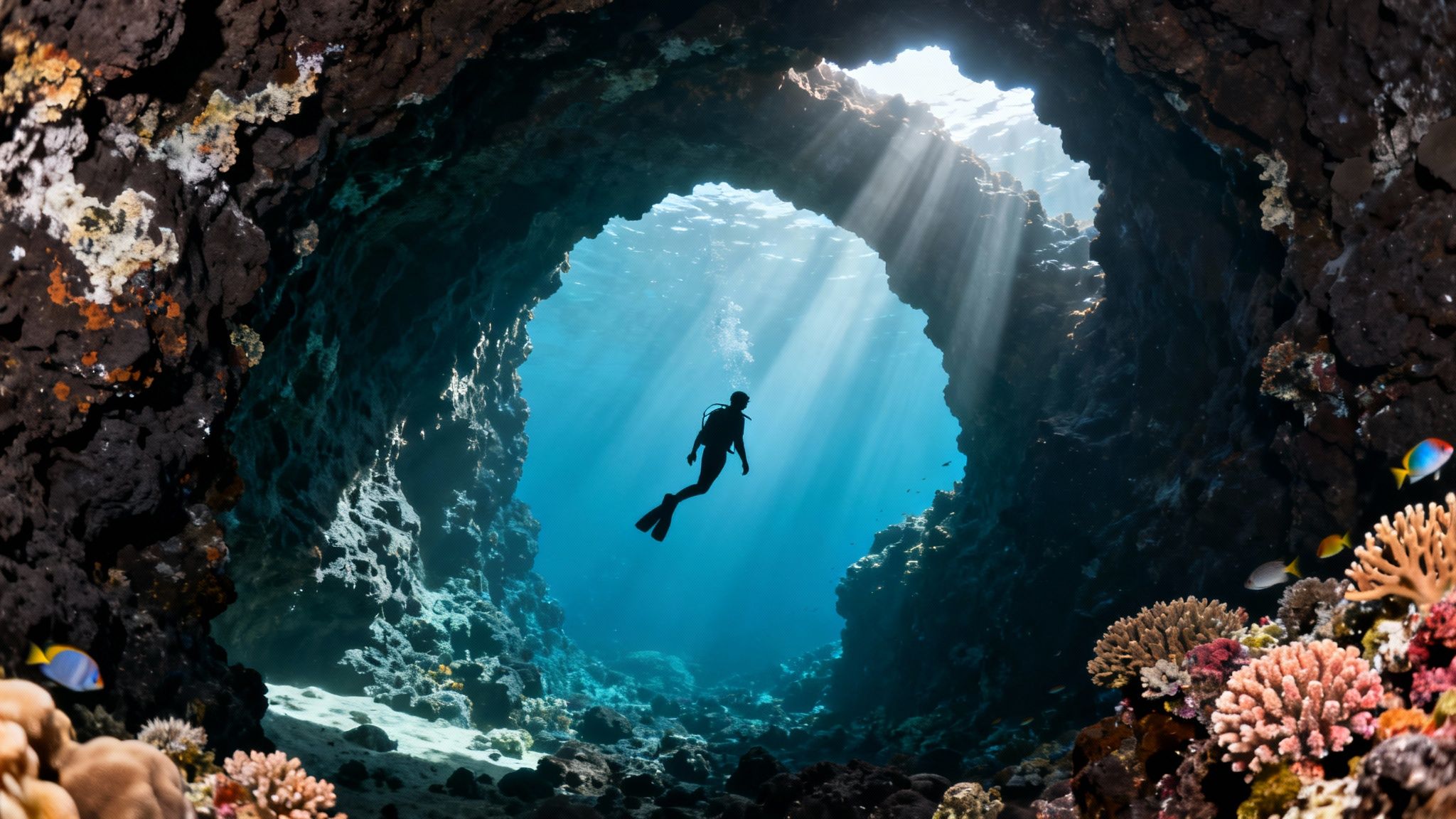
For those who crave a bit more adventure, Kona's volcanic past has created a thrilling underwater playground. Over millennia, flowing lava sculpted an incredible network of sub-aquatic structures—tubes, massive archways, and caverns that are now bursting with life. Exploring these formations is like swimming through a natural sculpture park.
One of the most famous examples is a site aptly nicknamed 'The Cathedrals.' Here, you can glide through enormous underwater arches and caverns. On a sunny day, beams of light pierce through the openings above, creating a breathtaking, almost spiritual effect that gives the site its name. The dramatic light makes for some of the most stunning underwater photography on the island.
But these sites are more than just cool rock formations. Their nooks and crannies are perfect hiding spots for all sorts of marine creatures. It’s common to find whitetip reef sharks resting on the sandy floor inside a cavern, or to spot moray eels, lobsters, and shy octopuses tucked away. Good buoyancy control is a must for these dives, but the reward is an unforgettable look at the raw power that shaped the Big Island.
In fact, Kealakekua Bay Marine Life Conservation District consistently ranks as a top scuba diving destination on the Big Island, establishing itself as a jewel on the Kona coast. This protected sanctuary offers incredible experiences for all skill levels, from beginners to seasoned pros. Beyond the bay, sites like the Cathedral Caves offer advanced divers a look at dramatic underwater lava formations, highlighting the diversity that establishes the Big Island’s prominence in the global diving community. Discover more about the Big Island's top-rated dive sites.
Ready to explore these incredible underwater landscapes? Check out our daily diving tours to find the perfect trip for your skill level and interests.
Beyond The Reef: Unlocking Kona’s Most Unique Dives
So, you've got a full logbook. You've seen beautiful reefs, explored a wreck or two, and now you're looking for that next-level experience—the kind of dive you’ll be talking about for years. If that sounds like you, Kona is about to become your new favorite place on Earth.
The Big Island is home to some of the most genuinely adventurous dives you can find anywhere. These aren't your standard-issue reef tours. We're talking about experiences that push your skills and open up a side of the ocean most people will never, ever see.
The Kona Blackwater Dive: A Trip to Inner Space
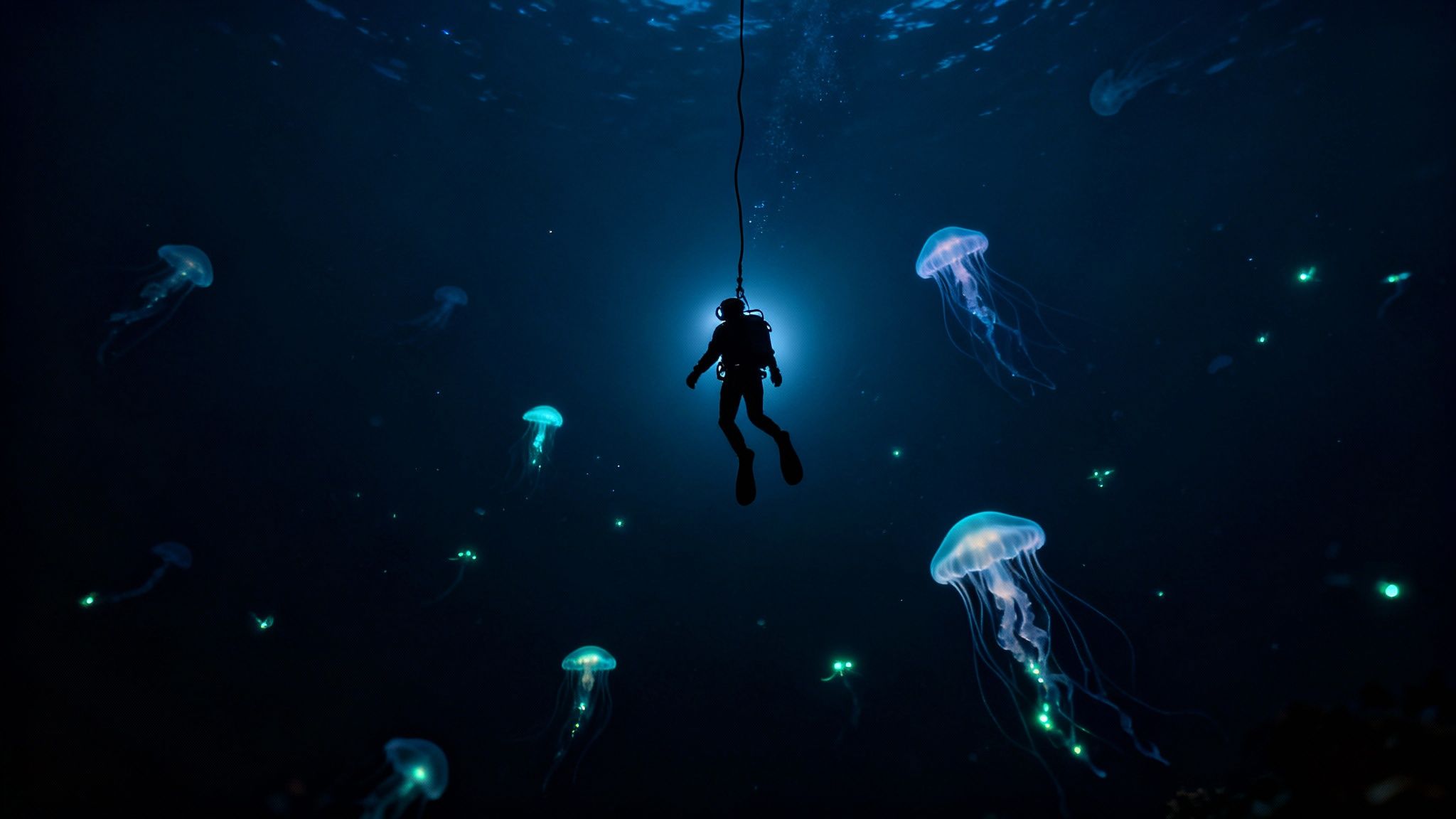
Picture this: you're miles offshore, suspended in the deep, dark ocean. Below you, thousands of feet of water drop into blackness. You're tethered to the boat, floating in what feels like outer space, but all around you, life is erupting. This is the world-famous Kona Blackwater Dive.
This isn't just a night dive—it's a journey into the largest migration on the planet. Every single night, a vertical migration brings bizarre, bioluminescent creatures up from the crushing depths to feed near the surface. You're literally drifting through an alien world as it comes alive.
A blackwater dive is less about the reef and more about the creatures of the open ocean. Think tiny, see-through larval fish, glowing squid, and otherworldly jellies that look like they were dreamed up for a sci-fi movie. It's an experience that completely redefines what a dive can be.
Because we're in the deep open ocean at night, this dive is for seasoned divers. You’ll need an Advanced Open Water certification and at least 50 logged dives to join. It’s the ultimate test of buoyancy control and being comfortable in the dark, but the reward is a memory that will stick with you forever.
Advanced Reefs and Exhilarating Drift Dives
Beyond the blackwater experience, Kona’s volcanic coastline hides some truly wild and challenging sites for experienced divers. These are the spots where the underwater topography gets more complex, the currents can pick up, and the chances for spotting big animals increase dramatically.
These trips are built for divers who have their skills dialed in and are ready for a more dynamic environment. The payoff is huge:
- Intricate Lava Tubes: Imagine weaving through ancient lava tubes and archways. These intricate formations require precise buoyancy and a calm confidence, but they lead to hidden chambers and spectacular underwater architecture.
- Thrilling Drift Dives: Forget kicking. Here, you can harness the ocean’s energy and fly effortlessly over massive stretches of pristine reef. It’s an incredible feeling, like soaring over an underwater landscape.
- Remote Seamounts: We visit submerged volcanic pinnacles that shoot up from the seafloor. These "seamounts" act like magnets for marine life, serving as cleaning stations for sharks, rays, and massive schools of jacks.
These advanced charters are about so much more than just going deeper; they’re about navigating raw, powerful environments with a guide who knows them inside and out.
Kona's Unique Dive Experiences Compared
Deciding between these incredible options can be tough. Here’s a quick breakdown to help you figure out which adventure is calling your name.
| Dive Type | Best For | What You'll See | Required Experience |
|---|---|---|---|
| Manta Ray Night Dive | All divers, families, photographers | Giant manta rays feeding on plankton, amazing photo opportunities | Open Water Certified |
| Blackwater Dive | Experienced divers, thrill-seekers | Bizarre, bioluminescent deep-sea creatures, "alien-like" organisms | Advanced Open Water, 50+ dives |
| Advanced Reef/Drift Dive | Confident divers, adventure lovers | Lava tubes, arches, potential for sharks, rays, and large schools of fish | Advanced Open Water preferred |
Whether you're dancing with mantas, exploring inner space on a blackwater dive, or flying over remote reefs, Kona offers an unforgettable experience tailored to your skill level.
Planning Your Kona Dive Trip: What You Need to Know
A little bit of planning can make the difference between a good dive trip and an absolutely incredible one. Before you even pack your bags, let's cover a few key details that will help you get the most out of your scuba diving Kona Hawaii Big Island adventure.
Think of Kona as a diver's dream destination. The massive volcanoes on the Big Island act as a natural shield, protecting the coastline and keeping the conditions fantastic pretty much all year. The water temperature is always in that sweet spot, hovering between a comfortable 75-80°F (24-27°C). Forget the drysuit; a simple 3mm or 5mm wetsuit is all you’ll need to stay warm, even on the famous night dives.
So, when’s the best time to visit? Honestly, there’s no bad time. The summer months from May to October usually bring the calmest, glassiest seas you can imagine. But winter (November to April) has its own kind of magic. That’s when the humpback whales are here, and there’s truly nothing like hearing their songs echo through the water while you’re on a safety stop. It adds a whole other layer to the experience.
Gearing Up For Your Dives
The age-old question: pack your gear or rent? The great news is, you can’t go wrong either way. We have top-notch, well-maintained rental gear ready for you, which is perfect if you want to travel light. Of course, nothing beats the comfort and familiarity of your own kit.
Here’s a simple breakdown to help you decide:
- Definitely Bring: Your mask, fins, and dive computer. A mask that fits your face perfectly is non-negotiable for a good dive, and you already know your computer inside and out.
- Consider Bringing: Your regulator and BCD. If you’re really comfortable with your own setup, it might be worth the extra space in your luggage. It really comes down to personal preference.
- Leave at Home: Tanks and weights. We’ve always got you covered there, so don’t even think about packing them. Full rental packages are also available if you want to keep it simple.
Here at Kona Honu Divers, we want you to have the best dive possible. That's why we offer complimentary Nitrox for all certified Nitrox divers. Diving on an enriched air blend can mean you feel less tired after a day of diving, leaving you with more energy to enjoy your vacation on land.
Your Certification and Staying Sharp
Before you head out, make sure you have your certification card handy—a physical copy or a digital one on your phone works perfectly.
Now, if it’s been a minute since you were last underwater (usually a year or more), we strongly recommend taking a refresher course. It’s a great way to shake off the rust, get reacquainted with your gear, and brush up on those critical skills. You’ll feel much more confident and relaxed from your very first dive.
Starting your trip with sharp skills is all about safety and enjoyment. When you’re prepared, you can just relax and take in the stunning underwater world Kona is famous for. If you're working on a budget, it's also smart to understand all the potential costs, so check out our guide on how expensive scuba diving in Hawaii can be to help with your planning.
With your gear sorted and your skills sharp, you’ll be ready to hit the water the moment you get here.
Why Kona Honu Divers Is Your Best Choice
Kona has no shortage of great dive operators, so what makes one stand out? It often comes down to the people, the boats, and an unwavering focus on giving you the best possible day on—and under—the water.
Your dive trip is a big deal, and we get that. It’s more than just a boat ride. It’s about feeling confident, safe, and guided by people who are genuinely fired up about what they do. That’s the core of our philosophy here at Kona Honu Divers.
Designed For Divers, By Divers
It all starts with our crew. We’ve brought together a team of seasoned, professional, and ridiculously enthusiastic divers who know these waters intimately. Think of them as your personal guides to Kona’s underwater world, dedicated to making sure your trip is safe, fun, and unforgettable.
A great dive day also needs a great boat. We didn’t just buy any old boat; we had ours custom-built specifically for diving. Our vessels, the Honu One and Honu Two, are designed from the hull up for comfort and convenience.
- Spacious decks mean no bumping elbows while you gear up.
- Easy water entry and exits make the transition seamless.
- Plenty of shade and comfy seating ensure the ride out is just as relaxing as the dive itself.
We’re also firm believers in small group sizes. Keeping our trips intimate means you get the personal attention you deserve. You’re never just another face in the crowd. Your guide is right there with you, pointing out that elusive octopus or helping you fine-tune your buoyancy.
Whether you're dreaming of the world-famous Manta Ray Night Dive, the otherworldly Kona Blackwater Dive, or a vibrant daytime reef exploration, we've got you covered. We run a full spectrum of world-class adventures for every skill level.
But don't just take our word for it. Here’s what other divers are saying about their time with us:
Your incredible Kona dive adventure is just a click away. We can’t wait to show you the magic of the Big Island’s underwater world.
Your Kona Diving Questions, Answered
Planning a dive trip to the Big Island always sparks a few questions. Let's get you some clear, straightforward answers from our years of experience so you can book your Kona adventure with total confidence.
What Is The Best Time Of Year To Scuba Dive In Kona?
Honestly, there's no bad time to dive in Kona—it’s fantastic year-round. The water stays in a beautifully comfortable range of 75-80°F (24-27°C) no matter the season.
If you love glassy, calm seas, the summer months from May to October are usually your best bet. But winter (November to April) has its own magic. While you might see some bigger swells, the diving is still incredible, and you get the added bonus of listening to humpback whales singing during your dives. It's an experience that will stay with you forever.
Do I Need To Be An Advanced Diver To Enjoy Kona?
Not in the slightest! Kona is a dream destination for divers of every skill level. We have tons of protected bays and beautiful, calm reefs that are perfect for beginners or those who just got their certification.
Our crew at Kona Honu Divers makes a point of choosing dive sites that match the group's experience level. The goal is always to make sure everyone, from the novice to the seasoned pro, has a safe, comfortable, and amazing time in the water.
What Marine Life Can I Expect To See?
Get ready for a show! The Kona coast is absolutely packed with life. On any given dive, you're almost certain to encounter Hawaiian green sea turtles (our beloved honu), a variety of moray eels peeking out from the reef, octopus, and playful spinner dolphins. The reefs are also home to hundreds of species of colorful fish you can only find here in Hawaii.
And if you get a little lucky? You could be treated to a fly-by from a graceful eagle ray, spot whitetip reef sharks cruising the perimeter, or even find a master-of-disguise frogfish.
What Should I Bring On The Dive Boat?
Packing for the boat is pretty simple. We recommend you bring:
- Reef-safe sunscreen
- A towel
- Sunglasses and a hat
- A reusable water bottle to stay hydrated
If you know you’re prone to motion sickness, it's a good idea to take your preferred remedy before we leave the harbor. We’ll take care of the rest—Kona Honu Divers provides all the dive gear you'll need, plus snacks and drinks. Of course, if you have your own personal gear you love, feel free to bring it along