
Welcome to the undisputed heart of scuba diving on Hawaii's Big Island—the sun-drenched Kona coast. This place is special. Ancient lava flows have created a spectacular underwater world of dramatic caves and archways, all covered in vibrant coral and teeming with life. It's more than just another dive spot; it's a world-class aquatic playground waiting for you.
Your Essential Guide to Kona Scuba Diving
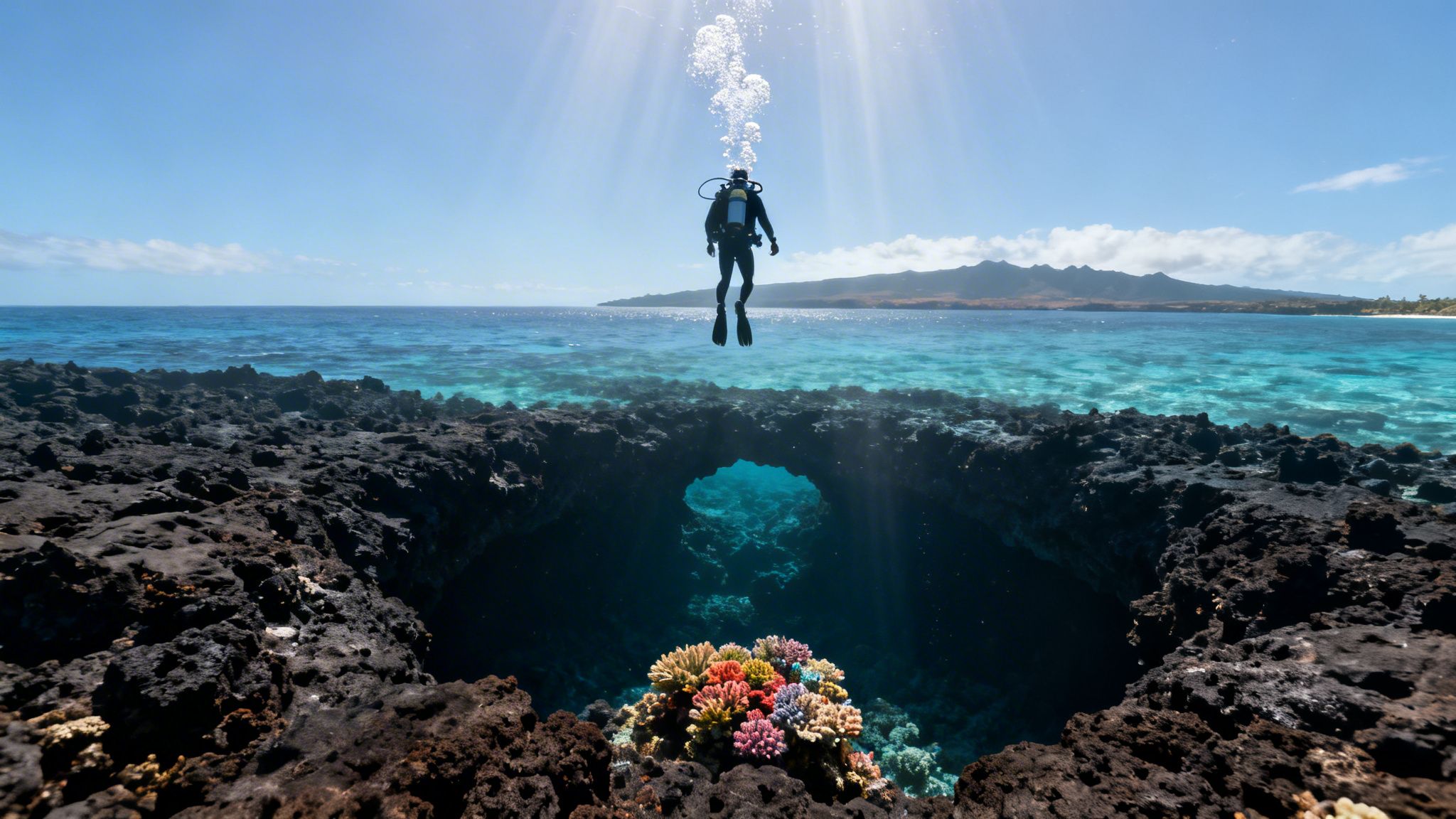
Kona’s reputation as a top-tier dive destination isn't just hype. The western coast is perfectly shielded by the massive volcanoes of Mauna Loa and Hualalai. Think of them as giant natural walls, creating a calm, protected "leeward" side with exceptionally gentle sea conditions.
This means less wind, smaller waves, and incredible underwater visibility that often stretches beyond 100 feet. It’s this natural protection that makes Kona an ideal spot for divers of all levels, all year round.
The underwater landscape here is truly something else, shaped directly by volcanic fire. You can find yourself navigating through ancient lava tubes and craters that have since become breathtaking coral cathedrals. This unique topography creates the perfect home for a staggering amount of marine life.
What Makes Kona's Underwater World So Special
Diving in Kona is all about unforgettable encounters you just can't have anywhere else. The area is legendary for a few iconic experiences that pull in divers from every corner of the globe.
- World-Famous Manta Ray Night Dive: This is the big one. You'll witness the silent, graceful ballet of giant manta rays as they swoop and glide through the beams of underwater lights to feed on plankton.
- Surreal Blackwater Dives: Imagine floating in the deep, dark ocean at night as bizarre and beautiful bioluminescent creatures rise from the abyss. It's like a journey into another dimension.
- Vibrant Reef Ecosystems: The coral gardens here are bursting with color and life, from endemic Hawaiian fish you won't see anywhere else to green sea turtles (honu) and playful spinner dolphins.
To truly unlock the best of what Kona has to offer, you need the right guide. With over 200 years of combined local experience, the crew at Kona Honu Divers knows these waters like the back of their hands. They keep their groups small, which means you get personalized attention that turns a good dive into an extraordinary one. Their focus is always on safety and tapping into their deep knowledge of the sites to match every trip to the day's conditions.
Plus, certified divers get some great perks like complimentary nitrox. This allows for longer bottom times, giving you a more relaxed experience and extra time to explore the wonders of scuba diving in Kona, Hawaii's Big Island.
For an incredible adventure led by seasoned local experts, you should definitely check out their lineup of diving tours.
Kona’s World-Famous Dive Experiences
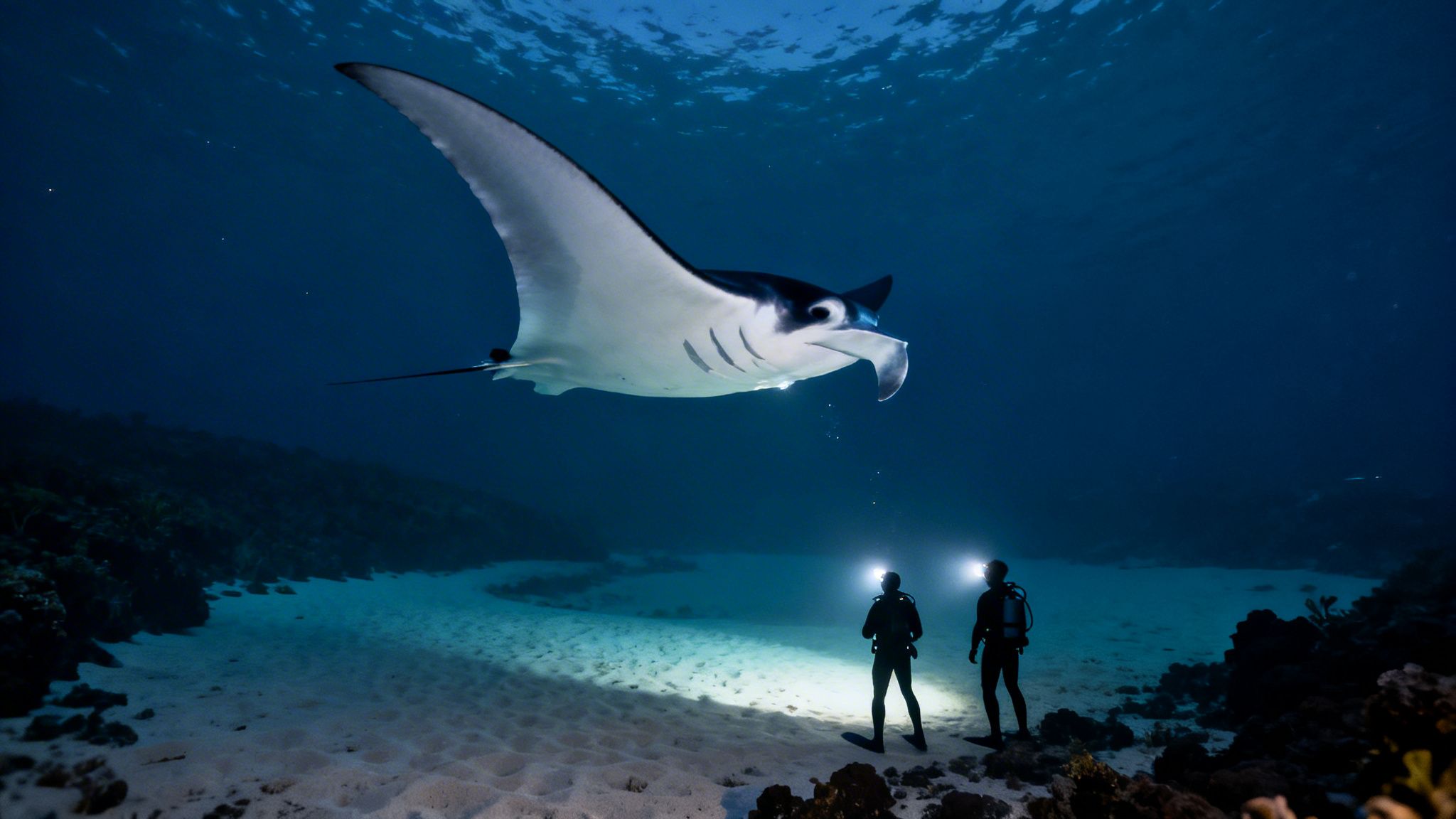
Sure, any dive in Kona is going to be memorable. But a few special experiences have put this place on the map, drawing divers from all over the world. These aren't just your average dives; they're the kind of iconic encounters that truly define scuba diving in Kona, Hawaii's Big Island.
Three dives, in particular, stand out. Each one offers a completely different window into the magic of the Pacific. From the silent, graceful ballet of giant manta rays to a surreal journey into the ocean's inky abyss, Kona serves up adventures that will stick with you long after you’ve surfaced.
The Manta Ray Night Dive: A Silent Ballet
The manta ray night dive is, without a doubt, one of the most incredible underwater encounters you can have anywhere on Earth. It's hard to put into words. You descend into the warm, dark ocean just after sunset, find a spot on the sandy bottom, and point your dive light up towards the surface. And then you wait for the show to begin.
Soon, giant manta rays, some with wingspans stretching over 12 feet, glide silently out of the darkness. They perform a stunning acrobatic dance, swooping and barrel-rolling through the beams of light to scoop up the plankton that have gathered. It’s a quiet, mesmerizing, and profoundly moving spectacle.
For this experience, the location is everything. We firmly believe Garden Eel Cove is the superior choice for the manta dive. Why? It's more protected from the ocean swell, which means calmer and more predictable conditions. Just as importantly, the underwater viewing area is better situated and the surrounding reefs are healthier, making the whole experience feel more pristine. To book this amazing encounter, check out the manta ray dive tours available.
The Blackwater Dive: A Journey into Inner Space
For the truly adventurous souls, the Kona blackwater dive is an experience that defies comparison. This isn't a reef dive. At all. Instead, we take you miles offshore at night, where the ocean floor is thousands of feet below. You'll descend to about 50 feet and simply drift in the open ocean, tethered to the boat for safety.
Divers often describe it as floating through outer space. Your light cuts through the darkness, illuminating a world of bizarre and beautiful creatures that migrate from the deep abyss toward the surface every single night.
This vertical migration is the largest on our planet, and on a blackwater dive, you get a front-row seat. You'll see bioluminescent organisms, translucent larval fish, and alien-like invertebrates you would never dream of seeing on a reef.
This dive is a surreal journey into a rarely seen dimension of the ocean. It's an absolute must-do for photographers and anyone looking for a dive that pushes the boundaries of exploration.
Classic Reef Dives: Exploring Volcanic Landscapes
Beyond the famous night dives, the daytime reef diving in Kona is absolutely world-class. The ancient volcanic activity of the Big Island has created a spectacular underwater playground filled with dramatic structures and vibrant life.
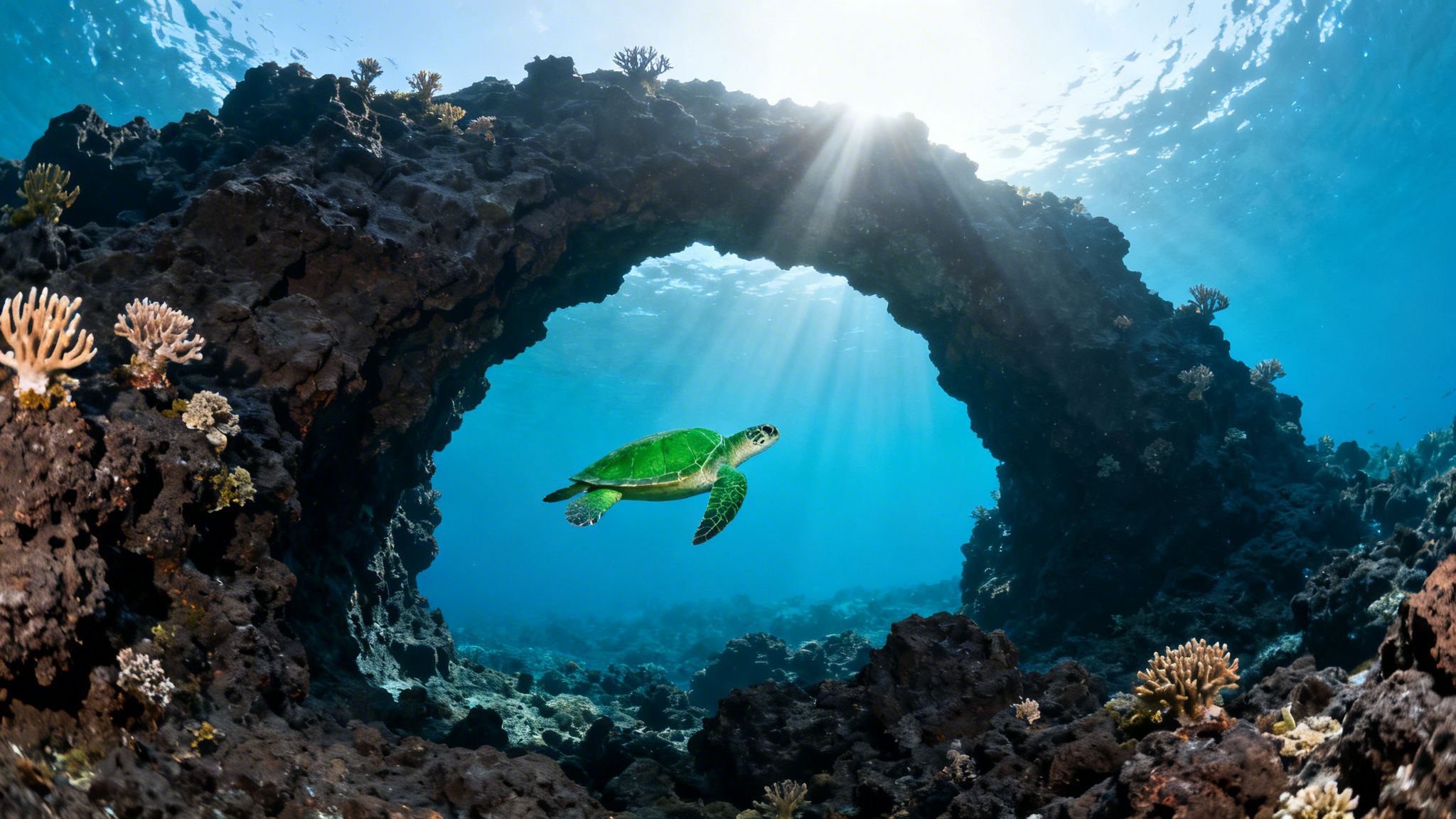
- Lava Tubes and Arches: You can explore intricate swim-throughs and massive archways formed by ancient lava flows, now completely decorated with colorful corals and sponges.
- Vibrant Coral Gardens: We'll guide you through sprawling fields of healthy hard corals, which are home to a huge diversity of reef fish—including many species found only in Hawaii.
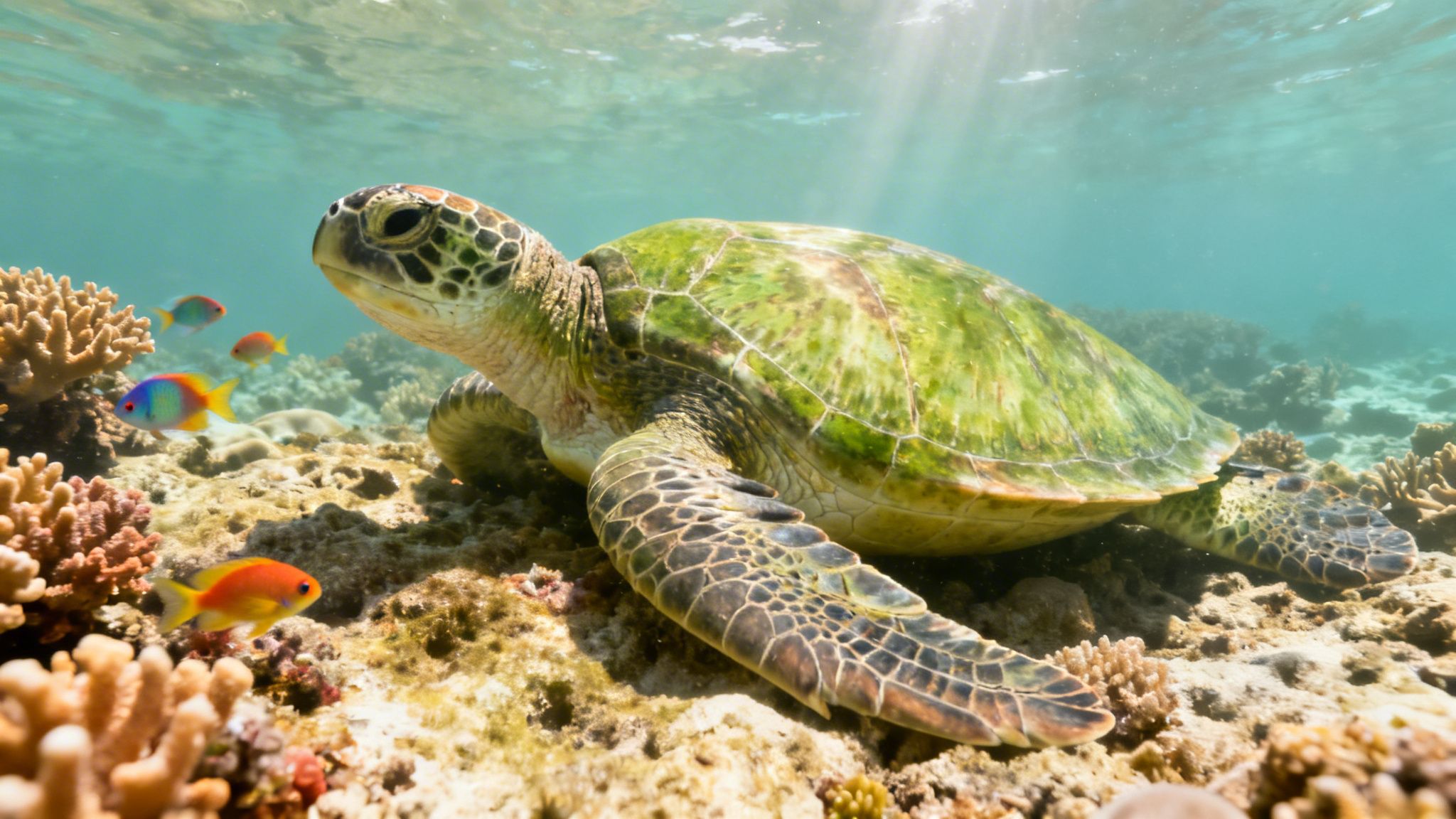
- "Turtle Cleaning Stations": A true highlight is witnessing Hawaiian green sea turtles (honu) holding perfectly still while smaller fish swim up to clean algae right off their shells.
These day trips are the perfect way to soak up the sun and explore the foundational ecosystems that make Kona's marine environment so incredibly rich. They're fantastic for divers of all skill levels and offer endless opportunities for discovery.
Exploring the Top Dive Sites on the Big Island
The Kona coast is basically a treasure map for divers. It’s packed with world-class spots, each offering a completely different peek into the Big Island’s underwater universe. You’ve got everything from historic bays to wild volcanic ledges, and the sheer variety is incredible. Figuring out where to drop in is the real secret to an unforgettable dive trip.
This is where local knowledge becomes your best friend. Our guides at Kona Honu Divers live and breathe these waters. They’re constantly checking the swell, currents, and visibility to pick the absolute best site for the day's conditions. It’s not just about safety; it’s about putting you in the right place at the right time for those mind-blowing encounters with marine life.
Kealakekua Bay: The Crown Jewel
If you ask any seasoned diver about Hawaii, Kealakekua Bay will inevitably come up. It's not just another dive site—it's a protected Marine Life Conservation District and a huge piece of Hawaiian history, marking Captain Cook's first landing spot. Underwater, it’s a pristine sanctuary.
Picture this: you descend into calm, crystal-clear water where a sheltered bay gives way to dramatic volcanic structures. The reef is absolutely covered in healthy hard coral, and it’s buzzing with over 100 species of fish. Visibility often hits 100-150 feet because the bay is shielded from the trade winds, making it a dream for divers of all skill levels. Because it’s so protected, the coral is healthier than in many parts of the world, and fish populations are 3-5 times denser than on typical Hawaiian reefs.
Golden Arches and Turtle Pinnacle
Beyond the famous bay, Kona has dozens of other fantastic sites, each with its own vibe. Two spots that are always at the top of divers' wish lists are Golden Arches and Turtle Pinnacle.
Golden Arches: Just like the name implies, this site is all about the breathtaking lava rock arches you can actually swim through. When the sunlight filters down through the arches, it creates this incredible, cathedral-like atmosphere. It’s a playground for underwater photographers and anyone who loves unique topography, with most of the action happening between 30-60 feet.
Turtle Pinnacle: If you’re hoping to see the beloved Hawaiian green sea turtle (honu), this is your spot. It's a natural "turtle cleaning station" where turtles patiently line up while surgeonfish nibble away algae and parasites. It's an amazing bit of natural teamwork to witness and the best way to see these gentle giants completely relaxed.
Au Au Crater: For the More Adventurous
Ready for something a little more dramatic? Au Au Crater feels like you’ve descended onto another planet. This submerged volcanic crater is a totally different scene, with sheer walls, fascinating rock formations, and the chance to spot bigger pelagic species cruising by in the deep blue.
The underwater landscape here is complex, making it a fantastic choice for more experienced divers. The crater's walls provide shelter for all kinds of marine life, from huge schools of fish to moray eels peering out from their rocky hideouts. It's the kind of dive that really tests your skills and rewards you with a truly unique experience.
There are so many incredible places to explore. You can learn more about what makes each spot special by checking out our complete guide to Big Island diving. Diving these sites with a crew that knows them inside and out is what turns a good dive into an adventure you'll never forget.
Meeting the Marine Life of Kona
Diving in Kona is like dropping into another world. The water is teeming with life, and you quickly realize you’re just a visitor in a busy, vibrant underwater city. It's not about just ticking off species from a list; it’s about the incredible encounters that make scuba diving in Kona, Hawaii's Big Island a truly unforgettable experience.
The undisputed stars of the show here are the majestic manta rays. These are the gentle giants of the sea, with massive wingspans that can stretch over 16 feet. In Kona, you don't just hope for a fleeting glimpse—you get a front-row seat to a world-famous underwater ballet. There is simply nothing like the manta ray night dive, where these graceful creatures swoop and glide through the beams of your dive lights. Sighting rates for this incredible experience often top 80% on dedicated night dives. Thanks to careful tracking, we know there are over 200 individual mantas that call this coastline home, a concentration that brings divers here from all over the planet.
Honu, Dolphins, And The Locals On The Reef
While the mantas own the night, Kona's reefs are absolutely buzzing with life during the day. You’re almost guaranteed to meet a Hawaiian green sea turtle, known locally as honu. These serene, ancient-looking creatures are a symbol of good luck in Hawaiian culture, and watching them soar through the water or chill out at a "turtle cleaning station" is a truly peaceful moment.
Keep an ear out for the clicks and whistles of spinner dolphins. They travel in big, energetic pods and are famous for their acrobatic leaps out of the water. Underwater encounters are rare and up to chance, but just knowing they're around adds a special energy to your surface intervals.
The coral gardens themselves are a kaleidoscope of color, packed with countless reef fish. What makes it even more special is that a huge number of these fish are endemic to Hawaii—you won't find them anywhere else on Earth. Look for schools of bright yellow milletseed butterflyfish or the deep, rich colors of a Potter's angelfish hiding among the corals.
A Note on Respectful Diving: The golden rule here is simple: look, don't touch. We're guests in their home. By keeping a respectful distance and never touching marine life, you're doing your part to protect this fragile ecosystem for future divers to enjoy.
To help you know what to look for, here’s a quick guide to some of the iconic animals you might encounter on your Kona dives.
Kona Marine Life Encounter Guide
| Marine Animal | Common Dive Sites | Best Dive Type for Sighting |
|---|---|---|
| Manta Ray | Garden Eel Cove, Manta Heaven | Manta Ray Night Dive |
| Green Sea Turtle (Honu) | Turtle Pinnacle, Golden Arches | Daytime Reef Dive |
| Spinner Dolphin | Offshore, between dive sites | Surface Interval (Boat) |
| Whitetip Reef Shark | Crescent Beach, Au Au Crater | Daytime or Night Reef Dive |
| Frogfish | Various shallow reefs | Daytime Reef Dive (requires a keen eye!) |
| Hawaiian Monk Seal | Rare sighting, any coastal site | Matter of luck! |
This table just scratches the surface, but it gives you an idea of the amazing diversity waiting for you just beneath the waves.
The Apex Predators of the Reef
The word "shark" can get the heart pumping, but in Kona, these encounters are almost always calm and beautiful. The shark you’re most likely to meet is the whitetip reef shark. They’re graceful, often a bit shy, and you can usually find them resting on sandy patches under ledges or cruising casually along the reef.
Far from being a threat, their presence is a great sign of a healthy, balanced reef ecosystem. Reputable dive shops here work hard to educate divers on the vital role these animals play. If you're curious and want to dive deeper into the topic, you can learn more about sharks on the Big Island in our detailed article.
Planning Your Kona Scuba Diving Adventure
Alright, let's get down to the nitty-gritty of turning that dream Kona dive trip into a reality. A little bit of planning goes a long way, and I'm here to walk you through the practical details to make sure your adventure is smooth, safe, and something you'll talk about for years.
The great news? Kona is tucked away on the leeward side of the Big Island, which blesses us with fantastic, consistent weather all year long. Honestly, there isn't a "bad" time to dive here. But knowing the subtle differences between seasons can help you pick the perfect time for your ideal trip.
When to Visit Kona for the Best Diving
The water here is always inviting. You can expect temperatures to hover around a comfortable 75°F (24°C) in the winter months and warm up to a balmy 81°F (27°C) by late summer. On top of that, the visibility is consistently incredible, often stretching out beyond 100 feet.
To help you decide, here’s a quick look at the seasons:
- Winter (December – March): This is humpback whale season! While you're not likely to see one underwater, hearing their songs echo through the water during a dive is a powerful, almost mystical experience you will never forget.
- Summer (June – September): During these months, the ocean is at its absolute warmest and calmest. This makes for incredibly relaxing and easy-going dives, perfect for anyone just getting certified or those who simply love that warm, tropical water.
No matter when you come, the underwater locals are always here. Manta rays, sea turtles, and a whole universe of vibrant reef fish are year-round residents, ready to put on a show.
What to Pack for Your Dive Trip
Packing for Kona is pretty simple, but there are a few items that will make your time in and out of the water much more comfortable. We provide all the major scuba equipment, so you can focus on the personal gear that makes all the difference.
Here’s what I recommend tossing in your bag:
- Wetsuit: A standard 3mm wetsuit is perfect for most people, most of the year. If you know you get chilly, especially on night dives or during the slightly cooler winter months, a 5mm is a solid choice.
- Reef-Safe Sunscreen: This one is non-negotiable. We have to protect both our skin and Hawaii's fragile coral reefs. Look for mineral-based sunscreens without oxybenzone or octinoxate.
- Reusable Water Bottle: Staying hydrated on the boat is key. A reusable bottle is great for the environment and helps you feel your best for every dive.
- Certification Cards: Don't leave home without them! Bring your physical or digital cert cards, including any specialties like Nitrox.
Choosing the Right Dive Operator
Let’s be honest: your choice of a dive shop can make or break your vacation. You want a team that is obsessive about safety, knows the local sites like the back of their hand, and makes you feel like part of the family. That’s where we come in.
At Kona Honu Divers, we believe better dives happen in smaller groups. It’s that simple. We keep our groups small to give you personalized attention, which means a safer, more intimate, and more educational tour of our underwater world.
Our boats were custom-built with divers in mind, offering plenty of space and making it super easy to get in and out of the water. Couple that with our perfect safety record and a crew that genuinely loves what they do, and you get an experience that’s truly second to none. If you're curious about budgeting, we break down the costs in our article on how expensive scuba diving in Hawaii can be.
Certification and Skill Requirements
One of the best things about diving in Kona is that there’s something amazing for every skill level, from your very first breath underwater to your thousandth dive.
If you’ve never dived before but are feeling adventurous, a Discover Scuba Diving experience is the perfect way to test the waters. It’s a supervised, introductory dive that gives you a real taste of the magic without the commitment of a full course.
For certified divers, the possibilities are wide open. Most of our stunning reef sites are well within the limits for Open Water divers. For those with more bottom time under their belts, our advanced dive tours are designed to explore deeper sites and more challenging topography. It's the perfect way to push your skills and see a different side of Kona's underwater landscape.
Why Choose Kona Honu Divers for Your Big Island Dive
Let’s be honest, picking a dive operator is the most critical choice you’ll make for your scuba diving Kona Hawaii Big Island trip. It’s what separates a good dive from an unforgettable one. It’s the difference between just looking at the reef and actually experiencing it. This is where we come in.
It all boils down to local knowledge. With a staggering 200 years of combined experience, our crew knows these waters like the back of their hand. This isn't just about knowing where the dive sites are; it's about understanding the subtle shifts in currents, tides, and marine life behavior that dictate where the best action will be on any given day. That's how we make sure you're always in the right place at the right time.
A Commitment to Safety and Personalized Service
For us, your safety and comfort are everything. We’ve always believed that the best dives happen in small groups. It’s a simple philosophy, but it makes a world of difference. Limiting our numbers means we can give you the personal attention you deserve, making sure you feel relaxed and confident whether it's your first time in Hawaiian waters or you're a seasoned pro.
You'll see this commitment in every detail. Our boats are purpose-built for diving, with plenty of room to gear up and relax between dives. Our guides aren't just there to point the way; they're passionate naturalists who love sharing what they know about the local critters and our conservation efforts. We want you to leave with a deeper connection to this incredible underwater world.
We believe a great dive isn’t just about what you see, but how you see it. Our goal is to create a safe, educational, and inspiring environment that enhances every moment you spend underwater.
But don't just take our word for it. The best way to get a feel for what we do is to hear from other divers. Check out some of their stories below—their feedback says more about our team’s passion than we ever could.
Diving with Kona Honu Divers isn't just booking a tour; it's investing in an experience run by people who genuinely love the ocean and are dedicated to sharing its magic safely and responsibly.
Ready to see the difference for yourself? Take a look at our full lineup of diving tours and find the adventure that’s calling your name. We can’t wait to show you the best of Kona.
Your Kona Diving Questions, Answered
As you get ready to pack your bags for Kona, a few last-minute questions are bound to pop up. We get it. Here are some of the most common things divers ask us before they hop on the boat.
What Certification Do I Need for the Manta Ray Night Dive?
You’ll need at least an Open Water certification to join the world-famous manta ray night dive. The dive itself isn't difficult—you'll mostly be settled on the ocean floor—but having that foundational training ensures you're comfortable and safe in the water after dark.
Is Scuba Diving in Kona Good for Beginners?
Kona is an absolute dream for new divers. The conditions here are often calm and protected, with little to no current at many of the most popular sites. The shallow, vibrant reefs provide the perfect underwater classroom to build skills and confidence without any stress.
When Is Humpback Whale Season?
The humpbacks arrive in Hawaii's waters from December through March. While getting a glimpse of one on a scuba dive is the equivalent of winning the lottery, hearing them is another story. On winter dives, the water is often filled with their incredible, haunting songs—an experience that will give you chills in the best way possible.
What if the Mantas Don't Show Up?
Manta rays are wild creatures, and while the show they put on is remarkably consistent (we're talking a 90% success rate!), there's never a 100% guarantee. That’s why top-notch operators like Kona Honu Divers offer a "manta guarantee." If you don't see any mantas, you can usually come back another night for free, based on availability. This is exactly why we always tell people to book their manta dive early in their trip!
Ready to see it all for yourself? Check out our full lineup of Kona diving tours to find the perfect underwater adventure.