
Picture this: you’re dropping into a world of brilliant turquoise, descending through water so clear it feels like flying. Below you, ancient lava tubes have formed stunning underwater cathedrals, and everywhere you look, vibrant coral gardens are buzzing with life you won’t find anywhere else on the planet. This is what it's like scuba diving in Kona, the absolute heart of the Big Island’s aquatic paradise.
It’s no wonder divers from around the globe have Kona on their bucket list. The legendary manta ray night dive and the one-of-a-kind blackwater dive are true once-in-a-lifetime experiences.
Discovering Kona The Heart of Big Island Scuba Diving
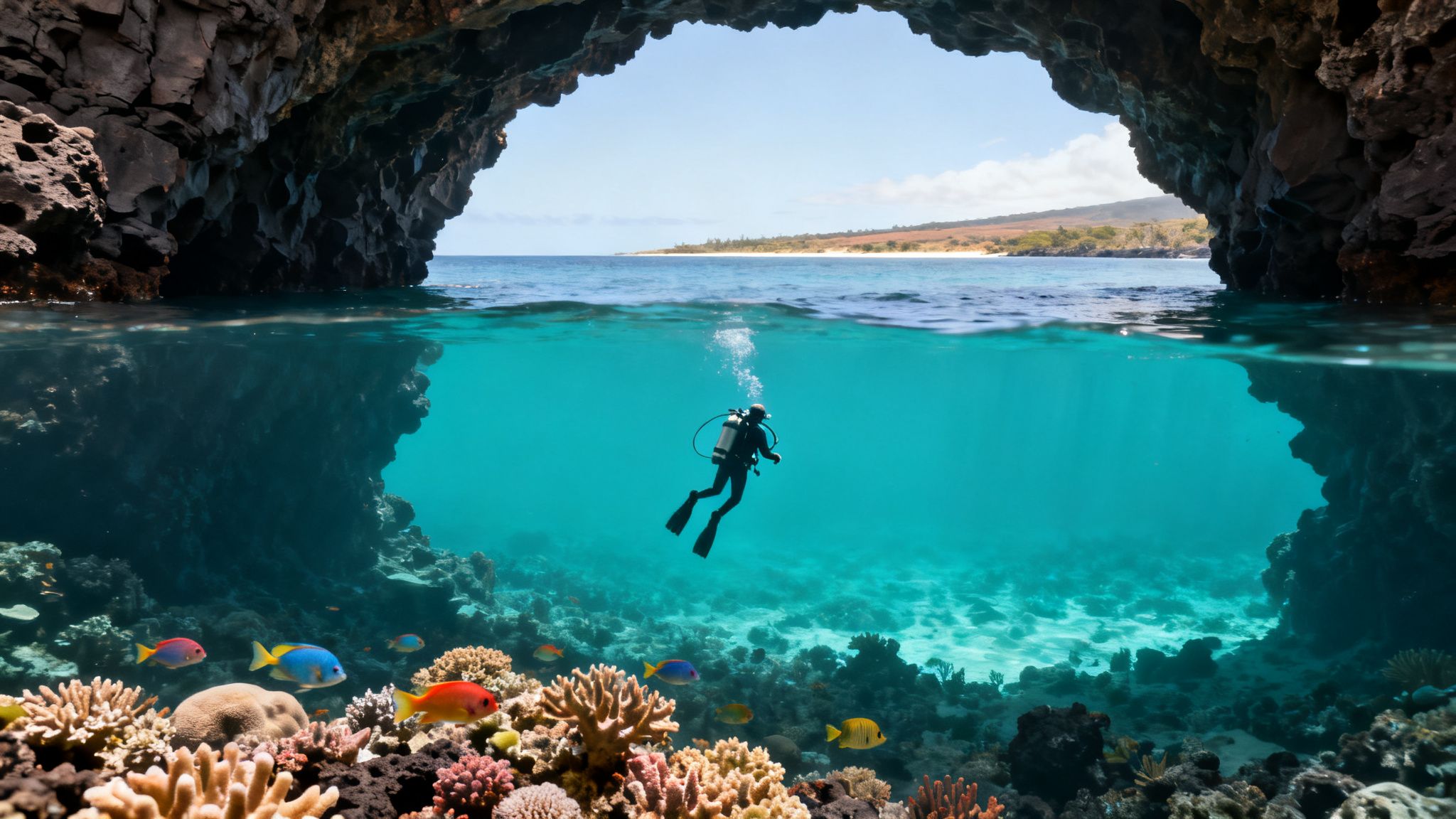
Welcome to your definitive guide for scuba diving in Kona. Tucked away on the western coast of the Big Island, Kona is a diver's haven, perfectly sheltered from the gusty trade winds by the colossal volcanoes, Mauna Loa and Hualālai. This incredible natural barrier creates the calm, clear waters that make for near-perfect diving conditions almost every single day.
The underwater landscape here is a direct gift from its volcanic past. Millennia of lava flows have carved out breathtaking seascapes of arches, caverns, and twisting lava tubes that are now home to some of the most unique ecosystems you'll ever see. It’s this combination of dramatic topography and incredible marine life that sets Kona apart from other tropical destinations.
Why Divers Choose Kona
So, what makes Kona a world-class diving spot? For starters, visibility often pushes past 100 feet, and the water stays at a comfortable 75-80°F all year long. That kind of consistency makes planning a dive trip here a breeze, no matter the season.
But beyond the fantastic conditions, Kona is famous for a couple of iconic night dives that draw adventure-seekers from all corners of the world:
- The Manta Ray Night Dive: Imagine watching a graceful underwater ballet as giant manta rays swoop and glide inches from your face, feeding on plankton attracted by dive lights. It’s pure magic.
- The Blackwater Dive: This one is for the true adventurers. You’ll drift in the deep open ocean at night, witnessing a world of strange and wonderful bioluminescent creatures as they migrate up from the abyss.
This guide will walk you through everything this premier dive destination has to offer. We’ll explore what makes Kona's protected coastline and volcanic seascape an unforgettable experience for divers of every skill level. And when you're done diving, you can check out our guide to the 10 best beaches in Kona to make the most of your surface time.
Of course, to have the best experience, you need the best guides. Kona Honu Divers is the top-rated operator on the island, ready to show you the best of the blue. Our focus on small groups, impeccable safety, and creating truly unforgettable dives is why divers rave about us.
What Makes Kona’s Underwater World So Unique
Kona is so much more than just another pretty place to go diving. It's a raw, living, volcanic wonderland. The secret to its magic isn't just one thing, but a perfect recipe of geology and geography that creates an underwater world unlike any other.
The towering volcanoes of Mauna Loa and Hualālai act as massive bodyguards for the Kona coast. They block the gusty trade winds that batter other parts of the islands, leaving us with incredibly calm, clear water. It’s this natural shield that makes Kona a dream for divers pretty much any day of the year.
A World Forged by Fire
That volcanic influence doesn't stop at the shoreline. Under the surface, you’re diving through history. Centuries of lava flows have cooled into a dramatic, rugged seascape of arches, swim-throughs, and massive caverns. Imagine dropping down onto what was once a flowing river of molten rock, now a playground for divers and marine life.
These unique formations aren't just for show. They’re the foundation for one of the healthiest reef systems in Hawaii. The porous volcanic rock gives coral a perfect place to anchor and grow, creating a complex, three-dimensional habitat with endless nooks and crannies for animals to hide, hunt, and thrive.
A Haven for Rare and Beautiful Creatures
All that incredible structure makes for a very busy underwater neighborhood. The Kona coast is basically a natural aquarium, home to everything from the gentle Hawaiian green sea turtles (honu) munching on algae to a cleverly camouflaged octopus you might swim right past. On any given dive, we get fly-bys from pods of spinner dolphins, see whitetip reef sharks cruising the reef, or find moray eels peeking out from their rocky dens.
What really sets Kona apart is the sheer number of animals you won't find anywhere else on the planet. Over 25% of the fish here are endemic to Hawaii. That means every dive is a treasure hunt for species like the brilliant Potter's Angelfish or the striking Hawaiian Turkeyfish. You can dive a little deeper into this topic by reading about diving the Big Island to look for endemic marine animals.
Kona's underwater world is a testament to the power of volcanoes to create life. The very lava that once flowed with destructive force has now become the intricate, life-sustaining backbone of one of the planet's most unique coral reef ecosystems.
Consistently Amazing Dive Conditions
On top of the incredible scenery and wildlife, Kona just makes diving easy and enjoyable. The water is almost always calm, and because the coast drops off into deep water quickly, we get phenomenal visibility that often pushes past 100 feet. You can truly soak in the grand scale of it all.
The water stays warm all year, so there’s never really a bad time to visit. This reliability takes the stress out of planning a dive trip; you know you're going to get great conditions whenever you decide to come.
Here’s a quick snapshot of what you can typically expect when diving in Kona:
Kona Diving Conditions at a Glance
| Metric | Details |
|---|---|
| Water Temperature | A comfy 75-80°F (24-27°C) all year. |
| Visibility | Usually 80-100+ feet (24-30+ meters). |
| Peak Season | Diving is great year-round, but summer and fall tend to be the calmest. |
| Common Marine Life | Turtles, dolphins, manta rays, reef sharks, eels, and thousands of tropical fish. |
It’s this combination—the dramatic volcanic structures, the unique marine life, and the ridiculously good conditions—that puts Kona in a class of its own. It’s a place where every single dive reveals something new and reminds you just how amazing our ocean is.
Experiencing the Legendary Kona Manta Ray Night Dive
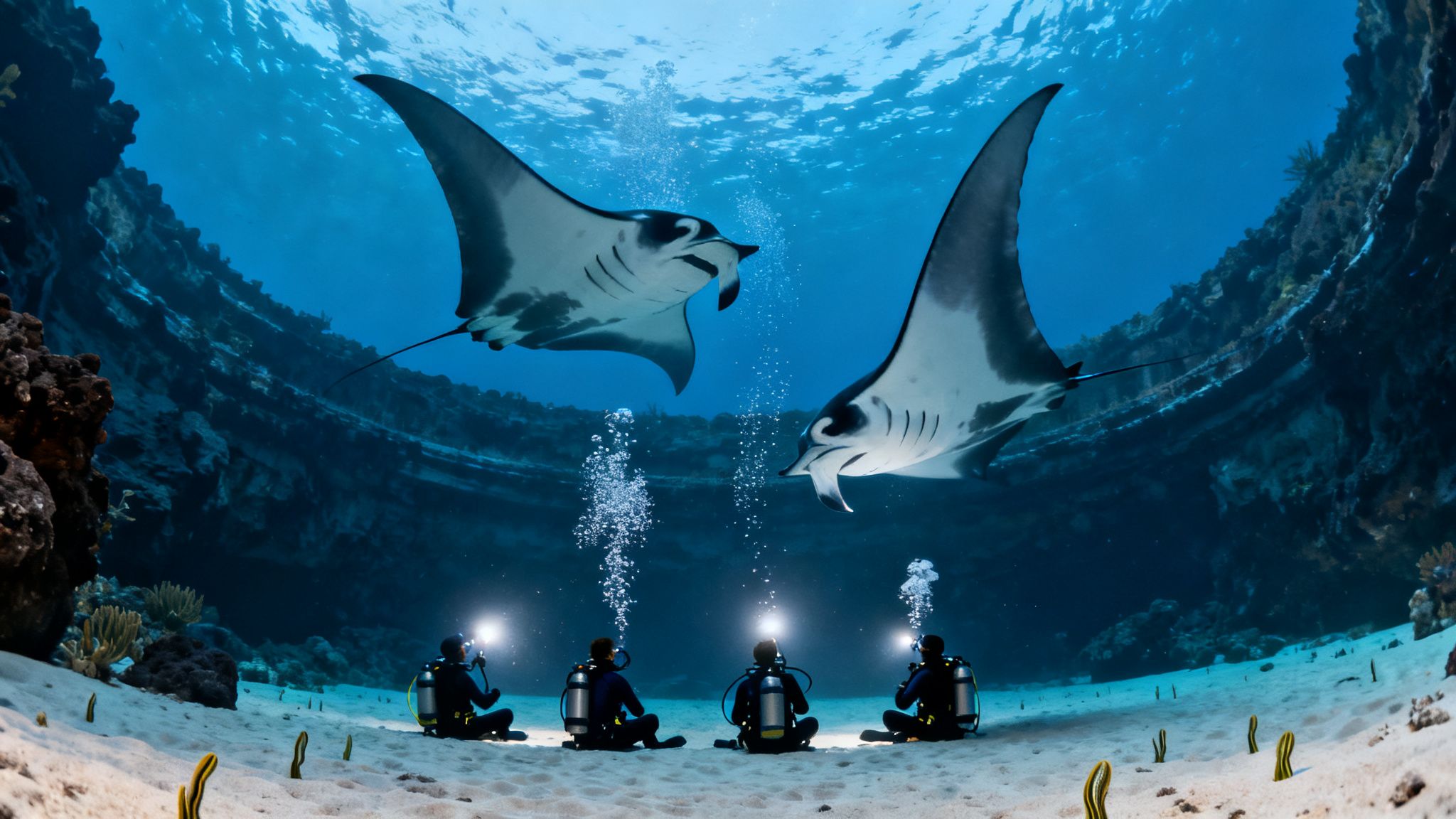
Of all the amazing things you can do while scuba diving in Kona, Hawaii, the Big Island, one experience tops just about every list. The Kona Manta Ray Night Dive isn't just a dive; it's a world-famous underwater ballet, a genuine, life-changing spectacle that every diver dreams of.
Here’s how it unfolds: You descend into the warm Pacific just as the sun dips below the horizon. Finding your spot on a sandy patch of the seafloor, you and your group switch on your powerful dive lights and aim them straight up. The beams attract a cloud of microscopic plankton, essentially creating an all-you-can-eat buffet in the water column.
And then, they arrive. Seemingly out of nowhere, massive, silent shadows emerge from the dark. These are Kona’s famous manta rays, and they’ve come for dinner.
These gentle giants, some with wingspans stretching over 16 feet, put on a show that defies belief. They glide, swoop, and perform effortless barrel rolls just inches above your head, their movements so graceful it’s hard to fathom their size. It’s a silent, beautifully choreographed performance that feels utterly surreal.
Why Garden Eel Cove is the Premier Manta Dive Site
You can see mantas at a few spots along the Kona coast, but one location consistently delivers the most magical experience: Garden Eel Cove. We lovingly call it "Manta Heaven," and for good reason. It’s simply the best place for this encounter.
For starters, its position inside a protected cove means the water is almost always calm. This makes the whole experience safer and more comfortable, and it dramatically reduces the chance of a trip getting canceled due to rough seas. The site also has a natural amphitheater-like layout, with a large sandy bottom where divers can settle in for a perfect, front-row view of the action.
The reefs around Garden Eel Cove are also incredibly healthy and vibrant, which just adds to the dive's beauty. It’s this combination of calm water, perfect viewing, and a thriving ecosystem that makes it the ultimate stage for the manta show.
An Unforgettable and Reliable Encounter
What truly sets this dive apart is just how dependable it is. These mantas aren't just passing through; they're residents, and they show up to feed nearly every single night. In fact, encounter rates for top operators like us regularly exceed 80%. The Big Island’s unique, nutrient-rich waters make this a year-round phenomenon, giving you an excellent shot at this incredible encounter no matter when you visit.
The feeling of a 12-foot manta ray gracefully somersaulting directly over your head, so close you can see every detail of its patterned belly, is impossible to describe. It's a moment of connection with one of the ocean's most majestic creatures that stays with you forever.
The best part? This isn't an exclusive club for certified divers. If you’d rather stay on the surface, you can still witness the magic. We have fantastic options to snorkel with manta rays in Kona, which offers a different but equally breathtaking perspective as the rays soar up toward the lights from below.
Ultimately, the manta ray night dive is the signature experience of diving in Kona. It’s an opportunity to become a quiet observer of a magnificent natural spectacle and create memories that will truly last a lifetime.
Exploring Kona’s Premier Daytime Dive Sites
While the Manta Ray Night Dive might get all the headlines, Kona’s underwater magic truly shines during the day. The sun brings out the brilliant colors of the reef and reveals a coastline dotted with incredible dive sites, each one a unique playground shaped by ancient lava flows.
When you join one of our daytime diving tours, you’re stepping into a vibrant, living ecosystem. We have something for everyone, from sun-drenched coral gardens perfect for your first breaths underwater to dramatic volcanic structures that will excite even the most seasoned diver.
Dive Sites for Beginners and Building Confidence
If you’re new to scuba or just shaking off some rust, Kona has some of the most beautiful and forgiving dive sites you could ask for. These spots are usually calm, shallow, and absolutely packed with marine life, making them the perfect place to get comfortable and master your skills.
Pawai Bay is a fantastic example. It’s a sheltered spot known for its gorgeous coral gardens and massive schools of fish. With depths typically between 20-40 feet, it’s an ideal place to dial in your buoyancy and just soak in the spectacle of Hawaii’s reef fish, like bright yellow tangs and butterflyfish. It's a perfect, gentle introduction to scuba diving in Kona, Hawaii, the Big Island.
Intermediate Adventures and Turtle Encounters
Once you’ve got a few dives under your belt, a whole new world of exploration opens up. These intermediate sites often feature more complex terrain—think lava tubes, arches, and swim-throughs—and they’re where you’re more likely to run into some of the bigger local celebrities.
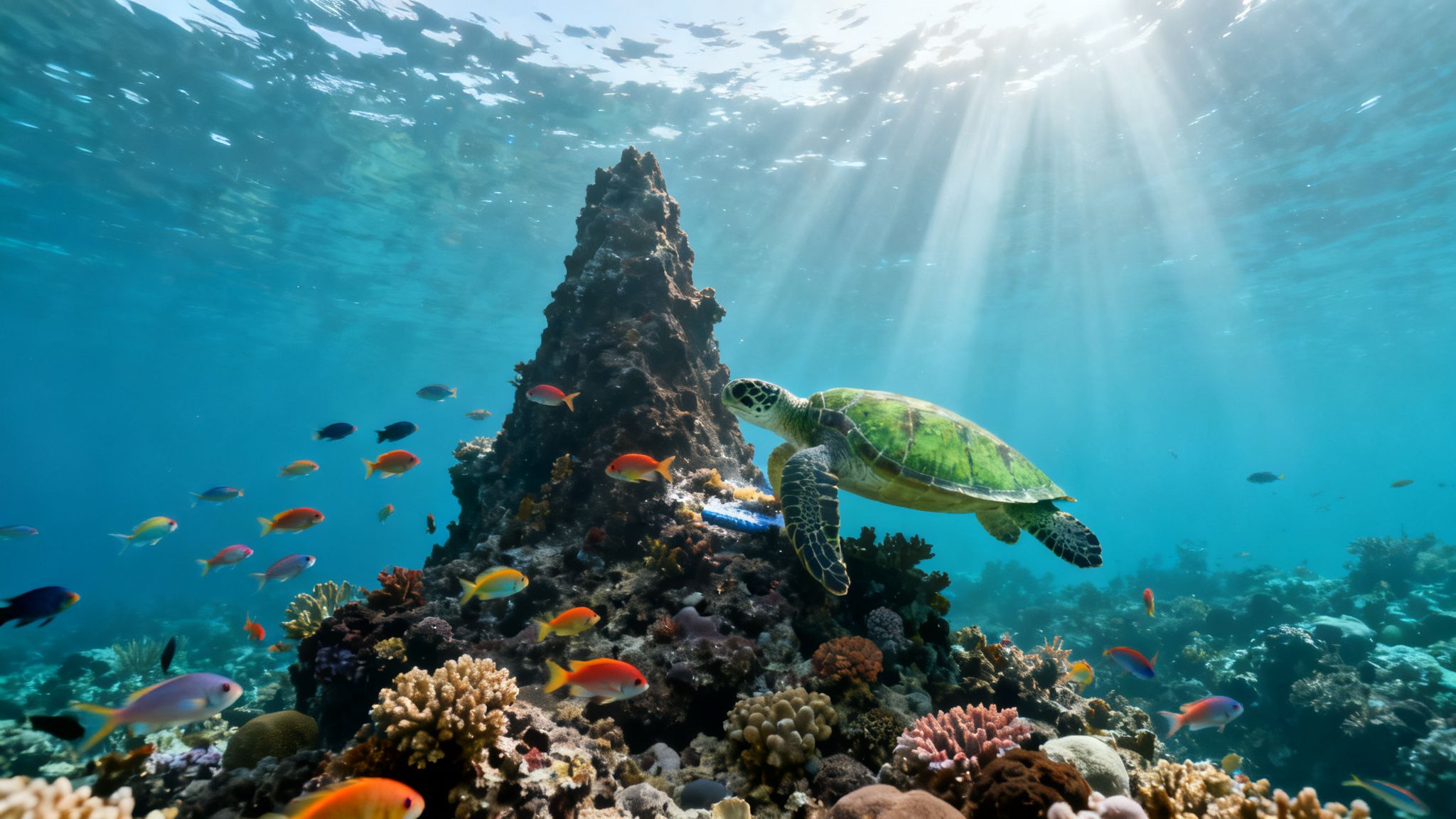
One of our all-time favorite spots is Turtle Pinnacle. This is a natural "cleaning station" where Hawaiian green sea turtles, or honu, come to let reef fish nibble parasites and algae off their shells. It’s basically a turtle spa day, and for divers, it's an absolutely unforgettable sight.
You can just hang back and watch this incredible symbiotic relationship happen right in front of you. The surrounding reef is just as impressive, with cool lava formations where you can spot moray eels and octopus peeking out from their homes.
Thrills for the Advanced Diver
For experienced divers looking for a bigger challenge, Kona absolutely delivers. We have sites with deeper profiles, more complex navigation, and the chance to spot some really rare marine life. These dives will test your skills and reward you with some of the most dramatic underwater scenery on earth.
For a closer look at all the spots we love to visit, check out our guide to some of the best dive sites on the Big Island of Hawaii.
A site like Au Au Crater (which we often call "The Dome") is a collapsed lava dome that formed a massive underwater amphitheater. Exploring its caverns requires top-notch buoyancy control, but the payoff is huge—you might find bizarre-looking frogfish or even whitetip reef sharks resting on the bottom. It’s no surprise that dives like this are the highlight of our premium advanced dive tours.
No matter your certification level, Kona's daytime diving offers an incredible range of underwater worlds just waiting to be explored. Every single site has its own story and showcases the amazing diversity that makes this corner of Hawaii so special.
Taking the Plunge into a Kona Blackwater Dive
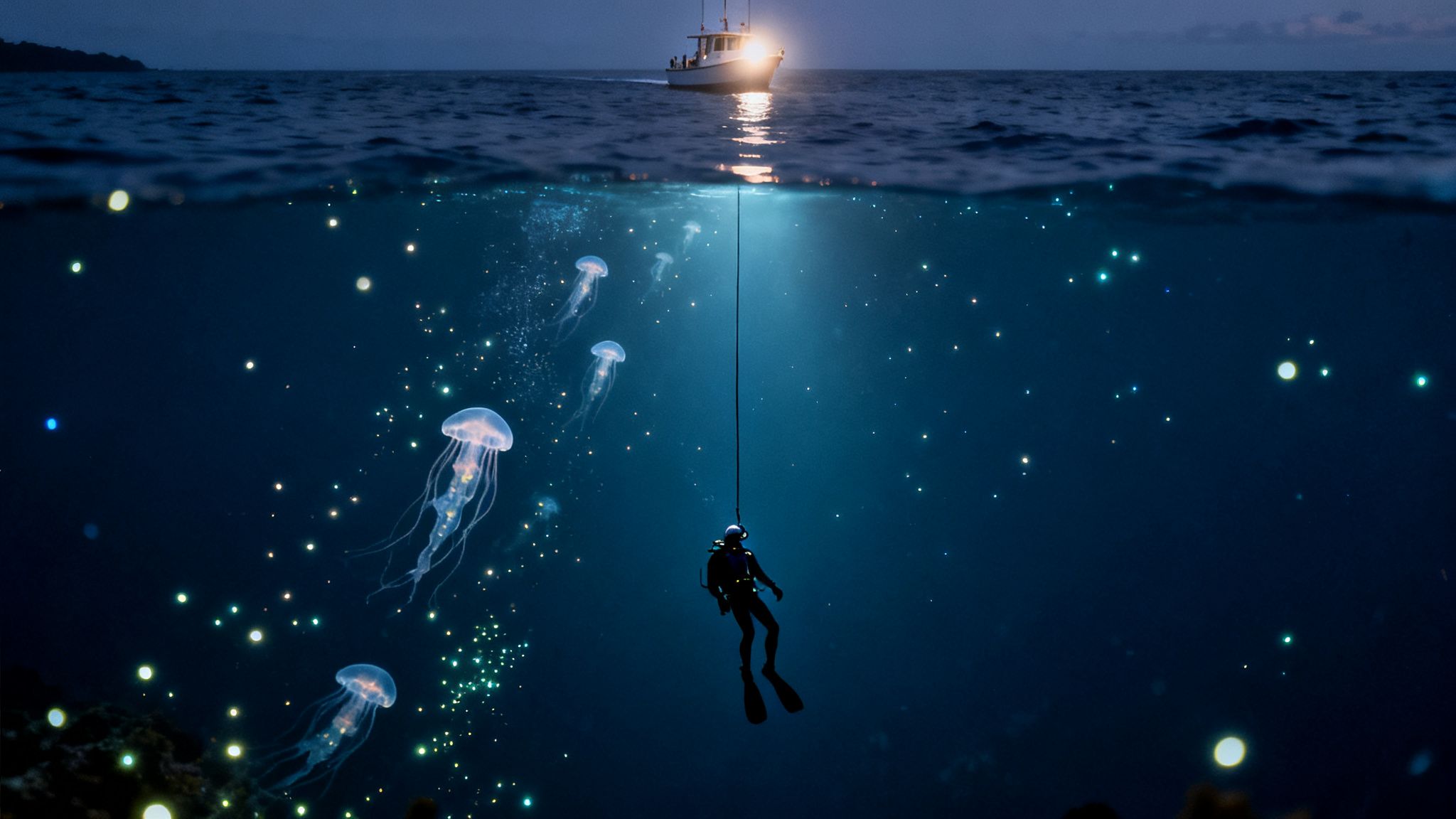
For the truly adventurous at heart, Kona has something special. It’s an experience that feels less like a scuba dive and more like floating through deep space. Forget the reef, forget the seafloor—forget everything you think you know about night diving. This is the Kona Blackwater Dive, a surreal drift miles offshore in the profound, inky blackness of the open ocean.
You’ll be tethered securely to the boat, hanging suspended in the vastness as you witness the largest migration on our planet. Every single night, a universe of bizarre and beautiful creatures rises from the abyss to feed near the surface. The feeling is absolutely otherworldly; you're just floating in the void, surrounded by a living galaxy of bioluminescent life.
This is your chance to see strange, translucent larval creatures in their juvenile stages—animals you would never see or even recognize on a daytime reef dive. It’s an underwater safari for the weird and the wonderful.
The Ultimate Frontier of Scuba Diving
A Kona Blackwater Dive isn't just another excursion. It's a highly specialized activity that hinges on expert guidance and meticulous safety protocols. This isn’t about exploring a static location; it’s about drifting through a dynamic, ever-changing environment. That’s why choosing the right operator is absolutely critical.
Kona Honu Divers was instrumental in pioneering this unique dive, helping to perfect the techniques that turned a niche scientific pursuit into a safe and mind-blowing adventure. The real challenge is managing a group of tethered divers in the open ocean, at night, while making sure everyone is safe and gets a front-row seat to the spectacle.
Floating in the silent darkness, illuminated only by your dive light and the ethereal glow of passing creatures, is a profoundly humbling experience. You are a temporary visitor in a world that operates on a scale and rhythm entirely its own.
Blackwater diving is a cutting-edge frontier in scuba diving on Kona, Hawaii's Big Island. Our deep offshore waters make for incredible drifts into the pelagic realm. During these night dives, we suspend ourselves mid-water (usually between 40-80 feet) and wait for the show. You’ll encounter neon-colored larval fish, ethereal salps, and glowing pyrosomes—sights we see on over 90% of our trips during the peak plankton blooms from April to October. These unique Kona conditions have made blackwater diving a bucket-list item for advanced divers worldwide. You can learn more about the pioneering efforts in Big Island scuba diving that made it all possible.
What to Expect on Your Blackwater Dive
The experience begins with a thorough briefing. We’ll go over the specialized equipment, how the tethering system works, and the communication procedures we'll use in the dark. Once we're in the water, we lower a set of powerful lights below the boat, which act as a beacon for the vertically migrating zooplankton and the strange predators that follow them.
Your job is simple: relax, dial in your neutral buoyancy, and watch the show unfold around you. You might see:
- Larval Fish: Tiny, transparent versions of familiar reef fish, looking completely alien.
- Bizarre Jellyfish: Some pulse with internal light, while others trail long, elegant tentacles.
- Pelagic Cephalopods: Keep an eye out for tiny squid and octopuses hunting in the dark.
- Bioluminescent Ctenophores: Comb jellies that catch your light and refract it into dazzling rainbow patterns.
This dive is more than just an adventure; it's a rare glimpse into a hidden ecosystem that plays a vital role in the ocean’s health. For experienced divers looking for that ultimate, unforgettable dive, it doesn’t get much better than this. If you're ready for a truly unique challenge, you can book your specialized Blackwater Dive tour with us today.
Planning Your Ultimate Kona Diving Adventure
Alright, you've seen the photos and heard the stories about Kona's incredible volcanic underwater world. Now, let's get you from dreaming about it to actually doing it. This is the final step before you're geared up and descending into that magical blue water.
Picking the right dive operator is probably the most critical decision you'll make for your trip. An outfit like Kona Honu Divers can take a good dive trip and make it truly unforgettable. It's one thing to go diving; it's another to go with a crew that has over 200 years of combined experience on these very reefs.
They run custom-built boats designed for diver comfort and stick to small groups, which makes a world of difference. This isn't just about comfort—it means more personalized attention and a safer, richer experience for everyone, whether it’s your first dive or your thousandth.
Your Kona Dive Trip Checklist
Getting all your ducks in a row is part of the fun. Here’s a quick rundown to help you prep for your trip and hit the ground running once you get here.
Best Time to Visit: Honestly, the diving here is fantastic all year. But if you want to be strategic, think about what you want most. Summer and fall (roughly May-October) usually mean flatter, calmer seas, which makes for glassy boat rides. Winter (December-March) is humpback whale season—hearing their songs reverberate through your chest on a dive is something you'll never forget. The mantas and blackwater critters? They’re here year-round.
Essential Items to Pack: You’ve got your swimsuit and reef-safe sunscreen, but don't forget a windbreaker or hoodie. It can get chilly on the boat ride back after a dive, especially at night. Absolutely bring your certification cards and logbook. And because diving is an adventure sport, looking into different travel insurance options is just plain smart planning.
Getting Certified in Paradise: If you're not a diver yet, I can't think of a better place to learn. Kona's waters are typically calm, warm, and crystal clear—a beautiful and stress-free environment to get your Open Water certification. What a way to start your diving career!
Book Your Kona Diving Adventure Today
The pristine reefs, giant manta rays, and bizarre deep-water creatures are all out there waiting. The only thing left to do is pick your dates and start the countdown. When you go with a top-notch crew, you can just relax and enjoy the ride, knowing you're in the best possible hands.
Take a look at all the incredible diving tours available and see what gets you excited. From technicolor reef dives to the world-famous Manta Ray Night Dive, your perfect Kona experience is ready to be booked. Don't put it off—adventure is calling.
Your Kona Diving Questions, Answered
Got a few questions before you book your trip? You're not alone. Here are straightforward answers to the things we get asked most often, helping you plan your Kona dive adventure with total confidence.
What’s the Best Time of Year to Dive in Kona?
Honestly, there’s no bad time to dive in Kona—the water is always incredible. We enjoy warm seas all year round, typically hovering between a comfortable 75-80°F.
If you're looking for the absolute calmest seas and smoothest boat rides, the summer and early fall months (think May through October) are your best bet. That said, our most famous residents, the manta rays, show up every single night, year-round. So, whenever you can get here, the diving will be fantastic.
Do I Need to Be an Advanced Diver to Enjoy Kona?
Not at all! Kona is one of the best places to dive whether you have thousands of dives under your belt or are just getting started. The coastline is full of protected coves and shallow reefs that are perfect for beginners and those getting their Open Water certification.
We have dive sites to suit every comfort level. You'll find that Kona's underwater world is incredibly accessible, so no matter your experience, there's a spectacular dive here waiting for you.
How Safe Is the Manta Ray Night Dive?
It's completely safe. When you go with a professional and experienced company like us, you're in great hands. The Manta Ray Night Dive has been refined over decades to be a safe, comfortable, and absolutely mind-blowing experience.
Before you even get in the water, you'll get a thorough safety briefing. Our certified divemasters and instructors are with you the entire time. The dive itself is stationary—you’ll settle on the seafloor and watch the show from a controlled spot, making it one of the safest and most unforgettable night dives you'll ever do.
Besides Manta Rays, What Else Will I See?
Get ready for a parade of incredible marine life! Kona’s reefs are absolutely bursting with diversity. On any given day, it's common to swim alongside Hawaiian green sea turtles (we call them honu), spot pods of playful spinner dolphins from the boat, and find moray eels peeking out from their rocky homes.
You can also expect to see camouflaged octopuses, whitetip reef sharks relaxing on the sand, and huge schools of colorful reef fish. The best part? Many of these species are endemic, meaning you can only see them right here in Hawaii.