
You've got a few open mornings in Kona, a certification card somewhere in your luggage, and a browser full of reef dives, manta trips, and blackwater encounters. They all sound good. The harder question is which one fits your actual comfort in the water, and which operator will help you avoid an overcrowded site rather than just get you onto a boat.
Scuba diving in Kona, Hawaii, works best when you choose by skill, terrain, and site pressure, not just the animal on the booking page. Start with a trip that matches your recent experience, leave room for weather changes, and treat the reefs and manta feeding grounds as habitats rather than attractions with guaranteed performances.
Kona Dive Trips at a Glance
Kona dive trips by diver level
| Trip | Best For | Certification Needed |
|---|---|---|
| 2-Tank Local Morning Dive | Certified divers who want reef variety | Open Water or higher |
| Morning Introductory Scuba Dive | First-time divers with no certification | None |
| Manta Ray Night Dive | Night-dive fans seeking manta encounters | Open Water or higher |
| Black Water Night Dive | Experienced divers who enjoy night dives | Open Water or higher, night experience helpful |
| Premium Advanced 2 Tank Trip | Advanced divers wanting remote sites | Certified divers, advanced experience advised |
These are the core choices in Kona Honu Divers' lineup. Treat the certification column as a starting point, not automatic admission: specialty trips can have additional experience, recency, or skill requirements that you should confirm before paying.
For most certified visitors, the 2-Tank Local Morning Dive is the sensible first booking. Coral gardens, ancient lava tubes, and dramatic arches provide variety without making the entire outing depend on a wildlife encounter. It's also an opportunity to settle weighting, check rental equipment, and find out how comfortable you feel entering and exiting the boat.
Choose the challenge you actually want
The manta trip is an after-dark wildlife observation dive. Blackwater is a different proposition: open, deep water, darkness beyond the lights, and subjects that may be unfamiliar even to experienced reef divers. Don't choose it because you've already done a manta dive.
The Premium Advanced 2 Tank Trip suits certified divers prepared for deeper, remote sites and drift diving. Good buoyancy, dependable gas monitoring, and comfort following a changing underwater plan matter more than enthusiasm alone.
For someone without certification, the Morning Introductory Scuba Dive is the appropriate tour in this lineup. It's supervised introductory diving, not a substitute for an Open Water qualification.
Booking rule: Certified divers should start with a morning trip, then add a night dive once they know how Kona's entries, equipment, and currents feel.
Certification and Course Options Before You Dive
For most regular charters, we require at least Open Water Diver certification from a recognized agency such as PADI, SSI, or NAUI. That qualification allows diving to 60 feet (18 meters) with a buddy. Bring your C-card, and be candid about when you last dived.
A card establishes training history. It doesn't tell the crew whether you're comfortable clearing a flooded mask, holding a safety stop, or managing unfamiliar equipment.
Kona course options by diver goal
| Course | Who It Suits | Prerequisite |
|---|---|---|
| PADI Scuba Certification Course | Complete beginners | None |
| PADI Open Water Referral Course | Divers who finished classroom study elsewhere | Completed knowledge development; confirm referral paperwork and remaining water training |
| PADI Reactivate | Lapsed divers returning to diving | Previous certification |
| PADI Advanced Open Water | Open Water divers wanting more experience | Open Water certification |
| PADI Enriched Air Diver | Divers who want to use nitrox | Open Water certification |
| PADI Peak Performance Buoyancy | Divers who want better control | Open Water certification |
| PADI Deep Diver | Divers preparing for deeper profiles | Advanced Open Water certification |
| PADI Boat Diver | Divers who dive from boats regularly | Open Water certification |
| PADI Rescue Diver | Divers who want emergency management skills | Confirm qualifying certification and current first-aid and CPR requirements; Advanced Open Water recommended |
Start with the skill gap
If you're new, choose between a supervised introduction and full certification. If you've already studied elsewhere, send your referral documents before traveling so an instructor can establish which sessions remain.
Returning divers should prioritize Reactivate when basic procedures feel rusty. Practicing regulator recovery and controlled ascents before a charter is more useful than hoping those skills return during the first descent.
Certified divers can use the Big Island scuba certification options to match training to a specific goal. Better buoyancy helps with photography; enriched-air training supports appropriate nitrox use; rescue training develops awareness beyond your own equipment.
After Advanced Open Water, an advanced charter can put those developing skills into context, provided your recent experience fits the trip. Choose the course for the diving you want to do, not the most impressive certification name.
Seasons, Visibility and Conditions to Plan Around
Kona offers year-round diving in warm, generally clear water. The useful planning question isn't which month is best, but how the day's conditions will affect the dive you want.
The Kona diving conditions guide describes typical visibility commonly exceeding 30 meters, about 100 feet, while noting exposed-site currents and winter storms that can complicate access. Clear water and easy diving aren't interchangeable: you can see a long way while swimming into current or negotiating surge near an exit.
Kona's leeward position often helps surface conditions, but local bottom shape and exposure still matter. A sheltered boat ride doesn't prove that the water below is stationary. Winter storms can make the ride uncomfortable, while summer or winter swell can make an otherwise familiar reef entry unsuitable.
Plan movement separately from visibility
Review the marine forecast, swell direction, wind, tides, and expected current before departure. Decide where you'll enter, where you'll exit, and what will trigger a turnaround before anyone gets wet.
At a current-exposed site, allow for greater gas consumption and agree on lost-buddy procedures. Establish an exit or boat-pickup contingency rather than assuming everyone can swim back against the flow. A separation procedure is preparation for accidental separation, not permission to spread out.
For calendar planning, use the guide to the best months for scuba diving in Hawaii alongside the actual marine forecast. Seasonal expectations help narrow choices, but they shouldn't overrule conditions at the entry.
Clear water doesn't guarantee an unchanged reef
The Divearoo Kona destination guide describes West Hawaii's coral-bleaching pressures, including the major 2015 event and the broader 2023 through 2025 period. Expect coral appearance and fish activity to differ among sites; don't treat a single dive as representative of the whole coast.
Before leaving the dock, check:
- Access: Is the planned entry and exit workable for everyone?
- Gas: Have you agreed on turn pressure and reserve?
- Movement: Does everyone understand current, surge, and pickup procedures?
- Equipment: Are hoses, gauges, and camera accessories secured?
- Flexibility: Is there a sheltered alternative if conditions deteriorate?
Dive Sites and What Makes Each One Special
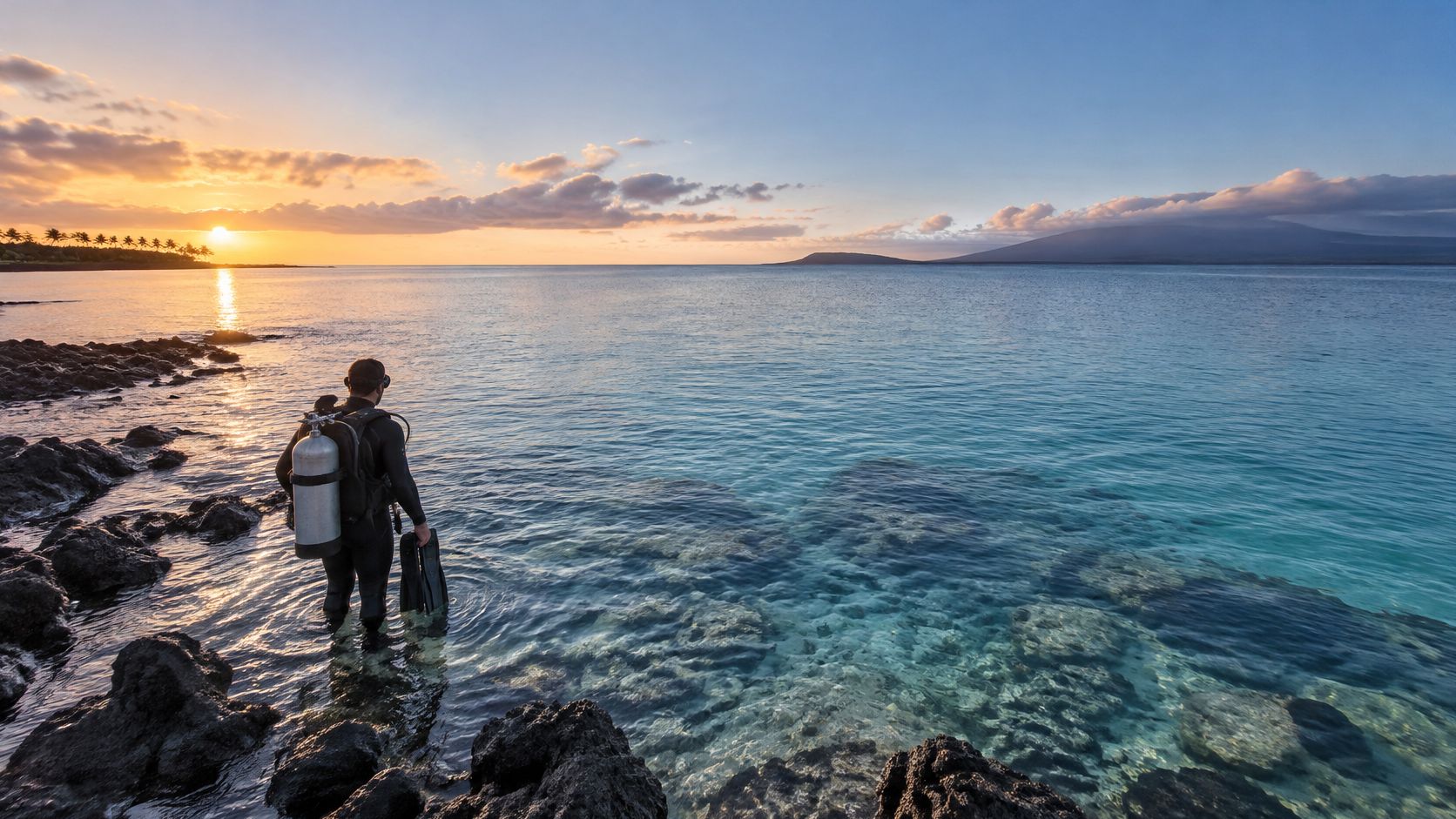
Say you're planning your first Kona dive day. Rather than requesting the site with the longest wildlife list, describe what you can comfortably do: a boat entry, a rocky shore exit, a controlled descent, or an unassisted stop. Terrain is the better starting point for site selection.
Begin with open reef terrain
The Hawaii Division of Aquatic Resources' Old Kona Airport description places the district between the Old Kona Airport and Kailua Lighthouse, extending 500 yards seaward from designated points, with shallow lava fingers reaching approximately 50 feet before the bottom drops rapidly. The agency describes substantial coral cover, diverse reef fish, and common turtle and ray sightings.
That makes the underwater terrain appealing, but not the shore entry automatically easy. Sharp coral and lava rock demand deliberate footing and a workable exit. For a less experienced diver, a suitable boat-accessed reef may be the more forgiving choice.
Lava arches and tubes add another dimension. Enjoy the structure from outside unless your training, equipment, and the guide's plan support entering it. A passage that looks spacious can become awkward when a diver loses trim or blocks the route.
An attractive opening in the reef isn't an invitation to enter an overhead environment.
Progress to depth and open water
Pinnacles require a different plan. A rocky structure can draw your attention downward while current increases the effort needed to maintain position. Set depth and gas turnaround criteria before descending, and don't follow a subject below your planned limit.
Garden Eel Cove belongs on a manta-focused itinerary, but it also gives the trip a reef setting rather than making the whole experience about darkness and lights.
The Black Water Night Dive moves away from reef reference points altogether. In open, deep water after dark, animals gather around lights while divers manage position without a visible bottom. It suits divers already comfortable with night procedures and precise buoyancy.
Use the Big Island dive-site guide to discuss terrain preferences, not to insist on a fixed destination. Match the site to your certification, entry skills, and that day's conditions.
Manta Ray Night Dives at Garden Eel Cove
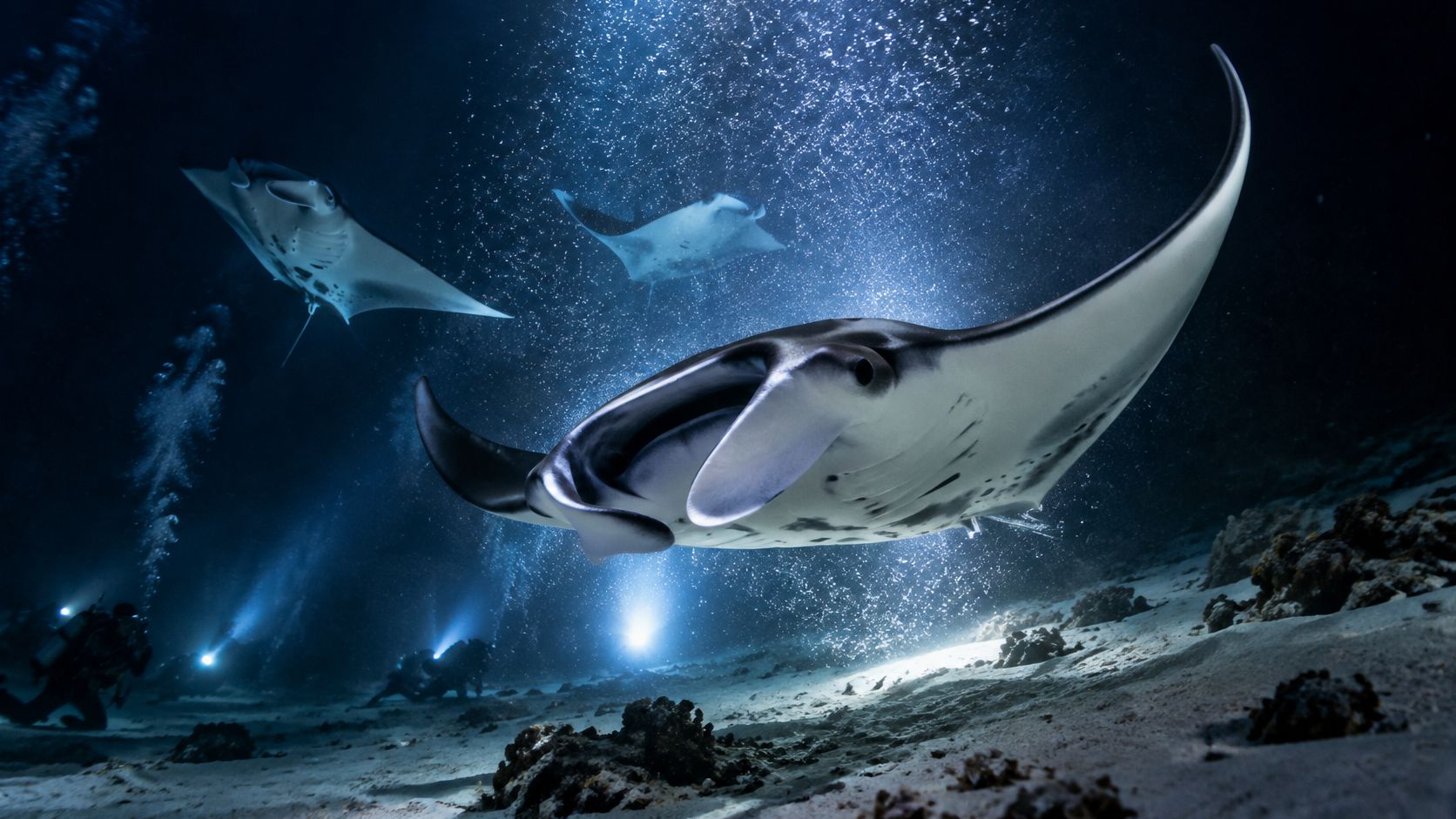
Reef mantas gather after dark to feed on plankton concentrated around lights. They aren't arriving for a scheduled performance, so food availability matters more than your booking confirmation.
For a manta-focused dive, I'd choose Garden Eel Cove. Its protected location, established viewing area, and better surrounding reefs make it the stronger overall setting, especially when you value the reef portion as well as the encounter.
Why Garden Eel Cove is the stronger starting point
Hawaii state boating officials identify the principal viewing areas as Makako Bay, also called Garden Eel Cove, and the coastline fronting the Sheraton Keauhou Bay Hotel, and reported manta observations on approximately 80% of dives at Garden Eel Cove each year. That historical observation rate supports choosing the site, not promising an animal on your particular dive.
A University of Hawaii study published in 2025 analyzed 13 years of records from 2010 through 2022 and found generally larger nighttime aggregations at Garden Eel Cove, with aggregation changes tracking zooplankton density. The practical implication is straightforward: even a well-chosen site can have a quiet night.
Review the Kona manta night-dive guidance before deciding whether this is the right first night dive for you. Being comfortable in darkness makes it easier to remain still and observe rather than constantly adjust equipment.
Crowding is part of the booking decision
A Kona manta visitor-use assessment found average encounters of approximately 62 snorkelers, 33 divers, and 12 boats, compared with respondents' average acceptable levels of approximately 52 snorkelers, 32 divers, and 11 boats. Divers were closest to their acceptable threshold; snorkeler and boat encounters exceeded theirs more noticeably.
Those are social acceptability measures, not ecological safety limits or legal visitor caps. They don't establish that scuba is less disruptive than snorkeling, and a small group on your boat doesn't guarantee a quiet viewing area.
Ask these questions before booking:
- Boat density: How does the crew assess how many boats are expected at the site?
- Guide allocation: How many guests will share your guide underwater?
- Site choice: Does the operator rotate sites or change plans when congestion is poor?
Underwater, stay low in the designated viewing area without settling onto coral. Follow the guide's light directions, avoid camera flash, and leave the feeding corridor open. Never chase, touch, or rise into a manta's path.
The manta ray dive tour is worth planning around, but leave another evening available if possible. Choose Garden Eel Cove for predictability and reef quality, with a backup opportunity if conditions or crowding make the first plan unsuitable.
Gear, Nitrox and Underwater Photography Tips
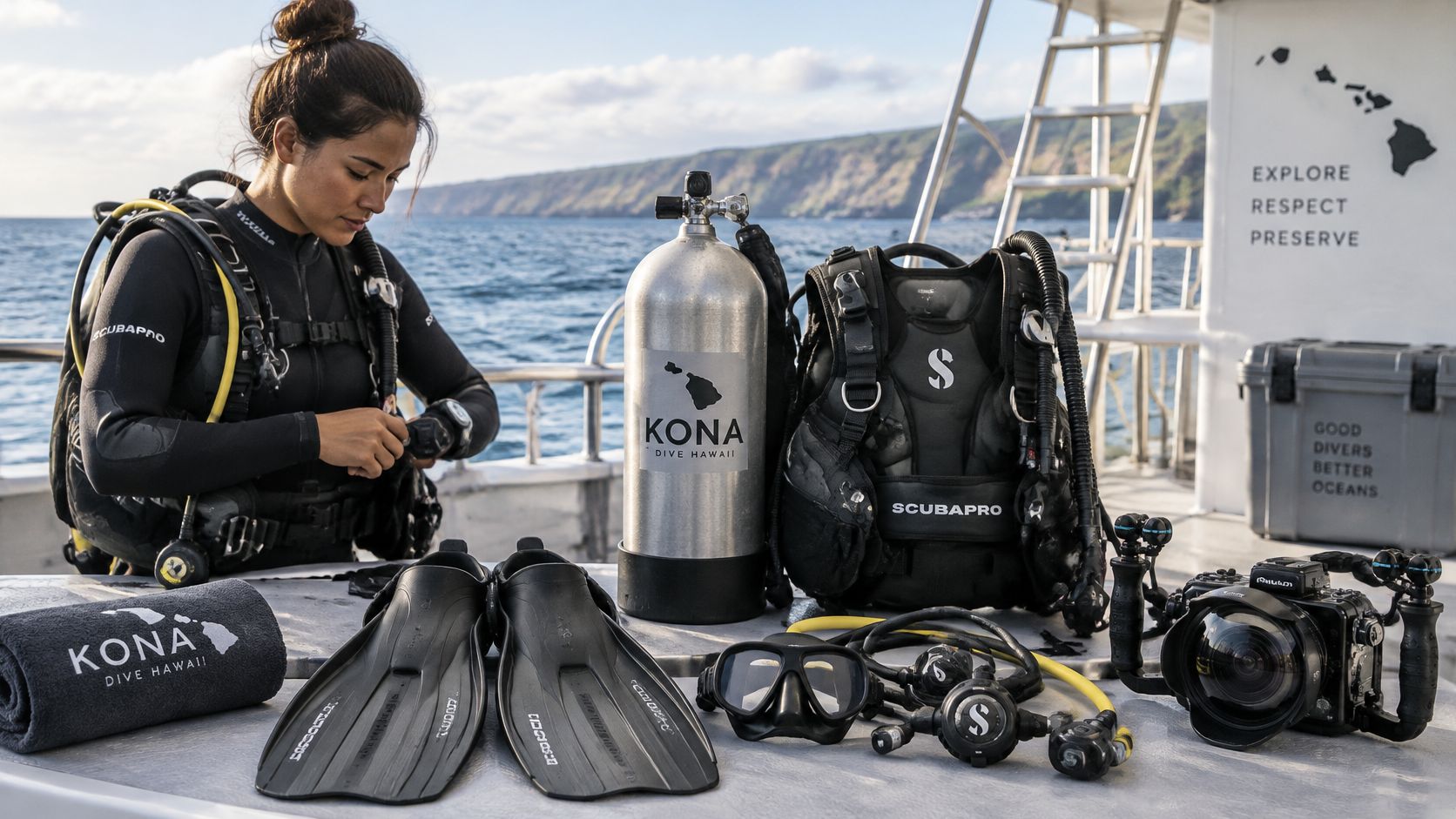
Bring the equipment whose fit you already trust; rent what makes travel unnecessarily bulky. A familiar mask is especially valuable, and divers attached to their own fins or regulator may prefer to pack them. Tanks and a BCD are practical rental choices; a rental regulator also makes sense when you don't want to transport your own.
Before departure, check fit, hose routing, releases, and the location of alternate air. Our rental equipment is proactively serviced, but you still need to know how the specific setup operates. Request a dive computer when booking so we can confirm availability and any small extra cost.
Choose exposure protection and gas deliberately
Don't select a suit solely because the destination is tropical. A light wetsuit may suit a warm-running diver on a daytime reef, while someone who chills easily may want more insulation for repeated or stationary night dives. A rash guard provides less thermal protection than a wetsuit.
Nitrox can extend no-stop time on suitable profiles, but it introduces oxygen-exposure and maximum-operating-depth considerations. It doesn't allow you to ignore depth limits or use an air setting on your computer.
We offer free nitrox for appropriately certified divers. Confirm that your certification qualifies, analyze your cylinder, record the oxygen content, and set your computer correctly. When comparing other packages, establish whether enriched air is included, charged separately, or built into the advertised price.
Get stable before getting the shot
Master buoyancy before adding a camera task. If you can't hold position without finning near the bottom, simplify the rig or leave it aboard while you practice.
For mantas, wide-angle equipment suits large subjects passing close, but let the animal close the distance. Shoot without flash and follow site-specific lighting instructions. During daytime reef dives, macro equipment can help you concentrate on small subjects without pursuing larger animals.
Before boarding, check:
- Mask defog: Pack it where you can reach it.
- Dive computer: Check battery status and gas settings.
- Camera battery: Charge it and inspect the housing seal.
- Spare O-ring: Carry the correct replacement for your housing.
- Night lighting: Bring an appropriate primary light and backup.
Marine Life Rules and Responsible Diving
Key Kona marine life rules
| Rule | What It Means for You |
|---|---|
| No taking, injuring, or removing marine life, live coral, algae, shells, or rocks in the Old Kona Airport MLCD | Leave everything in place, subject only to narrowly defined permitted exceptions |
| No anchoring in the Old Kona Airport MLCD | Boats must use lawful mooring arrangements or shore access, not anchors |
| State mooring limited to three hours per boat per day | First come, first served for noncommercial use; commercial operators need a permit |
| Scuba spearfishing prohibited in the West Hawaii Regional Fishery Management Area | Don't carry a spear with SCUBA gear |
| Protected rays and sharks, including tiger sharks, whale sharks, spotted eagle rays, stingrays, and protected reef sharks | Observe only; take or possession is prohibited |
| Certain yellow tang size classes | No more than five fish in each specified category |
The Old Kona Airport MLCD regulations establish the collection and anchoring restrictions, the three-hour mooring limit per boat per day, and permit requirements for commercial operations. They also prohibit motorized vessels in the designated No Boating Zone except for emergencies or enforcement.
The West Hawaii fishing regulations prohibit possessing SCUBA gear with a spear or a speared aquatic animal, protect the listed rays and sharks, and limit possession in specified yellow tang size categories to five fish per category. Recreational observation and collection are different activities; a dive booking isn't permission to take souvenirs.
Turn protection into underwater habits
Legal compliance is the minimum. Your positioning determines whether an otherwise lawful dive still puts avoidable pressure on coral or animals.
- Keep off coral: Never stand, kneel, or rest a camera on living reef.
- Use buoyancy: Hold position with controlled breathing and trim, not repeated fin contact.
- Leave animals room: Don't corner, chase, or crowd them for a photograph.
- Accept alternatives: Choose a quieter time or suitable alternate site when congestion is high.
The responsible diver etiquette guide is useful preparation for buddies with different experience levels. Agree that either diver can abandon a photograph or suggest moving away from a crowded encounter.
These rules and habits protect the habitat that makes a return trip worthwhile.
Plan Your Kona Dive Day and Book Your Trip
A typical day starts with arrival and gear setup, followed by a briefing on site conditions and entry style. The first dive usually addresses the deeper or more condition-sensitive site. After a surface interval, the second dive is generally more relaxed.
Arrive early, eat a familiar breakfast, and bring your C-card and logbook. Pack water, a towel, reef-safe sunscreen appropriate to local requirements, and a warm layer for the ride back. Include post-dive flying and elevation plans when discussing your itinerary with the crew.
Compare the whole package
Check the total cost and practical arrangements, not just the first price displayed:
- Equipment: Are tanks, weights, and necessary rentals included?
- Gas and training: Does the package cover your intended gas and any required instruction?
- Boat comfort: Are shaded seating and hot showers available?
- Underwater organization: What are the group arrangements and intended site options?
- Booking terms: What happens if you cancel, or weather changes the trip?
Kona Honu Divers suits visitors who want broad trip variety and a premium full-service experience. We were voted best dive operator in Kona, Hawaii, but the useful test remains whether the proposed trip fits your skills and preferences.
Browse the full diving tours lineup, or call 808-324-4668 to discuss your certification, recent diving, and preferred terrain. Confirm the nitrox policy and cancellation terms before committing.
Choose the trip from the first table that matches your current ability, check availability, and book with room for a conditions-based change.
Kona Honu Divers offers guided reef trips, manta encounters, advanced diving, and training to help you choose a Kona experience that fits your abilities. Visit Kona Honu Divers to match your certification and interests to a trip, then reserve your preferred dive day.