
Picture this: you're slipping into warm, impossibly clear water, with the massive silhouettes of Mauna Loa and Hualālai volcanoes standing guard on the shore. That’s the magic of scuba diving in Kona on the Big Island. It's more than just another pretty spot; it's a world-class underwater haven, created by volcanic fire and teeming with life.
Why Kona Is a World-Class Diving Destination
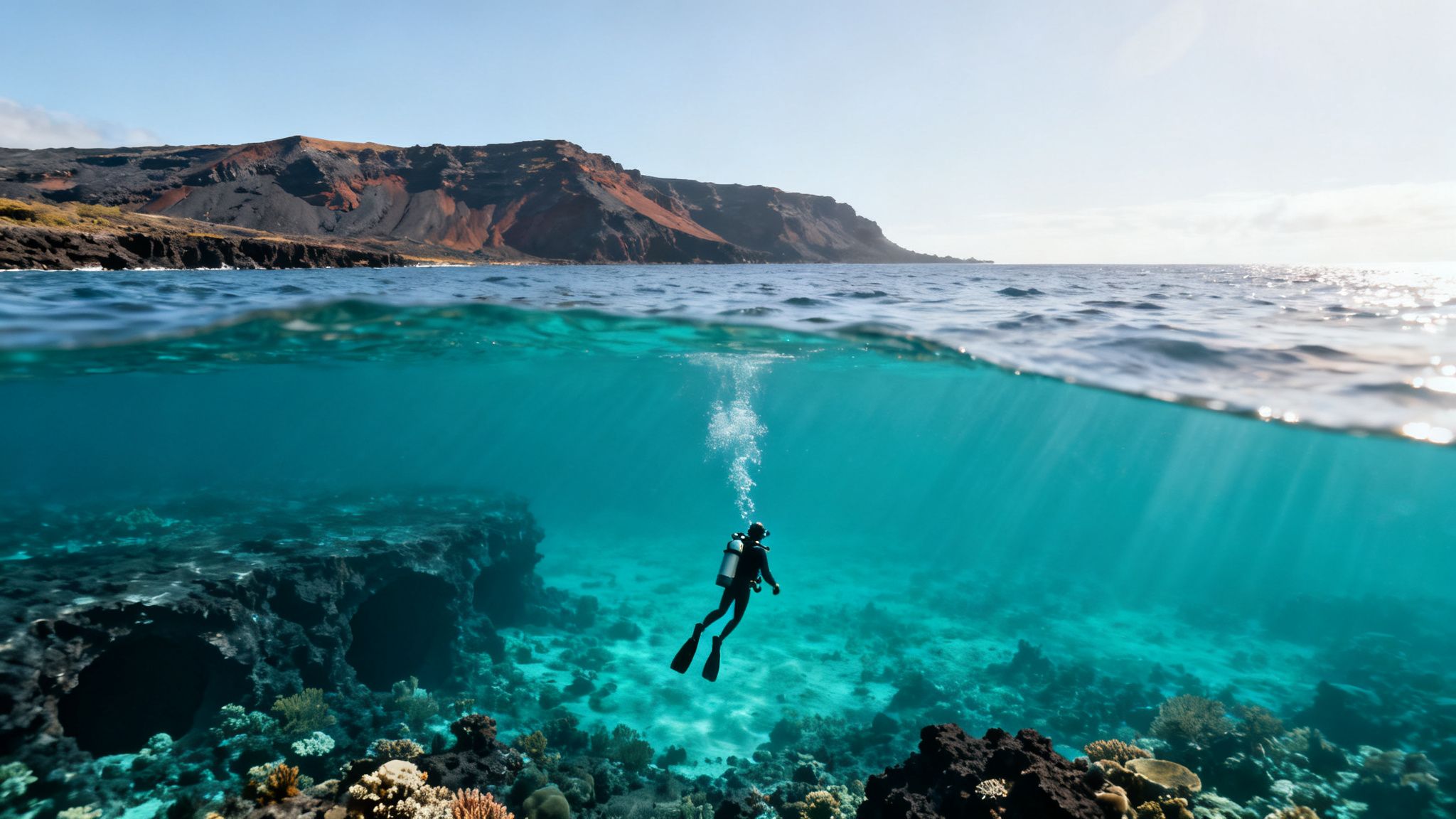
The secret to Kona's incredible diving lies in its geography. Those giant volcanoes act as a natural shield, blocking the strong trade winds that churn up the water elsewhere on the island. The result? Consistently calm, clear seas, where visibility often pushes past 100 feet.
These peaceful conditions are the perfect invitation to explore the dramatic landscapes shaped by ancient lava flows. Forget flat, sandy bottoms. Kona's underwater world is a maze of incredible formations.
A Volcanic Underwater Playground
The real star of the show here is the volcanic architecture under the waves. Over thousands of years, lava has created a stunningly complex and beautiful environment where marine life flourishes. When you dive in Kona, you’re not just swimming—you’re exploring.
You'll get to navigate:
- Dramatic Lava Tubes and Swim-Throughs: These natural tunnels make for an unforgettable experience, like exploring a hidden underwater cave system.
- Majestic Arches and Caverns: Formed by the raw power of volcanoes, these structures are incredible to see and offer some amazing photo ops.
- Pristine Coral Reefs: Some of Hawaii's healthiest coral gardens grow right on top of the old volcanic rock, creating a vibrant ecosystem.
This varied topography gives countless critters a place to hide, hunt, and live, making every single dive a genuine adventure. For a deeper dive, you can learn more about what is unique about diving in Kona and its one-of-a-kind geology.
The appeal of spots like Kona is driving major growth in the diving world. The U.S. diving tourism market is expected to grow from USD 1,101.6 million in 2025 to USD 1,585 million by 2035—a steady 3.7% annual increase. This shows just how much people are seeking out premier destinations for their underwater adventures.
Kona is more than a location; it's an experience. The combination of calm seas, incredible visibility, and unique volcanic formations creates a diving environment that is both accessible for beginners and thrilling for the most seasoned divers.
From the legendary Manta Ray Night Dive to the surreal Blackwater Dives miles offshore, Kona serves up adventures you truly can’t find anywhere else. It’s an underwater paradise where every descent is a new story waiting to be told.
Kona’s Three Unforgettable Underwater Adventures
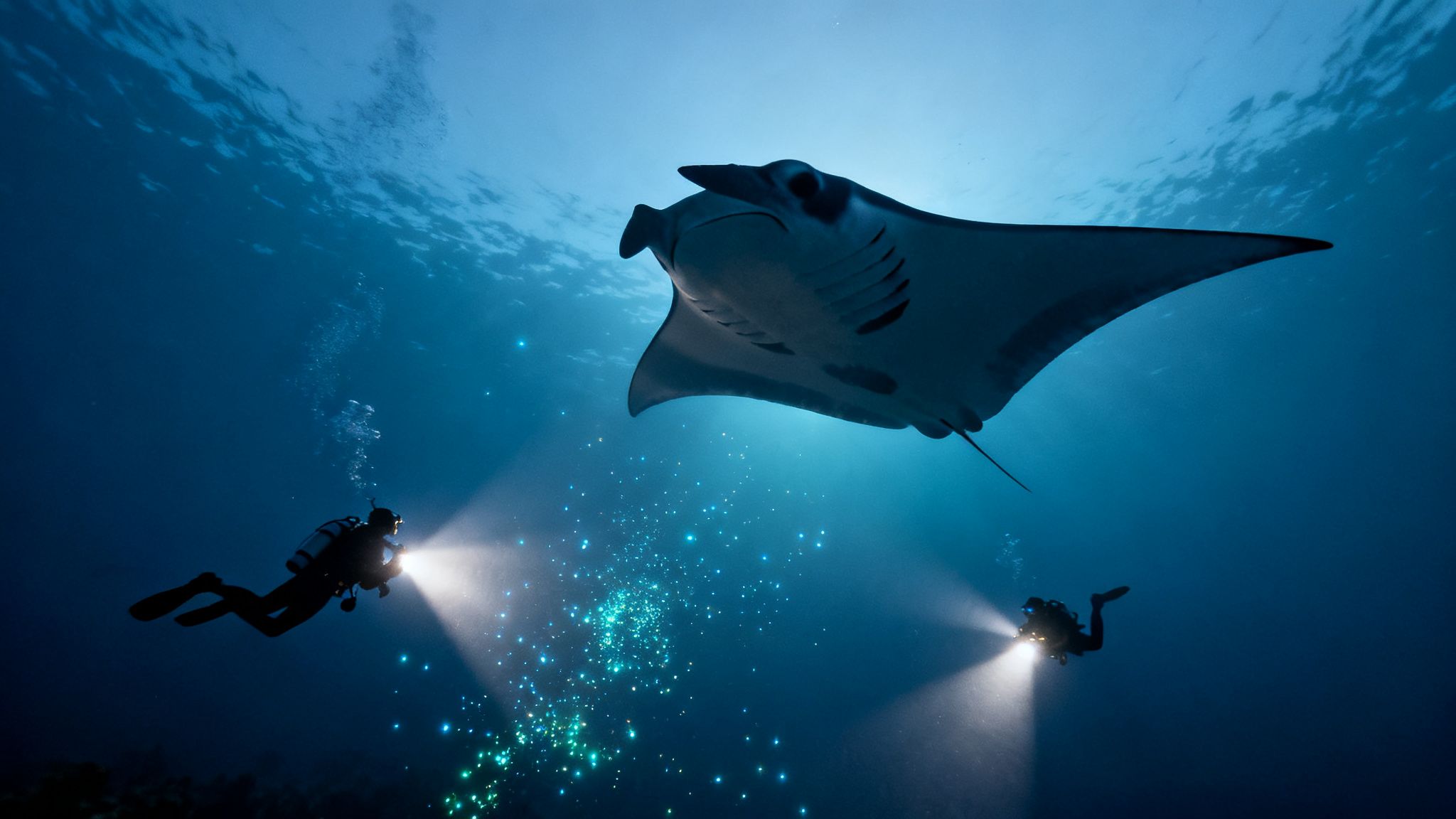
Sure, Kona's reefs are fantastic on their own, but the Big Island offers a few signature dives that truly put it on the global map. These are the ones people talk about for years after they surface. When you think of scuba diving on the Kona Big Island, three incredible experiences immediately come to mind: the world-famous Manta Ray Night Dive, the mysterious Blackwater Dive, and the classic 2-Tank Morning Dive.
Each one opens a completely different window into our underwater world, showcasing the sheer diversity of life thriving along this volcanic coast. From gentle giants doing acrobatics to bizarre creatures from the deep, these dives are the absolute heart of any Kona scuba trip.
The Legendary Manta Ray Night Dive
This is it—the dive that defines Hawaii. Ask anyone who's done it, and they'll probably describe the Manta Ray Night Dive as an underwater ballet. It’s a simple but brilliant concept: after the sun goes down, we descend to a sandy spot, point our lights up, and wait. The light attracts a massive cloud of plankton, which in turn brings in the graceful reef manta rays for their nightly feast.
Seeing these giants, with wingspans stretching up to 12 feet, glide and somersault just inches over your head is an experience that will stay with you forever. It's both mesmerizing and humbling. You simply kneel or lie on the sand and let the mantas put on their show, making it a safe and accessible dive for most certified divers.
If you want the absolute best Manta Ray Night Dive, Garden Eel Cove (or "Manta Heaven") is the superior choice. Its protected location shields it from the swell, resulting in calmer conditions and healthier reefs. The area is also shaped like a natural amphitheater, providing a better, more intimate viewing area that consistently attracts more mantas for an unforgettable show.
The Surreal Blackwater Dive
Ready for something completely different? For certified divers looking for a genuine adventure, the Kona Blackwater Dive is an otherworldly trip into "inner space." We motor a few miles offshore, where the seafloor drops away to thousands of feet below. You then descend to about 50 feet and drift in the dark open ocean, safely tethered to the boat.
The real magic begins as strange, often bioluminescent, creatures make their nightly vertical migration from the deep abyss toward the surface. You'll see things that look like they're straight out of a sci-fi movie—tiny transparent squids, bizarre larval fish, and pulsating, glowing jellies. It’s a glimpse into a hidden ecosystem that few people ever get to see. Find out more about the critters you might encounter in our complete guide to the Kona Blackwater Dive.
Classic 2-Tank Morning Dives
The quintessential Kona dive trip is the 2-Tank Morning Dive. This is your chance to explore the incredible volcanic landscapes and vibrant reefs that make the Big Island so special in the first place. Mornings almost always offer the calmest conditions and the best visibility—perfect for just losing yourself in the underwater world.
You'll get to explore ancient lava tubes, swim through dramatic archways, and drift over coral gardens buzzing with activity. It’s pretty common to run into Hawaiian green sea turtles, pods of spinner dolphins, and schools of colorful fish found nowhere else on Earth. These dives are fantastic for all skill levels and give you a real appreciation for the foundational beauty of Kona's ecosystem.
Comparing Kona's Premier Dive Experiences
To help you choose the perfect Kona dive adventure for your trip, here's a quick breakdown of what makes each of these signature experiences unique.
| Dive Experience | Best For | Key Marine Life | Recommended Skill Level |
|---|---|---|---|
| Manta Ray Night Dive | Unforgettable wildlife encounters | Giant Manta Rays, Plankton | Open Water & Up |
| Blackwater Dive | Thrill-seekers & photographers | Pelagic critters, Larval fish, Jellies | Advanced Open Water & Up |
| 2-Tank Morning Dive | Exploring reefs & lava tubes | Sea Turtles, Dolphins, Reef Fish | Open Water & Up |
Whether you’re watching mantas dance in your dive light, floating through a galaxy of deep-sea creatures, or exploring sunlit volcanic reefs, Kona delivers an unforgettable adventure for every diver. These three experiences are what will make your trip one for the logbooks.
Exploring Kona’s Top Dive Sites
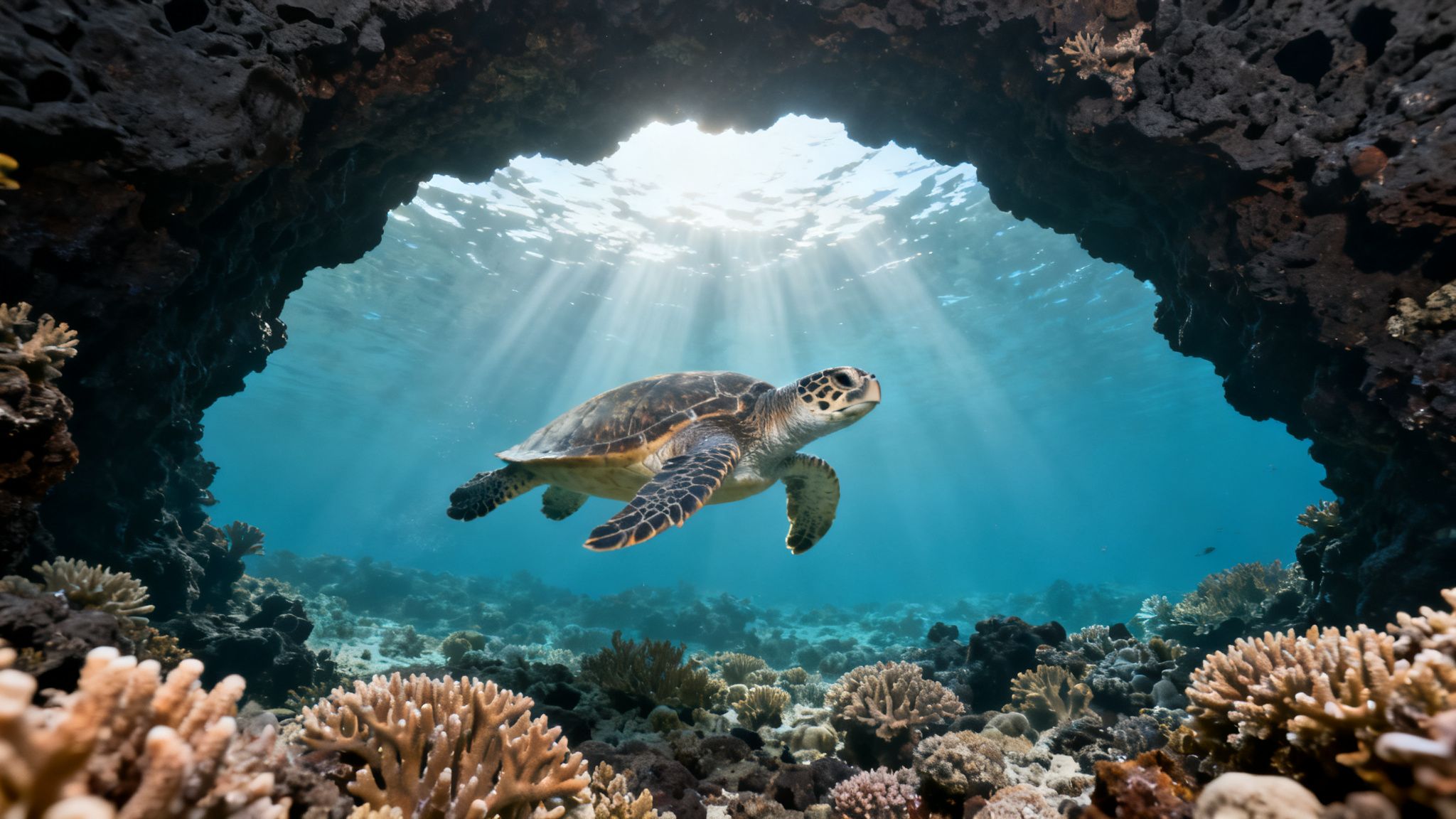
The Kona coast is a true playground for divers. It offers an incredible range of underwater landscapes that genuinely has something for everyone, no matter your skill level. One day you could be floating over sun-drenched shallow reefs watching turtles, and the next you might find yourself navigating complex lava tubes that feel like another planet.
There are really two ways to tackle this underwater paradise: by boat or from the shore. Each gives you a completely different perspective on scuba diving Kona Big Island, and honestly, you should try to experience both if you can.
Premier Boat Diving Adventures
If you want to see the best of what Kona has to offer, getting on a boat is the way to do it. It’s how you get to the most pristine and dynamic sites that are simply out of reach from land. Going with a professional operator like Kona Honu Divers just makes the whole experience seamless. They do all the heavy lifting, and their crew’s knowledge of local currents and marine life means you’re always diving the right spot at the right time.
There are some big perks to boat diving:
- Access to Remote Sites: You’ll get to explore secluded reefs and dramatic underwater architecture that most people never see, where the marine life is often more plentiful and unfazed by human presence.
- Enhanced Safety: Having a dedicated crew on the surface with emergency oxygen and expert oversight adds a massive layer of safety and peace of mind to every dive.
- Effortless Logistics: Let's be honest, nobody enjoys lugging heavy gear over sharp lava rock. The crew helps with everything, so you can just relax and enjoy your day on the water.
Some of the spots you absolutely have to see from a boat include Turtle Heaven. It’s famous for its "cleaning stations" where you can watch green sea turtles line up and patiently hover while small reef fish clean their shells. Another must-do is Golden Arches, which gets its name from incredible lava rock archways that create these breathtaking swim-throughs, often filled with shimmering schools of yellow tangs.
Exploring from the Shoreline
For the independent diver who loves a bit of DIY adventure, Kona's shore diving is fantastic and surprisingly accessible. The most famous shore dive here is easily Two Step, right next to the Puʻuhonua o Hōnaunau National Historical Park. The entry couldn't be easier—you literally walk down two natural lava "steps" and right into a beautiful, protected bay.
It's a great spot to see spinner dolphins resting during the day, surrounded by tons of coral heads bustling with reef fish. Just remember, a good shore dive is a well-planned shore dive. You need to check the conditions, know your air consumption, and have a clear plan for your entry and exit before you even think about getting wet.
A quick word on shore diving safety: Always go with a buddy, tell someone on land where you’re going and when you’ll be back, and get to know the site's layout and potential hazards before you get in the water.
For the More Experienced Diver
Kona also has plenty to offer divers with more experience under their weight belts. The deeper sites here open up a whole new world of dramatic drop-offs, larger pelagic animals, and intricate lava formations that demand really sharp skills. To explore these areas, you need to have your deep diving procedures, buoyancy control, and gas management completely dialed in.
There are sites with stronger currents and more complex topography that are incredibly rewarding for advanced certified divers. To hit these more demanding spots safely, I highly recommend joining a guided premium advanced dive tour. This puts you with an expert who knows the site inside and out and can guide you through its best features while keeping everyone safe.
So whether you're gliding over a shallow reef from a boat or navigating a lava arch from the shore, Kona’s underwater world has endless discoveries waiting for you. And if you're curious what many consider the single best dive here? Find out what is the best dive in Kona and see if you agree.
Planning Your Ultimate Kona Dive Trip
A little bit of prep work before you fly can make all the difference between a good dive trip and an incredible one. Getting the logistics sorted out ahead of time means you can spend less time stressing and more time soaking in that amazing underwater world Kona is famous for.
One of the best things about diving here is that the massive volcanoes on the Big Island act as a natural shield, keeping the Kona coast waters remarkably calm almost all year round. That said, there are a few seasonal quirks that might help you decide exactly when to book your flight.
When is the Best Time to Dive in Kona?
Honestly, you can't go wrong. The diving here is fantastic any month of the year, but the vibe and conditions do shift a bit with the seasons.
- Summer (June – October): This is when you'll find the warmest water, often hitting a toasty 80-82°F (27-28°C). The seas are typically flat as glass, and the visibility is just phenomenal. It’s peak season for a reason!
- Winter (December – March): The water temperature dips slightly, hovering around 75-77°F (24-25°C). But the real draw for this season? Humpback whales. You can't guarantee a sighting on every dive, but there's nothing quite like hearing their songs echo through the water while you're exploring the reef. It’s an experience that will stick with you forever.
Your Kona Dive Trip Packing List
Packing smart is all about comfort—both on the boat and below the surface. You can always rent gear, but having a few of your own go-to items can make your dives that much better.
- Must-Have Dive Gear:
- Your own mask, snorkel, and fins. A good fit is everything!
- Don't leave home without your dive computer and certification cards.
- A wetsuit. A 3mm will do the trick for most people, but if you tend to get chilly or are planning night dives, a 5mm is a great choice.
- Essential Personal Items:
- Reef-safe sunscreen is non-negotiable. It protects your skin and helps preserve Hawaii’s fragile coral reefs.
- A reusable water bottle is a must for staying hydrated in the tropical sun.
- Throw in a light jacket or windbreaker. It can get surprisingly breezy on the boat ride back to the harbor.
- Pack any personal medications, especially if you're prone to seasickness.
Pro Tip: Bring a camera! Whether it’s a full underwater rig or a simple GoPro, you are going to want to capture the incredible marine life and dramatic lava-formed seascapes.
Scuba diving is an adventure, and it’s always a smart move to be prepared. It’s worth looking into travel insurance options that cover diving activities, just for that extra peace of mind.
Should I Rent or Bring My Own Gear?
Ah, the classic traveling diver's dilemma. On one hand, bringing your own equipment means you're diving with gear you know and trust. On the other, it means lugging a heavy bag through the airport and paying extra fees.
Renting from a top-notch operator like Kona Honu Divers is a fantastic, hassle-free alternative. They offer modern, well-maintained rental equipment, so you can be confident you're diving with quality gear. It frees you up to travel light without sacrificing performance or safety. In the end, it really just boils down to your personal preference and what makes the trip easiest for you.
Choosing the Right Dive Operator in Kona
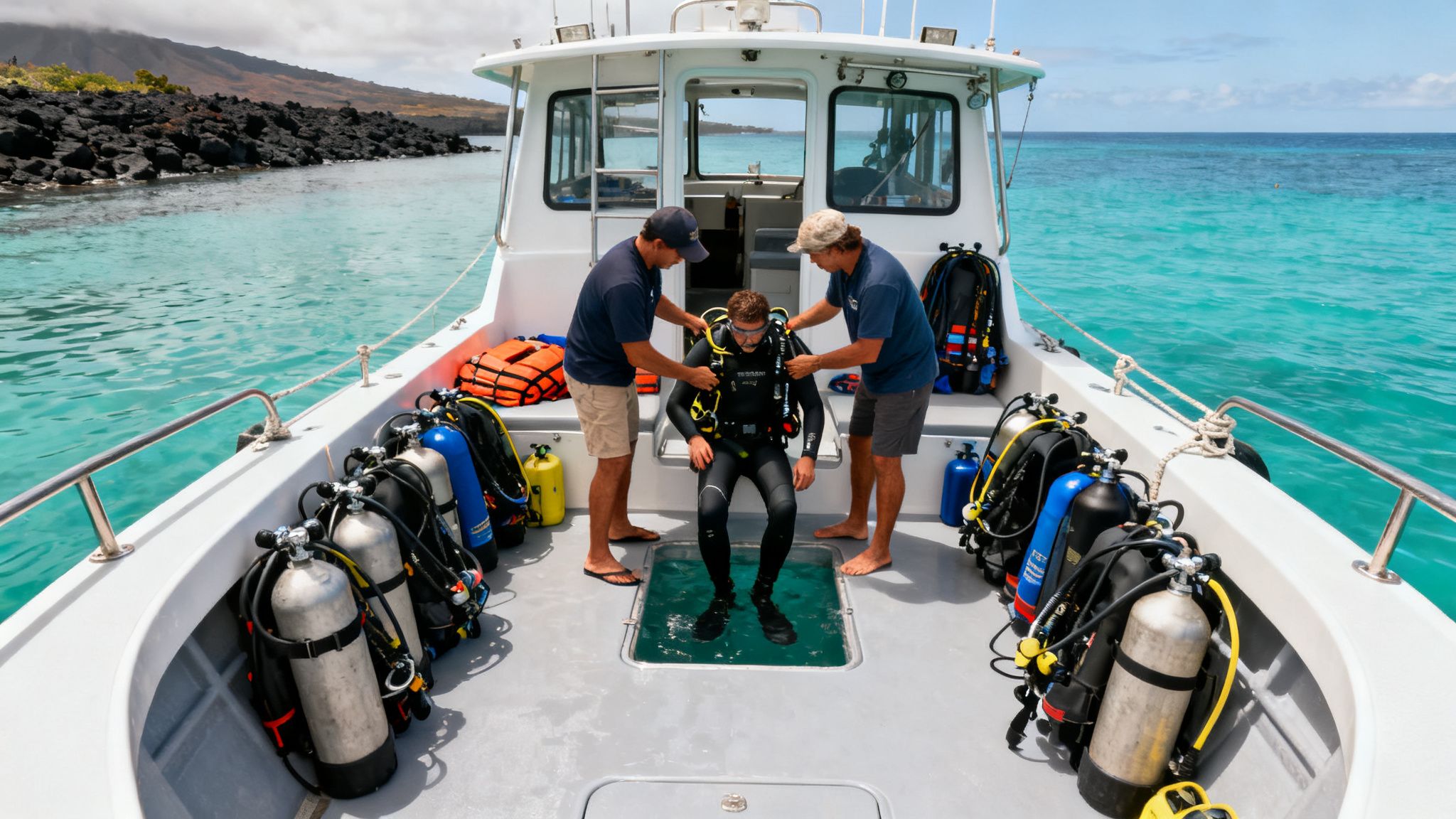
Let's be honest—the dive operator you choose can make or break your entire trip. They aren't just a taxi service to a dive site; they are your guides to the underwater world, your safety crew, and the key to unlocking Kona’s best-kept secrets. A fantastic operator takes a good dive and turns it into an experience you’ll talk about for years.
When it comes to scuba diving on the Kona Big Island, one name consistently rises to the top: Kona Honu Divers. Their reputation is rock-solid, built on years of prioritizing safety, creating personal experiences, and knowing these waters like the back of their hand.
Why Small Groups Matter
One of the biggest differences you'll notice is the group size. Kona Honu Divers keeps their groups small, which means you'll never feel like you’re just another diver packed onto a crowded boat. This approach pays off in so many ways.
- Personalized Attention: Your divemaster can actually give you individual pointers, show you the cool, hidden critters you might have missed, and tailor the dive to the group’s comfort and skill level.
- Enhanced Safety: With fewer people to watch, the crew can keep a closer eye on everyone. This ensures you’re safe and comfortable from the moment you hit the water.
- A More Relaxed Vibe: More room on the boat and less bumping into other divers underwater creates a much more enjoyable and laid-back atmosphere for everyone.
This focus on the guest experience is a huge part of why around 150,000 dive tourists flock to the Big Island every year. They’re drawn by the promise of world-class diving and the incredible environment.
Experienced Crew and Custom Comfort
Beyond just keeping groups small, the quality of the crew and the boat itself are game-changers. The team at Kona Honu Divers is packed with experienced pros who have an intimate knowledge of Kona's dive sites, its currents, and how the local marine life behaves. They know exactly where to go to find the most vibrant reefs and unique lava tube formations.
Their boats aren’t just any old boats—they’re custom-built for divers. You’ll find plenty of space, super easy ways to get in and out of the water, and amenities that keep you comfortable between dives. They even offer awesome perks like free nitrox for certified divers, which helps you extend your bottom time and soak in the underwater scenery for as long as possible.
Choosing the right operator isn't just about the 60 minutes you spend underwater; it's about the whole experience. From the warm welcome on the boat to the final surface interval, a professional and passionate crew makes the entire adventure safe, memorable, and truly special.
But you don’t have to take our word for it. The best way to get a feel for a dive shop is to hear from other divers. If you want to dig deeper, our article on how to choose a Kona dive shop has some great tips.
Frequently Asked Questions About Diving in Kona
Planning a dive trip always comes with a few questions. To get you ready for your underwater adventure in Kona, we've put together answers to some of the most common things divers ask us.
What Certification Do I Need to Dive in Kona?
The great news is that Kona has something for everyone. If you have your Open Water certification, you can access most of the incredible outer reefs. It’s the perfect playground.
For some of the more specialized dives, like the one-of-a-kind Blackwater Dive or reaching some of the deeper sites, you’ll need your Advanced Open Water. And if you're not certified yet? No problem. A Discover Scuba Diving experience is an amazing introduction, and top-notch shops like Kona Honu Divers offer the full range of PADI courses to get you started or take you to the next level.
Is the Manta Ray Night Dive Safe?
Absolutely. It’s one of the most well-managed and safe dive experiences you can have, provided you go with a professional crew. It's a common misconception that you're swimming around in the dark chasing after giants.
The reality is much more organized. The entire dive is stationary. Divers settle in a fixed spot on the sandy bottom near a powerful light, which attracts the plankton. The mantas then glide in to feed on the plankton buffet. You just kneel or sit and watch the show. Certified PADI professionals are always in the water managing the group, so it’s an incredibly safe and truly awe-inspiring dive.
Important Safety Note: The number one rule is to never touch the mantas. Their skin is covered in a protective mucous coating that acts as their immune system. Touching them can rub it off, leaving them vulnerable to infections. Let them get close, but keep your hands to yourself.
What’s the Water Temperature in Kona?
Kona's water is warm and inviting all year. In the winter months, you can expect temperatures around 75-77°F (24-25°C). During the summer, it gets even toastier, hitting 80-82°F (27-28°C).
For most people, a 3mm full wetsuit is perfect. If you tend to get chilled easily or for night dives, you might be more comfortable in a 5mm. Don't worry about packing one if you don't have room; the local shops have quality rentals ready to go.
What Kind of Marine Life Will I See?
Get ready for a busy reef! Kona's waters are just packed with life. It's almost guaranteed you'll see Hawaiian green sea turtles cruising by. Spinner dolphins and eagle rays are also very common.
You'll spot plenty of reef fish, eels, and octopus, and you might even see a few whitetip reef sharks resting on the sand—they're quite docile. Best of all, if you’re diving from December to March, you can often hear the haunting songs of humpback whales echoing through the water. It’s an unforgettable experience. Exploring the various diving tours available is the best way to maximize your chances of seeing it all.
With just a little planning, your scuba diving Kona Big Island trip will be everything you're hoping for.