
Picture this: you descend into impossibly clear blue water, surrounded by ancient lava tubes and dramatic volcanic drop-offs. A world of vibrant marine life, much of it found only here, unfolds before your eyes. This is the magic of scuba diving in Kona on the Big Island. It's a truly world-class destination where every single dive holds the promise of an unforgettable encounter, from the gentle dance of giant manta rays to the strange, beautiful creatures of the deep ocean.
Your Essential Guide to Diving in Kona
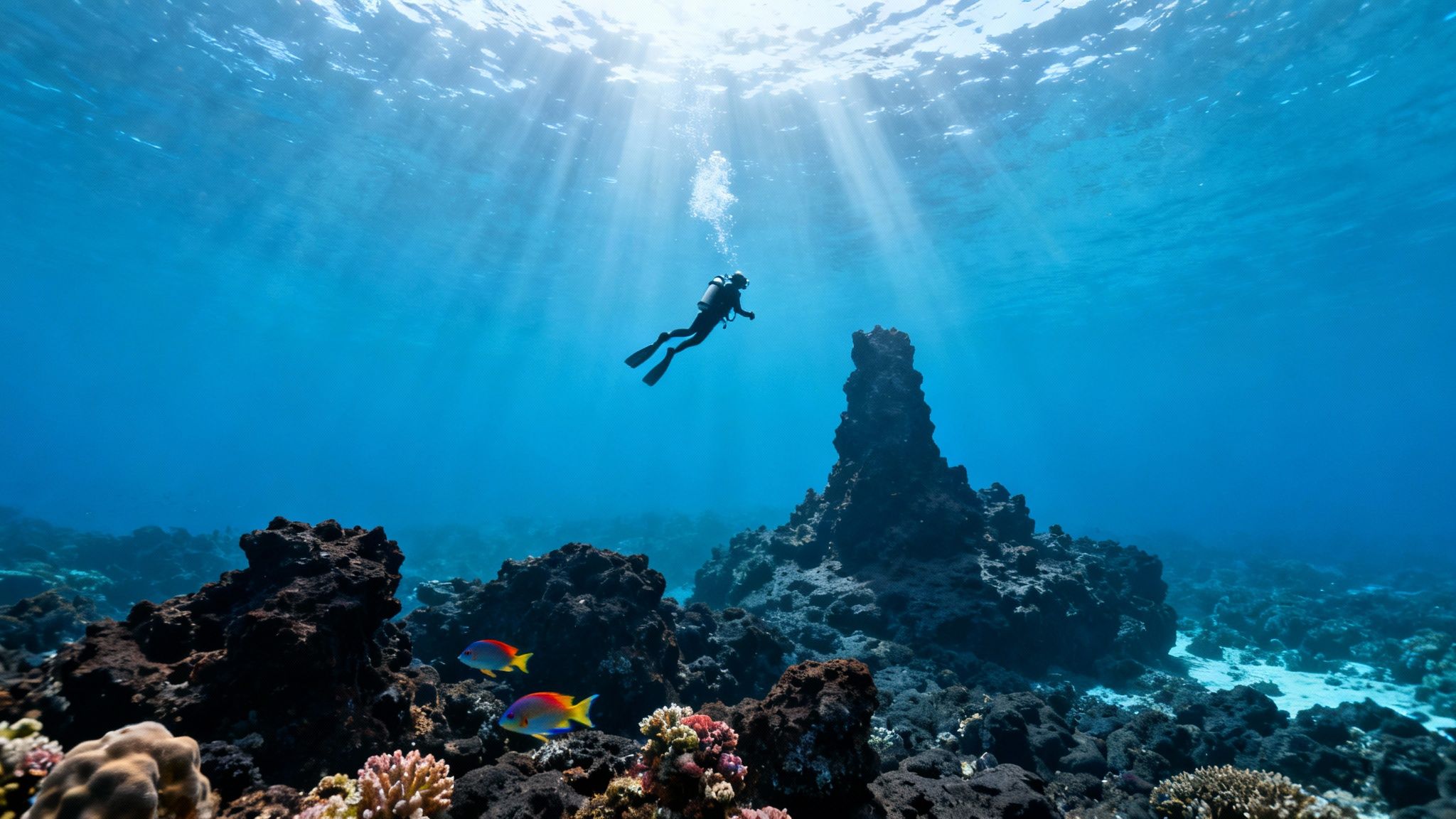
This guide is designed to show you exactly why Kona is an underwater paradise that divers from all over the world flock to. The Kona coast is special. It’s blessed with naturally protected waters, incredible visibility that often pushes past 100 feet, and a stunning underwater landscape carved out by millennia of volcanic activity.
Think of this as your pre-dive briefing for one of the best adventures of your life. We'll walk you through the iconic dives that put Kona on the map for every scuba enthusiast, including:
- The legendary Manta Ray Night Dive, an otherworldly ballet you truly have to see to believe.
- The mysterious Blackwater Dive, a one-of-a-kind journey into the deep to meet bizarre and bioluminescent creatures.
- Gorgeous, sun-drenched daytime reef dives that are bursting with healthy corals, sea turtles, and fish you won't see anywhere else.
What to Expect From This Guide
Our mission here is to give you all the insider info you need to plan an amazing dive trip. We won’t just tell you what you can see, but how you can experience it all safely and responsibly with Kona Honu Divers, the island's top-rated dive operator. You’ll get a feel for the unique geology that makes Kona’s underwater world so special and meet the incredible marine life that calls these lava tubes and coral gardens home.
From the nitty-gritty logistics and safety tips to highlighting the absolute can't-miss dives, we’ve got you covered. Whether you're a brand new diver fresh off your certification or a seasoned pro with hundreds of dives under your belt, Kona has something incredible in store for you. Let's get started and explore one of the planet's most spectacular aquatic playgrounds with our handpicked Kona diving tours.
Why Kona is a World-Class Diving Destination
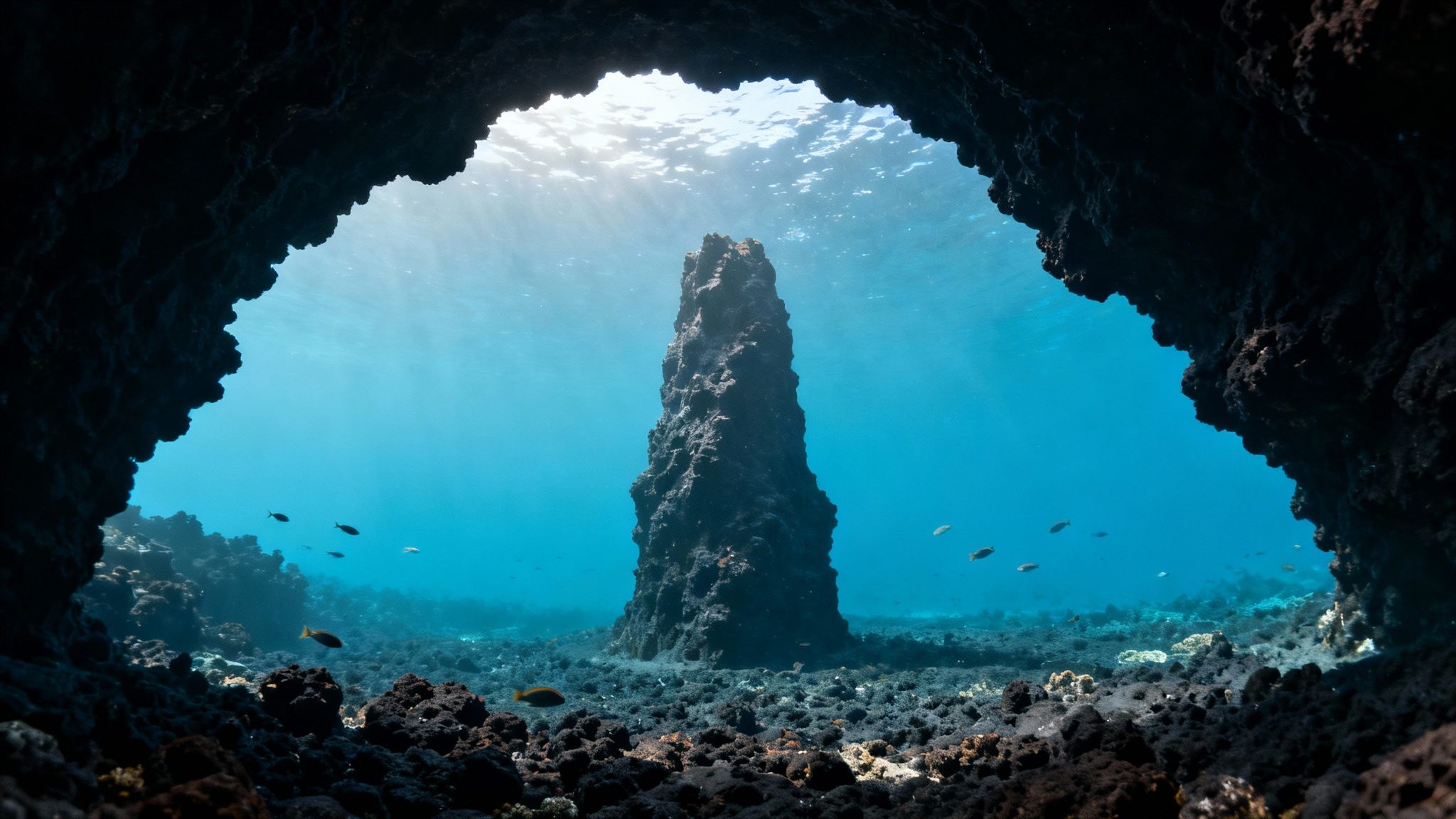
What is it about Kona that puts it on every serious diver's bucket list? It’s not just one thing—it’s a perfect storm of incredible geology, calm waters, and unique marine life. The Big Island's volcanic origins have sculpted a dramatic underwater world filled with lava tubes, massive archways, and winding caverns. It’s a playground for divers that you won't find anywhere else.
But it's more than just cool rock formations. The island's colossal volcanoes, Mauna Loa and Hualalai, create a massive shield that blocks the powerful trade winds from hitting the Kona coast. This lucky accident of geography gives us some of the calmest and clearest water in Hawaii.
It’s common to get visibility that stretches beyond 100 feet, letting you soak in every detail of the vibrant reefs. This is what makes scuba diving in Kona an unforgettable experience, whether you're a seasoned pro or just getting your fins wet.
A Sanctuary of Calm and Clarity
The water here is just different. Thanks to that volcanic shield, the Kona coast stays protected year-round, giving us consistently great conditions when other spots in Hawaii are too rough to dive.
Divers from all over the world come to explore the ancient lava flows that have cooled into intricate tunnels and swim-throughs. The water is so clear that even at depths of 80 to 100 feet, the colors are brilliant and the views are endless. You can find out more about what is unique about diving in Kona.
This reliability means you can plan a trip for January or July and know you're going to get some spectacular dives in. It’s why so many of us who dive here once end up coming back again and again.
Here’s a quick look at what you can expect from the water conditions throughout the year.
Kona Diving Conditions at a Glance
| Metric | Winter (Dec-Feb) | Spring (Mar-May) | Summer (Jun-Aug) | Fall (Sep-Nov) |
|---|---|---|---|---|
| Water Temp (°F) | 75-78° | 76-79° | 79-82° | 78-81° |
| Visibility (ft) | 80-100+ | 80-100+ | 80-100+ | 80-100+ |
| Surface Conditions | Generally calm; occasional winter swells | Calm | Very calm | Calm; can be choppier during hurricane season (rare) |
As you can see, Kona offers consistently fantastic conditions, making any time of year a great time to visit.
The combination of volcanic underwater architecture and reliably clear, calm waters creates a diving experience that is both thrilling and serene. It's a place where you can truly immerse yourself in the beauty of the ocean without battling strong currents or poor visibility.
These prime conditions allow the coral reefs to flourish. Healthy, vibrant corals cover the lava rock, providing shelter and food for a dense population of marine life. This is the stage for some of the most memorable underwater encounters you'll ever have.
An Abundance of Endemic Marine Life
Kona isn't just about clear water and cool lava tubes; it’s a hotspot for life you can’t see anywhere else. The Hawaiian islands are the most isolated archipelago on Earth, which has led to an explosion of endemic species—plants and animals found only here.
For a diver, that means every drop beneath the surface is a chance to see something truly special. On any given dive, you might come across:
- Hawaiian Green Sea Turtles (Honu): A beloved icon of the islands, you'll often see these gentle giants cruising the reef or taking a nap under a ledge.
- Endemic Fish: Keep your eyes peeled for the Milletseed Butterflyfish, Potter's Angelfish, and the elusive Psychedelic Wrasse—all unique to Hawaiian waters.
- Spinner Dolphins: While we mostly see them from the boat, you might get lucky and have a pod of these acrobatic dolphins swim by underwater. It’s a moment you’ll never forget.
This incredible biodiversity makes every dive feel like a genuine discovery. You aren’t just exploring another pretty reef; you're swimming through a living museum of evolution. The sheer number of world-class dive sites, each offering a different piece of the puzzle, is what truly cements Kona's reputation as a premier diving destination.
Kona’s Unforgettable Must-Do Dives
Sure, every dive along the Kona coast is memorable, but a few legendary experiences have truly put this place on the global map. These aren't just dives; they're encounters, choreographed ballets of marine life that you'll be talking about for years to come.
From the gentle giants that dance in the dark to the bizarre creatures that rise from the abyss, Kona offers signature dives you simply can't find anywhere else. Let’s break down the three experiences that define scuba diving on the Big Island and draw people here from all corners of the world.
The World-Famous Manta Ray Night Dive
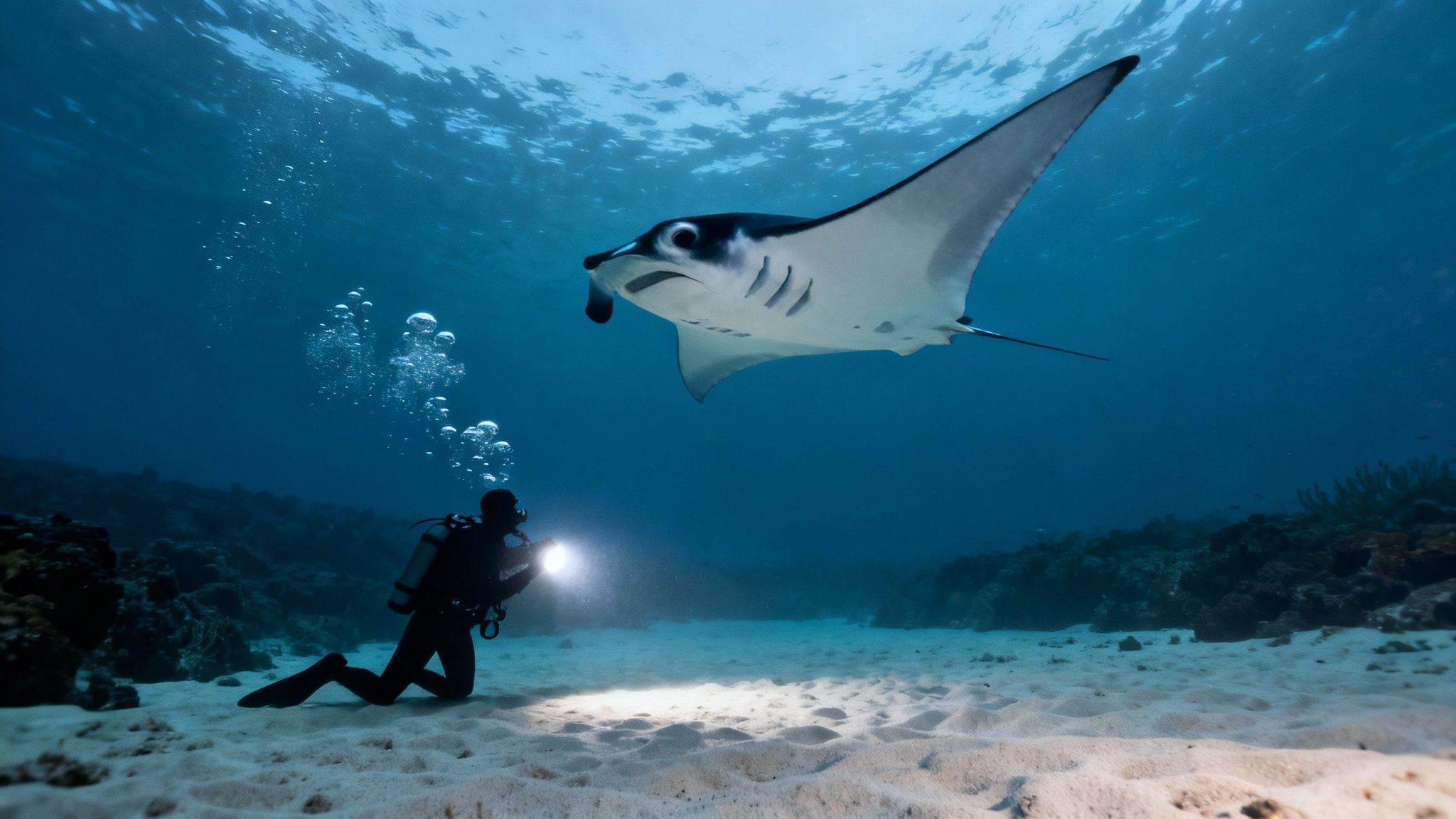
Picture this: you’re kneeling on the sandy ocean floor after sunset, your light pointing up into the dark water. Out of the gloom, a colossal shadow glides into view, swooping and barrel-rolling just inches over your head. This is the absolute magic of the Manta Ray Night Dive, an experience that consistently lands on "Top 10 Dives in the World" lists for a very good reason.
The concept is beautifully simple. We use powerful lights to attract plankton—the manta rays' favorite meal. The local mantas, who know the routine well, show up for their nightly buffet, performing a mesmerizing, acrobatic ballet as they feed. With wingspans stretching over 12 feet, watching them move so effortlessly is both humbling and breathtaking.
To get the full picture of this incredible encounter, check out our complete guide to the unforgettable manta ray night swim in Kona.
Garden Eel Cove: The Superior Manta Location
While you can see mantas at a couple of sites, Garden Eel Cove (aptly nicknamed Manta Heaven) is the superior choice for the dive tour. Why? First, its protected location means it's shielded from open ocean swells, resulting in calmer and more comfortable conditions for divers.
The viewing area itself is superior, set up like a natural amphitheater on the ocean floor. This allows divers to settle onto the sand and enjoy an unobstructed, cinema-like view as the spectacle unfolds right above them. On top of that, the surrounding reefs at Garden Eel Cove are healthier and more vibrant, making the preceding twilight dive a fantastic experience in its own right.
Choosing a dive at Garden Eel Cove is the best way to ensure a comfortable and spectacular manta encounter, as it offers a better viewing area and a healthier marine ecosystem compared to other locations.
The Mysterious Kona Blackwater Dive
If you’ve got a taste for the truly adventurous, the Kona Blackwater Dive is a journey into another dimension. This is not a reef dive. At all. Instead, you'll be tethered to the boat, drifting over thousands of feet of inky black ocean as you witness the largest animal migration on Earth.
Every single night, countless deep-water creatures—many of them bioluminescent and utterly alien—ascend from the abyss to feed near the surface. You'll see things that look like they're straight out of a sci-fi movie: translucent squids, bizarre larval fish, and shimmering, chain-like siphonophores. It's a dive that mixes the thrill of deep-ocean exploration with the pure wonder of discovering life forms you never knew existed.
Vibrant Daytime Reef Diving
Beyond the world-famous night dives, the daytime scuba diving in Kona Big Island is absolutely spectacular. The coastline is packed with dozens of unique sites, each offering a different window into Hawaii's underwater world. You'll get to explore ancient lava tubes, swim through dramatic archways, and drift along vibrant coral-covered walls.
This is where you'll really connect with Kona's amazing endemic marine life. On any given dive, you can expect to see:
- Schools of colorful reef fish: Keep an eye out for butterflyfish, angelfish, and triggerfish, many of which are found only in Hawaii.
- Resting sea turtles: We see honu (Hawaiian Green Sea Turtles) all the time, often snoozing under a ledge or cruising gracefully over the reef.
- Hidden critters: If you have a sharp eye, you can spot well-camouflaged frogfish, moray eels, and tiny, colorful nudibranchs.
These dives are perfect for every skill level, from freshly certified divers to seasoned underwater photographers. The calm, clear water creates the perfect environment to just relax and soak in the beauty of Kona’s incredible coral ecosystems.
Choosing Your Premier Kona Dive Operator
Let’s be honest: your guide can make or break a dive trip. Picking the right operator for scuba diving on the Big Island is the single most important decision you'll make, shaping everything from your safety and comfort to the amazing marine life you get to see.
It's about so much more than just a boat ride. You want a team that genuinely loves the ocean and is completely focused on making your dive safe and unforgettable. This is exactly where Kona Honu Divers has built its reputation—on deep local knowledge, fantastic service, and a real passion for Kona's underwater world.
The Kona Honu Divers Difference
So, what really sets a dive shop apart in a world-class destination like Kona? It all comes down to the little things that add up to a seamless, memorable adventure. At Kona Honu Divers, they’ve obsessed over every detail so you can just focus on the incredible experience.
You can see their commitment to quality in a few key areas:
- Boats Built for Divers: Forget feeling cramped. Their boats, like the Honu One, were custom-designed with divers in mind. There's plenty of shade, lots of room to move around, and super easy ways to get in and out of the water.
- Top-Notch Rental Gear: Good, reliable gear is non-negotiable. They provide high-quality, well-maintained equipment you can trust, giving you total peace of mind from the moment you suit up.
- Free Nitrox for Certified Divers: This is a huge perk. If you're nitrox certified, getting it for free means longer bottom times. That’s more time exploring the reefs and spotting all the cool critters that call Kona home.
With a team that has over 200 years of combined professional experience, you're not just another customer. You're diving with some of the most knowledgeable and passionate guides in all of Hawaii.
This incredible depth of experience means every dive is led with confidence and a sharp eye for spotting the reef's hidden gems. It’s what turns a simple tour into a truly educational and inspiring journey.
Expertise for Every Diver
Whether you're about to take your very first breath underwater or you're a seasoned diver with hundreds of dives in your logbook, Kona Honu Divers has a trip for you. They offer the full spectrum of PADI courses, from the Discover Scuba Diving experience for total beginners to advanced specialties for divers looking to sharpen their skills.
This focus on professional, eco-conscious diving is a big part of what makes Kona's dive scene so special. The demand for sustainable underwater adventures is growing fast, with some projections showing the U.S. diving tourism market could hit $1,585 million by 2035. Operators like Kona Honu Divers are at the heart of this, offering PADI-certified training that welcomes everyone and ensures the reefs can be enjoyed for generations to come.
To see how the best shops stack up, check out our comparison of the top Kona diving companies. At the end of the day, choosing Kona Honu Divers isn't just booking a tour—it's an investment in a world-class, safe, and truly unforgettable adventure with real experts of the sea.
Planning Your Kona Dive Adventure
Alright, you’ve seen the incredible dives Kona has to offer. Now it's time to talk logistics. A little bit of planning is what separates a good trip from an absolutely unforgettable one. Think of this as your pre-flight checklist for everything you need to know before you touch down on the Big Island.
The best news? Scuba diving on the Big Island is a year-round affair. Kona's coast is uniquely sheltered from the trade winds by the island's massive volcanoes, which means the water stays consistently calm and clear. While there's truly no bad time to visit, winter does bring slightly cooler water and the incredible soundtrack of humpback whales singing during your dives. Summer, on the other hand, usually serves up the warmest temps and the flattest surface conditions.
What to Pack for Your Kona Trip
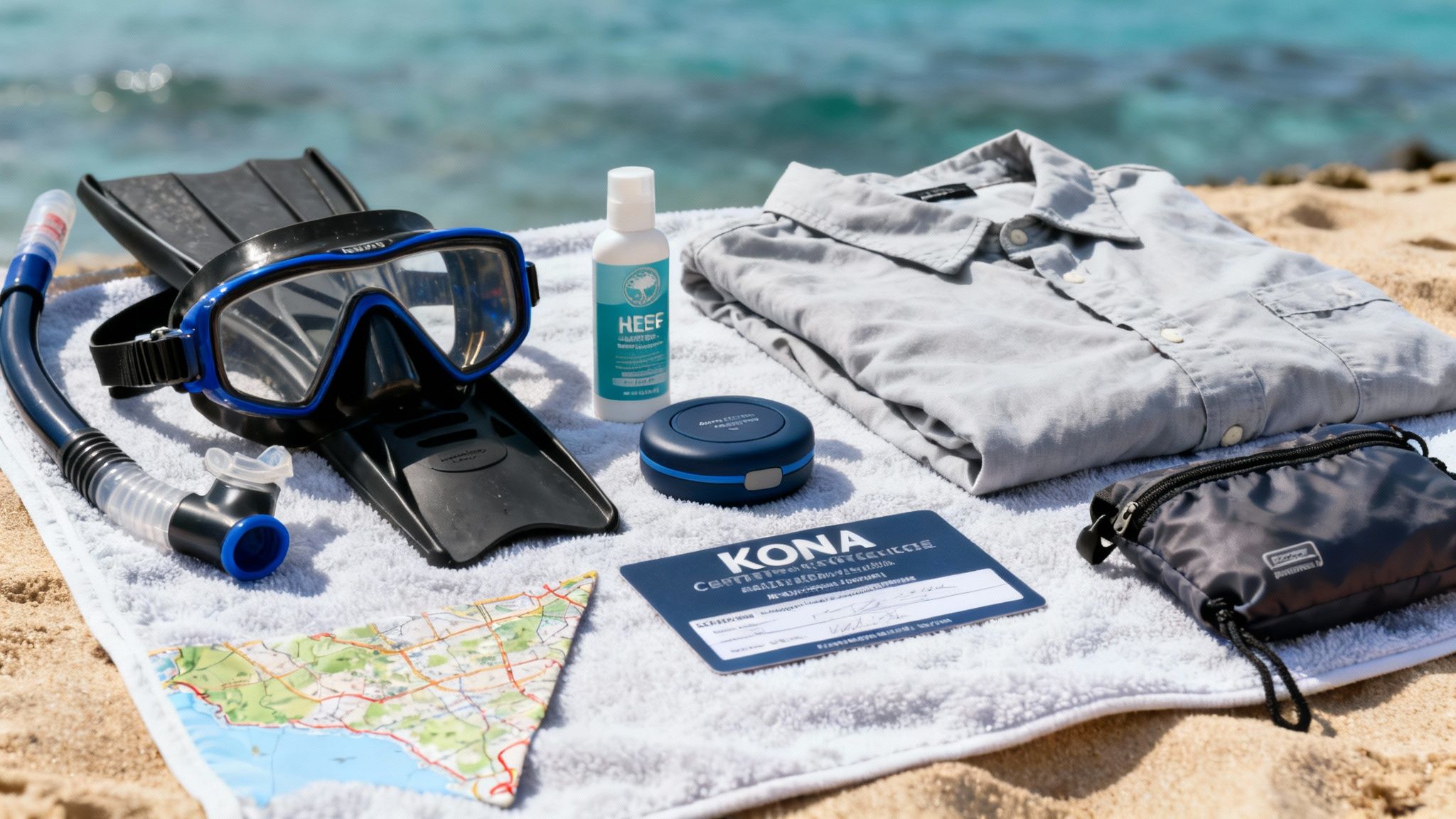
Packing smart is key to staying comfortable. You can always rent quality gear, but there are a few personal items you’ll be glad you brought from home.
- Reef-Safe Sunscreen: This is a big one. Hawaii has banned sunscreens with oxybenzone and octinoxate because they bleach coral. Look for mineral-based options with zinc oxide or titanium dioxide to protect both your skin and the reefs you’re here to see.
- Layers for the Boat: It can get surprisingly chilly on the boat ride back, especially after a night dive. A simple windbreaker or a light jacket makes all the difference.
- Reusable Water Bottle: Staying hydrated is critical for safe diving. Help us cut down on plastic waste by bringing your own bottle to refill.
- Your Own Computer & Safety Gear: While we have everything you need, many divers prefer their own computer, surface marker buoy (SMB), and whistle. It’s about comfort and familiarity.
- Dive Insurance: Don't even think about skipping this. Companies like DAN (Divers Alert Network) offer fantastic, affordable plans for dive-specific emergencies. It’s peace of mind you can’t put a price on.
Getting Here and Getting Around
Fly into Ellison Onizuka Kona International Airport (KOA). It’s just a short drive north of Kailua-Kona, putting you right in the heart of the action.
Once you’re on the ground, I highly recommend renting a car. We’ll get you to and from the docks, but a car gives you the freedom to explore everything else the Big Island has to offer. From the volcanoes to the rainforests, there’s so much to see on your surface intervals. Just be sure to book your rental well in advance, especially during peak travel seasons.
Dive Safety and Reef Responsibility
Safety is everything in diving. It all starts with being honest with yourself about your experience and never pushing your limits. Pay close attention during the dive briefings—our guides share crucial local knowledge about currents and conditions that you won’t find in a textbook.
Just as important is our shared duty to protect the underwater world. Being a responsible diver is easy, and it makes a huge difference.
Never, ever touch the coral or marine life. The oils on our skin can damage the protective layer on corals and animals, leaving them open to disease. Master your buoyancy so you can hover effortlessly without bumping into the fragile reef.
By diving with awareness, you become an ambassador for the ocean, helping us keep Kona’s reefs healthy for the next generation. Wondering how all of this fits into a budget? Get a better idea by exploring how expensive scuba diving in Hawaii is.
Your Kona Diving Questions, Answered
Planning a dive trip to the Big Island should be all about the excitement, not the stress. We get it—you’ve got questions, and as seasoned Kona divers, we’ve got the answers. Think of this as a chat with a local divemaster, clearing up everything you need to know before you take the plunge.
Let's get you feeling confident and ready for your underwater adventure.
What Is the Absolute Best Time of Year to Dive in Kona?
This is probably the easiest question we get, and the answer is simple: anytime. Seriously. Thanks to the massive volcanoes of Mauna Loa and Hualalai, Kona's coast is incredibly sheltered, giving us calm, clear water pretty much year-round. There really is no "off-season" here.
That said, the seasons do have their own personalities:
- Summer (June-August): This is when you'll find the warmest water, often creeping into the low 80s (°F). The surface conditions are typically glassy and calm, making for some seriously smooth boat rides.
- Winter (December-February): The water cools down a bit, usually hovering in the mid-to-upper 70s, but this is peak humpback whale season. There's nothing quite like hearing their haunting songs echoing through the water on a dive—it's an experience that will stick with you forever.
Honestly, the best time to visit comes down to what you're looking for. No matter when you book your ticket, you're in for world-class scuba diving in Kona.
Do I Need to Be an Expert Diver to Enjoy the Reefs?
Not at all. One of the greatest things about Kona diving is how accessible it is. Our protected coastline is dotted with shallow, gentle reefs that are absolutely perfect for new divers or anyone just wanting a beautiful, relaxing swim.
But if you're an old pro looking for a thrill, don't worry—we've got you covered. Kona serves up plenty of deeper sites, dramatic lava-tube-lined walls, and exciting drop-offs. We run specialized charters, like our Advanced Dive Tour, specifically for divers who want to push their limits. The key is diving with a great crew who knows the sites and can match the day's plan to your skill level.
Is the Manta Ray Night Dive Safe for All Skill Levels?
Yes, absolutely. The world-famous Manta Ray Night Dive is designed from the ground up to be safe and comfortable for any certified diver. It’s a stationary dive, which is a bit unusual but makes it incredibly manageable. We descend to a sandy spot in about 35-40 feet of water, get settled, and simply wait for the show to begin.
Since you aren't navigating a reef in the dark, it’s a very controlled environment. Our divemasters give a comprehensive briefing before we get in the water and are right there with you the whole time, making sure everyone is safe and secure. It’s truly one of the most magical—and safest—night dives you’ll ever do.
What Kind of Marine Life Will I Actually See?
Get ready to check a lot of boxes on your "must-see" list. Kona's reefs are teeming with life, much of it found only here in Hawaii. On a typical day, you can expect to see:
- Hawaiian Green Sea Turtles (Honu): It's almost harder not to see one of these gentle giants.
- Endemic Fish: Keep an eye out for the vibrant Potter's Angelfish, schools of Milletseed Butterflyfish, and the busy Hawaiian Cleaner Wrasse.
- Eels and Octopus: We find moray eels tucked into the reef on almost every dive, and if you have a sharp eye, you might spot a day octopus perfectly camouflaged.
- Spinner Dolphins: We frequently see huge pods from the boat, and if you're lucky, they'll sometimes treat us to an underwater fly-by during a dive.
And then there are the mantas. With a success rate of 85-90%, seeing them is practically a given. Researchers have identified over 270 individual mantas in this area, making it one of the most reliable megafauna encounters on the planet. To get a sense of how special it is, you can learn about the history of the manta dive in Kona.
What Specific Certifications Are Needed for the Blackwater Dive?
The Kona Blackwater Dive is a different beast entirely. It’s an advanced, one-of-a-kind experience where we drift in the open ocean at night, tethered to the boat over thousands of feet of water. To make sure you’re safe, comfortable, and can truly enjoy this unique dive, we do have a few requirements. Divers need to be Advanced Open Water certified (or hold an equivalent rating) and have at least 25 logged dives.
This isn't about being exclusive; it's about ensuring you have the solid buoyancy control, night diving experience, and overall comfort needed to have a good time. It's an incredible adventure, and having those core skills dialed in is what makes it both safe and mind-blowingly fun.
We hope that helps you feel prepped and even more excited for your trip. The underwater world here is something special, and we can’t wait to share it with you.
Ready to experience the magic of scuba diving on the Big Island for yourself? Kona Honu Divers is here to make your underwater dreams a reality. From the world-famous Manta Ray Night Dive to vibrant reef explorations, our expert team is committed to providing a safe, fun, and unforgettable adventure. Book your dive today and see why we're Kona's top-rated choice.