
Picture this: you descend into warm, turquoise water, the sunlight dancing through the surface above you. All around are intricate coral gardens and dramatic, ancient lava tubes. This isn't just a dream; this is what it’s like to scuba dive in Kona.
Welcome to Kona’s Underwater Paradise
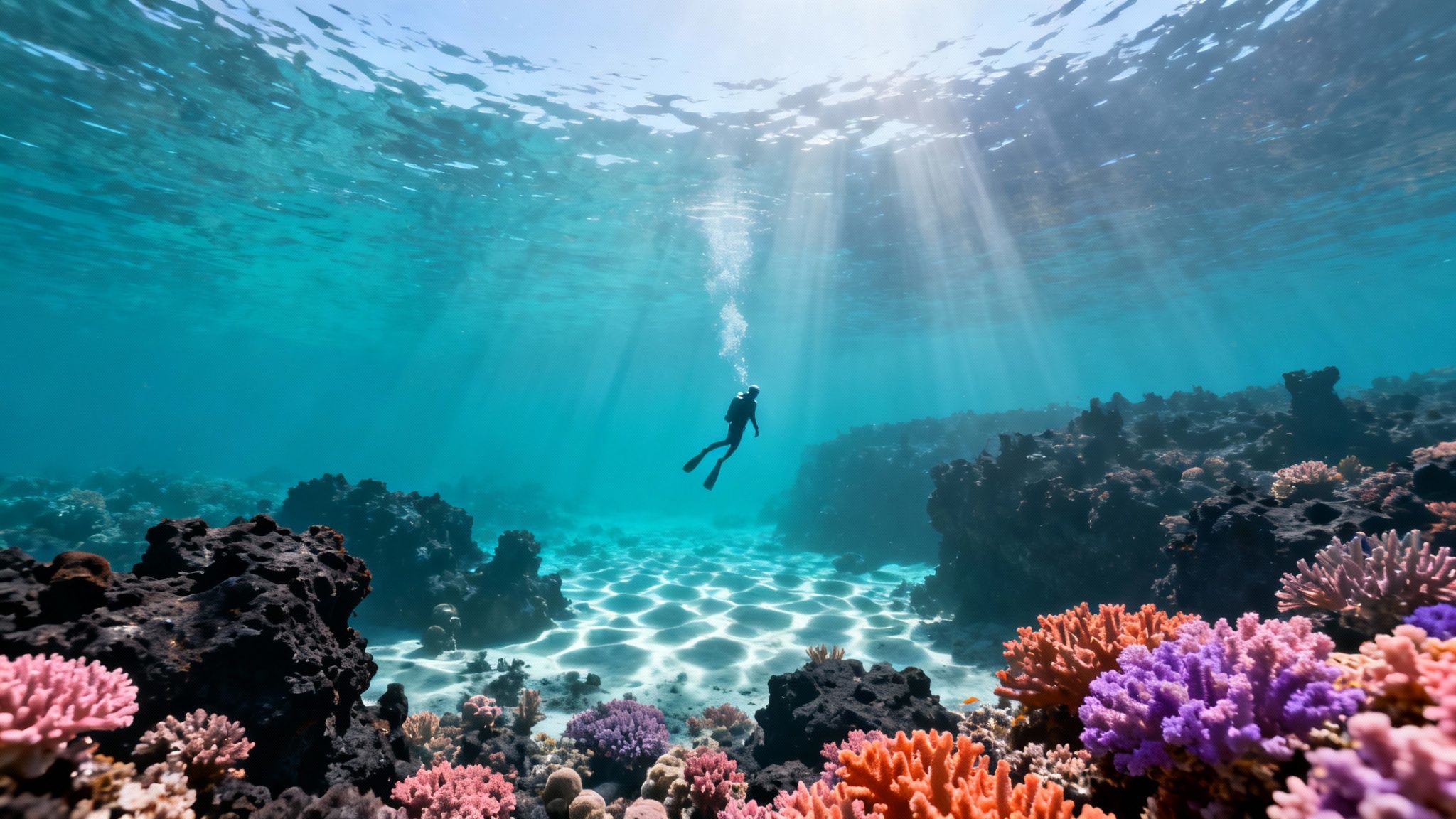
The Kona coast of the Big Island offers an underwater experience that's truly unique in Hawaii. We have the towering volcanoes of Hualālai and Mauna Loa to thank for that. They act as a massive natural barrier, shielding the coastline from the powerful trade winds and leaving our waters exceptionally calm and clear almost all year long. This incredible protection has created the perfect environment for a vibrant world sculpted by lava to thrive.
Think of this guide as your personal map to the very best of Kona diving. We'll explore the iconic diving tours that people travel across the globe for, from the surreal nighttime dance of manta rays to the otherworldly thrill of a blackwater dive.
What to Expect From This Guide
I've put this together to cover everything you need to plan a safe, unforgettable trip. Here's a quick look at what's inside:
- World-Class Conditions: We'll get into why Kona's unique geology gives us consistently clear water, with visibility often reaching an incredible 100 feet.
- Iconic Dives: You'll learn all about the must-do dives, including the world-famous Manta Ray Night Dive and the one-of-a-kind Blackwater Dive.
- Diverse Marine Life: We'll introduce you to the locals—from our beloved Hawaiian green sea turtles (honu) to the colorful endemic fish you won't find anywhere else on Earth.
- Planning and Logistics: I'll give you practical advice on picking the right dive shop, understanding the best times to visit, and getting ready for your adventure.
Diving in Kona is more than just another spot on the map; it's an experience that really stays with you. It doesn’t matter if you’re about to take your first breath underwater or you're a seasoned pro with a full logbook, the marine sanctuary of Kona has something for you. Let's get started.
What Makes Kona a Premier Diving Destination
So, what’s the secret behind Kona's legendary diving conditions? It all comes down to geology. The Kona coast sits on the leeward (or sheltered) side of the Big Island, tucked safely behind the colossal volcanic mountains of Hualalai and Mauna Loa. These mountains are so massive they act as a natural shield, blocking the powerful northeasterly trade winds that often churn up the ocean elsewhere.
This geography creates a phenomenon known as a “rain shadow.” Imagine the volcanoes as a giant wall. When the moist trade winds roll in from the east, they're forced up and over the peaks. As the air rises, it cools and dumps its moisture as rain—that’s why the Hilo side is a lush, green rainforest.
By the time that air finally crests the mountains and descends into Kona, it's dry and calm. The result? Incredibly tranquil seas and clear skies, making this stretch of coastline an absolute dream for divers.
The Underwater Lava Landscape
That same volcanic force didn't just shape the island; it sculpted an absolutely mind-blowing world beneath the waves. The seafloor off the Kona coast is a dramatic canvas of ancient lava flows. When you drop beneath the surface, you’re not just swimming over a reef—you’re exploring a submerged volcanic landscape found nowhere else on Earth.
Get ready to discover:
- Lava Tubes: Huge, hollowed-out tunnels and caverns where molten rock once flowed, now offering shelter to all sorts of cool marine life.
- Arches and Pinnacles: Soaring rock formations that create thrilling swim-throughs and dramatic vertical walls just waiting to be explored.
- Intricate Reef Structures: The solid, rocky foundation left by the lava is the perfect real estate for Hawaii's vibrant corals to take hold and flourish.
These features are far from just static rock. They are dynamic, bustling underwater cities. Every nook and cranny provides a home for something, from a reclusive octopus to schools of vibrant reef fish. You can learn more about how this geology creates such a rich ecosystem in our article about what is unique about diving in Kona.
Calm Waters and Exceptional Safety
Thanks to its protected position, the Kona coast delivers consistently calm, clear water. Visibility often hits 100 feet or more, making it a fantastic year-round destination for divers of every skill level, from your first-ever dive to your thousandth.
Safety is everything here. Local operators stick to small groups, use highly-trained, PADI-certified guides, and maintain top-notch gear. It’s why families, photographers, and hardcore divers come back again and again. In fact, when you look at the numbers, scuba diving proves to be remarkably safe. Between 2009-2018, Hawaii saw 206 snorkeling fatalities compared to just 28 scuba-related deaths, highlighting the structured safety of diving with a professional guide.
Kona’s sheltered coastline and volcanic topography come together to create a truly world-class diving destination. The calm seas mean comfortable boat rides and easy entries, while the lava-formed reefs support a complex, thriving habitat for an incredible diversity of marine life.
This perfect blend of geological luck and unique underwater terrain is what makes diving in Kona so special. It's a place where new divers can comfortably build their confidence and seasoned pros can find an adventure unlike any other.
Exploring Kona’s Most Unforgettable Dives
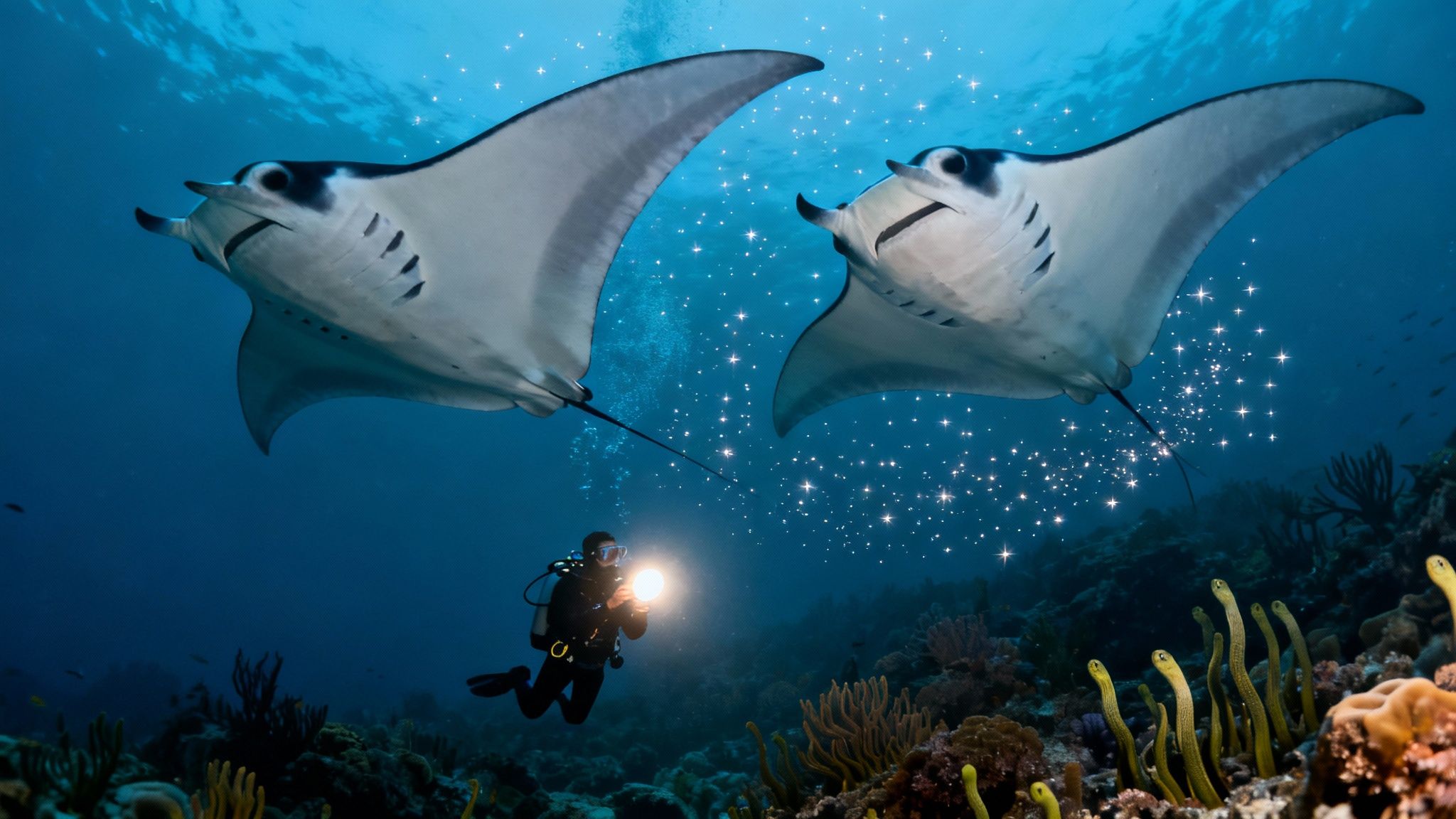
The Kona coast is home to some truly once-in-a-lifetime underwater adventures. While the daytime reefs are absolutely stunning, it’s what happens after sunset that really sets Kona apart. Two experiences, in particular, define diving here: the world-famous Manta Ray Night Dive and the mind-bending Blackwater Dive.
These aren't just dives to tick off a list; they are genuine, profound encounters with the ocean's deepest mysteries. For divers coming to the Kona Big Island, these are the pinnacle experiences that draw people from every corner of the globe.
The Legendary Manta Ray Night Dive
Picture this: you're kneeling on the sandy ocean floor in the dark. The beam from your dive light points straight up, cutting through the black water. Then, out of nowhere, a massive, graceful shadow glides into the light, swooping and barrel-rolling just inches above your head.
That’s the Manta Ray Night Dive. It’s a completely surreal, almost magical experience often described as an underwater ballet. These gentle giants, with wingspans that can reach an incredible 16 feet, are drawn to the lights because the lights attract their favorite meal: plankton. We create a "campfire" of light from the bottom, and the show begins. It's a safe and respectful way to witness one of nature's most spectacular displays up close.
Why Garden Eel Cove is the Superior Choice
While you might hear about a couple of spots for the manta dive, Garden Eel Cove (also known as Manta Heaven) is hands-down the superior choice for the dive tour. It’s a better and more protected location. Located just offshore from the Kona airport, it's naturally more protected from the southerly swells, which usually means calmer, more enjoyable conditions.
But that's not the only reason it stands out:
- A Natural Amphitheater: The layout of the site is perfect. It’s like an underwater stage with a better viewing area where divers can comfortably settle on the sand for a front-row seat without kicking up the bottom.
- Better Reefs: The surrounding coral is more vibrant and full of life than at other manta sites. This makes the first dive of the trip—a sunset reef dive—an amazing experience all on its own.
- More Mantas, More Often: While nature never offers guarantees, Garden Eel Cove consistently attracts more manta rays. It's not uncommon to see a dozen or more swooping through the lights at once.
This is a true bucket-list dive. Being that close to these majestic creatures is an encounter that will stay with you forever.
The Mysterious Kona Blackwater Dive
For those with a true taste for adventure, the Kona Blackwater Dive is a trip into another dimension. This isn't a reef dive. Far from it. You’re tethered to a line, drifting in the deep, dark open ocean, suspended over thousands of feet of inky black water.
The feeling is often compared to floating through outer space. Your light beam catches things you've never imagined—bizarre and beautiful creatures that make a vertical migration from the deep every single night to feed near the surface. Many are bioluminescent, creating their own otherworldly light show in the dark.
On a Blackwater Dive, you are witnessing the largest migration on Earth. Every night, countless tiny, alien-like organisms rise from the abyss, and you get to float right through the middle of it.
You’ll encounter creatures that look like they belong on another planet: tiny, translucent larval fish, shimmering comb jellies, and strange, beautiful cephalopods. It’s a dive that demands a bit of courage and comfort in the dark, but the reward is a front-row seat to a world that very few people ever get to see.
Vibrant Daytime Reef Dives
Beyond the iconic night dives, Kona’s daytime diving is simply world-class. The underwater topography is a diver's playground, sculpted by ancient lava flows into a maze of arches, caves, and swim-throughs. The coral gardens are pristine and packed with life.
You can spend your days watching Hawaiian green sea turtles get a cleaning from reef fish or drifting through huge schools of colorful butterflyfish. There’s always something new to discover. If you're trying to decide between seeing the mantas on scuba or by snorkeling, you can learn more about the manta ray night swim to see which is the right fit for you.
Finding Your Perfect Dive Site in Kona
With more than 50 unique sites scattered along the coast, choosing where to dive in Kona can feel like trying to pick a favorite grain of sand. The truth is, there’s no single “best” spot—only the best spot for you, right now.
Finding that perfect match is the secret to an incredible dive. It's about aligning your experience level and your underwater wishlist with a location that delivers. Let's break down how to find your ideal underwater playground, whether you're looking for a gentle reef tour or a deep-water adventure.
Dives for Beginners
Just got certified or shaking off some rust? Kona has plenty of calm, protected sites that are perfect for getting comfortable and building confidence. These spots are sheltered from strong currents and big swells, letting you relax and focus on the incredible marine life.
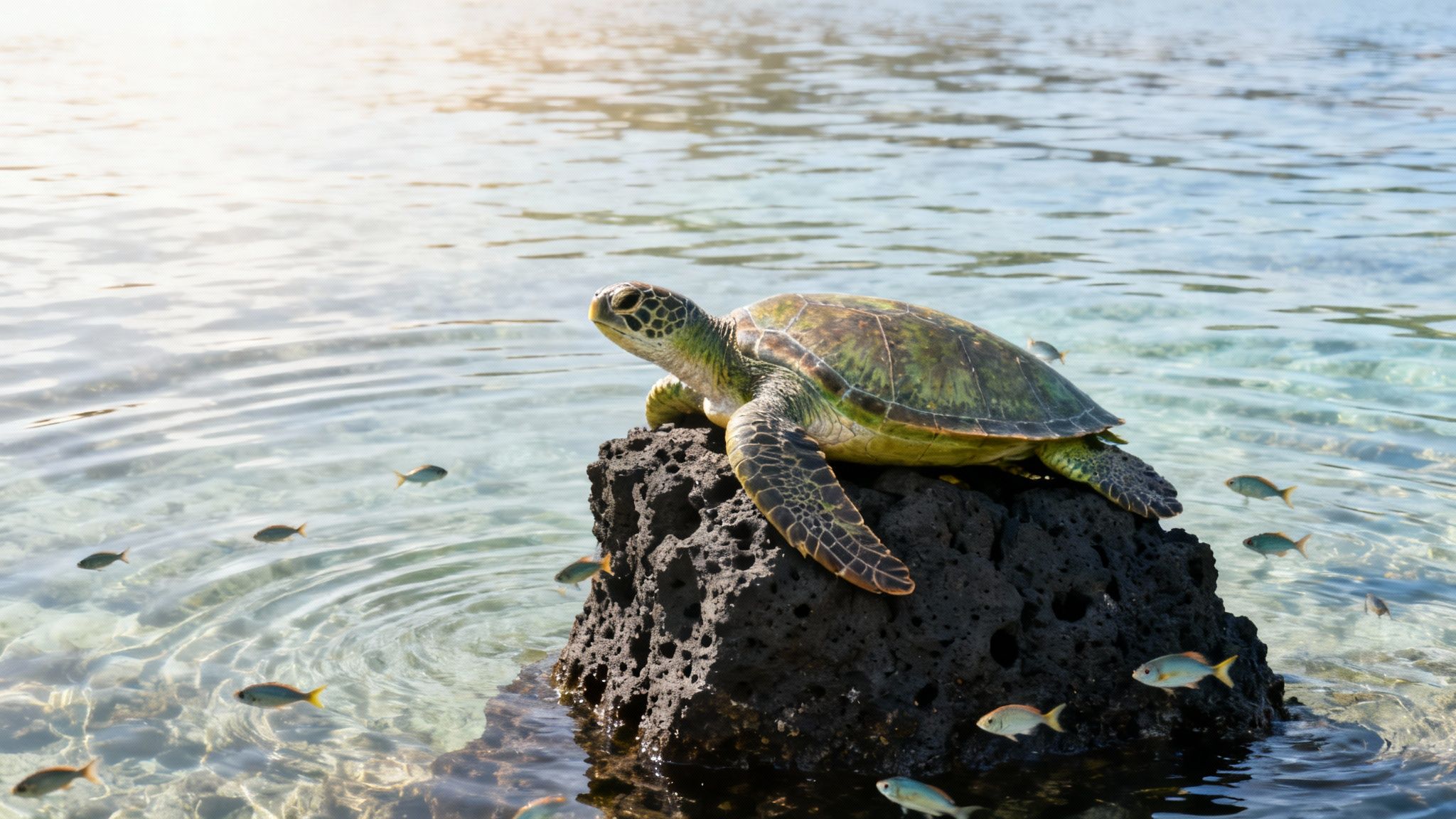
Turtle Pinnacle is a classic example and a must-do for many new divers. This isn't just a random reef; it's a famous "cleaning station" where Hawaiian green sea turtles, or honu, come to get spruced up by reef fish. You can hover nearby and watch these ancient-looking reptiles queue up patiently for their turn. It’s an unforgettable sight, all in a shallow, stress-free environment.
Other great beginner sites usually feature:
- Shallow, sun-drenched reefs packed with colorful fish.
- Sandy patches where you can work on your buoyancy without worrying about fragile corals.
- Straightforward layouts that are easy to navigate, so you can enjoy the view.
Intermediate Dives for the Explorer
Once you have a few dives under your belt, scuba diving the Kona Big Island really starts to open up. The intermediate sites are where you get to explore the dramatic volcanic landscapes that make this place so special. Think ancient lava tubes, archways, and caverns.
Sites like Golden Arches or the aptly named Suck 'Em Up invite you to weave through incredible underwater architecture. These aren't just empty caves; they're buzzing with life. You'll find schools of soldierfish hiding in the shadows and maybe even a whitetip reef shark snoozing on the floor. Dives like these require solid buoyancy control, but the reward is a truly one-of-a-kind experience.
Advanced and Challenging Dives
For the seasoned diver looking for a bigger thrill, Kona delivers. The advanced sites take you further offshore to deeper reefs and dramatic pinnacles where the big animals hang out. Here, the currents can be stronger and the depths greater, so sharp skills and experience are a must.
The payoff? You'll likely have these pristine sites all to yourself and a much better chance of encountering larger pelagic species. If you're ready for the challenge, we offer a Premium Advanced Dive Trip specifically designed to take experienced divers to these exclusive spots.
Curious about all the possibilities? Take a look at our complete guide to the Big Island dive sites Kona Honu Divers can take you to.
A Note on Skill Levels: Matching a dive to your certification isn't just about rules and safety—it’s about having a good time. When you're comfortable and confident, you can truly soak in the magic of the underwater world instead of worrying about your gear.
Kona Dive Site Guide at a Glance
To help you narrow down the options, we've put together this quick-reference table. Use it to find a few sites that match your skill level and get you excited for what's to come.
| Dive Site | Average Depth | Recommended Skill Level | What You'll See |
|---|---|---|---|
| Turtle Pinnacle | 30-60 ft (9-18m) | Beginner | Hawaiian Green Sea Turtles, cleaning stations, vibrant reef fish. |
| Garden Eel Cove | 35-50 ft (11-15m) | Beginner/Intermediate | Manta rays (night), garden eels, healthy coral reef. |
| Suck 'Em Up | 40-70 ft (12-21m) | Intermediate | Lava tube swim-throughs, unique topography, whitetip reef sharks. |
| Au Au Crater | 30-60 ft (9-18m) | Beginner/Intermediate | Collapsed lava dome, rich coral growth, frogfish, octopuses. |
| Blackwater Drift | N/A (Open Ocean) | Advanced | Bioluminescent creatures, larval fish, deep-sea organisms. |
Of course, this is just a small sample of the incredible diving Kona has to offer. Conditions change daily, so our experienced captains always choose the best sites on any given day for safety and maximum marine life encounters.
How to Plan Your Kona Diving Adventure
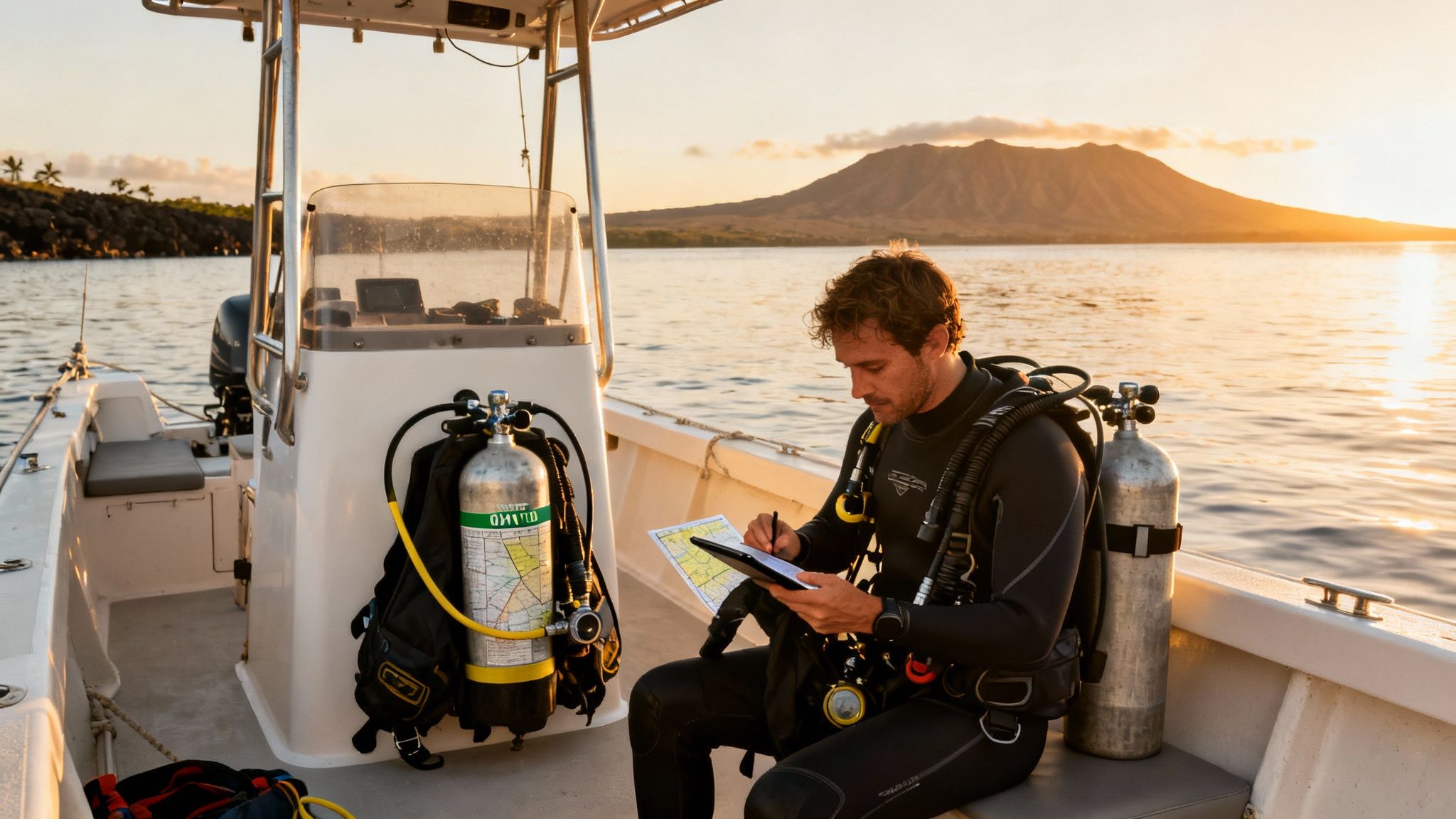
Turning your dream scuba diving Kona Big Island trip into reality is all about nailing the details. A little planning up front means you can truly relax and soak in the underwater magic once you get here. Everything from the time of year you visit to the dive boat you choose will shape your adventure.
Kona is a phenomenal year-round destination, but the seasons do bring subtle differences. Summer, running from about May to October, gives us the warmest water—often in the low 80s°F (27-28°C)—and the calmest seas. It’s peak season for a reason and an absolutely perfect time for the manta ray night dive.
Then there's winter, from November to April. The water might be a few degrees cooler, but the trade-off is spectacular: it’s humpback whale season. There is nothing in the world like hearing the beautiful, haunting songs of these giants echoing through the water on a dive. It's an experience that will stay with you forever.
Choosing the Right Dive Operator
Honestly, the single most important decision you'll make is picking your dive operator. It impacts your safety, your comfort, and how much fun you have. A top-notch outfitter like Kona Honu Divers doesn't just take you diving; they create a seamless adventure from start to finish.
One of the first things you'll notice is their custom-built dive boats. These aren't just generic boats; they were designed specifically for Kona's waters with diver comfort in mind. Think spacious decks, easy-entry ladders, and plenty of shade. It makes the time between dives just as relaxing as the time in the water.
Kona Honu Divers is also committed to small group sizes. This is a game-changer. It means you get more personal attention from your guide, feel safer, and never feel like you’re just a number in a crowd.
Packing and Gear Considerations
Packing for a Kona dive trip is pretty straightforward. Your operator will have tanks and weights covered, but definitely bring your personal gear like your mask, fins, and dive computer if you have them. And don't forget your C-card and logbook!
For your time on the boat, a few essentials make all the difference:
- Reef-safe sunscreen is a must to protect your skin and our fragile coral.
- A reusable water bottle helps you stay hydrated.
- A light jacket or hoodie is great for staying warm between dives, especially after a night dive.
- A towel and sunglasses for comfort on the surface.
Don’t want to lug all your gear across the ocean? No problem. High-quality rentals are easy to find. Kona Honu Divers keeps their rental equipment in pristine condition, so you can trust it's ready to go. Even better, for certified divers, they offer complimentary nitrox, which can help you get more bottom time and feel less tired after a day of multiple dives.
Speaking of legendary dives, the manta ray night dive has an incredible 85-90% success rate. It's not uncommon to see dozens of these gentle giants gliding in to feed on plankton. In fact, the Manta Pacific Research Foundation has identified over 270 individuals right here in Kona's waters. Kona Honu Divers makes this experience even better with expert crews and small-group boats for a more personal, safe encounter.
Budgeting for a dive trip can feel a bit overwhelming, but planning ahead makes it manageable. If you're wondering what to expect, check out our guide on how expensive scuba diving in Hawaii can be.
A fantastic trip really boils down to good planning and choosing a partner you can trust. But don't just take our word for it—see what other divers have to say about their own experiences.
Ready to book your unforgettable underwater journey? Check out our full range of incredible Kona diving tours and reserve your spot today.
Your Kona Scuba Diving Questions, Answered
Thinking about a dive trip to Kona? You've probably got some questions. As dive professionals, we hear them all the time. Here are some straightforward answers to the things divers want to know before they get here.
Do I Need to Be Certified to Scuba Dive in Kona?
For the vast majority of our boat dives, yes, you'll need an Open Water Diver certification (or equivalent) from a recognized agency like PADI or SSI. This is all about safety—it ensures you have the fundamental skills to be comfortable and safe while exploring Kona's incredible underwater world.
But what if you're not certified? You don't have to stay on the boat! You can jump in the water with a Discover Scuba Diving experience. It’s a fantastic, fully supervised introduction that gets you breathing underwater in a safe, controlled setting. And for that world-famous manta ray night dive? Non-divers can still get in on the action by snorkeling on the surface and watching the show from above.
When Is the Best Time of Year to Dive in Kona?
The short answer? Anytime. Kona is uniquely protected from the major open-ocean swells, making it a fantastic year-round dive destination.
That said, the seasons do have their own distinct personalities.
- Summer (May-October): This is when you'll find the warmest, flattest water. Temperatures often creep into the low 80s°F (27-28°C), making for some incredibly comfortable diving. It's prime time for those classic, calm Hawaiian conditions and epic manta encounters.
- Winter (November-April): The water might dip a few degrees, but the trade-off is absolutely magical. This is humpback whale season. There’s nothing quite like hearing their haunting, otherworldly songs echoing through the water while you're on a dive. It's an experience that will stick with you forever.
Visibility is generally great no matter when you come, so you really can't go wrong.
What Kind of Marine Life Will I See?
Kona is bursting with life. On just about any dive, you’re almost guaranteed to run into Hawaiian green sea turtles (honu), see pods of spinner dolphins leaping on the surface, and be surrounded by a dizzying array of colorful reef fish like butterflyfish, angelfish, and triggerfish.
Get a little closer to the reef and you'll start spotting moray eels peering out from their holes, clever octopuses camouflaged against the rocks, and maybe even a hard-to-spot frogfish. And of course, the main event for many is the graceful dance of the manta rays on the night dive. It’s not uncommon to also spot eagle rays, whitetip reef sharks, and if you venture out on a blackwater dive, some truly unique deep-ocean critters.
What Should I Pack for the Dive Boat?
We've got you covered with the heavy stuff like tanks and weights. The most important things for you to bring are your certification card and logbook. If you have your own gear like a mask or dive computer that you love, definitely bring it along.
For your time on the boat between dives, think about comfort:
- Reef-safe sunscreen
- A towel to dry off
- Sunglasses and a hat
- A reusable water bottle to stay hydrated
- A light jacket or sweatshirt—it can get chilly on the ride back!
And don't forget your underwater camera! You’ll be making memories on your scuba diving Kona Big Island adventure that you'll want to look back on for years.
Ready to see it all for yourself? Kona Honu Divers runs world-class charters led by some of the most experienced pros on the island. Check out our full range of diving tours and book your underwater adventure today.