
Ask any seasoned diver to name their top five dive destinations, and chances are, Kona will be on that list. There's a reason the Big Island has become a global magnet for underwater adventurers—it’s a truly world-class experience defined by crystal-clear water, mind-blowing volcanic seascapes, and, of course, unforgettable encounters with majestic marine life.
The secret to Kona's magic lies in its geography. Tucked away on the island's leeward side, the dive sites are shielded from harsh trade winds by the colossal volcanoes Mauna Loa and Hualalai. This natural barrier creates exceptionally calm and clear conditions, with visibility often soaring past 100 feet. It's an underwater paradise perfect for everyone from fresh-faced beginners to salty veterans.
Why Kona Is a World-Class Diving Destination
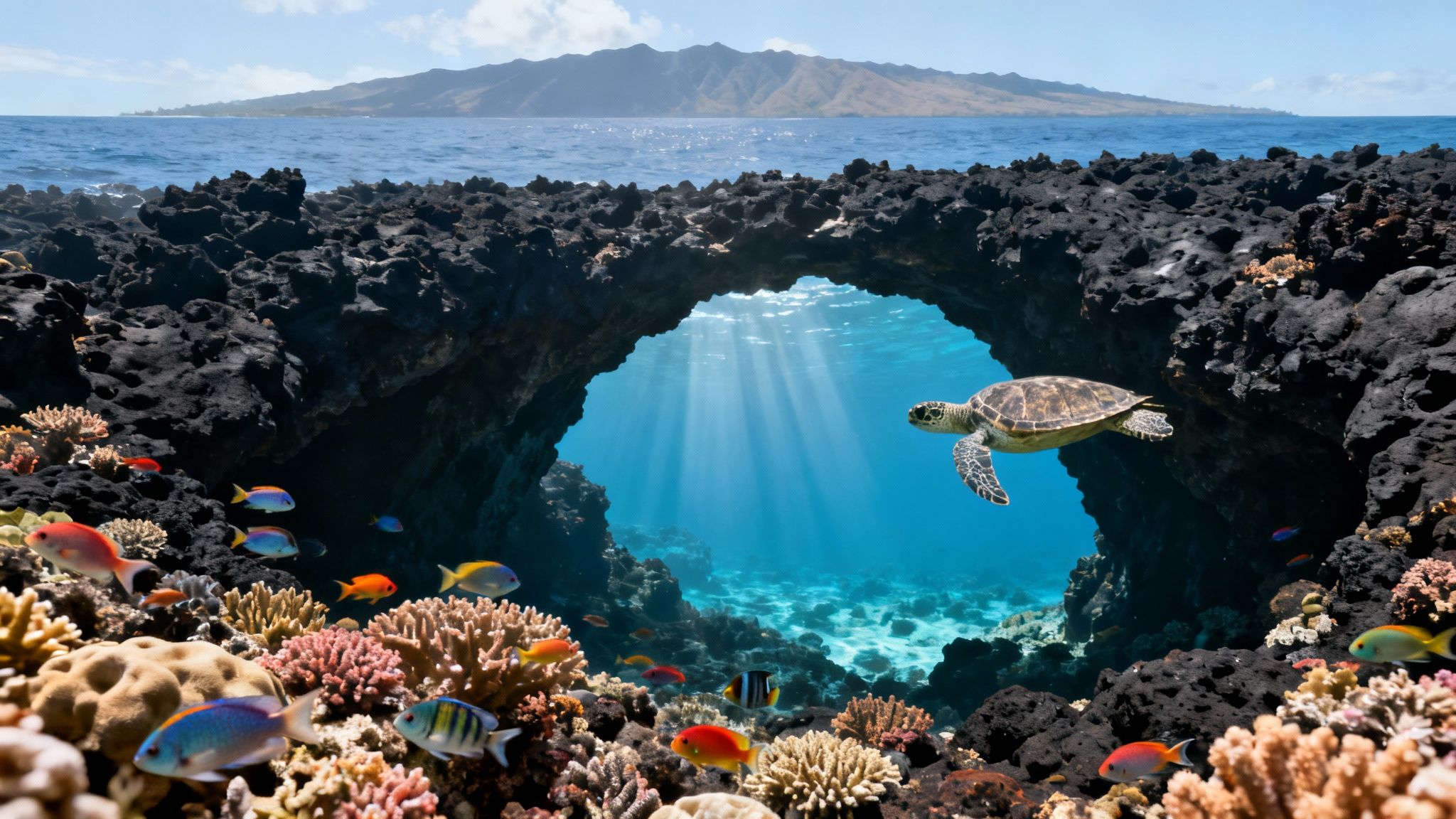
Diving in Kona feels like exploring another planet. The island's fiery volcanic origins didn't stop at the shoreline; they spilled into the sea, forging a dramatic underwater world. Millennia-old lava flows have been sculpted by the ocean into an incredible playground of arches, caverns, and intricate lava tubes just waiting for you to discover.
A Sanctuary of Biodiversity
This unique volcanic terrain, combined with pristine water quality, has cultivated an explosion of marine life. Kona isn't just a place where you might see cool things; it's a place where you connect with some of the ocean's most incredible inhabitants.
The reefs are absolutely electric, buzzing with countless species, many of which are found nowhere else on Earth. You'll find yourself searching for expertly camouflaged frogfish and day octopuses, then turning to watch a school of vibrant yellow tangs drift by. It's this sheer density and variety of life that truly sets Kona apart.
Iconic Encounters and Ideal Conditions
Let's be honest: many people come for the headliners. The world-famous Manta Ray Night Dive is a bucket-list spectacle, but the supporting cast is just as impressive. It's common to be greeted by a pod of spinner dolphins on the boat ride out or to swim alongside a graceful Hawaiian green sea turtle (honu).
Kona's reputation has attracted over 150,000 dive tourists annually, all eager to explore these legendary waters. The conditions remain fantastic all year, though late summer and early fall often bring the calmest seas and gin-clear visibility. You can learn more about what makes this place so special in this detailed overview of Big Island diving.
To get a better sense of what awaits, here’s a quick rundown of why Kona is a diver's dream.
Kona Scuba Diving at a Glance
| Feature | Description | Best For |
|---|---|---|
| Volcanic Topography | Underwater lava tubes, arches, and caverns create a unique, explorable landscape. | All divers, especially those who love interesting underwater structures. |
| Exceptional Visibility | Calm, leeward coast waters consistently offer visibility exceeding 100+ feet. | Underwater photographers and divers who appreciate stunning clarity. |
| Iconic Marine Life | Famous for the Manta Ray Night Dive, plus frequent sightings of turtles, dolphins, and endemic species. | Everyone! It's a bucket-list experience for a reason. |
| Year-Round Diving | Consistently good conditions throughout the year, with peak visibility in late summer. | Divers looking for a reliable, world-class destination any time of year. |
Diving here is more than just a tour; it's an immersion into a vibrant, living ecosystem that we're passionate about sharing and protecting.
At Kona Honu Divers, we bring over two centuries of combined local expertise to every single trip. Our mission is to guide you through this aquatic wonderland safely and respectfully, ensuring your scuba diving Kona Big Island adventure is one you'll talk about for years. We've designed a range of diving tours to showcase the very best of Kona, from its most famous sites to its hidden gems.
Ready to see it for yourself?
Kona’s Legendary Night Dives: Manta Rays and Blackwater
When the sun finally dips below the horizon in Kona, the ocean doesn't go to sleep. It awakens. For divers, this is when the real magic begins, with two of the most incredible underwater experiences on the planet: the Manta Ray Night Dive and the Kona Blackwater Dive.
These aren't just items to check off a list; they are transformative encounters that have rightfully put Kona on the map as a world-class diving destination.
The Manta Ray Night Dive is nothing short of an underwater ballet. Picture this: you're settled on the sandy ocean floor as majestic giants, some with wingspans of 15 feet, soar and somersault just inches over your head. It’s a powerful, almost spiritual experience that feels like you've been transported to another world.
The Magic of the Manta Ray Night Dive
So, how does this incredible spectacle happen night after night? The secret is surprisingly simple. We set up powerful, eco-friendly lights on the ocean floor, which act like a massive bug zapper for plankton, the mantas' favorite food.
These intelligent giants have learned that our lights mean an easy, all-you-can-eat buffet is open for business. They glide in, mouths agape, filtering the dense clouds of plankton from the water. This feeding frenzy creates the graceful, looping dance that makes the Manta Ray Night Dive a bucket-list dive for people all over the globe. The best part? It's a calm, stationary dive—you just get comfortable and let the show unfold around you.
A common question we get is, "Are manta rays dangerous?" The answer is a resounding no! Unlike their stingray cousins, manta rays have no barbs, stingers, or teeth. They are true gentle giants, completely harmless and far more interested in their plankton dinner than the divers watching them.
While you can see mantas at a few spots, one location consistently delivers the best experience.
Why Garden Eel Cove Is the Superior Choice
Hands down, Garden Eel Cove (also known as Manta Heaven) is the premier spot for the manta ray night dive. It’s not just our opinion; the location itself makes all the difference for a few key reasons.
- Protected Location: Tucked away in a natural cove, the site is shielded from the wind and open-ocean swell. This means calmer, safer, and much more comfortable conditions for everyone on board, especially when the weather is less than perfect.
- Better Viewing Area: The bottom topography at Garden Eel Cove is like a natural amphitheater. It allows us to set up the lights on a sandy patch where divers can kneel comfortably, giving the mantas a perfect "stage" to perform above us without anyone damaging the fragile coral.
- Better Reefs: The vibrant reefs surrounding the cove support a robust ecosystem, which means more plankton. More plankton means more mantas and a more spectacular, reliable show for our divers.
Into the Abyss: The Kona Blackwater Dive
If the manta dive is a ballet, the Kona Blackwater Dive is a trip to outer space. This isn't your typical reef dive. We head offshore, miles from land, and drift in the pitch-black ocean, thousands of feet above the sea floor. Tethered to the boat, you feel like an astronaut exploring a new galaxy.
Drifting in that inky blackness is surreal. You're witnessing one of the largest migrations on Earth as countless strange, beautiful, and often bioluminescent creatures rise from the depths to feed near the surface.
You’ll encounter life forms that look like they were pulled from a sci-fi film—transparent larval fish, pulsating comb jellies, and bizarre deep-water squid that glow in the dark. This is a true adventure for divers seeking something truly unique, a chance to see a part of the ocean that very few people ever will. Kona Honu Divers runs a specialized Blackwater Dive tour designed to safely guide you through this hidden world.
Both of these night dives offer a profound connection to the ocean's mysteries and are a huge part of what makes diving here so special. If you're planning a trip, be sure to check out our complete guide to the manta ray night swim for more details.
Exploring Kona’s Top Daytime Dive Sites
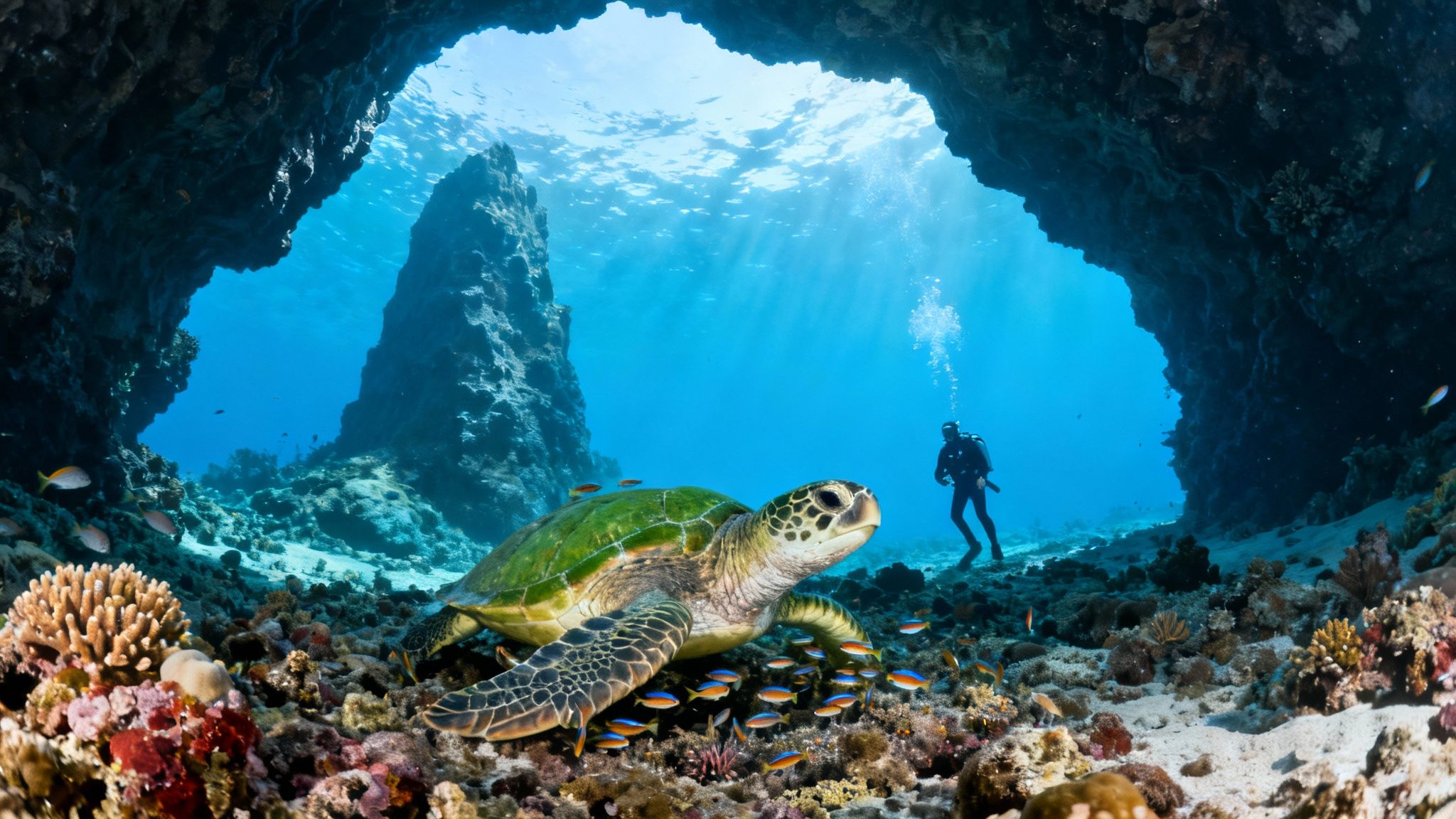
While the Manta Ray Night Dive gets a lot of the spotlight, Kona’s daytime diving is a whole other world of magic. The same volcanic activity that shaped the island’s starkly beautiful cliffs also created an unbelievable underwater playground. When you go scuba diving in Kona on the Big Island during the day, you’re dropping into a world painted with vibrant colors and buzzing with life.
The calm, protected waters of the leeward coast are home to thriving coral gardens, mind-bending lava formations, and some of the most fascinating marine ecosystems you'll ever see. Every site has its own personality, its own story. It's here, with the Hawaiian sun filtering down through the water, that you really get a sense of the sheer biodiversity that puts Kona on every diver's map.
At Kona Honu Divers, we never just pick a spot at random. We’re out there every day, and we meticulously choose our dive sites based on conditions to give you the best visibility and the most incredible encounters. Our local knowledge is your ticket to seeing these underwater masterpieces at their absolute peak.
Golden Arches: Where Lava and Light Collide
Picture this: you're swimming through a massive, ancient lava tube, and shafts of sunlight are piercing through openings in the ceiling above you. That’s the feeling of diving Golden Arches. It’s famous for its dramatic swim-throughs that feel less like diving and more like exploring a submerged cathedral.
The site gets its name from a spectacular archway completely encrusted in golden and orange corals—a perfect frame for any underwater photo. Inside these lava tubes, it’s common to find schools of fish hiding out, and you might even spot a whitetip reef shark taking a nap on the sandy bottom. It's a prime example of how Kona's volcanic past created such a dynamic and thrilling dive environment.
Turtle Pinnacle: A Bustling Honu Cleaning Station
If your dream is to swim alongside Hawaiian green sea turtles (we call them honu), then Turtle Pinnacle is where you want to be. This spot is what’s known as a "cleaning station," a vital hub in the reef’s ecosystem. It’s basically an underwater spa where turtles line up to get parasites and algae nibbled off their shells by helpful surgeonfish and other small cleaner fish.
This symbiotic dance gives us a front-row seat to watch these gentle, ancient creatures in their natural element. It's an incredible opportunity to observe their behavior up close as they patiently wait for their turn.
Au Au Crater: Diving a Submerged Volcano
For a dive site that is truly one-of-a-kind, Au Au Crater is a must. You're literally descending into a submerged volcanic cone. The topography here is unlike anywhere else, with the crater walls creating countless micro-habitats for all sorts of marine life.
On any given dive here, you can find everything from expertly camouflaged frogfish hiding in plain sight to majestic eagle rays soaring past the crater's edge out in the deep blue. The diversity is just astounding. For more ideas, check out our guide on other Big Island diving spots you won't want to miss.
These sites are really just the beginning of what Kona's reefs offer during the day. From shallow, brilliant coral gardens perfect for new divers to deeper ledges that seasoned pros will love, there’s an entire world waiting just beneath the surface. Let our crew show you the way.
Expert Insight: The incredible health of Kona's reefs is directly linked to its volcanic origins. The porous lava rock creates millions of tiny nooks and crannies. This provides essential shelter for juvenile fish and invertebrates, which in turn supports the entire food web—from the smallest cleaner shrimp all the way up to the top predators.
When to Plan Your Kona Dive Adventure
One of the absolute best things about diving in Kona is that there’s no bad time to visit. Seriously. Thanks to the sheer size of the Big Island’s volcanoes, Mauna Loa and Hualalai, the Kona coast is tucked away in a perfect lee, shielded from the prevailing trade winds. This creates an incredible microclimate with calm, clear water pretty much 365 days a year.
That said, while you can always count on a great dive, picking a specific time of year can help you dial in the exact experience you're looking for. The seasons bring subtle changes in water temperature, visibility, and even the cast of characters you'll meet underwater. Timing your trip right can turn a fantastic dive vacation into a legendary one.
Many experienced divers will tell you that the sweet spot is late summer and early fall, from about August to October. This is when the ocean truly lays down. The water is often glassy smooth, and temperatures climb to a balmy 80°F (27°C). It's that "bathtub-warm" water divers dream about, paired with gin-clear visibility that can easily top 100 feet. If you want long, comfortable dives where the reefs seem to go on forever, this is your season.
Winter Magic and Whale Songs
But then there's winter. Diving here between December and March is a whole different kind of magic. The water might dip a few degrees to around 75°F (24°C), but what you get in return is simply breathtaking. This is the peak of humpback whale season.
Now, seeing a humpback underwater is the dive equivalent of winning the lottery—it's incredibly rare. But you don't need to see them to feel their presence. On almost every winter dive, you can hear them. The haunting, complex songs of male humpbacks become the soundtrack to your dive, vibrating right through your chest. It's a powerful, humbling experience that you'll never forget.
So, how do you choose? To make it simple, we've broken down what you can expect from Kona's waters throughout the year.
Seasonal Guide to Diving in Kona
This table gives you a quick snapshot of the conditions and highlights you can look forward to, season by season.
| Season | Avg. Water Temp | Typical Visibility | Marine Life Highlights |
|---|---|---|---|
| Winter (Dec – Mar) | 75-77°F (24-25°C) | 75-100 feet | Humpback whale songs are frequently heard underwater. |
| Spring (Apr – Jun) | 76-78°F (24-26°C) | 80-120 feet | Excellent conditions with warming water and fewer crowds. |
| Summer (Jul – Sep) | 78-80°F (26-27°C) | 100-125+ feet | The warmest water and calmest seas, offering peak visibility. |
| Fall (Oct – Nov) | 77-79°F (25-26°C) | 80-120 feet | Conditions remain superb as the water slowly begins to cool. |
In the end, it really comes down to what you want to get out of your trip. Whether you're chasing the warmest water, the clearest visibility, or the chance to listen to an underwater orchestra of whales, Kona delivers.
No matter when you decide to come, our crew at Kona Honu Divers knows the reefs inside and out and will get you to the best spots for the season. Ready to see what's waiting for you? Explore our diving tours and let's get you in the water.
How to Choose the Best Dive Operator in Kona
With over 50 different charters and shops offering scuba diving on the Big Island, trying to pick the right one can feel a bit like you're lost at sea. But the operator you choose is single-handedly the most important decision you'll make. It’s what separates a good dive from an absolutely unforgettable one.
So, what should you really be looking for? It all comes down to a few critical things: an obsessive commitment to safety, the quality of the boat itself, the crew's experience, and the size of the dive groups. A great operator doesn't just ferry you to a dive site; they build an entire experience around their expertise and a genuine love for the ocean.
The Kona Honu Divers Difference
At Kona Honu Divers, we've spent years building our reputation by obsessing over those very details. We believe a world-class destination like Kona deserves a world-class dive experience, and that feeling starts the second you step onto one of our boats.
Our vessels, the Honu One and Honu Iki, aren't your average dive boats. They were custom-built from the hull up with divers in mind. That means you get more room to gear up, easy ways to get in and out of the water, and amenities that actually let you relax between dives. When choosing any operator, always ask about their commitment to sustainable boating practices—it’s crucial for protecting Kona's reefs for years to come.
Our crew is truly our greatest asset. Between them, they have over 200 years of combined local diving experience. That’s a massive library of knowledge about Kona’s waters. It means we know exactly where to go based on the day's conditions, putting you in the right spot for the best visibility and marine life every single time.
This kind of deep, local knowledge is essential, especially for iconic experiences like the Manta Ray Night Dive. This incredible dive has a history stretching back to the early 1990s. Since then, researchers have cataloged over 300 unique manta rays and documented more than 10,000 sightings, all contributing to global conservation efforts. These gentle giants, often spanning 10-15 feet, glide in almost every night to feed on plankton attracted by dive lights, creating a safe and magical show for divers of all levels.
Small Groups and Personalized Attention
We’re also huge believers in small group sizes. It’s not just a nice-to-have; it’s fundamental. Keeping our groups small means every diver gets the attention they deserve, whether you need a quick hand with your gear or just want to identify that cool fish you spotted. It simply creates a more relaxed, personal, and safer dive for everyone involved.
Of course, you don’t have to take our word for it. The best way to get a feel for a dive shop is to see what other divers are saying. Real-world reviews offer transparent proof and can help you feel confident in your choice. Our sister company is another great example of this commitment—you can see for yourself by reading about the Kona Diving Company.
When you choose the right operator, everything else just falls into place. It frees you up to focus on the jaw-dropping beauty of Kona's underwater world. We'll handle all the details so you can focus on making memories.
Ready to experience the best of Kona diving?
Taking Your Diving Skills to the Next Level
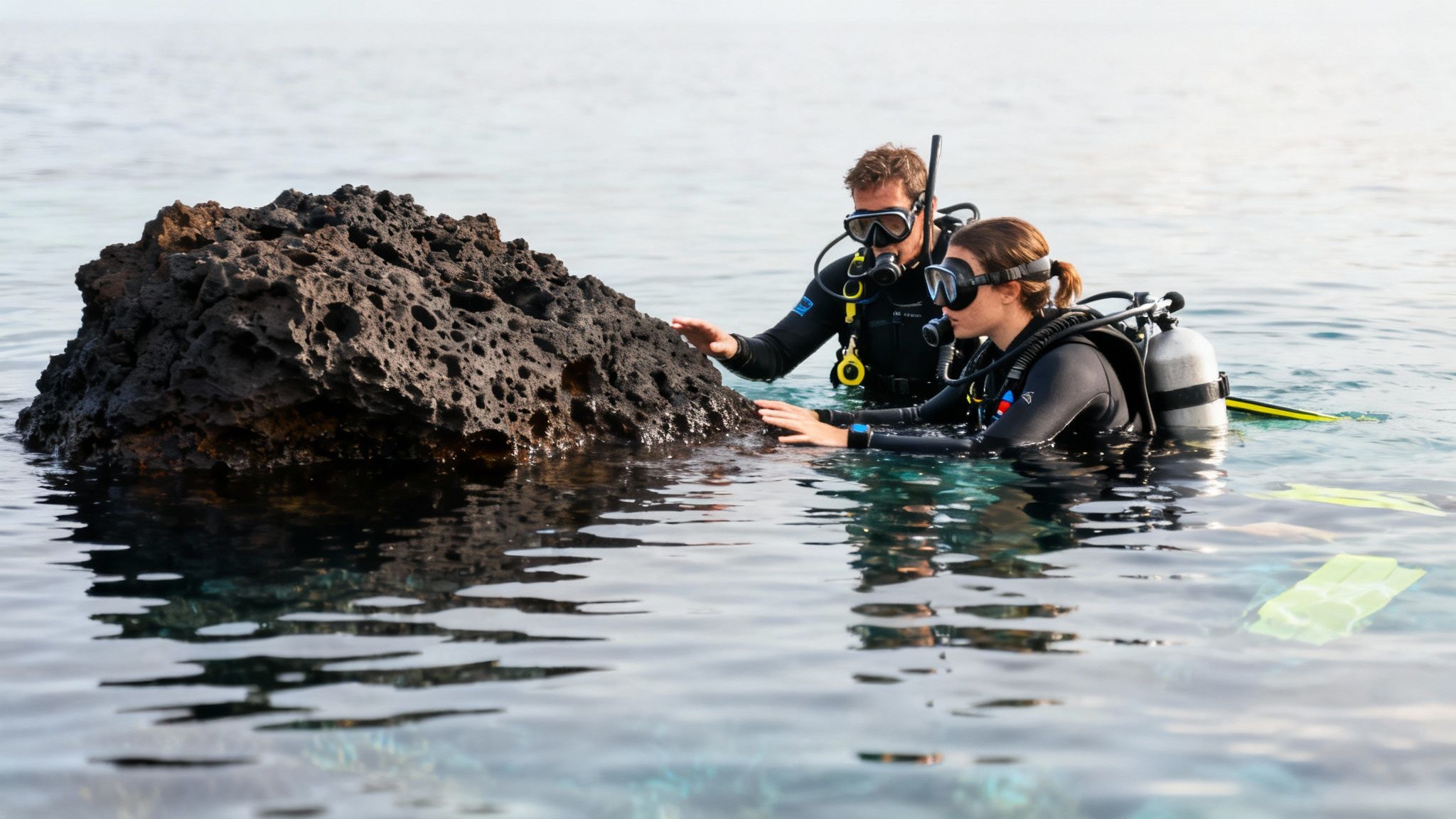
Sure, Kona is famous for its incredible "fun dives," but it’s also the perfect natural classroom for anyone looking to expand their skills and confidence in the water. Those same clear, calm conditions that make for a relaxing dive also create an ideal training ground. You don't just get to see world-class marine life; you can leave as a more capable and certified diver.
Advancing your skills opens up a whole new world. It's the difference between looking down at a reef and having the confidence to safely explore its hidden lava tubes or venture to its deeper, less-visited ledges. Think of every new certification as another key that unlocks more of the ocean’s secrets.
PADI Certifications in Paradise
As a full-service PADI dive center, Kona Honu Divers offers a whole range of courses, from your very first underwater breaths to highly specialized training. Our instructors are genuinely passionate about helping you hit your diving goals safely and—most importantly—while having a great time.
Whether you're starting from scratch or adding to your cert card collection, we've got you covered:
- PADI Open Water Diver: This is where it all begins. It’s the course that certifies you to dive with a buddy anywhere in the world.
- PADI Advanced Open Water Diver: Ready to go deeper? This course builds on your foundation with five adventure dives, including deep and navigation, opening up more challenging and rewarding sites.
- PADI Enriched Air (Nitrox): Learn how to safely use nitrox to get longer bottom times. More time means more moments to soak in the beauty of Kona’s reefs.
- Specialty Courses: We also offer courses like Deep Diver, Peak Performance Buoyancy, and Underwater Navigator to really fine-tune specific skills.
The best part? Completing a course here means your training dives are at some of the most beautiful sites for scuba diving Kona Big Island has. Imagine learning deep diving techniques along a dramatic volcanic drop-off or perfecting your buoyancy while gliding through a stunning lava archway. It beats the heck out of a quarry!
For the Experienced Diver Seeking a Challenge
Already certified and looking for an adventure that matches your logbook? Kona’s advanced dive sites deliver. We're talking thrilling challenges, from exploring deep canyons to navigating complex underwater topography. These environments demand a higher level of skill and awareness, but the payoff is absolutely worth it.
For divers ready to tackle these incredible sites, we run a premium advanced 2-tank trip designed specifically for you. This trip gets you to deeper, more remote locations that are way off the beaten path, promising unforgettable encounters and a true sense of exploration.
Your Kona Diving Questions Answered
Alright, we’ve covered a lot of ground—the what, where, and when of diving in Kona. But if you’re like most divers planning a trip, you’ve probably got a few more practical questions floating around. Let's get them answered.
Think of this as the final check-in before your big adventure. We'll tackle everything from the best time of year to jump in, to what you really need to pack, and whether that legendary manta dive is a good fit for you.
What Is the Best Time of Year for Scuba Diving in Kona?
Honestly, there’s no bad time to dive in Kona. The leeward coast keeps our waters protected and diveable all year long. That said, if you're chasing that bathwater-warm feeling, aim for late summer or early fall. From August to October, the water temps can climb to a balmy 80°F (27°C), and the seas are often glassy and crystal clear.
But if the thought of hearing the haunting songs of humpback whales as your dive soundtrack gives you goosebumps, you can't beat the winter months. Plan your visit between December and March for a truly magical underwater concert.
Do I Need to Be an Experienced Diver for the Manta Ray Night Dive?
Not at all! This is one of the biggest misconceptions about our world-famous Manta Ray Night Dive. You're not actually swimming around in the dark. Instead, you'll settle into a designated spot on the seafloor, hold on, and watch the show unfold just a few feet above you.
It’s a stationary, non-strenuous experience that’s just as breathtaking for a brand-new diver as it is for a seasoned pro. It's truly one of the safest and most incredible night dives on the planet, and our crew gives a detailed briefing to make sure everyone feels completely at ease.
What Marine Life Can I See Besides Manta Rays?
Oh, where to begin? The mantas might be the headliners, but Kona’s reefs are absolutely packed with life. On just about any dive, you’re likely to run into:
- Hawaiian green sea turtles (honu), either napping on the reef or getting a good scrub at a cleaning station.
- All sorts of moray eels, peeking out from their rocky hideouts.
- Masters of disguise like frogfish and the clever day octopus.
- Vibrant schools of endemic reef fish, including the iconic bright yellow tang.
And that's just underwater! Keep an eye out for pods of spinner dolphins on the boat ride. We also get lucky with visits from eagle rays, reef sharks, and every once in a while, a majestic whale shark will cruise by.
What Should I Pack for a Kona Dive Trip?
Keep it simple. The one thing you absolutely cannot forget is your certification card. After that, it’s all about comfort. Pack your swimsuit, some good reef-safe sunscreen, a hat, and sunglasses for your time on the boat.
We have excellent, well-maintained rental gear available, but feel free to bring your own rig if you prefer. An underwater camera is a fantastic idea to capture the memories, and I always recommend a light jacket or hoodie—it feels great to slip into one after an exhilarating night dive as we cruise back to shore.