
Picture this: you're descending into the warm, turquoise waters off the Big Island, and the powerful swells of the open Pacific simply disappear. That’s the magic of scuba diving in Kona. Here, the island's massive volcanoes act as a natural shield, creating an underwater paradise with conditions that are hard to beat anywhere in the world. With visibility often stretching past 100 feet and remarkably calm seas, it's no wonder Kona is a bucket-list spot for divers of every skill level.
Why Kona Is a Top-Tier Scuba Diving Destination
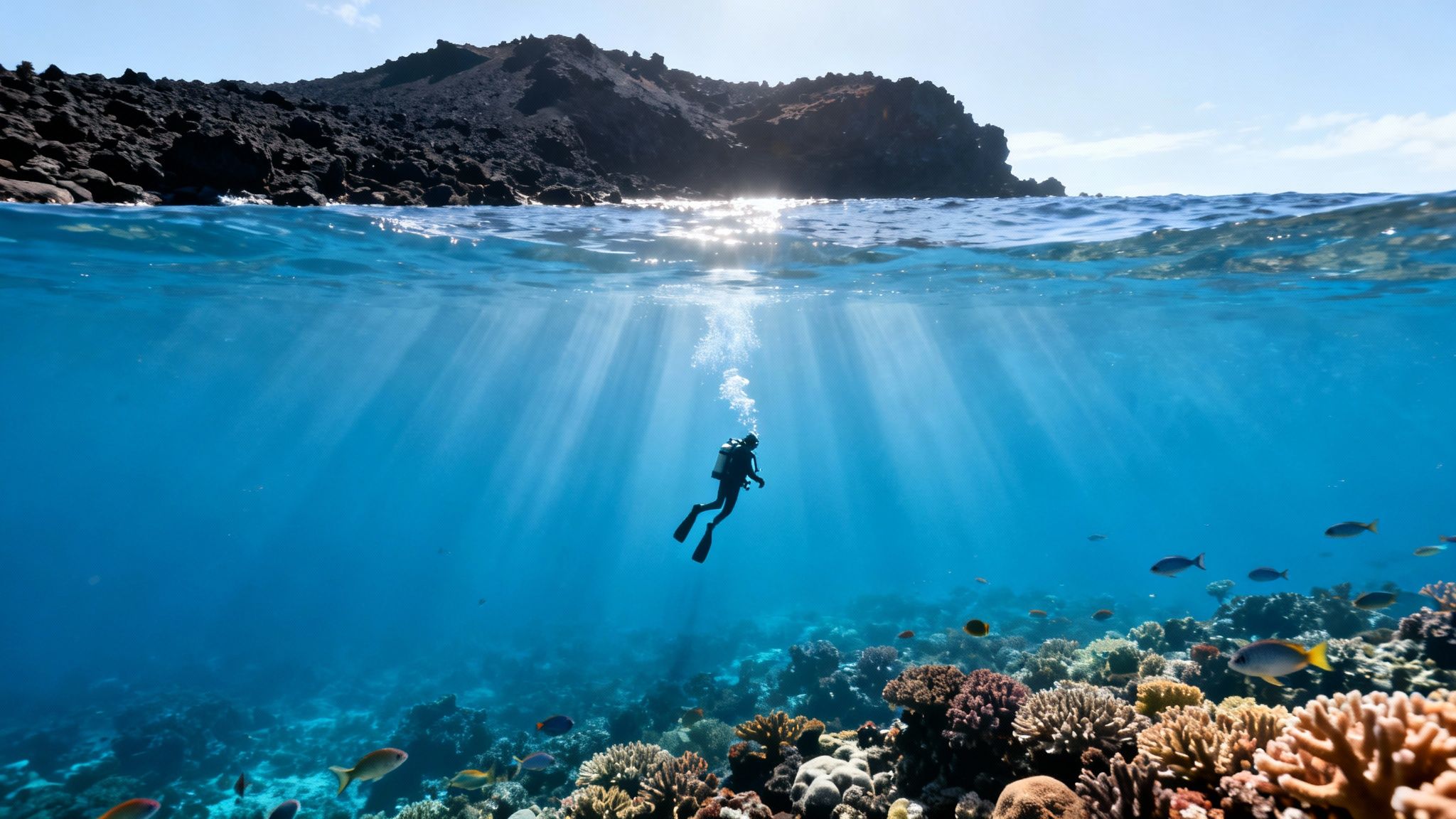
The secret to Kona’s incredible diving is simple geography. The dive sites are all tucked away on the western, or leeward, coast of the Big Island. The colossal volcanoes, Mauna Loa and Hualalai, stand as giant bodyguards, blocking the strong trade winds that hammer most of the other Hawaiian islands.
This creates a perfect pocket of calm, clear, and predictable water, making for fantastic diving conditions pretty much year-round. It means you get to spend your time exploring ancient lava tubes, swimming through dramatic archways, and gliding over pristine coral gardens without fighting against strong currents or rough surface chop.
A Hub for Underwater Adventure
Kona isn't just a great spot to dive; it’s a global hub. The area draws over 150,000 dive tourists annually and logs around 100,000 certified dives each year. Those numbers speak for themselves, showcasing Kona's reputation as a world-class destination. It has something for absolutely everyone, from a brand-new diver taking their first breaths underwater to a seasoned pro looking for a challenge. You can find everything from mellow reef tours to the heart-pumping thrill of a night dive. You can learn more about the incredible growth of Big Island scuba diving right here.
What truly makes Kona special, though, is the life you find beneath the surface. The Hawaiian Islands are a hotspot for endemism, which is a fancy way of saying that many of the creatures you'll see here exist nowhere else on the planet.
Some of the highlights you absolutely can't miss:
- Unique Marine Life: Get ready to meet Hawaiian green sea turtles (honu), schools of ornate butterflyfish, and the bizarre-looking (but very cool) frogfish that have evolved in total isolation for millennia.
- World-Famous Dives: Kona is home to two of the most iconic dives on the planet. The Manta Ray Night Dive is a mesmerizing underwater ballet, while the Blackwater Dive is a mind-bending trip into the deep to witness the ocean's largest daily migration.
- Diverse Topography: The island’s volcanic past has sculpted an incredible underwater landscape full of lava tubes, craters, and complex reef structures just waiting to be explored.
Choosing Your Guide to the Deep
With so many amazing sites, who you dive with really matters. A top-tier operator like Kona Honu Divers makes all the difference with their focus on safety, small groups, and genuinely unforgettable experiences. Their seasoned crew and custom-designed dive boats ensure every trip is comfortable, personal, and aimed at showing you the very best of Kona's underwater world.
Whether you're dreaming of swimming with gentle giants or exploring sun-drenched coral reefs, Kona delivers an adventure you won't soon forget. To see everything on offer, check out all the amazing Kona diving tours available.
The Legendary Manta Ray Night Dive
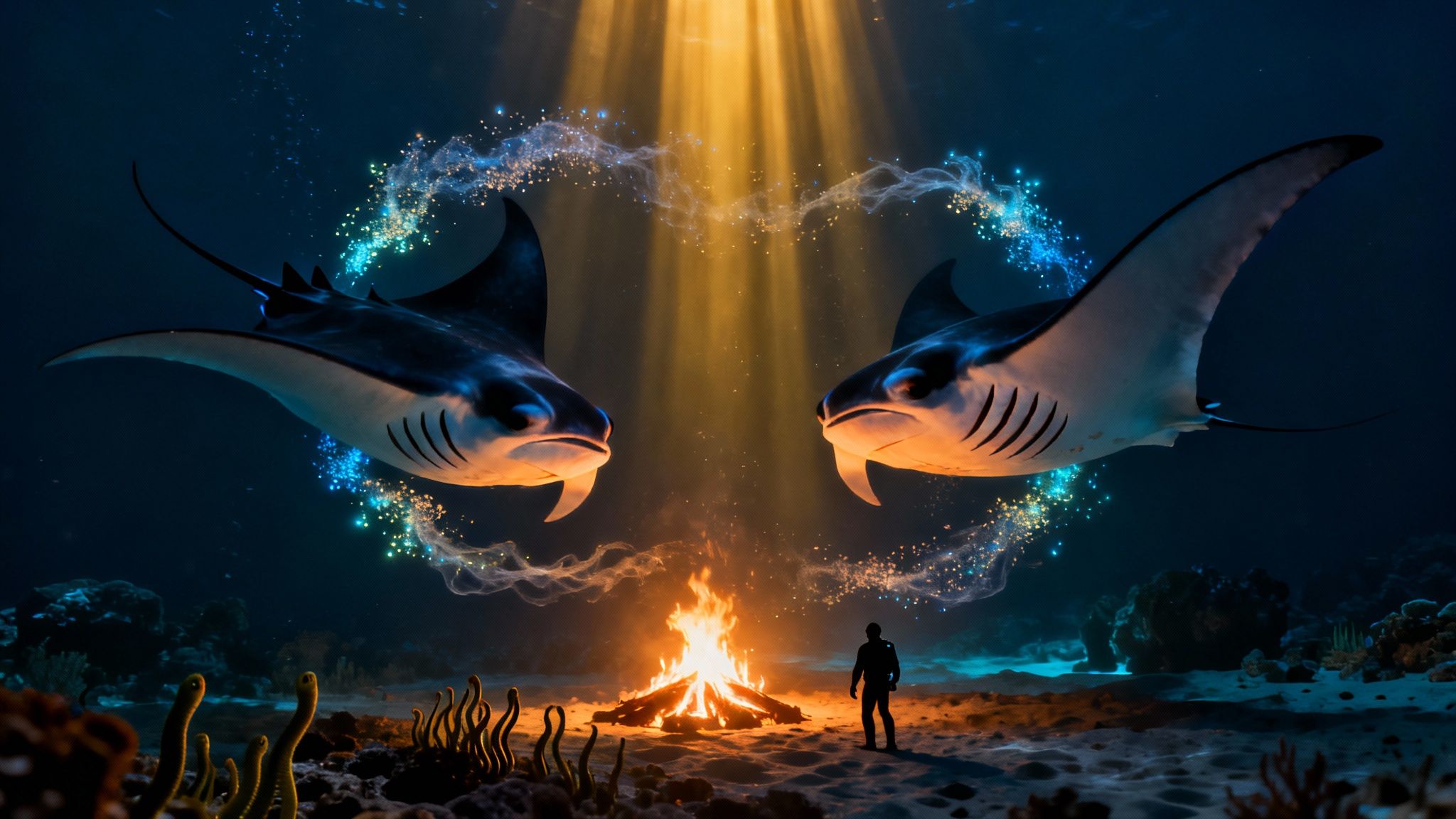
If there's one dive that puts Kona on the global map, it's the Manta Ray Night Dive. This isn't just another dive; it's a world-famous underwater ballet, an experience so breathtaking it has earned legendary status among divers. After the sun goes down, the ocean transforms into a stage for some of its most graceful giants.
The whole concept is brilliant in its simplicity. Dive operators create an underwater "campfire" by placing powerful, upward-facing lights on the ocean floor. These lights act like a magnet for plankton, the microscopic organisms that manta rays love to eat.
Before you know it, the gentle giants arrive for dinner. One by one, majestic mantas with wingspans sometimes exceeding 12 feet glide into the light beams, turning the water into a flurry of silent, graceful motion as they feast.
Why Garden Eel Cove is the Place to Be
While you can see mantas at a couple of sites, Garden Eel Cove is hands-down the superior choice for the dive tour. Tucked away near the airport, its protected location shields it from the big ocean swells. The result? Consistently calmer water and better visibility, which makes for a much more comfortable and enjoyable dive.
The setup at Garden Eel Cove is also ideal because of its better viewing area. Divers gather on the sandy bottom in a sort of natural amphitheater, giving everyone a front-row seat to the show without disturbing the environment. The surrounding reefs are also healthier, adding to the stunning backdrop. It's the perfect stage for the perfect manta encounter.
The iconic manta ray night dive off Kona's coast stands as one of the planet's most mesmerizing scuba experiences. Operations like Kona Honu Divers draw divers to spots such as Hoʻona Bay at Garden Eel Cove, where dozens of reef mantas perform barrel rolls to feed on plankton illuminated by hundreds of dive lights.
The Underwater Ballet
As the mantas show up, they begin a feeding ritual that looks like a beautifully choreographed dance. They perform effortless barrel rolls, swooping through the light with their mouths wide open to filter the plankton. It’s not uncommon for them to pass within inches of you, a truly humbling and awe-inspiring connection with these incredible animals.
This isn't a random occurrence. The Manta Pacific Research Foundation has been studying this population for years, identifying over 270 unique mantas and logging more than 10,000 sightings! It shows just how healthy and reliable this population is, with numbers often peaking in the summer months when the seas are calmest.
A typical trip with a top-notch operator like Kona Honu Divers is a two-tank affair. You'll start with a "golden hour" dive as the sun sets, letting you explore the beautiful reef in daylight. After coming up for snacks and watching a classic Kona sunset, you'll head back down for the main event. You can learn more in our complete guide to the Manta Ray Night Dive in Kona or book one of the best manta ray dive tours on the island.
Honestly, no scuba trip to Kona is complete without this dive. It’s an unforgettable spectacle that perfectly blends the thrill of a night dive with the serene beauty of these magnificent creatures.
Beyond the Mantas: Kona’s Other Must-Do Dives
The Manta Ray Night Dive is the undisputed headliner in Kona, and for good reason. But don’t make the mistake of thinking the show ends there. The waters off the Big Island are packed with world-class dives, from surreal night-time drifts in the deep ocean to sun-drenched explorations of volcanic reefs.
Once you’ve experienced the manta ballet, it's time to discover Kona's other signature night dive—a truly unique adventure that feels more like floating through outer space than diving in the ocean.
Plunging into Pelagic Magic: The Kona Blackwater Dive
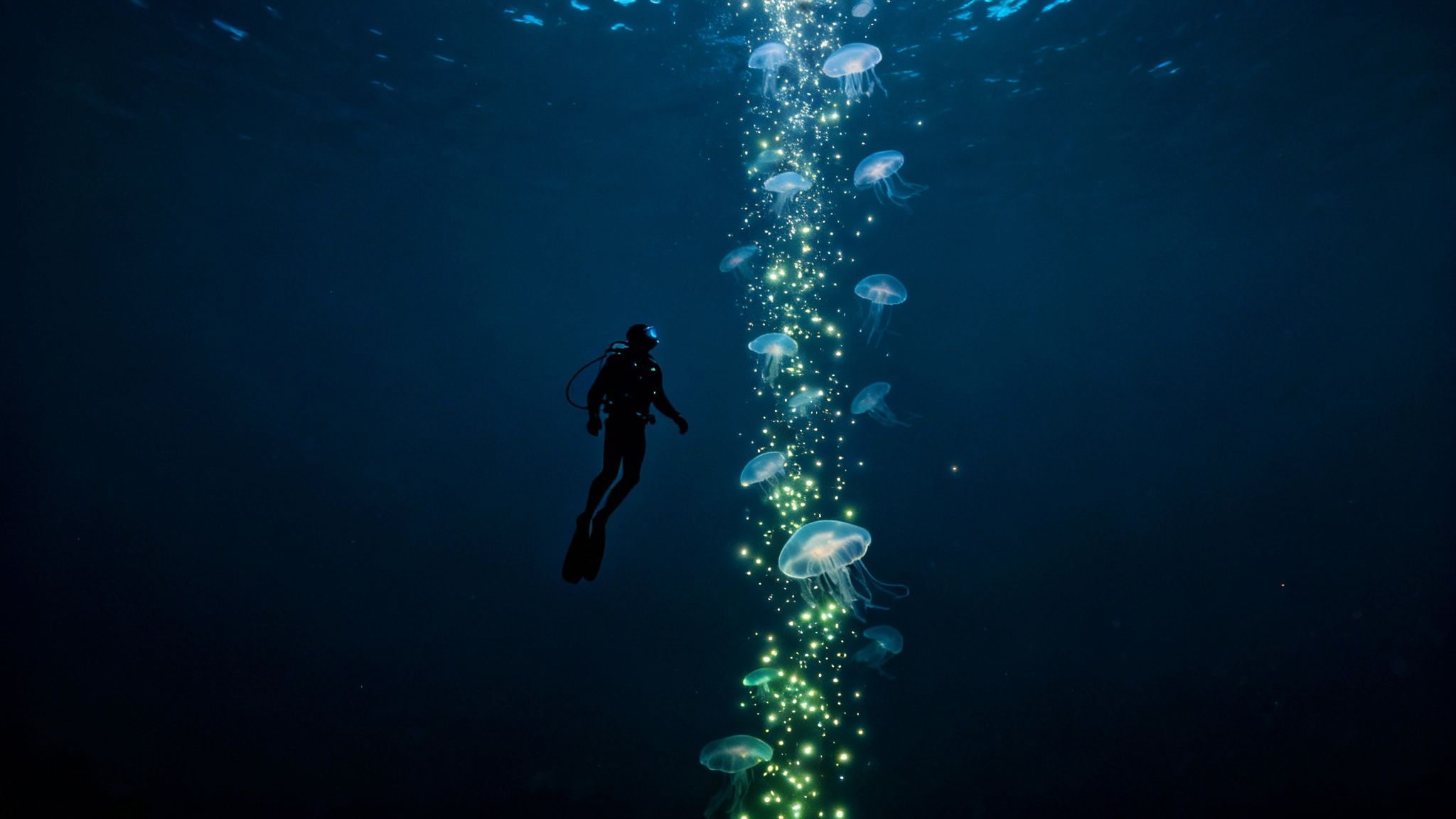
Picture this: you're suspended in the inky blackness of the open ocean, miles from shore, with thousands of feet of water below you. This is the Kona Blackwater Dive, and it's an experience that’s hard to put into words. It’s not about exploring a reef; it’s about witnessing one of the planet’s greatest migrations.
Every night, an incredible phenomenon occurs. Tiny, bizarre, and often translucent creatures rise from the crushing pressure of the deep to feed near the surface. Kona pioneered this type of dive, and it’s perfected here thanks to calm seas and deep waters just a short boat ride away. Divers are tethered to the boat, drifting along with the current as a parade of alien-like life floats past their lights.
Kona's blackwater dive, known as 'Pelagic Magic,' lets you witness the world's greatest vertical migration. This dive has become so significant that recreational divers have helped conduct nocturnal visual censuses for NOAA, documenting new species and refining methods for use in other locations. You can read more about how this pioneering Kona dive has influenced global exploration.
You’ll see things that defy imagination—larval fish that look nothing like their adult selves, pulsing comb jellies that shimmer with rainbows, and strange, beautiful squid. It’s an experience that will completely redefine what a night dive can be. Ready to drift into the abyss? Find out more about the Blackwater Night Dive.
Exploring Sunlit Reefs and Lava Tubes
When the sun comes up, Kona’s underwater world transforms. The volcanic origins of the Big Island have sculpted a dramatic sub-aquatic landscape of lava tubes, arches, and craters that are pure joy to explore.
Here's a taste of what you can expect on a typical day charter:
- Volcanic Topography: You'll navigate through ancient lava tubes, swim under massive archways, and explore the remnants of submerged craters. These formations create perfect hideouts for all sorts of marine life.
- Vibrant Coral Gardens: In the clear, sunlit shallows, healthy coral reefs are buzzing with activity. Keep an eye out for everything from schools of colorful butterflyfish to the elusive, camouflaged frogfish.
- Famous Local Residents: Encounters with Hawaiian green sea turtles, or honu, are almost a guarantee. You'll also likely spot octopuses, moray eels, and whitetip reef sharks napping on the sandy bottom.
Classic sites like Turtle Pinnacle and Pawai Bay are fantastic examples of Kona's daytime magic. They're known for their stunning topography and reliable wildlife sightings, ensuring no two dives are ever the same.
Deeper Dives for the Experienced Diver
If you’re an experienced diver looking to push your limits, Kona has you covered. The dramatic underwater terrain is perfect for deeper dives and more challenging navigation.
These advanced charters often head to sites further from shore or those requiring a deeper profile. The reward? Pristine, less-visited reefs and a better chance of spotting larger pelagic species. When you explore the deeper ledges and drop-offs, you might find yourself face-to-face with eagle rays, Galapagos sharks, or even the occasional scalloped hammerhead if you get really lucky.
These trips are ideal for divers with an Advanced Open Water certification (or higher) who are comfortable with deeper dives and eager to see another side of Kona. For those who want to take on a bigger challenge, check out the Premium Advanced 2-Tank Trip.
Planning Your Kona Dive Trip: A Seasonal Guide
One of the absolute best things about diving in Kona is that there's never really a "bad" time to jump in. The Kona coast is tucked away on the leeward side of the island, sheltered by massive volcanoes, which means the diving conditions are fantastic pretty much all year long.
That said, the seasons do bring subtle shifts to the underwater world. Knowing the difference between summer and winter here can be the key to planning a trip that perfectly matches what you want to see, whether that's peak manta action or the underwater symphony of humpback whales.
Kona's Two Main Dive Seasons
While the Big Island doesn’t have the dramatic seasonal changes you might find elsewhere, the ocean environment still follows two distinct cycles: a warm, calm summer and a slightly cooler winter that brings its own unique brand of magic.
The great news? The visibility is almost always spectacular. You can count on clear water, often ranging from 60 to over 100 feet, any time you visit. This means you'll always have a great view of Kona's famous lava tubes, vibrant reefs, and incredible marine life. For a deeper look at what each month holds, check out our detailed guide on the best season for diving in Kona.
Summer Diving (May – October)
Ask many seasoned Kona divers, and they'll tell you summer is the sweet spot. This is when the ocean is at its warmest and most serene, making for some truly blissful diving.
- Water Temperatures: The water is wonderfully comfortable, hovering between 77-80°F (25-27°C). Most divers find a simple 3mm wetsuit is more than enough to stay toasty.
- Sea Conditions: Think "glass." The seas are often incredibly flat, which means smooth, easy boat rides and effortless entries and exits from the water.
- Marine Life: Summer is prime time for manta rays. The calm, warm water often means more plankton, which is the dinner bell for these gentle giants. It's the best season for the world-famous Manta Night Dive. You'll also have a great shot at spotting pilot whales and playful spinner dolphins.
Winter Diving (November – April)
Winter offers a completely different, but no less incredible, experience. The water temperature drops a few degrees, but what you get in return is something truly special: the soundtrack of the humpback whales.
- Water Temperatures: The water cools down just a bit, settling in at 74-76°F (23-24°C). We definitely recommend a 5mm wetsuit to make sure you stay comfortable for the entire dive.
- Sea Conditions: Kona's coast is still well-protected, but winter can bring some bigger ocean swells. We're almost always able to get out and dive, but the boat ride can be a little more adventurous.
- Marine Life: The undisputed stars of the winter season are the humpback whales. While seeing them underwater is the holy grail (and very rare), you'll hear them. Their powerful and haunting songs echo through the water on nearly every dive, creating an unforgettable, soul-stirring experience.
Kona Diving Conditions Throughout The Year
To make planning a little easier, here's a quick look at how the two seasons stack up.
| Season | Average Water Temp | Typical Visibility | Marine Life Highlights |
|---|---|---|---|
| Summer (May – October) | 77-80°F (25-27°C) | 80-100+ ft | Peak manta ray activity, calmest sea conditions, pilot whales, dolphins. |
| Winter (November – April) | 74-76°F (23-24°C) | 60-100 ft | Humpback whale songs underwater, slightly cooler water, potential for larger pelagics. |
No matter when you decide to visit, Kona's underwater world is ready to put on a show. It really just comes down to what you want to see and hear.
What to Pack for Your Kona Dive Trip
Packing smart means you can spend less time worrying and more time diving. Aside from your usual vacation attire and dive gear, there are a few must-haves for a trip to Kona.
- The Right Wetsuit: This is key to your comfort. Bring a 3mm wetsuit for the warm summer months and a 5mm wetsuit if you're visiting in the winter. Staying warm lets you relax and enjoy every minute underwater.
- Reef-Safe Sunscreen: This is a big one. Hawaii has banned sunscreens with oxybenzone and octinoxate because they harm our delicate coral reefs. Always choose a mineral-based sunscreen that uses zinc oxide or titanium dioxide.
- Reusable Water Bottle: Staying hydrated is important, especially on the boat. A reusable bottle helps you do that while cutting down on single-use plastic.
- Seasickness Medication: Even on Kona's calm days, it's always better to be prepared. If you're even slightly prone to motion sickness, bring some along just in case.
Why Your Choice of Dive Operator in Kona is Everything
When you're planning a dive trip to Kona, it's easy to get caught up in the excitement of the famous Manta Ray Night Dive or the thrill of a Blackwater Dive. But here’s a piece of advice from years of experience: the single most important decision you'll make isn’t which site to visit first, but who you choose to take you there.
The right dive operator is the difference between a good trip and a truly unforgettable one. They're more than just a taxi service to a dive site; they are your guides, your safety net, and the key to unlocking the very best of Kona’s underwater world.
The Power of an Experienced Crew and Small Groups
The heart and soul of any great dive operation is its crew. You want a team with saltwater in their veins—people who know Kona's reefs like the back of their hand. An experienced crew, like the one we've built at Kona Honu Divers, understands the subtle shifts in currents and conditions, knows where the octopus hides, and can anticipate the behavior of marine life. This local knowledge is priceless.
It’s also why the best shops insist on small dive groups.
Being just one of a small handful of divers on a boat completely changes the dynamic. It means more personal attention from your guide, more space to enjoy the reef without fins in your face, and a much more relaxed, intimate experience.
This is especially true for new divers who might appreciate a little extra guidance, or for underwater photographers who need the freedom to compose that perfect shot.
The Advantage of a True Diver's Boat
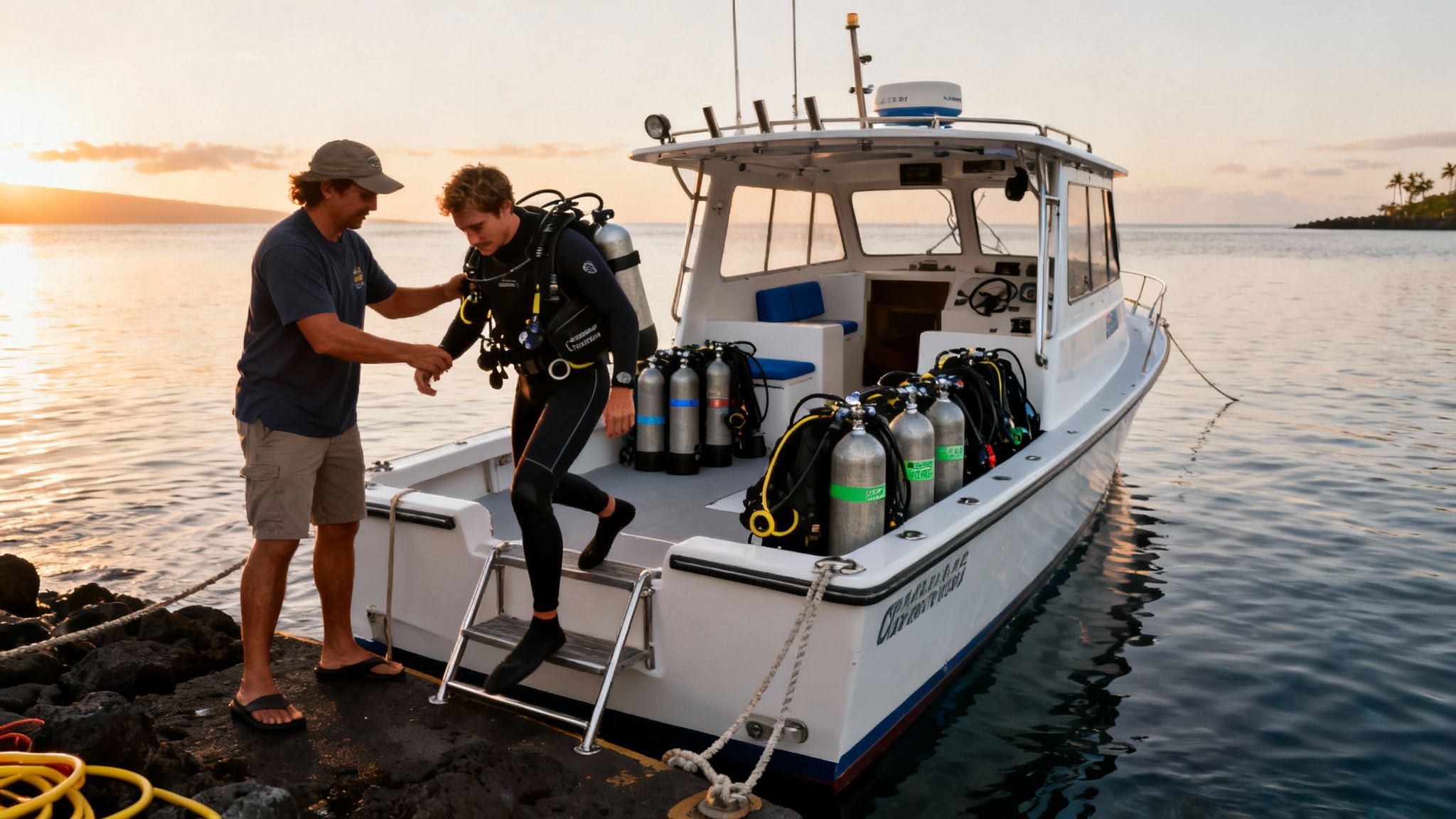
Let’s talk boats. Not all are created equal, and a vessel designed from the keel up for diving makes a world of difference in your comfort and safety. When an operator invests in a custom-built fleet, it’s a massive signal that they care about the diver experience.
Here’s what you should be looking for:
- A Spacious Deck: You need room to gear up without playing bumper cars with your fellow divers.
- Easy Entry & Exit: A wide swim step and sturdy, easy-to-climb ladders mean no struggling to get back on board.
- Creature Comforts: A clean marine head (that's boat-speak for a toilet!), a freshwater rinse, and plenty of shade are non-negotiable for a comfortable day on the water.
- Top-Notch Safety Gear: The boat should be well-maintained with oxygen, first aid kits, and communication devices all clearly visible and easily accessible.
When you're doing your research, pay attention to a company's website and online footprint. Often, the professionalism you see in their local Hawaii search engine marketing strategies is a good reflection of how they run their entire operation.
Value-Adds That Make a Good Trip Great
Beyond the essentials, the premier dive shops offer perks that genuinely elevate your trip. One of the biggest is offering free nitrox for certified divers. Breathing enriched air means you can extend your no-deco time—especially on your second or third dive of the day—and many divers find they feel less tired afterward. It lets you maximize every precious minute underwater.
A full-service shop also signals a deep commitment to the sport by offering a complete range of PADI courses. Whether you’re just starting your journey or you're a seasoned diver looking to add a new specialty, having expert instructors on staff is a huge plus.
In the end, it all comes down to reputation. A quality operator isn't just selling you a seat on a boat; they're investing in your safety, comfort, and a world-class adventure guided by people who are passionate about what they do.
When you invest in a quality operator, you're not just paying for a boat ride; you're investing in safety, comfort, and an expertly guided adventure. To see what a difference it makes, explore all of the amazing diving tours available.
Your Kona Diving Questions, Answered
Thinking about a dive trip to the Big Island? You’ve probably got a few questions. It’s a world-class destination, after all, and you want to get it right. To help you plan the perfect underwater adventure, we’ve put together answers to the questions we hear most often from divers getting ready to visit Kona.
Do I Need To Be Certified To Scuba Dive In Kona?
This is a big one, and the answer is great news for anyone curious about breathing underwater: no, you don't necessarily need a certification to discover Kona’s reefs. While being certified opens up more dive sites, beginners are absolutely welcome.
Most professional dive shops, including us at Kona Honu Divers, offer a program called PADI Discover Scuba Diving (DSD). It’s a fantastic, safe, and super fun way to try diving for the first time.
Here’s a quick rundown of how it works:
- A quick lesson: A certified PADI Instructor walks you through the essential safety rules and skills. No classrooms, just the important stuff you need to know.
- Practice in the shallows: You'll get comfortable with the gear and practice a few basic skills in calm, shallow water.
- A real dive: Once you're feeling good, your instructor will take you on a guided tour of a beautiful Kona reef, staying right by your side the whole time.
It’s the perfect way to experience the magic of the underwater world without committing to a full course. You get to see if scuba is your thing, and chances are, you'll be hooked!
What’s The Best Time Of Year To Go Scuba Diving In Kona?
Honestly, there’s no bad time to dive in Kona. The island’s leeward coast keeps our waters protected and diveable all year long. The "best" time really just depends on what you’re hoping to experience.
Summer (May – October):
- The Vibe: Think calm, glassy seas and warm water. We're talking temperatures between 77-80°F (25-27°C). It's absolute paradise.
- What You'll See: This is prime time for manta rays. The warm, plankton-rich water brings them out in full force, making the night dives truly spectacular.
Winter (November – April):
- The Vibe: The water gets a little cooler, dropping to around 74-76°F (23-24°C). A 5mm wetsuit is a good idea. The ocean can have bigger swells, but it rarely stops us from getting out.
- What You'll Hear: The humpback whales are back! While seeing one underwater is the holy grail for divers (and incredibly rare), you'll hear their haunting songs on nearly every dive. It's a truly unforgettable soundtrack.
So, you’re choosing between the calmest conditions and the magical sound of whale song. You really can’t go wrong.
What Kind Of Marine Life Can I Expect To See?
Kona's waters are like a giant, vibrant aquarium, packed with creatures you can only find here in Hawaii. It’s incredible what you can see on just a single dive.
On almost any given day, you can count on seeing:
- Hawaiian Green Sea Turtles (Honu): These gentle giants are everywhere, just cruising the reef.
- Eels: Keep an eye out for moray eels poking their heads out of the lava rock formations.
- Tons of Reef Fish: The reefs are buzzing with bright yellow tangs, butterflyfish, and parrotfish.
- Cool Critters: If you look closely, you might spot a well-camouflaged frogfish, a shy octopus, or all sorts of crabs and shrimp.
And of course, Kona is famous for its big animal encounters. The Manta Ray Night Dive is a must-do, and the Kona Blackwater Dive reveals some of the strangest and most wonderful creatures you'll ever see. Depending on the day, you might also run into spinner dolphins, whitetip reef sharks, or eagle rays. If you’re ready to see it for yourself, check out our full lineup of Kona diving tours and pick your adventure.
Is The Manta Ray Night Dive Safe For Beginners?
Absolutely. The Manta Ray Night Dive is incredibly safe, even for divers who just finished their Open Water certification. The entire experience is designed to be controlled, comfortable, and focused on the amazing show.
Here’s why it’s so safe:
- It’s shallow: The whole dive happens in a sandy area that’s only about 30-40 feet deep.
- You stay put: This isn’t a regular swimming dive. Divers simply kneel or lie on the sandy bottom around a set of lights. There’s no navigation to worry about.
- Expert supervision: You’ll get a thorough safety briefing before you even get in the water, and our divemasters and instructors are with you the entire time, making sure everyone is safe and having a great time.
It's one of the most well-managed and supervised dives you can do, making it a perfect (and unforgettable) first night dive for any new diver.
At Kona Honu Divers, our whole mission is to make your dive trip safe, fun, and something you’ll talk about for years. With our experienced crew, custom-built boats, and a commitment to small groups, you’re guaranteed to have an amazing time exploring Kona's underwater world.