
If you're looking for a world-class scuba destination, Kona on the Big Island needs to be at the very top of your list. It’s famous for some of the most spectacular underwater adventures you can find anywhere, thanks to its crystal-clear waters, mind-blowing marine life, and unique volcanic landscapes. The massive volcanoes on the island act as a natural shield, keeping the waters calm and making Kona a perfect spot for divers of all skill levels.
Your Essential Guide to Scuba Diving in Kona
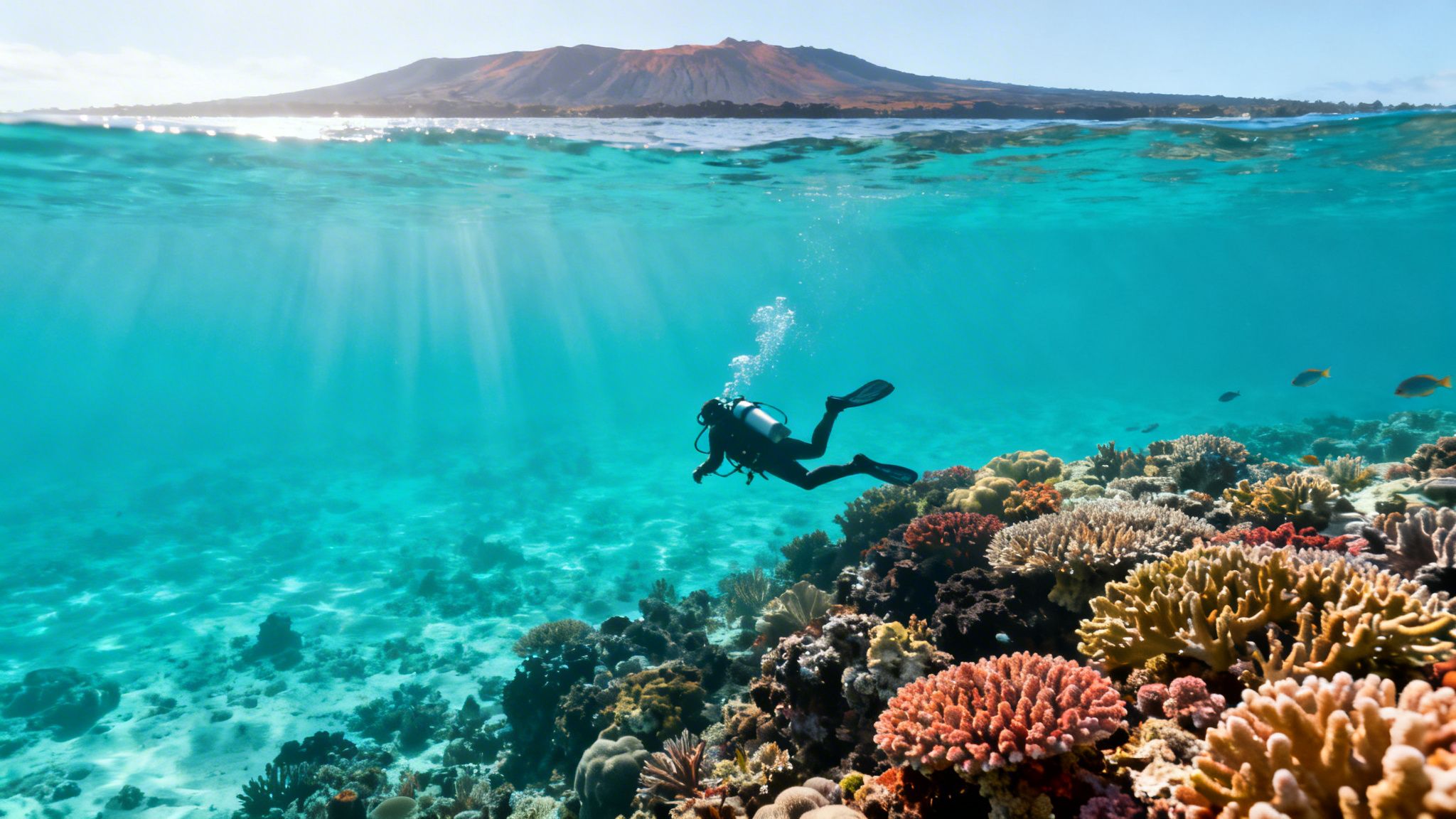
Welcome! You've found your way to the ultimate guide for exploring Kona's underwater paradise. Tucked away on the Big Island's western shore, this place is a diver's dream, and I’m here to walk you through everything that makes it so special.
So, what's Kona's secret? It's all about geology. The massive volcanoes, Hualālai and Mauna Loa, block the strong trade winds, creating a calm, protected coastline. The result is water that's often unbelievably clear—we're talking visibility that can easily exceed 100 feet—and a thriving marine ecosystem that has to be seen to be believed.
What to Expect From This Guide
In this guide, we'll get into the nitty-gritty of what sets Kona apart from other dive destinations. I'll give you an inside look at the incredible biodiversity just below the surface, where you can swim with Hawaiian green sea turtles, navigate ancient lava tubes, and, of course, experience the legendary manta ray night dive.
Here's a taste of what we’ll cover:
- Premier Dive Sites: I’ll introduce you to the must-see spots, from peaceful coral gardens to dramatic underwater cliffs carved by ancient lava flows.
- Iconic Experiences: We’ll talk about the bucket-list dives you can only do here, like the world-famous Manta Ray Night Dive and the surreal Blackwater Dive.
- Practical Planning Tips: You’ll get all the essential info for planning your trip, including the best seasons to visit and how to pick the perfect dive operator for your needs.
Kona isn't just another place to go diving—it’s a complete underwater experience. The mix of sheltered waters, volcanic formations, and a high concentration of species you won't find anywhere else on Earth creates a truly unique environment.
This guide is designed to give you all the knowledge you need to make your Kona adventure unforgettable. For more inspiration on underwater travel, you can find great resources on global Diving and Snorkeling hotspots. Whether you're a brand-new diver looking to get certified or a seasoned pro hunting for a new challenge, Kona has something incredible waiting for you. To get a feel for what it's really like down there, check out our overview of Kona scuba diving and see what adventures are in store.
Why Kona is Hawaii’s Premier Diving Destination
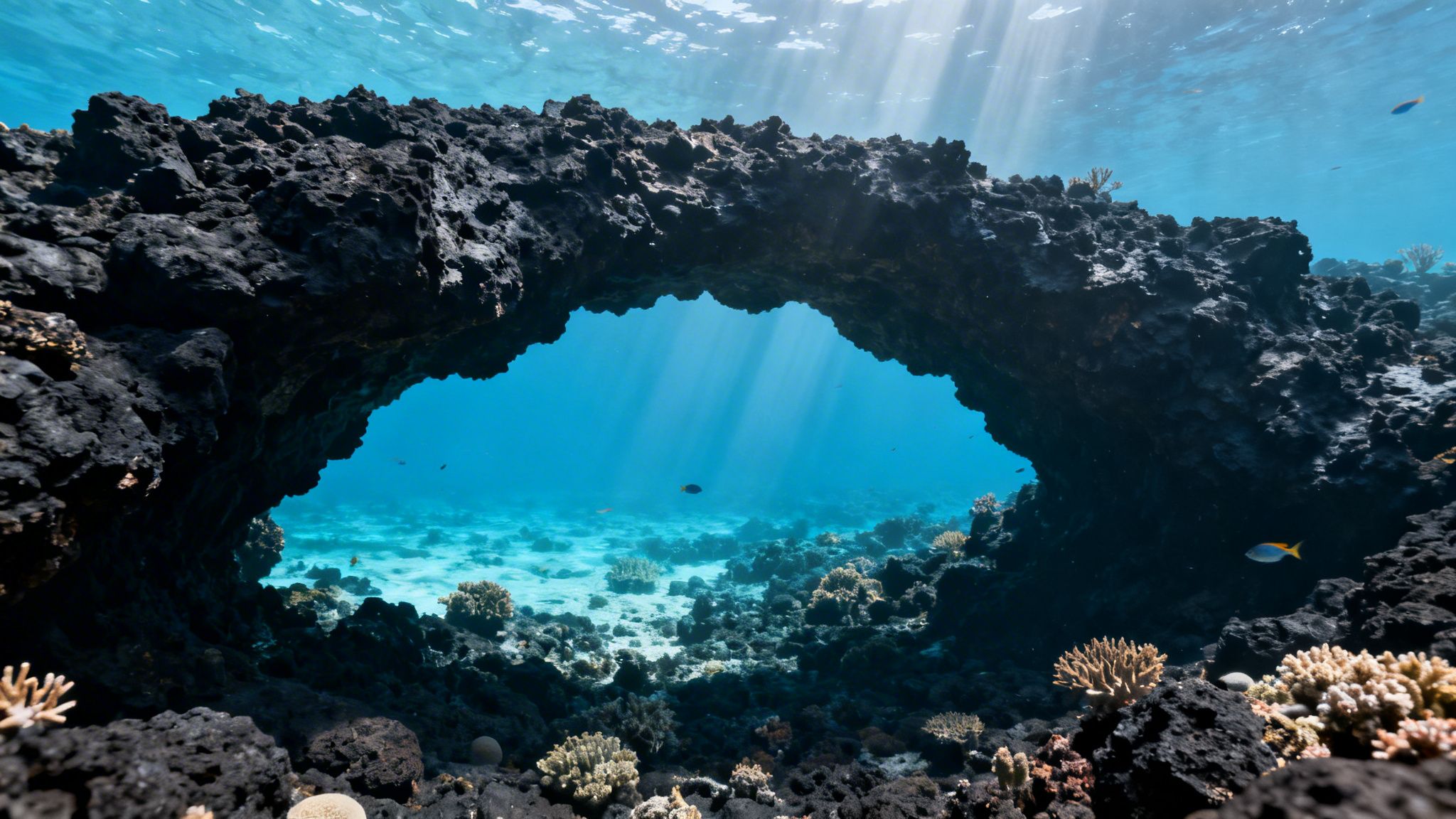
So, what makes scuba diving Kona Big Island a bucket-list experience for divers worldwide? While every Hawaiian island has its ocean charms, Kona holds a powerful, natural advantage that sets it apart. It’s a diver’s paradise, literally shaped by volcanoes.
The secret ingredient is the sheer size of Mauna Loa and Hualālai. These massive volcanoes create a huge natural barrier on the island's western (leeward) coast, shielding it from the powerful trade winds that often churn up the seas elsewhere in Hawaii.
What does that mean for you? Exceptionally calm and predictable water, nearly every single day. Less rocking and rolling on the boat, fewer canceled trips, and more time spent peacefully exploring the world below the surface.
Unbeatable Water Clarity
Those calm seas are the reason Kona is famous for its incredible visibility. With hardly any wind or waves to kick up sand and sediment, the water stays amazingly clear. It’s not uncommon to have visibility well over 100 feet, giving you a breathtaking, high-definition view of everything.
This isn’t just about pretty pictures, either. Crystal-clear water makes for safer, more relaxed dives. You can easily see your buddy, keep an eye on the group, and spot marine life from way off in the blue. It’s why Kona is a fantastic year-round destination—great conditions are the norm, not the exception.
The west coast of Hawaii's Big Island boasts the world's highest rate of endemism for marine fish and invertebrates, highlighting its global ecological importance. Divers here consistently enjoy 80 to 100-foot visibility, even when conditions are rough elsewhere, ensuring calm and clear diving throughout the year. For an in-depth look at Kona's unique marine environment, you can explore detailed insights on DAN.org.
A Hotspot For Marine Biodiversity
Beneath that calm, clear surface is an ecosystem that’s absolutely electric with life. Kona's waters are a global hotspot for endemic species—creatures you won't find anywhere else on the planet. The island's volcanic past has left behind a dramatic underwater landscape that provides the perfect home for all this life to flourish.
You get to explore a world built by lava:
- Intricate Lava Tubes: Ancient lava flows have created a maze of natural arches, caverns, and swim-throughs that are a blast to navigate.
- Vibrant Coral Reefs: For a geologically young island, Kona has stunningly healthy coral gardens, which in turn support huge schools of colorful reef fish.
- Dramatic Underwater Cliffs: The volcanic slopes don't just stop at the shore; they plunge into the depths, creating steep drop-offs that attract bigger pelagic animals.
This trifecta of perfect conditions, incredible underwater terrain, and unique marine life is what makes Kona the undisputed king of diving in Hawaii. You can learn more about what makes diving in Kona so special and start planning your own adventure.
Kona’s Unforgettable Underwater Experiences
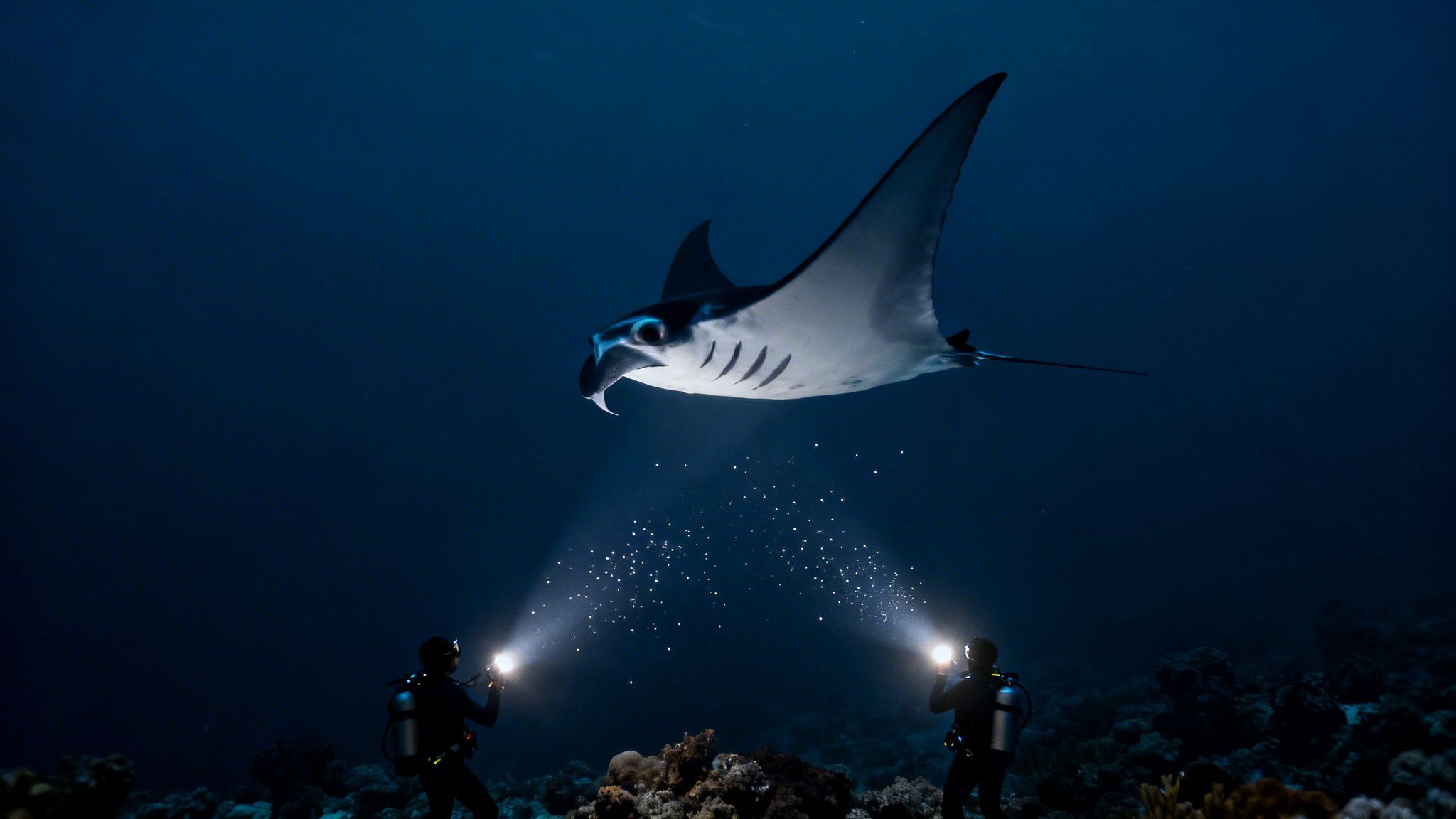
Sure, Kona's daytime reef dives are incredible. But the real magic happens after sunset. The entire underwater world transforms, revealing the kind of experiences that put scuba diving Kona Big Island on every diver's ultimate wish list.
We’re talking about graceful giants performing an underwater ballet and strange, otherworldly creatures rising from the abyss. These are the dives you'll be telling stories about for years to come.
The World-Famous Manta Ray Night Dive
Let's start with the headliner: the Manta Ray Night Dive. Picture this: you're settled on the ocean floor, and massive manta rays—some with wingspans stretching over 12 feet—glide, swoop, and somersault just inches above your head. It’s less of a dive and more of a mesmerizing, silent ballet.
Kona is hands-down the most reliable place on Earth to see manta rays. The success rates are mind-boggling, with some spots reporting encounters over 90% of the time. This consistency has made it a global phenomenon, and you can learn more about why it’s a must-do in our guide to the manta ray night swim.
There are a couple of places to see the show, but from our experience, one spot consistently delivers a better night.
Garden Eel Cove: The Superior Manta Experience
While other locations are popular, we find that Garden Eel Cove (lovingly nicknamed Manta Heaven) offers a superior experience. It’s more sheltered from ocean swells, which means calmer, more comfortable conditions for divers. Just as importantly, the underwater "campsite" has a better viewing area and the surrounding reefs are healthier, making for a richer, more vibrant dive from the moment you hit the water.
Venturing into the Abyss: The Blackwater Dive
If you're after an adventure that feels like a journey to another planet, you have to try the Kona Blackwater Dive. This is not your typical reef dive. Here, you drift in the vast, open ocean, tethered to the boat and suspended over thousands of feet of inky black water.
You're there to witness one of the largest migrations on Earth. Every single night, a hidden universe of bizarre and beautiful creatures rises from the crushing depths to feed near the surface. You'll float alongside translucent larval fish, glowing jellies, and alien-like cephalopods—things that most people will never, ever see. It’s a profoundly humbling and surreal experience.
Classic Daytime Reef Dives and Advanced Adventures
Of course, the classic daytime reef dives are what built Kona’s reputation. The coastline is packed with incredible sites featuring:
- Lava Tubes and Arches: You get to explore dramatic underwater landscapes carved out by ancient volcanic flows.
- Abundant Turtle Sightings: Seeing Hawaiian green sea turtles (honu) is an everyday occurrence here, and it never gets old.
- Vibrant Coral Gardens: Kona is home to healthy reefs packed with endemic fish you can't find anywhere else in the world.
For those with a few more dives under their weight belt, Kona offers some truly thrilling challenges. Our advanced diving opportunities will take you to deeper reefs and remote underwater pinnacles. These sites often have more complex topography and different marine life, rewarding you with pristine conditions and far fewer divers.
Signature Kona Dive Experiences
To help you decide which adventure is right for you, here's a quick comparison of Kona's most famous dive tours.
| Dive Experience | Best For | Key Highlights | Difficulty Level |
|---|---|---|---|
| Manta Ray Night Dive | Bucket-list seekers, photographers | Graceful manta rays gliding inches away | Beginner-Friendly |
| Blackwater Night Dive | Adventurous divers, photographers | Bizarre, alien-like deep-sea creatures | Intermediate |
| Daytime Reef Dive | All divers, families, beginners | Lava tubes, turtles, colorful fish | Beginner-Friendly |
| Advanced Charter | Experienced divers, thrill-seekers | Deeper sites, remote pinnacles, fewer crowds | Advanced |
Whether you are just getting started or are a seasoned pro, there's a perfect underwater adventure waiting.
Choosing the Best Dive Operator in Kona
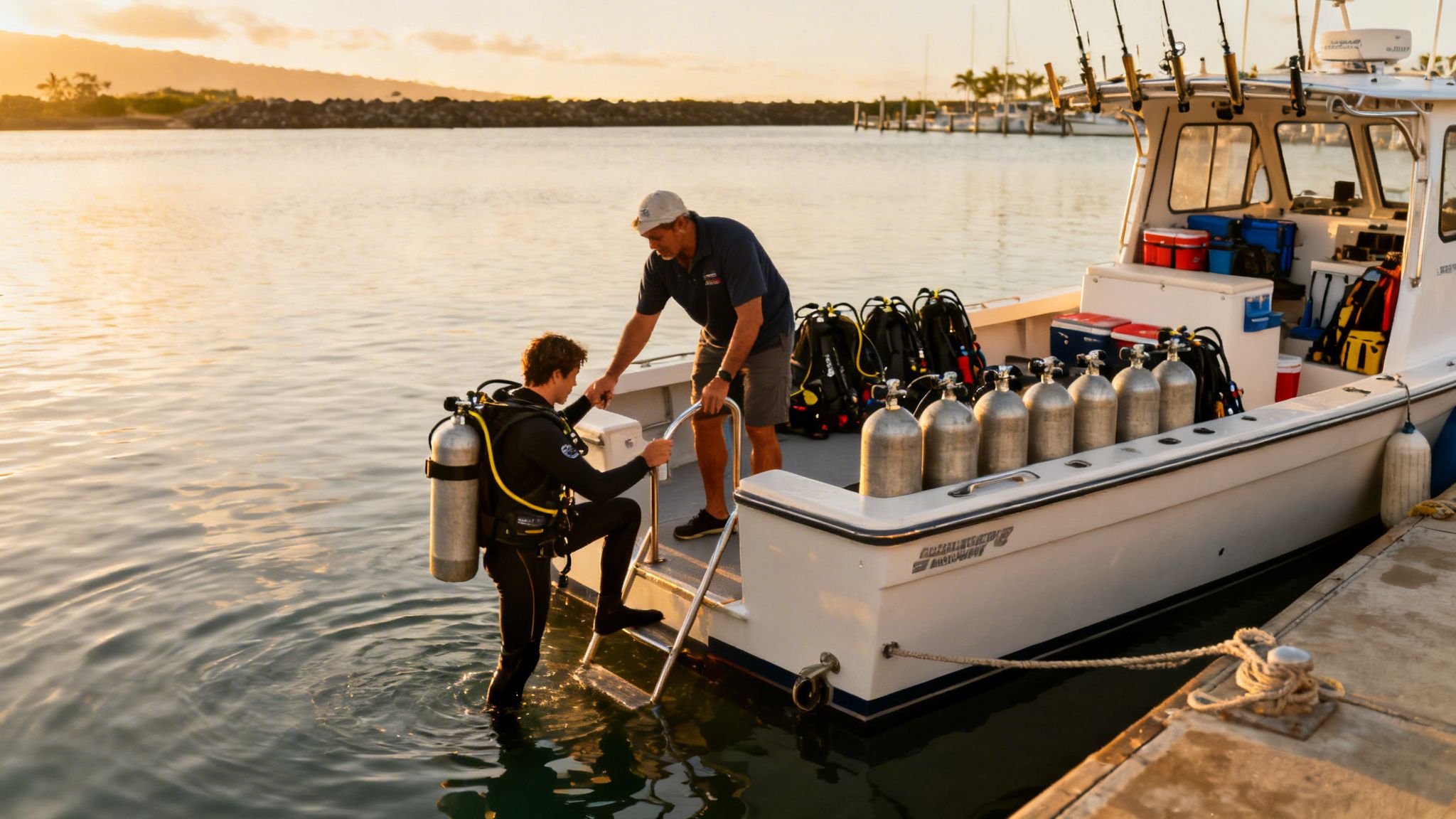
Let's be honest, the dive operator you choose will either make or break your entire trip. This is probably the single most important decision you'll make when planning your scuba diving Kona Big Island adventure. A great operator doesn’t just shuttle you to a dive site; they curate an entire experience built on safety, deep local knowledge, and a genuine love for the ocean.
Think about it: your operator determines the quality of your gear, the comfort of the boat, and the expertise of the guide leading you through an unfamiliar underwater world. A top-notch company puts your safety first, making sure every piece of equipment is flawlessly maintained and every dive plan is rock-solid. This creates a relaxed, confident vibe that lets you forget everything else and just soak in the magic unfolding around you.
What Sets a Premier Dive Shop Apart
So, how do you spot the best in a sea of options? A few things separate the truly great operators from the merely good ones. You’re looking for a company with a stellar reputation, a deeply experienced crew, and a real commitment to both their divers and the delicate marine environment.
Here are the non-negotiables to look for:
- Safety Record and Experience: You want a crew that knows these waters like the back of their hand. An experienced team, like ours at Kona Honu Divers with over 200 years of combined industry experience, brings an unmatched level of safety and site knowledge to every single dive.
- Quality of Boats and Gear: Your day starts on the boat, so it better be a good one. Look for custom-built vessels made for diving, not just converted fishing boats. This means more space, easier entry and exit from the water, and just a more comfortable trip. High-quality rental gear is just as critical.
- Small Group Sizes: Avoid the "cattle boats" at all costs. An operator focused on small groups can provide a much more personal and attentive experience. It's safer, less stressful, and allows you to build a real connection with your guide and fellow divers.
- Commitment to Conservation: The best operators are guardians of the reef. They actively participate in conservation and teach divers how to interact with marine life respectfully, ensuring these incredible ecosystems are here for generations to come.
A great dive operator doesn't just show you the reef; they help you understand and appreciate it. Their passion for the ocean is infectious, turning a simple dive into a profound connection with Hawaii's underwater world.
Why Kona Honu Divers is the Top Choice
We’re proud to say that Kona Honu Divers consistently stands out as the premier choice for scuba diving in Kona. We live and breathe every quality a world-class operation should have, starting with our passionate and incredibly knowledgeable crew. Every guide isn't just a certified pro; they're a marine life nerd who can't wait to share what they know with you.
Our custom-built dive boats, the Honu One and Honu Two, were designed by divers, for divers. That means every detail is geared toward your comfort and convenience. Combine that with our dedication to small group sizes, and you've got a recipe for an unforgettable day on the water.
On top of all that, we offer perks that make a real difference, like free nitrox for certified divers. This means you get longer bottom times and shorter surface intervals—more time exploring! Our commitment to safety and service is something we take personally, and it shines through in what our guests have to say. If you're weighing your options, our guide on choosing a Kona diving company offers even more tips.
See what fellow divers have to say about their experiences:
Ready to experience the best scuba diving Kona Big Island has to offer? Come dive with a team that’s completely dedicated to making your adventure safe, fun, and something you’ll be talking about for years to come.
Planning Your Kona Dive Trip Checklist
A great dive trip to Kona is all about smart preparation. If you get the details sorted out before you leave home, you can spend less time stressing and more time enjoying the incredible underwater world waiting for you here on the Big Island.
I find it helps to think about planning in a few simple stages. First, nail down the big stuff—flights, somewhere to stay. Next, shift your focus to the diving itself: your certs, what gear to bring, and what to book. Finally, think about the day-to-day things that make for a comfortable trip. Breaking it down like this keeps it from feeling overwhelming.
Essential Pre-Trip Logistics
Before you even think about packing your fins, there are a few key things to get squared away. Getting these right from the start makes everything else fall into place.
- Accommodations: If you want to make your dive mornings as easy as possible, look for a place to stay near Honokohau Harbor. This is where most of the dive boats leave from, including ours at Kona Honu Divers, so you’ll be just a few minutes from the action.
- Certifications: Make sure you have your certification cards handy, whether they're the old plastic kind or on your phone. Some of our more unique dives require specific training. For example, the mind-blowing Kona Blackwater Dive isn't for beginners; it needs an Advanced Open Water certification and really solid buoyancy control because you're drifting in the deep open ocean at night.
- Dive Operator: This is a big one—book your diving tours as far in advance as you can, especially if you're coming during a busy season. The best operators who keep their groups small tend to fill up fast, and you don't want to miss out on something special like the manta dive.
Packing For Your Kona Dives
Figuring out what to pack versus what you can just rent here is the key to avoiding overweight baggage fees. Here’s a quick rundown to help you pack smart.
What to Bring:
- C-Cards & Logbook: These are non-negotiable for proving your experience level.
- Reef-Safe Sunscreen: This is incredibly important. Regular sunscreens have chemicals that bleach our beautiful coral reefs. Please, help us protect them by choosing a mineral-based sunscreen.
- Reusable Water Bottle: The Hawaiian sun is no joke, and dehydration is a diver's enemy. A reusable bottle is the best way to stay hydrated and cut down on plastic waste.
- Personal Dive Gear: Most experienced divers bring their own mask, fins, and dive computer. There’s nothing like the comfort and reliability of your own gear.
What to Rent:
You can save yourself a lot of hassle by renting the heavy, bulky items. A good shop like Kona Honu Divers will have meticulously maintained BCDs, regulators, and wetsuits ready for you. It just makes travel so much easier.
A Quick but Critical Safety Note: Your health is everything. Always, always respect your dive computer's no-fly time after your last dive. The standard recommendation is to wait a conservative 18-24 hours before getting on a plane to avoid any risk of decompression sickness.
Kona's Place in the Diving World
It’s no secret that dive travel is booming, and Kona is a huge part of that. The U.S. diving tourism market is expected to grow from USD 1,101.6 million in 2025 to a staggering USD 1,585 million by 2035.
This isn't just about numbers; it reflects a real passion for exploring the ocean responsibly. Kona is at the heart of this, known for offering sustainable, unforgettable marine encounters that bring divers here from every corner of the globe. You can read more about the Big Island dive industry's role in this growth.
Follow this simple checklist, and you’ll be all set for the world-class scuba diving Kona has to offer.
Your Kona Diving Questions, Answered
Planning a dive trip always comes with a few questions, even for seasoned divers. To make sure you feel completely prepared for your scuba diving Kona Big Island adventure, we’ve put together answers to some of the most common things people ask us.
Think of this as a quick chat with your local divemaster before you even pack your bags. We want you to have all the info you need to hit the water with confidence.
What’s the Best Time of Year to Dive in Kona?
Honestly, there’s no bad time to dive in Kona, which is one of the best things about this place. The massive volcanoes on the Big Island act as a natural shield, protecting the Kona coast from the gusty trade winds. The result? The water is almost always wonderfully calm.
If you love warm water, summer (June to August) is fantastic. The ocean is at its warmest and usually flat as glass. But winter (December to February) has its own special magic. This is when the Humpback Whales are here, and hearing their songs echo through the water during a dive is an experience you will never, ever forget.
So it really just comes down to personal preference. Do you want the warmest water, or do you want to share the ocean with singing whales?
Do I Need a Scuba Certification to Dive in Kona?
For most of our boat dives, yes, you'll need to be a certified diver. To explore the incredible lava tubes, vibrant reefs, and, of course, join our famous night dives, you'll need to show us your certification card from a recognized agency.
But what if you're not certified? Don't worry, you can still get in on the action! Our PADI Discover Scuba Diving program is designed for beginners. It’s a chance to try real scuba diving in a safe, shallow environment with one of our instructors right by your side. It's the perfect way to see if diving is for you.
What Kind of Marine Life Will I See in Kona?
Kona is bursting with life. Seriously, the biodiversity here is off the charts. On just about any dive, you're almost guaranteed to see Hawaiian green sea turtles (honu) cruising by or just chilling on the reef. We often see playful spinner dolphins from the boat, and if you're lucky, they might even zip past you underwater.
The reefs are covered in fish you can only find here in Hawaii—they're endemic to our islands. Expect to be surrounded by schools of butterflyfish, see the uniquely patterned triggerfish, and spot countless other colorful critters. And then there are the headliners: the graceful giants on the Manta Ray Night Dive and the weird, wonderful creatures that rise from the deep on the Kona Blackwater Dive.
Is the Manta Ray Night Dive Really Safe?
Yes, 100%. When you dive with a professional, experienced crew, the manta ray night dive is an incredibly safe and well-organized experience. We have a system that's been perfected over many years.
The entire dive happens in a specific, well-lit area. Your job is to relax on the bottom and just enjoy the show. These mantas are gentle giants—they have no teeth, barbs, or stingers. They are filter feeders, and they’re only interested in the plankton attracted to our lights. Our expert guides are in the water the whole time, making sure everyone stays safe and has an unforgettable, worry-free encounter.
Ready to see Kona's underwater world for yourself? Kona Honu Divers has guided tours for every diver, from beginner to expert. Explore all our diving tours and book your adventure today