
The clearest water can still be the wrong place to dive. Kona's volcanic coastline puts ledges, steep relief, and confined passages close together, so an inviting view from the surface doesn't tell you whether the entry, depth, or exit suits your group. For scuba diving in Kona, choose the format first, then let the forecast decide the site.
That approach leaves room for the things that make Kona special without pretending the ocean runs on a booking calendar. Mantas follow food, swell changes access, and a comfortable morning reef dive can be a better choice than a demanding night trip you aren't ready to enjoy.
Pick the Kona Dive That Fits Your Group
Choose the trip your least-comfortable participant can realistically enjoy. A certified buddy, a non-diving partner, and a child who's nervous after dark don't necessarily belong on the same underwater plan. Sharing a boat is useful only when the surface supervision and in-water arrangements work for everyone.
Read the main limit before the highlight. The attraction gets you interested, but the limitation decides whether you should book.
Which Kona dive fits the group
| Trip | Best for | Usual profile | Main limit |
|---|---|---|---|
| Manta ray night dive | Certified divers wanting big animals | Night dive under lights, Garden Eel Cove preferred | Sightings follow plankton and aren't guaranteed |
| Manta night snorkel | Non-divers and mixed families | Surface viewing with flotation support | No bottom time and a shared light field; confirm age eligibility |
| Blackwater night dive | Comfortable open-ocean divers | Blue-water night drift with no reef reference | Higher task loading and no wall to follow |
| Two-tank morning boat | Most certified visitors | Reefs, tubes, and arches within certification limits | Site is chosen for that day's sea state |
| Shore dive | Confident buddies with a local plan | Lava-shelf entries such as Old Kona Airport | Surge, current, and the exit decide go or no-go |
| Introductory dive | Uncertified guests | Shallow, instructor-led | Not a substitute for blackwater or advanced sites |
Why the lava changes your choice
Kona isn't a broad sand shelf with interchangeable reef stops. The USGS description of Kona's submarine geology identifies basaltic volcanic terrain, steep scarps, and large offshore blocks, the geological setting behind the coast's dramatic underwater relief.
For a diver, that means a short horizontal swim can change the depth, available light, and water movement. A wall corner may feel different from the sheltered reef you just left. An opening that looks roomy from outside can become uncomfortable when surge pushes you toward its roof.
The lava architecture is part of the attraction, but it also demands disciplined positioning.
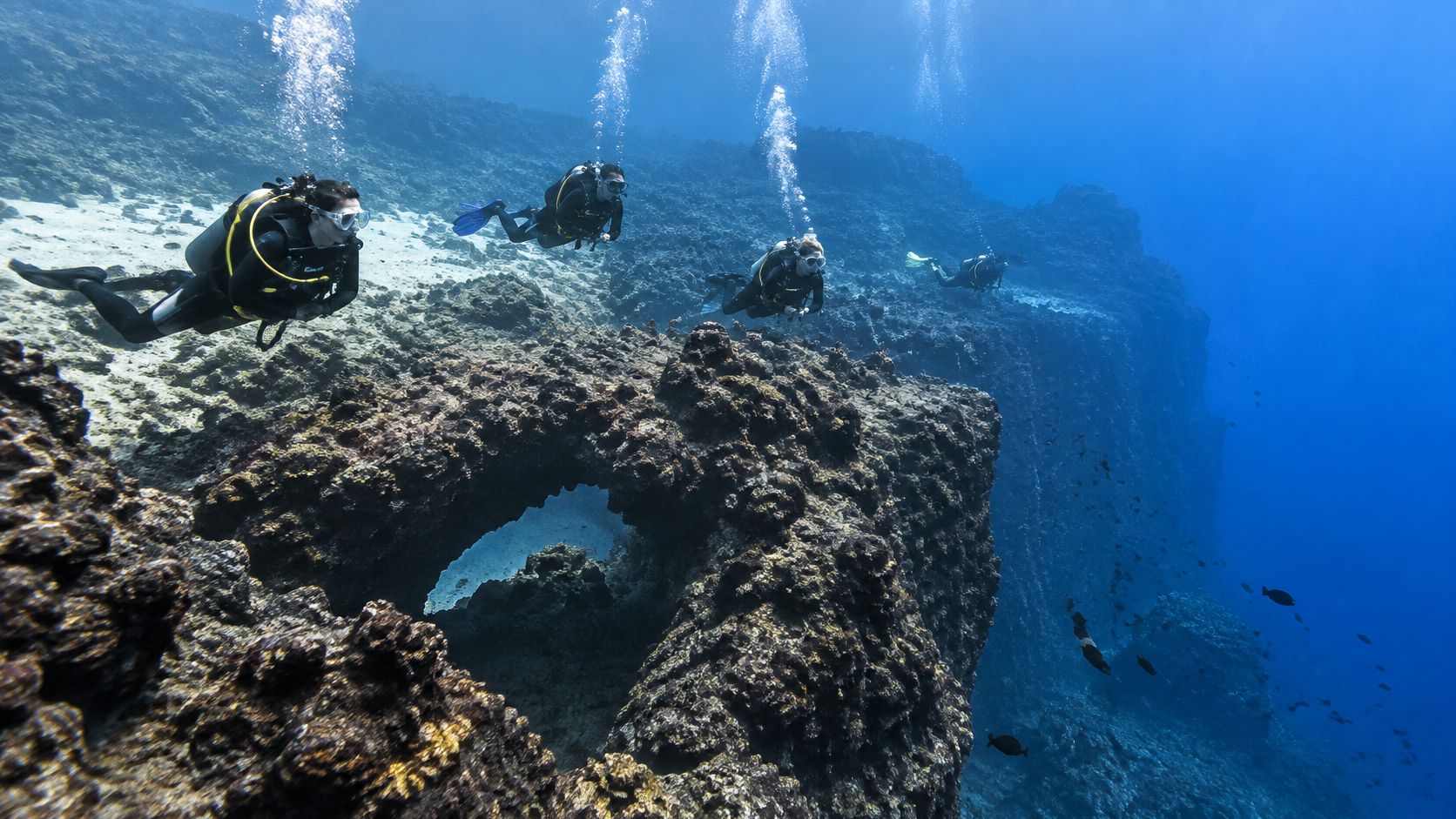
Don't treat an arch as permission to enter every passage nearby. Overhead environments require appropriate training and planning, not just a guide ahead of you. If you can't hold your depth without using your hands, enjoy the formation from outside.
Excellent visibility isn't the same as an easy dive. You still need to manage depth, gas, current, and your route back.
The best fit for each traveler
For most certified visitors, the morning boat is the sensible starting point. It lets the crew match the site to the actual roster rather than forcing everyone onto a fixed bucket-list location. It's also a useful way to settle weighting, check unfamiliar rental equipment, and establish how comfortably you're diving before adding darkness.
Our typical dive day follows a practical sequence: arrival and gear setup, a briefing on conditions and entry style, the deeper or more condition-sensitive dive, a surface interval, then a more relaxed second dive. The order matters because it gives the crew room to adapt the later profile.
A certified diver who's already comfortable at night can choose the manta dive for the view from below. A mixed family usually has a cleaner shared plan with the manta snorkel. Snorkeling isn't a lesser version of the encounter, it's a different position in the water, without the extra scuba tasks.
Blackwater is a separate skill decision. You need to control buoyancy while looking into open water, manage lights and instruments without a reef reference, and remain composed when there's no bottom to orient against. The Black Water Night Dive belongs on the shortlist only if that description sounds engaging rather than unsettling.
- Newly certified visitors: Start with the morning reef format and be candid about recent experience.
- Uncertified guests: Choose an introductory dive with an instructor, not a certified-diver charter.
- Mixed families: Prioritize a surface plan everyone understands, particularly after dark.
- Experienced divers: Select a profile that matches your recent diving, not just your highest certification.
- Independent buddies: Treat shore access as its own planning problem, including the exit under changing conditions.
Choose the profile before the site name
Deeper sites and drift dives shouldn't be squeezed into a standard morning profile because someone on board wants more challenge. The premium advanced trip is the appropriate format to consider for those objectives, subject to suitability and conditions.
Likewise, shore diving isn't a cheaper copy of a boat itinerary. You take responsibility for access, navigation, surface signaling, and getting your equipment back over the shoreline. Saving the boat fare doesn't make those tasks disappear.
Diving in Kona is available year-round, with warm water and generally clear visibility in every season. That gives you flexibility in travel dates, not a promise that every format or site will work every day.
Choose a primary format and a workable alternative before browsing the full diving tour menu. A morning reef outing might remain enjoyable when an exposed advanced site isn't workable. A land activity may be the right substitute when the coast itself is unsafe.
Certification Flags and Boat-Day Basics
Bring your C-card. For most of our regular charters, we require at least an Open Water Diver certification from a recognized agency such as PADI, SSI, or NAUI, allowing diving to 60 feet, or 18 meters, with a buddy. An introductory dive is the appropriate route for someone without that certification.
Your card establishes a training level, not your current comfort. If you're rusty on mask clearing, alternate-air procedures, or buoyancy, arrange a refresher rather than trying to rebuild those skills during a demanding charter. Our Big Island scuba certification guide helps distinguish initial training from continuing education.
Understand the surface signal
The Hawai'i Division of Aquatic Resources dive-flag rules require divers and spearfishers to display a flag and remain within 100 feet of it except during an emergency; a surface flag must be at least 12 by 12 inches, while a vessel longer than 16 feet must display a flag at least 20 by 24 inches together with a blue-and-white Alpha flag.
Those same state rules require a night-diving flag to be illuminated so it can be identified from 100 feet, and removed when diving stops. The practical point is that the flag marks an operating area, not just a boat accessory. Know how the planned route stays within it.
Sort equipment before departure
A useful briefing names the entry, maximum depth, turnaround pressure, reunion procedure, and exit. Listen even if you've made plenty of boat dives. Entry arrangements and pickup procedures aren't identical from vessel to vessel.
- Fit rental equipment early: Check boot and fin fit, mask seal, weight releases, and inflator operation before a tight departure.
- Know your gas: Use enriched air only with the appropriate certification, analyze the cylinder, and set your computer correctly.
- Prepare night equipment: Carry a primary light and backup, and learn the group's light signals.
- Stow photography gear: Secure clips and arms so they can't drag across coral or obstruct the ladder.
Photographers should bring a focus light for night work, but a camera doesn't justify losing position. Skip a tube shot if surge makes hovering difficult.
Confirm shade, restroom access, fresh water, and surface-interval seating for the specific vessel and trip. Pack a dry layer where you can reach it, and keep your mask somewhere it won't be stepped on during the tank change.
Lava Sites Worth Planning a Boat Around
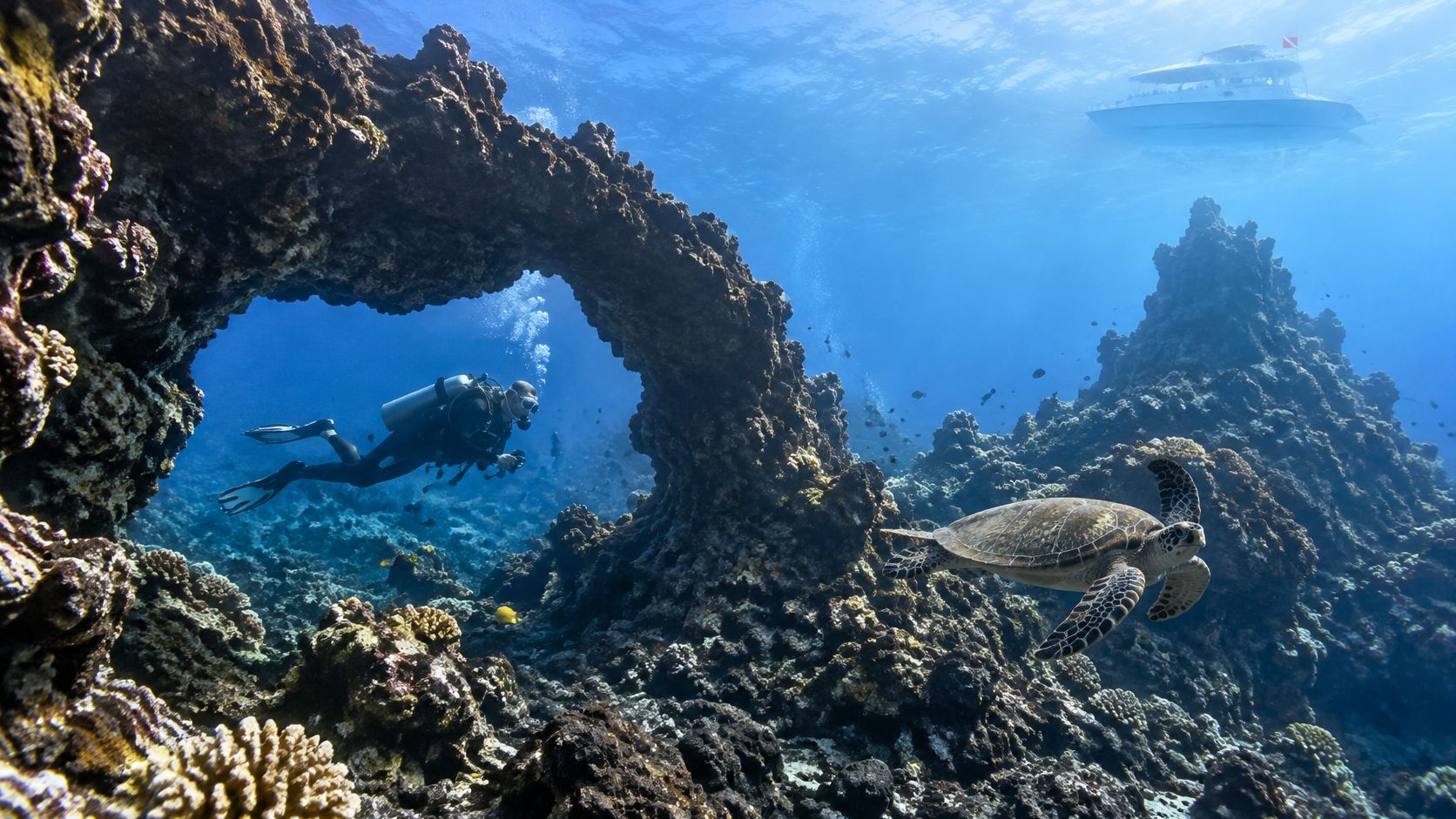
A good site choice has a reason beyond its name. Turtle Pinnacle makes sense when the group can hold position around lava relief without crowding a cleaning station. The arches along the Kailua-Kona coast are rewarding when divers can pass nearby without brushing the roof or descending onto coral.
Turtles resting or cleaning aren't props. Keep their route open and let them choose whether to remain nearby. Reef fish sheltering under ledges are easier to observe when the group slows down instead of surrounding every opening.
These formations reward a controlled approach, not a rushed swim-through.
Match the lava to the water movement
Suck ’Em Up and Golden Arches deserve a conservative decision when swell is moving water through the openings. Watch the movement before approaching. If you're having to kick hard just to avoid rock, the passage isn't adding anything useful to the dive.
Set a turnaround pressure before descent and stay outside confined terrain unless your training and the plan support entry. A clear opening doesn't remove the overhead.
| Site or area | Good reason to choose it | Reason to change the plan |
|---|---|---|
| Turtle Pinnacle | Controlled viewing around lava relief and cleaning activity | Crowding or poor position control |
| Suck ’Em Up and Golden Arches | Inspecting volcanic formations in manageable surge | Water movement pushing divers toward rock |
| Pine Trees and North Kona shelf | Open reef exploration in settled conditions | Current around corners or an uncomfortable return |
| Honokohau-area reefs | A shorter, condition-appropriate alternative | Vessel traffic or unsuitable local conditions |
Pine Trees and the broader North Kona shelf can offer reef sharks and hunting jacks, but don't choose the site solely for that possibility. Calm water helps the plan; it doesn't schedule the animals.
Honokohau and harbor-adjacent reefs can be useful alternatives when a longer run isn't sensible. They still require their own assessment, particularly around boat traffic. Use the Big Island scuba diving sites guide to compare terrain, then accept the day's operational choice.
Treat Old Kona Airport as protected habitat
The state's Old Kona Airport Marine Life Conservation District rules describe boundaries extending approximately 500 yards offshore from designated coastal points, prohibit anchoring, and set a three-hour limit for noncommercial use of the district mooring.
The district also restricts injuring, possessing, or removing marine life, live coral, algae, shells, and geological features. Motorized vessels are barred from the designated No Boating Zone except for the stated exceptions; commercial activity requires the appropriate permits. Don't assume a commercial permit makes every position or approach permissible.
Use authorized moorings or approved shore access, and verify the boundary map before committing to an entry. Leave shells, lava, and animals where they are.
A dangling console, tank strike, or hard fin kick can damage shallow habitat. Secure accessories, establish neutral buoyancy away from the reef, and photograph rather than collect.
Visibility and Swell Through the Kona Year
Kona dive conditions by season
| Season | Water | Visibility when calm | Planning limit |
|---|---|---|---|
| Winter, December to February | Warm, with a cooler feel on repeated dives | Clear water is possible between swell events | North swell can wrap; south or west swell can close sites |
| Spring, March to May | Plan exposure protection for your cold tolerance | Calm mornings can offer excellent viewing | South swell can still make lava shelves unsuitable |
| Summer, June to August | Warm-water diving | Favorable when wind and surface disturbance stay low | Afternoon chop favors morning boats |
| Fall, September to November | Warm-water conditions continue | Assess the actual site rather than the calendar | South swell still matters; don't assume quiet water |
Use the season to prepare, not to approve a dive. Our year-round diving conditions make Kona flexible, but a monthly average can't tell you whether a particular lava shelf is safe tomorrow. For travel planning, the guide to the best months to scuba dive in Hawai'i is a starting point, not an entry assessment.
When the plan should change
Winter calls for flexibility around exposed points. A sheltered reef may remain suitable while another site has uncomfortable surge or a difficult pickup. Don't judge that change as a downgraded trip if it keeps the profile within the group's ability.
Spring doesn't automatically clear every shore entry. A south swell can make an otherwise inviting shelf unusable even when the water beyond it looks blue and calm. The important distinction is between an attractive underwater view and a manageable route through the shoreline.
Summer planning should account for afternoon wind. A morning boat is a practical default for visitors who want reef time without committing to a later, potentially choppier ride. Blackwater and exposed advanced profiles need a crew willing to change the location or cancel rather than force a departure.
Forecast rule: Book a format you'll enjoy at more than one suitable site. Don't build the value of the trip around a single mooring.
Fall can be comfortable for diving, but warmth doesn't cancel swell. Nor should you assume fewer visitors on your travel dates means an uncrowded manta site. Boat schedules and shared viewing areas matter independently of the season.
Pack for your actual exposure
A 3 mm wetsuit is a practical starting point for many warm-water divers, not a universal prescription. If you get cold easily, make repeated dives, or expect long stationary viewing, choose more protection rather than hoping activity will keep you warm.
Bring a rash guard for the ride and surface interval, plus a dry layer for wind. Fit matters as much as nominal thickness: a loose suit that flushes at the neck won't feel like the same suit that fits properly.
- Before travel: Choose a primary format and leave schedule space for changes.
- The day before: Review swell direction, wind, and the operator's update.
- At departure: Accept a site change based on current conditions.
- Before entry: Reassess your own comfort, not just whether the boat is going.
For manta trips, don't chase a supposed peak month. For offshore nights, don't confuse warm water with easy surface conditions. The useful question is whether the forecast supports your specific format.
Garden Eel Cove Manta Nights Done Right
Garden Eel Cove is my preferred manta-dive choice when conditions support it. A University of Hawai'i study analyzed community observations from 2010 through 2022, recording more than 23,000 sightings of 167 individually identified reef manta rays, and found consistently larger aggregations at Garden Eel Cove than at Keauhou.
That supports a site preference, not a guaranteed head count. The study also found that Keauhou was visited predominantly by females, with an approximately balanced overall sex ratio across the sites, and that aggregation size tracked zooplankton density.
Garden Eel Cove's protected location, better viewing area, and stronger surrounding reef make it the better tour choice in suitable conditions. Shelter is relative, though. A captain still needs to judge swell, access, and congestion.
Keep the feeding lane open
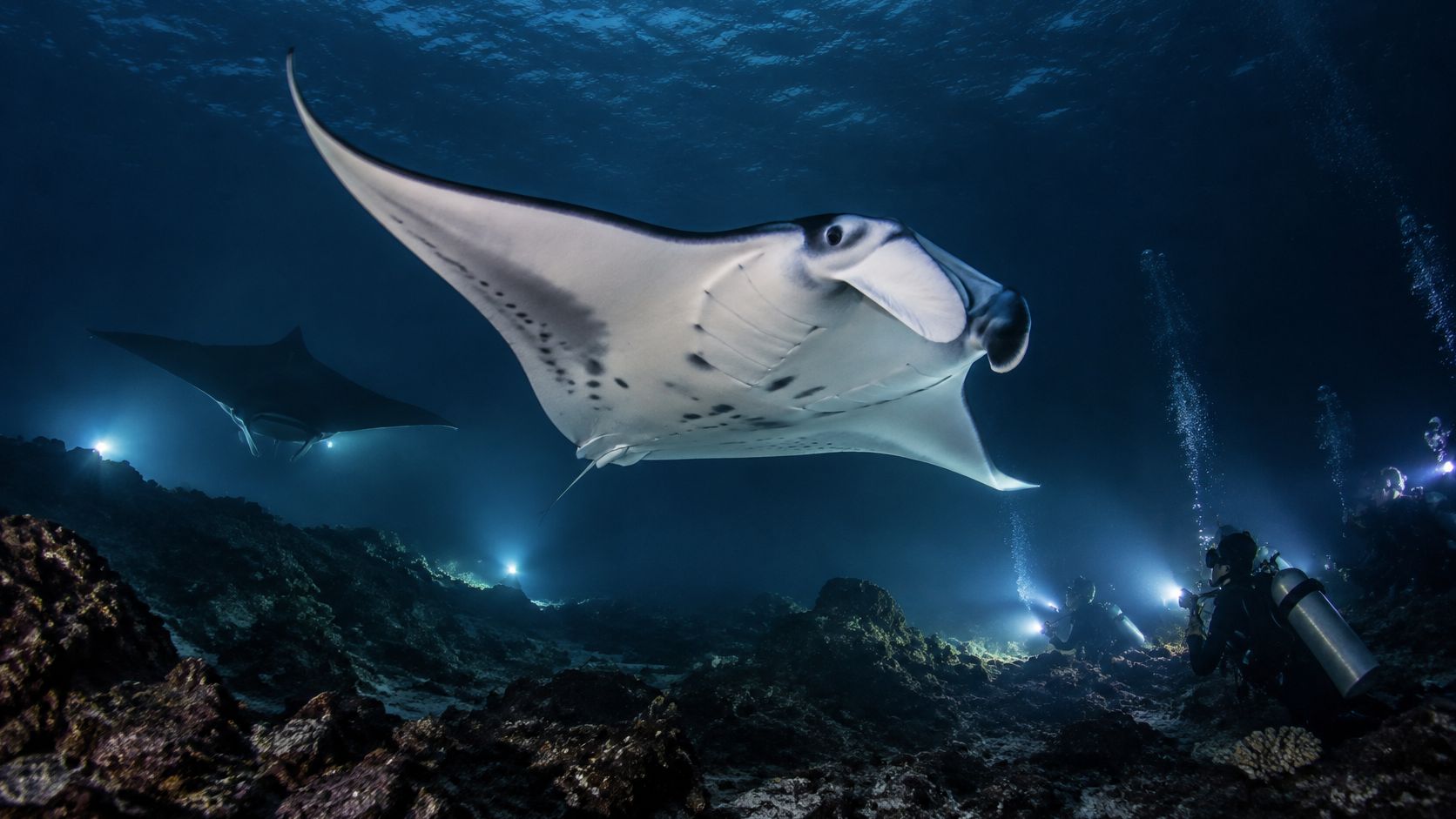
Divers should hover low or use the guide's designated position on an appropriate nonliving surface. Don't kneel on coral, rise into a feeding loop, or follow a manta away from the viewing area. Snorkelers stay at the surface with their assigned flotation arrangement and don't duck down into the divers' space.
The light field works only when everyone respects the shared arrangement. Adding a brighter light or moving closer for a photograph isn't automatically an improvement. It can interfere with the setup and put another person directly in an animal's path.
- Keep hands in: Don't touch, chase, or try to ride a manta.
- Follow light directions: Aim your light where the guide specifies rather than sweeping faces and animals.
- Hold your place: Let the manta approach and leave without closing the gap.
- Watch your equipment: Keep camera arms and loose hoses out of the feeding lane.
Expect wildlife, not a performance
Earlier Hawai'i legislative testimony reported 106 individuals identified along the Kona Coast from 1992 through 2007, with approximately two newly identified pups per year during the pup-observation period. Those historical observations help explain why individual recognition and careful conduct matter for this resident group.
A crowded light field isn't a reason to compete for space. If your assigned view is obstructed, signal the guide instead of changing levels through other participants. The encounter works best when people remain predictable.
Read the Kona night manta dive guide before choosing between surface and scuba viewing, then use the manta dive and snorkel tour page for the trip details.
Confirm what happens if weather prevents the outing and what applies if the trip runs without sightings. Those are different situations. A responsible plan can include moving, shortening, or rebooking when appropriate, but don't assume a particular remedy unless it's stated in your booking terms.
Choose Shore or Boat Before You Gear Up
Assess the exit before admiring the reef. A lava shelf can look manageable from the parking area and still expose a fully equipped diver to a difficult climb when a set arrives. Calm water offshore doesn't cancel breaking water at your feet.
The Kona conditions and diving guidance emphasizes that local currents and exposure matter, including conditions associated with southerly storms and large south or west swells. The west coast's sheltered reputation isn't a substitute for watching the actual entry.
Make the decision before dressing
Stand where you can see the entry and exit clearly. Watch how water drains off the rock, where foam collects, and whether successive sets reach farther inland. Identify the place where you'll remove fins without losing balance or being pushed against an edge.
Use a practical go/no-go check:
- Swell direction: Consider whether the shoreline faces the incoming energy.
- Surge: Reject an entry that repeatedly sweeps your intended footing.
- Surface swim: Allow for the return with tired legs and equipment.
- Alternate exit: Identify a usable route, not a distant patch of coast.
- Buddy readiness: Confirm both divers understand unfamiliar gear and can manage the access.
- Daylight: Leave enough margin to exit, walk back, and pack without rushing.
- Surface support: Give the person ashore your route and expected return plan.
If an essential part of that plan is missing, don't enter. A boat may be the lower-risk choice because the crew can select a workable site and control the entry, although a boat trip still depends on suitable conditions and your ability to use its exit arrangement.
Set an abort rule you can use
If breaking water crosses the intended footing, the alternate exit becomes unusable, or either buddy is uncomfortable, abort before entry. Once underway, turn back early if the surface conditions deteriorate or the return swim becomes harder than planned. Don't wait until you're tired and low on options to reconsider.
The right shore-dive decision can be to leave your equipment dry. Paying for a boat later is cheaper than committing yourself to an exit you can't manage.
Keep the route conservative when someone is waiting on land. A family member shouldn't have to guess whether a late return means a longer dive, a changed exit, or a problem. Agree on communication and what they should do if you don't return as planned.
The Big Island shore-diving guide can help you evaluate access, but it can't approve today's entry. A photograph of a calm shelf shows what the location can look like, not what you'll encounter.
Shore diving is worthwhile when the conditions, access, and buddy team align. When they don't, changing formats is sound planning, not a failure of independence.
Kona Scuba Diving FAQs for Beginners and Advanced Divers
Can I dive without a certification card?
Yes, through an instructor-led introductory dive. That's a supervised introduction, not permission to join blackwater or advanced profiles. If you want broader access over future trips, choose certification rather than trying to stretch an introductory experience.
Is a manta night worthwhile if no animals appear?
Decide whether you're comfortable paying for a wildlife opportunity rather than a guaranteed appearance. An honest briefing, suitable conditions, and responsible conduct matter, but they don't make disappointment disappear. Understand the no-sighting terms before booking.
Do I need nitrox?
No. Nitrox is an optional tool for appropriately certified divers, not a requirement for enjoying Kona's reefs. If you want to use it without already holding the certification, arrange the course separately and allow time to understand analysis and oxygen-exposure limits.
Can a snorkeler join a dive party?
Sometimes, provided the trip supports snorkeling and has a suitable surface supervision plan. Don't assume a dive guide underwater is also watching a snorkeler above. The manta snorkel format is a practical option for sharing the night without sharing scuba tasks.
What should an experienced diver upgrade to?
Choose a more demanding profile only when your recent skills support it. Before moving to remote, deeper, or drift sites, confirm that you can:
- Manage gas independently: Know your reserve and act on the agreed turnaround.
- Control position: Hold depth without a bottom reference.
- Respect overhead limits: Don't enter lava passages beyond your training.
- Handle separation: Understand the briefing's reunion and surface procedures.
Should I keep a backup?
Yes, but make it a realistic alternative. A sheltered reef trip might replace an exposed site; a land day might replace unsuitable ocean conditions. Don't replace a canceled dive with an unfamiliar shore entry just because you're already packed.
Book the Dive That Matches the Forecast
Book the format you want, with flexibility about the site. Tell us about your certification, recent diving, night experience, and any non-diving companions before committing. Those details help us match the trip to the people who'll enter the water.
Kona Honu Divers offers the Manta Ray Night Dive, 2 Tank Local Morning Dive, Premium Advanced 2 Tank Trip, Black Water Night Dive, and Morning Introductory Scuba Dive. We also offer early diver discounts, dive packages, and free nitrox, with enriched-air use limited to appropriately certified divers.
Compare the complete booking
For Garden Eel Cove, choose the manta format and confirm whether each guest will dive or snorkel. For an open-ocean night, choose blackwater only after confirming suitability. Remote sites, deeper profiles, and drift objectives belong with the advanced format rather than an assumed upgrade aboard a standard reef charter.
Compare the full quote instead of only the headline rate:
- Equipment: Confirm tanks, weights, rental gear, and any personal equipment you need.
- Gas: Clarify the available fill and your certification requirements.
- Trip arrangements: Check departure instructions, vessel amenities, and surface supervision.
- Changes: Understand weather cancellations, passenger cancellations, and wildlife-related terms.
- Private arrangements: Compare the total charter cost and how it's shared across your group.
Current rates belong on the booking page, not in a travel budget copied from an old article. For help selecting the right format, call 808-324-4668 with your group's experience and preferred dates.
Leave room for a sound decision
Read reviews for details about briefings, communication, and how crews handle changing conditions, not just the animals people photographed. A calm explanation of why a site changed is more useful than a promise that every outing will deliver the same encounter.
Recheck swell the day before departure and keep your alternative format available. Let the captain change the site when conditions warrant it, and speak up if the revised plan falls outside your comfort.
Kona Honu Divers offers guided reef dives, manta nights, introductory scuba, and advanced trips for different experience levels. Visit Kona Honu Divers to choose a format that fits your group, then keep enough flexibility for the forecast to decide the site.