
You've landed in Kailua-Kona with a dive bag, a few open days, and the familiar question: should you spend your first dive day on the reef or save your energy for after dark? Kona's daytime lava formations and coral are worth exploring, but the experiences that make this coast distinctive often happen at night. The practical choice is whether to start with mantas, try a blackwater dive if you're qualified, or settle into a daytime reef trip before going nocturnal.
For Big Island divers in Kailua-Kona, the right plan depends on certification, recent experience, comfort in open water, and how much flexibility you've left for weather. Here's how to choose a trip, understand the manta encounter, and build a schedule that doesn't promise wildlife on demand.
Table of Contents
- Why Kona Is a Night-Diving Destination First
- Kona Honu Divers Signature Trips at a Glance
- The Manta Night Dive and Why Garden Eel Cove Wins
- Who Each Trip Suits from Novice to Advanced
- What a Kona Dive Day Feels Like from Parking to Return
- Gear, Packing, and Preventing Seasickness
- Pricing, Discounts, and How to Book
- Seasonality and Managing Wildlife Expectations
Why Kona Is a Night-Diving Destination First
By dusk, the useful Kona question changes from which reef to what kind of darkness you want. A boat leaves Honokohau Harbor, lights go into the water, plankton gathers, and divers kneel on the sand while mantas loop overhead. On a different night, qualified divers hang over deep water in blackness, watching small animals rise through the beam. Those are the bookings that make this coast distinct.
Day dives still earn space. Volcanic formations and reef structure give rusty divers a controlled way to relearn trim, meet the crew, and read local conditions before committing to a night charter. The mistake is treating daylight as the main event and evening as filler. Manta viewing depends on darkness and managed positioning; blackwater depends on comfort in open water, steady buoyancy, and tolerance for a featureless blue-black descent.
Plan around the experience, not just the clock. A manta trip can anchor a vacation evening; blackwater asks for more skill and a calmer head.
Pick the night trip that matches certification and confidence first, then fit a reef charter or snorkel around it. Keep slack for weather and for wildlife that does not keep appointments. The operator's diving tours overview lists which trip types are running during your stay.
Kona Honu Divers Signature Trips at a Glance
Use the table as a first filter, not a substitute for checking the operator's current requirements. Exact certification rules, recent-dive requirements, schedule, and equipment availability can vary by trip. The provided information doesn't establish a depth profile, price, or crowd level for every charter, so confirm those directly rather than choosing from assumptions.
| Trip | Best For | Time of Day | Min. Certification |
|---|---|---|---|
| Two-tank manta dive and snorkel | Certified divers and non-diving companions who want a shared manta outing | Evening into night | Confirm with operator |
| Blackwater night dive | Experienced divers comfortable in open water and darkness | Night | Confirm strict prerequisites |
| Daytime reef charter | Certified divers wanting a guided reef and volcanic-terrain dive | Day | Open Water, confirm recent-dive rules |
| Premium advanced two-tank trip | Experienced divers looking for a more challenging day charter | Day | Confirm advanced requirements |
| Manta snorkel | Snorkelers who want to see mantas from the surface | Evening into night | No scuba certification; confirm age and swimming requirements |
For a first trip, the simplest decision is usually between the manta outing and a daytime reef charter. Choose the manta dive if you're certified, comfortable staying still in a group after dark, and willing to follow the guide's positioning instructions. Choose the snorkel option if your group includes non-divers, or the reef trip if you want to establish your comfort in the water before a night dive.
Blackwater isn't a casual add-on for any certified diver. It's a nighttime open-ocean activity, not a reef route, so ask about logged experience, recent dives, buoyancy expectations, and the operator's screening process. The Kona blackwater diving guide offers another overview, but the crew's current trip requirements should decide whether you're ready.
The Manta Night Dive and Why Garden Eel Cove Wins
The boat engines cut, you drop to a sandy patch in the dark, and the guides hand you the simplest job in diving: hold your light overhead and stay put. A Kona manta dive runs as a managed viewing setup. Divers settle on the bottom with lights aimed into the water column, snorkelers stay at the surface with lights pointed down, plankton collects in the beams, and mantas feed by looping through the lit water.
Among Kona's manta sites, Garden Eel Cove gets my vote for this format. Its sheltered position keeps conditions manageable on evenings when more exposed water would push the group around, and its defined viewing area keeps everyone in position. The surrounding reef earns its keep too, giving you something worth watching during the descent and while the group waits for the action to start. None of that guarantees mantas on a given night. It means the site is built for the way the dive is run.
That reputation rests on documented repeat use. A six-year study at Manta Heaven and Manta Village recorded 25,444 observations of 118 identified reef manta rays, with 19,841 observations at Manta Heaven (NOAA manta-ray study). Recognizable animals returned to the same sites across years of monitoring, which is what makes a stationary viewing setup workable here, though repeat visitation across a study period still leaves any single evening to chance.
Technique on the bottom decides how well the whole thing goes. NOAA guidance recommends placing lights on sand or rubble and keeping them off live coral, with divers pointing up from below and snorkelers pointing down from the surface (NOAA manta-viewing guidance). Stow your snorkel in a buoyancy-compensator pocket before the mantas arrive; a ray passing inches overhead can snag a dangling one and drag your mask sideways. Hold your spot, keep the beam steady, and let the animals set the distance.
Hawaiʻi's rulemaking shows how seriously the state takes site management. A state proposal laid out designated viewing zones and operating limits for manta tours, though those remained proposed rules with no universal confirmed requirements in force (DLNR proposal). Judge an operator on the clarity of its briefing and its procedures on the site. Compare the Garden Eel Cove manta dive and snorkel trip with your group's comfort and certification before booking.
Who Each Trip Suits from Novice to Advanced
A newly certified Open Water diver can enjoy a guided reef charter, but the card alone doesn't tell the crew how recently you've dived or how comfortable you are in current. Share your last dive date and be candid about what feels rusty. If you haven't dived recently, ask whether a refresher is appropriate before signing up for a night experience. The Big Island dive experience guide can help you decide what questions to ask.
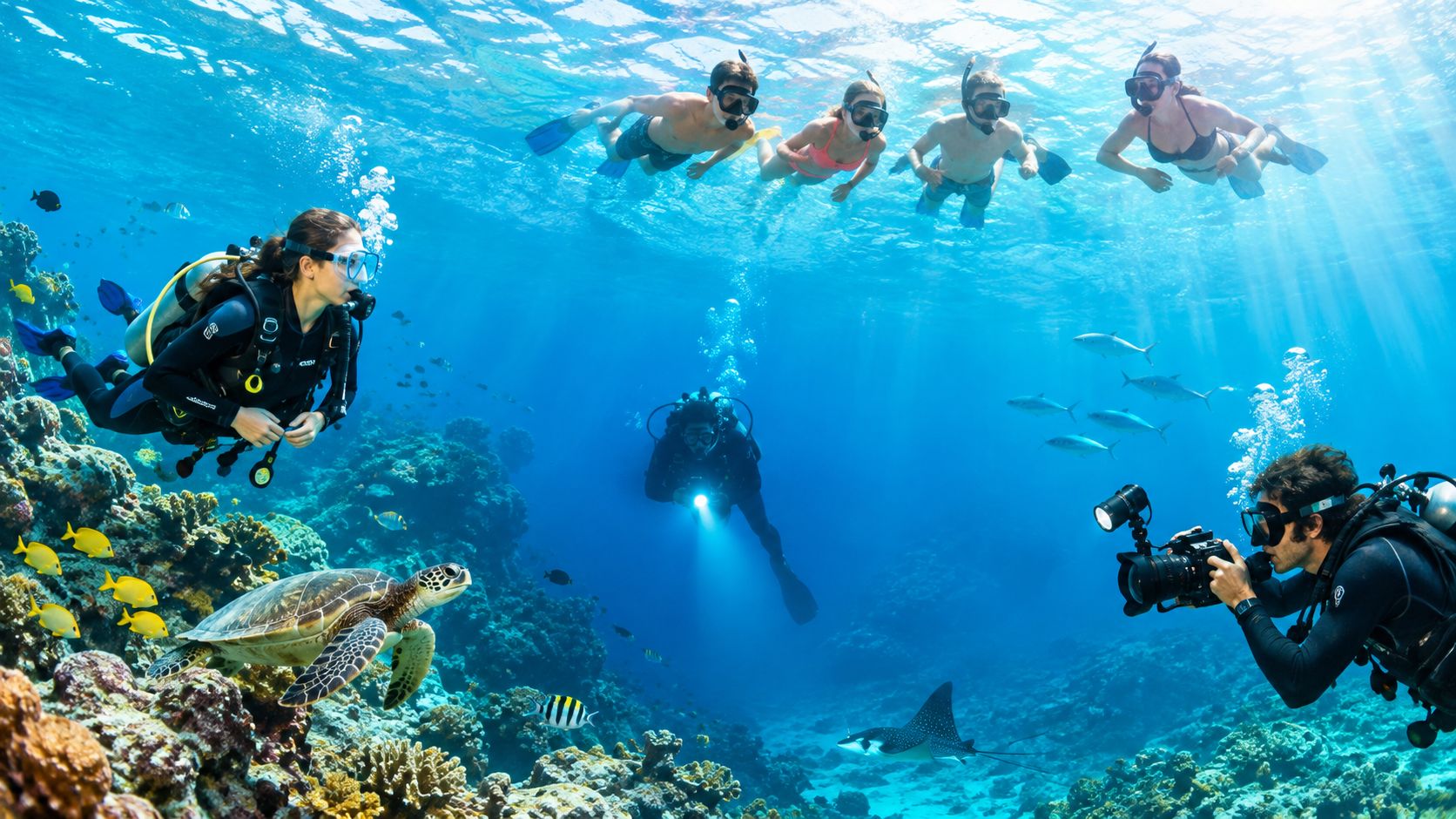
Blackwater suits the experienced diver, not someone who has a certification card. The operator's specific prerequisites are the deciding factor, and you should be comfortable maintaining buoyancy when there's no reef or bottom to use as a visual reference. If you're unsure whether you qualify, ask before arranging your itinerary around the dive.
Families should check each trip's age limits, supervision rules, and whether a child is ready to follow instructions in low light. Don't infer suitability from age alone. A teen who's a capable snorkeler may enjoy the manta trip from the surface, while scuba requires the relevant certification and the ability to stay calm and listen to the guide.
| Traveler | A sensible place to start |
|---|---|
| Newly certified diver | Daytime guided reef charter, after discussing recent experience |
| Experienced diver seeking an unusual night dive | Ask about blackwater prerequisites and buoyancy expectations |
| Family with teens or older kids | Confirm age limits and whether each person should dive or snorkel |
| Non-diving partner | Consider the manta snorkel option and ask about surface conditions |
For couples and families with mixed experience, a shared manta outing may keep everyone on the same evening while allowing divers and snorkelers to participate differently. Don't assume that everyone needs to enter the water in the same way. Match the trip to each person's skills, then confirm the operator's age and supervision policies.
What a Kona Dive Day Feels Like from Parking to Return
A boat day starts on shore, not at the dive site. Check your confirmation for the departure harbor, parking instructions, and check-in time. Honokohau and Keauhou are distinct launch points, so don't head to one based on memory or a search result from another operator. Leave enough time to park, meet the crew, complete paperwork, and fit equipment without rushing.
At check-in, bring your certification information and answer questions about your last dive and health. The crew can help fit rental equipment and explain the boat's entry and exit routine. Once underway, the ride is part of the trip, but the actual schedule depends on the charter and conditions. Ask the operator for the expected return time before making dinner plans.
On a two-tank trip, the first dive is followed by a surface interval, then the second dive and return to harbor. The wait between dives is planned recovery time, not dead time. Use it to drink water, stay warm, and listen to the crew's briefing rather than wandering off or changing the plan. For night trips, the briefing should make clear where divers position themselves, what light signals mean, and how to respond if they lose contact with a buddy.
Current, night entries, and gas planning
Current is a practical Kona hazard, especially for shore entries and surface swims. Hawaiʻi Ocean Safety notes that tidal, wind-driven, rip, and other currents can occur at any beach because exposure and island topography can change water movement quickly (Hawaiʻi Ocean Safety guidance). Don't try to swim directly against a strong current. That increases exertion and breathing rate, uses gas faster, and can leave you too tired to manage buoyancy and navigation well. Stay calm, float or hold a stable position, move with the current rather than fighting it, and signal for help.
Before a shore entry or surface swim, agree on a maximum separation from shore or boat, confirm recall and lost-diver procedures, and keep enough gas for a controlled ascent or return. Those checks matter even more at night, when darkness can hide current direction and remove visual references. On a blackwater dive, the crew's line and signals become essential reference points. Follow the briefing instead of improvising a route.
Equalize early and often as you descend. If pressure won't clear, stop, ascend slightly, and try again; don't push through discomfort or chase the group downward. Tell the guide if you're having trouble, and end the descent if equalization doesn't resolve.
The usual avoidable problems are straightforward: arriving at the wrong harbor, concealing a long gap since your last dive, rushing equipment checks, and treating a night dive like an ordinary reef swim. Give yourself time, tell the crew what they need to know, and follow the plan you agreed on at the surface.
Gear, Packing, and Preventing Seasickness
Pack for the boat as well as the water. Bring a mask you know fits if you own one, a towel, reef-safe sunscreen, and a warm layer for the ride back or a long surface interval. A wetsuit that feels comfortable while moving may feel less warm when you're stationary at night, so ask the operator what exposure protection is available before deciding what to bring.
Keep snacks and water accessible, and don't leave motion management until you're already aboard and uncomfortable. People respond differently to patches, pills, wristbands, and ginger, so check product directions and any medical considerations with a qualified health professional. If you're deciding what to try, compare the Ship-EEZ seasickness patch, Dramamine, Bonine, Sea-Band wristbands, and ginger chews. Don't combine medicines without checking their instructions.
For a manta night, bring a hat or warm layer for the return and avoid overpacking loose gear that can slide around the boat. Confirm what the operator provides, including rental equipment, lights, and any photo options. The Kona seasickness prevention guide can help you plan before departure.
Pricing, Discounts, and How to Book
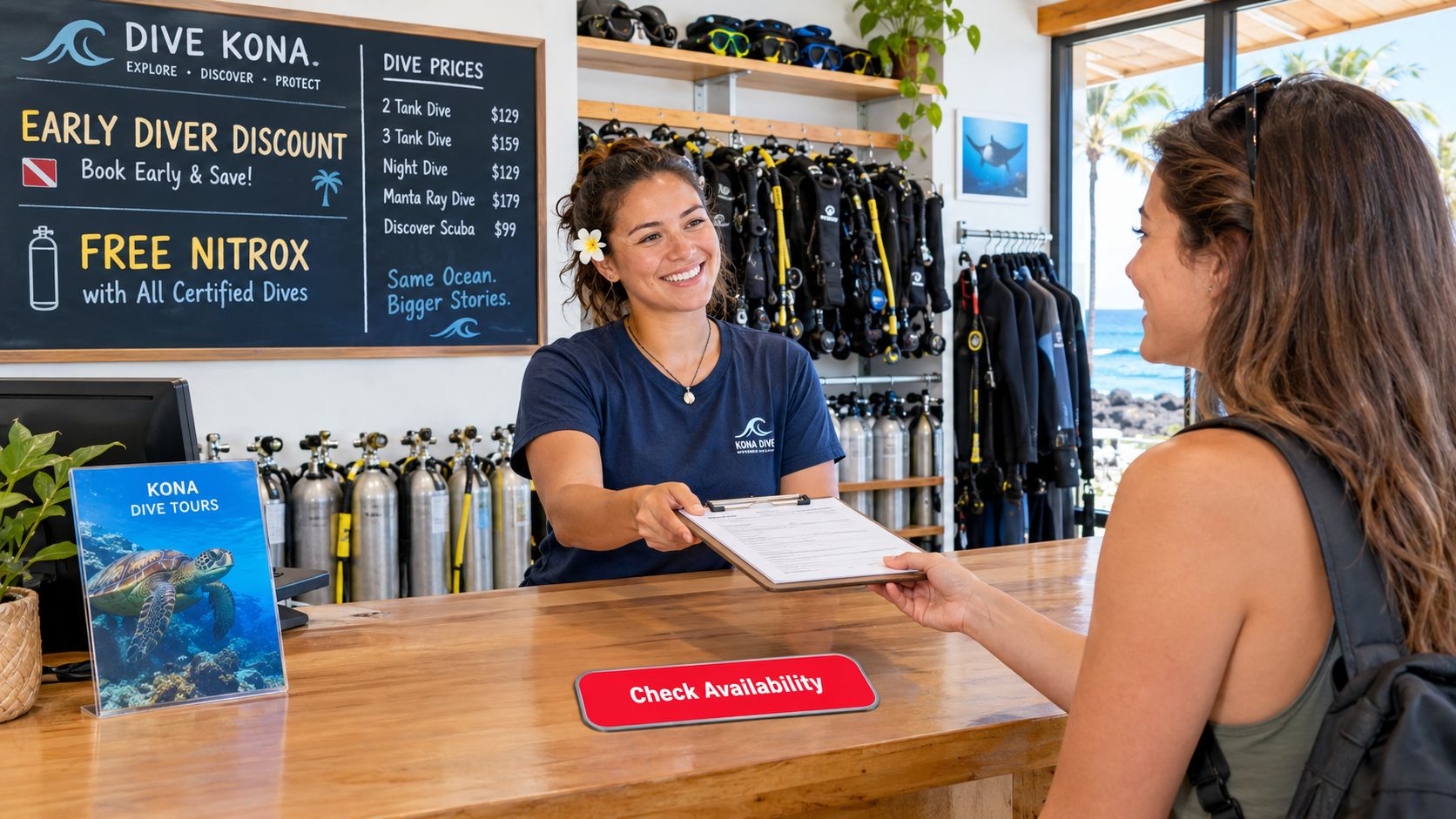
Don't build a trip budget from a generic Kona price range. Ask for the current total for the exact charter, then clarify what's included and what costs extra. Confirm rental gear, nitrox availability, photographs, additional tanks, taxes or fees if applicable, and the cancellation policy. A discount or included item only helps if you qualify and know what the booking covers.
The publisher describes early-diver discounts and free nitrox for eligible Enriched Air-certified divers, but you should verify the current terms when booking. Ask whether a discount applies to your dates and trip, and whether nitrox is available on that specific charter. For peak holiday periods or a particular night trip, book early enough to secure the date you need; keep flexibility in shoulder periods rather than assuming a boat will be uncrowded or a cancellation will be consequence-free.
Transport is another decision. Check how you'll reach the confirmed harbor from your lodging, especially if you're staying along the Kohala Coast rather than near Kailua-Kona. Don't assume a shuttle or resort pickup is included. Before the booking call, have your certification details, recent dive dates, medical declarations, and the names and ages of everyone in your party ready.
Use these sample schedules as planning frameworks, not promises of availability or wildlife:
- Three-day weekend: Day one, arrive and settle in; day two, book the manta dive or snorkel; day three, take a daytime reef charter if flight timing and surface-interval guidance allow, otherwise leave the day open for rest and travel. This version prioritizes the signature night and protects some flexibility.
- Five-day visit: Put a reef charter early in the stay, schedule the manta trip on another evening, and place blackwater later only if you meet the operator's requirements. Leave a free day between demanding dives or weather-sensitive plans, and ask the operator which night best fits its current conditions.
- Seven-day family and diver split: Alternate a diver-focused charter with a snorkel or rest day, and choose the manta outing if both divers and non-divers want to participate. Keep the blackwater option for the qualified diver only, while the rest of the group has a separate plan. Preserve open time for weather changes instead of filling every day.
Check current coupons and offers before paying. Then make sure the final booking confirmation states the harbor, check-in time, inclusions, and the operator's weather and cancellation terms.
Seasonality and Managing Wildlife Expectations
A “guaranteed” manta sighting is a claim to question. Kona's mantas return to familiar feeding areas often enough that the night dive earned its reputation, yet each trip still depends on plankton, current, moon phase, surf, and whether the animals choose to stay. A slow night does not automatically mean the crew picked the wrong site.
Research on Hawaiian reef mantas found low genetic diversity, limited movement between islands, and seasonal changes in detections inside the study area (Frontiers in Marine Science research). Those data came from Oʻahu, so treat them as a caution against fixed calendars rather than a Kona schedule. After dark, the variables stack higher: blackwater dives want workable open-ocean conditions, while manta dives need feeding animals near the lights.
Plan for a miss without wasting the trip
Before you book, ask what wind and swell cancel the charter, what the refund or credit policy covers, and whether a second attempt fits your stay. A missed sighting does not automatically earn a free repeat, so get the answer directly and keep one unbooked evening if the manta trip is your priority.
If your dates are flexible, use the Kona diving season guide as a starting filter, then let the crew match the night to current conditions. For a first night outing, compare the blackwater night dive and the premium advanced two-tank trip against your skills and schedule, alongside the manta and tours options covered earlier in this guide.
On the boat, follow the crew's light and positioning instructions closely and leave room for conditions to change. That flexibility builds a stronger Kona dive plan than chasing a promise.
Kona Honu Divers offers guided reef, manta, blackwater, and advanced trips along the Kona coast, with options for divers at different experience levels. Check your certification requirements, schedule, and weather flexibility, then visit Kona Honu Divers to compare trips and plan your night on the water.