
Picture this: you descend into warm, turquoise water, the sunlight filtering down around you. Ancient volcanic lava tubes, now carpeted with life, form a dramatic backdrop for vibrant coral reefs. A sea turtle glides past, indifferent to your presence. This is what scuba diving in Hawaii is all about.
The Hawaiian islands are a gateway to an underwater world unlike any other, where playful dolphins often escort your boat and unique fish found nowhere else on Earth dart through the coral.
Embark On Your Unforgettable Hawaii Diving Adventure
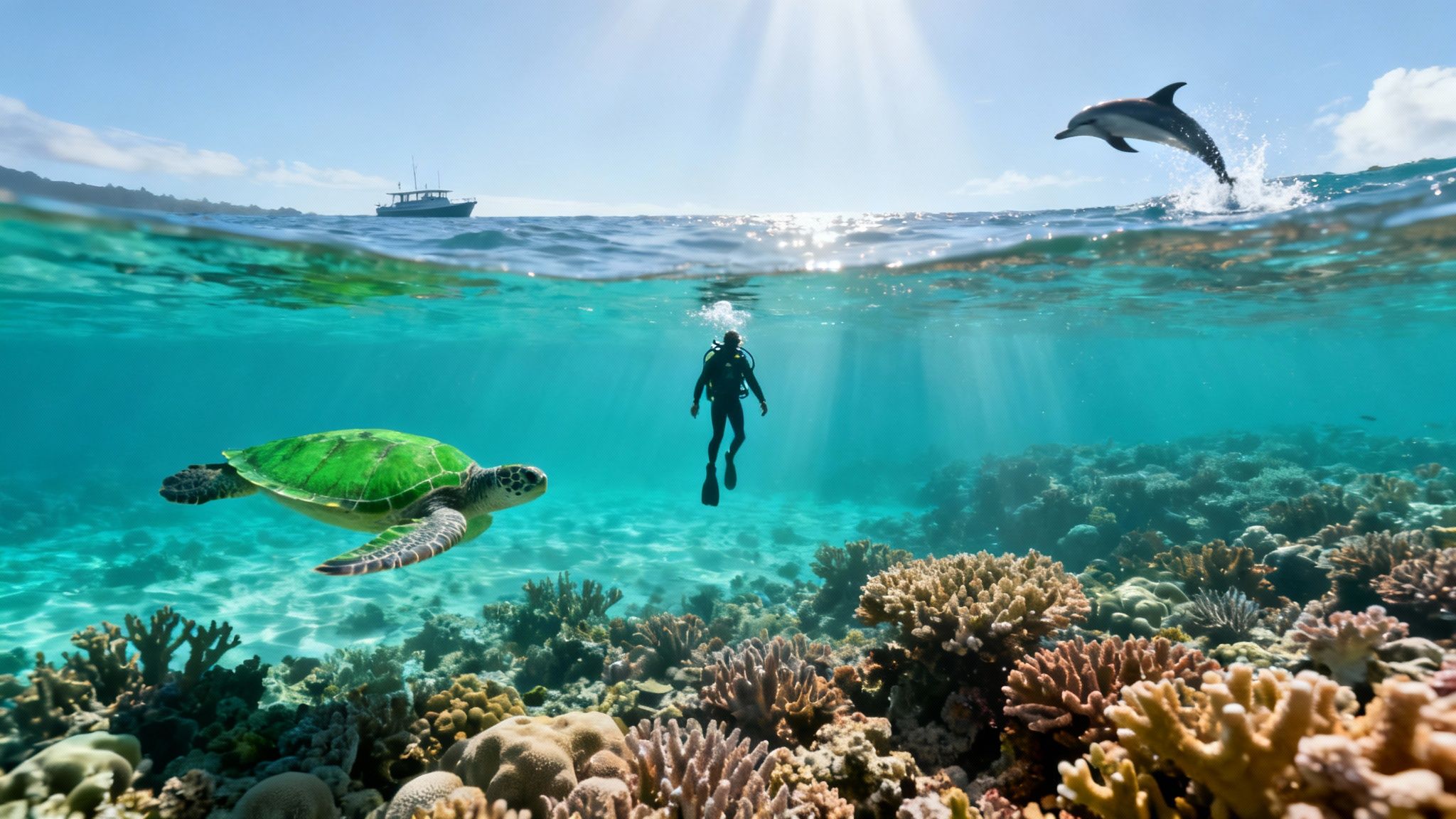
While every island has its charm, the Big Island's Kona coast is the real heart of the action for divers. It's the place you go for the legendary, once-in-a-lifetime encounters. The island's massive volcanoes shelter the coastline, creating calm, clear waters where marine life absolutely thrives.
Think of this guide as your personal roadmap to planning an incredible underwater trip. We'll cover it all—from the dives you absolutely can't miss to the nuts and bolts of picking the right dive shop—so you can focus on the adventure.
What Makes Kona a Premier Dive Destination
Kona's magic lies in its sheer variety. One day you can be exploring a peaceful coral garden, and the next, you're on a dive that feels like a trip to another planet. It’s this diversity that keeps divers coming back year after year.
Here’s a taste of what’s in store:
- World-Famous Manta Ray Night Dive: This is the big one. Imagine giant, graceful manta rays doing barrel rolls in the beams of underwater lights, feeding on plankton just feet away from you. It’s a true underwater ballet.
- The Mysterious Blackwater Dive: For the truly adventurous, you'll head out over deep water at night. You drop into the dark abyss and watch as bizarre, bioluminescent creatures—things you'd normally never see—ascend from the depths.
- Lava Tube Formations: Explore underwater caves, arches, and swim-throughs formed by ancient lava flows. These structures are now home to a huge array of marine life hiding in every nook and cranny.
- Vibrant Reef Ecosystems: Discover reefs buzzing with hundreds of fish species, many of which are endemic, meaning you can only find them right here in Hawaii.
We’ve packed this guide with insider tips from the crew at Kona Honu Divers, a team that shares more than 200 years of combined dive experience. Their goal is simple: help you have an unforgettable time, whether you just got certified or you're a pro looking for a new thrill.
As a top-rated operator, Kona Honu Divers focuses on safe, fun, and memorable diving tours. Their deep local knowledge and passion for the ocean make them the perfect guides for exploring the absolute best of Hawaiian scuba diving.
Why The Big Island Is Hawaii’s Diving Epicenter

While you can find great diving across the entire Hawaiian archipelago, ask any seasoned diver and they'll tell you the Big Island is in a class of its own. The Kona coast, in particular, is the undisputed champion of scuba diving in Hawaii, and it all comes down to geology.
The island is home to two of the largest volcanoes on the planet, Mauna Loa and Mauna Kea. These absolute giants create a massive barrier, shielding the western coastline from the powerful trade winds that can churn up the seas elsewhere. The result? Consistently calm, clear, and predictable water conditions that make for incredible diving almost every single day of the year.
A Diverse Underwater Playground
The Big Island's volcanic past didn't just bless us with calm seas; it sculpted one of the most dramatic underwater landscapes you'll ever see. Forget flat, sandy bottoms. Kona is a dynamic, three-dimensional world of underwater canyons, cliffs, and caverns.
On a single morning dive, you could be exploring:
- Ancient Lava Tubes: Imagine swimming through massive archways and tunnels carved out by flowing lava centuries ago.
- Dramatic Drop-Offs: There's nothing quite like gliding along a steep underwater wall that plummets into the deep blue, keeping an eye out for larger pelagic life cruising by.
- Vibrant Coral Gardens: The shallower sites are like underwater gardens, bursting with color and teeming with fish you can only find right here in Hawaii.
With well over 80 distinct dive sites along the Kona coast alone, you could dive here for weeks and never get bored. This sheer variety is what keeps divers coming back from all over the world.
Unlocking Kona's Best Kept Secrets
To really tap into what makes Kona diving so special, you need a guide who knows these waters like the back of their hand. Anyone can take you to the well-known spots, but an operator with deep local knowledge can show you the pristine, uncrowded sites that make for a truly personal adventure.
This is where a team like Kona Honu Divers really shines. Their crew has spent decades exploring every nook and cranny of this coastline. They know exactly where to go based on the day’s conditions and, more importantly, where the marine life has been most active.
They're not just boat captains; they're passionate divers who genuinely want to share their love for Kona's underwater world with you. It’s this commitment that turns a good dive trip into an unforgettable one.
Hawaii: A Global Diving Hotspot
The secret is definitely out. Hawaii as a whole hosts over 1.5 million scuba dives every year, supported by more than 215 licensed dive shops. It’s a world-renowned destination for everyone from first-timers to marine biologists, all drawn by the crystal-clear water and unique ecosystems.
The Big Island's blend of protected waters, volcanic topography, and a thriving marine environment truly cements its status as the best of the best. To learn more about what makes this place tick, check out our guide on why the Big Island is great for scuba diving. Whether you're looking for a gentle reef tour or a thrilling deep-water adventure, the Kona coast delivers an experience that is truly second to none.
Hawaii’s Most Iconic Dives You Cannot Miss
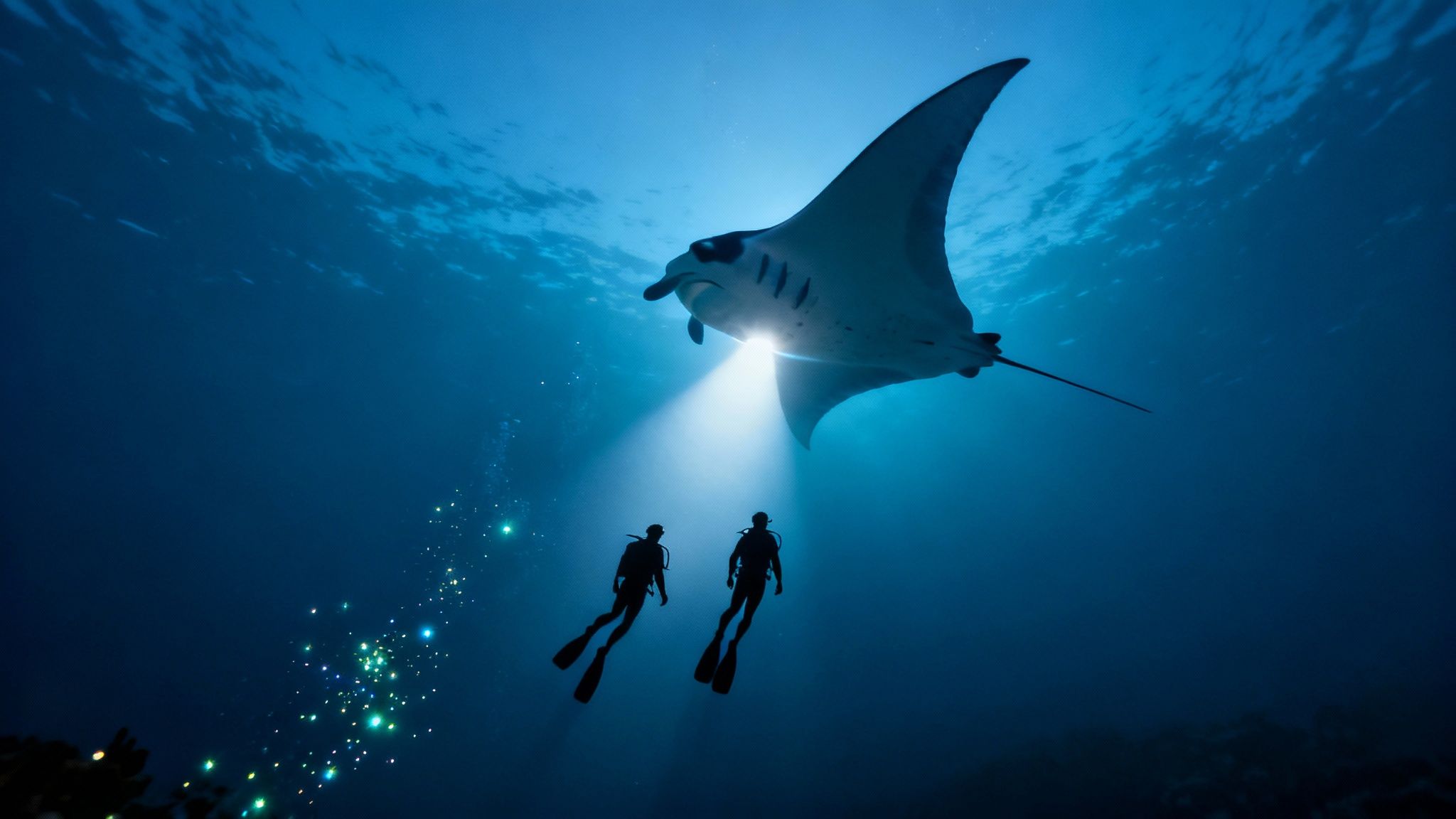
While just about any dive in Hawaii is going to be beautiful, some experiences are simply on another level. They’re the ones that belong on every diver’s life list. The Kona coast, in particular, is home to a few of these signature dives—the kind you’ll be telling stories about for years to come.
These aren't just scenic underwater tours; they are world-renowned aquatic events. From the silent, graceful ballet of giant manta rays after dark to a thrilling plunge into the ocean's alien depths, these dives represent the absolute best of scuba diving in Hawaii. They're the moments that truly make a trip unforgettable.
The World-Famous Manta Ray Night Dive
Let's be clear: this is hands-down the most famous night dive on the planet, and for very good reason. While there are a couple of locations for this dive, Garden Eel Cove is the superior choice. Its location is more protected from the ocean swell, leading to a calmer, more enjoyable experience. The viewing area is better situated and the surrounding reefs are healthier and more vibrant.
Picture this: you descend to a sandy patch on the ocean floor, about 35 feet down, just as the sun goes down. Your guide sets up powerful, upward-facing lights in the middle of your group. These lights act like a massive bug zapper, attracting clouds of microscopic plankton, which just so happens to be a manta ray’s favorite meal.
Then, the show begins. Out of the darkness, giant manta rays appear, some with wingspans stretching over 15 feet wide. They glide, swoop, and perform effortless barrel rolls just inches above your head, feeding in the light beams. It’s a peaceful, awe-inspiring, and profoundly moving experience that’s impossible to forget.
You can get more details about this incredible adventure right here at Kona Honu Divers' Big Island manta ray tours page.
The Kona Blackwater Dive
If the manta dive is a graceful ballet, the Kona Blackwater Dive is a trip to another planet. This is easily one of the most unique and thrilling dives you can do anywhere in the world, and it’s a must for adventurous, experienced divers.
The boat heads out miles from shore, positioning itself over thousands of feet of water. After sunset, you descend to about 50 feet and drift along a tethered line in the deep, inky-black open ocean. This is where you witness the largest migration on Earth, as bizarre and often bioluminescent creatures rise from the abyss to feed near the surface.
You will see things that look like they're straight out of a sci-fi movie—translucent squid, strange larval fish, and pulsating jellies that glow in the dark.
This is a true "blackwater" dive, which is a completely different beast than a standard night dive on a reef. It's an advanced experience that offers a rare peek into the mysterious world of deep-ocean pelagic life.
Advanced Diving Adventures
For certified divers who crave a bit more of a challenge, Kona’s underwater landscape is an absolute playground. The island's volcanic origins have created dramatic structures that are perfect for putting your skills to the test.
Deeper, more advanced sites often feature:
- Deep Pinnacles: Huge seamounts rising from the deep, acting as magnets for schools of larger fish and pelagics.
- Lava Tubes and Caverns: A network of swim-throughs and overhead environments that demand excellent buoyancy and navigation.
- Sheer Walls and Drop-offs: Drifting along vertical walls that plummet into the blue is a humbling experience, and you never know what might cruise by out in the deep.
These dives aren't for beginners. They typically require an advanced certification and rock-solid buoyancy control due to the depth and complex environments. Kona Honu Divers offers an advanced dive tour specifically for more experienced divers.
Vibrant Daytime Reef Dives
Of course, Kona isn't just about the epic night dives. The daytime reef diving here is spectacular, with dozens of sites to explore for every skill level.
You’ll find healthy coral gardens teeming with an incredible diversity of marine life, including a huge number of endemic species you can only find in Hawaii. Expect to see green sea turtles snoozing on the reef, clouds of colorful butterflyfish, moray eels peeking from their homes, and the occasional whitetip reef shark patrolling the sand. The calm, crystal-clear water makes these daytime dives a photographer's dream and the perfect way to spend your days before the big show begins at night.
Planning Your Hawaii Dive Trip: What To Know Before You Go
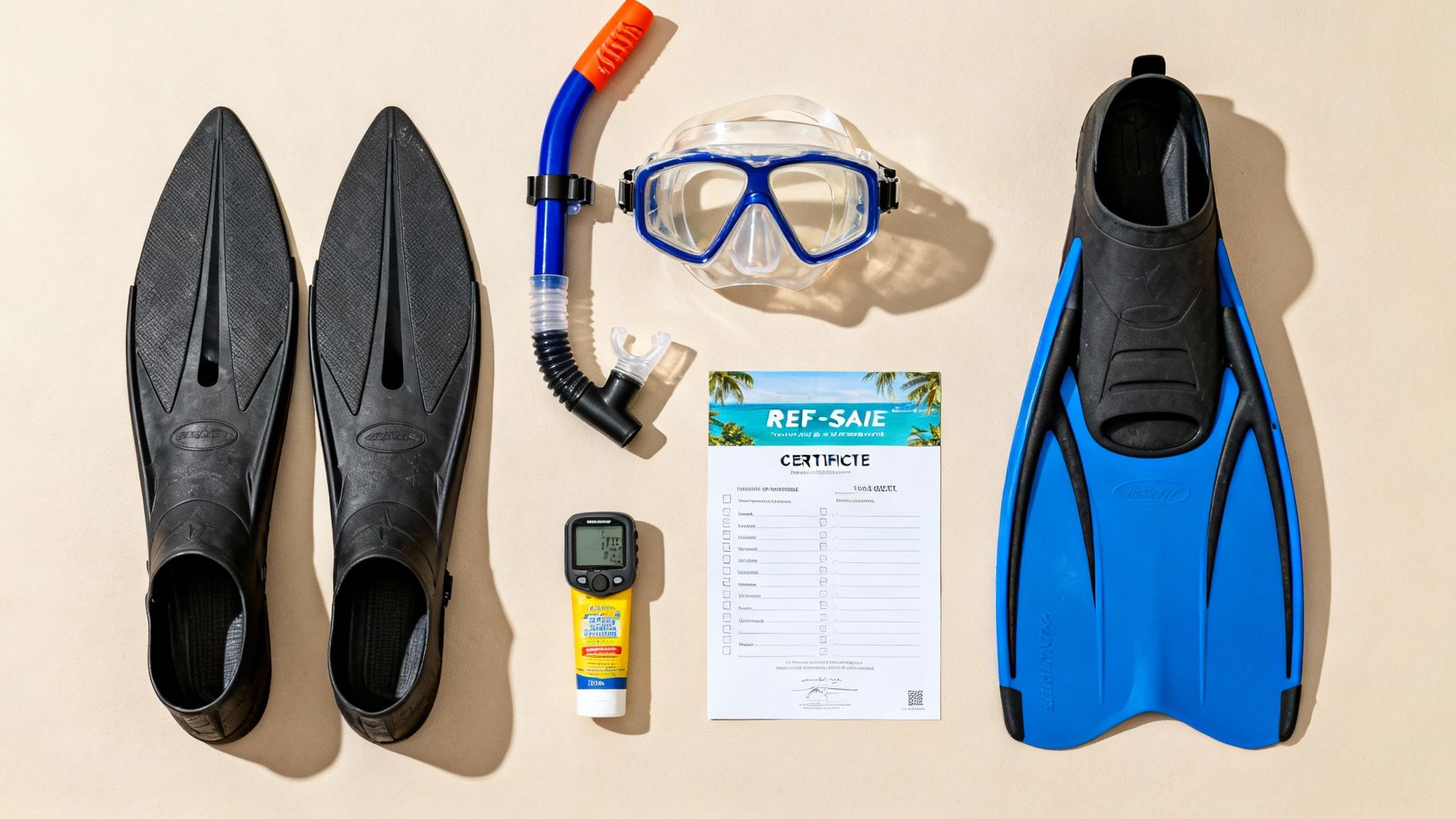
A little bit of planning is the secret sauce for a truly epic dive vacation. Knowing the best time to visit, what to throw in your bag, and what to expect underwater will make all the difference. When you're prepared, you can focus on what really matters: soaking in the incredible moments beneath the waves.
The great thing about scuba diving in Hawaii is that there’s really no bad time to go. The diving is fantastic year-round. Still, the seasons bring subtle shifts that can shape your experience, so it’s smart to know what’s in store.
The Best Time of Year for Hawaiian Diving
Hawaii’s diving conditions are pretty consistent, but we generally think of the year in two main seasons: a warm, calm summer and a slightly cooler winter that brings some very big visitors.
-
Summer (May to September): This is when the water is at its warmest, often hitting a perfect 80°F (27°C). The ocean is typically glassy and calm, and the underwater visibility can be absolutely stunning—sometimes clearing 100 feet or more. It’s a fantastic time for any diver, especially if you prefer things a bit warmer.
-
Winter (October to April): The water temperature cools down just a touch, averaging around 75°F (24°C). You might get a bit more wind and surface chop, but the real magic of winter is the arrival of humpback whales. From December through March, you can often hear their haunting songs echoing through the water on your dives. It's an experience that will give you goosebumps.
It's no secret that diving is more popular than ever. In fact, the U.S. diving tourism market, with Hawaii as a star player, is on track to hit USD 1,101.6 million in 2025. We've already seen a 5% jump in bookings in early 2024 compared to last year, driven by a desire for meaningful, eco-friendly travel and access to better gear.
A quick look at Hawaii's seasons can help you pick the perfect time for your trip.
Seasonal Diving Conditions in Hawaii
This table offers a quick overview of what to expect from Hawaii's diving conditions throughout the year, helping you plan the best time for your trip.
| Season | Water Temperature (Avg) | Visibility | Key Marine Life Sightings |
|---|---|---|---|
| Summer | 78-80°F (26-27°C) | Excellent (80-100+ ft) | Manta Rays, Reef Sharks, Dolphins, abundant Reef Fish |
| Winter | 75-77°F (24-25°C) | Good (60-80 ft) | Humpback Whales (singing!), Tiger Sharks, Manta Rays, Eagle Rays |
No matter when you visit, you're in for a treat. The key is matching the season to the experience you're looking for.
Certification and Gear Essentials
To really explore the full range of dive sites Hawaii has to offer, you’ll need to be certified as an Open Water Diver. This is your ticket to joining dive charters and exploring everything from vibrant shallow reefs to dramatic volcanic ledges.
Not certified yet? No problem. You can still get a taste of the underwater world with an introductory program like a PADI Discover Scuba Dive.
When it comes to packing, my advice is to travel light. A quality operator like Kona Honu Divers provides top-notch, well-maintained rental gear, so you don't have to lug your own BCD, regulators, and tanks across the ocean.
Here’s a short list of what you should always pack:
- Your C-Card & Logbook: Proof of certification is a must for any certified dive.
- Dive Computer: This is a non-negotiable piece of personal safety equipment.
- Mask and Snorkel: A mask that fits your face well is the key to a comfortable and leak-free dive.
- Reef-Safe Sunscreen: Help us protect Hawaii’s fragile coral by using a mineral-based sunscreen.
As you prepare for your unforgettable Hawaii diving adventure, ensure you have all the necessary gear. For those interested in tracking their underwater time, explore this helpful guide on the best dive watches.
Booking Your Dives in Advance
Here’s a final pro-tip: book your dive trips well ahead of time. This is especially true for world-famous experiences like the Manta Ray Night Dive. These charters are incredibly popular and often sell out weeks in advance, particularly during peak seasons.
Booking early doesn’t just guarantee you a spot—it gives you the freedom to choose the best dates and times for your schedule. Don’t wait until you arrive, or you might miss out on the very reason you came.
How To Choose The Right Dive Operator in Hawaii
Let’s be honest: your choice of dive operator can absolutely make or break your trip. It's probably the most important decision you'll make after booking your flight to Hawaii. A great company turns a fun dive into an unforgettable adventure, while a mediocre one can leave you feeling stressed, unsafe, or just plain disappointed.
When you're looking at options for scuba diving in Hawaii, remember you're doing more than just renting some gear. You're putting your trust—and your safety—in the hands of a crew. That’s why digging a little deeper than just the price tag is so important. The best operators pour resources into their boats, their equipment, and their people to ensure you have an amazing time from the moment you step on board.
What to Look for in a Top-Tier Dive Shop
So, how do you separate the best from the rest? It really comes down to a few key things that all world-class operations have in common.
- An Impeccable Safety Record: This is the big one. It's completely non-negotiable. A great shop will be transparent about its safety protocols, have emergency oxygen on the boat, and staff its trips with experienced, certified divemasters and instructors who know their stuff.
- High-Quality, Well-Maintained Equipment: With over 2.5 million active scuba divers in the U.S., this isn't just a casual hobby for many. A professional outfit gets that. Their rental gear, from regulators to BCDs, should be modern and serviced religiously.
- Comfortable and Purpose-Built Dive Boats: Nobody wants to be crammed onto a slow, uncomfortable boat. Look for vessels actually designed for diving—that means plenty of space to move around, easy ways to get in and out of the water, shade from the sun, and an onboard marine head (restroom).
- An Experienced and Passionate Crew: The best guides are more than just safety monitors; they're genuine ocean fanatics. A crew that’s excited to be out there will spot that rare nudibranch you would have missed and share stories that bring the reef to life.
Why Kona Honu Divers Sets the Standard
If you use that checklist, you'll quickly see why Kona Honu Divers is a standout on the Big Island. Their entire operation is built from the ground up to give divers the best possible experience.
They run a fleet of custom-built boats, like the incredible Honu One, which was designed with total diver comfort in mind. You can feel the crew’s passion for the ocean, and with over 200 years of combined experience, their knowledge of Kona's dive sites is second to none. Plus, they offer free nitrox for certified divers—a fantastic perk that can extend your bottom time and help you feel less tired after a day of diving.
Comparing Dive Companies on the Big Island
Making an informed decision is always easier when you have something to compare against. To get a full picture of the dive scene here, it's worth checking out reviews for a few of the other well-regarded operators. You can also dive deeper with our detailed guide on the top 10 Kona diving companies ranked.
Here are a couple of other respected shops on the Big Island. We’ve included their reviews so you can see what other divers have to say.
Big Island Divers is a popular, long-standing shop in Kona known for offering a wide variety of tours and PADI courses for divers of all levels.
Jack's Diving Locker is another one of Kona's original dive shops. They're highly regarded for their extensive training programs, which cover everything from beginner certifications to professional development.
By looking at these different options, you start to get a feel for what makes a company truly great. Picking the right operator is your first step toward a safe, fun, and amazing Hawaiian diving adventure.
Your Hawaii Scuba Diving Questions, Answered
Planning a dive trip always brings up a few questions, especially for a bucket-list destination like Hawaii. To make sure you feel totally prepared, we've gathered some of the most common things people ask us.
Think of this as a quick chat with your divemaster before you even leave home. We want you to feel confident and excited to book the underwater adventure of a lifetime.
So, Do I Actually Need a Certification to Dive in Hawaii?
Great question, and the answer isn't a simple yes or no.
If you want the freedom to explore Hawaii's best sites, join boat charters, and dive with just a buddy, then yes, you absolutely need to be a certified scuba diver. Something like a PADI Open Water Diver certification is your ticket to the main event. It proves you’ve got the skills and knowledge to dive safely.
But what if you're not certified yet? You're not out of luck! You can still get a taste of the underwater world through an "introductory dive," often called a PADI Discover Scuba Diving experience. You'll be paired with a certified instructor for a closely supervised dive in a calm, shallow spot. It’s the perfect way to try out breathing underwater and see if you catch the diving bug.
What’s the Water Temperature Really Like? Am I Going to Be Cold?
One of the best parts about diving here is the beautiful, warm water. You can leave the heavy-duty gear at home!
- Summer (May-Sept): The water is at its most bath-like, hovering between 78-80°F (26-27°C). A lot of divers are happy in just a rash guard, though a thin 3mm wetsuit is great for staying warm if you're doing multiple dives.
- Winter (Oct-Apr): Things cool off just a little, with temperatures averaging 75-77°F (24-25°C). Most of us will pull on a 3mm or maybe even a 5mm full wetsuit during these months. It just keeps you comfortable for the whole dive, especially on deeper trips.
Everyone feels the cold differently, but you'll never have to worry about a true "cold" water dive in Hawaii.
Is Scuba Diving in Hawaii Safe?
Yes, absolutely. Scuba diving in Hawaii is very safe, as long as you stick to standard safety practices and, most importantly, choose a professional, reputable dive operator. Your safety really comes down to three things: your training, your personal fitness, and the crew leading your dive.
We get it, people often wonder about sharks or rough seas. Here’s the real story:
- Marine Life: The sharks we see are typically gentle reef sharks that are more scared of you than you are of them. Genuinely dangerous encounters are incredibly rare.
- Ocean Conditions: The Kona coast is famous for its calm, protected waters. But a good guide knows how to read the ocean, and they will only take you to sites that are safe and appropriate for your skill level on that specific day.
- Your Dive Operator: This is key. Diving with a top-notch company like Kona Honu Divers means you have an experienced crew, a boat that's properly maintained and equipped, and small groups that are easy to manage.
The truth is, most diving incidents are caused by diver error. The two most important things you can do for your own safety are to dive within your limits and always listen to your divemaster.
Can I See Manta Rays During the Day?
It’s possible, but don't count on it. A daytime manta sighting is a rare, lucky, and usually very brief encounter. You might catch a glimpse of one cruising by in deep water or making a quick stop at a "cleaning station," but these moments are completely unpredictable.
If you want a guaranteed, jaw-dropping manta experience, the Manta Ray Night Dive is the only way to go. This world-famous dive is specifically designed to attract them. We use powerful lights to draw in the plankton they feed on, creating an incredible underwater ballet. You get to watch these gentle giants glide, swoop, and feed for the entire dive, often just inches from your face. A random daytime sighting just can't hold a candle to it.
Ready to see it all for yourself? The crew here at Kona Honu Divers is excited to show you the underwater magic of the Big Island. From the legendary Manta Ray Night Dive to stunning coral reefs, we run safe, fun, and unforgettable trips for every diver. Book your dive tour today and get ready for an adventure you'll never forget