
Picture this: you're descending into warm, impossibly clear turquoise water. Sunlight dances through the surface as you glide past ancient volcanic lava tubes and over coral reefs bursting with life. This isn't a dream—it's what scuba diving in Hawaii is all about. From the sheer underwater cliffs of Molokini to the historic shipwrecks off Oahu, the islands offer something for every diver.
But one spot, in particular, consistently delivers unforgettable experiences.
Discovering Hawaii’s Underwater Paradise
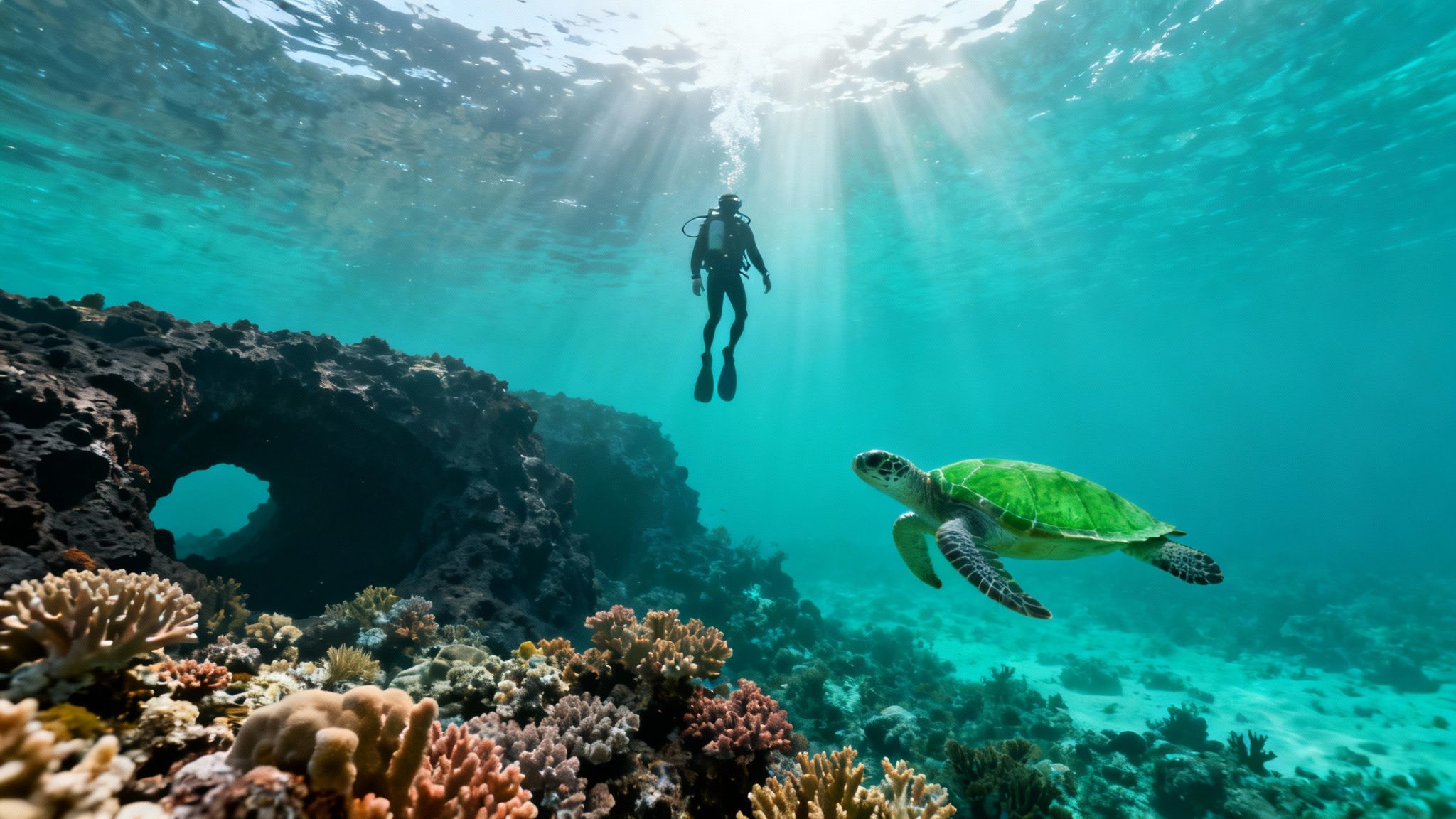
While every island has its own underwater magic, the Kona Coast on the Big Island is a true global hotspot for divers. Think of this guide as your personal map to that submerged world. We'll explore why Kona's famously calm waters and mind-blowing marine encounters make it a destination that stands head and shoulders above the rest.
With over 1.5 million scuba dives logged each year and more than 215 licensed shops, it's clear Hawaii is a premier diving destination. That's a lot of bubbles! This popularity isn't just hype; it's a testament to the incredible conditions and vibrant marine ecosystems that draw divers back year after year.
Here in Kona, shops like Kona Honu Divers are at the heart of the action, running specialized diving tours that turn a simple dive into a lifelong memory.
Why Hawaii Captivates Divers
So, what’s the secret sauce? It's a perfect storm of unique geology, staggering biodiversity, and dive sites that are surprisingly easy to access. The very volcanoes that formed these islands created a dramatic underwater landscape of lava tubes, arches, and craters—all of which are now home to a spectacular amount of marine life.
Here's a quick look at what makes Hawaiian diving a must for any enthusiast:
- Unique Marine Life: A huge chunk of the fish and critters you'll see here are endemic, meaning they exist only in Hawaiian waters. You literally can't find them anywhere else on the planet.
- Varied Dive Sites: There’s truly something for everyone. We're talking calm, shallow coral gardens perfect for your first breaths underwater, all the way to deep, technical dives that will thrill the most seasoned diver.
- Iconic Encounters: Hawaii is home to world-famous, bucket-list dives, like the legendary manta ray night dive right here off the Kona coast.
To help you get your bearings, we've put together a quick comparison of the top islands for diving.
Hawaii Diving Snapshot: A Quick Island Comparison
This table gives you a bird's-eye view of what each major island offers underwater. It’s a great starting point for figuring out which destination best fits your diving style and interests.
| Island | Best For | Key Dive Highlight | Best Time to Dive |
|---|---|---|---|
| Big Island (Kona) | Reliability & Variety | Manta Ray Night Dive, Blackwater Dives, Lava Tubes | Year-round (calmest conditions April-October) |
| Maui | Dramatic Topography | Molokini Crater Wall, Turtle Town, "Cathedrals" of Lanai | April to October (best visibility) |
| Oahu | Wrecks & Accessibility | WWII Wrecks (Corsair, YO-257), North Shore Caverns | Summer (May-September) for calmest seas |
| Kauai | Advanced & Adventurous | Sheraton Caverns, Ni'ihau & Lehua Rock (seasonal) | Summer (May-September) for North Shore access |
While each island has its standout sites, you’ll notice a theme: the Big Island’s Kona side offers unparalleled consistency and a sheer diversity of world-class dives.
Our journey starts by understanding the lay of the land—or in this case, the ocean floor. We’ll compare the diving across the islands but quickly focus on why the Big Island, and specifically the Kona coast, offers a more reliable and rewarding diving environment day in and day out.
Why Kona Is Hawaii’s Premier Dive Destination
While you can find incredible diving on every Hawaiian island, the Kona coast on the Big Island is truly in a league of its own. So what makes Kona the undisputed crown jewel of scuba diving in Hawaii? It all comes down to its unique geography.
The massive volcanoes of Mauna Loa and Hualalai create a natural shield, blocking the powerful trade winds that often stir up the waters around the other islands. This protective "wind shadow" results in remarkably calm and clear conditions nearly year-round, making Kona a diver's paradise.
This underwater sanctuary is just bursting with life. You'll find everything from sprawling coral gardens and dramatic lava rock formations to regular encounters with sea turtles (honu), playful dolphins, and graceful reef sharks. The biodiversity here is simply staggering.
Calm Waters and Unmatched Visibility
Kona's legendary calm isn't just about a comfortable boat ride—it’s the secret behind its incredible water clarity. With minimal wind and wave action, there's less sediment kicked up, often leading to visibility that pushes well past 100 feet.
Crystal-clear water completely transforms a dive. Sunlight can pierce deeper into the ocean, making the vibrant colors of the reef and its fish pop. For underwater photographers, these are dream conditions, allowing for sharp, brilliant photos without the annoying backscatter you get in murkier seas. Even if you're not holding a camera, that clarity creates a feeling of being completely suspended in another world.
Kona's protected coastline means fewer canceled dive days and more opportunities for perfect underwater conditions. It’s this consistency that allows divers to plan their trips with confidence, knowing a great experience is almost guaranteed.
A Hub for Iconic Dives
Great conditions are one thing, but Kona is also famous for hosting Hawaii's most iconic and unforgettable underwater experiences. It’s the global epicenter for two dives that belong on every diver's ultimate bucket list.
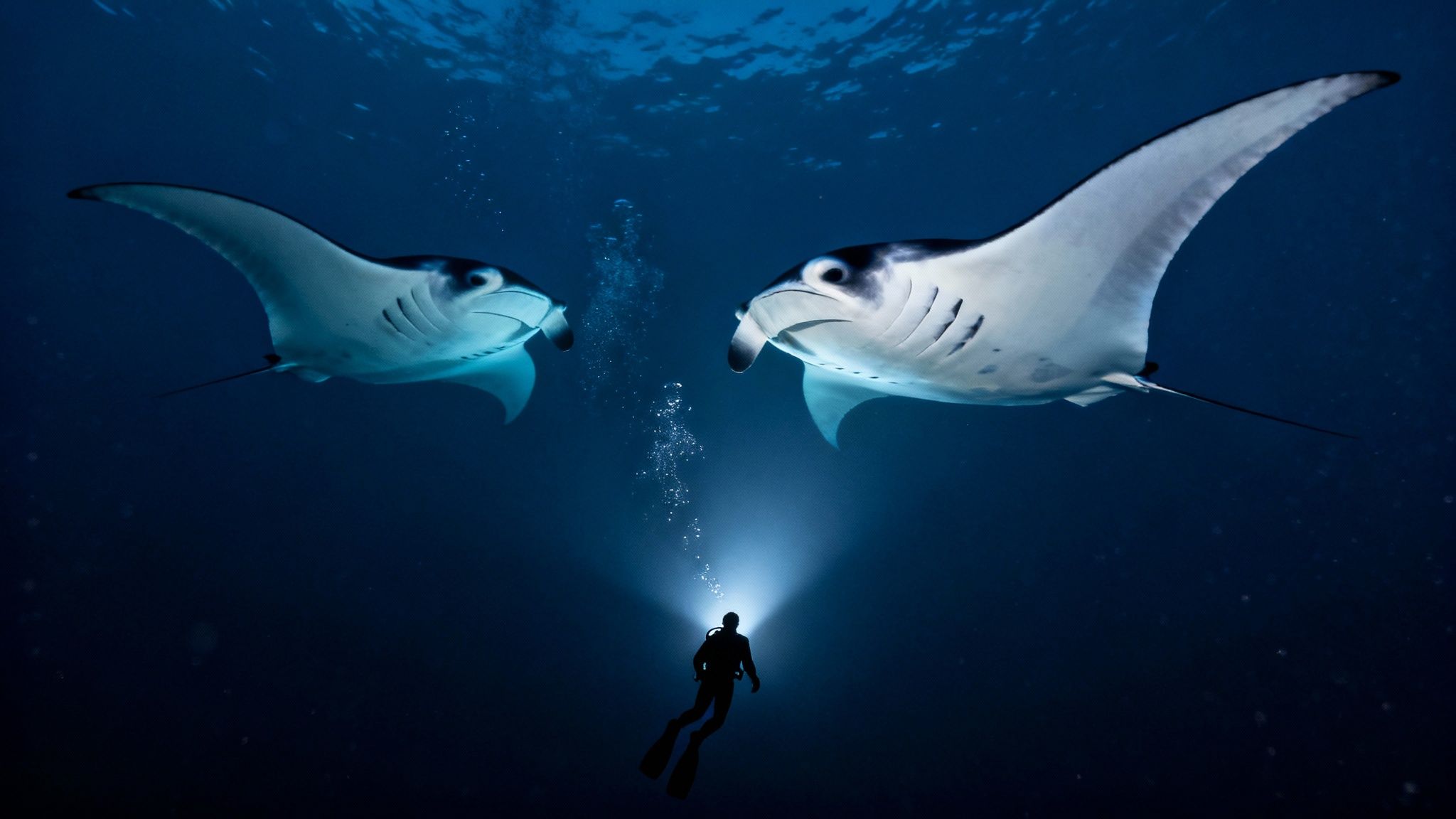
First up is the world-famous Manta Ray Night Dive. It’s a surreal, almost magical ballet where these gentle giants swoop and glide right over your head, feeding on plankton attracted by underwater lights. It’s an experience that leaves even the most jaded divers completely speechless.
Then there's the otherworldly Blackwater Dive. Often described as a spacewalk in the deep ocean, this unique night dive has you drifting in the open sea, witnessing bizarre and beautiful creatures as they migrate from the abyss toward the surface. These two adventures alone show why Kona isn't just a place to go diving—it's a destination for truly once-in-a-lifetime encounters.
Dive Sites for Every Skill Level
One of Kona’s best features is its amazing range of dive sites, offering something for everyone from brand-new divers to seasoned pros. This versatility means that no matter your experience, you can find the perfect underwater adventure.
- For Beginners: Sites like "Two Step" or "Pawae Bay" have shallow, protected reefs packed with colorful fish and turtles. They provide a safe and spectacular place to learn the ropes.
- For Intermediate Divers: Ready for more? Lava tubes, arches, and caverns at sites like "Golden Arches" and "Long Lava Tube" offer exciting structures and topographies to explore.
- For the More Experienced: Advanced divers can tackle deeper reefs and dramatic drop-offs, opening up opportunities for longer bottom times and thrilling drift dives along the walls.
This incredible diversity makes Kona the perfect spot for groups and families where skill levels might vary. Everyone can have a world-class dive that’s perfectly suited to their comfort and certification.
Kona Honu Divers excels at matching divers with the ideal sites, offering a wide array of diving tours on the Big Island that showcase the best of what the coast has to offer. To dive deeper into the specifics, you can explore more about what is unique about diving in Kona and see just how varied the underwater landscapes are. With a perfect blend of calm seas, amazing visibility, iconic wildlife, and sites for every diver, Kona solidifies its status as the ultimate destination for your Hawaiian scuba diving adventure.
Exploring Kona’s Most Unforgettable Dives
Alright, let's get to the good stuff—the dives that put Kona on the map for anyone serious about scuba diving in Hawaii. These aren't just entries in a logbook; they are the kind of profound, often life-changing experiences that you’ll talk about for years. We’re talking about underwater ballets with gentle giants and journeys into the planet's largest migration. This is where Kona delivers pure magic.
It's no secret that diving is booming. The industry is projected to grow into a massive USD 18.5 billion market by 2035, and North America is a huge part of that. Destinations like the Kona coast are at the heart of this trend, thanks to world-class operators offering unforgettable night dives. If you're interested in the numbers, Future Market Insights has a deep dive into the industry's growth.
The Legendary Manta Ray Night Dive
Picture this: you're kneeling on the sandy ocean floor as dusk settles, surrounded by the glow of powerful underwater lights. Then, out of the darkness, they appear. Giant, impossibly graceful manta rays, some with wingspans stretching over 12 feet, start gliding just inches above your head. They perform effortless barrel rolls, their massive mouths open to filter the clouds of plankton drawn to the light.
This isn't a scene from a nature documentary. It’s the world-famous Kona manta ray night dive, a natural spectacle so intimate and breathtaking you truly have to see it to believe it. While there are a few places to do this dive, one spot consistently stands out from the rest.
While other sites exist, Garden Eel Cove offers a superior and more reliable viewing experience. Its protected location results in calmer conditions, and the unique underwater "campfire" setup provides a better, more comfortable viewing area for divers, ensuring a truly spectacular show.
The healthier reefs at Garden Eel Cove also mean a more consistent food source for the mantas, making it the most dependable spot to witness this incredible feeding frenzy. Choosing a dive operator that prioritizes this site can make all the difference in turning a good dive into a magical one.
Journey into the Abyss with a Blackwater Dive
If the manta dive is an underwater ballet, then the Kona Blackwater Dive is a spacewalk into the deep ocean. It’s one of the most unique dives you’ll ever do. You head miles offshore, over thousands of feet of water, and descend to about 50 feet at night. Tethered to the boat, you simply drift in the darkness.
What you're witnessing is part of the largest migration on Earth, as bizarre and beautiful creatures rise from the crushing depths to feed near the surface.
- Pelagic Wonders: You’ll see creatures most people will never encounter—many are transparent, bioluminescent, or in their tiny larval stages.
- Alien-Like Life: Keep an eye out for see-through larval lobsters, iridescent squid, and otherworldly jellyfish that pulse with their own internal light.
- A Photographer's Dream: The pitch-black background makes these strange, glowing subjects pop, creating an unbeatable opportunity for macro photography.
This isn't your typical reef dive. It’s a pure, open-ocean experience that offers a rare glimpse into a hidden world. The Kona Blackwater Dive tour is a must for any adventurous diver looking for something completely different.
Thrills for the Advanced Diver
Beyond its famous night dives, Kona’s dramatic volcanic topography has created a stunning underwater landscape full of challenges for more experienced divers. Think deep lava tubes, thrilling drop-offs, and intricate archways.
These dives often involve deeper profiles and potential currents, demanding solid buoyancy control and awareness from a diver. But for those with the training, these sites represent the absolute pinnacle of Kona adventure. We’ve put together a complete guide on what is the best dive in Kona to help you choose your next challenge. If you’re ready to see what lies beyond the typical dive sites, an advanced dive tour will unlock Kona's most thrilling underwater secrets.
How To Plan Your Perfect Hawaii Dive Trip
So, you're ready to plan your underwater adventure in Hawaii? The good news is, it's pretty hard to go wrong. Unlike a lot of places around the world with strict dive seasons, Hawaii’s warm, clear waters are amazing pretty much all year long.
You can expect the water temperature to stay in a very comfortable range of 75-80°F (24-27°C). The visibility is usually fantastic, too—often stretching beyond 80-100 feet, especially along the calm and protected Kona coast. You can book a trip for just about any month and know you're in for some incredible diving.
That said, the marine life does follow its own calendar. If hearing the otherworldly songs of humpback whales through the water is on your bucket list, you'll want to aim for the winter months. From about December through March, they migrate to Hawaiian waters, and it’s a truly unforgettable experience.
Seasonal Diving Guide For Hawaii
While any time is a good time to dive here, this little guide breaks down what you can generally expect throughout the year.
| Season | Water Temp (Avg) | Visibility | Key Marine Life Sightings |
|---|---|---|---|
| Winter (Dec-Mar) | 75-77°F (24°C) | Good to Excellent | Humpback Whales (songs underwater), Manta Rays, Turtles |
| Spring (Apr-Jun) | 76-78°F (25°C) | Excellent | Pilot Whales, Dolphins, abundant reef fish |
| Summer (Jul-Sep) | 78-80°F (27°C) | Excellent (Calmest Seas) | Manta Rays, Eagle Rays, occasional Whale Sharks |
| Fall (Oct-Nov) | 77-79°F (26°C) | Good to Excellent | Turtles, Dolphins, large schools of fish |
It's clear that no matter when you visit, something amazing is waiting for you beneath the surface.
Shore Diving vs Boat Diving
You've really got two main options for getting in the water: from the shore or off a boat. Shore diving can be easy and a bit more budget-friendly, but you’re often limited to spots that are easily accessible and, frankly, more crowded.
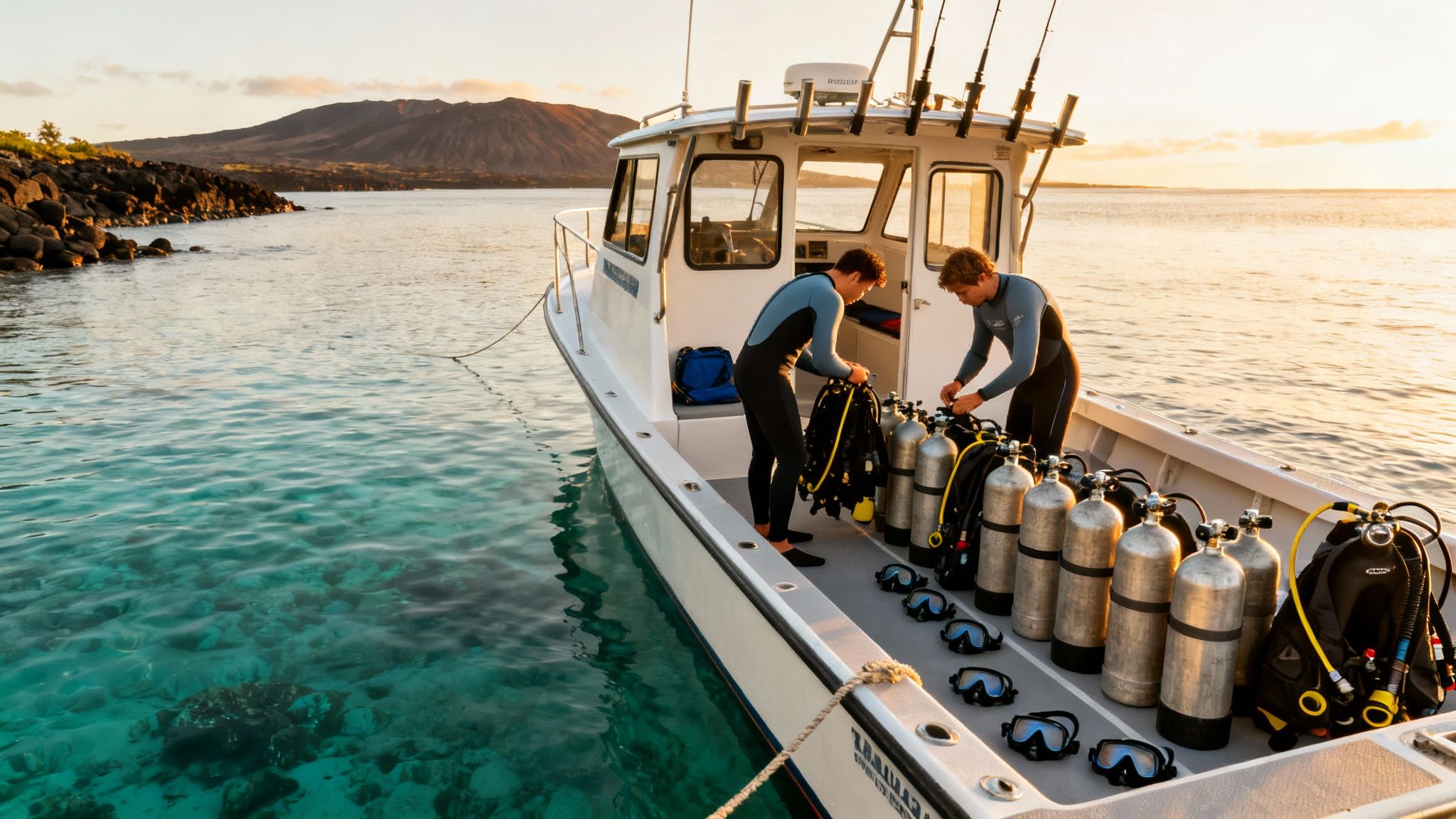
For a truly top-tier experience, you just can't beat a boat dive. Getting out on a professional charter, like the trips we run at Kona Honu Divers, opens up a whole different world. We can take you to pristine offshore reefs and dramatic lava tubes that you simply can’t get to from a beach. This is where you find the healthiest coral and the shy marine life that stays away from the hustle and bustle of the shoreline. If you want a better idea of the costs involved, you can learn more about how expensive scuba diving in Hawaii can be and see why a quality boat trip is such a great value.
Boat diving isn't just about getting to better, less-crowded dive sites. It’s also about safety and convenience. When you have a professional crew handling the boat, the gear, and the emergency plan, you can just relax and immerse yourself in the dive.
Your Essential Packing Checklist
Packing the right stuff can make or break a trip. While you can rent gear, most divers have a few personal items they prefer to bring for a perfect fit and familiar feel. A little preparation goes a long way, and having some essential watersports first aid knowledge is always a smart move before any water-based vacation.
Here’s a quick checklist to help you get organized:
H3: Dive Gear Essentials
- Mask, snorkel, and fins: Even if you rent everything else, a mask that fits your face without leaking is a game-changer.
- Dive computer and certification card: Don’t leave home without them!
- Wetsuit: A 3mm suit is usually the sweet spot for Hawaii's water temps.
- Regulator and BCD: If you have your own and love it, bring it along.
H3: Personal Items
- Reef-safe sunscreen: This is a big one. Standard sunscreens have chemicals like oxybenzone that kill coral reefs. In fact, Hawaii has banned the sale of sunscreens containing these chemicals, so make sure yours is compliant.
- Reusable water bottle: Hydration is key, especially out on the water.
- Swimsuits, sunglasses, and a hat: The Hawaiian sun is no joke.
- A light jacket or hoodie: It can get surprisingly cool on the boat ride back after a dive.
H3: Optional But Recommended
- Underwater camera: You're going to see things you'll want to remember forever.
- Dry bag: Perfect for keeping your phone, keys, and wallet safe and dry on the boat.
- Dive logbook: The best way to record all the amazing details of your Hawaiian dives.
How to Choose the Right Hawaii Dive Operator
Picking the right dive operator can honestly make or break your trip. It’s one of the most important calls you’ll make when planning your scuba diving in Hawaii. The right crew doesn’t just shuttle you to a dive site; they elevate the whole experience, making it safer, more fun, and something you’ll remember for years.
When you're looking at shops, especially around Kona, you're not just booking a spot on a boat. You're investing in expertise and peace of mind. A top-notch operator has guides who know the reefs like the back of their hand, runs clean and comfortable boats, and keeps their rental gear in pristine condition. All those pieces have to come together for a perfect day on the water.
What to Look For in a Dive Shop
Not all dive outfits are created equal. To make sure you have the best time possible, here are the key things to look for before you book.
-
Safety is Everything: This is the absolute dealbreaker. Look for shops with a flawless safety record. Their boats need to have emergency oxygen, first aid, and a clear emergency plan. A good pre-dive briefing is thorough, covering the dive plan, hand signals, and what to do if something goes wrong.
-
The Quality of the Boat and Gear: A comfortable, well-kept boat makes a world of difference. You want a purpose-built dive boat with plenty of shade, an easy way to get in and out of the water (like a proper dive ladder), and an onboard marine head (that's a toilet, for you landlubbers). If you’re renting gear, it should be modern, clean, and working perfectly.
-
Experienced Local Guides: The best guides are the ones who live and breathe these waters. They've spent years, sometimes decades, exploring the same reefs. That deep, personal knowledge means they can find the cool hidden spots, point out rare critters, and adjust the plan based on the day's conditions so you always see the best of what the ocean has to offer.
-
Stellar Reviews and Reputation: A company's reputation is out there for everyone to see. Check out recent reviews on Google and TripAdvisor. When you see consistently great feedback about safety, friendly staff, and amazing dives, you know you’ve found a winner.
Why Kona Honu Divers Stands Out
When you stack it all up, Kona Honu Divers just nails it on every front. Their team has a combined 200+ years of industry experience, and it shows in their passion for creating incredible dive adventures.
Their boats, the Honu One and Honu Two, were custom-built specifically for diving Kona's coast, which means they offer a level of comfort you won't find everywhere else. Little things, like a hot water shower on deck and plenty of snacks and drinks, show they’re thinking about the diver's experience from start to finish. This focus on making people happy is a huge part of who they are, and it’s why their reviews are so consistently fantastic.
Ready to experience the best diving tours the Big Island has to offer?
Other Respected Big Island Operators
To give you the full picture, it’s worth mentioning that the Big Island has several fantastic, highly respected dive companies. Operators like Jack’s Diving Locker and Big Island Divers have been part of the Kona community for years and have also earned great reputations for being professional and running quality trips.
Knowing you have a few excellent choices helps. It means you can do a little homework and feel confident you’re picking the absolute best fit for you and your dive buddies. Making an informed choice is the first step toward a truly unforgettable trip.
Jack’s Diving Locker
Big Island Divers
Get Certified Or Advance Your Skills In Paradise
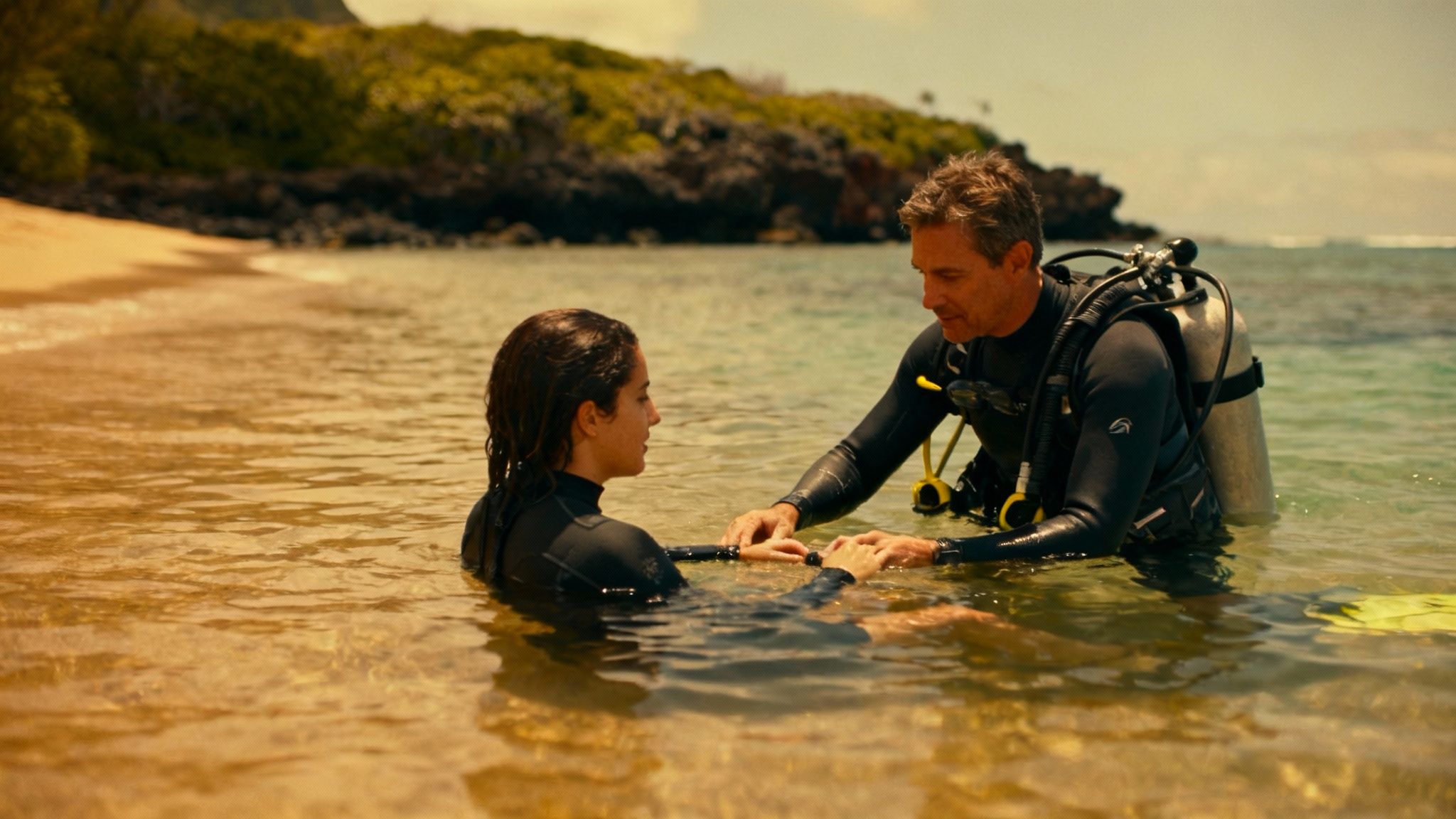
Whether you've never taken a single breath underwater or you've got hundreds of dives under your weight belt, Hawaii is one of the best places on the planet to take your skills to the next level. The Kona coast, in particular, is like a natural classroom. The water is warm, calm, and so clear you can see forever.
Think about learning buoyancy for the first time while a green sea turtle glides past you. Your first open water dives won't be in a cold, murky lake—they'll be over vibrant coral reefs buzzing with life. That’s what makes getting your PADI Open Water certification while scuba diving in Hawaii so special. The conditions here let you relax, build confidence, and truly connect with the ocean from day one.
Continuing Your Underwater Education
Already certified? Great, the real fun is just getting started. Hawaii’s diverse underwater landscapes are the perfect playground for expanding your diving toolkit.
-
Advanced Open Water: This is all about getting more comfortable and trying new types of diving. You’ll work on core skills like deep diving and navigation, and then you get to pick three other "adventure dives." Think night diving, perfecting your buoyancy, or even fish identification.
-
Underwater Photography: Kona is a photographer's dream. With visibility that often tops 100 feet and no shortage of amazing marine life, a specialty course can teach you how to capture those incredible moments instead of just remembering them.
-
Enriched Air (Nitrox): This is easily one of the most useful specialties you can get. Diving with nitrox allows you to safely extend your time at depth, which means more time exploring Kona's awesome lava tubes and dramatic drop-offs on a single tank.
Turning your vacation into a learning experience does more than just add another certification card to your collection. It deepens your connection with the ocean and makes every single dive you do from here on out that much more rewarding.
As you start your training, remember that diving is a physical activity. Knowing how to prevent sports injuries can keep you safe and comfortable in the water. Good training makes you not just a better diver, but a safer one. Whether it’s your first breath or your five-hundredth dive, Hawaii is the perfect place to grow.
Your Hawaii Scuba Diving Questions, Answered
Planning a dive trip to Hawaii for the first time? You've probably got a ton of questions. As a dive shop, we hear them all, so we've put together some straight answers to the most common things people ask.
Do I Need to Be Certified to Scuba Dive in Hawaii?
Not necessarily! While you do need an Open Water certification for most of our regular boat dives, you can absolutely get your feet wet without it.
We offer a "Discover Scuba Diving" experience specifically for beginners. It's a fantastic way to test the waters, literally. You'll learn the basics from a PADI instructor in a safe, controlled setting and then go on a real, shallow dive under their direct supervision. No cert card required.
When Is the Best Time of Year to Go Diving?
Honestly, any time is a good time for scuba diving in Hawaii, especially here on the Kona coast. The water stays in that perfect 75-80°F (24-27°C) range all year long.
If you're after the absolute calmest, glassiest seas, the summer months (roughly April to October) are prime. But winter has its own unique magic—that's when the humpback whales are here. You might not see them, but hearing their songs echoing through the water on a dive is an experience you'll never forget.
Will I See Sharks in Hawaii?
Yes, and that's a good thing! A healthy shark population means a healthy ocean.
The sharks you're most likely to spot are whitetip reef sharks. They're usually pretty shy, resting on the sandy bottom or cruising along the reef, and they really want nothing to do with divers. Seeing bigger sharks is very rare, and your divemaster will always cover safety procedures in the pre-dive briefing.
What Is the Most Famous Dive in Hawaii?
Oh, that's an easy one. Without a doubt, the most legendary dive in all of Hawaii is the Manta Ray Night Dive right here in Kona.
It's famous for a reason. People fly in from all over the globe to kneel on the seafloor and watch these gentle giants swoop and barrel-roll through the beams of our lights. It’s a true bucket-list dive and captures the incredible, one-of-a-kind magic of the Big Island.