
Picture this: an underwater world where ancient lava tubes weave through gardens of vibrant coral. That's what scuba diving in Hawaii is all about. It’s a truly world-class experience, offering everything from the legendary manta ray night dive off the Kona coast to dramatic volcanic landscapes hidden just beneath the waves. Consider this your personal map to exploring one of the most incredible dive destinations on the planet.
Why Is Hawaii a Premier Global Diving Destination?
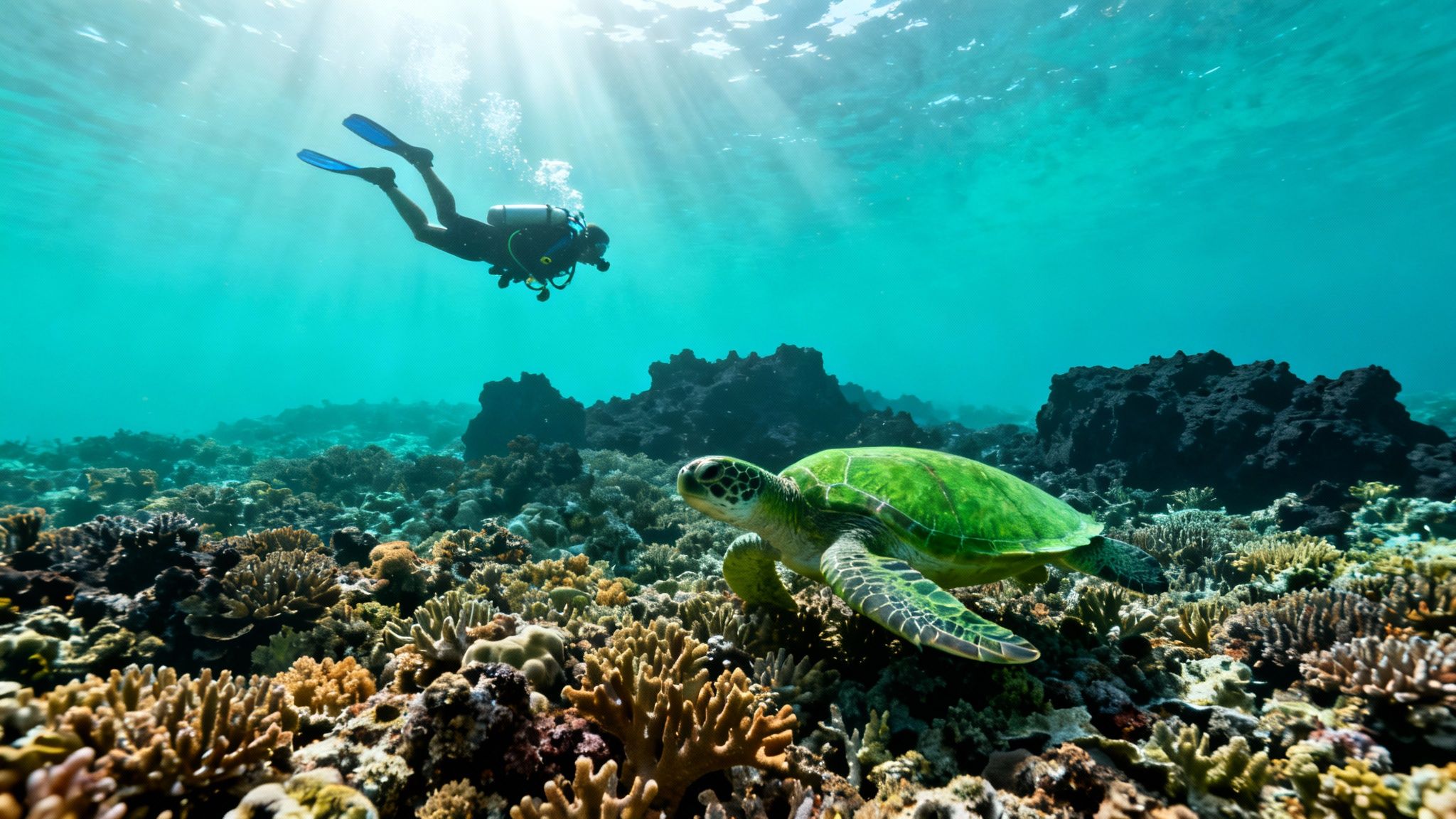
Hawaii’s reputation as a top-tier dive spot isn't just about postcard-perfect scenery; it’s built on a solid foundation of incredible biodiversity, unique geology, and a dive culture that welcomes everyone. The islands are a magnet for divers of all stripes, promising unforgettable encounters with sea turtles, sharks, and countless species you simply can't find anywhere else on Earth.
The numbers really tell the story. Divers take the plunge here over 1.5 million times each year, supported by more than 215 licensed dive shops across the islands. That huge figure shows just how magnetic Hawaii's crystal-clear waters and thriving reefs are for people worldwide. This passion for diving also fuels a significant part of the local economy, especially in coastal towns on Kona, Maui, and Oahu.
What Sets Hawaiian Diving Apart
The real magic of diving in Hawaii is the sheer variety. One day you could be gliding through a sunken shipwreck, and the next, you're navigating a lava tube forged by ancient volcanic flows. It’s an adventure that constantly changes.
Here’s a taste of what makes it so special:
- Volcanic Topography: The islands’ fiery origins created a stunning underwater playground of arches, caverns, and massive crater dive sites like Molokini.
- Endemic Marine Life: Nearly a quarter of the marine life here is unique to Hawaii. It’s a genuine thrill to spot creatures that call this one specific corner of the ocean home.
- Year-Round Diving: With water temperatures staying a comfortable 75-80°F (24-27°C) all year, there's never a bad time to get in the water.
- Iconic Encounters: Hawaii delivers bucket-list experiences, from the world-famous Kona manta ray night dive to the awe-inspiring sight of migrating humpback whales during the winter.
Think of this guide as your compass for planning the ultimate trip. We'll navigate the best dive sites, share essential tips, and help you choose the right operator for your adventure. And if you're looking to share your own stories, getting tips on writing an engaging travel blog can help you capture the magic.
Now, let's dive in and uncover what makes this archipelago a diver's dream.
Discovering Hawaii’s Top Dive Regions and Iconic Sites
Every Hawaiian island has its own unique underwater personality, making the archipelago a true diver's paradise. But if there's one place that consistently tops the charts, it's the Big Island's Kona Coast. Tucked away on the island's leeward side, it's naturally shielded from big ocean swells, which means the water is often incredibly calm and clear. It’s the perfect setup for exploration.
Kona is famous for its vibrant coral reefs and incredible underwater landscapes shaped by ancient lava flows. You can glide through massive lava tubes and arches that have become bustling highways for marine life. It’s a world that feels both ancient and alive, and it's easily accessible through a variety of general diving tours on the Big Island.
The World-Famous Manta Ray Night Dive in Kona
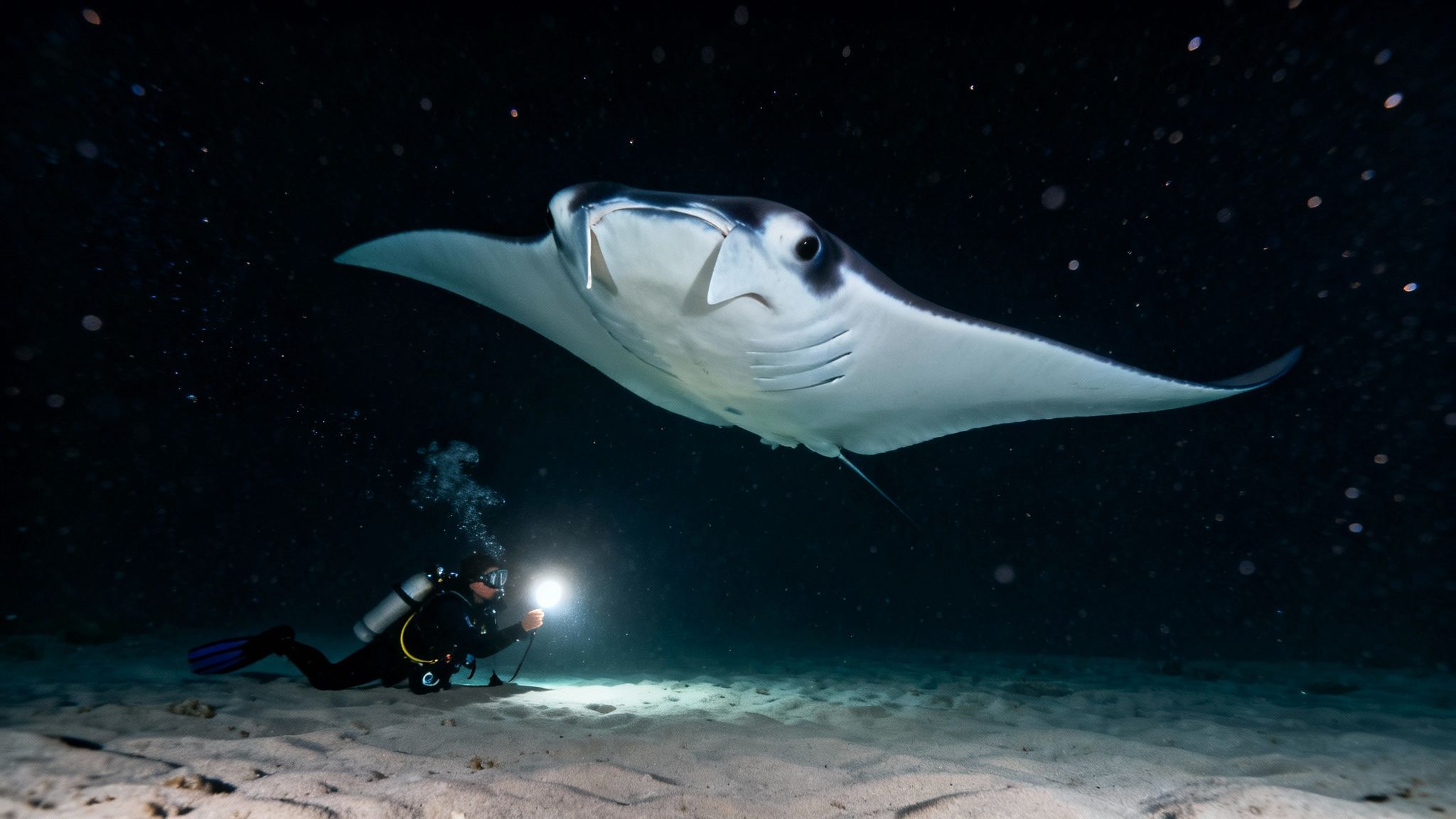
The undisputed crown jewel of Kona diving—and maybe all of Hawaii—is the Manta Ray Night Dive. This is more than just a dive; it's an experience that borders on the spiritual and will stick with you forever.
Here's how it works: after sunset, you descend to a designated spot on the sandy ocean floor where powerful lights create an "underwater campfire." This light attracts swarms of plankton, and the plankton, in turn, brings in the mantas for a feast.
These gentle giants, with wingspans stretching up to an incredible 16 feet, perform a silent, graceful ballet right in front of you. They swoop, glide, and barrel-roll through the beams of light, mouths agape. It's a humbling, awe-inspiring spectacle that leaves even the most jaded divers speechless.
Now, for an adventure this special, location is everything. While there are a couple of sites, Garden Eel Cove stands out as the superior choice. It’s more protected, which means a calmer, more stable viewing area without strong currents. This isn’t just better for you—it’s better for the reef, leading to a healthier ecosystem and an all-around more pristine experience. Booking a premier manta ray dive tour at this spot is your ticket to seeing the show in the best conditions imaginable.
Island-Hopping to Other Premier Dive Destinations
While Kona often steals the spotlight, the other islands offer incredible dives that are absolutely worth the trip. Each one gives you a different taste of Hawaiian diving, so you can pick your destination based on the adventure you're craving. Figuring out which Hawaiian island is best for scuba diving really just comes down to personal preference.
The dive scene here is massive for a reason. With over 1.5 million dives logged annually, Hawaii's dive industry is a cornerstone of a visitor economy projected to hit $21.2 billion in 2025. It’s a huge part of what makes the islands a top-tier global destination.
To help you choose, here's a quick look at what makes each of the main islands a standout diving destination.
Hawaii's Premier Dive Destinations At A Glance
| Island | Key Dive Experience | Best For | Typical Visibility |
|---|---|---|---|
| Big Island (Kona) | Manta Ray Night Dive & Blackwater | Pelagic encounters, volcanic topography | 80-100+ ft |
| Maui | Molokini Crater | Drift dives, pristine coral gardens | 100-150 ft |
| Oahu | Wreck Diving (YO-257, Sea Tiger) | Wreck enthusiasts, history buffs | 60-100 ft |
| Kauai | Lava Tubes & Turtle Caverns | Unique topography, turtle sightings | 50-80 ft |
As you can see, the variety is staggering. Whether you want to swim with the gentle giants of Kona, explore the historic wrecks off Oahu, or drift along a volcanic crater wall in Maui, Hawaii delivers. The archipelago truly offers a lifetime of underwater adventures just waiting to be discovered.
Exploring Unique Hawaiian Diving Adventures

Sure, the stunning reefs and world-famous manta ray encounters are what bring many divers to Hawaii. But for those with an adventurous spirit, there's a whole other side to diving here—one that takes you far beyond the sunlit shallows. Hawaii offers some truly specialized dives that will push your skills and completely redefine your idea of what the ocean holds.
These aren't your typical two-tank reef tours. Think of them as expeditions into the raw, untamed heart of Hawaii's underwater world, from the inky black abyss miles offshore to the hidden tunnels carved by ancient lava flows.
The Kona Blackwater Dive
Picture this: you’re drifting miles from shore in the middle of the night, suspended over thousands of feet of pitch-black water. Below you is nothing but the deep. This is the Kona Blackwater Dive, and it’s every bit as surreal as it sounds—often described as an "underwater spacewalk."
This dive isn’t about the reef. It’s about witnessing one of the largest migrations on the planet. Every single night, a universe of bizarre, often bioluminescent, creatures rise from the crushing depths to feed near the surface.
You’ll come face-to-face with alien-like organisms, nearly transparent larval fish, and shimmering jellyfish that pulse with their own light. It’s an otherworldly adventure that honestly feels more like exploring a distant galaxy than diving on Earth.
This is a rare window into a hidden ecosystem, revealing creatures so strange and beautiful that few people will ever see them. If you’re ready for a dive that is unlike anything you have ever experienced, you can learn more about the Blackwater Dive tour and prepare for an unforgettable journey.
Advanced Deep Dives and Wreck Exploration
For certified divers looking to expand their horizons, Hawaii delivers. The islands’ dramatic volcanic geology creates some spectacular underwater topography that really comes alive on a deep dive.
These advanced profiles take you down to sheer walls, submerged pinnacles, and deep ledges where you're much more likely to cross paths with big pelagic life. Schools of jacks, passing eagle rays, and the occasional shark are common sights once you get a bit deeper. We run specialized premium advanced deep dives for experienced divers who are comfortable at depth and want to see a wilder side of Kona.
Beyond the natural structures, Hawaii is a world-class destination for wreck diving, especially around Oahu. These sunken ships have become incredible artificial reefs, each with its own story and a thriving ecosystem.
- YO-257 & San Pedro: Two ships sunk intentionally off Waikiki. They’re now magnets for turtles, eagle rays, and whitetip reef sharks.
- Sea Tiger: A former fishing vessel sitting in over 100 feet of water, its multiple decks offer fantastic opportunities for penetration for properly certified divers.
- Mahi Wreck: This 165-foot minesweeper off Waianae is a classic Oahu wreck, accessible to a wide range of skill levels and always full of life.
Cavern and Lava Tube Diving
The very same volcanic forces that forged the Hawaiian Islands also left behind a network of incredible underwater tunnels and caverns. There's nothing quite like exploring these lava tubes. It's a true adventure, swimming through passages created by molten rock centuries ago.
You’ll find the best examples on the Big Island, where the geology is youngest. As you navigate these swim-throughs, you’ll see how life has adapted to these cool, shaded environments. The way sunlight streams through openings in the cavern ceilings is just breathtaking—it creates an effect like stained glass in an underwater cathedral. To get a better sense of what makes these sites so incredible, you can read more about what is unique about diving in Kona.
How To Choose The Right Dive Operator In Kona
Picking the right dive operator is probably the single most important decision you’ll make for your Hawaii scuba trip. This isn’t just about booking a boat ride; it’s about who you trust with your safety, your comfort, and ultimately, the quality of your entire underwater adventure. The right crew can turn a good dive into a life-changing memory.
Kona is a world-class diving destination, so you’ve got plenty of options. But they're not all the same. The trick is to look past the glossy photos and get down to what really matters: a rock-solid safety record, top-notch gear, comfortable boats, and a crew that knows these waters like the back of their hand.
What To Look For In A Premier Dive Shop
When you're weighing your options, here are the key things that separate the great shops from the merely good ones:
- Safety First: Does the crew live and breathe safety? A professional operation will have clear, thorough pre-dive briefings, emergency oxygen readily available on the boat, and a team that follows procedures without making things feel rigid or boring.
- Small Group Sizes: Getting packed onto a boat with too many other divers can feel chaotic and impersonal. Shops that intentionally keep their groups small give you more one-on-one attention from the guides, which is a huge plus for new divers or anyone tackling a more advanced site.
- The Quality of the Guides: A great divemaster is so much more than a tour guide. They're your underwater naturalist, your safety net, and your storyteller. The best ones have an almost supernatural ability to spot well-camouflaged creatures you'd swim right past and can handle any situation with a calm, confident demeanor.
- Boat Comfort and Vibe: You'll be spending a good amount of time on the boat between dives. Is there plenty of shade? Is getting in and out of the water easy? Do they offer snacks and drinks? A comfortable surface interval makes that second dive all the more amazing.
Top-Rated Dive Operators In Kona
To give you a head start, here’s a look at some of Kona’s most respected dive companies.
Kona Honu Divers consistently comes up as a top choice on the Big Island. They've built an incredible reputation for their friendly, customer-focused approach and having one of the most experienced crews around. They're especially known for their commitment to small groups, which makes every trip feel more like a private charter than a crowded tour.
When you choose a trusted local operator like Kona Honu Divers, you're also supporting the local community. The dive industry is a huge part of Hawaii's economy. Across the islands, divers log about 1.5 million dives every year. This feeds into a visitor economy projected to hit $21.2 billion in 2025, supporting countless local jobs and businesses. You can dive deeper into the numbers with Hawaii's economic outlook on dbedt.hawaii.gov.
Of course, it’s always smart to compare. A couple of other highly-regarded shops in Kona also get rave reviews.
Jack’s Diving Locker is another Kona institution. They've been around for a long time and are known for their comprehensive training courses and a wide variety of dive trips suitable for every skill level.
Big Island Divers is also a major player, offering a full slate of charters. They run the famous manta ray night dive and also have options for those interested in getting into technical diving.
At the end of the day, a little research goes a long way. Taking the time to pick the right operator will pay off big time, ensuring your Kona diving experience is safe, unforgettable, and everything you've been dreaming of.
Planning Your Hawaii Dive Trip: Practical Tips
A little bit of planning goes a long way. Getting the logistics sorted out before you even pack your bags means you can spend less time stressing and more time soaking in Hawaii’s incredible underwater world.
When Is The Best Time to Dive In Hawaii?
One of the absolute best things about diving in Hawaii is that it’s fantastic all year round. The water temperature hovers in a comfortable 75-80°F (24-27°C) range, so there's never a bad time to jump in.
That said, the seasons do bring a few changes that might influence when you decide to visit.
- Summer (May-September): This is when you'll find the calmest, flattest water, especially on Kona's sheltered leeward coast. Visibility is often phenomenal, sometimes pushing well past 100 feet. It’s the perfect time for underwater photography and just appreciating the little details on the reef.
- Winter (December-March): While you might see bigger swells on the open ocean, this is prime humpback whale season. There's truly nothing like hearing whale songs echoing through the water during your dive—it's a haunting, magical experience you will never, ever forget.
Honestly, there’s no wrong time to come. Your "best" time really just depends on what you're hoping to experience. Do you want glass-calm seas or the soundtrack of migrating giants?
Your Essential Packing Checklist
Packing the right gear makes all the difference between a comfortable, easy dive and a frustrating one. While we offer high-quality rental gear, many divers find that bringing a few personal items makes their experience that much better.
Must-Have Dive Gear:
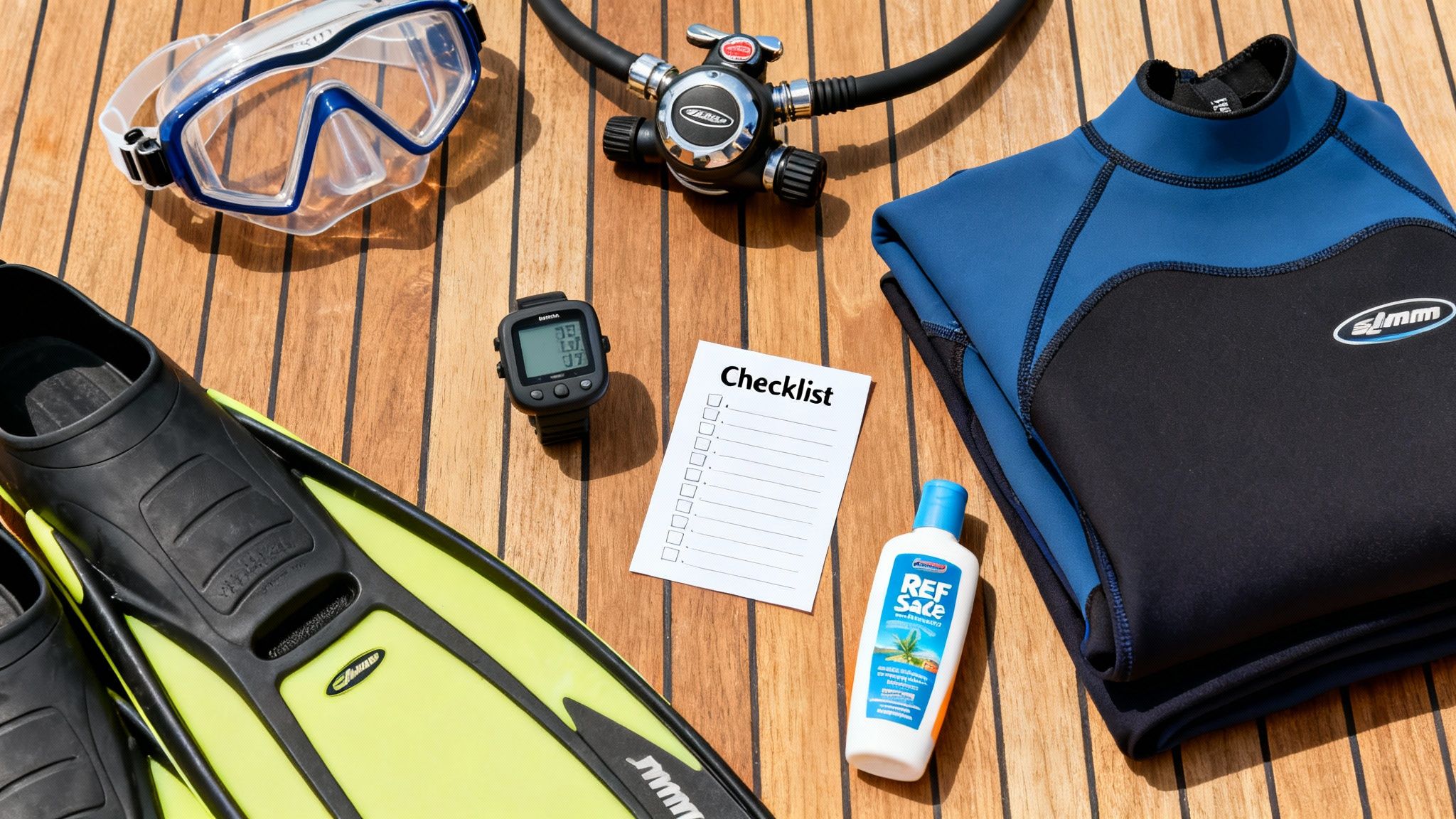
- Mask, Snorkel, and Fins: A mask that fits your face perfectly is your best friend underwater. Bringing your own is the surest way to avoid those annoying, persistent leaks.
- Dive Computer: This is a non-negotiable safety tool. Every reputable dive operator in Hawaii will require each diver to have their own.
- Wetsuit: A 3mm wetsuit is the sweet spot for most of the year. If you know you get chilly, a 5mm is a great choice, especially for deeper dives or during the slightly cooler winter months.
- Certification Card (C-Card): Don’t leave home without it! We need to see proof of your certification before you can join any certified dives.
Other Important Items:
- Reef-Safe Sunscreen: Hawaii law bans sunscreens with oxybenzone and octinoxate because they harm our fragile coral. Be sure to pack a mineral-based one (look for zinc oxide or titanium dioxide).
- Reusable Water Bottle: Staying hydrated is critical for safe diving. Help us cut down on plastic waste by bringing your own bottle to refill.
- Logbook: This is the perfect souvenir! It's the best way to remember your amazing dives and get them stamped by your divemaster.
Certification and Medical Requirements
In the dive community, safety is always priority number one. Before we head out on the boat, there's a little paperwork to take care of. Every diver will need to fill out a standard medical questionnaire, which helps us identify any health conditions that could pose a risk underwater.
Heads Up: If you have any pre-existing medical conditions like asthma, heart problems, or have had recent surgery, you absolutely must get a physician's clearance before your trip. Showing up with a signed medical release from your doctor can prevent any last-minute issues that could keep you out of the water.
This simple step ensures your safety and helps us make sure you have the best and safest experience possible. For a full picture of the costs involved, from gear to tours and certifications, our guide on how expensive scuba diving in Hawaii is is a great resource.
Booking Your Dives in Advance
Hawaii is one of the world's top dive destinations, and the most popular charters fill up fast. This is especially true for those bucket-list experiences like the Manta Ray Night Dive or the surreal Kona Blackwater Dive.
To make sure you get a spot, we strongly recommend booking your tours several weeks or even months ahead of time, particularly if you’re traveling during a busy season. Getting your dives locked in early means you can just relax and get excited for your trip without the stress of scrambling for a spot.
Your Hawaii Diving Questions, Answered
Any big trip comes with questions, and planning a dive vacation to Hawaii is no different. We get asked these all the time, so we’ve put together some answers to help you get ready for your adventure in our incredible Pacific waters.
Let's clear up some of the common queries so you can focus on the important stuff—getting excited for the dive of a lifetime.
What Certification Level Do I Need?
The great thing about Hawaii is that there’s a dive for just about everyone, whether you’re taking your first breaths underwater or you’re a seasoned pro with hundreds of dives in your logbook.
For most of our boat dives and reef tours, an Open Water certification is all you need. This is the foundational cert that shows you’ve got the essential skills down for a safe and fun dive.
But for some of the more advanced stuff—think deep wrecks or sites with stronger currents—you'll need your Advanced Open Water certification. If you're hoping to tackle those more demanding dives, it’s a good idea to get that training done beforehand. For divers looking to really push their skills, our premium advanced dive tours are the perfect next step.
Should I Bring My Own Gear or Rent It?
Ah, the classic question every traveling diver asks. The honest answer? It really comes down to personal preference, comfort, and how much you’re willing to haul across the ocean.
Renting is incredibly easy. You don't have to lug a heavy, oversized bag through the airport, and you can rest assured our gear is professionally maintained and perfectly suited for diving here in Hawaii. It’s the hassle-free option, plain and simple.
On the flip side, nothing beats the comfort and familiarity of your own equipment. This is especially true for the most personal pieces of gear like your mask, computer, and regulator. Knowing your gear inside and out can add a serious dose of confidence to any dive.
What Is The Best Island for Scuba Diving?
Trying to pick the “best” island for diving in Hawaii is like trying to pick a favorite child—they’re all amazing in their own unique way. The right island for you depends entirely on what you want to see and experience underwater.
Here’s a quick rundown to help you choose:
- The Big Island (Kona): This is the undisputed champ for marine life and those once-in-a-lifetime big animal encounters. It's home to the world-famous Manta Ray Night Dive and the mind-bending Kona Blackwater Dive. If you're after jaw-dropping experiences, Kona is your spot. Check out the full range of diving tours available on the Big Island to see what we mean.
- Maui: Famous for its crystal-clear water and the dramatic volcanic walls of Molokini Crater. It's an awesome choice for beautiful reef dives and easy-going drift diving.
- Oahu: If you’re a history buff, you can't beat Oahu. It has the best wreck diving in the state, with sunken ships and planes that have transformed into incredible artificial reefs teeming with life.
- Kauai: The "Garden Isle" offers a wilder, more rugged dive experience. Expect to explore unique lava tubes and volcanic formations, with sea turtle sightings on almost every dive.
Is It Safe To Dive With Sharks in Hawaii?
Absolutely. Hawaii has a healthy shark population, and for many of our guests, spotting one is the highlight of their trip! The shark you’re most likely to see is the **whitetip reef shark**, a pretty mellow species that’s usually more interested in napping under a ledge than paying any attention to divers.
Diving with sharks here is very safe. Any reputable dive operator puts safety and respect for the animals first. Our guides are experts in marine life behavior and will make sure any encounter you have is a positive one.
Remember, we are visitors in their home. By following your guide's instructions and practicing responsible diving etiquette—like not touching or chasing wildlife—you can safely appreciate these magnificent creatures in their natural habitat.
Hopefully, these answers help you get a better picture of what to expect. A lifetime of adventure is waiting for you beneath the waves!
Ready to explore the incredible underwater world of the Big Island? Kona Honu Divers offers a wide range of dive trips for all skill levels, from the world-famous Manta Ray Night Dive to thrilling advanced adventures. Book your unforgettable Hawaiian dive today at https://konahonudivers.com.