
Scuba diving around the Hawaiian Islands is a year-round invitation: warm water meets a kaleidoscope of marine life and easy shore entries. More than 1.5 million dives happen here each year, placing Hawaii among the world’s premier dive destinations. Discover colorful reefs and volcanic underwater landscapes that feel like living cathedrals beneath the waves.
Each reef in Hawaii began as molten lava, cooling into arches, caverns and canyons where fish, turtles and invertebrates gather. It’s like carving your own path through an underwater basilica. This guide breaks down everything you need to plan unforgettable adventures in Hawaiian waters.
You’ll find clear advice on:
- Island comparisons and top dive sites, from Kona’s lava tubes on the Big Island to Maui and Oahu
- Signature experiences like the manta ray night dive and open-ocean blackwater drifts
- Seasonal shifts, weather patterns and windows for 30+ meter visibility
- Gear essentials, Nitrox benefits and certification pathways for newcomers and veterans
- Sample itineraries tailored to families and advanced divers
- Booking logistics, safety protocols and environmental stewardship
“Gliding through lava arches and coral columns feels like exploring an ancient, submerged sanctuary.”
Guide Overview
Market data show Hawaii leading North America’s dive tourism, contributing a significant slice of U.S. dive revenues with premium experiences. For deeper insight, see the Future Market Insights report on United States Diving Tourism Market.
With water temperatures hovering between 23–27°C and visibility often exceeding 30 meters, you can dive in almost any month with confidence in clear conditions.
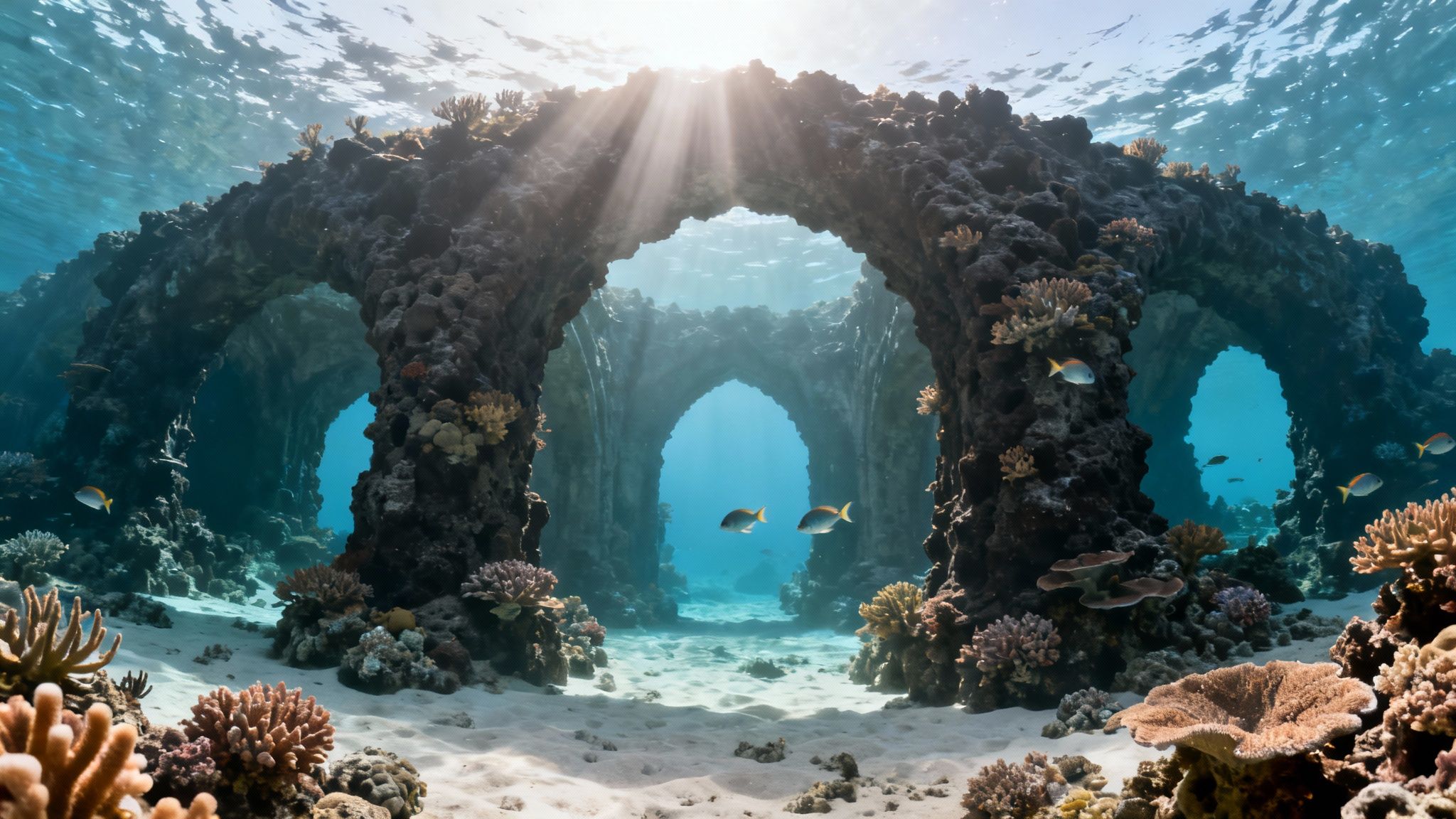
From gentle shore entries perfect for first-timers to adrenaline-charged drift dives along towering reef walls, Hawaii caters to every skill level. Rental gear is widely available, and local dive shops offer expert support—so you can travel light and still dive with top-quality equipment.
You can explore the scale of Hawaiian diving by reading our detailed dive activity analysis in the article on the popularity of diving in Hawaii
As you continue through this guide, get ready for hands-on tips, vivid dive stories and expert advice to plan every detail of your underwater adventure. Let’s dive in!
Happy diving ahead, and Aloha!
Hawaii’s main islands are living monuments of ancient lava flows, carving caverns, arches and walls beneath the waves. Each underwater landscape tells a volcanic story you won’t find anywhere else.
Despite its compact size, the state’s scuba scene features 215 licensed dive operations and logs over 1.5 million dives every year. Learn more about dive industry popularity in Hawaii in this report from DedePuDive.
Here’s a quick snapshot of what each island delivers:
- Big Island: dramatic lava tubes and Kona drift dives
- Maui: soaring coral towers at Molokini Crater
- Oahu: WWII wrecks paired with reef walls near Waikiki
- Molokai: sea cliff drifts that often attract pelagics
- Lanai: sheltered bays teeming with reef fish
Big Island Dive Sites
The Big Island stands out for easy shore entries that drop off into deep, current-swept walls. Lava arches along Kona’s coastline become tunnels where schools of fish weave in and out.
- Two Step at Hōnaunau Bay: calm shore entry, flourishing coral gardens
- Turtle Pinnacles: green sea turtles amid jagged lava boulders
- Captain Cook Monument drift: clear currents with pelagic visitors
Big Island dives can flip from tranquil coral patches to steep drop-offs in a heartbeat.
Site Difficulty And Access
Depths and currents range from mellow to challenging—so plan according to your certification and comfort.
- Shore Entries: beginner-friendly, minimal current, shallow to 12 m
- Boat Drift Dives: intermediate, currents ~1 knot, depths 15–25 m
- Walls & Channels: advanced, flows >2 knots, depths up to 40 m
Always align your skill level with current strength and depth for a safe dive.
Marine Life Highlights
Each island hosts its own cast of underwater characters. Choose sites based on the wildlife you most want to see.
- Green turtles patrol reef flats off Big Island and Maui
- Schools of jacks and surgeonfish swirl around Molokini and Oahu wrecks
- Eagle rays and spinner dolphins cruise Lanai and Molokai waters
Maui And Molokini Highlights
Maui’s reefs rise like underwater skyscrapers, often bathed in visibility exceeding 25 m—a photographer’s paradise. Seasonal currents tend to be mild, though it’s wise to check local forecasts before you jump in.
- Molokini Crater Wall: prolific coral growth, sculpted overhangs
- Lahaina Night Dives: turtle sightings by day, vibrant nocturnal life
Boat departures from Māʻalaea Harbor run twice daily, making it easy to fit a dive into any schedule.
Oahu Molokai And Lanai Overview
Oahu mixes urban wrecks with shallow fringing reefs just off Waikiki. Molokai’s sheer cliffs form long drift routes, while Lanai’s Hulopoe Bay offers glassy water and rich macro habitats.
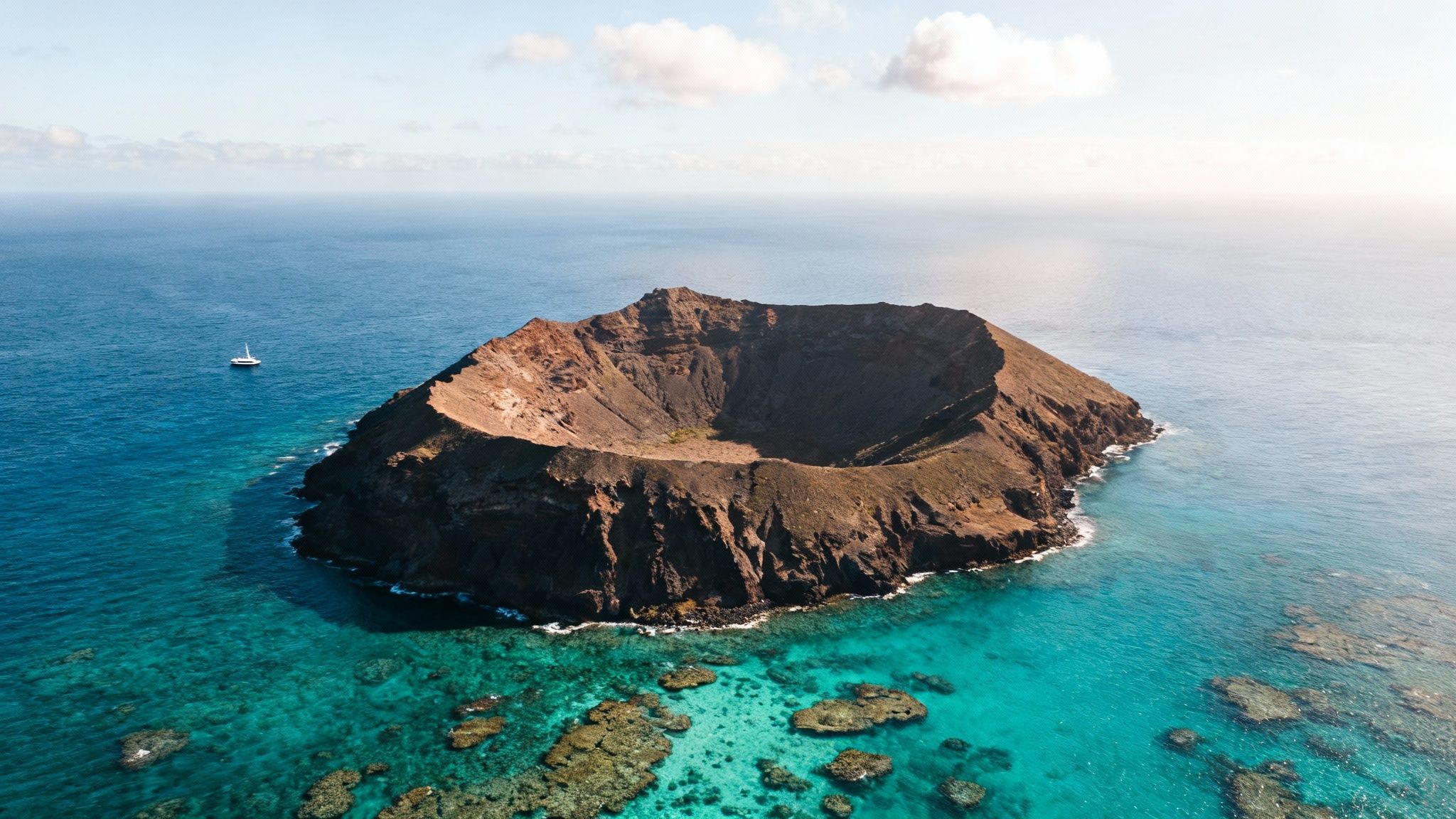
Most dive sites hug leeward shores for calmer seas and consistent visibility. For a deeper dive into which island suits you, check out our guide: Which Hawaiian Island Is Best For Scuba Diving?
Comparison Of Hawaiian Islands For Scuba Diving
To help you zero in on the right spot, here’s a quick side-by-side look at each island’s top dive stats:
| Island | Number Of Sites | Signature Experience | Visibility (m) | Ideal Months |
|---|---|---|---|---|
| Big Island | 60+ | Lava Tube Drift | 25–35 | Year-Round |
| Maui | 45 | Molokini Crater Wall | 20–30 | Apr–Oct |
| Oahu | 50 | WWII Wrecks | 15–25 | Jun–Dec |
| Molokai | 20 | Sea Cliff Drift | 15–25 | May–Sep |
| Lanai | 15 | Hulopoe Bay Macro | 10–20 | Feb–Jun |
For a full range of Kona and Big Island dive experiences, explore our diving tours page.
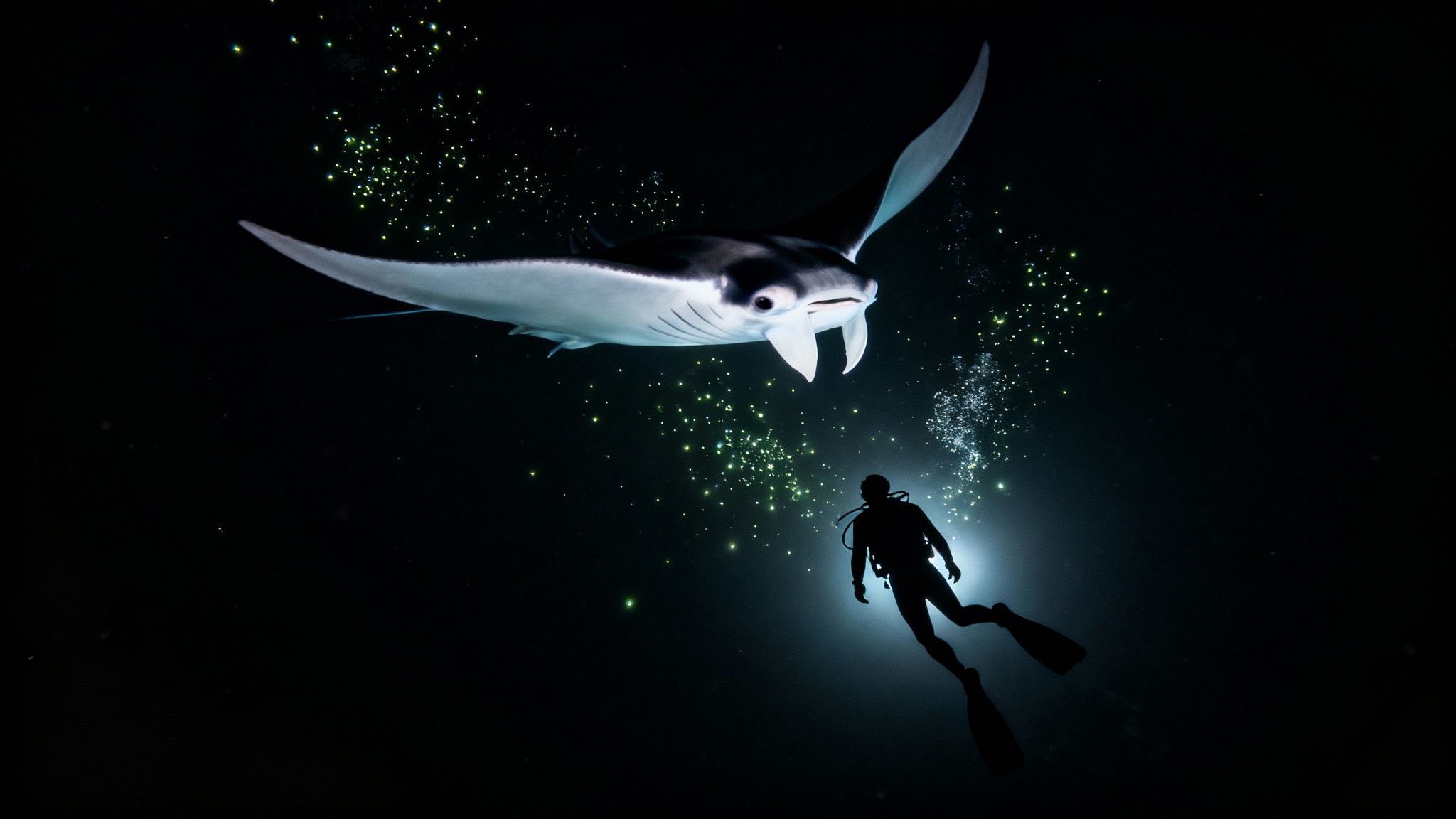
Watching manta rays swirl beneath lights in Kona feels like stepping into a secret performance. Garden Eel Cove’s natural walls shelter a thriving reef, drawing these gentle giants into a nightly plankton banquet.
Manta Ray Night Dive
Descending to 18–20 meters in calm water is like entering an underwater theater. Kona Honu Divers sets powerful floodlights that attract mantas as if by magic.
Garden Eel Cove stands out as the superior choice for manta ray night dives: its protected cove ensures calmer conditions, an unparalleled viewing platform, and thriving reef habitat that draws mantas close each evening.
“The mantas seemed drawn to the lights like moths to a flame,” recalls veteran diver Leah.
I’ve hovered with my camera as two rays glided in perfect synch—an impromptu ballet just inches away. They feed on plankton clouds swirling under the lights, turning the cove into a living spotlight.
Book the Manta Ray Dive Tour and experience the magic at Garden Eel Cove.
Eerie Blackwater Night Dive
Imagine drifting under a cloak of stars, surrounded by the glow of bioluminescent plankton. On a blackwater dive, you float in open ocean currents, watching tiny deep-sea larvae and juvenile jellyfish drift past.
Key features include:
- Vertical Drift down to 10+ meters in open water
- Bioluminescence lighting your path like a million fireflies
- Rare Species sightings of juvenile jellyfish and fish larvae
Book the Blackwater Dive tour to experience Kona’s nightly nutrient upwelling in full sci-fi mode.
Advanced Channel Drift Trips
Currents pushing you along sheer ledges at up to 2 knots feel like an underwater zip-line. These channel drifts demand Advanced Open Water certification and prior drift experience.
“Nothing beats the thrill of being carried by currents over drop-offs,” says dive pro Mark.
Kona Honu Divers’ premium two-tank trip is built for thrill-seekers ready to tackle Kona’s offshore channels.
Below is a quick snapshot of specialty dives available around Hawaii’s Big Island.
Specialty Dives In Hawaii
| Experience | Depth Range | Duration | Operator Link | Cert Level |
|---|---|---|---|---|
| Kona Manta Ray Night Dive | 18–20 m | ~90 minutes | Manta Ray Dive Tour | Open Water + Night |
| Blackwater Night Drift | 10–30 m | ~60 minutes | Blackwater Dive | Advanced Open Water |
| Channel Drift Adventure | 15–40 m | Two tanks | Premium Advanced Trip | Advanced + Drift |
Each of these Specialty Dives In Hawaii brings a mix of wonder, marine science, and pure adventure. Pick one—any will reshape how you see the ocean.
Diving Conditions And Gear
Visibility often tops 30 meters thanks to Kona’s clear currents. Night excursions demand reliable lighting—pack at least 1000 lumens on your primary light and always carry a backup.
- Wetsuit: 5mm for 24–26°C water
- Lighting: Primary and backup dive lights
- Safety: Surface signaling device and spare batteries
Expert Tip: Run through your gear checklist on deck to avoid surprises once you descend.
Find More Marine Encounters
Beyond mantas, Hawaii teems with whales and rainbow-hued reef fish. If you’re curious about close encounters with humpbacks, check out our guide on Can You Scuba Dive With Whales in Hawaii.
By sampling these signature dives, you’ll see why 16% of visitors pick mantas as their top sight. Whether it’s the glow of plankton or a silent manta dance, Kona Honu Divers has the perfect specialty trip. Each outing blends storytelling with expert guidance and pristine ocean conditions.
Ready to lock in your spot? Reserve your adventure with Kona Honu Divers today.
Hawaii’s underwater seasons ebb and flow much like a lush rainforest’s wet and dry cycles. Knowing when water temperatures peak, visibility clears up, and currents shift makes all the difference in choosing the right month for your skill level.
- Check tide charts and current forecasts before each dive to steer clear of unexpectedly strong flows.
- Pack a surface marker buoy and a reliable dive light to stay visible in low-light or choppy conditions.
- Stay within no-decompression limits and heed crew briefings to respect local marine life and safety protocols.
Hawaii Dive Seasons And Conditions
Use this snapshot to line up your calendar with monthly water temperatures, visibility ranges and prevailing currents. Each statistic helps you zero in on the best windows for your preferred dive style.
| Month | Water Temp (°C) | Visibility (m) | Current Strength |
|---|---|---|---|
| Jan | 23 | 25 | Moderate |
| Feb | 23 | 25 | Moderate |
| Mar | 24 | 27 | Low |
| Apr | 24 | 28 | Low |
| May | 25 | 30 | Low |
| Jun | 26 | 32 | Moderate |
| Jul | 27 | 33 | Moderate |
| Aug | 27 | 33 | Moderate |
| Sep | 26 | 30 | High |
| Oct | 25 | 28 | High |
| Nov | 24 | 27 | Moderate |
| Dec | 23 | 26 | Moderate |
This overview highlights February to April as the driest stretch, offering glassy waters and peak visibility before the tradewinds pick up.
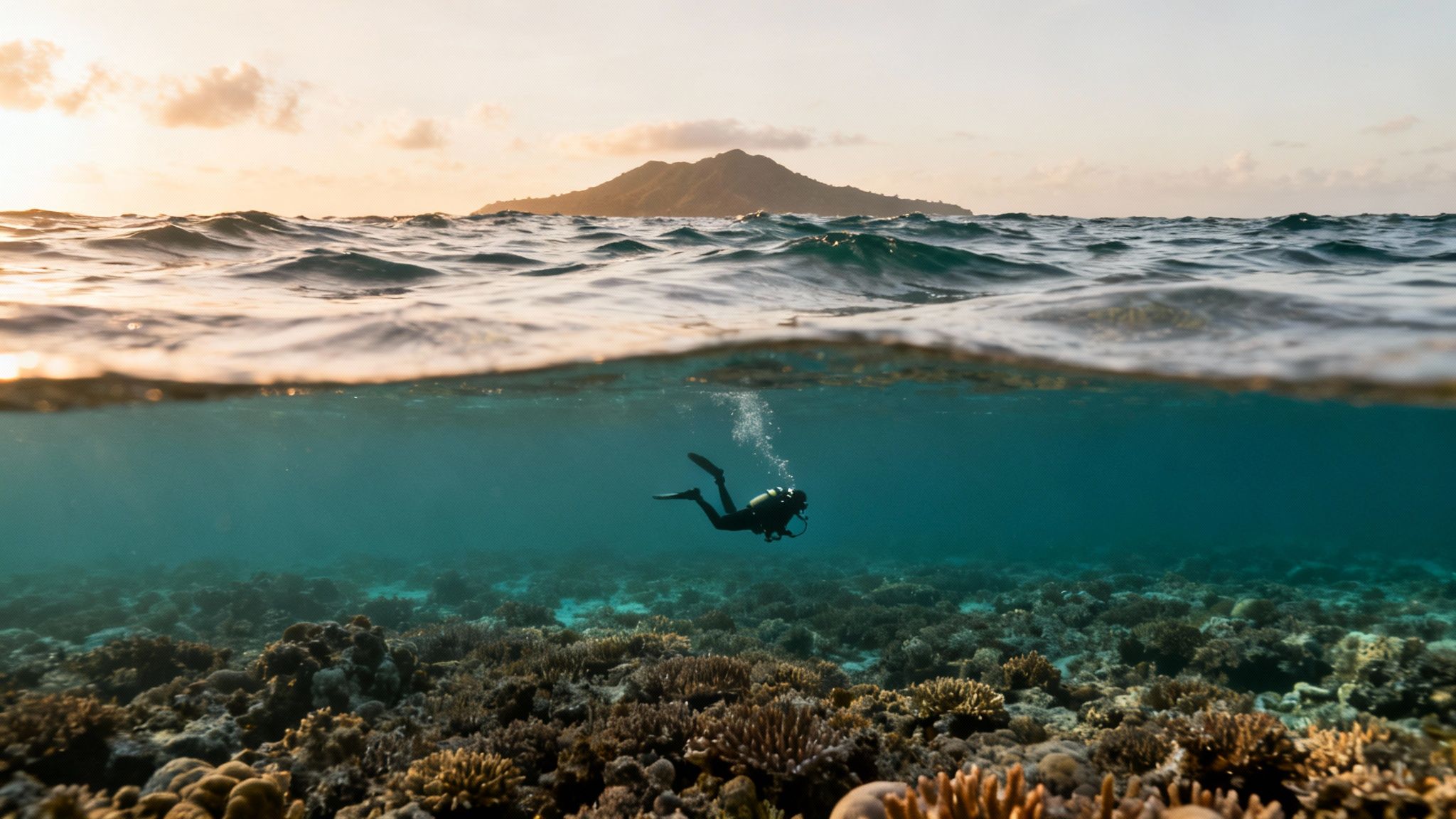
Tradewind Effects
Northeasterly tradewinds can smooth out Kona’s leeward shores while stirring up currents on the windward side. Timing your dives around these patterns often means calmer entry points and more predictable drift routes.
- Visit in spring to witness reef fish spawning—early morning wreck dives are prime time for this spectacle.
- Opt for off-peak fall trips to enjoy shorter lines at popular shore entries and quieter boat decks.
- Schedule blackwater drifts around the new moon phase for the most dazzling bioluminescent shows in open ocean settings.
Certification Impacts
When new open-water certifications spike, local operators see higher bookings for both beginner shore dives and specialty excursions. That ripple effect influences seasonal capacity and helps fund conservation fees.
Read the full report on how certification growth shapes Hawaii’s dive capacity on Grandview Research.
Always check currents and moon phase charts with your dive operator before heading out.
Seasonal Planning Tips
- Schedule morning slots to beat the afternoon tradewind buildup and enjoy glass-like conditions.
- Reserve boat spots at least two months ahead during summer’s peak to secure your preferred dates.
- Consult local shops for daily sea-state reports and portable nitrox fills to safely extend bottom time.
Scuba diving in Hawaii is part science, part art—merging seasonal data with on-the-water expertise to deliver unforgettable underwater adventures. Next, check out our gear and certification guide to make sure you’re fully prepared for whatever the seasons bring.
Stay flexible, embrace the island’s marine rhythms, and enjoy responsibly.
Choosing the right gear and certifications is the first step toward a safe, memorable dive in Hawaii.
Think of your regulator as the diver’s personal air pump—steady and reliable with every breath. Meanwhile, your dive computer plays the role of an underwater navigator, keeping tabs on depth, ascent rates, and no-decompression limits. Together, they create a safety net that lets you focus on the reef below.
Essential Scuba Equipment
Here’s a tropical-ready packing list:
- Regulator (first and second stages) plus a backup mouthpiece
- BCD (Buoyancy Control Device) matched to your torso length
- Dive Computer programmed for your gas mix and nitrox settings
- Wetsuit (3–5 mm for 23–27 °C waters)
- Primary Torch and Secondary Light for night and blackwater dives
- Surface Marker Buoy (SMB) to signal your position on drift dives
After each outing, rinse all gear in fresh water, let it air-dry out of direct sunlight, then lubricate O-rings and store in a cool, dry place. These simple steps will keep your equipment in top shape.
Certification Pathways
Align your training with the dives you plan to do. Here’s a quick comparison:
| Certification | Max Depth | Ideal For |
|---|---|---|
| Open Water Diver | 18 m | Shore entries and reef exploration |
| Advanced Open Water | 30 m | Drift dives, wreck penetration |
| Nitrox Specialty | 40 m | Longer bottom times |
| Rescue Diver | 30 m | Enhanced safety skills and leadership |
If your itinerary includes deep or drift dives beyond 18 m, a medical clearance is non-negotiable. A dive-trained physician will review cardiovascular and pulmonary health to keep everything above board.
Always secure a medical sign-off before venturing past 30 m or if you’ve had ear, sinus, or lung issues.
Nitrox Benefits And Timing
Switching to nitrox can boost your no-decompression limit by 20–40%, giving you more relaxed bottom time along Hawaii’s vibrant walls.
Plan ahead to get the most out of your certification:
- Calculate your EAD (Equivalent Air Depth) and MOD (Maximum Operating Depth)
- Verify the tank’s oxygen percentage before each dive
- Let your dive computer adjust stops and limits on the fly
Tip: Treat your dive computer’s nitrox mode like a smart timer that adapts to how you breathe.
Fitness Routines For Diving
A well-rounded fitness plan elevates your comfort and control underwater. Aim for three weekly sessions:
- Cardio (running, cycling, swimming) for at least 30 minutes
- Strength Training (planks, squats, deadlifts) to support your core and legs
- Flexibility Work (yoga flows focusing on shoulders, hips, and lower back)
Always begin with a brief warm-up—dynamic stretches or light calisthenics—to stave off cramps and strains.
Medical Clearances And Course Selection
Before you enroll:
- Complete a dive medical questionnaire and obtain clearance for any chronic conditions.
- Finish your Open Water certification through PADI or SSI before arriving.
- Schedule specialty courses (Nitrox, Drift Diving, Rescue) in advance of multi-day trips.
- Log gear checks and practice dives to build confidence.
By pairing thorough training with health screening, you’ll dive Hawaii’s reefs and drift sites with peace of mind, ready to focus on manta rays, blackwater adventures, and the underwater world at your fins.
Diving with Kona Honu Divers feels more like joining a well-oiled orchestra than scrambling last minute. Their friendly crew walks you through two- and three-tank packages, group savings, hotel pickups, and boat departure windows. You can customize your day trip or multi-day adventure—whether you prefer a calm shore entry or an adrenaline-pumping offshore drift dive—to match your skill level and schedule.
Package Options And Group Savings
Here’s a breakdown that makes planning feel as simple as choosing your favorite shave ice:
- Standard Day Dive: Two tanks, a breakfast snack, and an 9:30 am departure. Gear rental is included so you can focus on the reef, not your kit.
- Premium Day Dive: Three tanks, nitrox fills on request, and a boxed lunch delivered right to the boat. You’ll slip into the water at 8:00 am, beating the crowds to prime sites.
- Night Specialty: Opt for the famous manta ray night dive or a mysterious blackwater tour. Expert guides handle lights and point out every glowing creature.
Groups of 4 or more unlock up to 15% off. Private charters are available for families or corporate teams with fully customized schedules. Seasonal promotions often include free nitrox upgrades for certified divers.
Hotel Transfers And Departure Schedules
Kona Honu Divers offers a shuttle from most Kona hotels straight to Honokohau Harbor. Morning pickups run from 6:00 am to 7:30 am, with returns by 2:00 pm—plan to be ready 15 minutes before your slot.
Boat departures look like this:
- 8:00 am: Standard two-tank morning trip
- 10:00 am: Premium three-tank extended tour
- 6:00 pm: Manta ray night dive
- After sunset: Blackwater and specialty drifts
Add an extra 20 minutes on your schedule for gear setup and the pre-dive safety briefing.
Step By Step Booking Process
- Visit the Kona Honu Divers online booking portal and pick your dive experience.
- Select your date, number of divers, and any extras like nitrox or photo packages.
- Enter group details—discounts apply automatically for 4+ divers.
- Provide your hotel information for the shuttle service.
- Reserve with a credit card deposit and await your confirmation email.
- Complete the digital waiver in the confirmation email before arrival.
Your confirmation includes a detailed itinerary, crew contacts, and a handy gear checklist.
Why Choose Kona Honu Divers
With over 200 years of combined experience, the Kona Honu Divers team has deep roots in Kona’s dive community. Their fleet features spacious changing areas and fresh water stations, so transitioning between dives feels seamless.
You’ll also enjoy:
- Free nitrox fills on qualifying packages
- Expert guides who double as marine biology storytellers
- Low crew-to-guest ratios for truly personalized attention
- Mandatory eco fees that directly support reef conservation
Every element is designed to keep you safe, comfortable, and connected to Hawaii’s underwater wonders.
Cancellation And Refund Policy
Plans change—Kona Honu Divers makes flexibility easy.
- Full refund up to 48 hours before departure
- 50% fee for cancellations between 24 and 48 hours
- No refunds for no-shows or cancellations within 24 hours
- Free rescheduling up to 48 hours in advance
- Refunds processed to the original payment method within 7 business days
Be sure to check your email confirmation for any updates to these terms.
Case Study Example
Meet Sarah, a first-time visitor from California who had one goal: witness manta rays under Kona’s starlit sea. She booked the manta ray night dive through Kona Honu Divers and chose the Garden Eel Cove launch.
“Kona Honu Divers made me feel safe and confident. They knew exactly where to find mantas and guided me through every step.” – Sarah R.
Her photos capture mantas spiraling beneath the lights—a memory she still treasures. Don’t miss your chance to dive with Hawaii’s top-rated operator.
What certification do I need to start scuba diving in Hawaii?
Almost all shops on the islands ask for a PADI or SSI Open Water certification. If you’re looking to explore deeper walls and channel drifts, adding an Advanced Open Water credential makes perfect sense.
Here are the most common training levels:
- Open Water Diver: Shore entries down to 18 m
- Advanced Open Water: Channel drifts and reefs to 30 m
- Nitrox Specialty: Extended bottom time with enriched air
For more details, see our Gear Certifications And Fitness Requirements section.
When is the best time to see manta rays in Hawaii?
The Big Island’s manta ray season hits its stride from June through August, when these giants gather nightly under the lights. If you prefer fewer divers, try the shoulder months of May and September—still plenty of action, but with more elbow room.
Key manta months:
- June to August for peak activity
- May and September for lighter crowds
Dive deeper into this in our Signature Dives And Specialty Experiences guide.
Fitness Tips For Deep Dives
Venturing past 30 m demands solid cardiovascular fitness and a strong core. Think of it like training for a marathon—your lungs and legs must keep up with every current.
Try these routines:
- 30 minutes of cardio (swim, run or cycle) 3× weekly
- Strength work targeting core muscles and legs
- Flexibility exercises for shoulders, hips and lower back
Always get medical clearance before tackling depths beyond 30 m.
How do I choose between shore and boat dives?
Shore entries are ideal for beginners and families—gentle slopes, easy exits and colorful shallow reefs. Boat dives open the door to remote walls, expansive coral gardens and pelagic encounters.
Use these tips:
- Pick shore dives for calm conditions and minimal currents.
- Opt for boat trips when you crave deeper walls and open-ocean wildlife.
Shore entries build confidence while boat dives reveal hidden reefs.
What should I pack for scuba diving in Hawaii?
Along with enthusiasm, remember your certification card and logbook. Then gear up with:
- Mask, fins and snorkel
- Reef-safe sunscreen
- Dive computer
Refer back to our Gear Certifications And Fitness Requirements section for full packing guidelines.
Book your next dive with Kona Honu Divers.