
Picture this: you descend into a deep blue world, a landscape carved by volcanic fire and now home to some of the most unique marine life on the planet. That's the magic of scuba diving in Hawaii. You'll explore ancient lava tubes, glide along dramatic sea walls, and drift over pristine coral reefs. It’s an underwater adventure that truly has something for everyone, no matter your experience level.
Why Is Hawaii a Top-Tier Scuba Destination?

There's a good reason divers from all over the globe flock to these islands. With over 215 licensed shops facilitating more than 1.5 million scuba dives every year, Hawaii is a powerhouse in the diving world. This isn't just hype; it's a reputation built on incredible, accessible, and diverse underwater environments.
The islands' volcanic past is what makes the underwater scenery so spectacular. Imagine swimming through submerged lava tubes, passing under majestic archways, or exploring the walls of a sunken crater. This dramatic geology creates a stunning backdrop for the colorful marine life that calls these waters home.
To get a quick overview of what to expect, here's a snapshot of diving conditions in the islands.
Hawaii Scuba Diving at a Glance
| Attribute | Details |
|---|---|
| Water Temperature | Consistently 75°F to 80°F (24°C to 27°C) year-round |
| Visibility | Typically 75 to 100+ feet (23 to 30+ meters) |
| Marine Life | High concentration of endemic species, including green sea turtles (honu) |
| Topography | Volcanic formations like lava tubes, craters, and pinnacles |
| Best Dive Season | Year-round, with calmer seas typically in summer (May-September) |
| Experience Level | Sites available for all levels, from beginner to advanced |
This combination of factors makes planning a dive trip here a breeze, no matter when you decide to visit.
Consistent Conditions and Countless Dive Sites
One of the biggest draws is the water. It stays in that perfect 75°F to 80°F (24°C to 27°C) range all year long, so you can leave the thick wetsuit at home.
The Big Island alone offers more than 1,000 distinct dive sites, which is incredible for a couple of reasons. First, it means there’s a perfect spot for every skill level. Second, it helps spread out the divers, which is great for minimizing our impact on the delicate reefs. You can find more detail on Hawaii's dive scene in recent industry analysis.
With so much variety, you could dive here for a month and never see the same thing twice. Whether you’re after a calm, shallow reef or a deep, challenging wall, Hawaii has you covered.
Hawaii is more than just a place to dive; it's an immersive experience where volcanic landscapes meet vibrant marine biodiversity, creating an underwater spectacle unlike any other.
A Sanctuary for Unique Marine Life
Because the Hawaiian Islands are so isolated in the middle of the Pacific, they’ve become a hotspot for evolution. A huge percentage of the marine life you'll see here is endemic, meaning you literally can't find it anywhere else on Earth.
This makes every single dive a genuine journey of discovery. You'll almost certainly encounter the iconic Hawaiian green sea turtle (honu), and you might just spot the state fish, the Humuhumunukunukuāpuaʻa (a type of triggerfish). The reefs are just buzzing with life and color.
This guide will walk you through everything you need to know to plan your own Hawaiian adventure, from picking the right island to booking the most unforgettable dives of your life.
Choosing the Best Hawaiian Island for Your Dive Style
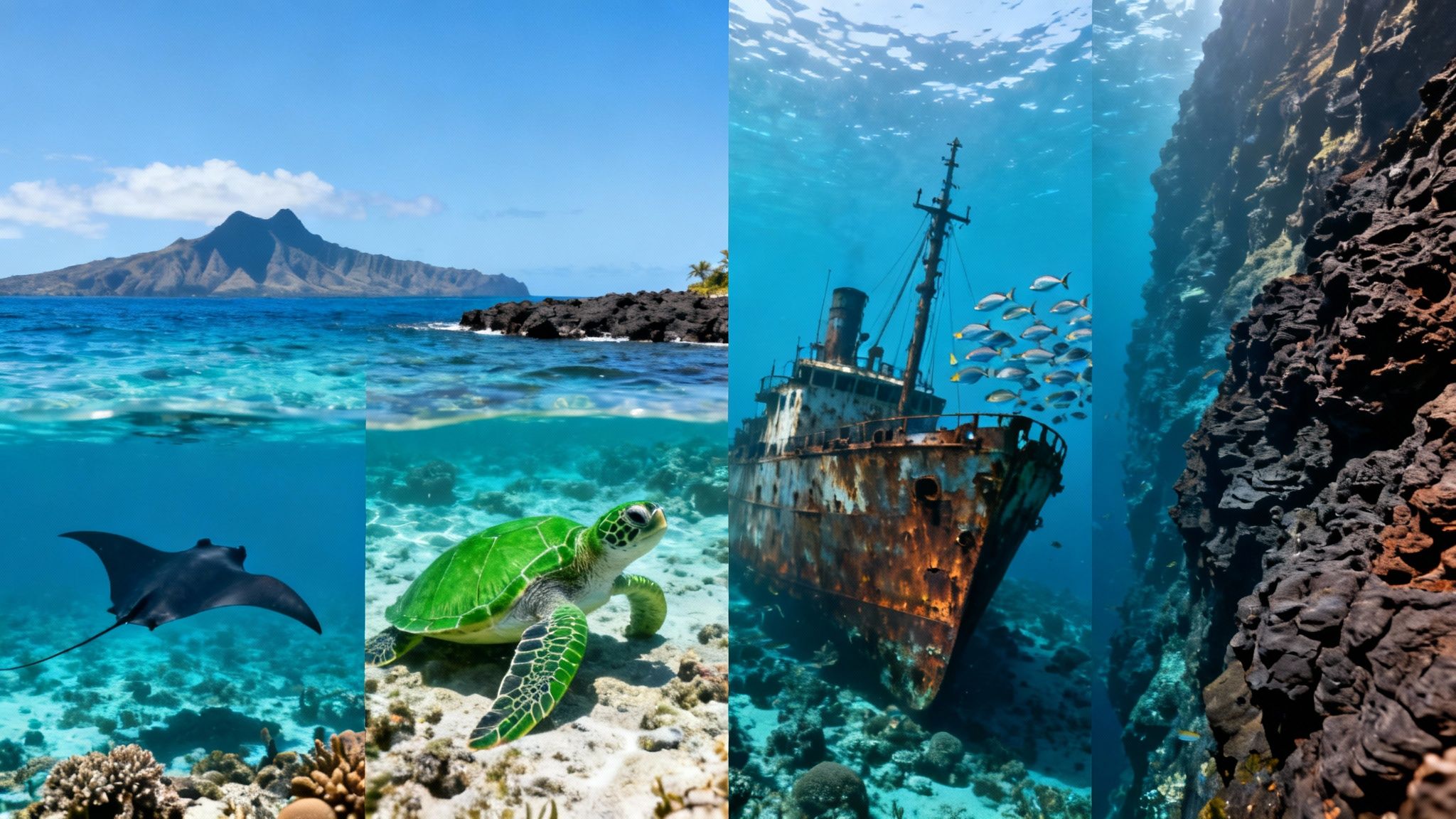
Here's the thing about diving in Hawaii: it's not a one-size-fits-all experience. Each island offers a completely different underwater world, and picking the right one is the single most important step in planning your dream dive trip. The vibe and the marine life can change dramatically from one coastline to another.
Are you hoping to come face-to-face with gentle giants in calm, clear water? Or is the idea of exploring the silent, haunting corridors of a sunken ship what gets your heart pumping? Your answer points you to a different island.
Let’s break down the top spots so you can match the island to your personal dive style and make sure your trip is unforgettable.
The Big Island (Kona Coast): Best for Marine Life Encounters
When people talk about world-class scuba diving in Hawaii, they're often talking about the Kona coast of the Big Island. It’s truly in a league of its own. Thanks to the towering volcanoes of Mauna Loa and Hualalai, the entire western shoreline is shielded from the powerful trade winds. This natural protection gives us incredibly calm, clear, and reliable diving conditions almost every day of the year.
The underwater topography here is pure volcanic artistry. You’ll be exploring ancient lava tubes, swimming through massive archways, and navigating unique structures all formed by ancient lava flows. These formations have become the foundation for some of Hawaii's most vibrant coral reefs, packed with an incredible density of marine life.
Kona is, without a doubt, the epicenter for big animal encounters in Hawaii. It’s most famous for the legendary Manta Ray Night Dive—a true bucket-list experience where dozens of manta rays glide and feast just inches from your face.
But it’s not just about the mantas. Kona is a hotspot for:
- Sea Turtles: Hawaiian green sea turtles, or honu, are everywhere, especially at sites we call "turtle cleaning stations."
- Dolphins: We almost always see pods of spinner dolphins from the boat, and sometimes they'll even join us on our dives.
- Unique Critters: The calm conditions are perfect for finding the small, weird, and wonderful stuff—like elusive frogfish, clever octopuses, and countless fish species you can only find here in Hawaii.
For a more detailed comparison, check out our guide on which Hawaiian island is best for scuba diving.
Maui: A Mix of Craters and Reefs
Maui has its own world-famous dive experience: the Molokini Crater. This stunning crescent-shaped volcanic caldera is a protected Marine Life Conservation District, and it acts as a safe haven for over 250 species of fish. For more advanced divers, the back wall of Molokini offers a spectacular drift dive that drops off into the deep blue.
Beyond the crater, Maui is well-known for its "Turtle Town" dive sites, where you can reliably find green sea turtles lining up to be cleaned by reef fish. Conditions on Maui can be a bit more unpredictable and windy compared to Kona, but the payoff of its vibrant reefs and turtle encounters is well worth it.
Oahu: Wreck Diving Capital
If you're fascinated by maritime history and the allure of sunken ships, Oahu is your spot. The island is the undisputed wreck diving capital of Hawaii, with several incredible wrecks that now serve as thriving artificial reefs. Near Waikiki, the YO-257 and the San Pedro were sunk intentionally, creating fantastic, multi-level playgrounds for divers of all experience levels.
These ghostly ships have become magnets for marine life. It’s common to see huge schools of eagle rays, whitetip reef sharks, and swarms of reef fish patrolling the decks. Oahu offers a unique blend of underwater adventure and historical discovery that really sets it apart from the other islands.
Kauai: Dramatic and Wild Underwater Landscapes
Known as the "Garden Isle," Kauai’s dramatic beauty extends well below the waterline. The diving here is all about incredible underwater architecture—think sea caves, lava tubes, and immense archways carved out by the power of the ocean. During the calm summer months, the north shore, in particular, has some of the most breathtaking underwater scenery in the state.
Diving Kauai isn't for everyone; its exposure to open ocean swells means conditions can be more challenging, making it a better fit for experienced divers. But for those with the skills, the reward is a truly unique topography and the chance to spot critters not often seen on the other islands, like the elusive long-handed spiny lobster.
Why Kona is the Crown Jewel of Hawaiian Diving
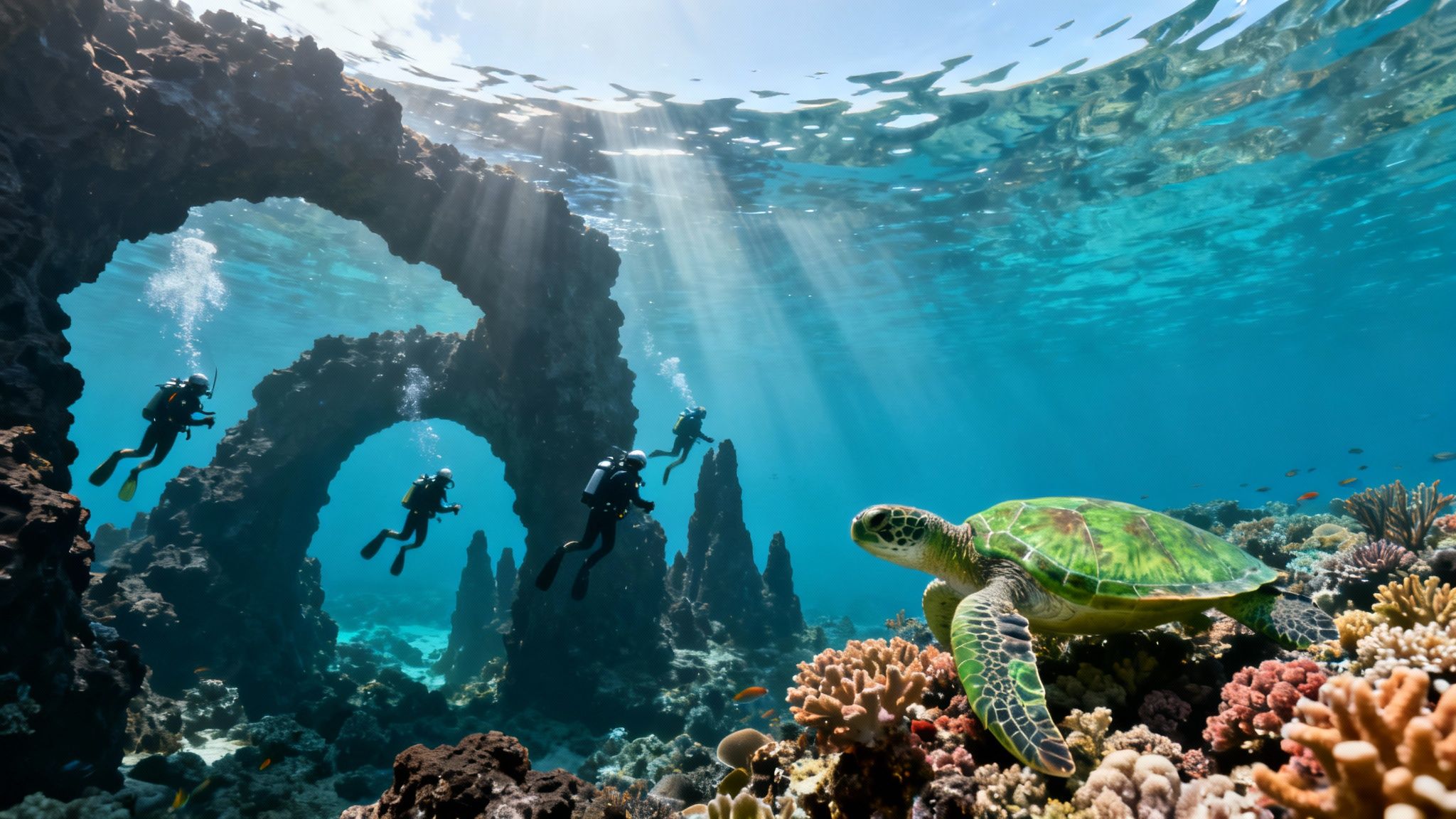
Ask any seasoned diver about their favorite spots in Hawaii, and you’ll hear one name come up again and again: Kona. While every island offers something special beneath the waves, the Kona coast on the Big Island is truly in a league of its own. It's not just another great dive destination; it's the undisputed heart of the Hawaiian dive scene.
So, what's Kona's secret? It's all about the geology. The sheer size of the island's volcanoes, Mauna Loa and Hualalai, acts as a massive natural shield. This barrier blocks the powerful trade winds that often churn up the waters around the other islands, giving Kona remarkably calm and clear seas almost every day of the year.
That incredible consistency means more than just a comfortable boat ride. It creates an underwater haven where marine life flourishes and visibility often pushes past an incredible 100 feet. You see everything, just as it’s meant to be seen.
Exploring Volcanic Undersea Worlds
The underwater landscape here is a direct result of Kona’s volcanic past. Ancient lava flows have carved out a dramatic seascape you just won't find anywhere else, creating a playground of incredible structures. These aren't just rocks; they're the foundations of a vibrant, living ecosystem.
Diving in Kona is all about exploring this unique terrain. Some of the most memorable experiences include:
- Lava Tubes and Caverns: Imagine swimming through natural tunnels formed by cooling lava. As sunlight streams through openings in the ceiling, it creates an almost spiritual, cathedral-like atmosphere.
- Archways and Pinnacles: You can glide under massive underwater arches or explore pinnacles that shoot up from the seafloor, acting as magnets for huge schools of fish.
- Thriving Coral Reefs: Unlike many places in the world, Kona’s reefs are incredibly healthy. They grow on a solid volcanic base and are absolutely buzzing with marine life you can only find in Hawaii.
This one-of-a-kind geology makes for an endlessly fascinating dive, no matter your skill level. To get a better sense of it all, you can read more about what is unique about diving in Kona and its volcanic underwater landscapes.
The Kona Honu Divers Difference
To really get the most out of Kona, you need a guide who knows its waters by heart. At Kona Honu Divers, we've built our reputation on providing world-class experiences that put safety first, keep groups small, and show a deep respect for the ocean. Our local expertise is what sets us apart, ensuring every dive is both safe and unforgettable.
We’re all about personalized adventures. Our crew will take you to legendary spots like Turtle Pinnacle and Au Au Crater, but we’ll also show you the local secrets—the hidden gems that make Kona diving so special.
Our team of instructors and divemasters live and breathe these waters. They know exactly where to find a perfectly camouflaged frogfish, spot an octopus hiding in a crevice, or lead you to a "turtle cleaning station" where Hawaiian green sea turtles (honu) gather. It’s this insider knowledge that turns a good dive into the dive you'll be talking about for years.
Whether you’re exploring a sunlit reef or gearing up for the world-famous manta ray night dive, the right guide changes everything. When you combine Kona’s natural advantages with true local expertise, you’ll understand why this coast is the crown jewel of Hawaiian diving. To see what we offer, take a look at our Kona diving tours.
Hawaii’s Most Unforgettable Underwater Experiences
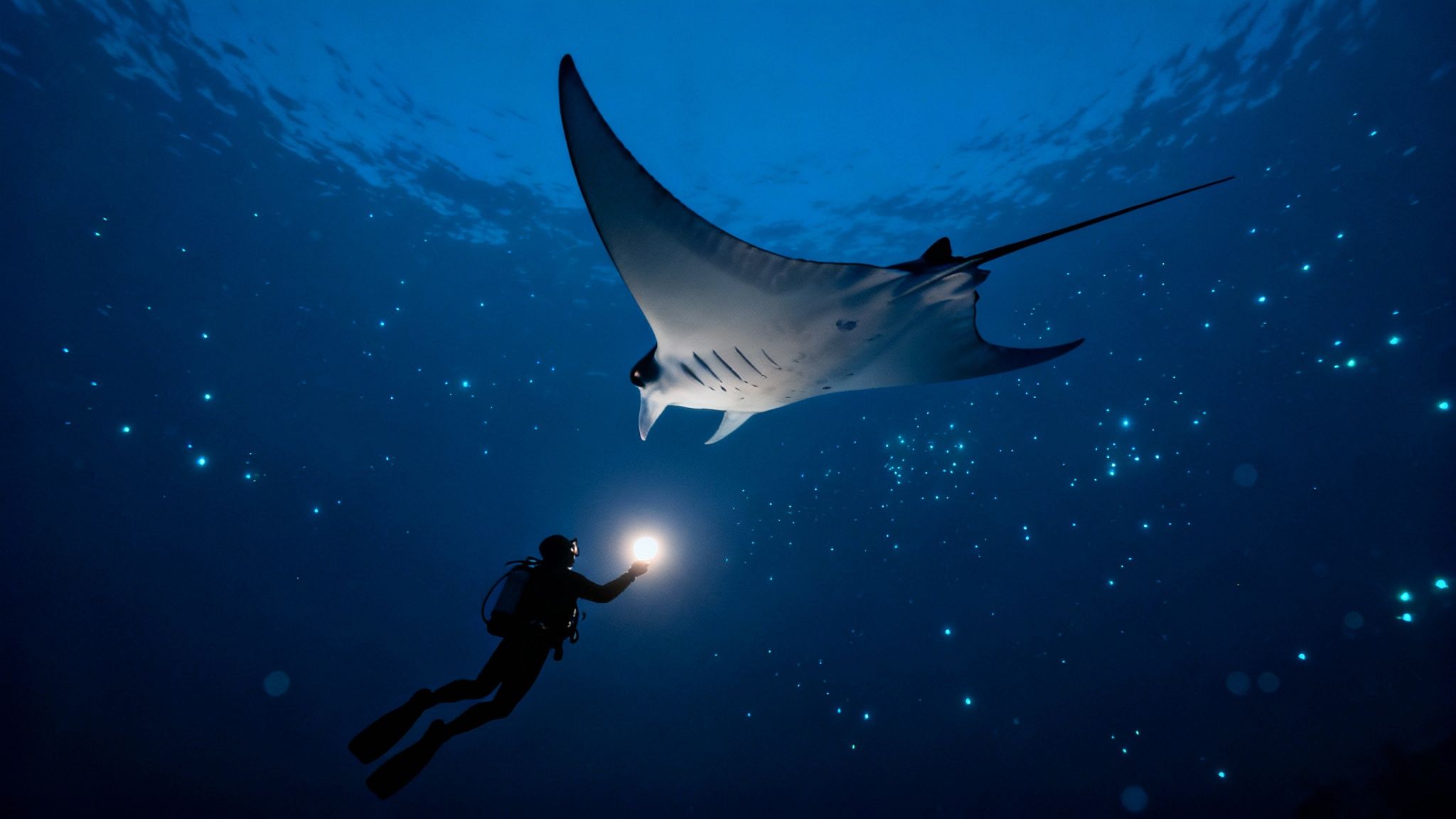
Sure, Hawaii's sun-drenched reefs and ancient lava tubes are incredible. But some dives go way beyond the typical. We're talking about the specialty dives—the ones that land on magazine covers and top every diver's bucket list.
These are the world-famous encounters that really set scuba diving in Hawaii apart, turning a great vacation into a life-changing adventure.
At the very top of that list is an experience that feels like something from another planet: the Kona Manta Ray Night Dive. This isn’t just a dive; it’s an underwater ballet performed by some of the ocean's most graceful giants. After the sun goes down, divers head to a designated spot on the sandy bottom, equipped with powerful lights.
These lights attract swarms of plankton, which just so happens to be the mantas' favorite meal. What happens next is pure magic. Massive manta rays, some with wingspans stretching over 15 feet, glide silently out of the darkness. They perform mesmerizing barrel rolls just inches over your head, feasting on the plankton caught in the light beams. It’s peaceful, profound, and absolutely unforgettable.
The Superior Manta Ray Experience at Garden Eel Cove
While you can see the mantas at a couple of spots, not all sites are created equal. For the most magical and reliable encounter, Garden Eel Cove is the superior choice. The site is tucked into a protected cove, which shields it from big ocean swells and currents. This means calmer, clearer conditions for everyone—divers and mantas alike.
The viewing area at Garden Eel Cove is often called an "underwater amphitheater." Its natural layout lets divers settle comfortably on the sand for an unobstructed, front-row seat to the show. The intimate setting makes for a more personal and less crowded experience. Plus, the surrounding reefs are healthier and more vibrant, making the entire dive a richer adventure from start to finish. For a truly premier encounter, you'll want to book the world-famous Manta Ray Night Dive with a trusted operator who knows how to get you to the best sites.
The Kona Blackwater Dive: A Journey into the Deep
For certified divers with a taste for the truly extraordinary, Hawaii offers an even more unique nocturnal adventure: the Kona Blackwater Dive. This isn't a reef dive. You'll head miles offshore, suspended over thousands of feet of inky black water.
Out here, you'll witness one of the planet's largest migrations, which happens every single night. Tiny, bizarre, and often bioluminescent creatures rise from the abyss to feed near the surface. Tethered to the boat, you'll float in the darkness, watching life forms that look like they belong on another planet drift past.
The Blackwater Dive is like floating through outer space, surrounded by constellations of living light. It's a humbling and thrilling glimpse into a world few ever get to see.
This dive definitely requires a bit more experience and a calm demeanor, but the payoff is an unparalleled look into the ocean's hidden world. The strange and beautiful creatures you’ll see on a Kona Blackwater Dive make for an experience that is genuinely one of a kind.
Advanced Diving For the Experienced Explorer
Beyond these signature night dives, the Big Island's rugged volcanic coastline offers endless playgrounds for experienced divers looking for a challenge. The underwater terrain is a maze of deep ledges, dramatic drop-offs, and intricate lava tube systems that demand excellent buoyancy and confidence.
These advanced sites offer thrilling rewards. Exploring a deep lava tube can feel like discovering an underwater cathedral. Drift diving along a steep wall can expose you to different currents and the chance to see larger pelagic species cruising by in the deep blue.
Here’s why advanced divers fall in love with Kona:
- Complex Topography: Navigating swim-throughs and caverns tests your skills and provides an incredible sense of exploration.
- Deeper Profiles: Access to deeper sites means seeing marine life you just won't find in the shallows.
- Varied Conditions: Learning to handle mild currents and different environments builds confidence and simply makes you a better, more capable diver.
These dives are perfect for anyone who has moved beyond basic reef tours and is craving something more. If you’re ready to push your skills and see a different side of Kona’s underwater world, consider booking an advanced dive trip with guides who know these sites like the back of their hand.
How to Plan Your Hawaiian Dive Adventure
A little bit of planning is what separates a good dive trip from an absolutely unforgettable one. With so many incredible spots for scuba diving in Hawaii, thinking through the details beforehand means you can just relax and soak it all in once you get here.
This isn't just a niche hobby anymore; the whole world is catching on to amazing underwater adventures. The scuba diving tourism market was valued at a whopping USD 3,993.7 million in 2022 and is only growing. It just goes to show how many people are seeking out incredible experiences like the ones waiting in Hawaii's waters. You can find more details about the expanding diving tourism market on futuremarketinsights.com.
Let’s walk through the essentials to get your trip dialed in.
Matching Your Certification to Your Dive Goals
Think of your dive certification as a key—it determines which underwater doors you can unlock. It’s all about making sure your training level matches the dives you’re dreaming about.
- Discover Scuba Diving: Never been diving? This is for you. It's not a certification, but a guided experience where a pro is with you every step of the way on a shallow, beautiful dive. It's the perfect way to test the waters, literally.
- Open Water Diver: This is your passport to the underwater world. As a certified Open Water diver, you can dive with a buddy down to 60 feet (18 meters), which opens up the vast majority of Hawaii’s stunning reefs.
- Advanced Open Water Diver: Ready for the next level? This certification is your ticket to more thrilling dives, like the famous Kona Blackwater Dive or exploring deeper lava tubes. You’ll expand your depth limits and gain a ton of confidence.
When to Visit for the Best Encounters
Truthfully, there’s no bad time to dive in Hawaii. The diving is fantastic year-round, but the "best" time really depends on what you want to see.
The summer months, from about May to September, typically bring the flattest, calmest seas and incredible visibility, especially here on the Kona coast. But if you visit in the winter, from December to March, you’re right in the middle of humpback whale season. There's nothing quite like hearing their songs underwater—it's a powerful, vibrating sound that you feel in your chest, and it's an experience you will never, ever forget.
Your Essential Dive Trip Packing List
Packing smart is all about showing up ready to jump in the water without any stress. Besides your swim trunks and aloha shirts, a few dive-specific items are key.
Pro Tip: Always, always pack your essentials in your carry-on bag. That means your dive computer, your mask, and any prescription meds. That way, even if your checked luggage takes a little vacation of its own, you won’t miss a single dive.
Here’s a quick checklist to get you started:
- Dive Gear: While we have excellent rental gear, nothing beats the comfort and fit of your own mask, fins, and dive computer.
- Certification Cards & Logbook: Don’t leave home without them! You'll need to show proof of your certification.
- Reef-Safe Sunscreen: This is a big one. Regular sunscreens have chemicals that are incredibly damaging to our coral reefs. Please help us protect the very ecosystem you’re coming to see by only using reef-safe options.
- Dive Insurance: We can't recommend this enough. Having a policy that specifically covers diving gives you peace of mind in the unlikely event of a medical issue.
Of course, planning also means thinking about your budget. To give you a clear picture, we've put together a guide on how expensive scuba diving in Hawaii can be.
Common Questions About Scuba Diving in Hawaii
It’s totally normal to have a few lingering questions as you lock in your plans for a dive trip to Hawaii. Getting them answered can make all the difference, helping you book with confidence and start getting excited for the adventure ahead.
To help you out, we’ve tackled some of the most common questions we get from divers just like you.
What Is the Best Time of Year to Scuba Dive in Hawaii?
Honestly, there’s no bad time to dive in Hawaii. The water stays in that perfect sweet spot, hovering between 75°F and 80°F (24-27°C) all year round. The "best" time really just comes down to what kind of experience you're looking for.
- Summer (May to September): If you want glassy seas and incredible visibility, this is your season. The ocean conditions, especially on the Kona side, are typically at their calmest, making for super smooth boat rides and relaxing dives.
- Winter (December to March): This is when the humpback whales arrive. The surface can get a bit more active, but there’s nothing quite like hearing whale song underwater. It's a powerful, vibrating sound that travels right through you—truly a once-in-a-lifetime experience.
- Shoulder Seasons (April-May & September-October): These are often the sweet spots. You'll find a fantastic balance of great weather, fewer people in the water, and often better deals on flights and accommodation.
Do I Need to Be Certified to Scuba Dive in Hawaii?
Nope! You don’t have to be certified to get your first glimpse of the underwater world. While being certified opens up a wider variety of dive sites, there are great options for absolute beginners.
Most reputable dive shops offer a "Discover Scuba Diving" experience. Think of it as a test drive. You'll get a quick, easy-to-understand lesson on the basics and practice a few skills in shallow water. Then, a professional instructor will take you on a guided dive, handling all the gear so you can just focus on the fish. It's the perfect way to see if diving is your thing without committing to a full certification course.
What Kind of Marine Life Can I Expect to See?
Hawaii's isolation in the middle of the Pacific means it has a ton of marine life you literally can't find anywhere else on the planet. On almost any given dive, you’re likely to bump into Hawaiian green sea turtles (honu), see different kinds of moray eels peeking out of rocks, and spot a dazzling variety of reef fish—like the iconic Humuhumunukunukuāpuaʻa (the state fish!).
Depending on where and when you dive, you could also see pods of spinner dolphins cruising by, majestic eagle rays gliding past, or whitetip reef sharks resting on the sand. And of course, Kona is world-famous for its nighttime encounters with gentle manta rays and the surreal, glowing creatures on the Kona Blackwater Dive.
Is Scuba Diving in Hawaii Safe?
Absolutely, as long as you dive with a professional, reputable operator. The dive community here is held to very high safety standards by agencies like PADI.
The key is to do your homework. Choose a well-established dive shop with experienced local guides who know the sites inside and out. Good operators have meticulously maintained gear and a solid safety record. Just be honest about your comfort and experience level, pay attention during the dive briefing, and always stay within your training limits. Do that, and you're set for an incredible—and safe—underwater adventure.
At Kona Honu Divers, we're passionate about sharing the magic of Kona's underwater world safely and responsibly. Check out our full range of tours and book your unforgettable Hawaiian dive today.