
Picture this: you're weightless, suspended in warm, crystal-clear water. Sunlight filters down from above, illuminating ancient lava tubes and the vibrant coral formations below. A sea turtle glides past. This isn't a dream—it's just another day of scuba diving in Hawaii. The islands, born from volcanic fire, have created an underwater world that draws divers from all corners of the globe.
Why Hawaii Is a Premier Global Diving Destination
Hawaii’s reputation as a top-tier dive destination isn't just hype. The numbers tell a story of a thriving underwater community, with over 1.5 million scuba dives happening annually across more than 215 licensed dive shops. The U.S. dive tourism market, with Hawaii as a major player, brought in an incredible $573.1 million in 2023 and shows no signs of slowing down.
But it's not just about the numbers. What makes Hawaiian waters so special is the dramatic, otherworldly topography. The islands' volcanic origins have sculpted a spectacular underwater landscape of intricate lava tubes, massive archways, and submerged crater walls—a direct result of the archipelago's fiery creation.
The Kona Coast Advantage
While you can find great diving across the state, the Kona Coast on the Big Island is really in a league of its own. Its secret? The colossal volcanoes of Mauna Loa and Hualalai act as a natural shield, protecting the western shores from the prevailing trade winds. This creates uniquely calm and clear conditions almost every day of the year, perfect for everyone from first-timers to seasoned pros.
Here’s a quick look at what makes this slice of paradise so exceptional for divers.
Hawaii Scuba Diving at a Glance
| Feature | Why It's Exceptional for Divers |
|---|---|
| Volcanic Topography | Explore intricate lava tubes, swim-throughs, and archways formed by ancient lava flows. |
| Incredible Visibility | The calm, sheltered waters of the Kona Coast often boast visibility exceeding 100 feet. |
| Endemic Marine Life | Roughly 25% of the reef fish here are found nowhere else on Earth. |
| Year-Round Diving | Consistent water temperatures and calm seas mean any time is a good time to dive. |
It's this blend of perfect conditions, stunning clarity, and a one-of-a-kind ecosystem that makes the Kona Coast stand out.
The Big Island's unique geology has essentially built an underwater playground. Those lava formations aren't just cool to look at; they create complex habitats that support an immense variety of marine creatures, from tiny, colorful nudibranchs to majestic manta rays.
If you're trying to decide where to take the plunge, it's hard to beat what Kona offers. To get a better sense of how the islands stack up, take a look at our guide on which Hawaiian island is best for scuba diving. Whether this is your first dive or your hundredth, an unforgettable adventure is waiting for you here.
Exploring the Big Island’s Top Underwater Sites
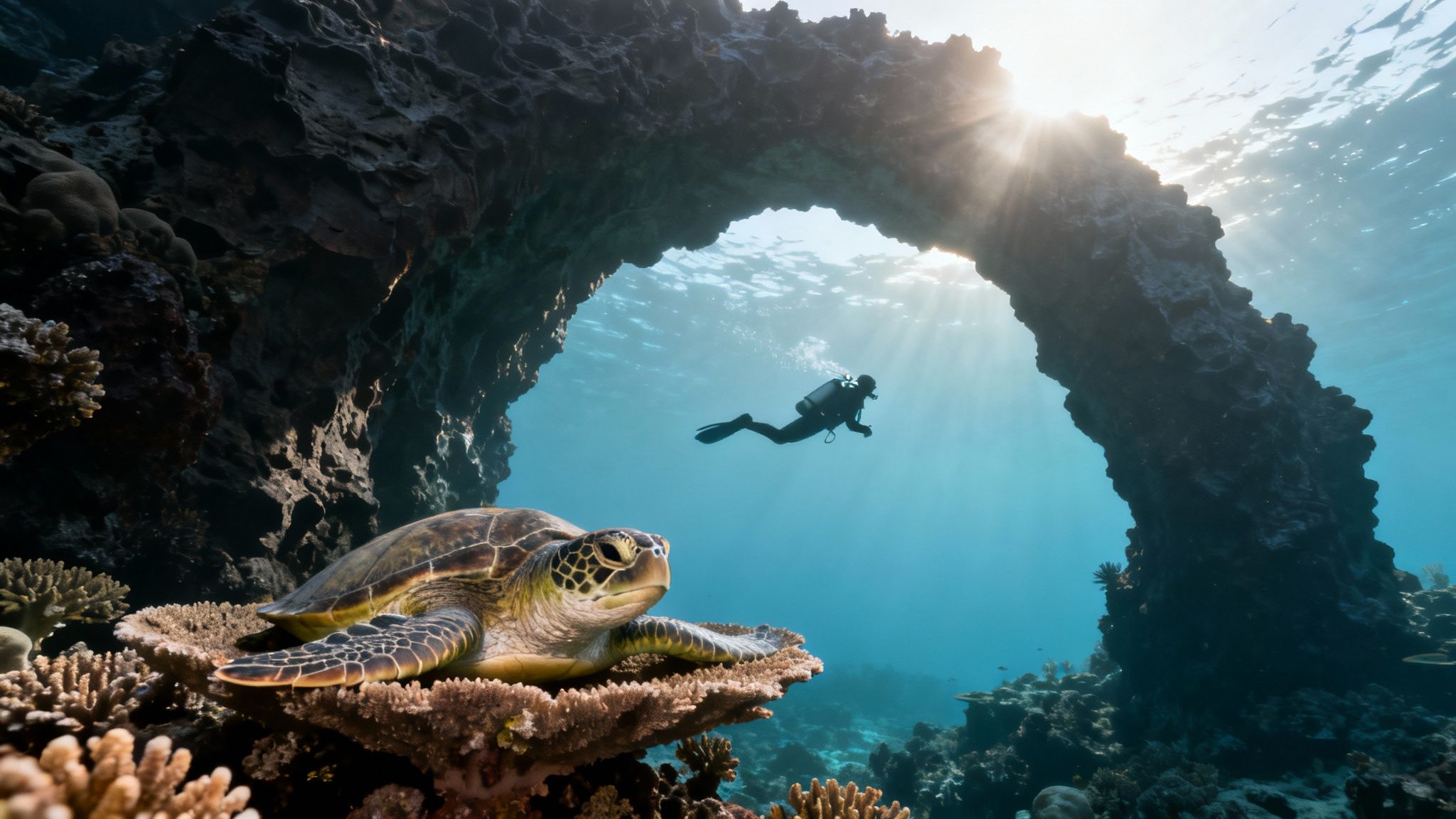
The Big Island’s Kona Coast is an absolute playground for divers. We’re talking more than 40 distinct dive sites, and each one has its own vibe and hidden gems. The same volcanic forces that shaped the islands have created a jaw-dropping underwater landscape full of lava tubes, massive archways, and sprawling coral gardens.
From the moment you slip beneath the waves, you’re in another world. Imagine gliding through a huge underwater arch with sunlight streaming down like it’s a cathedral. That’s the kind of magic you find here. The variety is incredible, too—from calm, shallow reefs perfect for a laid-back dive to thrilling deep-water adventures for more seasoned divers.
Must-See Dive Sites for Every Diver
It's tough to pick just a few favorites, but some Kona dive sites truly stand out and consistently blow people away. Each spot has its own cast of characters, from schools of impossibly colorful fish to our famous resident sea turtles.
- Turtle Pinnacle: This spot absolutely lives up to its name. It’s a popular “cleaning station” where Hawaiian green sea turtles (honu) hang out, letting smaller fish nibble away parasites. You can often see several turtles just chilling, which makes for some unforgettable photos.
- Golden Arches: A true Kona classic, famous for its incredible underwater architecture. The main event is a giant lava arch you can swim right through, often surrounded by a cloud of bright yellow tangs. It’s a perfect showcase of the island’s volcanic past.
- Suck 'Em Up Caverns: If you love exploring nooks and crannies, this site is for you. It's a network of lava tubes and small caverns that are a blast to navigate. The name comes from the ocean surge that can gently pull you through certain passages, adding a little bit of fun to the swim.
These are just a taste of what’s waiting for you. Honestly, the best way to see it all is with a guide who knows these sites like the back of their hand. They’ll not only keep you safe but will also point out all the cool, camouflaged critters you’d probably swim right past.
Encounters with Unique Marine Life
What really makes diving in Kona special is the life you find here. Hawaii is one of the most isolated island chains in the world, which means a huge chunk of the marine life is endemic—you literally can't find it anywhere else on Earth.
Diving here is like getting a front-row seat to an incredible nature documentary. You might find yourself drifting alongside a majestic eagle ray, spotting a cleverly hidden octopus, or being greeted by a pod of spinner dolphins on the boat ride out. The sheer amount of life is just astounding.
The real thrill of diving in Kona is that you never know what you'll see. One minute you're watching a moray eel peek out from its den, and the next you're surrounded by a shimmering school of pyramid butterflyfish. Every single dive is a new adventure.
To get a better sense of what makes this place tick, check out our guide to diving the Big Island and its one-of-a-kind underwater world.
Advanced Diving Opportunities
For certified divers looking to step up their game, Kona has plenty of challenges to offer. We have deep-water ledges and dramatic underwater cliffs that open up a whole different kind of diving, where you’re more likely to see the big pelagic species cruising in from the deep blue.
Sites like Au Au Crater let you explore the remains of a submerged volcanic cinder cone, with steep walls that seem to drop off into forever. These advanced dives require more skill and experience, but the payoff is huge. It’s a chance to see a wilder, more untamed side of the ocean.
If you’re a certified diver ready for something more demanding, there are premium advanced dive trips designed to take experienced divers to these deeper, more exhilarating sites. They really showcase the best of what Kona diving is all about.
Experiencing Hawaii’s Legendary Night Dives

When the sun finally dips below the horizon on the Kona coast, the real adventure is just beginning. Under the surface, a completely different world comes to life, setting the stage for some of the most unforgettable experiences in scuba diving in Hawaii. The calm, dark waters host two of the most famous night dives on the planet: the Manta Ray Night Dive and the Blackwater Dive.
These aren’t just any dives; they're your ticket to a front-row seat to the mysteries of the nocturnal ocean. While daytime diving shows off the reef's vibrant colors, night dives reveal the creatures that hide from the sun and the predators that emerge to hunt. It’s a total transformation, and Kona is the perfect place to witness it.
The World-Famous Manta Ray Night Dive
Picture this: you're kneeling on the sandy ocean floor in the quiet darkness, surrounded by beams of light aimed toward the surface. Then, out of the black, a colossal shadow glides gracefully into the light—a massive manta ray with a wingspan wider than you are tall. This is the Kona Manta Ray Night Dive, and it’s a spectacle so surreal it feels like a dream.
The concept is simple but absolutely genius. Powerful lights are set up on the ocean floor, which attract billions of microscopic plankton—the manta rays' favorite meal. As the plankton cloud the light beams, the mantas show up for the buffet. They perform an incredible underwater ballet, doing barrel rolls and swooping through the light to scoop up mouthfuls of food.
For divers, the experience is completely passive. You just settle in and let the show unfold around you. It's a profound and respectful way to interact with these gentle giants as they come to you, creating a humbling and utterly breathtaking encounter.
While there are a few places to do this dive, Garden Eel Cove is the superior choice. This location is naturally protected from the ocean swell, resulting in calmer, clearer water. The viewing area is better situated and the surrounding reefs are healthier, leading to a more intimate and spectacular experience with these magnificent animals. To get a better sense of this must-do activity, you can learn more about the unique Manta Ray Night Snorkel experience.
The Kona Blackwater Dive: An Otherworldly Experience
If the manta dive is an elegant ballet, then the Kona Blackwater Dive is a journey to another planet. This is not a reef dive. You head miles offshore into the deep open ocean, where the seafloor is thousands of feet below, and drift in the inky blackness. Tethered to the boat, you descend with powerful lights that illuminate a world very few people ever get to see.
Every single night, a process called diurnal vertical migration takes place. It’s the largest migration on Earth, as countless bizarre and beautiful creatures rise from the abyss toward the surface to feed. Many of these animals are bioluminescent, creating their own light in the darkness and looking like something straight out of a sci-fi film.
On a Blackwater Dive, you might cross paths with:
- Larval Creatures: See the transparent, juvenile forms of animals like octopus, eels, and lobsters.
- Pelagic Jellyfish: Witness strange and beautiful jellies pulsing with otherworldly light.
- Bioluminescent Organisms: Encounter creatures that sparkle and glow as they drift past your mask.
This dive is a sensory trip into the great unknown, giving you the chance to see alien-like life forms that live their entire lives in the open ocean. It’s a highly specialized dive that draws photographers and thrill-seeking divers from all over the world for a truly unique experience.
Both the unforgettable Manta Ray Dive and the thrilling Kona Blackwater Dive offer an incredible glimpse into the Pacific's after-dark secrets. These dives are what make scuba diving in Hawaii—and especially in Kona—a world-class adventure that keeps going long after the sun has set.
How to Plan Your Hawaii Scuba Diving Trip
A truly epic Hawaii dive trip doesn’t start when you get on the boat—it starts with smart planning. Getting the details dialed in before you even pack your bags means you’ll show up relaxed, confident, and ready to soak in every underwater moment. Let's walk through the essentials, from picking the right season to packing like a seasoned pro.
It’s no secret that Hawaii is a world-class diving destination, and its popularity is booming. The global scuba tourism market is exploding, hitting USD 910.4 million in 2024 and on track to reach a staggering USD 1,748.5 million by 2032. Here in the U.S., bookings for dive trips jumped 5% in the first half of 2024 alone. It’s a trend driven by divers like you who are looking for incredible, responsible underwater adventures. You can dive deeper into the trends shaping the U.S. diving tourism market.
Choosing the Best Time to Visit
One of the absolute best things about scuba diving in Hawaii is that the season never really ends. The water stays in that perfect "just right" zone all year, hovering around a pleasant 75°F (24°C) in the winter and warming up to a tropical 81°F (27°C) in the summer.
That said, each season has its own unique magic.
- Summer (May – October): This is when you'll find the warmest water and the calmest, glassiest seas, especially here on the Kona Coast. Visibility is often spectacular, sometimes stretching out well beyond 100 feet. It's pure bliss.
- Winter (November – April): The water might be a few degrees cooler, but this is humpback whale season. Between January and March, you can often hear the haunting songs of male humpbacks echoing through the water on your dives. It's an experience that will give you chills—in the best way possible.
Certification and Paperwork
To unlock the best dive sites, you’ll want to have your certification squared away before you arrive. While there are options for first-timers, you’ll need at least an Open Water Diver certification to join most boat dives and explore Hawaii's incredible underwater world.
Don’t forget to pack your certification card (the actual card or a digital version) and your logbook. Any reputable dive shop will need to see them before letting you on the boat. If it’s been a while since your last dive, it's a great idea to do a quick refresher on your skills.
For divers looking to level up, Hawaii is the perfect classroom. Earning your Advanced Open Water or Nitrox (Enriched Air) certification here is a fantastic way to build confidence and skill. Many operators, including us at Kona Honu Divers, even offer free nitrox for certified divers. This means longer bottom times and less post-dive fatigue—a serious win-win.
What to Pack for Your Dive Trip
Packing smart is the difference between a good trip and a great one. While you can always rent gear, having your own personal items that fit perfectly makes a world of difference.
Here’s a quick checklist of essentials:
- Your Core Dive Gear: At the very least, bring your own mask, snorkel, and dive computer. A mask that fits your face without leaking is non-negotiable for comfort and safety.
- Exposure Protection: A 3mm wetsuit is usually perfect for Hawaii’s warm waters. If you tend to get cold, you might appreciate a 5mm, especially in the winter months.
- Reef-Safe Sunscreen: This is a big one. Sunscreens with chemicals like oxybenzone are incredibly damaging to our fragile coral reefs. Please, only pack mineral-based, reef-safe options.
- The Little Things: Throw in a reusable water bottle, a good hat, sunglasses, and a quick-dry towel. A dry bag is also a lifesaver for keeping your phone and keys safe and dry on the boat.
Understanding Costs and Finding Value
The cost of scuba diving in Hawaii can vary, but it's important to know what you're paying for. Most shops price their trips on a per-person basis for a standard two-tank boat dive, with gear rental often being an extra charge.
When you're comparing options, look past the initial price tag and focus on the overall value. A slightly higher price might include perks that actually save you money and give you a much better experience. Keep an eye out for:
- Early booking discounts that reward you for planning ahead.
- Free nitrox for certified divers (a huge value-add!).
- Small group sizes, which mean more personalized attention from your guide.
- High-quality rental gear that’s clean and well-maintained.
Thinking about these details when you plan will ensure your Big Island dive adventure is smooth, safe, and absolutely unforgettable.
Choosing the Best Dive Operator in Kona
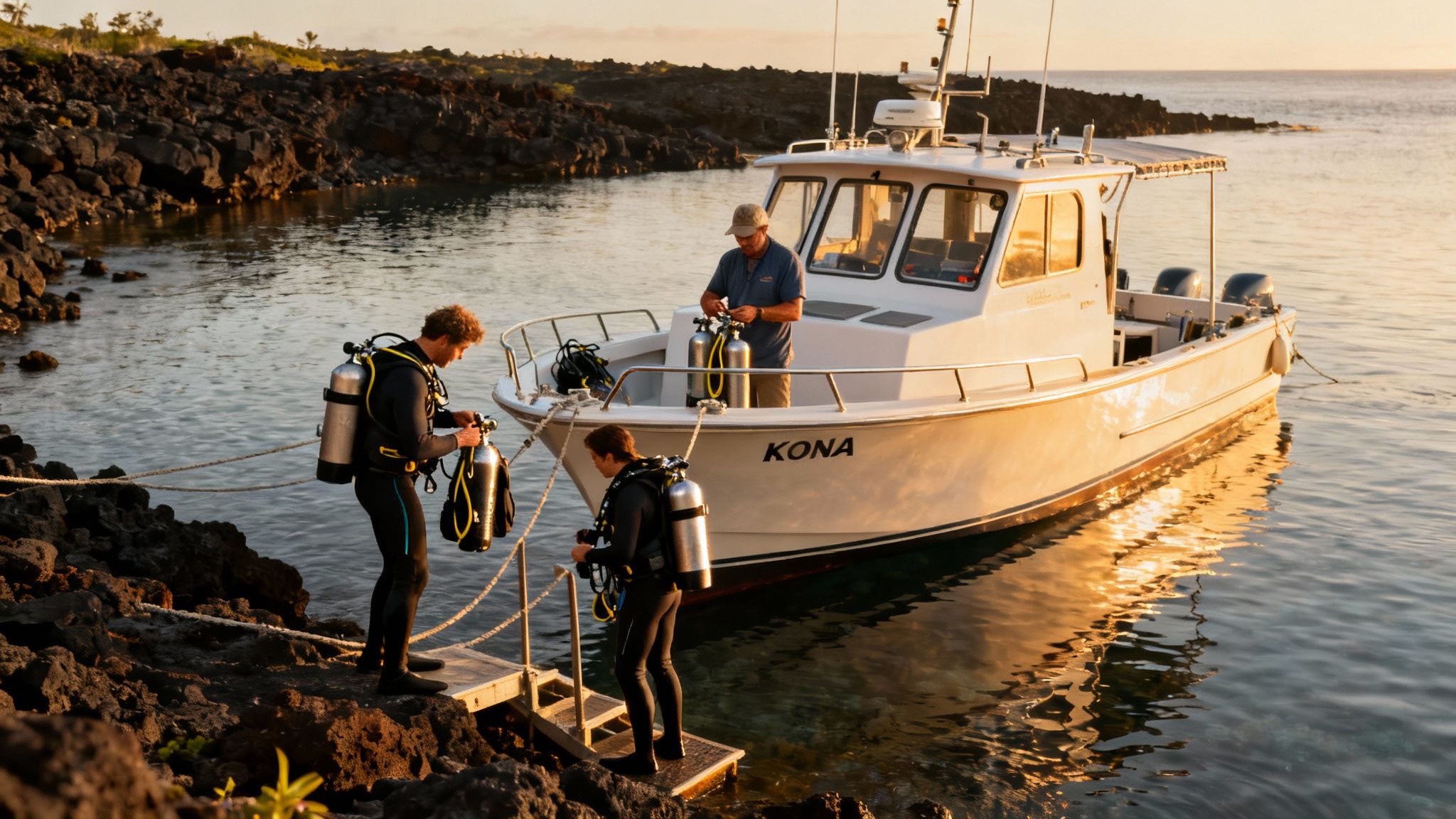
Let's be honest, your dive operator can make or break your entire trip. The right team does more than just drive the boat; they shape your whole underwater experience with their expertise, safety-first mindset, and genuine love for the ocean. A great crew can turn a pretty good dive into a story you'll be telling for years.
When you’re looking for the best scuba diving in Hawaii, particularly on the Kona coast, a few things really matter. Rock-solid safety standards are an absolute must. After that, look at the crew's experience, the quality of their boats, and whether they keep their groups small for a more personal adventure.
What Sets the Best Apart
A top-notch operator like Kona Honu Divers really shows what you should be looking for. Their crew has over 200 years of combined experience in the dive industry. You're not just getting a guide; you're getting a seasoned pro who knows every lava tube, cleaning station, and coral garden like their own backyard.
They also run boats, like the Honu One, that were built from the ground up specifically for diving. That means things are designed to make your life easier—plenty of deck space so you're not tripping over gear, easy-to-use ladders, and warm freshwater showers for after the dive. It's the little things that add up to a much better day on the water.
When you choose a dive operator, you're choosing your guides, your safety net, and your hosts for an underwater adventure. The best ones prioritize your experience over everything else, ensuring every dive is as safe and enjoyable as possible.
This focus on the diver experience is a big reason why Kona Honu Divers has built such a strong reputation. You don't have to take our word for it—just see what other divers have to say.
Other Reputable Operators in Kona
To give you the full picture, it’s worth knowing that Kona has several fantastic dive shops. Being transparent helps you make the best choice, so it's always smart to check out what people are saying about other well-regarded operators.
Jack's Diving Locker is one of the original Kona dive shops and has been guiding divers here for decades. They are well-known for their excellent training programs and offer a huge variety of dive trips.
Big Island Divers is another great option, running large, comfortable boats and providing everything from daily charters to technical diving courses. Their deep local knowledge makes them a solid choice for exploring Kona's underwater world.
At the end of the day, picking the right operator is about finding the one that fits your style. Maybe you prioritize small groups, or you’re looking for a specific type of trip, or certain boat amenities are important to you. By comparing what the best shops offer, you can book your next Kona diving tour with confidence and get ready for an incredible time.
Answering Your Hawaii Diving Questions
We've covered a lot of ground, from mapping out the best dive sites to picking the right crew to take you there. To make sure you feel totally prepared for your underwater adventure, I've put together answers to the questions we hear most often. Think of it as a final pre-dive check before you jump in.
What Is the Best Island in Hawaii for Scuba Diving?
Every island has its own underwater magic, but if I had to pick just one, it would be the Kona coast on the Big Island. Hands down, it's the most consistently incredible diving in the state. Why? It's all about the geography—the massive volcanoes of Mauna Loa and Hualalai block the winds, creating calm, gin-clear water nearly every single day.
That protection makes for ideal dive conditions. Kona is also a biodiversity hotspot, famous for its dramatic lava tube swim-throughs and, of course, the legendary Manta Ray Night Dive. With over 40 unique dive sites just a short boat ride from shore, there’s always something new to see, no matter your skill level. It's no accident that top-tier shops like Kona Honu Divers are based right here.
Do I Need to Be Certified to Scuba Dive in Hawaii?
Nope, you don't! If you're new to diving but eager to see what all the fuss is about, you can sign up for a Discover Scuba Diving experience. Pretty much every dive shop, including us, offers this introductory, non-certification course.
It’s a simple, safe introduction. You'll get a quick rundown on the basics of safety and equipment, practice a few skills in shallow water, and then go on a real dive with an instructor right by your side. It’s the perfect way to get your fins wet.
That said, to really explore the deeper, more exciting sites that make scuba diving in Hawaii world-famous, you'll need at least an Open Water Diver certification to join the charter boats.
What Marine Life Can I Expect to See?
Get ready for a busy underwater world. On just about any dive here, you're likely to bump into Hawaiian green sea turtles (we call them honu), pods of playful spinner dolphins, and graceful white-tip reef sharks snoozing on the sand. The reefs themselves are buzzing with colorful fish, many of which you can only find here in Hawaii.
Kona really shines when it comes to "big animal" encounters. The Manta Ray Night Dive is a bucket-list spectacle for a reason. And if you're here in the winter (January to March), you'll often hear the haunting songs of humpback whales echoing through the water on your dives. It's a surreal, unforgettable experience.
Is Scuba Diving in Hawaii Safe?
Absolutely. Scuba diving in Hawaii is incredibly safe, especially when you go with a professional, reputable operator. For any good dive shop, safety isn't just a priority—it's everything. Here on the Kona coast, the calm, predictable waters give us a huge head start.
Every trip with a company like Kona Honu Divers starts with a thorough safety briefing. Our boats have all the modern safety and communication equipment, and our divemasters know these sites like the back of their hand. They understand the currents, the terrain, and the marine life, ensuring every dive is as secure as it is stunning. That peace of mind lets you relax and just soak in the beauty of it all, knowing you’re in good hands.
Ready to see Hawaii's underwater world for yourself? At Kona Honu Divers, we live to share our amazing reefs and marine life with you. From the world-famous Manta Ray Night Dive to our vibrant reef tours, our experienced crew and custom-built boats are waiting to give you the adventure of a lifetime. Book your Hawaii diving tour with us today and find out why Kona is a diver's paradise.