
If you're picturing the ultimate Hawaiian scuba diving trip, your mind is probably already on the Big Island. This is where the real magic happens underwater. The island's raw, volcanic origins have forged a seascape you won't find anywhere else—a world of ancient lava tubes, dramatic drop-offs, and reefs bursting with color and life.
Whether you're dreaming of the world-famous manta ray night dive or the surreal experience of a blackwater dive in Kona's deep ocean, the Big Island delivers.
Why The Big Island Is Hawaii’s Top Diving Destination
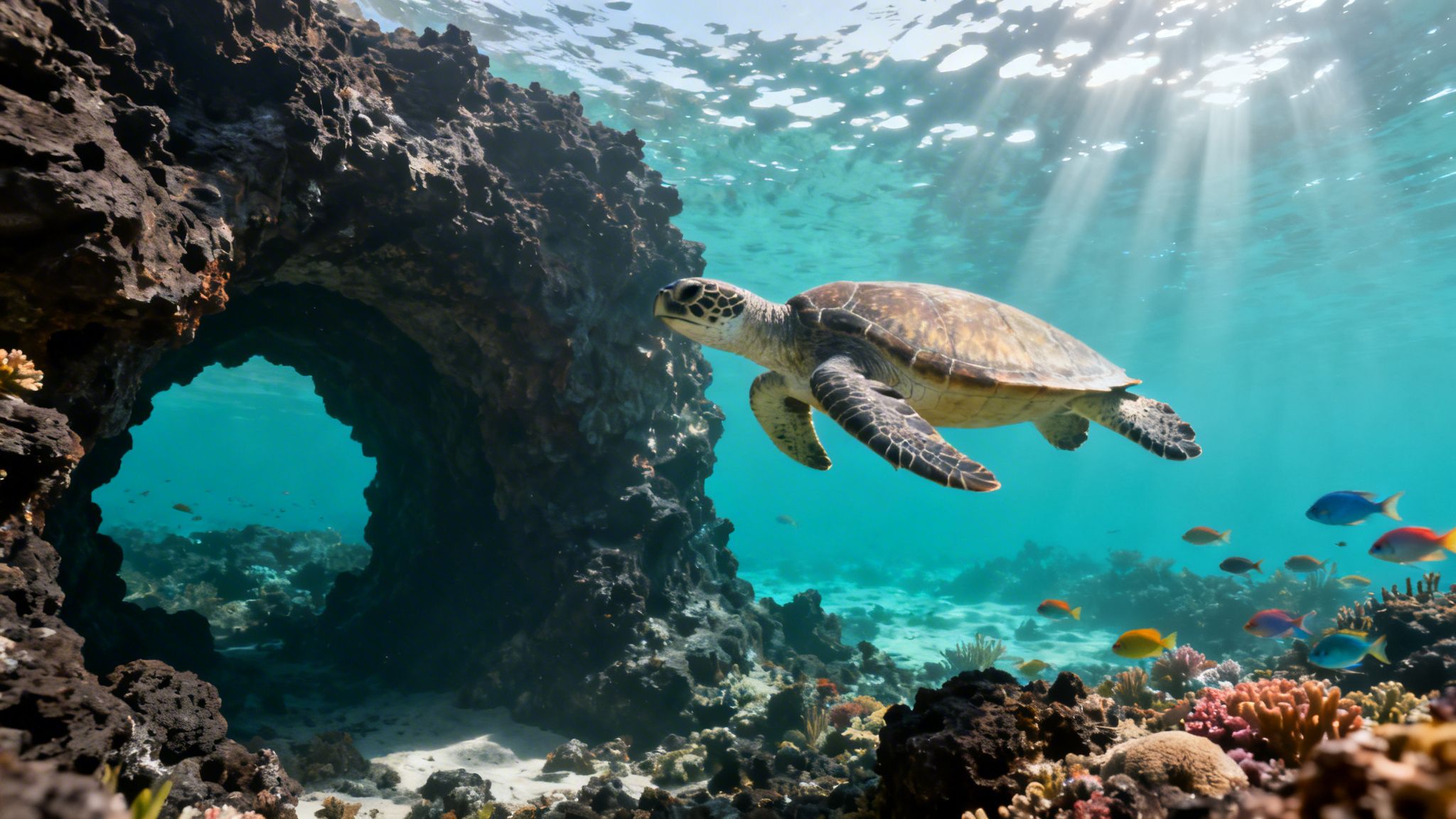
What sets the Big Island apart is its geology. You're not just diving over reefs; you're exploring the direct results of centuries of volcanic flow. This has created a submarine playground of lava arches, intricate swim-throughs, and caverns that have become perfect homes for an incredible diversity of marine animals.
Better yet, a huge chunk of that marine life is endemic, meaning you can't see it anywhere else on Earth. The island’s geography also plays a key role. It drops off sharply into the deep ocean without a gradual continental shelf, which means you always have a shot at spotting larger pelagic species cruising by.
Let's break down exactly what makes the Big Island such a standout destination for divers.
Big Island Diving At A Glance
| Feature | Why It Matters for Divers |
|---|---|
| Volcanic Topography | Explore unique lava tubes, arches, and underwater canyons formed by ancient lava flows. It's a photographer's dream. |
| Calm Kona Coast | The massive volcanoes of Mauna Loa and Mauna Kea block the trade winds, resulting in calm, clear water and ideal diving conditions year-round. |
| High Endemic Species | About 25% of the reef fish here are found only in Hawaii. Every dive offers a chance to see something truly unique. |
| Deep Water Access | The island's steep drop-off brings pelagic species like sharks, dolphins, and even whales closer to shore. |
| World-Class Dives | Home to iconic experiences you can't get anywhere else, like the Manta Ray Night Dive and Blackwater Dives. |
This unique combination of features isn't just hype; it's why experienced divers consistently rank the Big Island as Hawaii's premier scuba spot.
A Sanctuary for Abundant Marine Life
The Kona coast, in particular, is a sweet spot. Shielded by the towering volcanoes, its waters are consistently calm and clear, allowing the coral gardens to truly thrive. This protected environment has become a bustling sanctuary for some of Hawaii’s most iconic creatures:
- Honu (Green Sea Turtles): You'll see these gentle giants on nearly every dive. They're a beloved and constant presence in Kona's waters.
- Endemic Fish: Keep an eye out for species unique to the Hawaiian Islands, like the striking Tinker’s butterflyfish or the masked angelfish.
- Spinner Dolphins: It's common to see pods of them leaping and spinning in the boat's wake as you head to and from your dive sites.
- Reef Sharks: Whitetip reef sharks are often found relaxing in underwater caves and on sandy ledges, offering a peaceful and predictable shark encounter.
When you poll divers or look at the data, the conclusion is clear: the Big Island is the undisputed king of diving in Hawaii, with Maui being a distant second. The mix of incredible marine life, one-of-a-kind dive sites, and expert operators makes it an experience you won’t forget.
Want to learn more? Check out our in-depth guide asking is the Big Island good for scuba diving?
Exploring The Big Island’s Must-Do Dives
The Big Island isn't just another dot on the map for scuba divers; it's a place of pilgrimage. Its signature underwater experiences have cemented its legendary status, offering encounters that go far beyond just another logbook entry.
These aren't just dives. They're profound moments—the silent, graceful ballet of giant mantas, the surreal plunge into the ocean's deep, dark heart. This is where you make memories that will stick with you for a lifetime.
The Legendary Manta Ray Night Dive
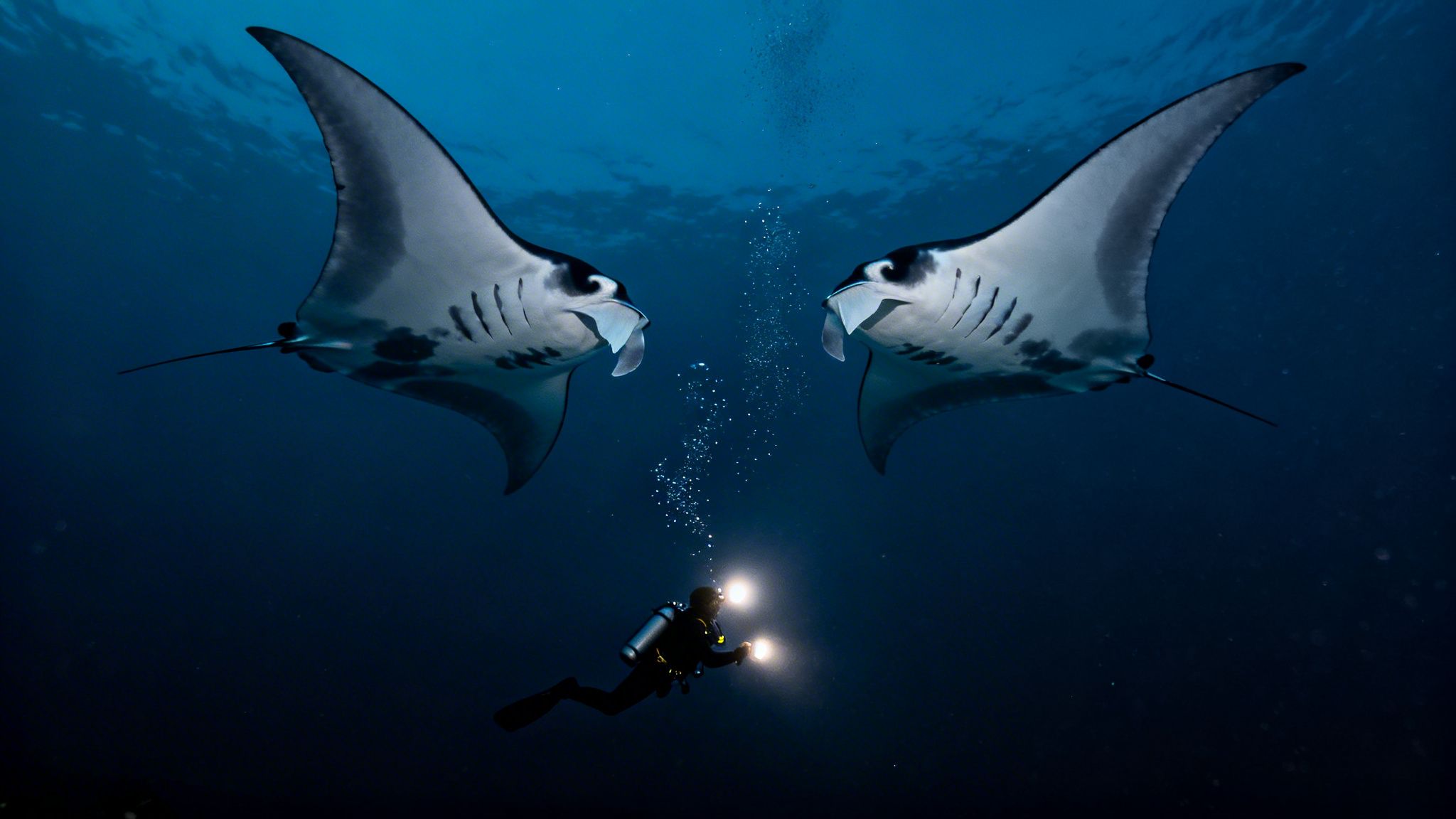
Imagine this: You’re kneeling on the ocean floor in the velvet dark, your light pointing straight up. Suddenly, enormous, graceful shadows descend from the blackness above. This is the Manta Ray Night Dive, an experience so magical it’s often described as an underwater ballet. These gentle giants, with wingspans that can stretch 16 feet, glide and somersault just inches over your head, feasting on the plankton drawn to the lights. It's simply breathtaking.
While you might hear about a couple of locations for this dive, trust us when we say that Garden Eel Cove is the superior choice. It’s more protected, which means calmer, more comfortable conditions for divers. Just as importantly, the viewing area is better situated and the surrounding reefs are healthier, which is a big reason why the mantas consistently show up.
And they really do show up. This is one of the most reliable big-animal encounters in the world. We see mantas on about 85-90% of our trips, with sightings ranging from a few individuals to an unbelievable spectacle of over 30 at once.
The Thrilling Kona Blackwater Dive
For the truly adventurous—those who have seen a reef or two and want something completely different—there's the Kona Blackwater Dive. This isn't just another dive; it's like a trip to another planet. You won't be exploring a reef. Instead, you'll be tethered to a boat, suspended over thousands of feet of inky black water, drifting in the open ocean at night.
As you float in the darkness, your dive light illuminates a world of bizarre and beautiful creatures rising from the abyss. This nightly vertical migration brings up a whole host of bioluminescent and translucent organisms you’ll almost never see during the day.
It's a humbling, almost psychedelic experience. You'll see life in its earliest stages—tiny larval octopuses, strange glowing jellies, and alien-like squid—all pulsing in the dark. This dive completely redefines what you think is possible underwater.
This unique adventure is an absolute must for experienced divers looking for a thrill that goes way beyond the ordinary.
Vibrant Daytime Reef Dives
Famous night dives aside, don't for a second think the daytime diving here is anything less than spectacular. The Big Island's volcanic origins have created a stunning underwater landscape of lava tubes, dramatic arches, and winding caverns just begging to be explored. Sunlight piercing through an ancient lava formation to light up a swim-through full of colorful fish is a sight you won't forget. You can get a better sense of the sheer variety of sites here: https://konahonudivers.com/big-island-diving/.
The coral gardens are bursting with life, and a surprising amount of it is found nowhere else on Earth. On any given dive, you're likely to see:
- Green Sea Turtles (Honu): A beloved and common sight. You'll often find them snoozing on the reef or cruising past with effortless grace.
- Endemic Fish: Keep an eye out for the Milletseed Butterflyfish, Potter's Angelfish, and other colorful species unique to Hawaiian waters.
- Playful Dolphins: Pods of spinner dolphins often escort the dive boats, putting on an acrobatic show during your surface intervals.
- Whitetip Reef Sharks: It's common to spot these mellow sharks resting in what we call "shark condos"—undercuts and small caverns in the reef.
Whether you're blowing your first bubbles or you're a seasoned pro with thousands of dives, the daytime reefs offer endless chances for discovery and adventure.
Planning Your Big Island Dive Adventure
Alright, you’ve got the dream dives pictured in your head. Now it’s time to get down to the brass tacks. A little bit of planning is what separates a good dive trip from an unforgettable one, making sure you’re prepared, comfortable, and ready for whatever the Pacific decides to show you.
Getting these details sorted out beforehand means that once you’re here, all you have to focus on is the incredible world beneath the waves.
Best Time to Dive in Kona
One of the best things about diving on the Kona coast is just how consistent it is. We have the massive volcanoes, Mauna Loa and Mauna Kea, to thank for that. They act like giant shields, blocking the powerful trade winds and leaving the western side of the island with calm, clear water almost all year long.
That said, there are a few subtle differences between the seasons:
- Summer (May – October): This is what most people consider the peak season. The water gets nice and warm, anywhere from the high 70s to low 80s Fahrenheit (25-28°C). Visibility is often spectacular, sometimes pushing past 100 feet, and the seas are typically flat as glass.
- Winter (November – April): The water temperature dips a bit into the mid-70s (23-25°C), so you’ll be much happier in a 5mm wetsuit instead of a 3mm. But the real magic of winter is the humpback whales. Hearing their songs echoing through the water on a dive is a powerful, haunting experience you'll never forget.
Certification and Experience Levels
Your certification card is your ticket to the Big Island’s underwater theme park, and different rides have different requirements. We have something for everyone, whether you're about to take your first breath underwater or you're a seasoned pro looking for a new thrill.
For most of our beautiful reef dives in calm, clear conditions, a standard Open Water Diver certification is all you need. If you're not yet certified, no worries! You can join a Discover Scuba Diving experience and have one of our pros guide you through the magic.
But for the dives that really put Kona on the map, you’ll need some more advanced training. The famous Kona Blackwater Dive, for instance, requires an Advanced Open Water certification because you're drifting in the deep, open ocean at night. It’s a whole different ballgame.
Always be upfront about your comfort and experience level. It helps the dive shop place you on the right boat and at the right site, which makes it safer and more fun for you and everyone else in the group. For those who are ready to explore deeper sites and more challenging conditions, Kona Honu Divers runs incredible advanced dive tours specifically for experienced divers.
Gear and Responsible Diving Practices
Packing for a dive trip is always a game of Tetris. You have to decide what’s worth bringing and what’s easier to rent.
What to Bring vs. What to Rent:
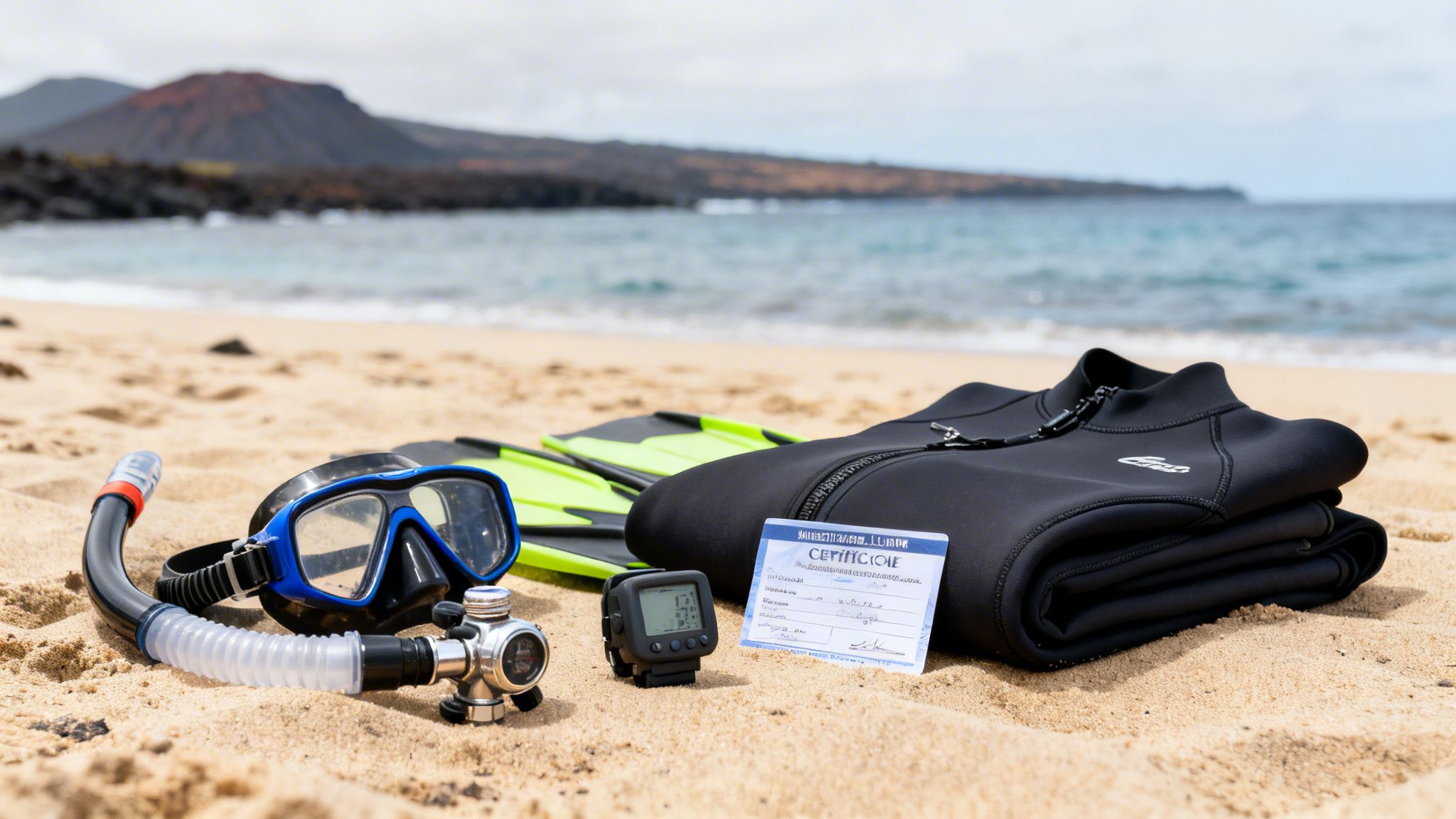
- Bring: Your own mask, snorkel, dive computer, and maybe your fins. There’s nothing worse than a leaky mask, and having gear that you know fits perfectly makes a huge difference in your comfort and safety.
- Rent: BCDs and regulators. Let’s be honest, they’re a pain to travel with. A good operator like Kona Honu Divers has top-notch rental gear that’s serviced regularly, saving you the headache and the extra baggage fees. If you're wondering about the budget, we break it all down in our guide on how expensive scuba diving is in Hawaii.
Most importantly, we all share the kālele (responsibility) of protecting Hawaii’s precious marine life. That means being a good guest underwater. Never touch, chase, or crowd the animals, especially our beloved manta rays and sea turtles. Work on your buoyancy so you don't accidentally bump or break the fragile coral. And, of course, leave everything exactly as you found it. By diving with respect, you help keep this underwater paradise healthy for generations to come.
How To Choose The Best Dive Operator In Kona
Let's be honest—choosing the right dive operator can make or break your entire trip. The crew and the boat you pick are the difference between a good dive and an absolutely unforgettable one. It’s not just about getting to the dive site; it’s about the whole experience, from the moment you step on board to the stories you tell afterward.
Think of it this way: a great operator doesn’t just provide a service, they curate an adventure. They handle all the logistics so you can focus on the magic happening below the surface. When you're investing in a dream dive vacation in Hawaii, you don't want to leave that experience to chance.
What To Look For In A Top-Tier Operator
As you start looking at different dive shops in Kona, a few things should be at the very top of your checklist. These are the non-negotiables that separate the pros from the rest.
- An Unshakable Safety Record: This is everything. Look for a long history of safe operations, experienced divemasters, and clear, comprehensive safety briefings before every single dive. No compromises here.
- Small, Personal Groups: Ever felt like just a number on a crowded boat? It’s the worst. Smaller groups mean your guide can give you personal attention, you have more room to move, and you're far more likely to have those quiet, incredible wildlife encounters.
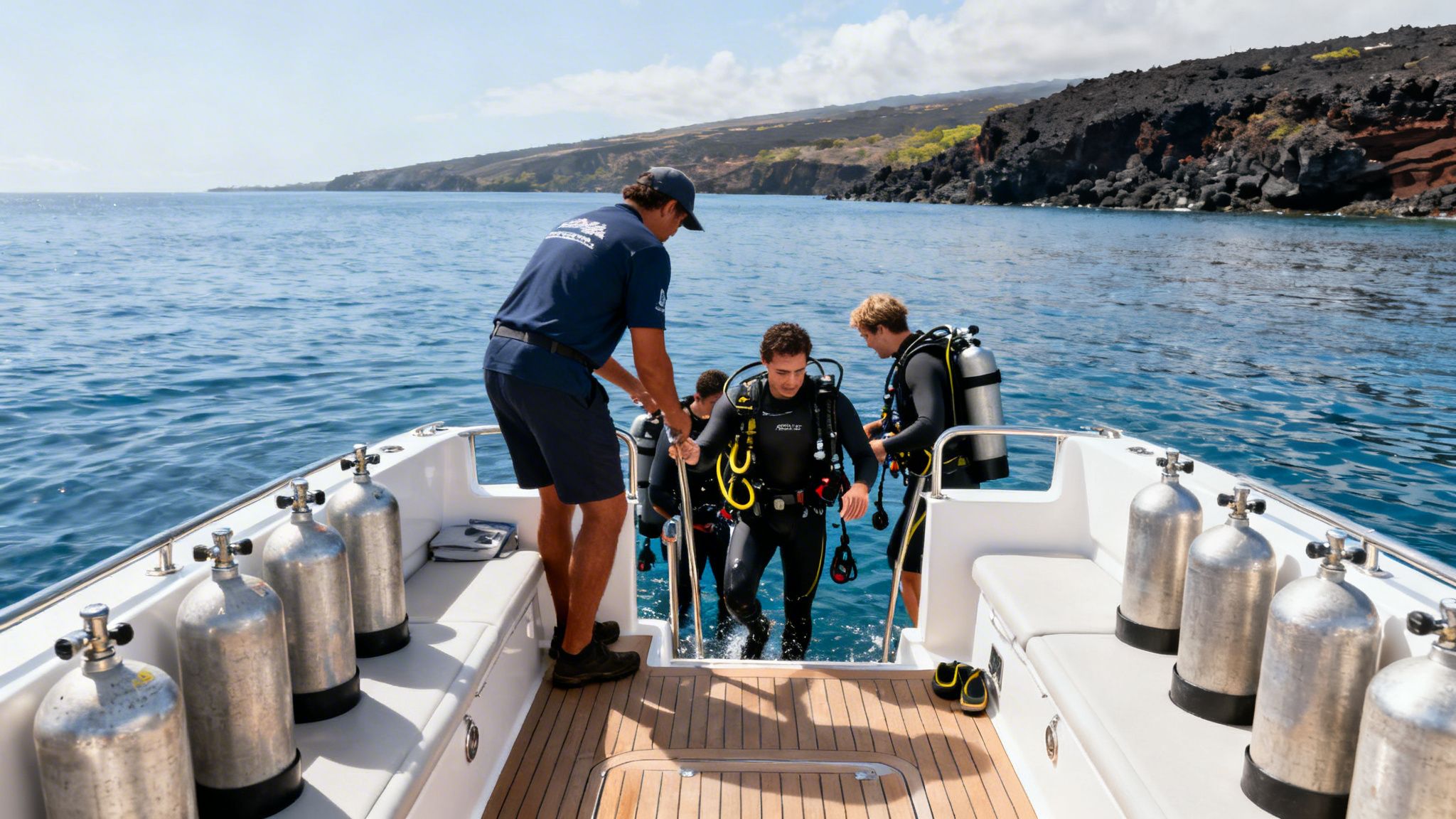
- Boats Built For Divers: A boat designed for fishing or sightseeing just doesn’t cut it. You want a vessel with plenty of space for your gear, easy ways to get in and out of the water, and creature comforts like a marine head (bathroom) and some shade.
- A Crew That Lives And Breathes Diving: The best guides aren't just there to punch a clock. They’re genuinely passionate marine life nerds who are excited to show you their backyard and share what makes it so special.
Why Kona Honu Divers Is The Gold Standard
At Kona Honu Divers, we don't just check these boxes—we built our entire company around them. We believe a world-class destination like the Kona coast demands a world-class dive experience to match.
Our crew is our secret weapon. Seriously. Together, they have over 200 years of combined industry experience. For them, this isn't just a job; it’s a lifestyle and a passion they can't wait to share with you.
We're also obsessed with comfort. Our two custom-built dive boats, the Honu One and Honu Lele, were designed by divers, for divers. That means spacious decks, easy-to-navigate layouts, and a stress-free gearing-up process. We also keep our groups small, sticking to a strict 6-to-1 diver-to-guide ratio, ensuring you get the personal and attentive experience you deserve.
Kona Honu Divers vs. The Rest
When you start comparing options, the small details really start to add up. Here’s a quick look at what sets us apart from many standard dive operations in the area.
| Feature | Kona Honu Divers | Standard Operators |
|---|---|---|
| Diver-to-Guide Ratio | 6:1 for a personal, safe experience. | Often 8:1 or higher, leading to crowded dives. |
| Boat Design | Custom-built for diving with spacious decks, shade, and easy water entry. | Multi-purpose boats that may be cramped. |
| Crew Experience | Over 200 years of combined professional experience. | Varies widely; may include newly certified guides. |
| Included Perks | Complimentary nitrox for certified divers. High-quality rental gear. | Nitrox is an extra charge. Gear quality can vary. |
| Vessel Fleet | Two US Coast Guard certified boats running daily. | Often a single, smaller boat. |
It’s these differences that elevate your dive from just another tour to a premium, hassle-free adventure.
We're all-in on making your day on the water as smooth and enjoyable as possible. That’s why we offer complimentary nitrox for certified divers—so you can enjoy longer bottom times and shorter surface intervals. It’s also why we provide top-notch, perfectly maintained rental gear. And if you’re doing your research, we encourage you to learn more about other Kona dive companies so you can feel confident you're making the best choice.
But don’t just take our word for it—see what fellow divers have to say about their adventures with us.
Why Dive Tourism Is a Growing Global Phenomenon
Thinking about scuba diving on the Big Island? You’re part of a massive, exciting shift in how people travel. For decades, scuba was a niche hobby, but it’s exploded into a major reason people pack their bags and explore the globe.Travelers aren't just looking for a beach to sit on anymore. They want to dive in, literally. There’s a powerful pull to experience the 71% of our planet that’s underwater, and that curiosity has turned quiet coastal towns into world-renowned destinations for adventure. Places like Kona, with its one-of-a-kind marine life and top-notch dive operators, are now on the bucket list for a global community of passionate divers.
The Economics of Underwater Exploration
This isn't just a feeling; the numbers tell the same story. The global market for dive tourism is booming. It's on track to grow from around USD 11.2 billion in 2025 to a staggering USD 18.5 billion by 2035.
What’s driving this? A hunger for real adventure and eco-conscious travel. This financial wave is fantastic news for divers like you. It means more investment in better, safer custom dive boats, higher training standards for guides, and a much stronger focus on protecting the incredible underwater environments that we all love. For a deeper look at the market trends, you can check out the analysis from Future Market Insights.
Why The Big Island Stands Out Globally
In this huge global market, some places just shine brighter, and the Big Island is a perfect example. It hits that sweet spot between being easy to get to and offering truly wild, untamed adventure. Some places have great reefs. Others have thrilling big animal encounters. Kona gives you both.
Choosing to dive here isn't just booking another tour. You're investing in an experience that’s recognized as world-class by a massive global community. It cements the Big Island’s reputation as a key player in the incredible world of underwater exploration.
From the world-famous Manta Ray Night Dive to the surreal Blackwater Dive, the experiences here are in a league of their own. When you plan your trip, you’re not just coming to Hawaii; you’re heading to a destination that has earned its spot on the world stage, ready to deliver an adventure that will blow you away.
Frequently Asked Questions About Big Island Scuba Diving
Jumping into a new adventure—especially one as incredible as scuba diving Hawaii Big Island—always brings up a few questions. We get it. To help you plan your trip with total confidence, we've put together some straight-up answers to the things people ask us most. Let's clear the waters so you can focus on the amazing dives waiting for you.
What Is The Best Time of Year to Scuba Dive on The Big Island?
Honestly, one of the best parts about diving here is that there's no "off-season." The Kona coast is tucked in the shadow of the massive Mauna Kea and Mauna Loa volcanoes, which act as a giant shield against the trade winds. This gift from nature means the water is almost always calm and clear.
That said, there are some subtle shifts between seasons:
Summer (May – October): This is when the water is warmest, hovering between a balmy 78-82°F (25-28°C). The ocean can get ridiculously flat, like glass, and it's not uncommon for visibility to push past 100 feet. It’s a fantastic time to be in the water.
Winter (November – April): The water temperature dips a little, down to 74-77°F (23-26°C). Most divers find a 5mm wetsuit is cozier than a 3mm. The real magic of winter diving, though? The humpback whales are here. Hearing their songs echo through the water on a dive is an experience that will stay with you forever.
Do I Need to Be Certified to Scuba Dive in Hawaii?
That’s a classic "yes and no" question. To join our boat dives, including the world-famous Manta Ray Night Dive, you’ll need at least an Open Water Diver certification. It doesn't matter if it's from PADI, SSI, NAUI, or another recognized agency; that card is your ticket to showing you've got the essential skills for safe diving.
But what if you're not certified? No problem! You can still get underwater with a Discover Scuba Diving experience. It’s a fantastic introductory program where, after a quick lesson and skills practice, you get to dive in a shallow, calm spot with an instructor right by your side. It's the perfect way to test the waters and see if diving is your thing.
What Is The Difference Between The Manta Ray Night Dive and Snorkel?
Both are amazing ways to see the mantas, but they offer completely different perspectives on the action. The right one for you really boils down to your comfort in the water and whether you're a certified diver.
The biggest difference is your position in the water. Divers are on the ocean floor looking up, while snorkelers are at the surface looking down.
Manta Ray Night Dive:
If you're a diver, you'll head down to a sandy patch about 30-40 feet deep and settle in. You'll point your dive light up, creating a column of light that attracts plankton. The mantas follow their food, swooping and barrel-rolling right over your head, sometimes just inches away. It’s a front-row seat to one of nature's greatest shows.
Manta Ray Night Snorkel:
As a snorkeler, you'll float comfortably at the surface, holding onto a custom-built light board. The powerful lights on the board shine down, drawing the plankton up from below. The mantas come right up to the surface to feed, giving you an incredible bird's-eye view of their graceful underwater ballet.
Is It Safe to Swim With Manta Rays?
It’s completely safe! There’s a reason we call them "gentle giants." Despite their massive size, manta rays are totally harmless to people.
Here’s the key difference: unlike their stingray cousins, manta rays do not have stingers, barbs, or teeth. They're filter feeders, meaning they only eat tiny organisms like plankton. Their interest in us is pure curiosity. The one golden rule is never, ever touch a manta ray. Their skin is coated in a protective slime layer that acts as their immune system. Touching them can rub it off and leave them vulnerable to infection. Just relax, breathe, and enjoy the show.
What Marine Life Can I Expect to See Besides Manta Rays?
While the mantas are the headliners, the Kona coast is packed with an incredible supporting cast. The reefs here are buzzing with life, and you're bound to see something amazing on every single dive.
Here are a few of our regular reef residents:
- Honu (Hawaiian Green Sea Turtles): You'd be hard-pressed not to see a turtle. They are everywhere!
- Spinner Dolphins: We often see them from the boat, and getting a fly-by underwater is a true treat.
- Whitetip Reef Sharks: These chill sharks are often found napping under ledges or in lava tube "condos."
- Endemic Fish: Hawaii has the highest concentration of fish found nowhere else on Earth. Keep an eye out for the Potter's Angelfish and Milletseed Butterflyfish.
- Eels: All sorts of morays—whitemouth, yellowmargin, and viper—are tucked into the reef's crevices.
- Octopus (He'e): Spotting one of these masters of camouflage is always a highlight.
- Frogfish: Another camouflage expert. Finding one of these bizarre-looking ambush predators earns you serious bragging rights.
A trip to Hawaii is often the adventure of a lifetime. Choosing the right dive operator is what turns a good trip into an unforgettable one. At Kona Honu Divers, our entire team is focused on making sure your time with us is safe, comfortable, and shows you the very best of Kona's underwater world.
Ready to dive into the adventure of a lifetime? Book your trip with Kona Honu Divers and experience the magic of the Big Island's underwater world with Hawaii's top-rated and most experienced dive crew. Explore our diving tours and reserve your spot today.