
Picture this: you descend into an underwater world carved by volcanoes. Ancient lava tubes become dramatic, sun-dappled cathedrals, and vibrant coral gardens explode with life. This is the magic of scuba diving on the Big Island of Hawaii, a destination that truly stands apart. The calm, crystal-clear waters of the Kona coast offer an incredible dive experience year-round, from the world-famous manta ray night dive to pristine reefs packed with unique Hawaiian species.
Discovering a Diver’s Paradise on the Big Island
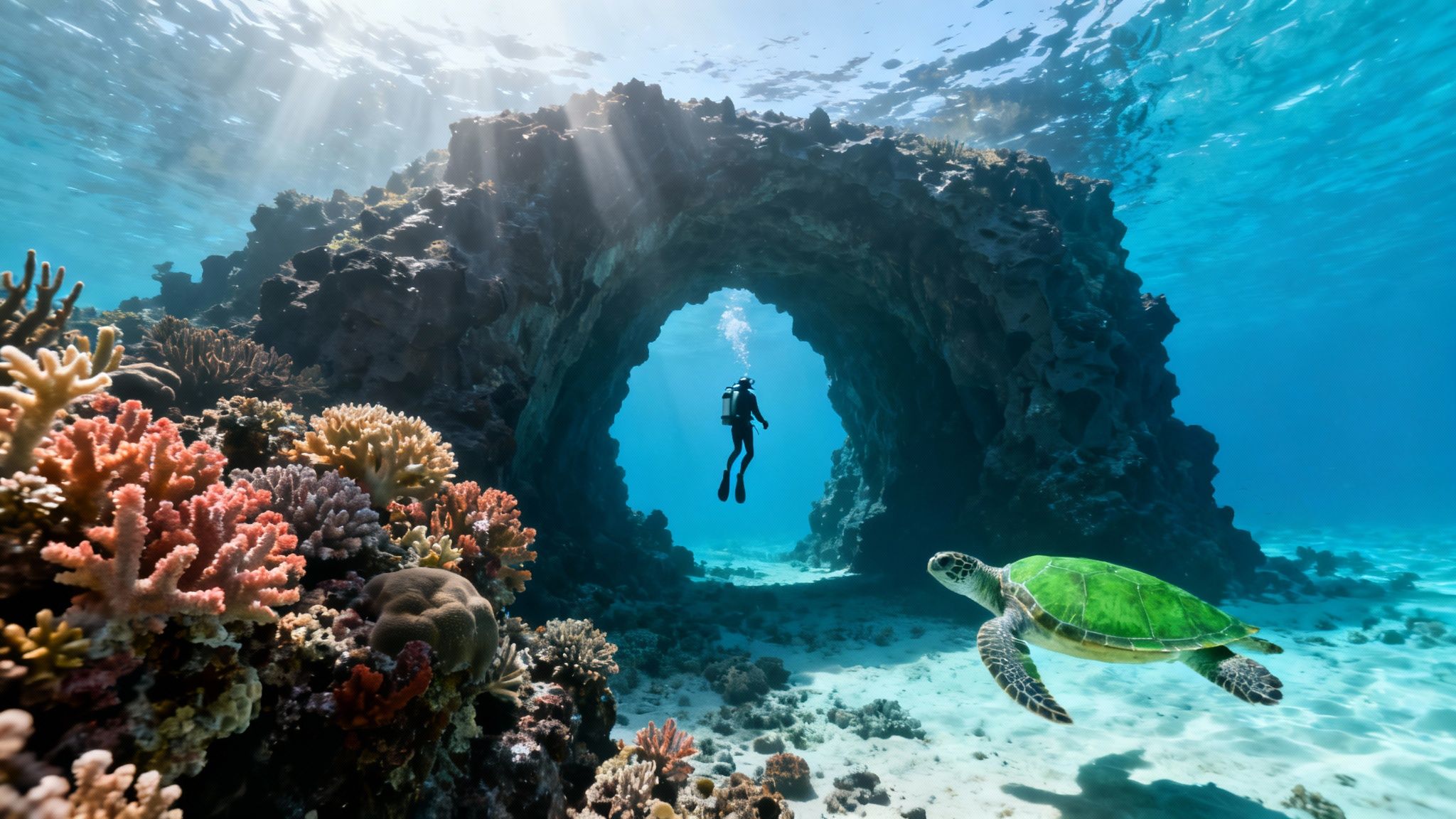
The Big Island isn't just another tropical spot; it's an underwater playground forged by fire and home to creatures you won’t find anywhere else on the planet. Its volcanic origins have shaped a dramatic and one-of-a-kind submarine landscape. As a diver, you get to explore ancient lava tubes, swim-through arches, and huge underwater canyons that shelter an astonishing variety of marine life.
What really makes the Kona coast special are its consistently amazing conditions. The island’s massive volcanoes, Mauna Loa and Hualalai, act as a natural shield against the strong Pacific trade winds, leaving the waters here exceptionally calm and clear. This means visibility often pushes past 100 feet, creating the perfect backdrop for your underwater adventure, no matter when you visit.
Why Kona is a Premier Diving Destination
The island’s remote location in the middle of the Pacific has led to an explosion of unique biodiversity. In fact, about 25% of the marine species here are endemic, meaning they've evolved in isolation and can't be found anywhere else. This turns every single dive into a genuine voyage of discovery.
Here’s what makes diving the Big Island so unforgettable:
- Unique Volcanic Topography: You're not just diving a reef; you're exploring a world of lava tubes, arches, and craters that create beautifully complex habitats.
- Exceptional Water Clarity: The water is consistently so clear and calm that it’s perfect for divers of all experience levels, from beginners to seasoned pros.
- Abundant and Diverse Marine Life: Get ready to encounter everything from honu (green sea turtles) and spinner dolphins to rare endemic fish like the Tinker's butterflyfish.
- World-Famous Night Dives: The Big Island is legendary for its mind-blowing manta ray and blackwater night dives, offering experiences that are truly in a class of their own.
It's this unique combination of features that has cemented the Big Island’s reputation, drawing around 150,000 dive tourists annually to its shores. The island is supported by over 50 professional dive operators, and a top-rated company like Kona Honu Divers logs more than 25,000 dives each year. You can learn more about why the Big Island is a diving powerhouse and see all the incredible trips we offer on our main diving tours page.
Exploring the Top Dive Sites Along the Kona Coast
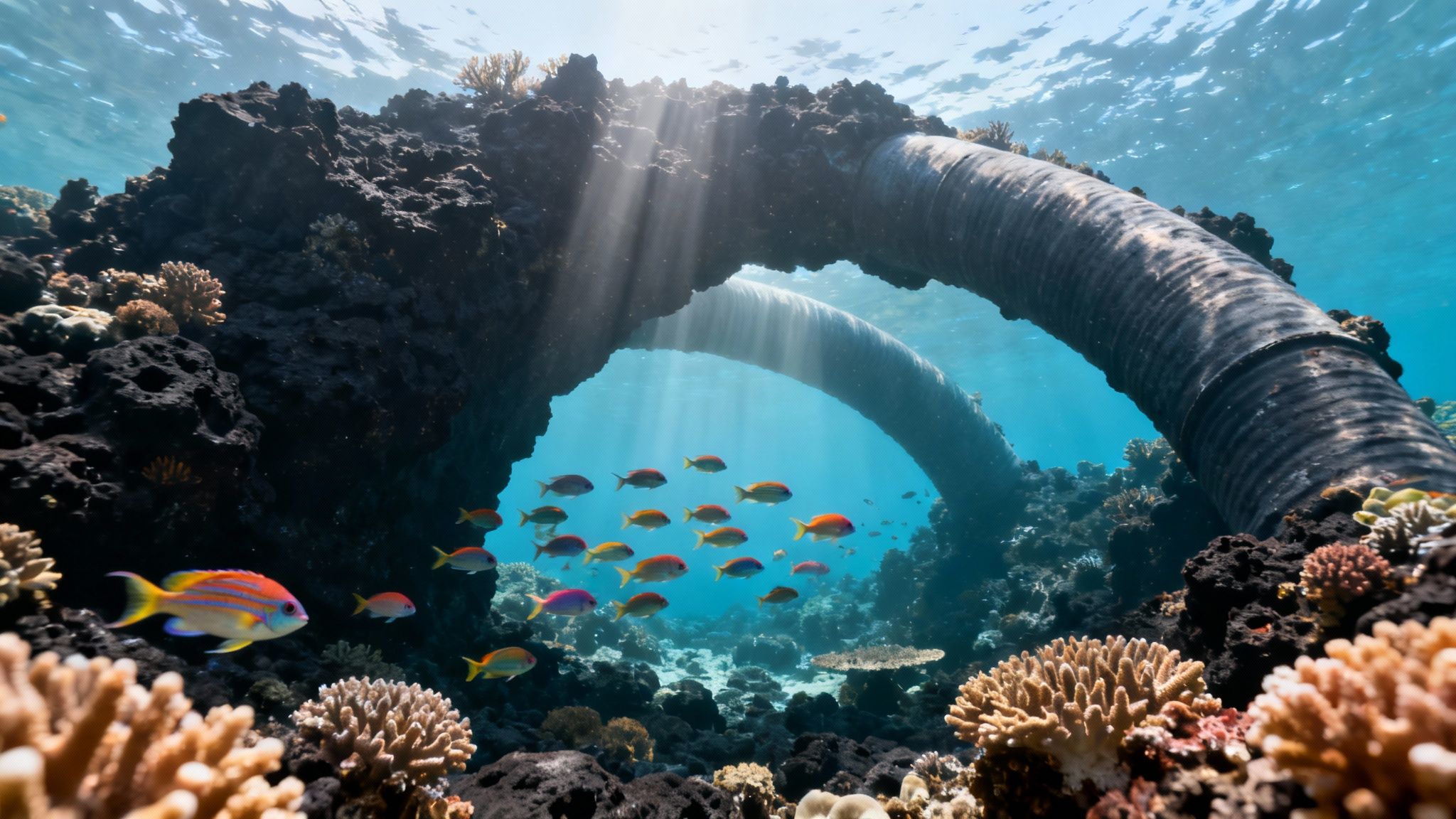
The Kona coast is a diver’s paradise, plain and simple. We're talking about a coastline loaded with more than 100 unique dive sites, each one with its own personality. The best part? The massive volcanoes towering over this side of the island act as a natural shield, keeping the waters remarkably calm and clear. It’s not uncommon to get visibility of 75 to 125 feet, creating the perfect underwater stage for divers of all stripes.
Every site tells a story written by ancient lava flows. These flows sculpted the dramatic arches, deep caverns, and winding canyons you see today. Now, these volcanic creations are bustling underwater cities, packed with an incredible density of sea life. From sun-drenched shallow reefs perfect for a first-timer to intricate deep structures that will challenge the most seasoned diver, the variety here is just incredible. This is the heart of any true scuba diving Hawaii Big Island adventure.
Pawai Bay: A Hub of Underwater Activity
Just a short boat ride north of Kona, Pawai Bay is a perfect example of what makes this area so special. It isn't just one dive site; it's a large bay that holds several distinct spots, each with its own unique feel. Two of the local legends here are "Golden Arches" and "Pyramid Pinnacles."
As the names suggest, these sites are all about the incredible lava formations. You'll find yourself navigating through majestic archways and exploring cavernous swim-throughs that are absolutely brimming with life.
Pawai Bay is a protected Marine Life Conservation District, and you can really tell the difference. The fish populations are healthy, abundant, and not the least bit shy. This protection has allowed the ecosystem to flourish, making for some of the most reliable and rewarding critter encounters on the entire coast.
The bay is a known sanctuary for well over 150 marine species. On any given dive, you can expect to see:
- Walls of Fish: It's common to be surrounded by clouds of yellow tang, bluestripe snapper, and raccoon butterflyfish.
- Unique Critters: Keep your eyes peeled! In the nooks and crannies, you might spot dragon morays, elusive frogfish, or even a well-camouflaged titan scorpionfish.
- Green Sea Turtles: The honu are regulars here, often seen cruising the reefs or just chilling out under a ledge for a quick nap.
Kealakekua Bay: Where History Meets the Reef
Head a bit further south and you'll find Kealakekua Bay, a place that’s as important historically as it is ecologically. This stunning bay is not only a protected marine sanctuary but also the spot where Captain James Cook first made contact with the island back in 1779. The monument commemorating him serves as a landmark both above and below the water.
Diving in Kealakekua Bay feels like you've dropped right into an aquarium. The coral gardens are exceptionally vibrant, and the sheer number of fish can be breathtaking. With depths typically ranging from 20 to 80 feet, it’s a fantastic site for most certified divers. The calm, sheltered waters also make it a world-class spot for snorkelers.
It's not unusual to be greeted by a pod of spinner dolphins resting or playing in the bay after a long night of hunting. The mix of pristine reefs, abundant wildlife, and a palpable sense of history makes Kealakekua Bay an absolute must-do.
Here at Kona Honu Divers, we've spent years exploring these incredible locations. Our crew knows the secret spots, the local characters (both fish and human!), and the best times to visit to make sure you have a safe and truly unforgettable time in the water.
Experiencing the World-Famous Manta Ray Night Dive
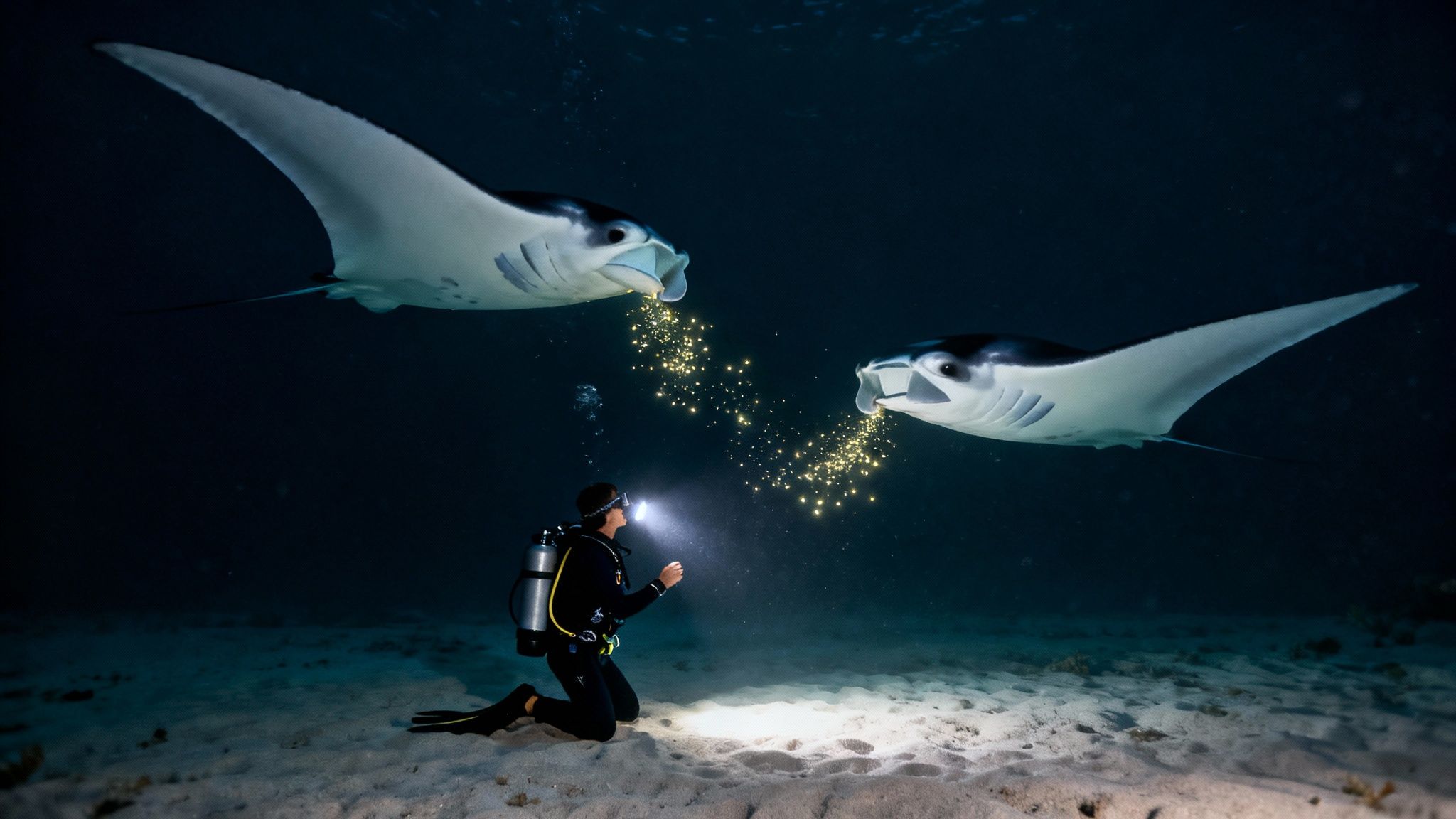
If there's one dive that defines the Big Island, this is it. The manta ray night dive isn't just another entry in your logbook; it's a front-row seat to one of nature's most spectacular performances. It's an otherworldly ballet that unfolds right before your eyes.
The concept is brilliantly simple. We set up powerful, stationary lights on the ocean floor. These lights act like a massive bug zapper for plankton, drawing in clouds of the tiny organisms. And where there’s a plankton buffet, the manta rays are sure to follow.
Picture yourself kneeling on the sand, pointing your dive light straight up. Out of the darkness, these gentle giants emerge, gliding just inches over your head with wingspans reaching up to 16 feet. They perform graceful barrel rolls and somersaults, their huge mouths open to filter the water. It’s a hypnotic, almost surreal experience that you’ll be talking about for years.
Why Garden Eel Cove is Our Go-To Spot
You can see mantas at a couple of spots, but from our experience, Garden Eel Cove (also known as Manta Heaven) consistently delivers the best dive. Its location is more sheltered from the open ocean, which usually means calmer water and a more comfortable experience for everyone.
The setup at Garden Eel Cove just works better for divers. We settle into a natural sandy amphitheater, which gives everyone a fantastic view without anyone needing to rest on the delicate coral reef. Plus, the surrounding reef is healthier and more vibrant, making the whole environment feel more alive. It all adds up to a more intimate and responsible way to meet these amazing animals.
To help you see the difference, here’s a quick comparison of the two main sites:
Manta Ray Night Dive Site Comparison
| Feature | Garden Eel Cove (Makako Bay) | Keauhou Bay (Manta Village) |
|---|---|---|
| Conditions | Generally calmer and more protected | Can be rougher, more exposed |
| Environment | Healthier reefs and a sandy viewing area | Closer to shore, some man-made structures |
| Diver Setup | Natural sandy "amphitheater" for viewing | Divers gather around a central light source |
| Crowd Size | Can get busy, but space allows for better separation | Often more crowded due to proximity to hotels |
| Overall Vibe | More natural, immersive underwater experience | Convenient but can feel more commercial |
While both sites offer a chance to see mantas, we've found that Garden Eel Cove provides a more reliable and magical encounter, which is why we head there on our manta ray dive tours.
"Diving with mantas is one of the most satisfying things a person can do in the water. It’s impossible to describe the feeling of watching a massive fish the shape of a stealth bomber coming into vision. It’s akin to watching your child ride a bike for the first time or finding a winning lottery ticket."
The manta dives here are legendary for a reason. Encounter rates regularly top 80%, and some nights are just unbelievable. We've seen local logs reporting 23 mantas on one night and 32 on another! On average, you can expect to see 10-15 on any given trip, making this a true bucket-list dive.
What To Expect On Your Dive
Your adventure starts on the boat with a thorough briefing from your divemaster. They’ll cover the plan for the dive and, most importantly, explain how to interact with the mantas respectfully. The number one rule is simple: look, but don't touch. A manta's skin is covered in a protective mucous layer, and touching them can strip it away, leaving them vulnerable to infections.
Once we're in the water, we’ll descend to our designated spot on the sand. You’ll find a comfortable spot to settle in and aim your light upward, helping to create the column of light that attracts the plankton.
And then, the show begins. These intelligent creatures are surprisingly comfortable around divers and will swoop in close—so close you can feel the water displaced by their massive wings. It's a connection with wildlife that stays with you forever.
To get an even better feel for the trip, check out our complete guide to the manta ray tour on the Big Island. At Kona Honu Divers, we're all about making this encounter safe, respectful, and absolutely unforgettable. Our crew's passion for these animals is infectious, and we can’t wait to share this magical experience with you.
Taking on Advanced and Unique Diving Adventures
Once you've logged plenty of dives and have your buoyancy dialed in, you start looking for something more. For seasoned divers with a taste for the truly extraordinary, the Big Island delivers adventures that go way beyond the beautiful coral gardens. The real thrill often lies in the unique, challenging dives that have put Kona on the map.
These aren't your typical reef tours. We're talking about specialized experiences that demand a higher level of skill, confidence, and a genuine spirit of adventure. You might find yourself navigating the cathedral-like interiors of ancient lava tubes or dropping into the deep blue of a massive underwater canyon. These kinds of scuba diving on the Hawaii Big Island offer a different kind of reward.
The Kona Blackwater Dive: A Spacewalk in the Ocean
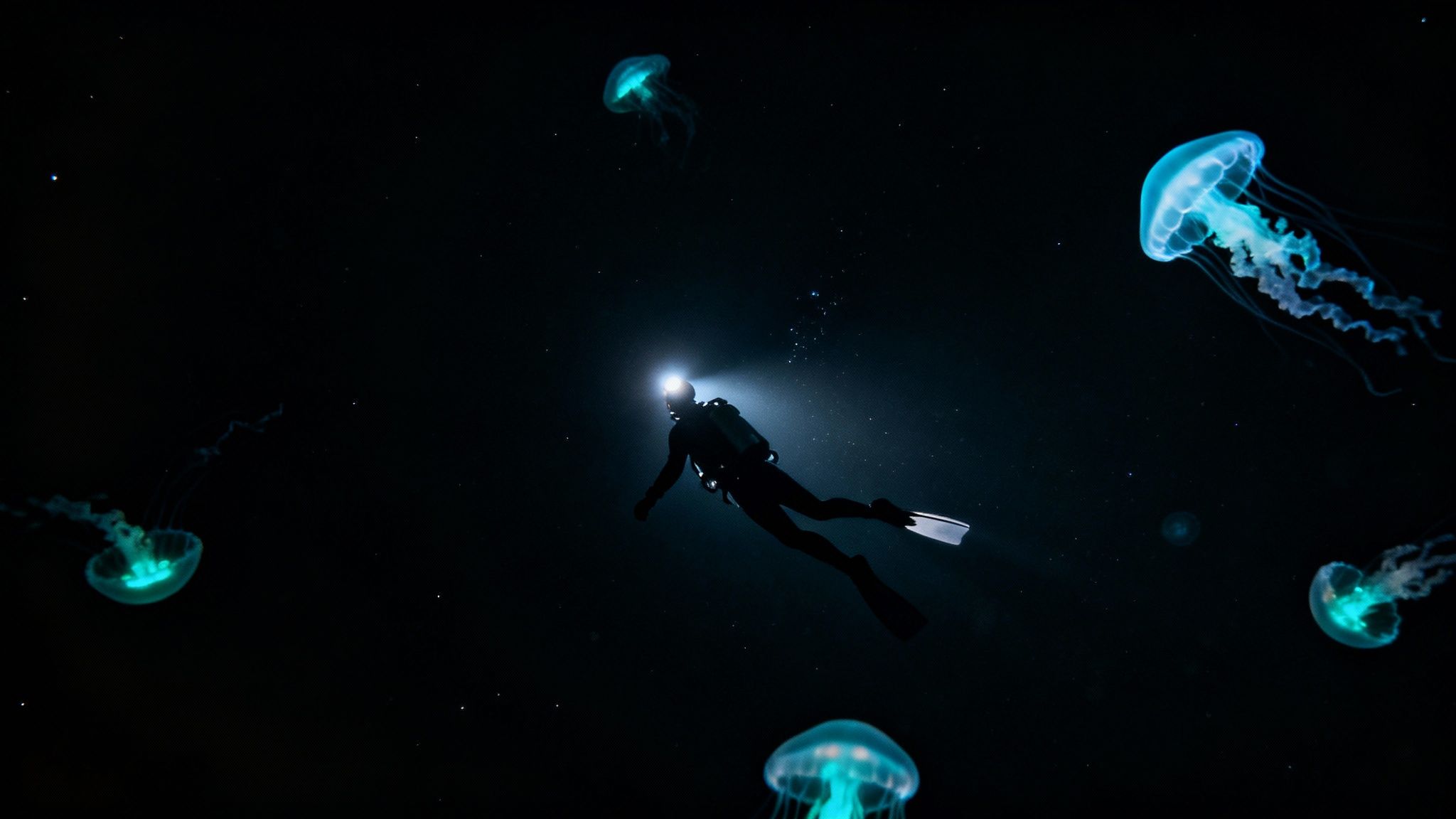
The undisputed crown jewel of unique Big Island diving has to be the Kona Blackwater Dive. It's often described as a "spacewalk" in the open ocean, and honestly, that's the best way to put it. This is not a reef dive. It’s a drift dive in the pitch-black of night, miles offshore, where you're suspended over thousands of feet of water with nothing but the deep below you.
The purpose? To witness the largest nightly vertical migration of life on Earth. Every single night, a bizarre and beautiful menagerie of deep-sea creatures travels from the crushing pressures of the abyss toward the surface to feed. Tethered to the boat, you just drift in the darkness as these alien-like organisms, many of them bioluminescent, float right past your light.
"Your body thinks you’re going to die, but you’re not. In 10 seconds, 98 percent of that nervousness is gone… We are not capable of being scared and fascinated at the same time." – Jeff Leicher, PADI Master Scuba Diver Trainer
You’ll see creatures that live their entire lives in the open ocean, things so strange and delicate they look like they’re made of glass. It’s a hypnotic, surreal, and deeply humbling experience that will completely redefine what a night dive can be. To get a real sense of this one-of-a-kind adventure, check out the Kona Honu Divers' Blackwater Dive tour page.
Mastering Deep Lava Tubes and Canyons
Beyond the famous blackwater experience, the Big Island's volcanic geology serves up some incredible playgrounds for advanced divers. The Kona coast is riddled with deep, intricate lava tubes and huge underwater canyons that require absolute precision with your buoyancy and a sharp awareness of your surroundings.
These aren't simple swim-throughs. They're complex structures with multiple chambers and passages that you have to respect. The payoff is huge, though. You get a chance to see marine life that prefers these dark, sheltered environments—think reclusive lobster species, sleeping whitetip reef sharks, and rare nudibranchs you won't find on the sunny reefs. Exploring a deep lava tube really is like being an astronaut on another world.
These more demanding dives are incredibly rewarding for divers who have the right training and experience. If you’re ready to push your skills and explore the wilder side of Kona, take a look at our premium advanced dive tour page. We’ve put these trips together specifically for divers who want a real challenge and a chance to see something spectacular.
Getting Certified and Preparing for Your Dives
Whether you're dreaming of taking your first breath underwater or you're an experienced diver looking to master a new skill, the Big Island is the perfect classroom. The Kona coast's calm, clear waters create a comfortable and inspiring environment to learn, making it one of the best places in the world to get certified.
You can arrive as a complete beginner and leave a few days later as a confident diver, ready to explore the 70% of our planet that lies beneath the waves. Local dive shops offer the full range of PADI courses, so your underwater education can grow with you.
Taking the Plunge with PADI Certification
Your PADI Open Water Diver certification is your passport to the underwater world. The process is straightforward and fun. You'll start with online e-learning that you can finish from home before your trip, saving valuable vacation time. Once in Kona, you'll practice skills in a pool or calm bay before making four real open-water dives on our beautiful reefs.
Once you have that certification card in hand, a whole new world of training opens up. Popular next steps include:
- Advanced Open Water Diver: This isn't just one course; it's five "adventure dives" that build on your core skills. You'll do a deep dive and a navigation dive, then choose three more that interest you.
- Rescue Diver: Ask any seasoned diver, and they'll tell you this is one of the most challenging but rewarding courses you can take. It shifts your focus from yourself to being a better, more aware dive buddy.
- Specialty Courses: Want to perfect your buoyancy, get comfortable with deep diving, or become a master of underwater navigation? There's a specialty course for that.
If you're ready to start your journey, you can get the full rundown on the steps to becoming a scuba diver and see which course is the right fit.
The Advantage of Diving with Nitrox
As you start diving more, you'll hear people talking about Enriched Air Nitrox, or just "nitrox." Don't let the name intimidate you. It’s simply air with a little extra oxygen and less nitrogen.
So, why does that matter? When you dive, your body absorbs nitrogen from the air you breathe. By reducing the amount of nitrogen going in, you get one huge benefit: longer bottom times. It means you can stay down longer, especially on those second or third dives of the day, without getting close to your no-decompression limits. Many divers also report feeling less tired after a day of diving with nitrox.
For many divers, once they try nitrox, they never go back. Being able to spend an extra 10 or 15 minutes exploring a cool lava tube or watching a turtle get its shell cleaned is a total game-changer, especially in that 40 to 100-foot range where Kona’s reefs are bursting with life.
The Enriched Air Nitrox course is PADI's most popular specialty, and you can usually knock it out in a single afternoon. Because it makes such a difference in the dive experience, top-tier shops like Kona Honu Divers actually provide free nitrox for certified divers on all their boat trips—a massive perk that enhances every single dive.
What to Know About Your Dive Gear
One of the most common questions we get from visiting divers is whether to bring their own gear or rent. The good news is that most dive tour packages on the Big Island include a full set of high-quality, well-maintained rental equipment.
A standard rental package will get you:
- A Buancy Control Device (BCD) to manage your position in the water.
- A Regulator set, almost always with an integrated dive computer.
- A Wetsuit, typically a 3mm or 5mm, which is perfect for our water temperatures.
- Tanks and weights, which are always included.
While you can certainly rent everything, most divers find that bringing their own mask, snorkel, and fins makes a huge difference in comfort. A mask that fits your face perfectly is worth its weight in gold. As you dive more, owning your own dive computer is another smart investment you won't regret.
Planning Your Ultimate Big Island Dive Vacation
Turning that dream of **scuba diving Hawaii’s Big Island** into a reality is all about a little smart planning. While Kona’s underwater world is incredible any time of year, knowing the subtle shifts between seasons can take your trip from great to absolutely unforgettable.
So, when is the best time to come? It really depends on what you’re looking for. If warm water is your top priority, aim for August through October, when the ocean is a balmy 80°F (27°C). But if you visit between January and March, you’ll trade a few degrees—the water dips to a still-pleasant 75°F (24°C)—for something truly magical. This is peak humpback whale season, and there’s nothing quite like hearing their haunting songs echo through the water while you dive. It’s an experience that sticks with you.
Booking Your Dives Like a Pro
Some of the Big Island's underwater experiences are world-famous, and that fame means they fill up fast. The Manta Ray Night Dive, for instance, is a true bucket-list adventure that draws divers from all over the globe, so it often sells out, especially during busy travel times.
Our best advice? Book your must-do dives—especially the manta and blackwater charters—several weeks, or even a few months, ahead of time. This locks in your spot and gives you wiggle room to reschedule if the weather doesn't cooperate or, on the rare occasion, the mantas are a no-show on your first night.
Booking early is also a great way to get the best value. Dive shops like us at Kona Honu Divers often have great packages and early-bird rates that make a real difference in your vacation budget. It's always a good idea to check out the full lineup of available diving tours to see if a multi-day package lines up with your plans.
Creating a Seamless Dive Itinerary
A little bit of planning goes a long way in making sure your trip is relaxing and fun, not rushed. Here are a few tips for building a great dive schedule:
- Pace Yourself: It's tempting to do it all at once, but you'll have a better time if you don't overschedule. A two-tank morning dive followed by a laid-back afternoon exploring on land is a perfect way to balance your days.
- Don't Forget "No-Fly" Time: This one is crucial for safety. Always leave a buffer of at least 18-24 hours between your final dive and your flight home. This gives your body plenty of time to safely off-gas.
- Mix It Up: For the full Kona experience, try a bit of everything. Alternate between deeper volcanic ledges, vibrant shallow reefs, and the mind-blowing night dives to truly appreciate the incredible variety of marine life here.
With a little forethought, you can craft the perfect dive vacation, lock in your spot on the best charters, and get ready for an amazing adventure. When you're ready to make it happen, we're here to help.
Frequently Asked Questions About Big Island Scuba Diving
Planning a dive trip always brings up a few last-minute questions. To help you get everything squared away, here are answers to some of the things we hear most often from divers getting ready to explore the waters of the Big Island.
What’s the Best Time of Year to Dive?
Honestly, there’s no bad time to dive in Kona. The coast is perfectly positioned, sheltered from the trade winds that can stir up the water on other parts of the island. This means we get fantastic conditions year-round.
That said, there are a few seasonal quirks to keep in mind:
- Water Temperature: If you love bathtub-warm water, aim for August through October when temperatures peak around a balmy 80°F (27°C). During the winter months, from January to March, it cools down a bit to a still-comfortable 75°F (24°C).
- Whale Season: This is a big one. From December through March, the humpback whales are here. Seeing one underwater is the holy grail, but hearing them is almost guaranteed. There's nothing quite like listening to their songs echoing through the water on a safety stop – it's an experience that will stick with you forever.
Do I Need to Be Certified for the Manta Ray Night Dive?
Good news – you don't need a scuba certification to experience the world-famous manta ray night dive! We (and most other operators) offer a snorkel option where you can watch the show from the surface. You'll hold onto a custom-built light board that draws in the plankton, and the mantas will swoop and glide right underneath you.
However, if you are a certified diver, you absolutely want to be on the bottom for this. To join the scuba portion, you'll need at least an Open Water certification. Being on the ocean floor and having these gentle giants barrel-roll inches over your head is a completely different, and totally unforgettable, experience.
What Marine Life Can I See Besides Mantas and Turtles?
While the mantas and honu (our beloved green sea turtles) get most of the spotlight, the reefs here are absolutely teeming with life. You never know what you'll find.
On any given dive, it's pretty common to spot pods of spinner dolphins playing in the boat's wake, whitetip reef sharks napping in the sand, and curious moray eels poking their heads out of crevices. We've got a huge variety of colorful reef fish, from butterflyfish to the state fish, the Humuhumunukunukuāpuaʻa (try saying that three times fast!). And if you get really lucky, you might even cross paths with a critically endangered Hawaiian monk seal or a passing tiger shark.
How Warm is the Water in Hawaii?
As we mentioned, the water off the Kona coast stays in that sweet spot between 75-80°F (24-27°C) all year.
Most divers find a 3mm or 5mm wetsuit is perfect. I'd lean towards the 5mm if you tend to get cold, are doing multiple dives, or are joining the Manta Ray Night Dive, since you're not moving around as much. Any reputable dive shop will include a good quality, well-fitting wetsuit with their rental gear.
Ready to take the plunge? Explore all the amazing underwater adventures Kona has to offer.
At Kona Honu Divers, we're all about creating dive experiences that are not just safe and fun, but truly memorable. Check out our full range of diving tours and let's find the right adventure for you.