
Picture this: you descend into warm, turquoise water so clear it feels like you're flying. All around you, dramatic volcanic arches and vibrant coral gardens pulse with life. This is what it's like to scuba dive the Big Island of Hawaii—an experience that hooks new divers and keeps seasoned veterans coming back for more. The island's Kona coast, in particular, is a world-class destination that delivers unforgettable underwater adventures.
Why The Big Island Is A Scuba Diver’s Paradise
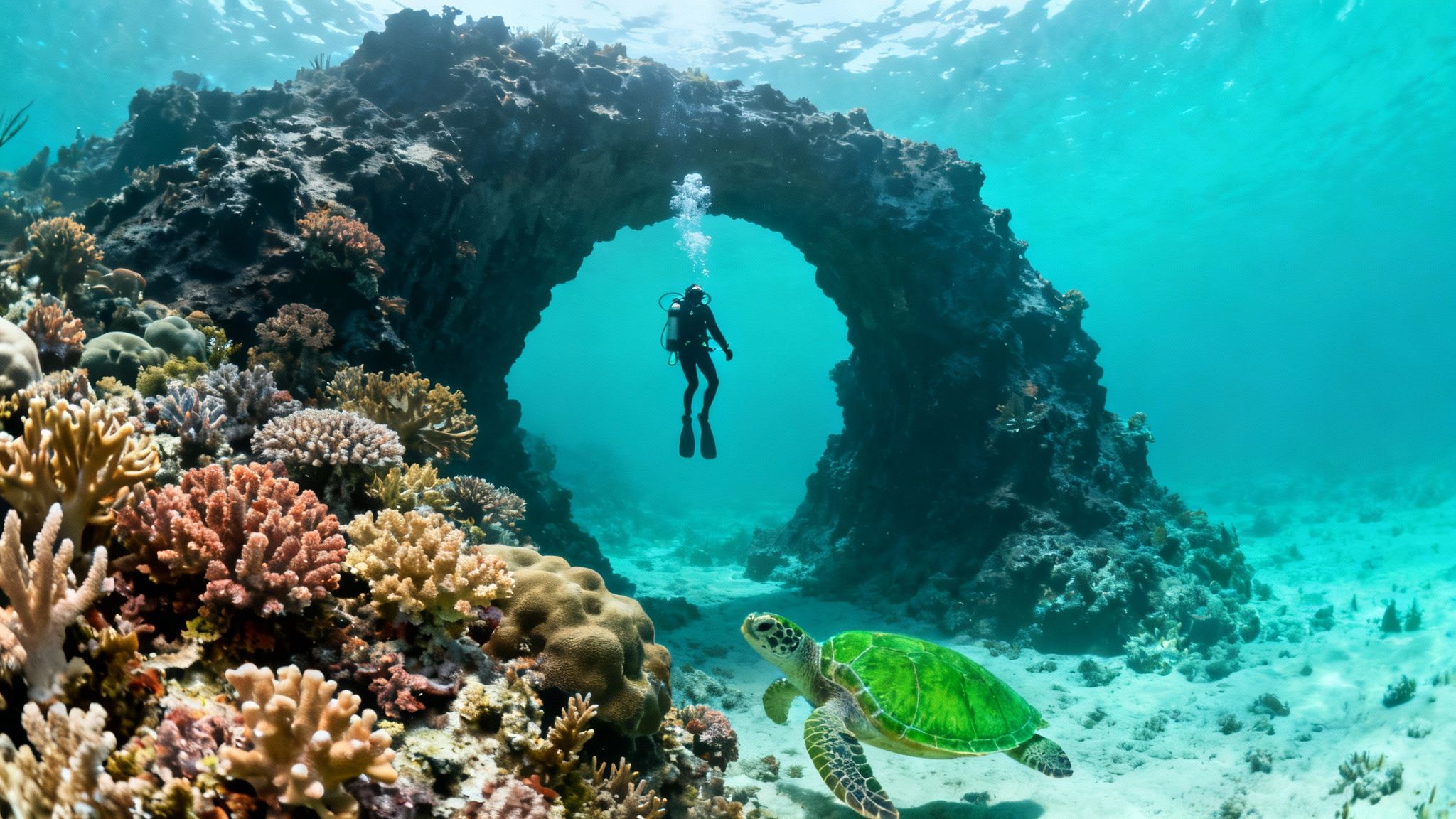
The Big Island isn't just another pretty spot to dive; it’s a one-of-a-kind underwater world, sculpted by volcanoes and sheltered by nature. The Kona coast, on the island's western side, sits in the massive shadow of two giants: Mauna Loa and Hualālai.
This unique geology acts as a natural shield, blocking the powerful trade winds and leaving the waters exceptionally calm and clear nearly all year. While divers on other islands might have to contend with choppy seas, Kona’s leeward coast offers a reliable haven for underwater exploration. You can learn more by checking out our guide on which Hawaiian island is best for scuba diving.
Incredible Marine Biodiversity
Once you slip beneath the surface, you'll find a world bursting with color. The island’s volcanic past has created a stunning underwater landscape of lava tubes, dramatic arches, and healthy, intricate coral reefs.
This dynamic environment is the perfect home for a staggering variety of marine life. It’s not a question of if you’ll see amazing creatures, but how many. On any given dive, you’re likely to meet:
- Green Sea Turtles (Honu): Gliding gracefully through the water or resting peacefully among the corals.
- Spinner Dolphins: You'll often see them leaping and playing in the boat's wake on your way to the dive sites.
- Vibrant Reef Fish: Hundreds of species, including the famous Humuhumunukunukuāpuaʻa, darting in and out of the reef.
- Unique Critters: Keep your eyes peeled for moray eels, clever octopuses, and majestic eagle rays.
Signature Underwater Experiences
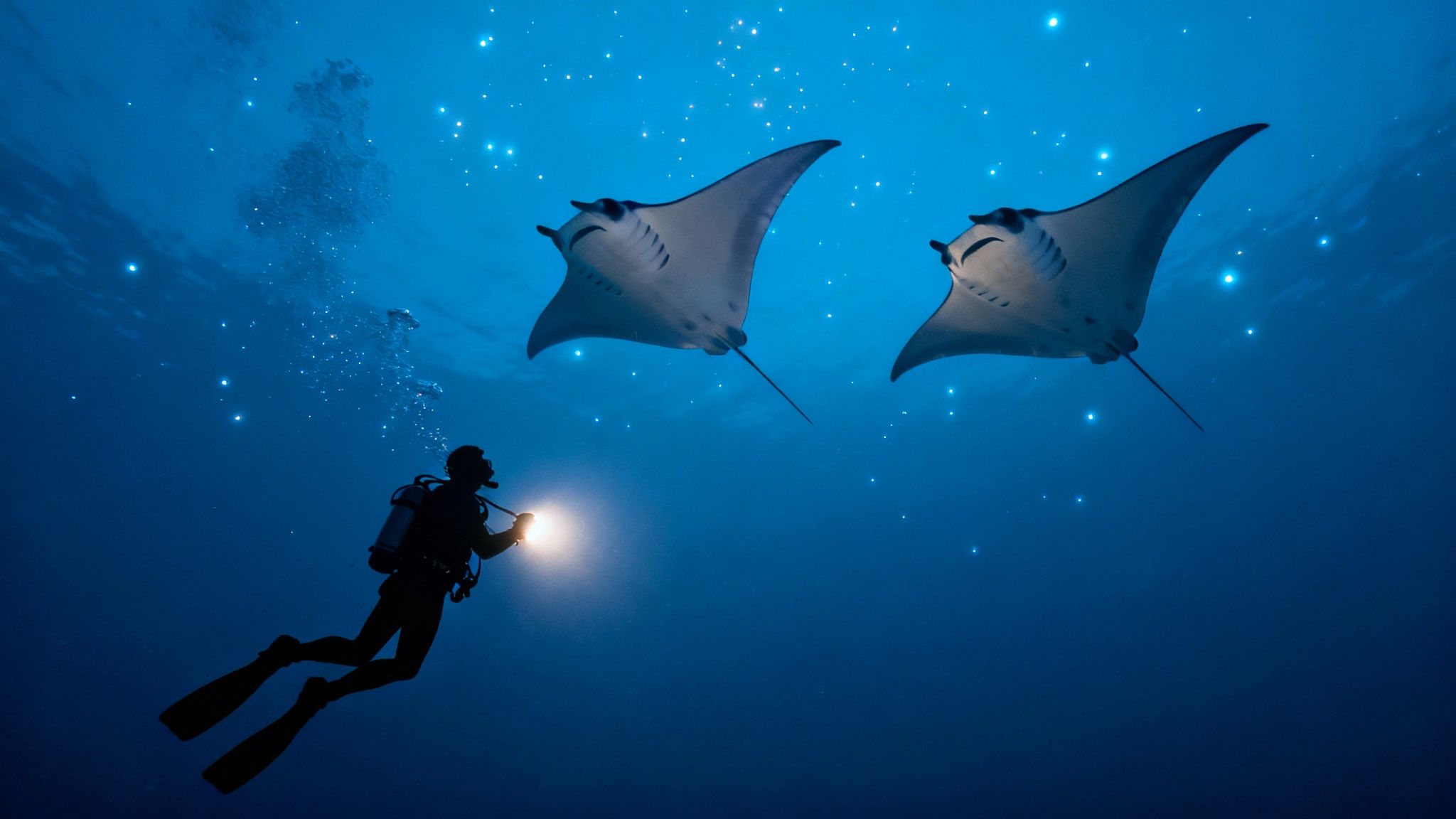
What truly makes the Big Island a bucket-list destination are its world-famous signature dives. The Manta Ray Night Dive is consistently rated one of the best dives on the planet—a surreal, underwater ballet where gentle giants swoop and barrel-roll in the glow of your dive light. It’s pure magic.
For those with a taste for adventure, the Kona Blackwater Dive is a thrilling journey into the deep open ocean after dark. You’ll witness a bizarre and beautiful procession of bioluminescent creatures rising from the abyss—things you won’t see anywhere else. These are the kinds of once-in-a-lifetime experiences that define diving here.
The Kona coast stands out as a diver’s paradise because its calm waters and fantastic visibility make for great conditions year-round. While summer (April to October) boasts the flattest seas, winter (November to March) adds a special soundtrack to your dive: the haunting songs of migrating humpback whales.
Here at Kona Honu Divers, we're passionate about guiding you through this incredible underwater world. Our focus is on providing safe, thrilling, and unforgettable experiences. Take a look at our selection of diving tours and get ready to discover Hawaii's best-kept secrets.
What Makes Kona the True Heart of Hawaiian Diving?
So, what’s the secret sauce? What makes the Big Island, and specifically the Kona coast, the undisputed champion of diving in Hawai‘i? It all comes down to geology—and a little bit of luck. The island's very creation story is what sets the stage for an underwater experience you just can't find anywhere else.
The island’s massive volcanoes, Mauna Loa and Hualālai, are more than just stunning peaks. They’re a giant, natural wall, shielding the Kona coast from the gusty trade winds that churn up the waters around the other islands.
This protection creates a massive "rain shadow," blessing Kona with incredibly calm and clear seas. We’re talking about water so clear that visibility often pushes past 100 feet. For divers, that means more perfect days on the water and a far more relaxing and predictable experience, whether you're a brand new diver or a seasoned veteran.
A Playground Carved from Fire
The real magic, though, is what you find beneath the waves. Millennia of volcanic activity have sculpted an underwater world that feels like something out of a fantasy novel. Ancient lava flows have frozen in time, creating a labyrinth of dramatic structures just waiting to be explored.
Get ready to dive into a submarine landscape packed with:
- Lava Tubes: Imagine swimming through natural, hollowed-out tunnels formed by molten rock.
- Dramatic Arches: These massive, sweeping archways are perfect for framing that epic underwater photo.
- Hidden Caves and Caverns: You'll find countless secluded grottos where shy marine life loves to hide.
- Pinnacles and Canyons: Navigate stunning vertical rock formations that plunge straight down into the deep blue.
This isn't just for show. This incredibly rich and complex topography creates the ideal habitat for a thriving marine ecosystem. Every crack and crevice provides a home, a hiding place, or a nursery for an amazing variety of reef fish, many of which you can only see right here in Hawaiian waters. To get a closer look at the unique dive sites this creates, check out our guide to Kona scuba diving.
Why The Big Island Stands Out
When you stack up the Hawaiian Islands, the Big Island consistently rises to the top for divers. It's that unique cocktail of protected waters, wild volcanic seascapes, and bucket-list big animal encounters that gives Kona an edge. No other island can offer the same variety and reliability.
Let's break down exactly why the Kona coast is the real epicenter of Hawaiian diving.
Big Island Diving vs Other Hawaiian Islands
| Feature | Big Island (Kona Coast) | Maui | Oahu | Kauai |
|---|---|---|---|---|
| Water Conditions | Exceptionally calm and clear due to volcanic wind shadow. | Can be windy; popular sites like Molokini are offshore. | Busier, with conditions that can be variable. | Often has stronger currents and rougher seas. |
| Underwater Topography | Complex lava tubes, arches, caves, and dramatic drop-offs. | Volcanic crater (Molokini) and some lava formations. | Primarily known for wrecks; reefs are less complex. | Features unique formations but less extensive than Kona. |
| Signature Dives | World-famous Manta Ray Night Dive & Blackwater Dive. | Molokini Crater wall dive. | Multiple wreck dives (e.g., YO-257, Sea Tiger). | Niʻihau (advanced) and Sheraton Caverns. |
| Marine Life Diversity | Extremely high; turtles, dolphins, eels, and endemic fish. | Good diversity, known for frogfish and sharks at Molokini. | Healthy reef fish populations and turtle cleaning stations. | Known for turtles, monk seals, and seasonal pelagics. |
| Dive Site Accessibility | Numerous sites are just a short boat ride from shore. | Many premier sites require longer boat trips. | Most sites are easily accessible via boat charters. | Access can be limited by weather and sea conditions. |
While every island has its charm, the sheer diversity and quality of diving opportunities along the Kona coast make it the clear winner for anyone serious about their underwater adventures.
Explore The Big Island’s Most Unforgettable Dives
The Big Island isn't just another dive destination; it's home to some of the planet's most iconic underwater encounters. Divers travel from all over the world for a chance to experience what Kona has to offer. These aren't just logbook entries—they're the kind of life-changing moments that redefine your idea of what's possible beneath the surface.
We’re talking about graceful giants performing an underwater ballet and strange, beautiful creatures emerging from the abyss. At Kona Honu Divers, leading you through these signature adventures is what we do best. Our team is obsessed with making every trip safe, unforgettable, and deeply respectful of the marine life we're so lucky to witness.
The World-Famous Manta Ray Night Dive
Picture this: you’re kneeling on a sandy patch of the ocean floor after sunset, your dive light pointing straight up. Out of the darkness, a massive, winged silhouette glides into your beam of light. This is the Manta Ray Night Dive, an experience that consistently tops "best dive" lists worldwide, and it happens right here off the Kona coast.
The magic is beautifully simple. We create a "campfire" of light that attracts swarms of plankton, the mantas' favorite food. Then, the show begins. These gentle giants, some with wingspans up to 16 feet, arrive for their nightly feast.
They swoop, glide, and perform breathtaking barrel rolls, often just inches from your mask, as they filter the plankton-rich water. It’s a peaceful, almost spiritual encounter—like being invited to a secret performance choreographed by nature itself.
Why Garden Eel Cove Is The Superior Manta Dive Location
You can see the mantas at a couple of spots, but from our experience, Garden Eel Cove (also known as Manta Heaven) consistently delivers the best possible show. Being just north of the airport, it’s a more protected site, which usually means calmer water and a more comfortable experience for everyone.
Even better, the topography at Garden Eel Cove is like a natural amphitheater. This setup allows us divers to settle into a designated sandy area, giving everyone an unobstructed, front-row seat. The surrounding reef is also healthier and more vibrant, so the dive down and the swim back to the boat are just as beautiful as the main event.
The Manta Ray Night Dive isn't just an activity; it's a spectacle. By choosing a location like Garden Eel Cove, you are optimizing your chances for a calm, comfortable, and truly mesmerizing encounter with these gentle giants.
The success rate for these dives is phenomenal, with mantas showing up an average of 85-90% of the time. The numbers speak for themselves: on October 10th, divers were treated to a visit from 23 different mantas. On November 23rd, two separate trips saw 30 and 32 mantas, respectively! The action continues, as you can see from the latest manta ray sighting reports.
Ready to witness this underwater ballet for yourself? Check out our manta ray dive tours page.
Journey Into The Abyss: The Kona Blackwater Dive
If you’re a diver who truly craves adventure, Kona offers an experience that feels like a journey to another planet. The Kona Blackwater Dive takes you miles offshore, where you'll drift, suspended over thousands of feet of inky-black water. It's a true pelagic night dive.
Tethered safely to the boat, you become a spectator to one of the largest migrations on Earth. Every single night, countless bizarre and often bioluminescent creatures rise from the crushing depths to feed near the surface. You'll see things that defy imagination—larval fish that look nothing like their adult forms, shimmering comb jellies, and critters that look like they came straight from a sci-fi movie.
This isn't your typical reef dive. This is an exploration of the vast, open ocean, a glimpse into a hidden ecosystem that only comes to life in the dark. It’s a highly specialized dive that requires real expertise, and our crew is among the most experienced in the world at leading these unique expeditions.
If you're ready for an adventure into the unknown, book your spot on our next Black Water Night Dive.
Essential Daytime Dives For Every Skill Level
While the night dives get a lot of the glory, the daytime scuba diving on Hawaii's Big Island is absolutely world-class. Our dramatic volcanic underwater landscapes create a stunning backdrop for every dive, with incredible sites for every certification level.
Here’s just a taste of what you can explore during the day:
- Shallow Sunlit Reefs: Perfect for new divers and underwater photographers. Sites like Pawai Bay and Golden Arches are packed with colorful fish, green sea turtles, and healthy coral in crystal-clear water.
- Dramatic Volcanic Drop-Offs: For more experienced divers, sites like Au Au Crater offer thrilling wall dives. You can hover along the edge and peer into the deep blue, keeping an eye out for passing eagle rays or even sharks.
- Lava Tubes and Arches: The Big Island's volcanic origins created some amazing underwater architecture. At sites like Turtle Pinnacle or Kaiwi Point, you can swim through ancient lava formations that are now home to eels, octopuses, and huge schools of fish.
No matter your experience, there's a perfect dive site here waiting for you. Our guides know these waters like the back of their hands and will take you to the best spots based on the day's conditions and what you want to see. Take a look at all our daytime diving tours and discover the vibrant underwater world of Kona.
Ready for a Deeper Challenge? Welcome to Advanced Diving

If you're already a certified diver and feel that pull to see what lies beyond the standard reef tour, you've come to the right place. The Big Island’s real magic for experienced divers is found in its wilder, more dramatic underwater landscapes. We're talking about exploring the raw, volcanic heart of Kona—a world of ancient lava tubes, steep drop-offs, and the bigger animals that patrol the deep blue.
Advanced scuba diving on Hawaii's Big Island is about more than just going deeper. It's about witnessing the island's powerful geological story firsthand. Imagine the thrill of swimming through a massive, hollowed-out lava tube as sunlight streams in from openings in the ceiling. Picture yourself hovering weightlessly along a sheer wall that plummets into the abyss, keeping an eye out for majestic eagle rays or even the occasional shark. This is what you came for. For more experienced diving opportunities, check out our advanced dive tour page.
Unlocking Kona's Best-Kept Secrets
Accessing these incredible environments requires stepping up your skills, and the right certifications are your ticket in. An Advanced Open Water certification is the natural next step, sharpening your buoyancy and navigation while preparing you for deeper, more complex dives.
But if you want a real game-changer, get certified for Enriched Air Nitrox.
Simply put, nitrox is a breathing gas with a little more oxygen and less nitrogen than the air you're breathing now. This small change makes a huge difference underwater, giving you longer bottom times and shorter breaks between dives. You get more time exploring and less time waiting on the boat. We believe in it so strongly that we provide complimentary nitrox for all certified nitrox divers on our charters.
Think of it this way: on a deeper dive, using nitrox can significantly extend your no-decompression limit. That translates to more precious minutes to explore that lava tube or patiently watch a school of rare fish.
Of course, safety is always our first priority, especially on these more demanding dives. Our guides are masters of Kona's advanced sites, from reading the subtle shifts in currents to knowing every nook and cranny of the underwater terrain. You can dive deep into the science behind it in our guide to the benefits of nitrox diving.
The Premier Advanced Dive Trip in Kona
Ready to see what you’re made of? We’ve designed a charter specifically for divers like you. Our Premium Advanced 2-Tank Trip isn't your average tour; we head for the sites that are further out and more challenging, promising a far more rewarding experience.
This is the perfect trip for confident divers who are comfortable with deeper profiles and want to see the island's most spectacular underwater topography. Let's go exploring.
How To Plan Your Perfect Big Island Dive Trip
So, you’re ready to turn that dream of scuba diving Hawaii's Big Island into a reality? Awesome. A little bit of planning goes a long way in making sure your trip is unforgettable, both in the water and out. The main things to think about are when to visit, what a typical day of diving looks like, and how to sort out your gear and certifications.
The best part? Kona offers spectacular diving all year long. That said, certain seasons have their own special magic. If you want to hear the incredible songs of humpback whales echoing through the water on your dive, you’ll want to book your trip between November and March. For the flattest, calmest seas and gin-clear visibility, the summer months from April to October are tough to beat.
What To Expect On a Dive Trip
When you book a charter with us at Kona Honu Divers, our goal is to handle all the heavy lifting so you can just relax and enjoy the ride. Our custom-built dive boats, like the spacious Honu One, are designed with diver comfort in mind. You’ll find plenty of shade, clean marine heads (that’s boat-speak for restrooms), and freshwater showers for a post-dive rinse.
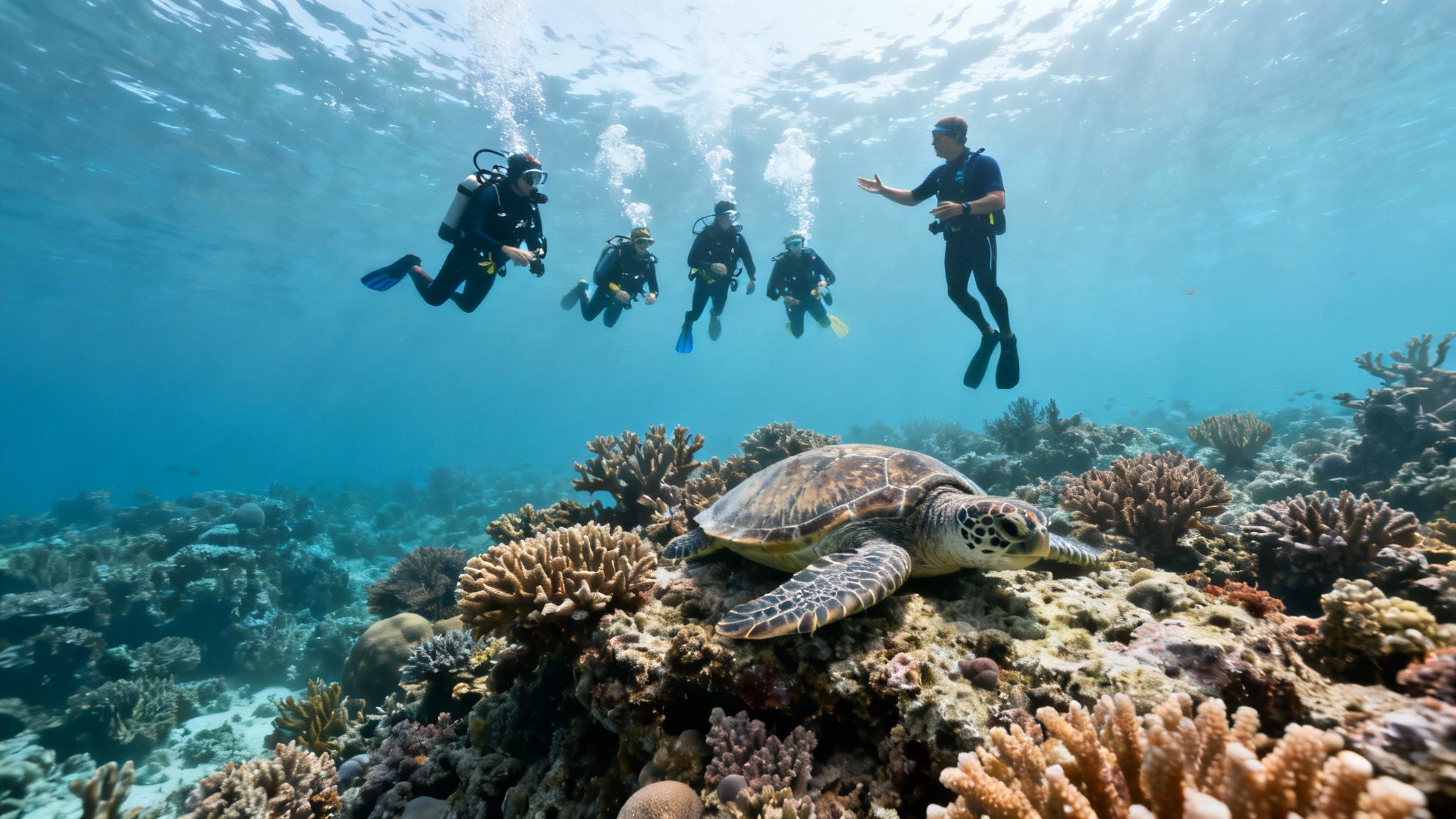
Before we even untie the lines, our crew will walk you through a complete boat and safety briefing. Once we arrive at the dive site, your divemaster will give you a detailed rundown of the underwater landscape, the cool critters we hope to see, and the overall dive plan. We intentionally keep our groups small because it makes for a much more personal and safe experience. And don't worry, we've got plenty of snacks and drinks on board to keep you fueled up between dives.
We're proud of the experience we provide, and we think our divers' feedback speaks for itself.
Certification and Gear Logistics
Didn't have time to finish your certification at home? No sweat. We do this all the time. Kona’s calm, warm, and clear waters are the perfect classroom for completing your Open Water checkout dives. Just bring your referral paperwork, and we’ll get you certified in paradise.
And if you’re trying to travel light, we’ve got you covered with a full selection of high-quality, meticulously maintained rental gear. When you book one of our scuba diving tours, you can add a complete rental package that includes everything you need.
What's Included in Rentals: We provide the BCD, regulator with an integrated dive computer, a wetsuit, and weights. You’re always welcome to bring your own mask, snorkel, and fins, but we have those available to rent, too.
Even though our rental gear is top-notch, many divers find that bringing a few personal items makes their dives that much more comfortable.
- Your Own Mask: Nothing beats a mask that you know fits your face perfectly. It can make or break a dive.
- Dive Computer: If you have your own, it’s always best to dive with a computer you’re familiar with.
- Rashguard or Dive Skin: Great for a little extra warmth under a wetsuit and for sun protection on the boat.
- Reusable Water Bottle: Help us protect our beautiful reefs by cutting down on single-use plastics.
Ultimately, planning your perfect trip is about letting us handle the details. All you have to do is show up, breathe, and get ready to explore the incredible underwater world of the Big Island.
Responsible And Safe Diving The Aloha Way
Exploring Hawai‘i’s underwater world is an incredible privilege, and with that comes a shared responsibility to protect both the ocean and ourselves. Living the spirit of aloha means we enter the water with a deep respect for its power and a commitment to keeping it—and ourselves—safe.
While the Kona coast is famous for having some of the calmest, clearest water in the state, the ocean always has the final say. The statistics are a sobering reminder of why we can never get complacent. Between 2020 and 2024, Hawaiʻi recorded 187 resident ocean drownings, giving it the second-highest per-capita rate in the US. The rate in 2022 was a staggering three times the national average, a tough lesson in the dangers of underestimating ocean conditions, as detailed in reports about Hawaii's ocean safety challenges.
This is precisely why choosing a certified, professional guide for any scuba diving Hawaii Big Island adventure is so important. A DIY shore dive might seem appealing, but it can quickly put you in unfamiliar currents and conditions. When you dive with a professional crew, you're with experts who know these waters like the back of their hand.
Our Unwavering Commitment To Your Safety
Here at Kona Honu Divers, your safety is the absolute bedrock of every single thing we do. It’s not a checklist for us; it’s our culture.
We’ve built our entire operation on the belief that a safe diver is a relaxed diver who can truly enjoy the experience. That’s why we don’t just meet industry standards—we push well beyond them. Here’s what that feels like on our boats:
- Meticulously Maintained Gear: Our rental equipment is serviced by certified technicians far more often than the manufacturers require. Your gear will be in top shape.
- A Crew That Knows Kona: Our divemasters and captains live and breathe these waters. They have an intimate, day-to-day understanding of Kona's dive sites, weather, and currents.
- Clear, Comprehensive Briefings: Before you even think about getting in the water, we'll walk you through a detailed dive plan, site-specific information, and emergency procedures. No surprises.
- Small Groups, Big Attention: We keep our guide-to-diver ratios low. This means you get personalized attention and our guides can keep a close eye on every single diver.
Our dedication to safety means you can let go of the "what-ifs" and just focus on the magic unfolding in front of you. The best feedback we get is when our guests tell us they felt completely safe and cared for. That’s when we know we’ve done our job right.
Becoming A Guardian Of The Reef
Being a safe diver and being an environmentally responsible diver go hand-in-hand. The reefs and marine life that make the Big Island so special are a precious, fragile treasure. We all have a part to play in protecting them.
When we enter the water, we are visitors in a fragile world. Our goal should be to leave it exactly as we found it, ensuring its beauty endures for generations of divers to come.
Remember the golden rule: observe, don't interact. Look, but never, ever touch. Laying a hand on marine life, especially manta rays or sea turtles (honu), can strip off their protective slime coat and leave them vulnerable to disease. The same goes for coral; the slightest bump from a hand or fin can damage or kill these delicate animals that took decades to grow.
The single best skill you can master to protect the reef is perfecting your buoyancy. When you achieve neutral buoyancy, you can float effortlessly above the coral, becoming a silent observer instead of a potential threat.
Come dive with us. We won't just show you the wonders of Kona's underwater world; we’ll help you become a true guardian of the very ecosystem you came all this way to see.
Your Big Island Diving Questions, Answered
Got questions about diving in Kona? You're not alone. We get asked these all the time, so we've put together answers to help you plan the perfect underwater adventure.
When Is The Best Time Of Year To Dive In Kona?
Honestly, there's no bad time to dive here. The Kona coast is shielded from the prevailing winds, giving us wonderfully calm and clear water almost year-round.
That said, the "best" time really depends on what you're hoping for. If you dream of glassy, flat seas and incredible visibility, aim for April to October. The conditions are typically at their most serene, making for easy boat rides and truly relaxing dives.
But if you're here between November and March, you're in for a different kind of magic: humpback whale season. You'll often see them from the boat, but the real treat is hearing their haunting, beautiful songs underwater during your dive. It’s an experience that will stay with you forever.
Do I Have To Be Certified For The Manta Ray Night Dive?
Yes, if you want to be on the ocean floor with a tank on your back, you'll need to be a certified diver. The scuba experience involves settling down on the bottom and watching the mantas perform their ballet just a few feet above you.
But don't worry, no one has to miss out! We've designed a fantastic manta ray snorkel experience that happens on the same boat. Snorkelers hold onto a custom light board at the surface and watch the very same mantas swoop and feed right below. It’s a great way for divers and non-divers in the same group to share the spectacle.
How Deep Do The Dives Get?
Kona's dive sites offer something for everyone. A huge number of our most beautiful and lively reefs are in the 30 to 60-foot range. This "sweet spot" is perfect for divers of all levels, from those fresh off their open water course to seasoned pros who just want to enjoy the vibrant marine life.
For our more experienced divers looking for a different kind of topography, we have incredible advanced sites. Think dramatic lava tubes, deep underwater canyons, and sheer walls that drop off into the blue. These dives can take you anywhere from 60 to over 100 feet, showcasing the island’s raw volcanic origins. We always tailor our diving tours to match the comfort and certification of everyone on board.
What Else Will I See Besides Manta Rays?
The mantas may be the headliners, but the supporting cast is world-class! The Kona coast is bursting with life. On just about any dive, you can expect to run into:
- Green Sea Turtles (Honu): You'll see these graceful creatures everywhere, resting on the reef or cruising by.
- Spinner Dolphins: They love to put on a show, often racing alongside the boat.
- Eels and Octopuses: Keep your eyes peeled! They're masters of disguise, hiding in the countless lava rock crevices.
- Hundreds of Tropical Fish: A kaleidoscope of color, including many species found nowhere else on Earth.
And if you get really lucky, you might spot a majestic eagle ray, a shy reef shark, or even one of our precious and critically endangered Hawaiian monk seals.
Ready to see it all for yourself? The team here at Kona Honu Divers lives and breathes this stuff, and we can't wait to show you the incredible underwater world of the Big Island.