
Welcome to an underwater world literally forged by fire and sea. Scuba diving on Hawai‘i's Big Island is a top-tier global experience, and for a good reason. The Kona coast, sheltered by the island's massive volcanoes, is a diver's paradise with some of the most consistent and incredible conditions you'll find anywhere on the planet.
Your Essential Guide to Big Island Scuba Diving
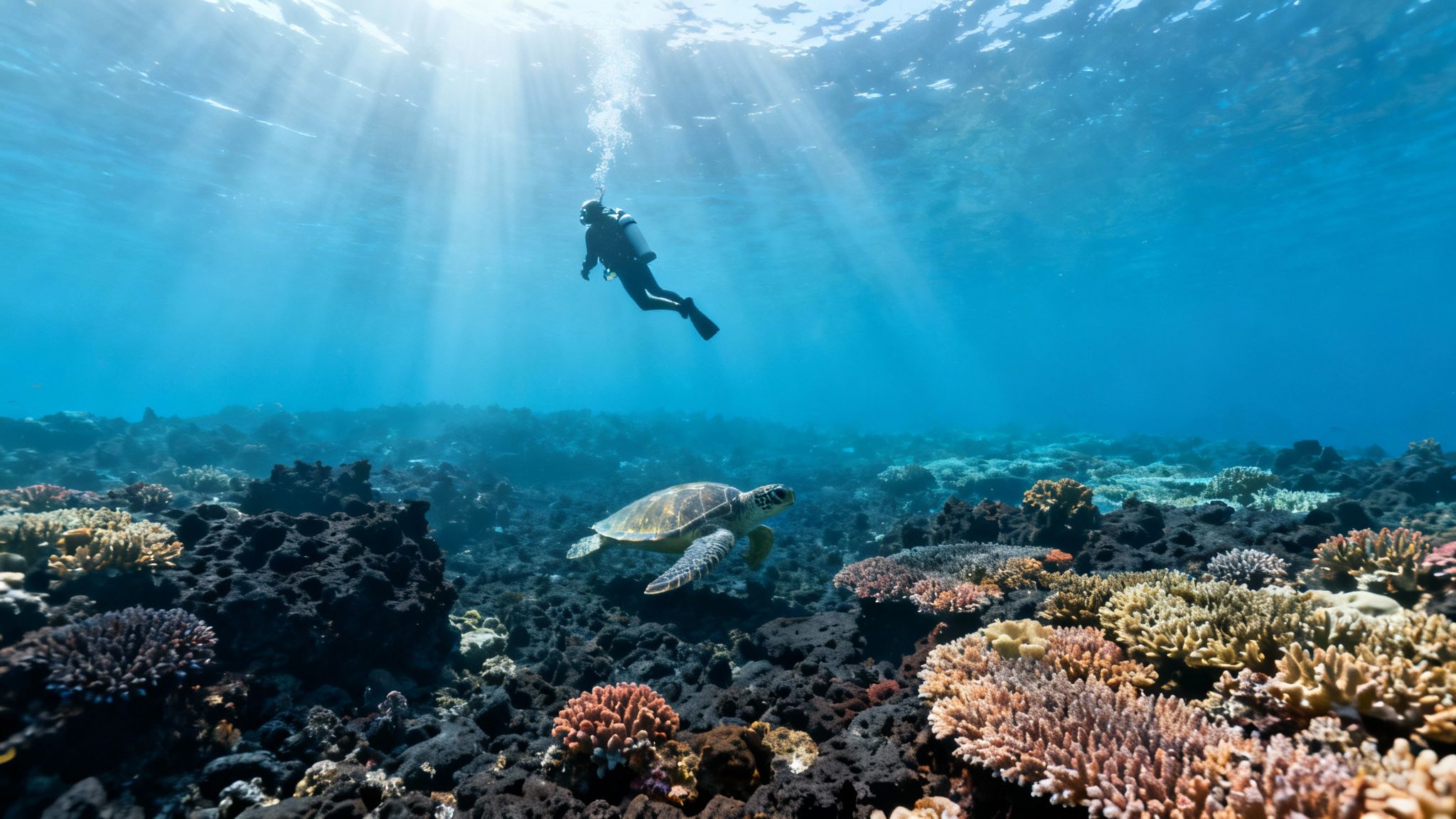
The Big Island isn't just another tropical dive spot; it’s a place where raw geology and vibrant marine biology spectacularly collide. The island's volcanic past has carved out a dramatic underwater landscape full of ancient lava tubes, mesmerizing archways, and sprawling coral gardens teeming with life.
This guide is your all-access pass to this aquatic realm. We'll cover everything from the world-famous Manta Ray Night Dive to the surreal Kona Blackwater experience, showing you exactly why this is a bucket-list destination for divers of every skill level.
Why Choose Kona for Your Dive Adventure?
The heart of the Big Island’s dive scene is undeniably the Kona coast, located on the island's western side. Shielded from the powerful trade winds by the towering volcanoes of Mauna Loa and Hualālai, its leeward position creates what can only be described as a diver’s dream: exceptionally calm seas and crystal-clear visibility almost every day.
This incredible reliability has turned the area into a premier diving hub. What started as a niche activity in the 1970s has blossomed into a vital part of the local economy, drawing over 150,000 dive tourists annually. The Kona coast now supports more than 50 dive operators who enjoy an estimated 300+ diveable days a year—a powerful testament to its unique and dependable conditions. You can get more details on what makes the Big Island a top-tier dive market from the experts at Kona Honu Divers.
Big Island Diving Conditions at a Glance
Here is a quick overview of what to expect when planning your scuba diving adventure on the Big Island.
| Feature | Details |
|---|---|
| Water Temperature | A comfortable 75-80°F (24-27°C) year-round. |
| Visibility | Typically 100+ feet (30+ meters). Can reach up to 150 feet (45 meters) on great days. |
| Currents | Generally mild, especially on the protected Kona coast, making for relaxed drift dives. |
| Best Time to Dive | Year-round, but summer (April-October) often has the calmest seas. |
| Marine Life | Manta rays, dolphins, sharks, eels, octopuses, and over 600 species of fish. |
| Topography | Lava tubes, arches, caverns, craters, and vibrant coral reefs. |
These near-perfect conditions make the Big Island an accessible yet thrilling destination for both new and seasoned divers.
Meet Your Expert Guides: Kona Honu Divers
To truly unlock the magic of Big Island scuba diving, you need a guide who knows these waters like the back of their hand. At Kona Honu Divers, we're dedicated to providing safe, unforgettable, and personalized underwater adventures.
We believe a better dive experience starts with a better philosophy. Here's what sets us apart:
- Small Group Sizes: We keep our groups small. This ensures you get personalized attention from our expert crew and never feel lost in a crowd.
- Custom-Designed Boats: Our vessels are built from the ground up for diver comfort and safety, making your trip to the site just as enjoyable as the dive itself.
- Unmatched Expertise: Our team’s deep, firsthand knowledge of local marine life and dive sites means you’ll see the absolute best the Big Island has to offer, every time.
Get ready to explore a world of unparalleled beauty. Check out our full range of diving tours and find the perfect underwater journey for your next trip.
Why Kona Is the Heart of Big Island Diving
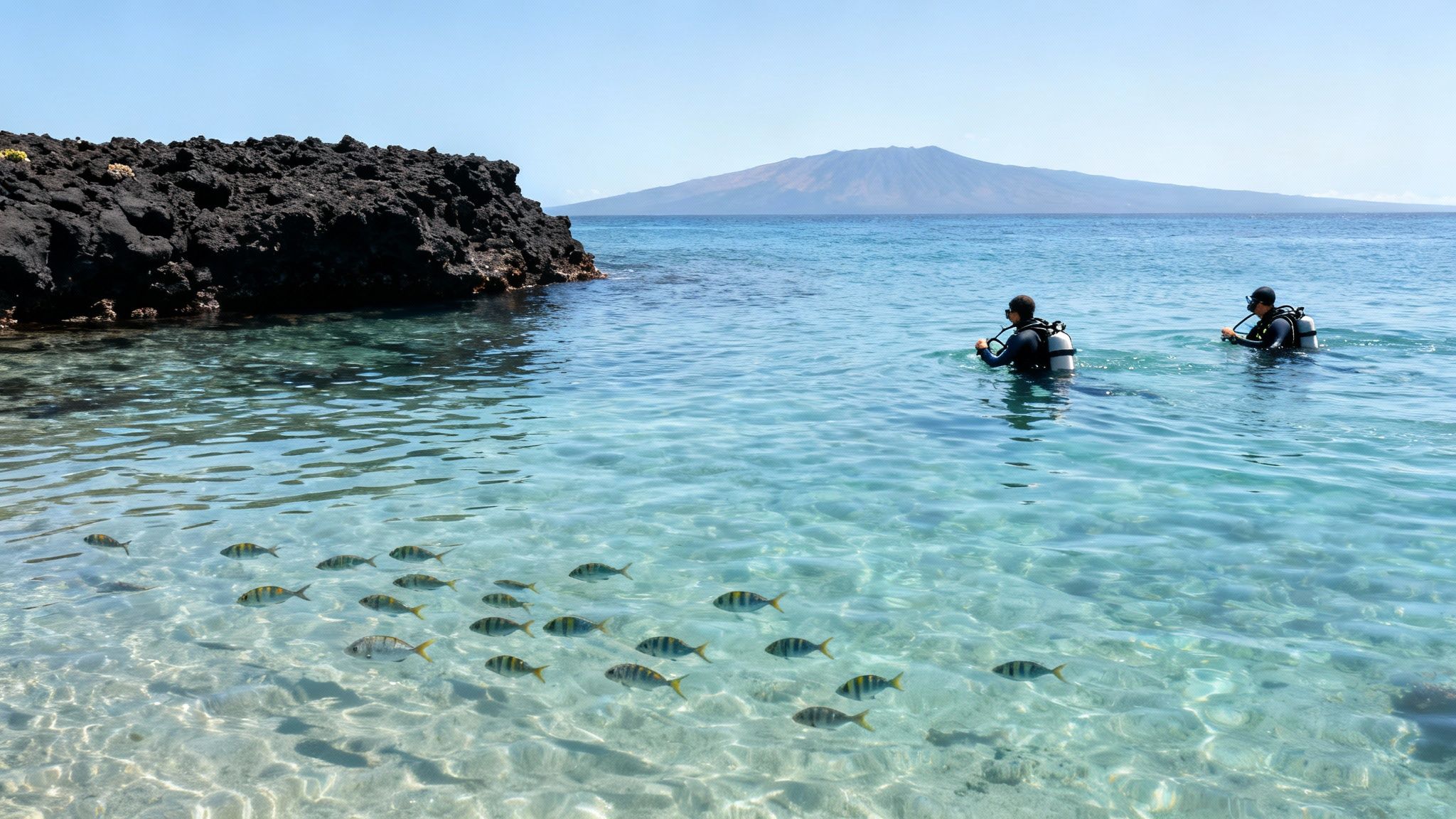
When people talk about diving on the Big Island, they’re really talking about Kona. This isn't just another spot on the map; it's the undisputed epicenter of the island's entire underwater scene. The secret to its magic? Simple geography.
Kona sits on the leeward side of the island, perfectly sheltered by the colossal volcanic masses of Mauna Loa and Hualālai. These giants act as a natural shield, blocking the relentless trade winds that can churn up the waters elsewhere.
What that means for us divers is a dream come true: exceptionally calm, clear, and predictable conditions almost every single day. You can book a diving tour months in advance with confidence, knowing the ocean will most likely be ready and waiting for you.
A Haven for Diverse Marine Life
But calm water is just the beginning. Kona's volcanic past has sculpted an incredible underwater landscape that life just loves to call home. Ancient lava flows have created a maze of intricate lava tubes, dramatic drop-offs, and cool caverns that are perfect hideouts and homes for all sorts of marine creatures.
Over time, these volcanic structures have become thriving coral gardens, buzzing with activity. You'll see schools of fish that exist nowhere else on Earth darting through the coral. And this is absolutely the place for those big-ticket encounters you’ll be talking about for years.
Encounters with Hawaiian green sea turtles (honu), playful spinner dolphins, graceful eagle rays, and various species of reef sharks are incredibly common in Kona's waters. It's a living ecosystem where every dive offers a new discovery.
If you want a closer look at the specific underwater environments and the creatures you'll meet, our detailed guide on Kona diving is a great place to start.
Why Kona Honu Divers Is the Top-Rated Choice
To truly experience everything Kona has to offer, who you dive with matters. A lot. Here at Kona Honu Divers, our entire focus is on giving you a better dive experience—one that’s built on safety, personal attention, and a deep respect for our ocean home. There’s a reason we’re consistently the top-rated and most-reviewed dive company in Hawaii.
Our whole philosophy comes down to a few core beliefs that make all the difference:
- Small, Intimate Groups: We firmly believe diving is better when you're not lost in a crowd. Our small groups mean you get personalized guidance from our crew and a much more connected, relaxed experience underwater.
- Custom-Built Dive Boats: We designed our boats specifically for divers. That means easy entries and exits, plenty of space for your gear, and a comfortable ride out to the sites. No compromises.
- Commitment to Sustainability: We're not just visitors here; we're stewards of this incredible place. Our team follows strict sustainable practices to protect the reefs and marine life for generations of divers to come.
We bring together our deep local knowledge, top-tier equipment, and a friendly, professional crew to make sure every dive is as safe as it is unforgettable. We’d be thrilled to show you the heart of Big Island diving.
Finding the Best Dive Sites on the Big Island
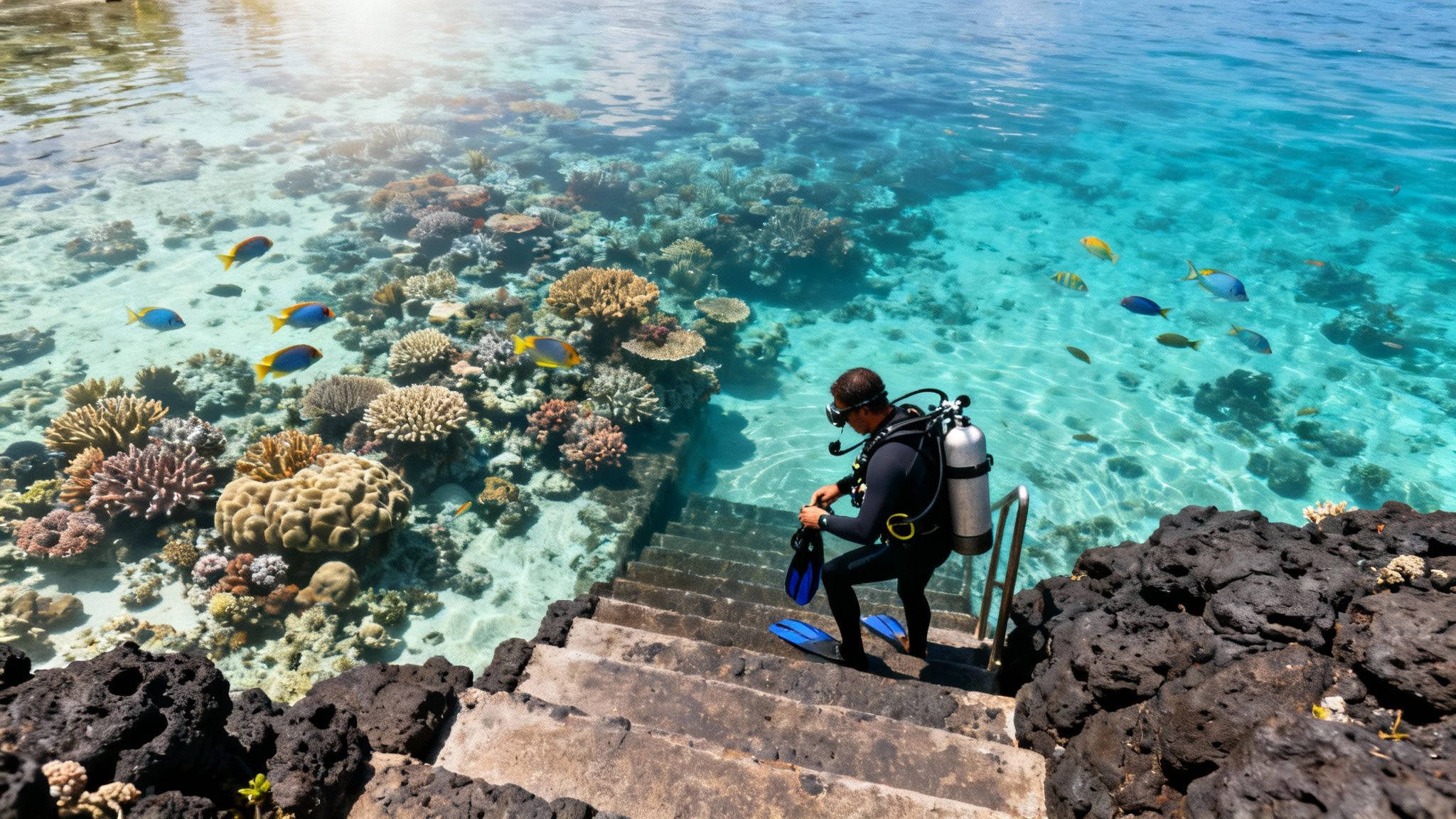
The Big Island’s volcanic past has left behind an incredible underwater legacy. Its dramatic coastline has sculpted a playground for divers, offering a completely different adventure around every corner. One site might be a calm, shallow reef perfect for finding your fins, while the next could be a maze of ancient lava tubes.
This variety is what makes diving here so unforgettable. Each spot tells a unique story of the island's fiery creation and the vibrant marine life that now calls these structures home. Think of this as your guide to the must-see spots along the Kona coast—there's truly something for everyone, whether this is your first dive or your five-hundredth.
A Dive for Every Skill Level
One of the best things about diving in Kona is just how accessible it is. No matter your experience, there are plenty of sites where you can comfortably and safely explore.
- Beginner-Friendly Reefs: New to diving? No problem. Sites like Puʻuhonua O Hōnaunau, better known as "Two Step," are perfect. The shore entry is about as easy as it gets, leading you into shallow, sun-drenched coral gardens packed with colorful fish. It’s an ideal place to build confidence.
- Intermediate Explorations: If you have a few dives under your belt, you can start exploring more complex terrain. This is where you get to glide through ancient lava tubes, navigate underwater arches, and explore deeper reefs where you might find whitetip reef sharks resting in the sand.
- Advanced Adventures: For the seasoned diver looking for a thrill, the Big Island delivers. We can take you to deeper sites, often with stronger currents, where encounters with big pelagic species are more likely. These dives demand rock-solid buoyancy control and situational awareness.
No matter your certification, our expert guides at Kona Honu Divers will make sure you’re matched with a site and group that fits your skill level. The goal is always a safe, rewarding, and downright awesome experience.
Kealakekua Bay: A Protected Paradise
Of all the gems along the Kona coast, Kealakekua Bay is something special. As a designated Marine Life Conservation District, it’s a true sanctuary where marine life thrives, protected from fishing and other disruptive activities. This protection has allowed one of Hawaii's most pristine reef ecosystems to flourish.
The bay’s geography naturally creates calm, sheltered waters, making it a perfect nursery for juvenile fish and a haven for countless other species. The coral formations are just spectacular—a vibrant, bustling underwater city. It's also a favorite resting spot for massive pods of spinner dolphins. Diving here feels like stepping into a different world.
The Big Island’s premier dive sites uniquely blend volcanic geology with proactive marine conservation and fantastic year-round accessibility.
This combination of features is what puts the Big Island on the map for divers worldwide, and Kealakekua Bay is the crown jewel. It’s consistently ranked as one of the best places to dive and snorkel in all of Hawaii.
Dive depths here are typically in the 30 to 60-foot (9–18 meter) range, making it perfect for most divers. Because of its protected status, the bay boasts incredibly healthy coral cover and a much higher density of fish compared to unprotected areas. With water temperatures hovering between a comfortable 76–81°F (24–27°C) and visibility that often hits 80–100 feet (24–30 meters), the conditions are phenomenal pretty much any day of the year. You can learn more about what makes the area so unique by exploring the essentials of Big Island diving.
Diving in Kealakekua Bay is like getting a glimpse of a Hawaiian reef as it was meant to be. It’s an experience that will leave you with a profound appreciation for the ocean’s beauty and the importance of protecting it.
Experiencing Hawaii’s Two Most Iconic Dives
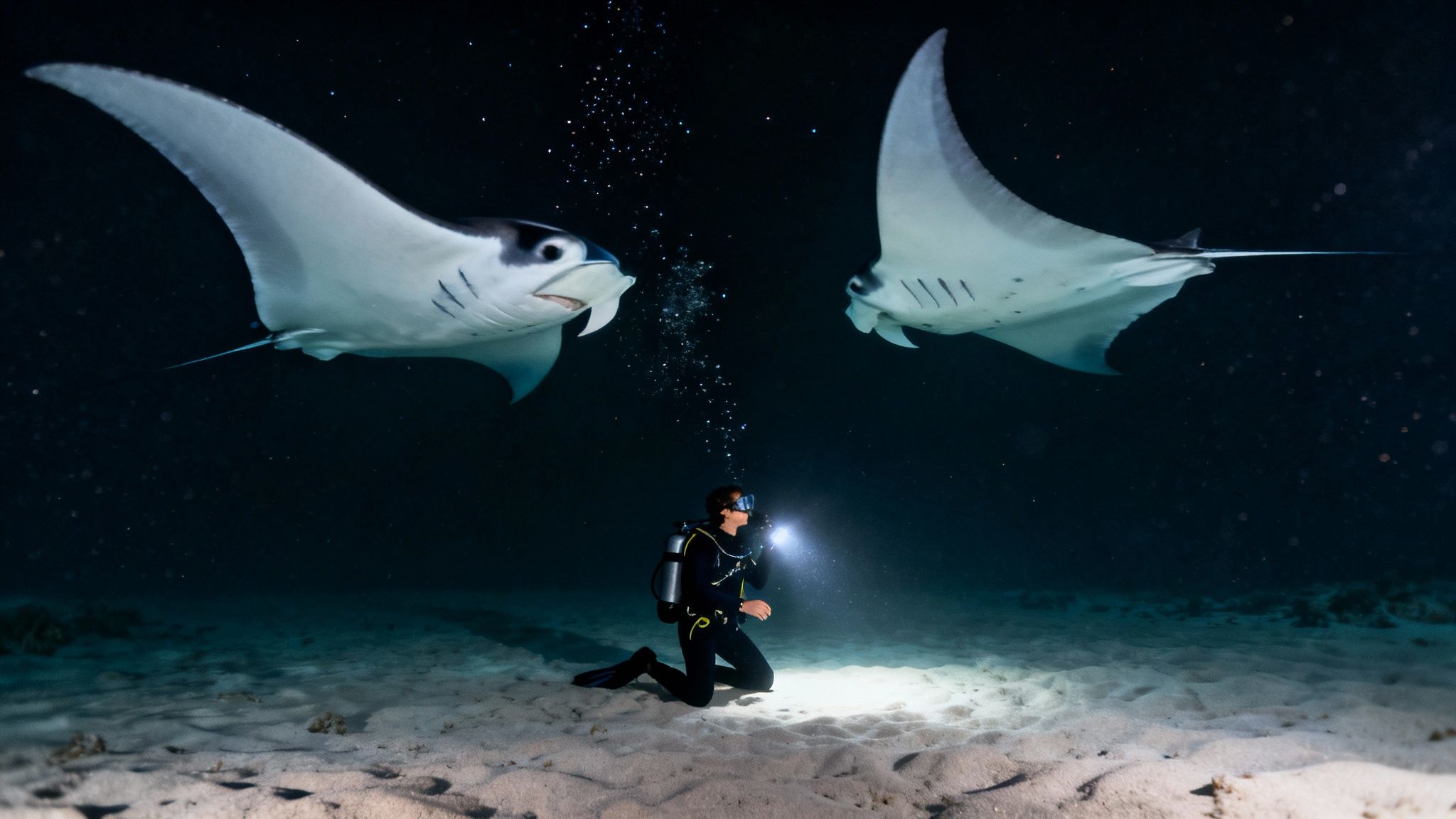
Sure, the Big Island has an endless menu of incredible reef dives, but there are two world-renowned experiences that truly put this place on the map. These aren't just dives; they're the kind of bucket-list encounters people travel across the globe for. I'm talking about the legendary Manta Ray Night Dive and the pioneering Kona Blackwater Dive.
These two adventures have become the signature of scuba diving Hawaii Big Island, and for good reason. Each offers a completely different, yet equally mesmerizing, window into the ocean's mysteries. One is a graceful, silent ballet; the other is a journey into a surreal, alien world.
The Manta Ray Night Dive: An Underwater Ballet
Picture this: you're kneeling on the soft, sandy ocean floor after sunset. You and the other divers form a circle on the bottom, pointing your lights straight up. This creates a massive column of light that acts like a dinner bell for plankton, drawing them in from all around.
Then, out of the darkness, they arrive.
Giant, magnificent manta rays, some with wingspans stretching over 12 feet, glide effortlessly into the light. They perform an incredible underwater ballet, soaring, swooping, and somersaulting just inches above your head as they feed. It’s a breathtaking, humbling, and utterly magical spectacle that feels like you’ve stumbled into another dimension.
The Big Island’s manta ray night dive has earned its global reputation. Local operators, including us, see astoundingly high encounter rates, hovering around 85–90%. That level of reliability is almost unheard of for wild, large-animal encounters. It’s not uncommon for divers to see 20–30 individual mantas on a single night, as you can see in some local manta reports.
Why Garden Eel Cove Is The Superior Choice
While a couple of sites host this dive, we at Kona Honu Divers exclusively use Garden Eel Cove (also known as Manta Heaven). After years of experience, we’re convinced it provides a significantly better and more consistent experience for our divers.
- Protected Location: The cove is naturally sheltered from wind and swell, which means calmer water. This makes for a much more comfortable and less stressful dive, especially if you're new to night diving.
- Better Viewing Area: The site's topography creates a natural amphitheater. This setup allows divers to settle in comfortably on the sand, giving everyone clear, unobstructed views of the mantas feeding overhead.
- Healthier Reefs: The vibrant reefs surrounding the cove support a robust ecosystem, which means a healthy supply of the plankton the mantas come for. This ecological health is key to reliable manta appearances, night after night.
These factors combine to make Garden Eel Cove the premier stage for this incredible performance. Join us for this unforgettable experience by booking one of our specialized manta ray dive tours.
The Kona Blackwater Dive: A Journey into the Abyss
If the manta dive is a ballet, the Blackwater Dive is a trip to another planet. This dive was pioneered right here in Kona, and it remains one of the most unique and thrilling dives you can do anywhere on Earth.
The adventure begins after the sun goes down. We head miles offshore, stopping over thousands of feet of deep, dark ocean. A powerful lighting system is lowered from the boat on a tether, and you descend to about 30-60 feet, drifting in the vast, inky blackness of the open sea.
This isn't a reef dive. You are suspended in the abyss, witnessing one of Earth's largest daily migrations as bizarre and beautiful creatures ascend from the deep to feed near the surface under the cover of darkness.
You’ll encounter life forms that look like they belong in a sci-fi movie. Translucent larval fish, otherworldly jellies, and shimmering squid are just a few of the strange pelagic creatures that materialize out of the black. For any serious thrill-seeker or underwater photographer, this is an absolute must-do.
This is a dive that completely redefines what’s possible in the ocean. To discover this otherworldly adventure for yourself, check out our Blackwater Dive tour page and get ready for a dive you will never, ever forget.
Planning Your Big Island Dive Trip
A little bit of planning is all it takes to turn a good dive trip into an incredible one. When you’re dreaming of scuba diving on the Big Island, thinking through the details beforehand means less time stressing and more time underwater. Let’s walk through how to set yourself up for the perfect Kona dive vacation.
The best part about diving here? It’s fantastic all year round. That said, the seasons offer slightly different flavors. Summer, from roughly May to October, is when you’ll find the warmest water, often hitting a bath-like 80°F (27°C). The seas are usually glassy and calm, which makes for some beautiful, easy-going days on the boat.
Then there's winter, from November through April. The water dips a few degrees to a still-comfortable 76°F (24°C). The real magic of winter, though, is that it's peak humpback whale season. While you probably won't see one on a dive, you can often hear them. Hearing their songs echo through the water is a powerful, unforgettable experience you'll be talking about for years. No matter when you come, visibility is almost always amazing, easily topping 100 feet.
Where to Stay and What to Pack
My top tip for visitors is to stay in or near Kailua-Kona. It’s the heart of the action for dive operators, including us, and it puts you just minutes from the Honokohau Harbor. Trust me, you’ll be thankful for the short commute when you have an early morning boat to catch.
Packing properly is another simple way to make your trip more enjoyable. We’ve got you covered with all the main scuba gear, but here are a few personal items I always recommend people bring:
- Wetsuit: A 3mm or 5mm full wetsuit is the sweet spot for Big Island diving. If you know you run cold, go with the 5mm, especially if you're planning on multiple dives a day or the manta night dive.
- Reef-Safe Sunscreen: This is non-negotiable. Please help us protect our fragile reefs by using only mineral-based sunscreens (look for zinc oxide or titanium dioxide on the label).
- Sun Protection: The Hawaiian sun is no joke. A wide-brimmed hat, polarized sunglasses, and a rash guard for on the boat will save your skin.
- Reusable Water Bottle: Staying hydrated is key. Bring your own bottle to refill—it helps us cut down on single-use plastics.
- Logbook and Cert Card: You’ll want to log these dives! Don’t forget your certification card and logbook to record your underwater adventures.
Booking Your Dives and Getting the Best Value
It’s always a good idea to book your dives in advance, especially if you're visiting during the busier times of the year. Here at Kona Honu Divers, we try to make it as easy and worthwhile as possible, with a few perks you won't find everywhere else.
We think a world-class dive experience shouldn't be complicated or break the bank. We offer things like early diver discounts and free nitrox for all certified nitrox divers to make your adventure both amazing and affordable.
This is a huge part of our philosophy. For a deeper dive into budgeting for your trip, our guide on how expensive scuba diving is in Hawaii breaks it all down.
When you book with us, you're getting more than just a spot on the boat. You're getting a dedicated crew that's focused on your safety, comfort, and making sure you have an incredible time exploring Kona's volcanic coastlines and vibrant reefs. We handle the logistics so you can focus on the good stuff.
Your Big Island Diving Questions, Answered
Planning an underwater adventure always brings up a few questions. To help you get ready, we’ve put together answers to some of the most common things people ask about diving the Kona coast. We want you to feel totally confident and excited to jump in.
Of course, the most important decision you'll make is choosing a professional, experienced crew to dive with. It's the key to a safe and unforgettable trip, and it's why so many divers choose Kona Honu Divers for their Big Island adventure.
What Is the Best Time of Year to Scuba Dive on the Big Island?
Here’s the great news: there’s really no bad time to dive in Kona. The island’s massive volcanoes act as a natural shield, blessing us with calm, clear waters nearly every single day of the year.
If you love warm water, aim for summer (May to October). The ocean gets up to a balmy 80°F (27°C) and the seas are often glassy-calm. Winter (November to April) is a little cooler, with water temps around 76°F (24°C), but it comes with a truly magical soundtrack—it’s humpback whale season. You may not see them on your dive, but hearing their songs echoing through the water is an experience that will stay with you forever.
No matter when you come, visibility is almost always fantastic, regularly topping 100 feet.
Do I Need to Be an Advanced Diver?
Not at all! The Big Island has incredible diving for every skill level, from your very first ocean dive to your thousandth. Many of Kona’s most vibrant and beautiful coral reefs are in shallow, protected areas, making them perfect for new divers to build confidence.
For our more experienced divers, we've got plenty to keep you thrilled. We explore deeper structures, ancient lava tubes, and dramatic volcanic ledges that will take your breath away. At Kona Honu Divers, we always group divers by experience level, so everyone on the boat has a safe, comfortable, and fantastic time.
If you're an experienced diver looking to explore some of our more challenging sites, check out our premium advanced dive tours. They’re designed specifically for pushing your skills and seeing something truly special.
What Marine Life Can I Expect to See?
The sheer amount of life here is just astounding. On any given reef dive, you’re almost guaranteed to spot Hawaiian green sea turtles (honu) cruising by, with moray eels, octopuses (tako), and huge schools of colorful reef fish everywhere you look. Many of these fish, like the milletseed butterflyfish and saddle wrasse, are endemic—you can’t find them anywhere else on Earth!
It's also pretty common to have spinner dolphins swim by the boat, or to see graceful eagle rays and different kinds of reef sharks resting in the sand. And that’s not even counting our specialty dives, which get you up close with majestic manta rays or the bizarre, beautiful creatures on our world-famous Kona Blackwater Dive.
Is the Manta Ray Night Dive Safe?
Absolutely. When you go with a professional, safety-conscious team like ours, the manta ray night dive is an incredibly safe and well-managed experience. The entire dive is a passive observation—you simply rest on the sandy bottom and watch the magnificent mantas glide and feed in the water just above you.
Before we even get in the water, our expert guides give a thorough safety briefing and they stay with you for the entire dive. We also exclusively use Garden Eel Cove for this experience. It's a naturally protected site, which means calmer, more comfortable conditions for everyone. You can book this unforgettable, safe adventure right on our manta ray dive tour page.
Ready to see it all for yourself? We make it easy to book your adventure and experience the best scuba diving the Big Island has to offer.