
Picture this: you descend into warm, crystal-clear turquoise water, surrounded by dramatic landscapes shaped by ancient volcanoes and coral reefs bursting with life. This is the heart and soul of scuba diving in Hawaii—an experience that turns a beautiful island vacation into a mind-blowing underwater adventure. From a peaceful encounter with a green sea turtle to the world-famous Kona manta ray night dive, the islands offer a subaquatic show you simply can't find anywhere else.
Why Hawaii Is a Diver’s Paradise
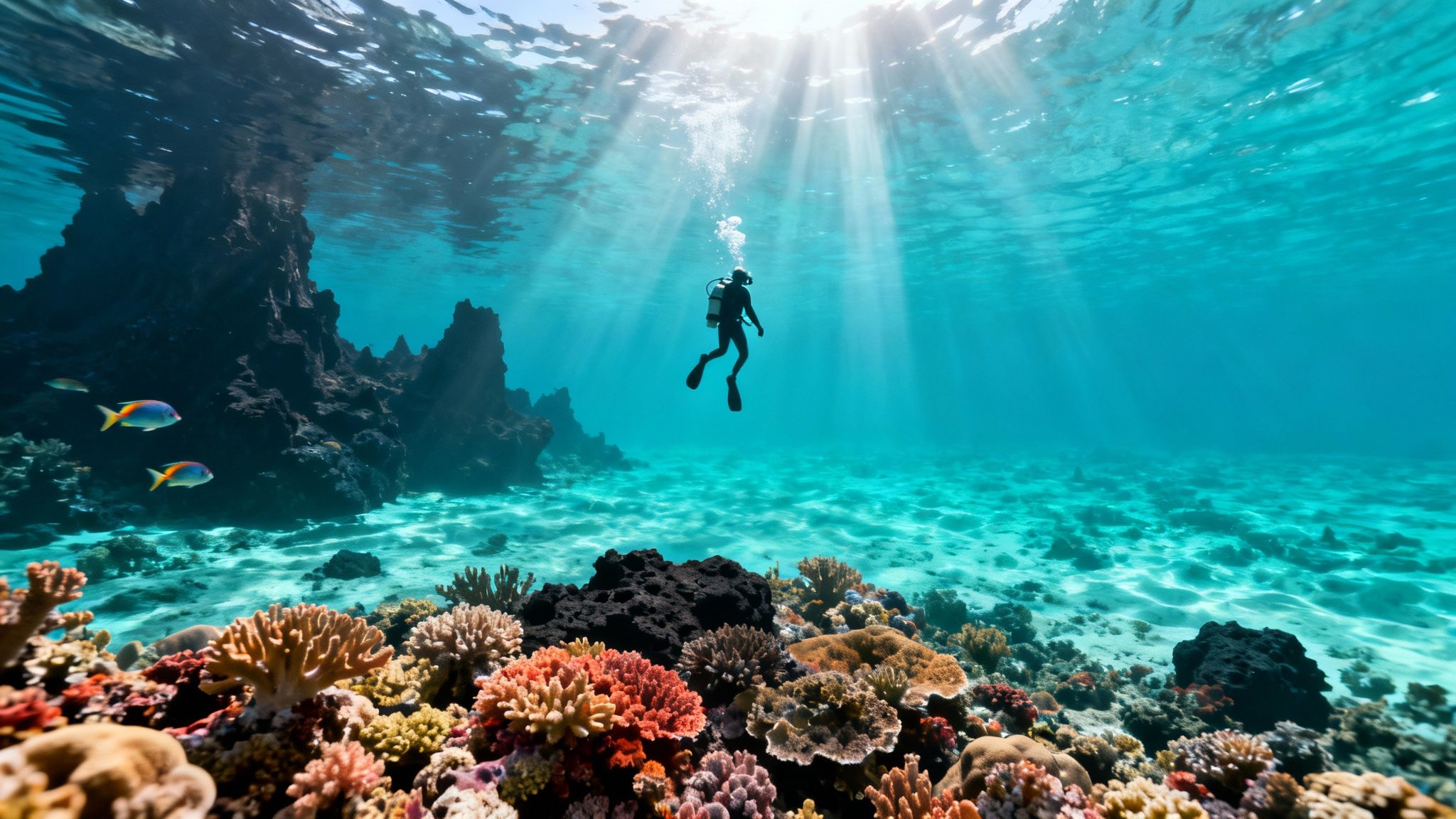
Thanks to its remote location smack in the middle of the Pacific, Hawaii has become an isolated and thriving ecosystem. This volcanic island chain is a true sanctuary for marine life, with a fascinating twist: nearly a quarter of all the species here are endemic. That means you won't see them anywhere else on the planet.
This incredible biodiversity is matched by nearly perfect diving conditions year-round. The water temperature hovers between a balmy 75°F and 80°F (24°C to 27°C), meaning any season is dive season. It's no wonder these welcoming waters draw divers from all over the world, cementing Hawaii’s reputation as a top-tier diving destination.
An Underwater World for Everyone
It doesn’t matter if you're about to take your very first breath underwater or if you have hundreds of dives in your logbook. Hawaii offers something for every skill level. We've seen countless people start their diving journey right here, their initial jitters melting away as they discover a lifelong passion. Seeing that transformation from a nervous beginner to a confident, awestruck diver is one of the best parts of the job.
The numbers really paint the picture. More than 1.5 million scuba dives happen in Hawaii every year, supported by over 215 licensed dive shops. This isn't just a niche hobby; it's a major driver of the local economy. In fact, scuba-related activities accounted for a massive 78.29% revenue share of North America's entire dive tourism market in 2023.
The magic of scuba diving in Hawaii is all about its sheer variety and ease of access. On any given day, you could be exploring:
- Vibrant Coral Reefs: Drift through intricate coral gardens swarming with schools of colorful fish.
- Unique Volcanic Topography: Swim through ancient lava tubes, under massive arches, and into submerged volcanic craters.
- Iconic Marine Life: Come face-to-face with majestic manta rays, resting reef sharks, and pods of curious dolphins.
Think of this guide as your personal roadmap to it all. We’re here to help you sort through the amazing options and plan the underwater trip of a lifetime. For more on this, check out our article on why scuba diving is so popular in Hawaii.
Choosing Your Perfect Island Dive Destination
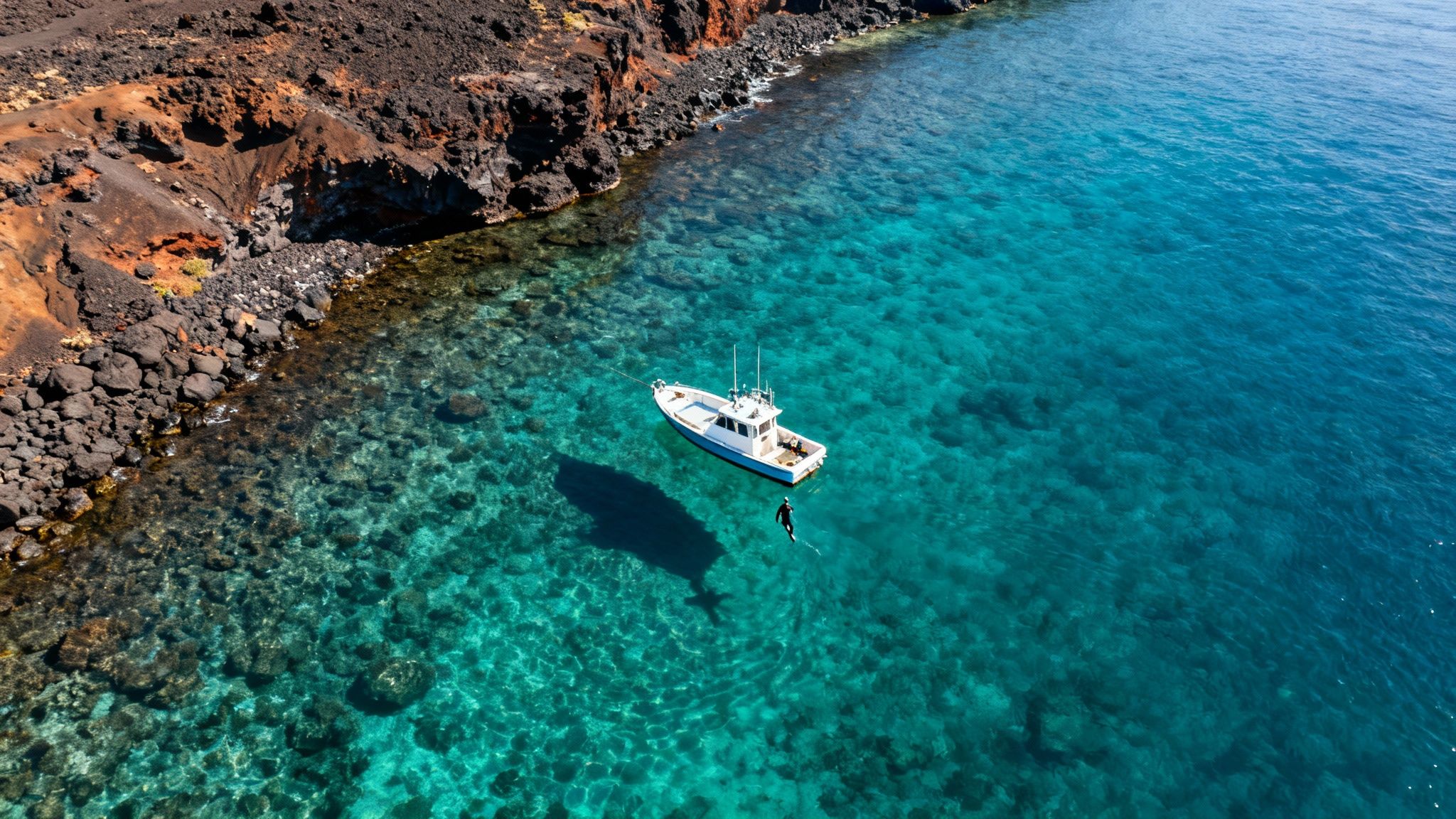
Every Hawaiian island has its own unique underwater personality. Picking the right one is the first, most important step in planning a dive trip you'll never forget. While you can find great diving across the state, the Big Island's Kona Coast is consistently the all-star player, celebrated for its incredibly clear, calm waters and bucket-list dives.
Think of Kona as the epicenter for iconic scuba diving in Hawaii. Its western shoreline is naturally protected from the powerful trade winds by the sheer size of Mauna Loa and Mauna Kea. This giant natural barrier is a game-changer for divers.
This protection creates some of the most serene and predictable dive conditions in the entire Pacific, with visibility often soaring past 100 feet. It’s this unique geography that makes legendary experiences like the manta ray night dive and the surreal blackwater dives possible year-round.
The Big Island (Kona): The Premier Choice
The Kona coast of the Big Island is simply unmatched in its sheer diversity. The underwater world here is a stunning tapestry woven from ancient lava tubes, vibrant coral gardens, and dramatic volcanic archways. One day you’re exploring a shallow reef that’s teeming with fish you can’t find anywhere else on Earth, and the next you're drifting over a deep ledge, watching huge pelagic species cruise by in the blue. For a full list of options, see our diving tours page.
Here at Kona Honu Divers, we've spent years charting these waters. That deep local knowledge lets us show you the absolute best of what Kona has to offer, making sure every single dive is safe, unforgettable, and full of discovery.
What really seals the deal for Kona is its reliability. Other islands can have their seasons interrupted by wind and waves, but Kona’s leeward coast is a calm sanctuary, making it a fantastic destination any time of year.
Maui: Shipwrecks and a Sunken Volcano
Maui definitely brings its own flavor of adventure to the table, with the Molokini Crater as its crown jewel. This partially sunken volcanic caldera is a protected marine preserve, which means the water is crystal-clear and absolutely packed with fish. It's an amazing spot for both divers and snorkelers.
Beyond Molokini, Maui is known for some fun drift dives and a handful of accessible shipwrecks. The only catch is that conditions can be a bit more exposed to the wind, so planning dives can be less predictable than it is over on the Kona coast.
Oahu: History Beneath the Waves
If you're a wreck diving fanatic, Oahu is your island. Its waters are a museum of sunken ships and airplanes, including the famous YO-257 and the Corsair plane wreck. These artificial reefs are dripping with history and have blossomed into thriving homes for marine life, attracting everything from majestic eagle rays to huge schools of fish.
While the wreck diving is phenomenal, Oahu’s natural reefs can sometimes feel the impact of its larger population. For divers who love a good story behind their dive, though, Oahu is a must-see.
Kauai: Dramatic Underwater Landscapes
They call Kauai the "Garden Isle," and that lush, wild beauty continues right on down below the waves. Diving here is all about dramatic lava formations—think sprawling lava tubes and otherworldly caverns that make you feel like you’re exploring another planet. Sites like Sheraton Caverns are famous for the dozens of green sea turtles that hang out under the lava ledges.
The diving on Kauai can be more advanced, as much of the island is exposed to powerful open-ocean swells. It’s a fantastic choice for experienced divers who are comfortable with more challenging conditions.
If you’re still weighing your options, our detailed guide on which island in Hawaii has the best scuba diving breaks it down even further.
To help you decide at a glance, we've put together a quick comparison of the top islands for divers.
Comparing Hawaii's Top Islands for Scuba Diving
Use this table to quickly compare the top Hawaiian islands for scuba diving and find the best fit for your underwater adventure.
| Island | Best For | Key Dive Sites | Visibility |
|---|---|---|---|
| The Big Island (Kona) | Overall diversity, Manta Rays, Blackwater Dives, Calm Conditions | Manta Heaven, Golden Arches, Turtle Pinnacle, Blackwater Sites | Excellent (often 100+ ft) |
| Maui | Volcanic Crater Diving, Marine Preserves, Mixed Groups (Snorkel/Dive) | Molokini Crater, Cathedrals, Carthaginian Wreck | Good to Excellent |
| Oahu | Wreck Diving, Accessibility, History | YO-257, San Pedro, Corsair Wreck, Sea Tiger | Good |
| Kauai | Advanced Divers, Lava Tubes, Caverns, Turtles | Sheraton Caverns, Tunnels Beach, Ni'ihau (advanced) | Variable (can be excellent) |
Ultimately, there's no "wrong" choice, but understanding what each island specializes in will help you find the perfect underwater paradise for your trip.
Hawaii's Most Iconic Dives: The Ones for Your Bucket List
While you'd be hard-pressed to find a "bad" dive in Hawaii, some experiences are so legendary they've rightfully earned a spot on every diver's must-do list. These are the dives that define scuba diving hawaii—the ones you’ll still be talking about years from now.
The Big Island, and the Kona coast in particular, is ground zero for some of the most unique underwater encounters on the planet. Its calm, clear, and protected waters set the stage for wildlife interactions that you simply can't find anywhere else.
The World-Famous Kona Manta Ray Night Dive
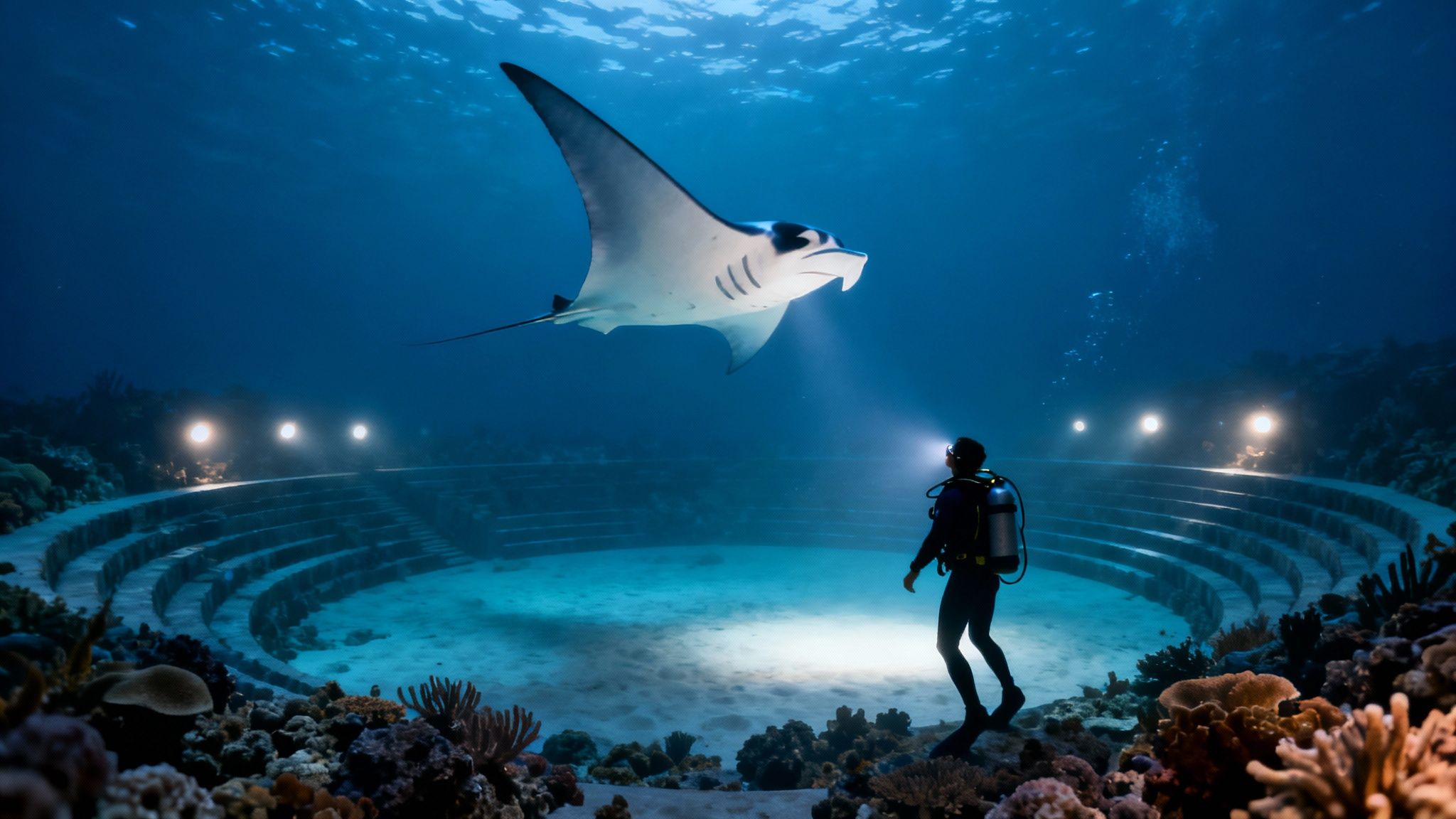
Picture this: you’re kneeling on a sandy patch of the ocean floor after sunset. You and your fellow divers point your lights up, creating a brilliant column of light in the dark water. Before long, a massive, shadowy shape glides in from the blackness. It’s a majestic manta ray, with a wingspan easily stretching 12 feet, performing effortless barrel rolls just inches above your head.
This isn’t a scene from a nature documentary. This is the Kona Manta Ray Night Dive, an experience so consistently mind-blowing that it tops "best dive" lists around the globe. You can learn more about our manta ray dive tours here.
The magic is in its simplicity. We gather on the seafloor and use our lights to attract plankton—the mantas' favorite food. The rays show up for the all-you-can-eat buffet, putting on a breathtaking acrobatic show as they feed. It’s an incredibly safe and respectful way to get up close and personal with these gentle giants.
Why Garden Eel Cove is the Superior Manta Dive Location
There are a couple of spots to see the mantas, but at Kona Honu Divers, we are committed to Garden Eel Cove. From our years of experience, we know it provides a far more reliable and magical encounter.
Here's why:
- Calm and Protected: The site is tucked into a natural cove, which shields it from the open ocean swell. This means calmer, safer, and much more comfortable conditions for divers.
- A Natural Amphitheater: The seafloor here forms a perfect sandy "amphitheater." It allows everyone to settle in comfortably for an unobstructed, front-row seat to the show without ever touching or damaging the reef.
- Vibrant, Healthy Reefs: Because it’s so protected, the coral surrounding Garden Eel Cove is incredibly healthy and full of life, adding another layer of beauty to the whole experience.
We've chosen this spot carefully to ensure our divers get the absolute best, most unforgettable manta encounter possible. Want to learn more? Check out our article on the best dives in Kona.
The Otherworldly Kona Blackwater Dive
If you’re a diver who truly craves adventure, the Kona Blackwater Dive is an experience that feels like visiting another planet. This isn't your typical night dive. We head miles offshore, into the deep open ocean, and descend into the abyss while tethered to the boat.
Here, you’ll witness one of the largest migrations on Earth, as bizarre and alien-like creatures rise from thousands of feet below to feed near the surface. Many are bioluminescent, creating their own light in a silent, dazzling spectacle. It’s a genuine journey into the unknown. If you're feeling adventurous, you can book a Blackwater Dive tour here.
Other Must-See Hawaiian Dive Sites
Beyond Kona's signature night dives, the islands are dotted with other incredible sites that are well worth the trip.
- Molokini Crater (Maui): This crescent-shaped volcanic crater is a state marine sanctuary, and it shows. The water clarity can be astonishing, often exceeding 150 feet, and the crater is packed with dense schools of reef fish. For advanced divers, the "back wall" offers a thrilling drift dive along a sheer vertical drop.
- Corsair Wreck (Oahu): In 1948, a WWII-era Corsair fighter plane went down off the coast of Oahu. It now rests perfectly intact on the sand at around 107 feet, creating a fantastic artificial reef that’s a magnet for marine life. It’s a bucket-list deep dive for history buffs and wreck lovers.
And don't forget, many of Hawaii’s premier underwater spots, like the historic Kealakekua Bay, offer fantastic snorkeling for non-divers or for a relaxing surface interval. For more on that, take a look at this great Captain Cook Hawaii Snorkeling Guide.
Planning Your Hawaii Dive Trip: What You Need to Know
Okay, you’re sold on the incredible dive sites. Now for the fun part: making it happen. A little bit of smart planning for your scuba diving hawaii adventure will ensure everything goes smoothly, from what you pack to when you book.
One of the absolute best things about diving here is that there's no "off-season." The water is always inviting, hovering between a comfortable 75°F to 80°F (24°C to 27°C) all year long. Seriously, any time is a good time to get in the water.
That said, certain seasons do offer unique bonuses. Winter, from about December to March, is peak humpback whale season. You won’t be diving right next to them, but hearing their haunting songs reverberate through the water on a dive is an experience you will never, ever forget. On the other hand, the summer months often bring flatter, calmer seas, which means smooth boat rides and sometimes even better visibility.
Certification and Skill Levels
Hawaii's underwater world truly has something for everyone. If you've never even tried scuba, you can jump right in with a "Discover Scuba Diving" experience. It’s a fantastic, non-certification intro where an instructor shows you the ropes in a safe, controlled setting before guiding you on your first real dive.
For those already certified, an Open Water card is your key to the vast majority of Hawaii’s incredible reef dives. But if you’re chasing the bigger thrills, you’ll want to have more training under your belt.
Some of the most memorable dives—like exploring deeper wrecks, navigating a swift drift dive, or plunging into the abyss on a blackwater dive—are typically reserved for divers with an Advanced Open Water certification or higher. These environments demand solid buoyancy and a cool head.
Are you an experienced diver eager to explore sites that are off the beaten path? Kona Honu Divers runs premium advanced dive trips specifically for divers like you who are ready for a real adventure.
Your Essential Packing List
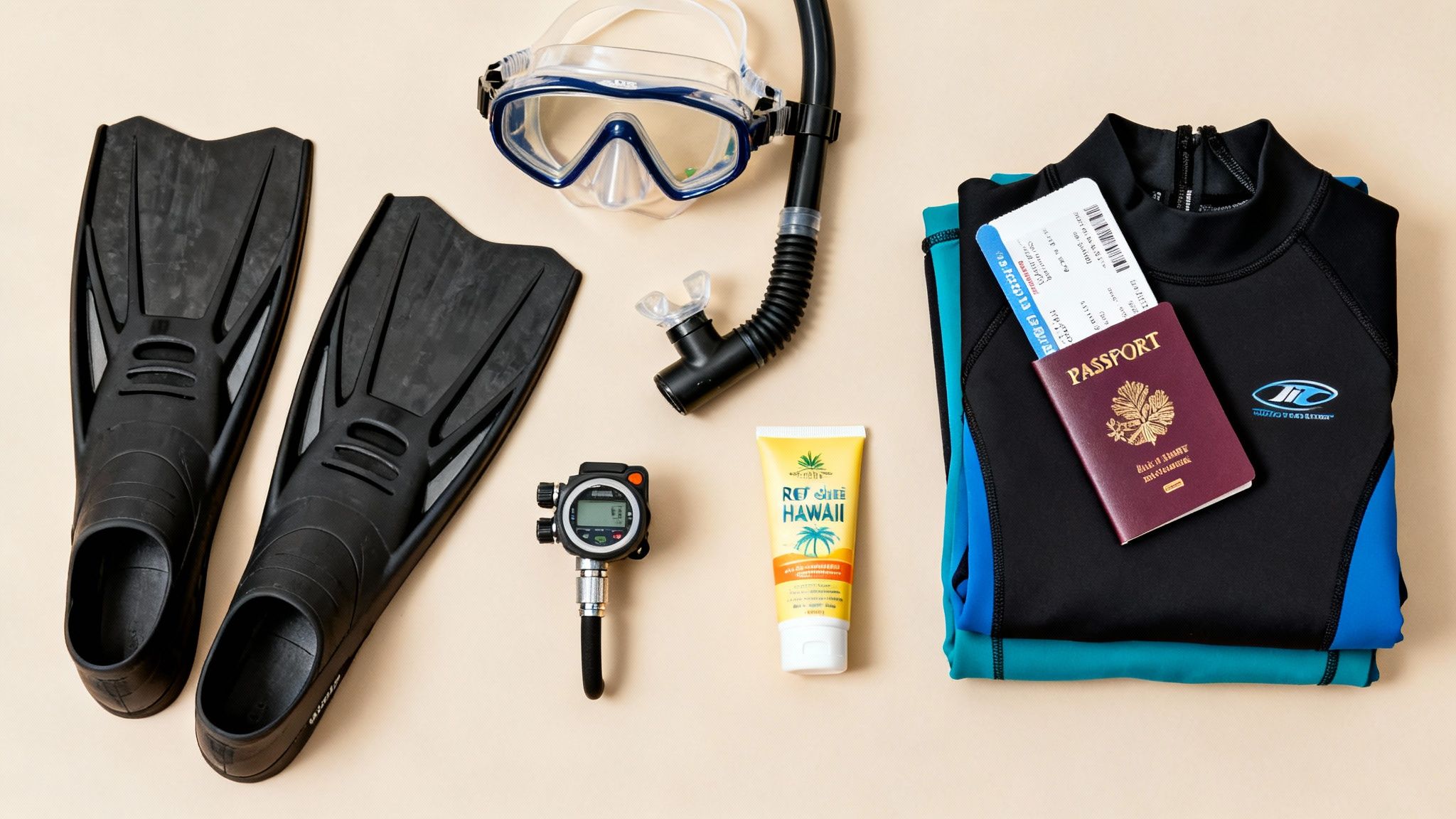
Packing for a dive trip is a two-part game: what you need on the boat and what you need on land. You can rent just about everything, but most divers agree that bringing your own mask and dive computer makes a world of difference in comfort and safety.
Dive-Specific Gear:
- Certification Cards & Logbook: The first thing any shop will ask for. Don't leave home without them!
- Dive Computer: Absolutely non-negotiable for safe diving.
- Mask and Snorkel: A mask that fits your face perfectly is priceless.
- Wetsuit: A 3mm full suit is the sweet spot for Hawaii’s water temps.
- Fins and Booties: If you have a pair you love, bring them.
- Underwater Camera: You’re going to see things you’ll want to show off.
- Dive Light: A must for night dives. Always bring a backup.
General Island Essentials:
- Reef-Safe Sunscreen: It’s the law in Hawaii. Protect your skin and our reefs by avoiding sunscreens with oxybenzone and octinoxate.
- Reusable Water Bottle: Stay hydrated; it’s key for safe diving.
- Polarized Sunglasses and a Hat: The tropical sun doesn’t mess around.
- Light Rain Jacket: Quick tropical showers can pop up anytime.
- Dry Bag: A lifesaver for keeping your phone, keys, and wallet dry on the boat.
Diving with Respect and Aloha
In Hawaii, we live by the principle of mālama i ke kai—to care for and protect the ocean. This isn't just a saying; it’s a responsibility that every diver shares. Our reefs are beautiful, but they're also incredibly fragile.
As you plan, think about safety first. It’s always smart to have a plan for emergencies, which can include knowing about essential marine safety equipment like ACR rescue beacons.
Here are the golden rules for diving with aloha:
- Look, Don't Touch: This goes for everything—coral, turtles (honu), fish, all of it. Touching coral can kill it, and harassing animals is stressful for them and just plain wrong.
- Nail Your Buoyancy: The single best thing you can do for the reef is to stay off it. Practice hovering so you don't accidentally kick or crash into the delicate ecosystem.
- Secure Your Gear: Make sure your gauges and alternate air source are clipped in, not dragging across the reef.
- Take Only Pictures, Leave Only Bubbles: Shells, coral fragments, and sand all belong in the ocean.
- Listen to Your Guide: Your Divemaster knows these sites like the back of their hand. Trust their briefing and their guidance.
Finding the Best Dive Operator in Hawaii
Let’s be honest: the dive shop you choose can absolutely make or break your trip. A great crew doesn't just motor you out to a reef and blow the horn when it's time to come up. They elevate the whole experience, making sure every part of your day—from the boat ride to the final ascent—is safe, comfortable, and truly memorable.
When you're looking for scuba diving in Hawaii, you’re really searching for a team that’s professional, passionate, and has their act together.
So, what should you look for? The best operators all share a few core principles. Safety is always, always number one. You’ll see it in their well-maintained gear, their detailed dive briefings, and the way their guides keep a watchful, yet relaxed, eye on everyone in the water. They also know that comfort is key, running clean, well-equipped boats that make the time between dives just as enjoyable.
What Separates the Good from the Great
Beyond those fundamentals, a truly exceptional dive shop stands out by obsessing over the diver's experience. This often comes down to one simple thing: smaller group sizes. Being on a boat that isn't packed to the gills means you get a more personal and relaxed dive. You're not just another tank and regulator; you get real attention from a guide who can point out that elusive octopus hiding in plain sight.
Another huge tell is a genuine passion for marine conservation. The top operators in Hawaii lead by example. They aren't just following rules; they're actively teaching and practicing responsible diving. Their deep respect for the ocean is obvious in everything they do, from their briefings to how they conduct themselves underwater.
Choosing a dive operator isn't just a logistical step; it's an investment in your safety, enjoyment, and the quality of your underwater memories. The right crew transforms a good dive into an extraordinary adventure.
On the Big Island, Kona Honu Divers is a perfect example of a company that gets it. They’ve built an incredible reputation by focusing on small groups, running beautiful custom-built dive boats, and hiring a crew whose love for diving is absolutely infectious. They are laser-focused on delivering world-class diving tours on the Big Island and consistently go the extra mile for their divers.
But don't just take our word for it—see what other divers are saying.
Ready to see the difference for yourself? You can book your Kona adventure right here.
Other Highly-Regarded Kona Dive Shops
To give you a complete picture, it’s worth shouting out a few other fantastic operators who help make Kona a world-class diving destination. The dive community here is tight-knit, and several shops are known for their top-tier service.
Jack's Diving Locker: A true Kona institution, Jack's has been around for decades and has a stellar reputation for its thorough training programs and professional boat charters. They're a cornerstone of the local dive scene.
Big Island Divers: Another excellent operation, Big Island Divers gets a lot of love for its friendly crews and diverse dive offerings, which even include technical diving. With multiple boats, they can cater to divers of all stripes.
At the end of the day, spending a little time reading recent reviews and seeing what each shop specializes in will help you find the perfect fit. This is easily one of the most important decisions you'll make when planning your Hawaii dive adventure, so it's worth getting it right.
Your Hawaii Scuba Diving Questions Answered
Even the most seasoned travelers have a few lingering questions before a big dive trip. Let's tackle some of the most common ones we hear about diving in Hawaii so you can feel completely confident and ready to hit the water.
How Much Does It Cost to Scuba Dive in Hawaii?
You can generally expect a standard two-tank boat dive to cost between $150 and $250 per person. That price typically includes your tanks and weights, but always double-check what's included. Costs can shift a bit depending on which island you're on and the dive shop you choose.
For those once-in-a-lifetime dives, like the famous Kona Manta Ray Night Dive, you're looking at a premium experience. These specialty charters usually run from $200 to $300. If you're not certified yet, introductory dives are a great option and are priced a little higher to cover the hands-on instructor guidance and gear rental.
Can I Scuba Dive in Hawaii Without a Certification?
Absolutely! If you're new to diving, look for a "Discover Scuba Diving" program, which pretty much every reputable dive shop offers. It's the perfect introduction.
You'll get a solid lesson on safety and basic skills from a pro, and then they'll take you on a beautiful shallow dive under their direct supervision. It's a fantastic way to get your fins wet for the first time. Of course, to explore more freely and dive deeper, you'll need to get your Open Water Diver certification.
What Marine Life Will I See While Diving in Hawaii?
Get ready for an incredible show. Hawaii's reefs are teeming with life. You're almost guaranteed to see green sea turtles (honu), and you’ll be surrounded by vibrant, colorful reef fish found nowhere else on Earth. Keep an eye out for moray eels peeking out of crevices and graceful eagle rays gliding by. And of course, the Kona coast is world-renowned for its majestic manta rays.
Pro Tip: If you’re diving in the winter (roughly December through March), listen closely. You can often hear the haunting songs of migrating humpback whales echoing through the water—it's a truly magical experience you'll never forget.
Is It Safe to Dive with Sharks in Hawaii?
Yes, it is very safe. The sharks we most often see here, like whitetip reef sharks, are typically shy and want nothing to do with divers. They’re beautiful to watch from a respectful distance.
Any good dive operator puts safety first. They'll give you a thorough briefing on local wildlife and proper etiquette before you even get in the water, ensuring every dive is safe and supervised. For most divers, seeing a shark cruise by peacefully in its own environment is an absolute highlight of their trip.