
Picture this: you descend into a world of brilliant turquoise, where ancient lava tubes twist into dramatic underwater cathedrals and coral reefs burst with life you can't find anywhere else on the planet. This isn't a fantasy; it's the everyday reality of scuba diving in Hawaii. It's an underwater playground that truly has something for everyone, from tranquil, protected coves to heart-pumping deep-water drop-offs.
Why Hawaii Is a Bucket-List Dive Destination
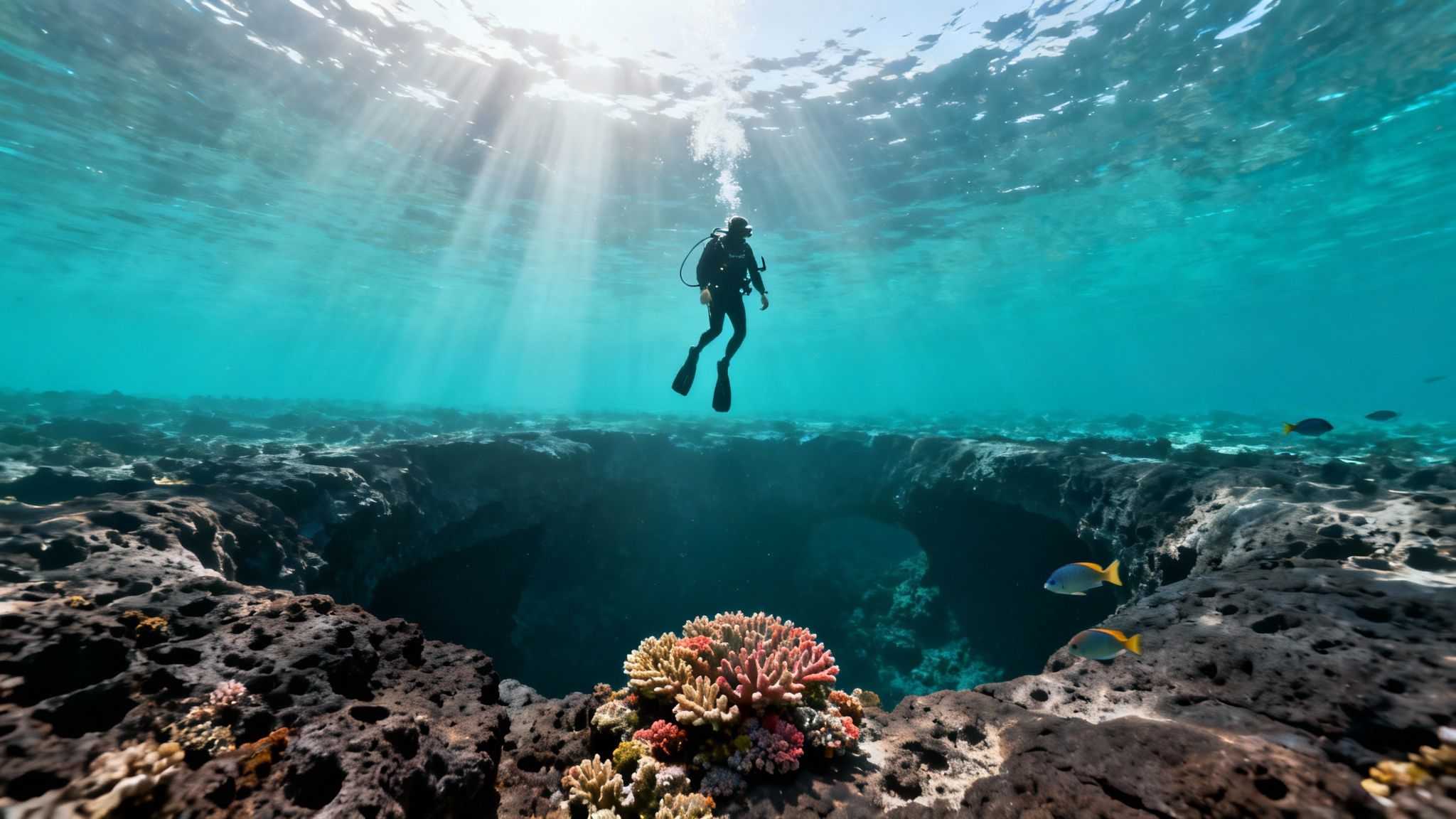
So, what makes Hawaii stand out in a world full of amazing dive spots? It comes down to a special mix of volcanic geology, remote isolation, and near-perfect ocean conditions. The Hawaiian archipelago is the most isolated island chain on Earth, and that separation has allowed nature to get creative.
Because of this isolation, a staggering 25% of the marine life here is endemic, meaning you literally won't see it anywhere else. As you drift over the reefs, you’re not just fish-watching; you're observing a living museum of evolution. You'll meet unique residents ranging from massive schools of vibrant yellow tangs to the beloved state fish, the humuhumunukunukuāpuaʻa (try saying that three times fast!).
The islands’ volcanic past has also left behind an incredible underwater landscape. Divers get to explore:
- Lava Tubes & Arches: These are nature's swim-throughs, creating stunning caverns and tunnels.
- Sunken Craters: Places like Molokini off Maui’s coast act as natural, protected aquariums.
- Dramatic Pinnacles: These underwater mountains shoot up from the seafloor, attracting big pelagic fish.
To give you a better sense of how the islands stack up, here’s a quick overview.
Hawaii Scuba Diving Snapshot at a Glance
| Feature | Big Island (Kona) | Maui | Oahu | Kauai |
|---|---|---|---|---|
| Visibility | Excellent (often 100+ ft) | Good to Excellent | Good | Variable, Good in Summer |
| Topography | Lava tubes, arches, caves | Volcanic crater, pinnacles | Wrecks, reefs | Lava ledges, caverns |
| Signature Dives | Manta Ray Night Dive, Black Water Dive | Molokini Crater, "Back Wall" drift | WWII Wrecks (Corsair, YO-257) | Sheraton Caverns, Ni'ihau |
| Best For | Unique experiences, calm waters | Marine diversity, drift diving | Wreck diving enthusiasts | Adventurous, experienced divers |
Each island offers a distinct flavor of diving, but they all share the magic that makes Hawaii so special.
Great Conditions for Everyone
Beyond the one-of-a-kind geology and wildlife, Hawaii just makes diving easy and comfortable. The water temperature is always inviting, hovering around a pleasant 75°F (24°C) in the winter and warming up to a balmy 80°F (27°C) in the summer.
And the clarity? It's often phenomenal. On a good day, especially along protected coastlines like Kona on the Big Island, visibility can easily push past 100 feet. That kind of clearness turns every dive into a high-definition experience, letting you soak in all the tiny details of the reef and spot animals from way off.
A Vibrant and Professional Dive Community
The sheer appeal of diving in Hawaii has built up a fantastic, professional dive industry. This thriving community means you have a huge network of operators who are serious about safety, training, and protecting the beautiful environment they call their office.
How big is it? The islands host over 1.5 million scuba dives every year through more than 215 licensed dive shops, making diving a major pillar of local tourism. These businesses offer everything from easy shore dives to specialized boat charters for wrecks and the famous manta ray night dive, keeping divers coming back again and again. You can learn more about the scale and economic impact of Hawaii’s dive industry to see just how integral it is.
This solid infrastructure means that whether you're taking your very first breath underwater or you're a seasoned pro with thousands of dives, you’ll find a safe, well-run, and knowledgeable crew to guide your adventure.
Choosing the Right Hawaiian Island for Your Dives
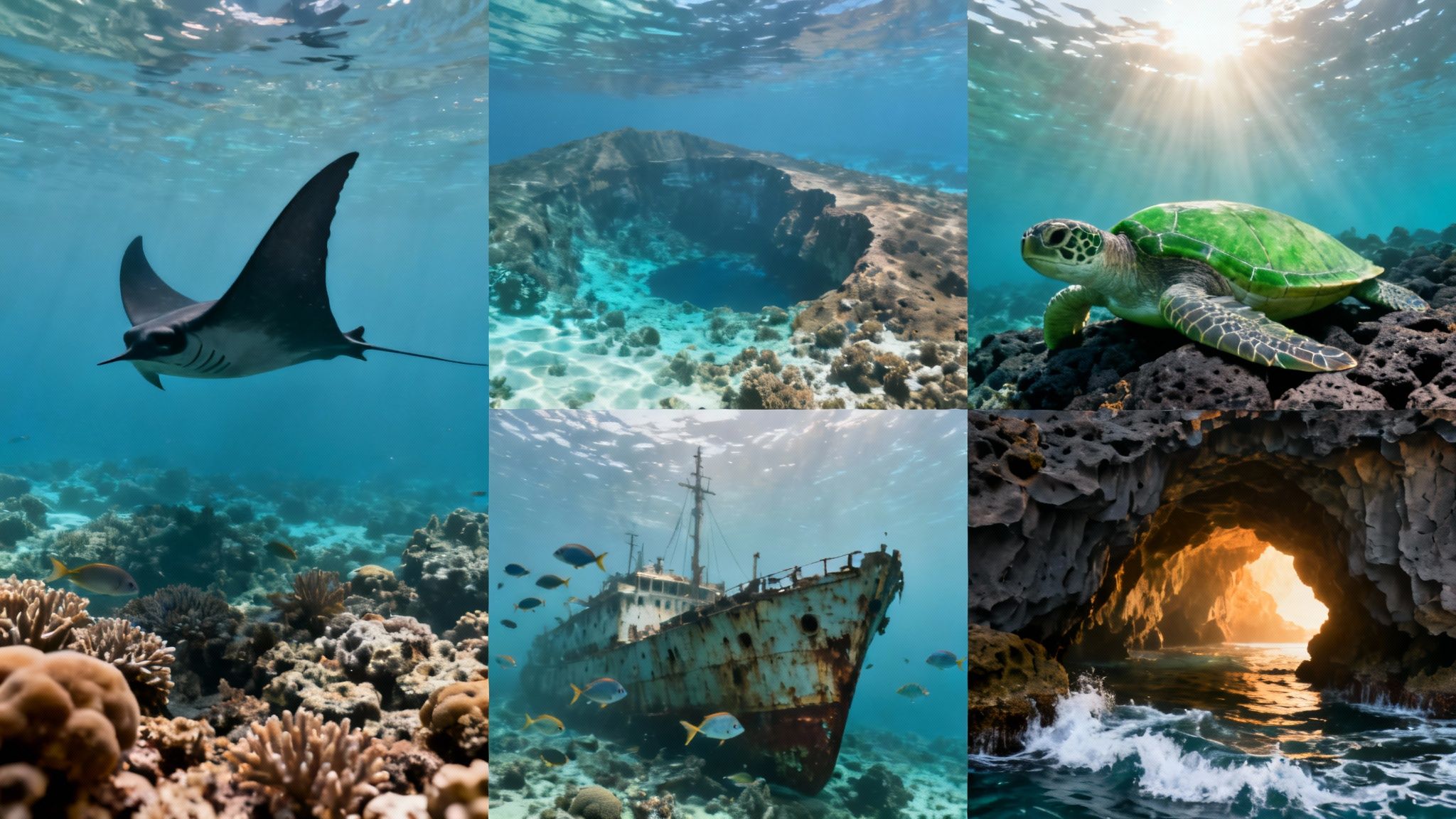
Deciding where to take the plunge when scuba diving Hawaii can feel like a tough choice, but it’s a wonderful problem to have. Every island has its own distinct underwater personality, shaped by its unique geology, currents, and local sea life. The real trick is matching your dive style, experience, and what you want to see with the right island.
Are you dreaming of floating through ancient lava tubes? Or maybe exploring a piece of naval history on a sunken shipwreck? How about coming face-to-face with majestic ocean giants? Whatever your underwater adventure looks like, there’s a Hawaiian island that has you covered. Let's break down the top spots to help you figure it out.
The Big Island (Kona) for Unforgettable Encounters
Ask any seasoned diver about Hawaii, and they’ll almost certainly point you to the Kona coast on the Big Island. It's widely considered the epicenter of diving here, and for good reason. The massive volcanoes of Mauna Loa and Hualalai act as a natural shield, leaving the waters on the Kona side consistently calm and incredibly clear. We’re talking visibility that often hits 100 feet or more.
This makes Kona a dream for just about every diver. If you're new to the sport, you'll feel right at home in the gentle conditions, exploring shallow reefs buzzing with colorful fish. For the veterans, there are intricate lava tubes, dramatic drop-offs, and underwater arches just waiting to be explored.
But what really puts Kona on the map are the big animal encounters. This is the home of the world-famous manta ray night dive, a true bucket-list experience where gentle giants glide and feed just inches from your face. It's also where you can take on the surreal Blackwater Dive, drifting in the open ocean at night to see bizarre creatures rise from the depths. If you want reliably great conditions and the best shot at seeing large marine life, Kona is your spot.
Maui for Marine Diversity and Dramatic Landscapes
Maui serves up a fantastic mix of vibrant marine life and stunning underwater topography. Its most famous dive destination is the Molokini Crater, a crescent-shaped volcanic caldera that's a protected marine sanctuary. Inside the crater, the water is calm and crystal-clear, making it a perfect place to spot everything from moray eels to whitetip reef sharks.
For a bigger thrill, the "Back Wall" of Molokini offers a heart-pumping drift dive along a sheer cliff that plunges over 300 feet into the deep blue. Maui is also legendary for "Turtle Town," where getting to swim alongside Hawaiian green sea turtles (honu) is practically a guarantee.
Conditions can be a bit more unpredictable than Kona because the island gets more exposure to trade winds, but the payoff is a spectacular blend of healthy reefs, dramatic walls, and turtles everywhere you look.
Oahu for Wreck Diving and Naval History
If you’re a history buff who loves exploring sunken treasures, Oahu should be at the very top of your list. The island has become a premier destination for wreck diving, with several impressive ships resting just a short boat ride from the coast.
The most renowned sites include the YO-257, a former Navy oiler, and the San Pedro, both of which were intentionally sunk to create thriving artificial reefs. These wrecks are now draped in coral and attract massive schools of fish, eagle rays, and even the occasional shark.
Of course, Oahu has beautiful reefs too, but the wrecks are the main draw. Their proximity to Waikiki makes them super accessible for anyone staying in the main tourist hub. It’s a dive experience that beautifully combines natural wonder with a powerful glimpse into the past.
Kauai for the Wild and Adventurous Diver
Known as the "Garden Isle" for its impossibly lush landscapes, Kauai’s wild spirit continues right on beneath the waves. The diving here is a bit more challenging and is definitely better suited for experienced divers who are comfortable with more dynamic conditions.
Kauai's underwater world is all about dramatic lava ledges, caverns, and swim-throughs. Sites like Sheraton Caverns feature a maze of interconnected lava tubes where you can often find sea turtles napping and huge schools of fish taking shelter. For a truly unique and advanced adventure, a trip to the nearby "Forbidden Isle" of Ni'ihau offers visibility that seems to go on forever and the rare chance to see critically endangered Hawaiian monk seals.
To dive deeper into choosing the perfect spot for your next trip, explore our detailed comparison of which Hawaiian island is best for scuba diving. This guide will give you even more insights to help you make the perfect choice.
Exploring the Kona Coast: A Diver’s Paradise
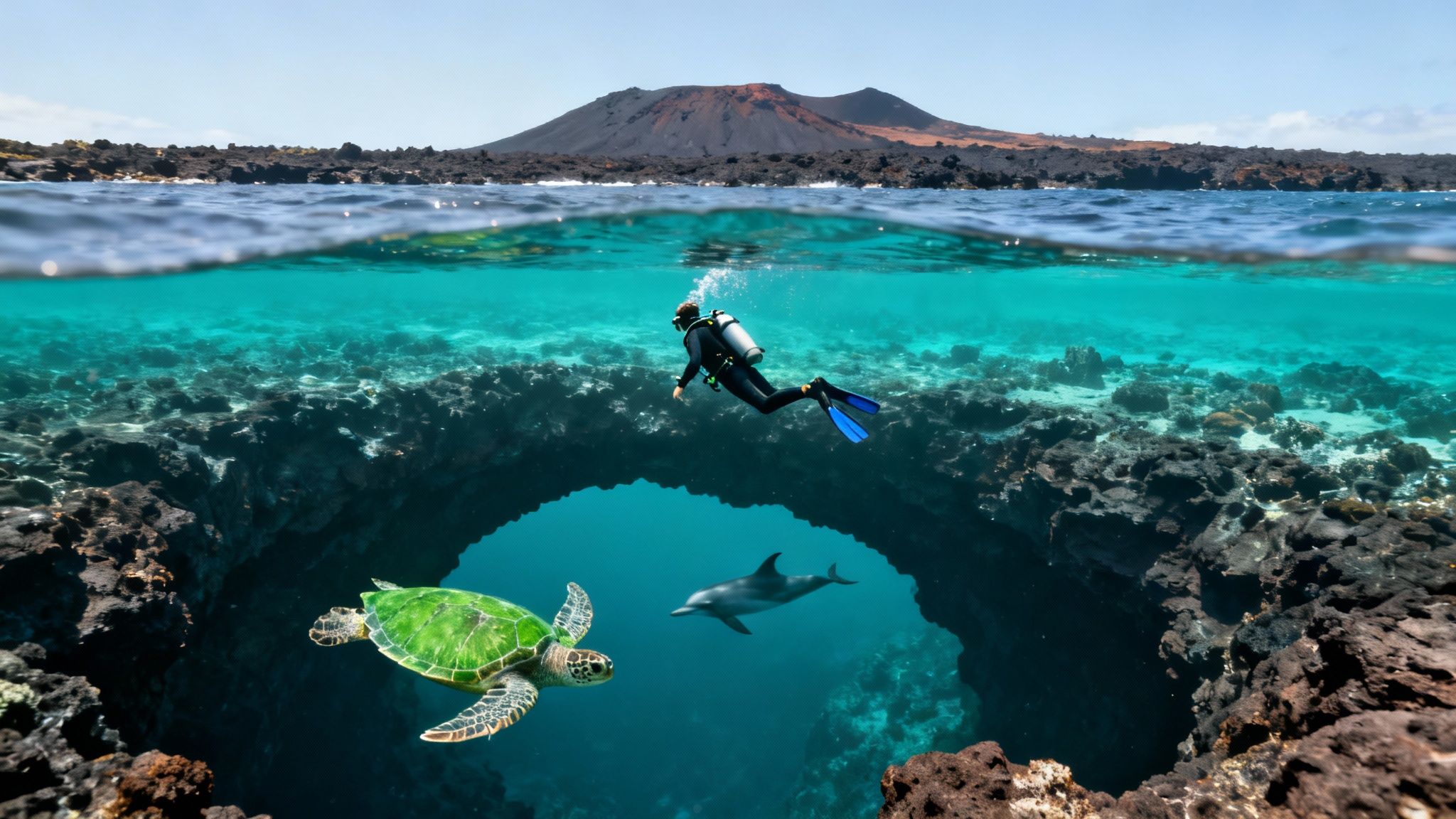
While you can find great diving across the Hawaiian islands, anyone who's spent serious time with a tank on their back will tell you the Kona coast of the Big Island is in a league of its own. It's not just another dot on the map; it’s widely considered the epicenter of diving in the state.
So, what’s the secret? It all comes down to geography. The massive volcanoes of Mauna Loa and Hualalai serve as a giant, natural shield, blocking the powerful trade winds that batter other coastlines. This creates a lee side with incredibly calm, clear, and predictable conditions year-round—a dream come true for divers of every skill level.
If you’re just starting out, Kona is the perfect classroom. You can spend your time exploring gorgeous, shallow reefs full of colorful fish, Hawaiian green sea turtles, and even the occasional pod of spinner dolphins, all without fighting strong currents or murky water. It’s an ideal place to build your confidence and get hooked on the sport for life.
An Underwater Volcanic Playground
Kona’s volcanic past has carved out an underwater world that is simply breathtaking. Forget flat, sandy bottoms; this is a landscape of high-drama geological formations that turns every dive into a true exploration.
Imagine gliding through ancient lava tubes where light filters in from cracks above, navigating through intricate archways, and hovering over deep-water pinnacles that seem to rise from the abyss.
These unique structures are magnets for marine life. Moray eels poke their heads out from rocky crevices, octopuses blend in perfectly against the lava rock, and if you’re lucky, you might even spot a rare Hawaiian monk seal sunning itself on a secluded beach. The sheer variety here means you’ll never have the same dive twice. If you want to dive deeper into what makes this place so special, check out the unique aspects of diving in Kona.
Choosing the Right Operator in Kona
With so many incredible sites to explore, the dive operator you choose can make or break your experience. You want a team that’s not just safe, but also passionate about the ocean.
Look for a company that prioritizes an eco-conscious approach and keeps their dive groups small. This isn't just better for the reef; it means you get more personalized attention from your guide and a more intimate, less crowded encounter with the underwater world.
The best crews know these sites like the back of their hand. They can take you to the perfect spot based on the day’s conditions and what you’re hoping to see, whether that’s a hidden cave or a tiny, camouflaged frogfish. That local knowledge is what turns a good dive into an unforgettable one.
Experiencing Hawaii’s Most Unforgettable Dives
Some dives change you. They go beyond being just another logbook entry and become a core memory you’ll replay for the rest of your life. While Hawaii is full of beautiful reefs, a couple of dives here are true, once-in-a-lifetime spectacles. These aren’t about passively observing marine life—they’re about becoming part of a natural phenomenon.
The Kona coast, in particular, is the world stage for these incredible encounters. The Manta Ray Night Dive and the Pelagic Blackwater Dive are two of the most talked-about dives on the planet, and for good reason. Let's dive into what makes them the pinnacle of Hawaiian diving.
The World-Famous Manta Ray Night Dive
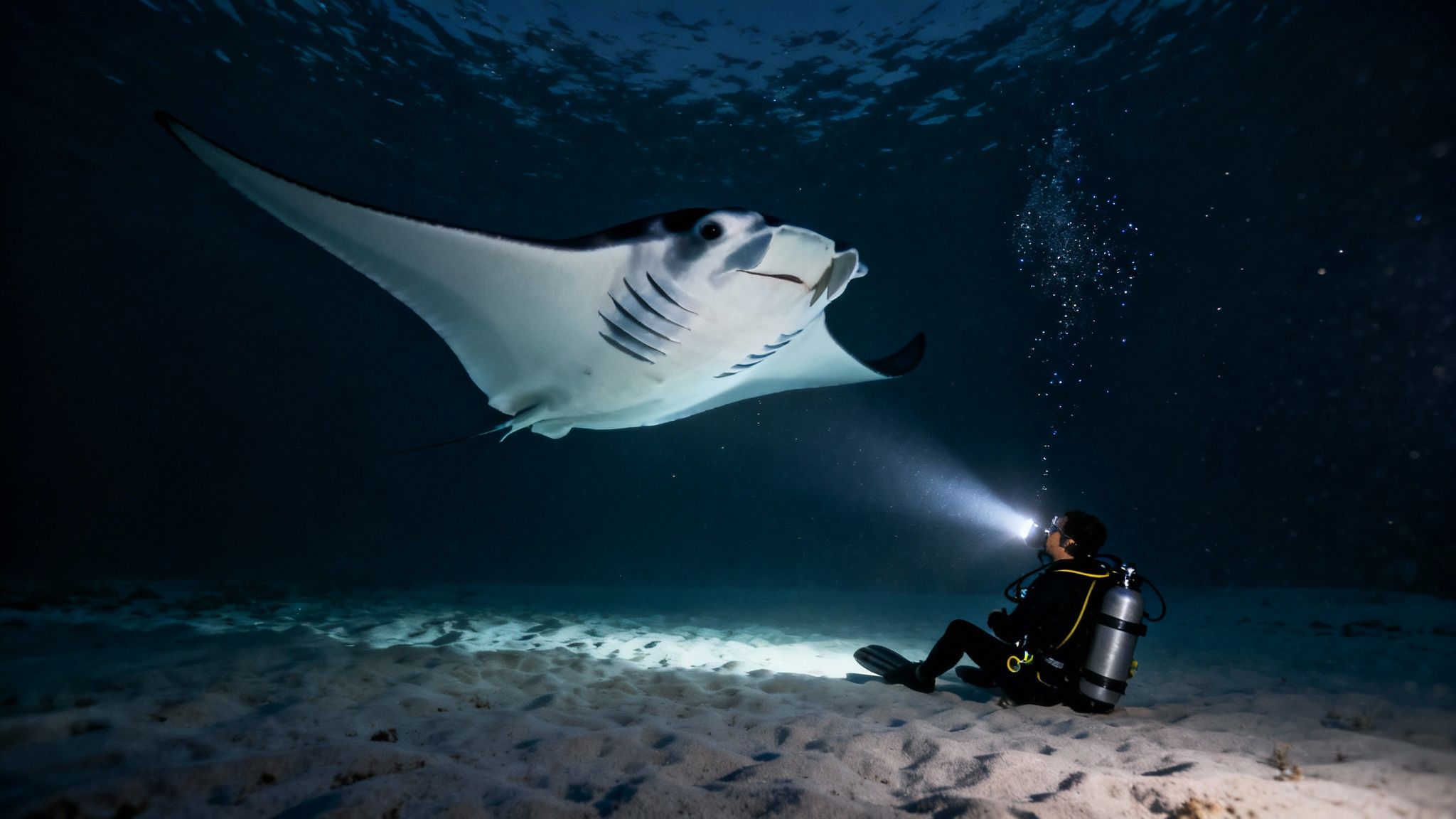
Picture this: the sun has just dipped below the horizon as you descend into the warm, dark Pacific. You find your spot on the sandy bottom, turn on your dive light, and aim the beam straight up. And then, you wait.
Before long, the show begins. Emerging from the blackness, giant manta rays with wingspans stretching over 15 feet glide into the light. They swoop, they soar, and they barrel roll in an effortless, silent ballet just inches above your head as they feed on the plankton drawn to the light. It is absolutely mesmerizing and a truly humbling experience. There is nothing else like it on Earth.
For the best possible version of this dive, you’ll want to head to a site called Garden Eel Cove. It is the superior choice because its location is naturally more protected from the open ocean swell, which translates to a calmer, more predictable experience. This protection also means divers can enjoy a better viewing area, and as a bonus, the surrounding reefs there are healthier and more vibrant, making the entire dive that much more magical.
Ready to see this underwater ballet for yourself? You can book your own unforgettable manta ray dive tour and prepare for a night that will stay with you forever.
The Surreal Pelagic Blackwater Dive
If you have a genuine taste for adventure and the truly unique, the Pelagic Blackwater Dive is an expedition into another world. Forget the reef—this is a totally different kind of exploration. Tethered to a boat, you drift in the middle of the ocean, suspended over thousands of feet of pure black water.
As you float in the darkness, something truly incredible happens. The largest migration on Earth begins to rise from the abyss, drawn to your lights. Every single night, countless tiny, bizarre, and often bioluminescent creatures journey from the deep sea to feed near the surface.
You'll come face-to-face with creatures that look like they're from a sci-fi movie: translucent larval fish, pulsating jellies with impossibly long tentacles, and shimmering ctenophores that flash and sparkle like underwater fireworks. It's a surreal, mind-bending experience that connects you to a part of the ocean that very few people will ever witness.
This dive is an absolute must for underwater photographers and any diver craving a thrill that’s completely out of the ordinary. If you're an experienced diver ready for the next frontier, you can dare to try the Blackwater Dive.
These signature experiences showcase the incredible range of adventures possible when scuba diving Hawaii. They take you beyond just looking at the reef and put you right in the middle of the ocean's most spectacular moments. Whether you prefer the graceful dance of gentle giants or the strange allure of the deep, Kona offers advanced diving that will challenge and inspire you. You can explore a full range of premium advanced dive tours to find your next great underwater adventure.
How to Plan Your Hawaii Dive Adventure
A truly memorable dive trip starts long before you feel the splash. Getting the logistics sorted out ahead of time means that once you're here, your only job is to soak in the incredible underwater world waiting for you. This guide will walk you through the essentials for a smooth, safe, and unforgettable dive adventure in Hawaii.
Think of it this way: a little prep work on the front end buys you total peace of mind later. From picking the right season to understanding the local conservation rules, let's get you ready.
Best Time of Year to Dive
While you can find fantastic diving in Hawaii any day of the year, the absolute sweet spot is during the summer months, from about May to September. This is when the ocean is at its flattest and the water is warmest, often hitting a comfortable 80°F (27°C).
Winter does bring bigger swells, especially on the north-facing shores of the islands. But that's the beauty of a place like Kona on the Big Island. Its leeward coast is naturally sheltered from the rough stuff, making it a calm, reliable destination for amazing diving no matter what month it is.
Water Conditions and Gear
Packing the right gear is all about staying comfortable and safe in the water. Here’s a quick rundown of what to expect:
- Water Temperature: The water hovers around a pleasant 75°F (24°C) in the winter and warms up to a balmy 80°F (27°C) in the summer.
- Wetsuit: For most people, a 3mm full wetsuit is the perfect fit. If you know you run cold, you might be happier in a 5mm suit, especially if you’re planning multiple dives in a day.
- Visibility: It can be absolutely breathtaking. In protected spots like Kona, it's common to have visibility well over 100 feet. While it can change with the weather, the vis is generally excellent across the islands.
Certification and Skill Levels
Good news—Hawaii has something for everyone. There are countless shallow, protected reefs that are perfect for beginners who just got their Open Water certification. You don't have to be a veteran diver to see incredible things here.
That said, some of the most legendary dives do require more experience under your belt.
Think about it: exploring the deep wrecks off Oahu, navigating intricate lava tube swim-throughs, or taking the plunge on the world-famous Kona Blackwater Dive—these adventures call for an Advanced Open Water certification or equivalent experience. The most important thing is to be honest about your skill level when you book. A good operator will make sure you’re on a dive that’s both fun and completely safe for you.
Choosing a Reputable Operator and Diving Responsibly
The dive shop you choose can make or break your trip. It's one of the most important decisions you'll make. Always go with a reputable, PADI-certified operator. A professional crew doesn't just keep you safe; they share their local knowledge and passion for the ocean, which makes the whole experience better.
Beyond safety, we as divers are guests in this underwater world, and we have a duty to protect it. Scuba diving is a big part of Hawaii's tourism, and the U.S. dive market is expected to hit USD 1.59 billion by 2035, much of it driven by people who want to see healthy ecosystems. You can explore detailed market insights on diving tourism to see just how important this is. This growth puts the responsibility on us to be good stewards.
Excellent buoyancy control is non-negotiable—it’s how we avoid accidentally breaking the fragile coral that took centuries to grow. The golden rule is simple: look, but don't touch. Give all marine life plenty of space, and never chase or harass an animal for a photo. Following these simple practices ensures Hawaii’s underwater paradise stays vibrant for everyone. Of course, planning also involves your wallet, and you can get a better sense of the investment by checking out our guide on how expensive scuba diving in Hawaii can be.
To help you keep track of all the moving parts, we've put together a handy checklist.
Hawaii Dive Trip Planning Checklist
This checklist will help ensure you've covered all your bases before you even pack your bags, leading to a much smoother and more enjoyable trip.
| Category | Details & Recommendations |
|---|---|
| Certifications & Docs | Bring your C-card, logbook, and any specialty certifications (like Nitrox). A digital copy on your phone is a great backup. |
| Flights & Lodging | Book flights and accommodations well in advance, especially for peak season (summer & holidays). Consider staying close to your chosen dive operator's location. |
| Dive Operator | Research and book your dive charters before you arrive. Popular operators, especially for signature dives like the Manta Ray Night Dive, fill up fast. |
| Gear & Packing | Decide if you're bringing your own gear or renting. If bringing, service your regulator and check battery life on dive computers. Pack reef-safe sunscreen and a rash guard. |
| Dive Insurance | Highly recommended. Ensure your plan covers scuba diving activities. Companies like DAN (Divers Alert Network) offer specific dive accident insurance. |
| Rental Car | A rental car is almost essential for exploring the islands, especially the Big Island, and getting to and from the dive boat harbor. |
| Health & Fitness | Make sure you are medically fit to dive. If you have any concerns, consult a physician before your trip. Stay hydrated and get plenty of rest. |
| Environmental Pact | Commit to being a responsible diver: practice perfect buoyancy, use reef-safe sunscreen, and never touch marine life or coral. Leave only bubbles! |
Going through this list a few weeks before your trip can make all the difference, letting you focus on the fun part once you land.
Your Hawaii Diving Questions, Answered
Getting ready for a dive trip always brings up a few questions. To make sure you feel totally prepared for your underwater adventure, we've pulled together some straightforward answers to the things we get asked most about scuba diving in Hawaii.
What’s the Best Time of Year to Dive in Hawaii?
For the calmest, warmest water, you can't beat the summer months. From about May to September, the ocean is typically glassy and the water temperature can hit a perfect 80°F (27°C).
But honestly, there's never really a bad time to dive here. Even when winter brings bigger swells to the north-facing shores, the leeward coasts—like ours here in Kona—stay protected and diveable. That means you're pretty much guaranteed great conditions no matter when you decide to visit.
Do I Need to Be an Advanced Diver?
Not at all! Hawaii is an incredible place for divers of all experience levels. We have tons of shallow, calm reef sites that are absolutely perfect for beginners or newly certified divers who want to get comfortable and build up their confidence.
That said, if you have your eye on some of the more specialized dives, you'll need more training. Things like deep wreck dives, navigating the intricate lava tubes, or experiencing the unique Kona Blackwater Dive require an Advanced Open Water certification at a minimum. It's all about making sure you're safe and can fully enjoy the challenge.
What Kind of Marine Life Will I See?
This is where Hawaii really shines. Because the islands are so isolated, a huge chunk of our marine life is endemic—you literally can't find it anywhere else on the planet. You can pretty much count on seeing green sea turtles (honu), playful spinner dolphins, whitetip reef sharks, moray eels, and a kaleidoscope of reef fish, including our state fish, the humuhumunukunukuāpuaʻa.
And if you're diving in Kona, the giant manta rays are the undisputed stars of the world-famous night dive. Plus, from December to April, you might just get to hear the unforgettable songs of humpback whales echoing through the water on your dive. It's magical.
Should I Rent Gear or Bring My Own?
This really comes down to personal comfort and convenience. Many divers prefer to bring their own mask, fins, and dive computer because they know everything fits perfectly and they're familiar with how it all works.
On the other hand, lugging a heavy BCD and regulator set across the Pacific isn't for everyone. Renting the bigger items from a trusted local shop is a super convenient option. Every certified operator in Hawaii, including us, offers high-quality, professionally maintained rental gear to make your life easier.
Ready to see for yourself what makes Hawaii scuba diving so special? Kona Honu Divers runs unforgettable diving tours for every skill level, from relaxed reef explorations to the legendary manta ray night dive. Come join our expert crew for an underwater adventure you won't forget.