
Picture this: you're weightless, drifting through an underwater world forged by volcanoes. Ancient lava tubes now serve as grand, silent cathedrals, and everywhere you look, vibrant coral gardens are bustling with fish you can't see anywhere else on the planet. That's the heart and soul of scuba diving in Hawaii—a perfect marriage of dramatic geology and one-of-a-kind marine life.
The Hawaiian Islands, especially the Kona coast of the Big Island, are blessed with some of the most consistently amazing dive conditions you could ask for.
Why Hawaii Is a Diver’s Paradise
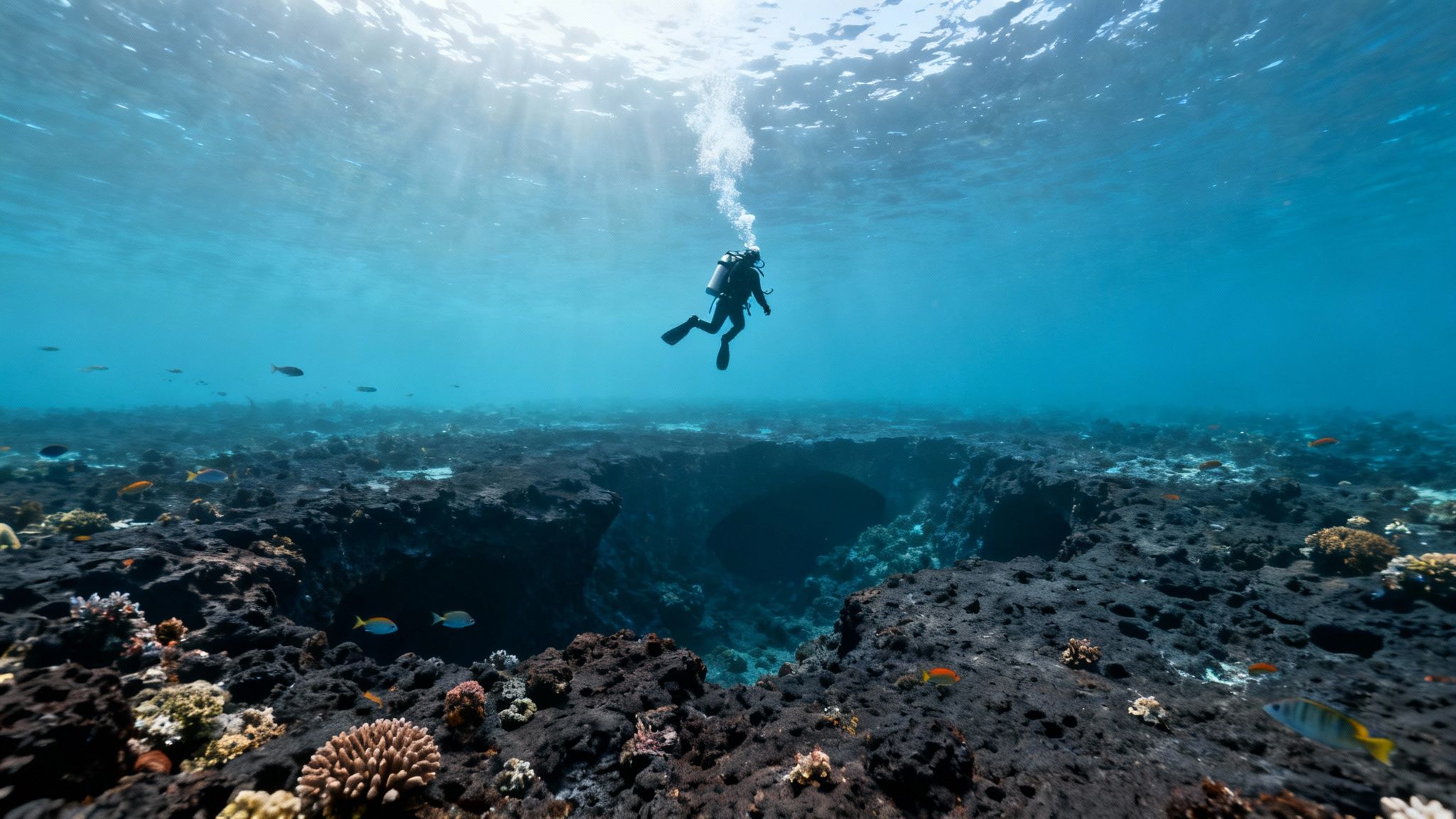
So, what makes Hawaii stand out in a world full of beautiful dive spots? It's not just one thing, but a powerful combination of geology, geography, and biology. The islands' volcanic birth created an underwater playground unlike any other. As a diver, you get to explore intricate lava tubes, swim through massive archways, and peer into submerged craters, all of which provide a haven for an incredible diversity of sea creatures.
This stunning underwater architecture is the stage for some truly special encounters. Because of Hawaii's extreme isolation in the middle of the Pacific, a staggering 25% of its reef fish are endemic. That means they are found only here. Every dive is a treasure hunt for rarities like the bright yellow Milletseed Butterflyfish or the stealthy Hawaiian Lionfish.
Unbeatable Conditions and Marine Life
A huge part of the appeal, particularly on the Kona coast, is the water itself. It's often incredibly calm and crystal clear. The towering volcanoes of Mauna Loa and Mauna Kea act as a massive shield, blocking the prevailing trade winds and creating almost lake-like conditions on many days. This natural protection makes for comfortable, stress-free diving for everyone, from beginners to seasoned pros.
Here’s a quick snapshot of what makes diving here so special.
Hawaii Diving at a Glance
| Attribute | Details |
|---|---|
| Visibility | Frequently 60-100+ feet (18-30+ meters), especially along the Kona coast. |
| Water Temperature | A comfortable 75°F to 80°F (24°C to 27°C) all year long. |
| Unique Topography | Volcanic formations like lava tubes, archways, and underwater craters. |
| Endemic Species | 25% of reef fish are found nowhere else in the world. |
| Iconic Encounters | Famous for manta ray night dives, green sea turtles (honu), and spinner dolphins. |
| Whale Season | Humpback whales visit from December to April, and their songs can be heard underwater. |
This amazing setting is why Hawaii ranks as a top-tier global dive destination, hosting over 1.5 million dives every year.
The Big Island alone boasts more than 1,000 documented dive sites, and with water temperatures hovering between a balmy 75°F and 80°F year-round, there’s truly no off-season. Want to dive deeper into why it’s so popular? Check out our guide, Is Scuba Diving Big in Hawaii?.
The consistently warm, clear water supports healthy coral reefs teeming with life. Beyond the kaleidoscope of reef fish, you’re almost certain to run into some of the local celebrities:
- Green Sea Turtles (Honu): These gentle giants are a signature sight, often found munching on algae, cruising by, or just chilling out on the reef.
- Spinner Dolphins: It’s common to see pods of these playful dolphins from the boat, and if you’re lucky, they might even swim by underwater.
- Manta Rays: Kona is world-famous for its majestic manta rays, and the night dive experience with them is something you’ll never forget.
- Humpback Whales: During the winter (December to April), you can often hear the haunting, beautiful songs of migrating humpbacks—a truly magical soundtrack for your dive.
Ultimately, scuba diving in Hawaii is so much more than a vacation activity. It’s a chance to immerse yourself in a dynamic, living ecosystem shaped by the raw power of fire and water.
Exploring Kona’s Underwater World: A Diver’s Paradise
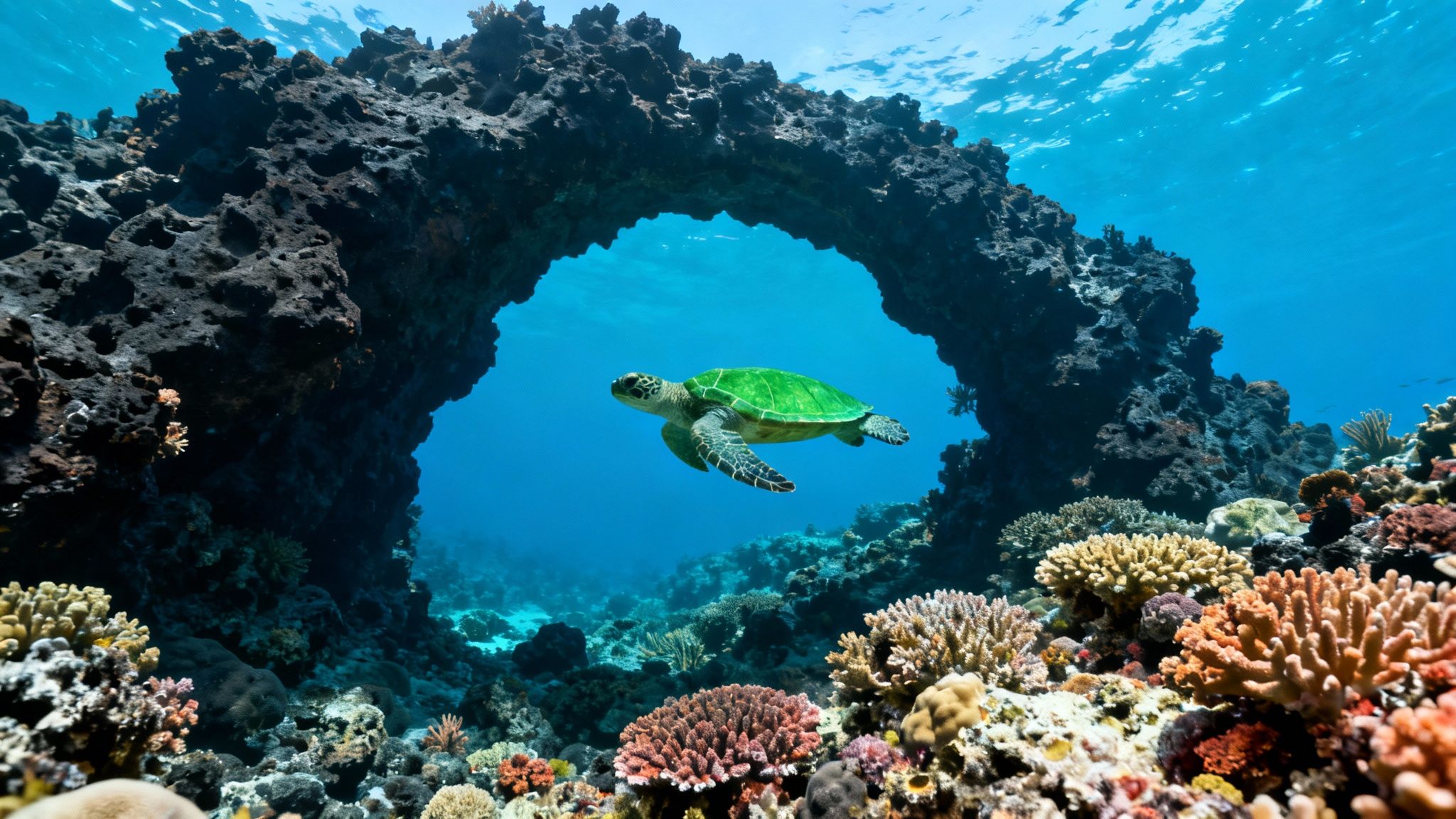
When you hear about scuba diving in Hawaii, you’re really hearing about the Kona coast. This is the epicenter, a place where the Big Island’s fiery volcanic birth is etched into every underwater canyon and cave. You're not just going for a dive; you're swimming through geologic history.
The dramatic lava formations—tubes, massive archways, and sprawling caverns—are what set this place apart. They're a testament to the raw power of molten rock meeting the ocean, creating a submerged playground that’s now teeming with life.
Lava Tubes and Spectacular Arches
The Big Island's underwater topography is its signature feature, and it is simply incredible. At sites like Golden Arches and Turtle Pinnacle, you get to experience it firsthand. Imagine gliding through a massive archway carved by ancient lava, with beams of sunlight cutting through the blue water from above. It’s pure magic.
But these structures aren't just for show. They're the foundation of the entire ecosystem. Every nook and cranny in the lava rock provides a home for something, whether it’s a shy octopus tucked away, a moray eel peering out, or a brightly colored nudibranch crawling along the surface.
Navigating these swim-throughs honestly feels like exploring a lost, underwater cathedral. It’s a powerful reminder of the forces that shaped these islands.
Thriving Coral Gardens and Reef Life
Beyond the dramatic volcanic rock, Kona’s coral gardens are bursting with color and energy. Drop down at a spot like Garden Eel Cove or Au Au Crater, and you’ll find yourself surrounded by carpets of healthy hard corals and an astonishing amount of fish.
You can expect to be greeted by clouds of yellow tangs, schools of raccoon butterflyfish, and the unmistakable Moorish idol. The reefs are a living, breathing kaleidoscope, and you'll spot something new every time you turn your head.
These reef systems are the lifeblood of our local marine world. They provide food, shelter, and nurseries for countless species while also protecting our coastline. This is why responsible diving is so important—we all have a part to play in preserving these fragile underwater cities for the future.
These spots are perfect for divers who love to just slow down, hover, and watch the day-to-day drama of the reef unfold. This is where you really get a sense of the biodiversity that makes Kona a top-tier global dive destination.
Encounters with Gentle Giants
Of course, no trip to Kona is complete without spending time with the local 'honu', our beloved green sea turtles. Seeing one of these ancient, graceful creatures patrol the reef is a quintessential part of the experience here.
You can often find them at "turtle cleaning stations," where they patiently let small reef fish nibble algae and parasites off their shells. It's a fascinating display of underwater teamwork and one of the coolest things you can witness. Watching a honu glide effortlessly by is a memory that will stick with you.
From lava tubes to coral gardens, the underwater landscapes of Kona offer an adventure for every diver. The sheer variety ensures every single dive is a fresh exploration of this volcanic paradise.
Here at Kona Honu Divers, we’ve spent years getting to know every secret spot and hidden gem along this coast. Our guides know exactly where to take you for the most spectacular views and marine encounters. Check out our available diving tours to see what kind of adventure is waiting for you.
The Unforgettable Kona Manta Ray Night Dive
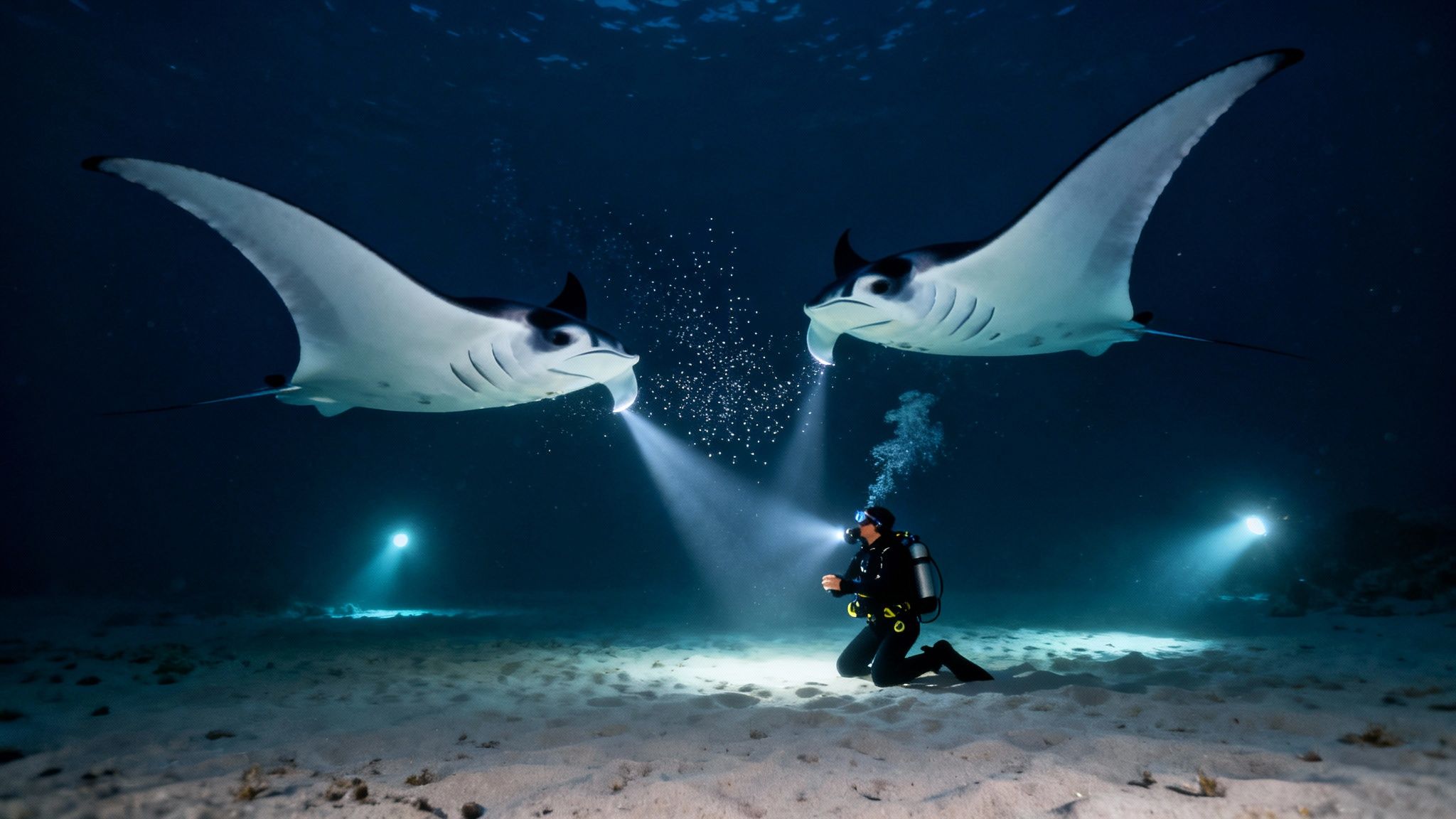
If there's one experience that defines scuba diving Hawaii, this is it. The world-famous Kona Manta Ray Night Dive isn't just a dive; it's pure magic. Picture yourself kneeling on the sandy ocean floor as majestic manta rays, with wingspans reaching up to 16 feet, perform a silent, graceful ballet just inches above your head.
This incredible spectacle is a beautiful intersection of nature and ingenuity. Dive operators set up powerful lights on the seafloor, creating what we affectionately call the "campfire." These lights draw in clouds of plankton—the mantas' favorite meal—and the gentle giants swoop in for a feast. The result is a breathtaking underwater show you won't find anywhere else on earth.
It’s an experience that lands on countless divers' bucket lists for a good reason. It’s more than just observing marine life; it’s an intimate, humbling connection with some of the ocean’s most magnificent creatures.
Why Garden Eel Cove Is the Premier Manta Dive Site
You might hear about a couple of spots for this dive, but ask any local pro and they'll tell you Garden Eel Cove is the place to be. Its geography gives it a serious edge, making the experience more reliable and simply more magical. The cove is naturally sheltered from the open ocean, which means calmer, more comfortable conditions for everyone—divers and mantas alike.
This natural protection also allows the surrounding reef to flourish. The vibrant coral and bustling marine life add an extra layer of beauty to the whole adventure. But the real game-changer is the underwater topography, which forms a perfect natural amphitheater.
This setup allows all the divers to gather in a designated viewing area—our "campfire"—without harming the delicate reef. It gives everyone an unobstructed, front-row seat to the feeding frenzy. It’s a sustainable approach that prioritizes an amazing experience for you and protects the mantas' home. If you want to dive deeper into these animals, learn more about the Kona Manta Ray.
What to Expect on Your Manta Ray Dive
The adventure usually kicks off with a twilight dive right before the sun sets. This first dip is your chance to explore the beautiful reef as the daytime critters head to bed and the nocturnal hunters start their shift. It's a great warm-up that gets you comfortable with the site and your gear.
Once darkness fully sets in, it's showtime. You'll descend again, this time to the "campfire." Your guide will have you settle on a sandy patch and point your dive light straight up into the water column. And then, you wait.
The first time you see a manta's shadow emerge from the darkness and glide effortlessly into the light is a moment you will never, ever forget. Their sheer size and silent grace are completely mesmerizing. These are wild animals, yet they swim so close, trusting the divers below while they feed.
The entire experience is surprisingly peaceful and utterly awe-inspiring. You just watch as these gentle giants dance in the beams of light, their massive mouths scooping up plankton in a beautiful, looping ballet.
The Kona Manta Ray Night Dive is truly the crown jewel of scuba diving Hawaii. At Kona Honu Divers, we specialize in making this experience safe, respectful, and absolutely unforgettable. See what our fellow divers had to say about their trip below.
Ready for the underwater show of a lifetime? Booking a Manta Ray Dive Tour is your ticket to one of the most celebrated night dives on the planet.
Exploring Advanced Diving Frontiers
For certified divers who crave something more, scuba diving Hawaii offers experiences that go way beyond the beautiful, sunlit reefs. Some of the most unforgettable moments happen out in the deep blue, where the dives aren't just a tour—they're a genuine expedition. These are the dives that become legends.
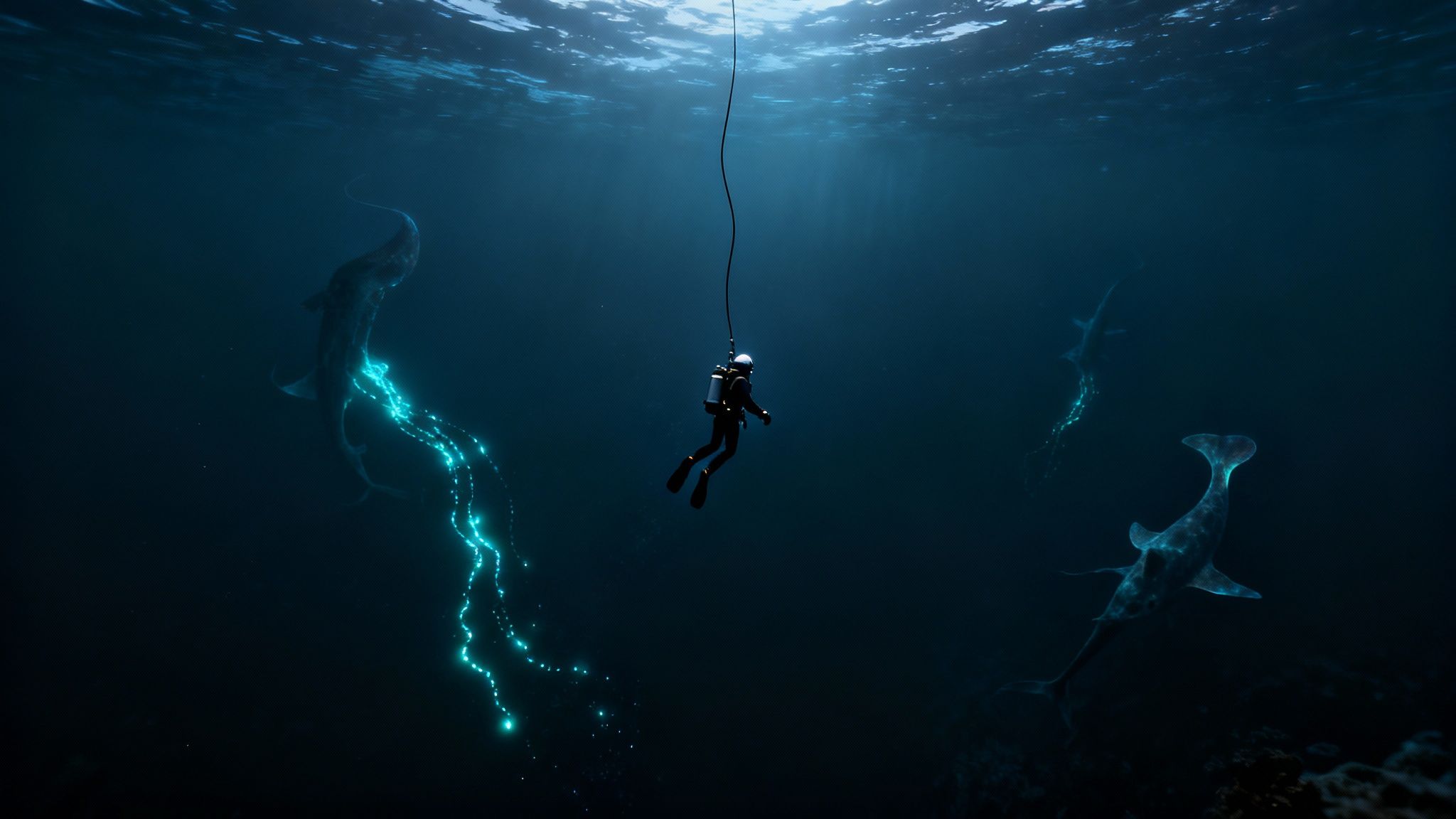
The ultimate adventure for the truly bold is the Kona Blackwater Dive. Forget everything you know about night diving on a reef. This is something else entirely. We head miles offshore, shut off the engines, and drift over thousands of feet of inky black water. Tethered to the boat, you just hang there and watch as the largest migration on Earth happens right before your eyes, with bizarre and often bioluminescent creatures rising from the abyss to feed.
It’s a surreal encounter with lifeforms that look like they belong on another planet: strange larval fish, otherworldly jellies, and tiny squid that pulse with their own light. This dive is a front-row seat to a world that very few people will ever get to see.
Mastering Deep and Dynamic Dives
Beyond the blackwater experience, Hawaii's volcanic origins have created an incredible underwater playground for advanced diving opportunities. If you’ve got the skills, you can explore deep, intricate lava tubes that twist and turn through ancient underwater landscapes. These dives demand rock-solid buoyancy control and a calm, collected mindset.
Our advanced charters also take you to more remote coastlines where conditions can be a bit more unpredictable. The payoff? Pristine, untouched reefs and a much better chance of spotting the big pelagic species that cruise the edges of the island’s shelf.
Another skill you’ll want in your back pocket for diving in Hawaii is drift diving. This is where you simply relax and let the current do the work, carrying you effortlessly along a reef or wall. It’s an amazing way to cover a lot of ground and see the ecosystem in its natural, dynamic state.
Drift diving isn't just a technique; it’s about going with the flow—literally. Instead of kicking against the current, you become part of it. You see marine life behaving more naturally, and you can explore huge sections of reef without getting tired. It’s both incredibly relaxing and wildly exciting.
This style of diving is becoming more and more popular. In fact, drift diving is projected to capture 25% of the U.S. market by 2025, which shows that experienced divers are actively looking for more engaging challenges. You can read more about this trend over at Future Market Insights.
Who Are These Dives For?
Let's be clear: these advanced trips are for divers who are already completely comfortable and confident in the water. To join, you’ll generally need:
- Advanced Open Water Certification: Or a similar cert from another agency, with logged deep dives.
- Excellent Buoyancy Control: This is non-negotiable for navigating delicate lava tubes and protecting the reef.
- Confidence in the Dark: For the blackwater dive, you have to be at ease in low-light, open-ocean conditions.
- A Calm Head: The ability to stay relaxed when things get challenging is the most important skill of all.
If you’re an experienced diver looking to push your own boundaries, these advanced frontiers will show you a side of scuba diving Hawaii that most people miss. It’s your ticket to exploring the wild, untamed heart of the Pacific.
How to Plan Your Hawaii Dive Adventure
An amazing scuba trip to Hawaii doesn’t just happen—it starts with smart planning long before your fins ever touch the water. A little bit of foresight can be the difference between a good vacation and a truly unforgettable one, making sure you're in the right place, at the right time, with all the right prep.
This guide will walk you through all the practical stuff you need to nail down before you go. We'll cover everything from the best seasons to dive, what certifications will open up the best sites, and how to pack and dive in a way that respects Hawaii's incredible marine life.
Choosing the Best Time to Dive
Let’s get one thing straight: there is no "bad" time to dive off the Kona coast. Seriously. The water stays in that perfect sweet spot of 75°F to 80°F all year long. That said, the seasons do offer a slightly different flavor.
Summer, from about May to September, generally serves up the calmest, warmest, and clearest water. We’re talking visibility that can easily top 100 feet, making it the perfect time for just kicking back and soaking in the vibrant reefs.
Winter, from December to April, might bring slightly cooler water and the occasional swell on the surface, but it also comes with a massive perk: it’s humpback whale season.
There's nothing quite like hearing the otherworldly songs of humpback whales echoing through the water during a dive. It's a powerful, full-body vibration—the ultimate underwater soundtrack and an experience you will never, ever forget.
To help you pick your perfect window, here's a quick look at what to expect.
Hawaii Dive Season and Conditions
Planning your trip around the conditions and marine life you want to see is key. This table breaks down the essentials for Hawaii's two main dive seasons.
| Season | Water Temperature | Visibility | Key Marine Life Sightings |
|---|---|---|---|
| Summer (May-Sep) | 78°F – 80°F (25°C – 27°C) | Excellent (often 100+ ft) | Manta rays, dolphins, turtles, vibrant reef fish. |
| Winter (Dec-Apr) | 75°F – 77°F (24°C – 25°C) | Good (60-100 ft) | Migrating humpback whales (songs are common), plus regular residents. |
No matter when you visit, the diving is fantastic. Your decision really just comes down to whether you prefer the absolute best visibility or the chance to hear those incredible whale songs.
Certification and Training Logistics
To really unlock everything Hawaii has to offer, showing up as a certified diver is your best bet. If you arrive with your Open Water certification (or higher) already squared away, you can get straight to the good stuff—exploring world-class sites—instead of spending precious vacation time in a classroom.
But what if you're not certified? No problem at all. Most shops, including us at Kona Honu Divers, offer a "Discover Scuba Diving" experience. It’s a brilliant, closely supervised introduction where an instructor teaches you the basics and then takes you on a beautiful shallow reef dive. It’s the perfect way to see if diving is for you.
And for those looking to level up, Hawaii is an amazing place to earn your Advanced Open Water certification. It opens up deeper dive sites and qualifies you for truly unique adventures like those famous night dives.
Gear, Nitrox, and Protecting the Reefs
The age-old question: what gear should you bring? While most experienced divers won't leave home without their own mask and dive computer, renting the bigger stuff like a BCD and fins right here on the island is often the smarter move. It'll save you a ton of hassle and cash on airline baggage fees.
One of the best perks of diving with a top-notch operator like Kona Honu Divers is getting free Nitrox. For those who aren't familiar, Enriched Air Nitrox is a breathing gas with a little more oxygen, which lets you stay down longer and get back in the water sooner. If you’re planning on doing multiple dives a day, it’s an absolute game-changer.
Finally, let's talk about being a good guest underwater. Every time we dive, we have a responsibility to act as guardians of the ocean. The golden rule is simple: leave no trace.
Here’s how you do it:
- Nail Your Buoyancy: Keep your fins and hands off the fragile coral. It’s delicate and can be damaged by the slightest touch.
- Respect the Locals: Observe marine life from a respectful distance. Never chase, touch, or harass the animals.
- Use Reef-Safe Sunscreen: Many common sunscreens contain chemicals that are incredibly toxic to coral.
- Choose Eco-Conscious Operators: Support dive shops that are actively involved in marine conservation.
By planning ahead and diving with care, you help ensure that Hawaii's spectacular underwater world stays healthy and vibrant for generations of divers to come.
Choosing Your Dive Operator in Kona
Let’s be honest, who you dive with can make or break your entire scuba diving Hawaii trip. It’s easily one of the most important decisions you'll make. The right crew doesn’t just shuttle you to a pin on a map; they bring the reef to life, keep you safe, and share a passion for the ocean that’s absolutely contagious.
When you start looking at Kona dive shops, a few things should be at the top of your checklist. You’re looking for a rock-solid safety record, guides who know the local sites like the back of their hand, and boats that are both comfortable and meticulously maintained. A genuine commitment to conservation is also a huge green flag—it shows they care about protecting the very ecosystem you’re coming to see.
Finding a Trusted Guide
Kona has a fantastic selection of dive companies, and each one has its own vibe. The trick is finding the one that’s the right fit for you. For a really detailed breakdown of what to look for, our guide on how to choose a Kona dive shop is a great place to start.
A great dive guide is so much more than a tour leader. They are part marine biologist, part safety officer, and part storyteller. They're the ones who will spot the perfectly camouflaged octopus you’d have finned right past, turning a simple swim into a genuine discovery.
Here on the Big Island, Kona Honu Divers has built an incredible reputation. We're known for our professional but super-friendly crew and an unwavering focus on small groups, which makes for a much more personal and relaxed experience on the water. The amazing reviews we get from divers of all backgrounds really speak for themselves.
Other Highly-Regarded Kona Operators
Of course, to give you the full picture, there are other excellent operators that make Kona such a world-class diving hub. It’s always smart to check out a few to find the perfect match.
Jack's Diving Locker is a true Kona institution. They've been around for a long time and are highly respected for their comprehensive training programs and big, comfortable boats that accommodate all kinds of divers.
Big Island Divers is another fantastic choice, with a solid reputation for having a very knowledgeable team and offering a wide variety of trips, from beautiful reef dives to more advanced technical charters.
At the end of the day, spending a little time reading recent reviews and finding an operator whose love for the ocean matches yours is the final key to planning an unforgettable scuba diving Hawaii adventure.
Your Hawaii Diving Questions, Answered
We get these questions all the time from divers getting ready for their trip. To help you wrap up your planning and feel completely confident before you hit the water, here are some straightforward answers to the essentials of scuba diving in Hawaii.
Do I Need to Be Certified to Scuba Dive in Hawaii?
Not necessarily to just try it! If you're curious about breathing underwater but aren't certified, you can sign up for a Discover Scuba Diving experience. Most shops, ours included, offer this fantastic introduction.
An instructor will walk you through the basics in a calm, controlled environment and then personally guide you on a real dive over a beautiful, shallow reef. It’s the perfect way to see if diving is for you. But to truly explore the incredible range of dive sites Hawaii has to offer on regular boat charters, you’ll definitely need your Open Water Diver certification.
Are There Sharks in Hawaii? Is It Safe to Dive With Them?
Absolutely, and seeing them is one of the best parts! Sharks are a sign of a healthy, thriving ocean. The most common one you'll likely spot is the whitetip reef shark. They tend to be pretty shy, often just cruising along the reef or resting under ledges, and are not considered a threat to divers.
Diving with a professional, experienced guide who understands local marine life behavior is key. They ensure every encounter is safe, respectful, and frankly, unforgettable. Serious incidents between scuba divers and sharks here are virtually unheard of.
What Is the Minimum Age for Scuba Diving?
For most big agencies like PADI, kids can start their Junior Open Water Diver course at just 10 years old. This is also generally the minimum age for those introductory Discover Scuba Diving experiences.
That said, it's always smart to double-check with the specific dive shop you plan to use. Some might have their own policies, especially for certain types of dives. Getting these details sorted is the last step before you can jump in and experience the magic for yourself.
Ready to see what the Big Island’s underwater world is all about? Kona Honu Divers runs a full lineup of dive trips for every skill level, from first-timers to seasoned pros. Find your perfect Hawaii dive adventure and book your spot today.