
Picture this: you're weightless, suspended in brilliant turquoise water. Ancient lava tubes and arches stretch out before you, all blanketed in vibrant coral and buzzing with life. That’s scuba diving Hawaii in a nutshell—it's a genuine underwater paradise. And when people talk about the best of the best, all signs point to the Big Island's Kona coast, the undisputed crown jewel of diving in the islands.
Why Hawaii Is a World-Class Diving Destination
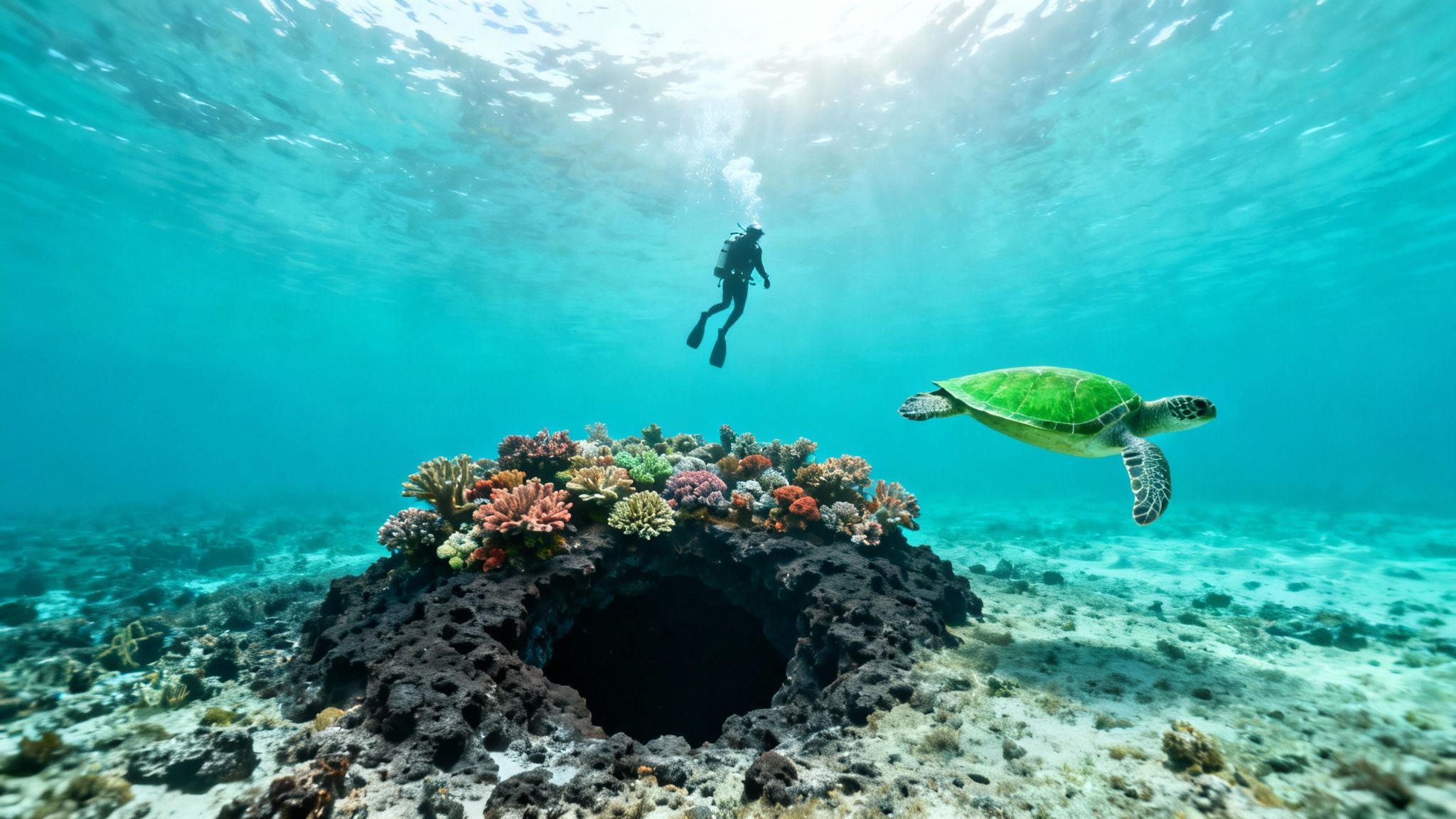
Hawaii’s magic comes from its isolation, smack in the middle of the Pacific. This created a unique, thriving underwater ecosystem you won’t find anywhere else. The islands' volcanic origins forged a dramatic seascape of lava tubes, massive craters, and intricate archways, all of which now serve as high-rise apartments for bustling marine communities.
This very geology is the reason for the incredible biodiversity here. Hawaiian waters are a sanctuary for a staggering variety of life, promising encounters that can be both heart-poundingly thrilling and wonderfully serene.
A Hub for Global Diving Enthusiasts
The secret is definitely out. Hawaii sees over 1.5 million scuba dives every year across more than 215 licensed dive shops, which firmly cements its reputation as a premier global destination. The U.S. diving tourism market, with Hawaii as a major player, brought in USD 573.1 million in 2023 and is expected to nearly double by 2030. If you want to dive deeper into its popularity, check out our guide on whether scuba diving is big in Hawaii.
The numbers really do paint a clear picture. Scuba diving made up a massive 78.29% revenue share of the market in 2023, proving it's the top draw for ocean lovers. You can dig into more stats from this U.S. diving market industry analysis.
This guide is your roadmap to the islands' best underwater experiences. We'll cover everything from drifting alongside graceful sea turtles to dancing with majestic manta rays at night.
We're going to break down what makes these waters a top-tier destination and show you how a professional, passionate dive operator like Kona Honu Divers can be your gateway to it all—ensuring every single dive is safe, unforgettable, and absolutely breathtaking.
Discovering the Top Dive Sites Across the Islands
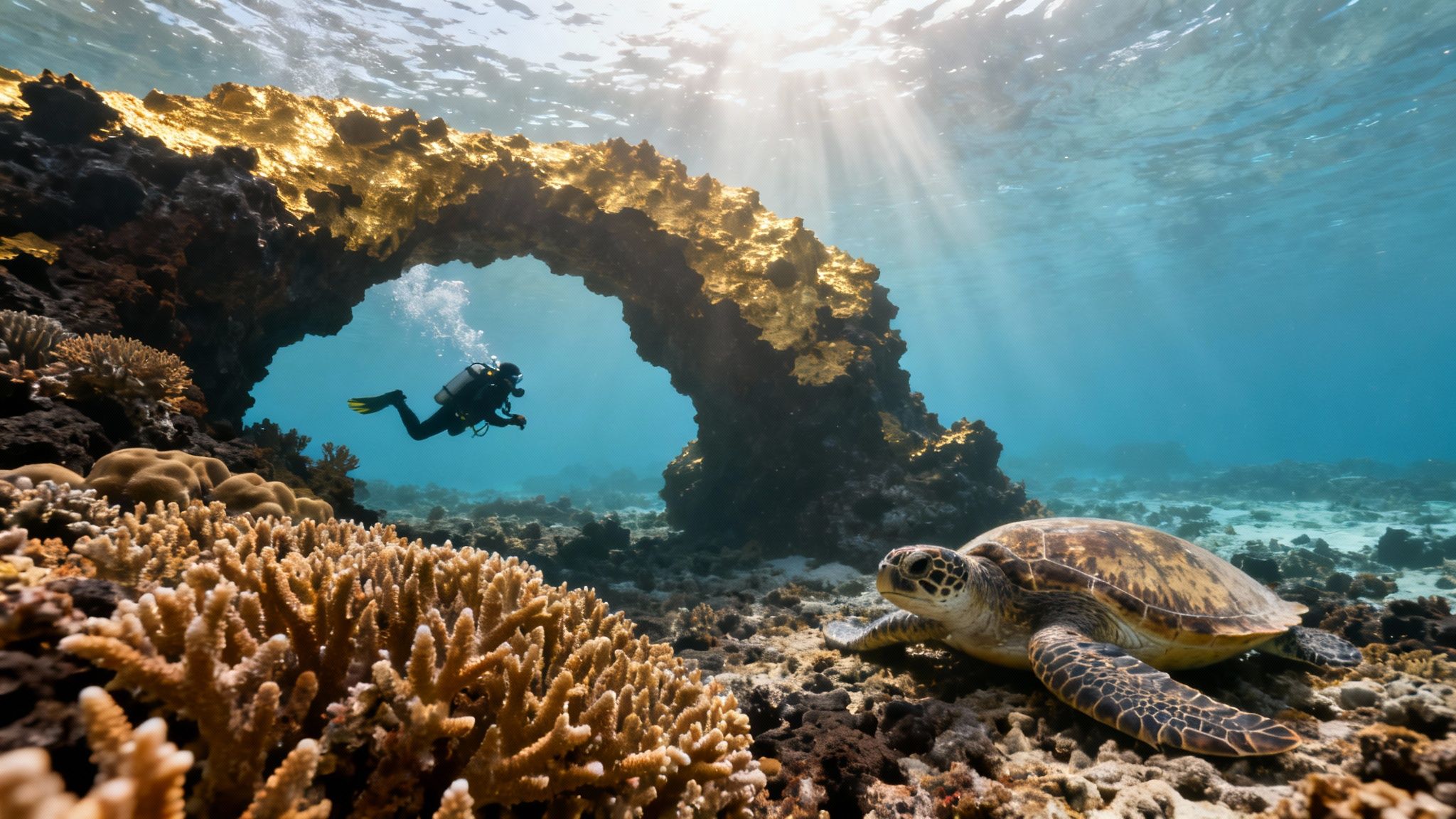
Every Hawaiian island has its own underwater personality, a unique world shaped by its volcanic history and the surrounding ocean currents. You could spend a lifetime exploring it all, from the haunting shipwrecks off Oahu to the legendary Molokini Crater wall near Maui.
But if you’re looking for the absolute best combination of variety, accessibility, and unforgettable marine encounters, one island consistently rises to the top.
The Big Island—specifically the Kona coast—is the undisputed heart of scuba diving in Hawaii. Its western-facing, leeward side is shielded from the powerful trade winds, which blesses us with calm, incredibly clear water nearly every day of the year. That reliability alone is a game-changer, making Kona a diver’s paradise for everyone from beginners to seasoned pros.
The island’s fiery origins have also created a spectacular underwater landscape. Just imagine descending along a sheer volcanic wall, gliding through ancient lava tubes, or exploring dramatic archways carved by nature. This isn't just rock; it’s a living, breathing habitat for an unbelievable diversity of marine life.
Kona: The Unrivaled Diving Hub
While other islands have their claim-to-fame dive sites, Kona offers an entire menu of world-class experiences that's tough to beat. Take a spot like Turtle Pinnacle, for example. It's not just a clever name; it's a natural "cleaning station" where Hawaiian green sea turtles, or honu, congregate in huge numbers. It's a photographer's dream and a truly humbling sight.
Better yet, Kona's dive sites are incredibly accessible. Most of our best spots are just a quick, comfortable boat ride away, so you spend more time in the water and less time getting there. This mix of convenience and jaw-dropping dives is exactly why serious divers come back to Kona again and again. For a great overview of where to go, check out this Big Island Hawaii snorkeling map.
The Big Island's volcanic landscape creates an underwater playground unlike any other. It’s a world where you can explore ancient lava formations in the morning and swim with majestic manta rays at night, all in one place.
This reputation is growing fast. The scuba diving industry here is booming, with Hawaii’s visitor arrivals projected to hit 9.7 million in 2025 and break the 10 million mark by 2028. This surge is driven by travelers seeking authentic eco-tourism experiences—the very kind that make Kona so special.
Comparing the Islands
So, what makes Kona the standout? A quick look at what each island offers makes it clear. While every island has its charm, they all cater to slightly different diving styles.
Comparing Dive Experiences Across Hawaiian Islands
| Island | Key Features | Best For | Typical Visibility |
|---|---|---|---|
| Big Island (Kona) | Protected calm waters, lava tubes, manta rays, blackwater dives | Overall Variety & Unique Dives | 80 – 150+ ft |
| Maui | Molokini Crater, wall dives, 'Cathedrals' off Lanai | Wall Dives & Day Trips | 70 – 120 ft |
| Oahu | Wreck diving (Corsair, YO-257), reef dives, some shore diving | Wreck Enthusiasts | 60 – 100 ft |
| Kauai | Remote sites, sea caves, strong currents, seasonal diving | Advanced & Adventurous Divers | 50 – 90 ft |
As you can see, if you're looking for the complete package, the Big Island is hard to top. The calm conditions, incredible visibility, and exclusive access to bucket-list dives like the Manta Ray Night Dive give it a serious edge.
Whether you're exploring a vibrant reef packed with fish found nowhere else on Earth or gearing up for a life-changing night dive, the Kona coast truly delivers. Its underwater world is a perfect reflection of the island itself: dynamic, wild, and absolutely full of life.
Here at Kona Honu Divers, showing you the very best of this underwater paradise is what we do. Our crew knows these waters like the back of their hand, and we’re passionate about guiding you to the most spectacular spots for a safe, unforgettable adventure.
Experience the Magic of the Kona Manta Ray Night Dive
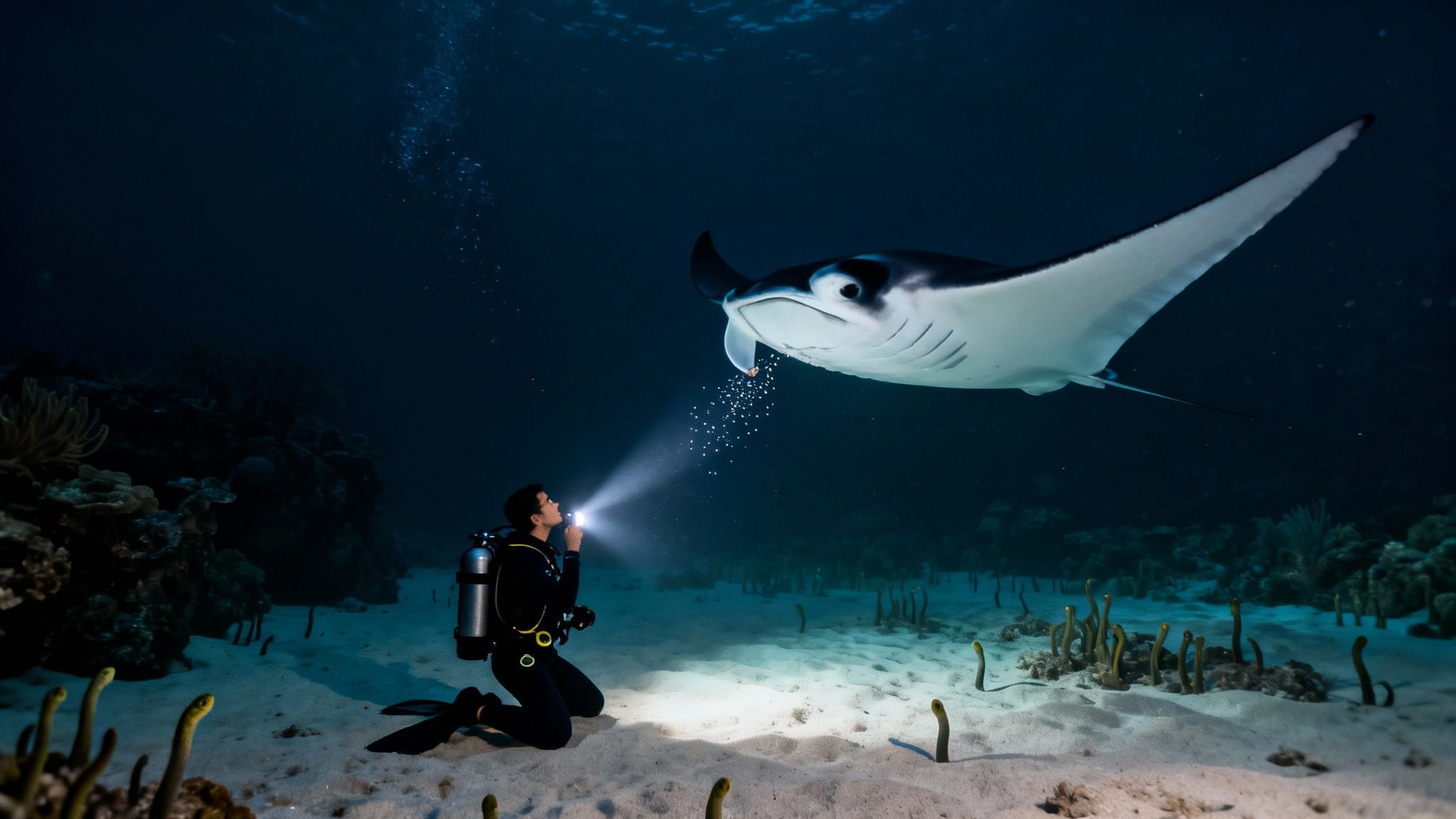
Picture this: you’re kneeling on a sandy patch of the ocean floor after sunset. In the quiet darkness, massive, gentle giants with wingspans over 15 feet swoop and glide in an effortless ballet just inches above your head. This isn’t a special effects scene from a movie—it’s the world-famous Kona manta ray night dive, and it’s an experience that lands on nearly every diver’s bucket list for a reason.
This is, without a doubt, a must-do when scuba diving in Hawaii. The magic kicks off when powerful, specially-designed lights are placed on the seafloor, creating a huge, brilliant "campfire" of light. This light acts like a magnet for plankton, the microscopic organisms that manta rays love to eat.
As our group of divers settles in a semi-circle around the light, the show begins. The mantas appear out of the darkness, drawn to the all-you-can-eat plankton buffet. They perform graceful barrel rolls and summersaults right through the light beams, scooping up mouthfuls of food. It's a silent, breathtaking performance that connects you to the ocean in a way few things can.
Why Garden Eel Cove Is the Premier Location
While you might hear about a couple of different spots for this dive, Garden Eel Cove is hands-down the superior choice. It’s tucked into a protected bay, which means the water is almost always calmer. That makes a huge difference for a more comfortable and enjoyable dive, especially after dark.
The whole setup at Garden Eel Cove just works better, too. The site has a large, sandy bottom that acts like a natural amphitheater, offering a better viewing area so we can all get comfortable and have a great view without ever needing to touch the fragile coral reef nearby.
The dive at Garden Eel Cove is more than just the mantas. It's surrounded by some of the healthiest, most vibrant reefs in the area. This means the first dive on our two-tank trip—usually done as the sun sets—is a spectacular tour of a thriving underwater world before the main event even starts.
Choosing the right location is key, and Garden Eel Cove consistently delivers the most reliable and magical setting for this incredible encounter. It’s the perfect combination of its protected location, an ideal viewing area, and amazing reefs that makes it the best stage for the nightly manta ballet.
What Makes the Experience So Special
The Kona manta ray night dive isn't just about watching fish. It’s a humbling, almost interactive experience. These are completely wild animals, yet they seem to put on a show, getting so close you can feel the water move as their massive wings pass by. For a full rundown of what to expect, check out our detailed guide on the Kona Manta Ray Night Dive.
At Kona Honu Divers, we've fine-tuned this tour over the years to make sure every single diver gets a front-row seat. Our experienced guides are focused on your safety and, just as importantly, the well-being of the mantas. We strictly follow all guidelines for a respectful and sustainable interaction. We absolutely love these animals, and that passion comes through on every trip we lead.
Ready to witness the ballet of the mantas? You can book your Manta Ray Dive Tour and secure your spot for an adventure you will never forget.
Explore Advanced and Unique Diving Adventures
For divers who have seen a lot and are craving something truly different, Hawaii delivers adventures that go way beyond the standard reef tour. Once your buoyancy is dialed in and you're completely at home in the water, a whole other level of diving opens up—especially off the Kona coast. These aren't your average day trips; they're journeys into the ocean's more mysterious and challenging corners.
These advanced dives are all about pushing your skills to witness phenomena that very few people ever get to see. From navigating the intricate architecture of ancient lava tubes to exploring the deeper reefs, these are trips designed for certified, experienced divers who are ready for what's next.
The Big Island's dramatic volcanic landscape creates the perfect underwater playground for it. The deep offshore waters and one-of-a-kind geological formations make for environments that are as rewarding as they are demanding.
The Ultimate Challenge: The Kona Blackwater Dive
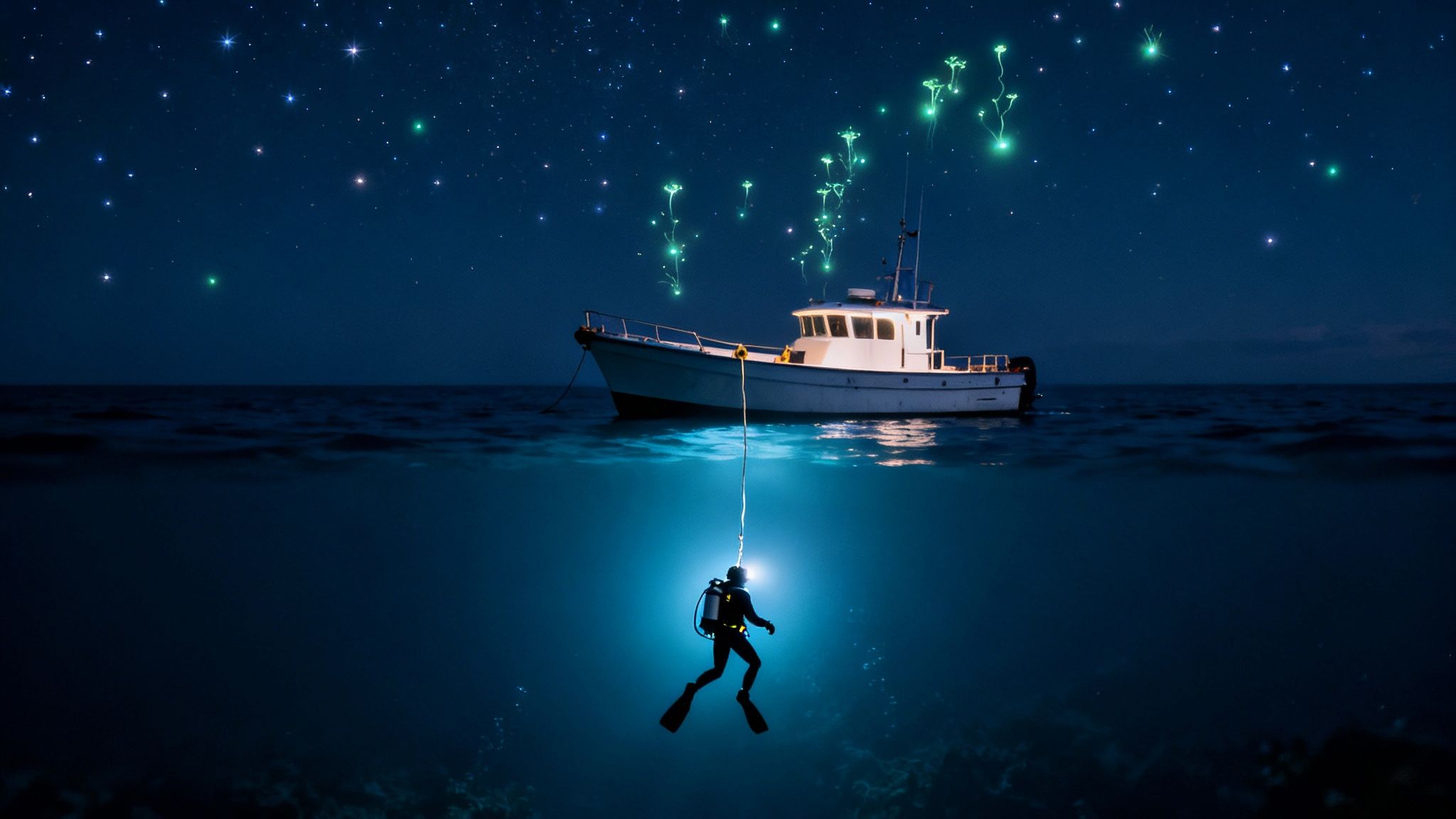
Picture this: you're floating in the profound, inky blackness of the open ocean. You're miles from shore with thousands of feet of water beneath you. Tethered to a boat, you drift in the quiet as bizarre, almost alien creatures rise from the abyss. This is the Kona Blackwater Dive, an experience people often describe as more of a spacewalk than a scuba dive.
This unique pelagic dive puts you front and center for the largest vertical migration on the planet. Every single night, countless strange and wonderful organisms—many of them bioluminescent—journey from the deep to feed near the surface. You'll see things that look like they belong on another world, from tiny, translucent larval fish to pulsing, glowing jellyfish.
The Blackwater Dive is a true test of a diver's composure and skill. It demands excellent buoyancy control and a calm mind, but the reward is an unparalleled glimpse into one of Earth’s last great wildernesses.
Kona Honu Divers offers expertly guided Blackwater Dive tours for certified divers ready to take on this incredible, mind-bending challenge. It's an adventure that completely redefines what night diving can be.
Pushing Boundaries with Advanced Dives
Beyond the blackwater experience, there are plenty of other ways for seasoned divers to expand their horizons. Exploring the Big Island's underwater world means you get the chance to go deeper, see more, and navigate complex environments that are off-limits to newer divers.
An advanced dive tour often means you'll get to:
- Explore Deeper Reefs: Drop down to depths of 100 feet or more to see different marine life and coral formations that simply don't grow in the shallows.
- Navigate Lava Tubes: Swim through ancient, submerged lava tubes—natural tunnels and caverns carved out by volcanic activity. This takes precise buoyancy and a real spirit for adventure.
- Drift Diving: Let the ocean currents do the work as you glide effortlessly over long stretches of reef, covering more ground and seeing more of the underwater landscape than you could on your own.
These dives demand a higher level of skill and certification, but the payoff is huge. They let you see a side of scuba diving Hawaii that most people miss out on, from hidden geological wonders to rare marine encounters. Kona Honu Divers runs an advanced dive tour specifically for experienced divers who want to safely explore these more spectacular sites. This is your ticket to see the absolute best of Kona's underwater world.
How to Plan Your Ultimate Hawaii Dive Trip
Let’s be honest, planning the perfect dive trip is about more than just booking a flight and a hotel. To really make the most of your time in Hawaii, a little insider knowledge goes a long way. It's about knowing when to come, what to pack, and how to prepare for the incredible underwater world that awaits.
The great news? When it comes to scuba diving Hawaii, particularly on the Kona coast, there’s truly no "off-season." Thanks to the protective shield of the massive volcanoes, the water here stays calm and clear almost all year. But, depending on what you want to see and experience, some seasons definitely have their own special magic.
Picking the Best Time to Visit
While you can count on fantastic diving any day of the year in Kona, the subtle shifts between seasons can shape your trip. The water is always inviting, hovering around a comfortable 75°F (24°C) in the winter and warming up to a blissful 81°F (27°C) in the heart of summer.
To help you decide when to book your trip, here’s a quick look at what each season offers.
Hawaii Diving Conditions by Season
| Season | Avg. Water Temp | Typical Visibility | Marine Life Highlights |
|---|---|---|---|
| Winter (Dec – Mar) | 75°F – 77°F | 80 – 120 ft | Humpback whale songs, Manta Rays |
| Spring (Apr – Jun) | 76°F – 78°F | 100 – 150+ ft | Calmest seas, excellent visibility |
| Summer (Jul – Sep) | 79°F – 81°F | 80 – 120 ft | Warmer water, abundant reef fish |
| Fall (Oct – Nov) | 77°F – 79°F | 70 – 100 ft | Great overall conditions, fewer crowds |
Winter in Kona is truly something else. Even if you don't spot a humpback whale on your dive, hearing their haunting, complex songs reverberating through the water is an experience that will stay with you forever.
This table gives you a great starting point, but remember that nature is always full of surprises!
Your Essential Packing Checklist
Packing smart is key to a comfortable and stress-free dive trip. While you can always rent top-notch equipment from us at Kona Honu Divers, most seasoned divers know the comfort of bringing their own core gear.
Here’s a quick checklist of what I never leave behind:
- Your Personal Dive Gear: At the very least, bring your own mask, snorkel, fins, and dive computer. A perfect fit makes all the difference, and you're already familiar with your computer's settings.
- Wetsuit: A 3mm or 5mm full wetsuit is your best bet for Hawaii’s temperatures, keeping you perfectly warm on any dive, any time of year.
- Certification Cards & Logbook: This one’s a no-brainer! Always have proof of your certification handy, and don’t forget your logbook to get a stamp and jot down memories of your incredible dives.
- Reef-Safe Sunscreen: Help us protect our precious coral. Look for mineral-based sunscreens with zinc oxide or titanium dioxide to keep both your skin and the reefs healthy.
- Boat-Day Basics: A reusable water bottle is a must for staying hydrated, and a good dry bag will keep your phone, keys, and towel safe and dry on the boat.
The Nitrox Advantage and Dive Insurance
If you’re certified to dive with Enriched Air Nitrox, you already know what a game-changer it can be. For those new to it, Nitrox is simply a breathing gas with a bit more oxygen and less nitrogen than the standard air in a tank.
The real magic of diving with Nitrox is that it extends your no-decompression bottom time. This means you can stay down longer, especially on your second or third dive of the day. As a bonus, many divers find they feel less tired after a day of diving on enriched air.
We believe every certified diver should have this advantage, which is why at Kona Honu Divers, we provide Nitrox for free. It’s our way of helping you get the absolute most out of every single dive with us.
One last critical tip: never, ever travel without proper dive insurance. Your standard travel or health insurance likely won't cover dive-specific incidents. A dedicated plan from an organization like Divers Alert Network (DAN) is essential. It provides peace of mind, covering you for the unexpected so you can focus on the amazing adventure ahead. Planning can be made even simpler by exploring comprehensive Hawaii scuba diving packages, which often bundle dives and other essentials for a hassle-free trip.
Choosing the Right Dive Operator and Protecting the Reefs
Let’s be honest: who you dive with can make or break your entire Hawaii trip. Your dive operator isn't just providing a boat ride; they're in charge of your safety, comfort, and ultimately, the quality of your underwater experience. A fantastic dive isn't just about what you see—it's about the confidence and peace of mind you have with the crew leading the way.
When you're looking at different shops, especially in a world-class spot like Kona, a few things should be non-negotiable. These are the tell-tale signs of a professional, safe, and truly top-notch company that cares as much about its divers as it does about the ocean.
What to Look for in a Top-Tier Dive Shop
First and foremost, a stellar safety record is the absolute baseline. But beyond that, think about the boat itself. A custom-built vessel designed specifically for diving makes a huge difference with easier entries, more space to move around, and a much smoother ride to the dive site.
Then there’s the crew. You want a team with a deep, collective knowledge of the local sites—they know the currents, the weather patterns, and where the cool critters like to hang out. That kind of experience can turn a good dive into an absolutely unforgettable one. Finally, seek out operators who prioritize small groups. It means more personalized attention and a far more intimate encounter with the underwater world.
We built Kona Honu Divers on these very principles. Our custom boats and a crew with over 200 years of combined experience are the foundation of every trip. Safety and comfort are just the start.
Our dedication to small groups ensures you get the most out of your time with our expert guides. We've seen firsthand how this approach makes all the difference in creating a truly special dive.
Our Role as Guardians of the Reef
As divers, we are incredibly lucky to be guests in a fragile, beautiful world. And with that privilege comes a huge responsibility to protect it. Hawaii's coral reefs are living, breathing ecosystems, and our actions in and out of the water directly impact their survival.
This means being a conscious consumer and thinking about where things come from. It's important to be mindful of purchasing products derived from marine ecosystems like coral, as this can contribute to the decline of the very environments we travel so far to see. The best dive shops lead by example, championing conservation and teaching their divers how to be good stewards of the ocean.
This shared commitment is what will keep Hawaii’s underwater world vibrant for generations to come.
Actionable Tips for Responsible Diving
Protecting the reefs really isn't complicated. It just boils down to a few simple, powerful habits that every single diver can—and should—adopt.
Here are the essentials for being a reef-friendly diver:
- Perfect Your Buoyancy: This is the #1 skill for reef protection. When you can hover effortlessly, you avoid accidentally kicking or bumping into fragile coral, and you won't stir up sand that can smother marine life.
- Hands Off Everything: Never touch, poke, or stand on the reef. The delicate polyps that build the coral structure can die from the slightest touch. This rule goes for all marine life, too—just observe from a respectful distance.
- Secure Your Gear: Make sure your gauges, octopus, and camera are clipped securely to your BCD. Dangling equipment is one of the most common causes of unintentional reef damage.
- Practice 'Leave No Trace': The old saying, "take only pictures, leave only bubbles," is the golden rule. Double-check that you leave the underwater world exactly as you found it.
By following these simple rules and diving with an operator who shares these values, your trip becomes more than just a vacation—it becomes a positive force for ocean conservation.
Your Top Hawaii Diving Questions, Answered
Thinking about a dive trip to Hawaii? You've probably got a few questions buzzing around. As dive professionals, we hear them all the time. Let's clear up some of the most common ones so you can get straight to the good stuff—planning your adventure.
Do I Need to Be Certified to Scuba Dive in Hawaii?
For the most part, yes. To join our boat dives and really explore what the reefs have to offer, you’ll need a scuba certification, like the PADI Open Water Diver certification.
But if you're not certified, don't worry—you can still get in the water! We offer a fantastic "Discover Scuba Diving" experience. It’s a safe, instructor-led dive designed for total beginners, giving you a real taste of the underwater world without needing a full certification.
What’s the Best Hawaiian Island for Scuba?
Every island has its own unique underwater charm, but if you ask any seasoned diver, they'll likely point you to the Kona coast on the Big Island. We think it's the absolute best destination for scuba diving Hawaii.
The massive volcanoes on the island shield the Kona side from the trade winds, which translates to incredibly calm, clear water pretty much all year. Plus, Kona is the one and only place you can experience world-famous dives like the manta ray night dive. It's a true bucket-list spot.
What Kind of Marine Life Will I See?
Hawaii's waters are teeming with life! On almost any dive, you can expect to bump into green sea turtles (honu), playful spinner dolphins, and graceful eagle rays. We also see plenty of white-tip reef sharks relaxing on the seafloor and a dizzying array of colorful reef fish found nowhere else on Earth.
And if you're diving in Kona, you have a phenomenal chance of encountering giant manta rays. Come in the winter, and you might even hear the haunting songs of humpback whales echoing through the water on your dive—it's an experience that will give you chills.
When Is the Best Time of Year to Dive?
This is the best part: there’s no bad time to dive in Hawaii, especially in Kona. The conditions are fantastic year-round.
The water temperature is always comfortable, hovering around a pleasant 75°F in the winter and warming up to a balmy 81°F in the summer. If you're looking for that extra bit of magic, plan your trip during the winter months (December through March) to be here for the spectacular humpback whale season.
Ready to see it all for yourself? Kona Honu Divers runs professionally guided diving tours for every skill level, from first-timers to seasoned pros. Let us show you the best of Hawaii's underwater world. Explore Our Dive Tours.