
Picture this: you descend into impossibly clear, blue water. All around you, ancient volcanic lava tubes twist and turn, creating an underwater playground. Vibrant coral gardens are everywhere, teeming with life. This isn't a dream—it's just another day of scuba diving on the Big Island of Hawaii.
This is a place where underwater adventures were literally forged by fire and are now cradled by the calm Pacific. It's no surprise that it consistently lands on "world's best" lists for its dramatic seascapes and mind-blowing biodiversity.
Why The Big Island Is a World-Class Diving Destination
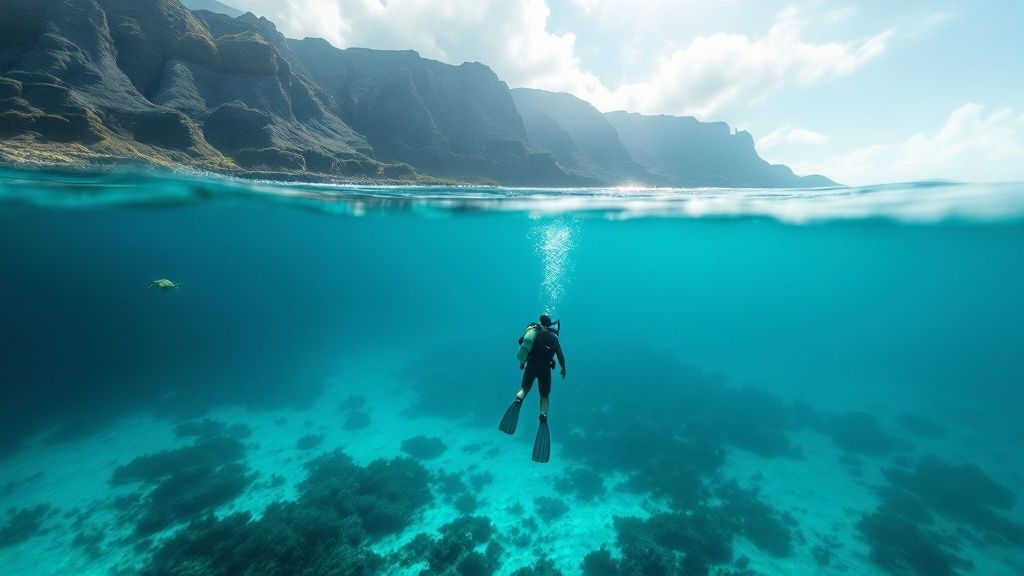
The Big Island’s incredible underwater world is a direct gift from its volcanic past. For millennia, lava flowed into the ocean, cooling to form a complex and stunning sub-aquatic landscape. What that means for divers is a chance to explore intricate lava tubes, swim through massive archways, and navigate towering pinnacles that rise from the deep.
This dramatic geology created the perfect stage for a thriving marine ecosystem. The waters around the Big Island are home to over 1,100 recorded species, including 129 species found nowhere else on Earth. Most of the action is concentrated along the protected west coast, where you can find caves with sleeping whitetip sharks and arches patrolled by eagle rays. You can dive deeper into the island's rich marine life on ScubaDiving.com.
The Kona Coast Advantage
There’s a good reason the western, or Kona, coast is the undisputed heart of the Big Island’s dive scene. It’s tucked into the "rain shadow" of the massive Mauna Loa and Hualālai volcanoes. These giants block the gusty trade winds, creating exceptionally calm and predictable seas nearly all year long.
This natural shield gives us some of the best water clarity in all of Hawaii, with visibility often soaring past 100 feet. Add in the consistently warm water, which stays a comfortable 75-80°F (24-27°C), and you have perfect conditions for diving any time you want to visit. It’s an ideal setup for both beginners getting their fins wet for the first time and seasoned pros looking to explore challenging sites.
Think of Kona's protected waters as a massive, natural aquarium. The lack of strong currents and river runoff means delicate coral reefs can thrive, which in turn attracts an incredible density of marine life—from tiny, colorful nudibranchs to majestic manta rays.
This unique combination makes every single dive a new adventure. One day you might be watching green sea turtles get spruced up at a "cleaning station," and the next you could be on the hunt for a perfectly camouflaged frogfish. Whether you're into underwater photography, marine biology, or just the pure thrill of discovery, the Kona coast delivers an endless variety of experiences.
Ready to see this underwater paradise for yourself? The expert crew at Kona Honu Divers offers a whole range of diving tours designed to show you the absolute best of the Big Island. We make sure your adventure is safe, unforgettable, and completely breathtaking.
The Can’t-Miss Dive Sites on The Kona Coast
Ask any diver about the Big Island, and they'll point you straight to the Kona Coast. This is the heart and soul of diving in Hawaii, a place where the underwater world is shaped by raw volcanic power.
Picture this: you’re descending through crystal-clear water, gliding over intricate lava tubes, through massive archways, and into ancient craters. This dramatic geology creates the perfect home for an incredible variety of marine life. Every single dive here feels like a brand-new adventure.
Kona’s dive sites are anything but one-size-fits-all. Some are known for their spectacular underwater architecture, while others are famous for the unique critters that call them home. So, let’s gear up and explore some of the legendary spots that put Kona on every diver's bucket list.
Turtle Pinnacle
If you’re hoping to see the beloved Hawaiian Green Sea Turtle (honu), this is your spot. Turtle Pinnacle gets its name for a reason—it’s a natural "cleaning station."
An underwater pinnacle rises from the seafloor to about 35 feet from the surface, and turtles line up here to let surgeonfish nibble away algae and parasites. It's an incredible sight. You can often see several turtles just hanging out, waiting their turn, making for some truly unforgettable photos.
With an average depth of 40-60 feet and consistently great visibility, it’s a fantastic and rewarding dive for people of all experience levels.
Golden Arches
Imagine swimming through a massive, sun-drenched archway carved from an ancient lava flow. That’s exactly what you get at Golden Arches. This spot is famous for its jaw-dropping underwater architecture, especially the main arch, which is covered in brilliant gold and orange corals.
When the light streams through the top, it creates this incredible, cathedral-like atmosphere. It’s a photographer's dream. The average depth hovers around 50 feet, perfect for wide-angle shots. Don't forget to look down—you’ll often spot whitetip reef sharks relaxing on the sandy floor below.
Au Au Crater
Diving Au Au Crater feels like you're exploring another planet. You’re descending into a submerged volcanic crater, a huge, dramatic bowl that drops to over 200 feet. Don't worry, most of the action is along the rim at more manageable depths of 40 to 80 feet.
This unique formation provides shelter for some of the ocean's masters of disguise, like the elusive frogfish hiding in plain sight among the sponges. The steep walls are also home to lobsters, crabs, and colorful nudibranchs. The combination of clear water and otherworldly terrain makes it a solid favorite among seasoned divers.
Kealakekua Bay
Kealakekua Bay isn't just a dive site; it's a historically significant place and a protected Marine Life Conservation District. What does that mean for divers? It’s a pristine underwater paradise.
The bay is known for its calm, exceptionally clear water, with visibility often soaring past 100 feet. Because fishing is restricted, the coral reefs are thriving and packed with life. You'll be surrounded by massive schools of yellow tangs and parrotfish. It's one of those spots that really shows you what a healthy reef should look like.
Kona's Premier Dive Sites at a Glance
To give you a quick snapshot of what to expect, we've put together a table highlighting the best of the best along the Kona Coast. Each site offers something a little different, from unique geological formations to specific marine life encounters.
| Dive Site | Max Depth | Key Features | Common Marine Life |
|---|---|---|---|
| Turtle Pinnacle | 60 feet | Underwater pinnacle, turtle cleaning station | Hawaiian Green Sea Turtles, surgeonfish, eels |
| Golden Arches | 50 feet | Large lava arch with golden coral | Butterflyfish, whitetip reef sharks |
| Au Au Crater | 200+ feet | Submerged volcanic crater, dramatic walls | Frogfish, lobsters, nudibranchs, diverse fish |
| Kealakekua Bay | 100+ feet | Protected marine sanctuary, exceptional clarity | Spinner dolphins, vibrant coral, tropical fish schools |
| Suck ‘Em Up | 50 feet | Exhilarating cavern dive with a lava tube | Hawaiian turkeyfish, shrimp, occasional reef sharks |
This table is just a starting point. The real magic happens when you get in the water and see these incredible places for yourself.
Suck ‘Em Up Lava Tube
The name says it all. Suck ‘Em Up is a thrilling cavern dive where you get to swim through a massive lava tube. As the ocean surge moves, you can feel a gentle push and pull of water—that's where it gets its name!
You enter through a big, open archway and swim into a cavern where light filters down from an opening above called the "skylight." It’s a great introduction to cavern diving and a chance to see critters that prefer the shade, like Hawaiian turkeyfish and shrimp.
Kona’s underwater world is truly special, but the spirit of diving often leads us to explore other incredible ecosystems. If you're ever curious about what lies across the Pacific, you can check out these affordable snorkeling options in the Great Barrier Reef for inspiration. To get all the specifics on planning your Kona adventure, check out our complete guide to diving on the Big Island.
Experiencing The World-Famous Manta Ray Night Dive
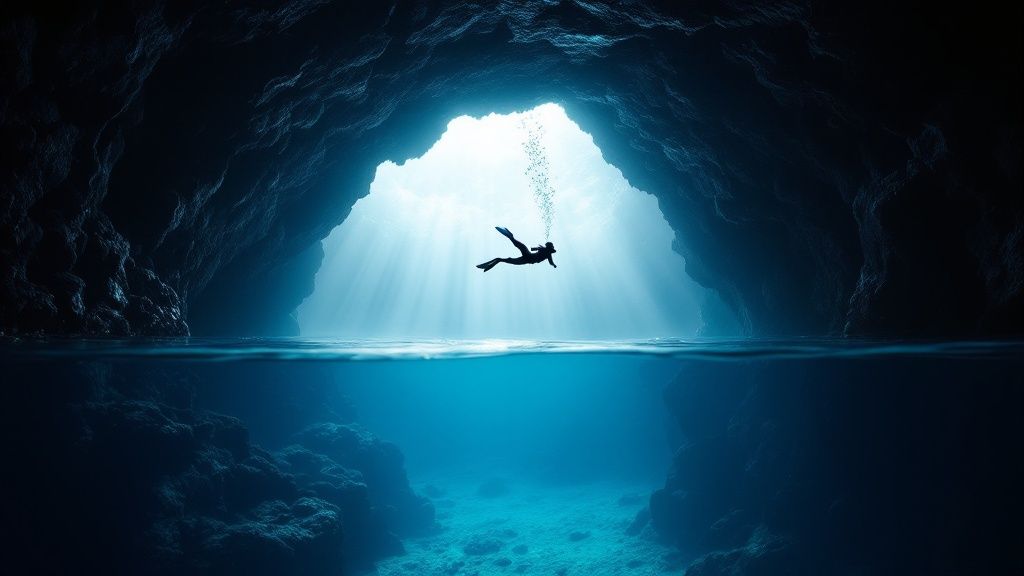
This isn't just another entry in your dive log. This is a front-row seat to one of the most hypnotic ballets on the entire planet. The Kona Manta Ray Night Dive is consistently voted one of the best dives in the world, and once you do it, you'll understand why. It’s more than just watching marine life; it’s an almost spiritual connection with some of the ocean's most graceful giants.
The whole spectacle is a brilliant bit of teamwork between nature and human ingenuity. The idea is wonderfully simple: powerful lights are set up on the ocean floor, lighting up the water like an underwater stage. This light attracts swarms of plankton—the manta rays' favorite meal—creating a five-star buffet they simply can't resist.
For a diver, the whole thing feels surreal. After a beautiful sunset boat ride, you’ll descend into the deep blue twilight and settle into a sandy spot often called the "campfire." You’ll kneel or lie flat, point your dive light toward the surface, and wait.
The Underwater Ballet Begins
What happens next is pure magic. First, you see a shadow gliding out of the darkness. Then another. And another. These gentle giants, some with wingspans stretching up to 14 feet, swoop effortlessly through the beams of light. They perform graceful barrel rolls and somersaults, their cavernous mouths wide open, filtering the plankton-rich water just inches above your head.
The only sound is your own breathing as these massive, silent creatures dance around you. It's humbling. It’s a moment that connects you directly to the raw, untamed beauty of the ocean in a way few things can. The feeling is both thrilling and profoundly peaceful, a rare combination that sticks with you long after you surface.
People always ask, "Is it safe?" The answer is a resounding yes. Manta rays are gentle giants. Unlike their stingray cousins, they have no teeth, no barbs, and no stingers. They are only there for the plankton and are masters at navigating around divers without ever making contact.
Prime spots for this dive, like Keauhou Bay (aka Manta Village), have become such reliable feeding grounds that the chance of seeing them is incredibly high—often over 90%. The mantas have learned over decades to associate the lights with an easy meal. If you're getting ready for this incredible experience, this Ultimate Kona Manta Ray Night Snorkel Adventure Guide offers some fantastic tips.
Choosing The Right Guide For a Magical Night
To really get the most out of a world-class dive, you need a world-class operator. Kona Honu Divers has truly perfected the Manta Ray Night Dive. They focus on small groups, prioritize diver safety, and operate with a deep respect for the mantas. Their experienced guides make sure you’re in the best possible spot to see the show, all while following strict guidelines to protect these magnificent animals.
Their team doesn’t just give you an unforgettable dive; they also teach you about the importance of manta conservation. This is more than a tourist attraction; it's a chance to connect with and learn about the marine world. You can find out more by checking out our information on the manta ray dive tours page.
Advanced Diving Adventures: The Blackwater Dive
Sure, the Kona coast has incredible reef dives, but for some of us, the real magic happens when we push past the familiar. If you're a certified diver looking for something truly extraordinary, the Big Island is home to some of the most unique advanced diving on the planet. I’m not talking about your standard reef tour; I mean a trip into the deeper, wilder side of the ocean.
Once you leave the vibrant reefs behind, you’ll discover a world of dramatic, deep lava tubes and remote underwater pinnacles that seem to shoot up from the abyss. Exploring these spots takes skill and a good dose of confidence, but the reward is seeing seascapes that very few divers ever will. For those with the right training, shops like Kona Honu Divers run special premium advanced dive trips designed to get you to these incredible, deeper wonders.
But if you want the ultimate thrill? Nothing, and I mean nothing, compares to the Kona Blackwater Dive.
A Journey Into the Abyss
Picture this: you’re floating in absolute darkness, miles from shore, hanging suspended over thousands of feet of pitch-black water. It sounds like a dream, but it's the very real, surreal experience of the Kona Blackwater Dive. Honestly, it feels less like scuba diving and more like a spacewalk.
For safety, you’re tethered to the boat, becoming a silent observer of the largest animal migration on Earth. Every single night, countless bizarre, and often glowing, creatures rise from the crushing pressure of the deep to feed near the surface. You're not just diving; you're drifting right into the middle of a hidden, alien world as it floats by.
Let's be clear, this dive isn't for everyone. It demands special gear and techniques, turning you into a human satellite drifting in the vast Pacific. Your whole focus shifts from the seafloor to the water column itself, where every little flicker of light reveals some strange, new life form you've never seen before.
What You Might See in the Dark
The creatures you'll meet on a blackwater dive look like they came straight out of a sci-fi movie. Many have only ever been seen by deep-sea biologists, and now, you.
- Pelagic Nudibranchs: Think free-swimming, gelatinous sea slugs that drift past like otherworldly jewels.
- Larval Fish: You’ll spot the baby versions of familiar reef fish, but they look completely different from their adult selves.
- Bioluminescent Jellies: These are the real showstoppers—pulsing, glowing creatures that put on their own light show in the dark.
- Cephalopods: From tiny squid to the incredibly rare blanket octopus, these masters of disguise are just mesmerizing to watch.
The experience is profoundly humbling. You are suspended in the planet’s largest living space, watching life forms that have evolved in complete darkness. It redefines your understanding of what is possible in the ocean.
This dive is a true adventure for the certified thrill-seeker, blending advanced technical skill with the pure, unadulterated wonder of discovery. To take this one-of-a-kind plunge, you can book a dedicated Blackwater Dive tour with the expert guides at Kona Honu Divers. They've absolutely perfected the safety and logistics of this incredible adventure.
How to Plan Your Big Island Dive Trip
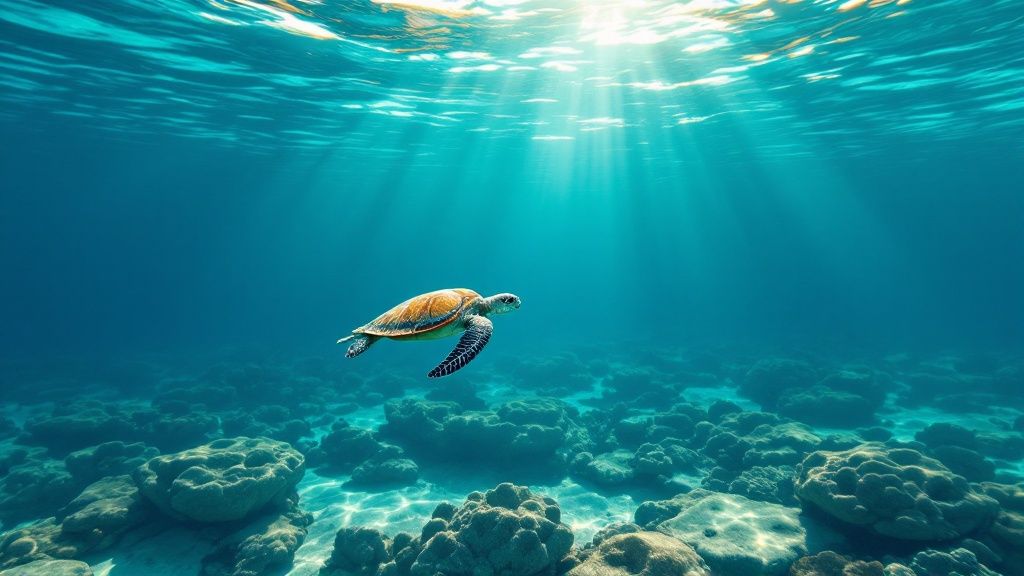
With its dramatic lava tubes and explosions of marine life, the Big Island is a diver's dream. But turning that dream trip into a reality comes down to a bit of smart planning. Getting the details dialed in before you go—from picking the right season to packing the right gear—is what makes an adventure completely seamless and unforgettable.
The great news? There really is no "bad" time for scuba diving Big Island Hawaii. The Kona coast is blessed with fantastic conditions all year long. Water temperatures are a comfortable 75 to 80°F (24 to 27°C), which gives you incredible flexibility to plan a trip whenever it works for you.
Still, different times of the year offer their own unique magic.
Big Island Diving Season and Conditions
To help you decide on the perfect time for your trip, here’s a quick look at what you can expect throughout the year.
| Season | Water Temp (Avg) | Visibility (Avg) | Marine Life Highlights |
|---|---|---|---|
| Summer (May-Oct) | 78-80°F (26-27°C) | 80-100+ ft | Glassy seas, great for manta & blackwater dives. |
| Winter (Nov-Apr) | 75-77°F (24-25°C) | 60-80 ft | Humpback whale songs underwater, slightly cooler water. |
This table is just a starting point, but it shows how the experience shifts. Summer often brings calmer, clearer waters, while winter delivers the awe-inspiring soundtrack of migrating humpback whales.
Finding the Right Dive Operator
The dive operator you choose will absolutely shape your entire underwater experience. On the Big Island, the best charters focus on small groups, which makes for a safer, more personal, and ultimately more rewarding adventure. It’s a philosophy we live by at Kona Honu Divers, because we know an uncrowded boat leads to a better dive.
Think about it: a smaller group means more personalized attention from your guide, less kicking up sand, and a much better chance of spotting shyer creatures. When you're looking for a charter, keep an eye out for operators who make a point of their small group sizes. The top-tier outfits might only take six divers, ensuring you're a person, not just a number on a roster.
Our whole focus at Kona Honu Divers is on creating that premium, personal adventure. With our experienced crew, we're all about safety, fun, and showing you the absolute best of what Kona has to offer.
What to Pack in Your Dive Bag
Figuring out what to bring versus what to rent can make packing so much easier. While most shops have excellent rental equipment, nothing beats the comfort and fit of your own personal gear.
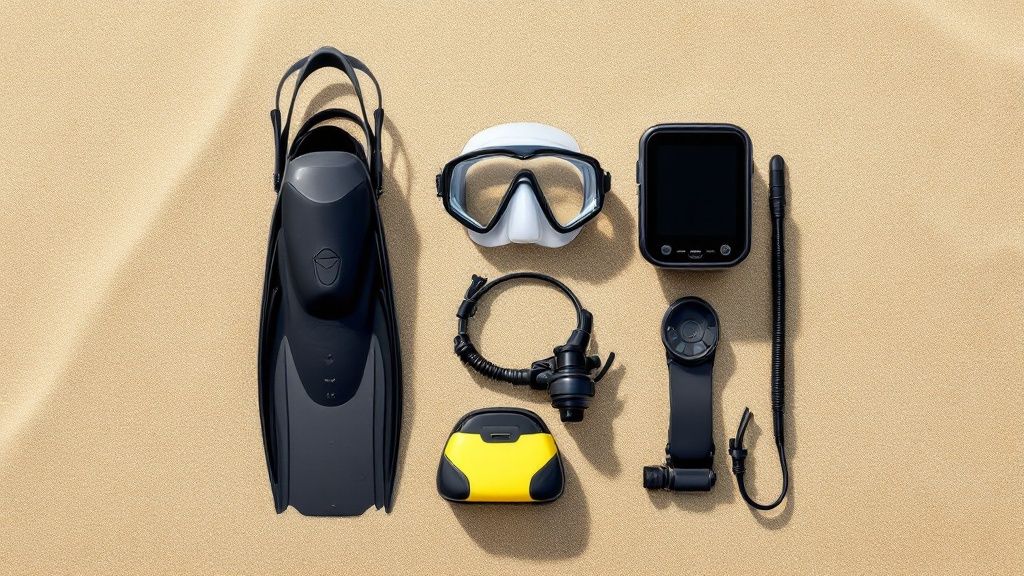
Pro Tip: Always pack your mask, dive computer, and any prescription lenses in your carry-on. These items are the most critical and personal. If your checked bag gets lost or delayed, you won't have to miss a single dive.
Here’s a quick checklist to get you started:
- Mask and Snorkel: A mask that fits your face perfectly is non-negotiable. If you have one you trust, bring it.
- Dive Computer: An essential piece of safety gear. If you're a regular diver, you should have your own.
- Wetsuit: For Hawaii's warm waters, a 3mm wetsuit is usually perfect. If you tend to get chilly, you might consider a 5mm for the winter months.
- Reef-Safe Sunscreen: This is a big one. Sunscreens with chemicals like oxybenzone are incredibly harmful to our coral reefs. Please help us protect this fragile ecosystem by only using mineral-based, reef-safe products.
- Certification Card & Logbook: Don’t leave home without them! You can often use digital versions, but having a physical backup is always a good idea.
For a more in-depth look at what to pack, check out our guide on the gear you will need for your Kona diving adventure. A little prep work now means you can just relax and soak in the incredible underwater world of the Big Island.
Your Kona Diving Adventure Awaits
We've covered a lot, from the vibrant coral gardens of Kealakekua Bay to the almost alien world of a Blackwater Dive. The Big Island’s dramatic lava tubes, teeming reefs, and one-of-a-kind encounters are more than just items on a diver's bucket list—they're experiences that genuinely stick with you.
Floating through clouds of manta rays as they feed in the dark is something you'll talk about for the rest of your life. So is exploring the ancient, submerged volcanic landscapes that make Kona's underwater topography so completely unique. It’s a place that inspires a real connection to the ocean.
Now, it’s your turn to jump in. The next step is to get your trip on the calendar with guides who know these waters inside and out. The team at Kona Honu Divers is ready to show you the best of it, with safe, unforgettable, and personalized Kona diving tours that bring you right to the island’s most incredible spots.
Your journey into Hawaii's underwater world starts now. Let's get you in the water.
Your Kona Diving Questions, Answered
It's totally normal to have questions when you're planning a dive trip to a new place. In fact, it’s a great sign! Thinking ahead is what makes for a smooth, amazing adventure.
Here are some of the most common things people ask us about diving on the Big Island. Getting these sorted out now means you can just relax and enjoy the incredible underwater world waiting for you.
Do I Need to Be Certified to Scuba Dive Here?
For almost all of the boat dives heading out to Kona's incredible reefs, you'll need at least an Open Water certification. But if you're not certified yet, don't worry—you absolutely don't have to miss out on the fun!
You can jump right in with a Discover Scuba Diving (DSD) experience. Great local shops, like Kona Honu Divers, run these introductory courses. A seasoned instructor will walk you through the basics in a calm, safe spot before taking you on a real, shallow dive under their direct supervision. It’s the perfect way to see if diving is for you.
What’s the Best Time of Year to Dive in Kona?
Honestly, there's no bad time! The diving here is fantastic all year long. Water temperatures stay in that perfect "just-right" zone, hovering between 75-80°F (24-27°C) no matter the season.
That said, each season has its own unique charm:
- Summer (May-October): This is when the ocean is at its calmest. You can expect glassy seas and super smooth boat rides.
- Winter (November-April): You might get some bigger ocean swells, but Kona's coastline is so well-protected that the dive sites are almost always accessible. The real magic of winter is hearing humpback whales singing during your dive—it's an experience that will give you chills.
How Likely Am I to Actually See Manta Rays on the Night Dive?
The chances are incredibly high. The world-famous Manta Ray Night Dive has a success rate that consistently tops 90%. Think about that—it's one of the most reliable big-animal encounters on the planet.
These sites are established feeding zones where operators have been using lights to attract plankton for years. The mantas know exactly where to show up for an easy meal. While they are wild animals and nothing is ever 100% guaranteed, your odds here are about as good as they get.
How Can I Be a Good, Eco-Friendly Diver in Hawaii?
This is such an important question. Protecting Hawaii's beautiful and fragile marine life is a team effort, and every single diver has a part to play.
The most important thing you can do for the reef is to master your buoyancy. When you can hover effortlessly and keep your fins from kicking up sand or hitting the coral, you're being a true ocean guardian. A single accidental kick can destroy coral that took decades to grow.
Beyond that, always give marine life its space—look, but don't touch or chase. And please, only use reef-safe sunscreen. The chemicals in regular sunscreens, like oxybenzone, are devastating to our coral reefs. Making these simple choices helps ensure this underwater paradise is here for generations to come.
Ready to dive in and see it for yourself? The team at Kona Honu Divers is passionate about guiding divers on safe, unforgettable adventures. Check out all our amazing diving tours in Kona and let's get you in the water