
Picture this: you descend into brilliant blue water, sunlight filtering down through the surface. Below you, ancient lava tubes form dramatic underwater canyons, and vibrant coral reefs pulse with life you can't find anywhere else on the planet. That's the heart of scuba diving on the Big Island of Hawaii—an experience shaped by unique geology and incredible biodiversity. The Kona coast, in particular, is the soul of Hawaiian diving, known for its glassy, calm seas and unforgettable underwater encounters.
Why the Big Island Is a World-Class Diving Destination
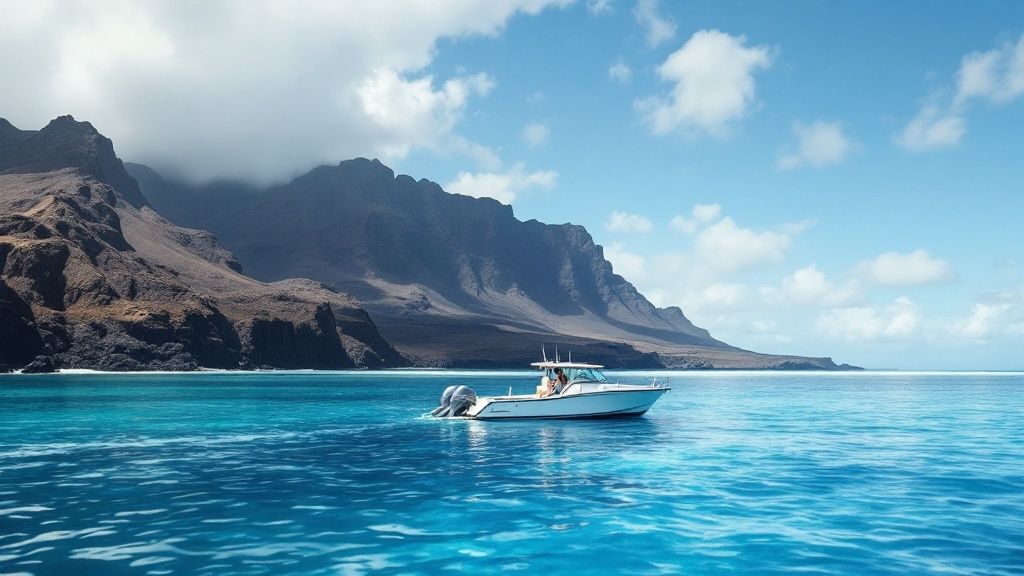
The Big Island isn't just another pretty spot to go diving; it's a living, breathing geological marvel that continues far beneath the waves. Its volcanic origins have sculpted an underwater world that is truly one-of-a-kind. Unlike many other tropical destinations, the Kona coast is sheltered from the winds by massive volcanoes, which creates consistently calm and clear conditions—perfect for divers of all skill levels.
This unique geography fosters an extraordinary diving environment. The waters here are some of the most diverse in the world, a direct result of the island's volcanic birth and its remote spot in the middle of the Pacific. You get to explore intricate underwater lava tubes and bizarre rock formations that create a topography you just won't see anywhere else.
Plus, the water is always inviting. With average temperatures hovering between a comfortable 75°F and 80°F (24°C to 27°C) year-round, the conditions are ideal for an amazing variety of marine life. For a deeper dive into the science, check out the expert insights on PADI's guide to Hawaiian diving.
To quickly see what makes this place a diver's dream, here's a snapshot of the key highlights.
Big Island Diving At a Glance
| Feature | Description |
|---|---|
| Unique Topography | Explore underwater lava tubes, arches, and volcanic formations found nowhere else. |
| Calm, Clear Waters | The Kona coast is shielded by volcanoes, ensuring excellent visibility and calm seas most of the year. |
| Incredible Marine Life | Home to a high percentage of endemic species, plus famous megafauna like manta rays and sea turtles. |
| Year-Round Diving | Consistently warm water temperatures mean any time is a great time to jump in. |
Ultimately, the combination of perfect conditions and a truly unique underwater landscape is what sets the Big Island apart from other world-class destinations.
What Makes Kona Diving So Special?
So, what takes diving here from simply "great" to "unforgettable"? It's the sheer variety and quality of the experiences. There's an adventure for everyone, from easy shore dives perfect for a relaxed afternoon to thrilling boat trips that take you out to remote, pristine sites.
The marine life is the real headliner, though. Thanks to protected marine sanctuaries and a deep-rooted respect for the ocean, the local ecosystems are thriving. On any given dive, you might see:
- Endemic Species: A huge number of Hawaii’s marine creatures are found only in these waters. It's a chance to see animals you literally can't find anywhere else.
- Mega Fauna Encounters: The Big Island is famous for its large marine animals. The legendary Manta Ray Night Dive is a true bucket-list experience, and it's common to spot dolphins, turtles, and even humpback whales during the winter.
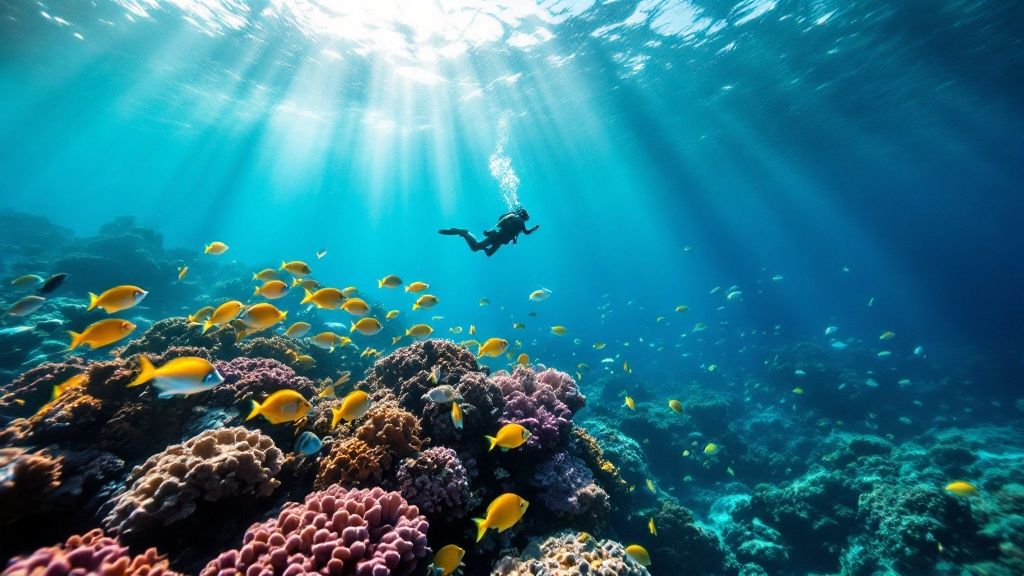
- Pristine Reefs: Healthy coral gardens burst with color, providing a home for countless species of fish, eels, and invertebrates.
Here at Kona Honu Divers, we offer a wide range of diving tours designed to show you the very best of what the Big Island has to offer. Whether you're a new diver excited to see your first reef or a seasoned pro looking for a challenge, the underwater adventures waiting here are second to none.
Exploring the Top Dive Sites on the Kona Coast
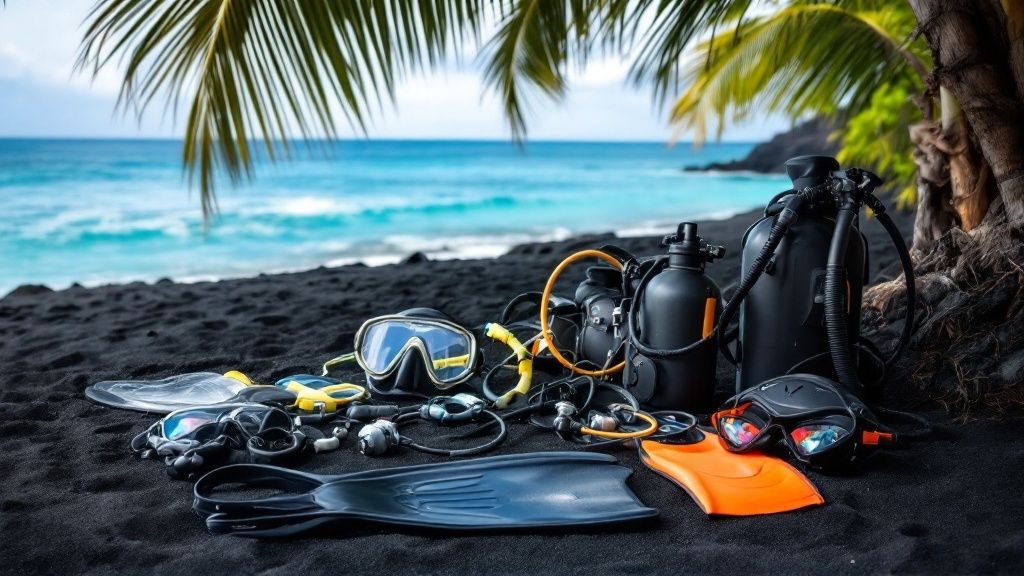
The Kona coast is a diver's dream, a treasure map of world-class sites that each offer a unique glimpse into the Big Island's underwater world. You can go from serene bays packed with life to dramatic, volcanic structures—there’s truly an adventure for everyone. Let’s dive into a few of the must-see spots that make scuba diving Big Island Hawaii an experience you'll never forget.
Kealakekua Bay: A Protected Paradise
Kealakekua Bay isn't just a dive site; it's a living piece of Hawaiian history and one of the most protected marine sanctuaries in the state. This is where Captain James Cook first landed, marked by an iconic white monument you can see from the boat.
Below the surface, the bay is a pristine paradise. Because it’s a Marine Life Conservation District, all fishing is prohibited, allowing the coral reefs to absolutely flourish. The bay's unique geography shields it from the wind, often resulting in crystal-clear visibility that can easily exceed 100 feet. The coral gardens slope gently from the shallows down past 100 feet, making it an incredible spot for divers of all levels. You can count on seeing spinner dolphins, green sea turtles, and more reef fish than you can imagine.
Crescent Beach: An Architectural Wonder
If you love exploring dramatic underwater landscapes, you have to check out Crescent Beach. This site is famous for its massive lava arches and swim-throughs, which feel like you're exploring an ancient, submerged city built by nature.
As you navigate through these incredible volcanic formations, keep a sharp eye out for green sea turtles—they love to hang out here. With an average depth of 30 to 60 feet, it’s a perfect and accessible dive for most certified divers. The unique topography makes for some jaw-dropping photo ops and gives you a real sense of adventure.
The sheer variety of dive sites along the Kona coast is what sets it apart. One day you're gliding over delicate coral gardens, and the next you're swimming through a majestic lava arch. It’s a constant journey of discovery.
Advanced Diving Opportunities
For those with an advanced certification looking for a bigger challenge, the Big Island delivers. We have deeper, more complex sites featuring intricate lava tube systems, steep drop-offs, and the chance to see different marine life that hangs out in deeper waters, like eagle rays and other large pelagics.
These dives demand excellent buoyancy control and a solid handle on deep diving procedures. But the reward is getting to see some of Hawaii’s most untouched underwater environments.
- Premium Advanced Trips: We run special charters designed specifically for divers with an Advanced Open Water certification or higher.
- Small Group Sizes: We keep these groups small to ensure everyone gets personalized attention and stays safe.
- Expert Guidance: Our most experienced divemasters lead these trips, putting your safety first while guiding you through these thrilling spots.
If you’re ready to see the deeper wonders of the Kona coast, you can learn more about our advanced dive tour options and find the perfect adventure for your skill level.
Getting to know the different dive sites is the key to planning the perfect trip. For a bigger picture of what's out there, take a look at our complete guide on diving the Big Island.
Experience the Legendary Manta Ray Night Dive
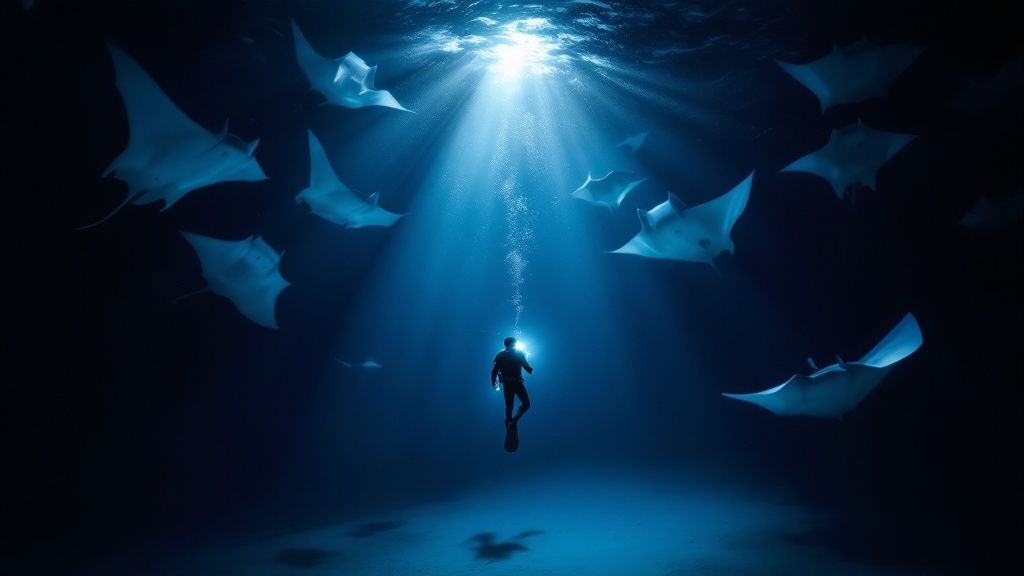
Imagine this: you're kneeling on the sandy bottom of the Pacific, the world around you turned to inky black. Then, out of the darkness, enormous, ghost-like figures glide into view. This is the world-famous Manta Ray Night Dive, and it's without a doubt the crown jewel of scuba diving Big Island Hawaii.
It’s an underwater ballet like no other. Giant manta rays, with wingspans stretching up to an incredible 16 feet, perform graceful somersaults and barrel rolls just inches from your face. It truly has to be seen to be believed.
So, how does this nightly spectacle happen? The concept is actually quite simple. We set up powerful, stationary lights on the ocean floor that shine up toward the surface. This massive column of light acts like a bug zapper for plankton, drawing them in from all around. And plankton, of course, is a manta ray’s favorite meal.
You and your fellow divers become the front-row audience for this feeding frenzy. As the plankton thickens, the mantas arrive, swooping in with their cavernous mouths wide open to feast. It's a natural phenomenon, helped along just enough to give us an intimate and unforgettable view.
What to Expect During the Dive
Your adventure kicks off just before sunset with a short boat ride to one of Kona's premier manta viewing sites, like Manta Village or Manta Heaven. Before you hit the water, your divemaster will walk you through everything you need to know, focusing on how to have a safe and respectful encounter.
Once you descend, you’ll find your spot on the seafloor with the group and point your dive light straight up. From there, your only job is to relax and watch the show unfold above.
- Proximity: These gentle giants get unbelievably close. Don’t be surprised if one glides just inches over your head while chasing plankton in your light beam.
- Duration: You’ll typically spend about 30-45 minutes underwater, completely mesmerized by the silent, graceful performance.
- Safety: The whole dive happens in a controlled, shallow environment, usually around 30-40 feet deep, making it perfectly accessible for most certified divers.
It’s impossible to describe the feeling of watching a massive fish the shape of a stealth bomber coming into vision. It’s akin to finding a winning lottery ticket—a truly awesome experience.
A Safe and Respectful Encounter
People often ask if manta rays are dangerous. While they are related to stingrays, they are completely harmless to people—they don't have a stinger or a barb. Their only interest is the plankton.
That said, it’s absolutely critical that we interact with them responsibly. The number one rule is to never touch a manta ray. They have a delicate mucous coating on their skin that protects them from infection. A simple touch from a human hand can damage this layer and make them sick.
Choosing a responsible operator who prioritizes the well-being of the mantas is essential. At Kona Honu Divers, we are deeply committed to sustainable practices and follow all local guidelines for safe manta interactions. And if you're not a certified diver, you don't have to miss out! You can witness the same amazing spectacle from the surface. We break down the differences in our guide to the Big Island manta ray night snorkel.
Ready to witness this once-in-a-lifetime underwater show? Our expert team at Kona Honu Divers will guide you through this incredible adventure safely and respectfully.
If you're ready for this magical experience, you can book your spot on the 2-Tank Manta Dive tour and prepare for an evening you will never forget.
How to Choose the Right Dive Operator in Kona
When you're planning a scuba diving Big Island Hawaii trip, one of the biggest decisions you'll make has nothing to do with what you'll see underwater. It’s about who you choose to take you there.
The right dive operator can make or break your entire vacation. A great one doesn't just drive the boat; they are your guides, your safety net, and your key to unlocking the secrets of the local reefs. They turn a good dive into an unforgettable one, while a bad one… well, let's not go there.
This isn't about finding the cheapest boat ride. It’s about finding a crew that puts safety first, meticulously maintains their gear, and knows Kona’s waters like the back of their hand. A professional guide can point out a camouflaged octopus you’d swim right past, making you feel confident and cared for so you can just relax and enjoy the magic.
Why Small Group Sizes Matter
Here’s a little insider tip: always ask about group size. Some outfits try to pack as many divers onto a boat as possible, but that’s a huge red flag. The best operators know that a smaller group makes for a safer, more personal, and all-around better dive for everyone.
Think about it this way: would you rather be on a crowded city bus or in a private car with a personal tour guide? The difference is night and day, and it’s the same underwater.
With a smaller group, you get:
- More Eyes on You: The divemaster can keep a close watch on every single diver, catching potential issues before they become real problems. It's all about proactive safety.
- Personalized Attention: You’re not just another face in the crowd. Your guide can offer pointers, help fine-tune your buoyancy, and show you things tailored to your interests.
- A Healthier Reef: Fewer divers mean less accidental bumping into fragile coral and less stress on the marine life. It’s just better for the ocean.
- A More Relaxing Vibe: No crowded boats, no bumping into fins underwater. It’s just you, your small group, and the serene beauty of the reef.
High-quality operators often keep their groups to six or fewer divers per guide and a total of just 12 divers on the boat. This ensures every single person gets the attention they deserve. It's especially crucial for big-ticket dives like the Manta Ray Night Dive, where a knowledgeable guide and a well-run operation are everything.
Key Questions to Ask Any Dive Shop
Before you hand over your credit card, do a little homework. Any dive shop worth its salt will be happy to answer your questions.
Here are a few things you should always ask:
- What's your safety record and what are your emergency plans? This should be their top priority, and they should be able to explain their procedures clearly.
- How often do you service your rental gear? You're trusting your life to this equipment. Make sure it's in top-notch condition.
- What are your divemasters' certifications and local experience? There's no substitute for a guide who has been diving these specific sites for years.
- What’s your maximum diver-to-guide ratio? As we covered, smaller is almost always better!
A great dive operator doesn't just sell you a ticket to a boat ride. They act as your trusted guides and stewards of the ocean, committed to making your dive as safe and spectacular as possible.
Taking a few minutes to ask these questions ensures you end up with a team that shares your commitment to safety and fun. For a more in-depth guide, check out our article on how to choose a Kona dive shop.
Kona Honu Divers: A Commitment to Excellence
At Kona Honu Divers, we've built our entire business around these principles. We are completely dedicated to small-group charters that put your safety, comfort, and the health of our ocean first.
Our dive boats were custom-built for Kona’s waters, and our crew members are some of the most experienced and passionate divers you’ll ever meet. We believe a dive trip should be an escape, not a chore. That’s why we do all the heavy lifting for you—from setting up your gear to swapping your tanks between dives. All you have to do is show up and get ready to be amazed.
Ready to experience the difference for yourself? Take a look at our range of Kona diving tours and let's get you in the water.
Planning Your Big Island Dive Adventure
Alright, you've seen what makes the Big Island a world-class diving destination. Now, let’s get into the nitty-gritty of making your trip happen. A little bit of smart planning is what separates a good dive trip from an absolutely unforgettable one. We’re talking about everything from picking the perfect season to knowing exactly what gear to pack.
First up, when should you come? The simple answer is: anytime! The Big Island offers fantastic diving year-round, but what you experience underwater changes slightly with the seasons. If you love calm, glassy seas and water that feels like a bathtub, aim for the summer months between May and October. The water temperature often peaks at a balmy 80°F (27°C), making for some truly blissful diving.
But don't count out the winter. From December to March, the Big Island has a special kind of magic. The water might be a few degrees cooler, but this is the prime season for humpback whales. There is honestly nothing like being underwater and hearing the beautiful, haunting songs of these giants echoing all around you. It's an experience that will stay with you forever.
What to Expect Throughout the Year
To help you nail down the best time for your trip, here’s a quick guide to what the conditions look like throughout the year.
While the "best" time is subjective, this table gives you a solid idea of what to expect, whether you're chasing the warmest water or hoping to hear those incredible whale songs.
Big Island Diving Seasons and Conditions
| Season | Water Temperature (Avg) | Visibility | Marine Life Highlights |
|---|---|---|---|
| Winter (Dec – Mar) | 75-77°F (24-25°C) | Good to excellent | Humpback whale songs, manta rays, turtles |
| Spring (Apr – Jun) | 76-78°F (24-26°C) | Excellent | Calm seas, clear water, abundant reef fish |
| Summer (Jul – Sep) | 78-80°F (26-27°C) | Excellent | Warmest water, calmest conditions, pilot whales |
| Fall (Oct – Nov) | 77-79°F (25-26°C) | Good to excellent | Fewer crowds, great manta ray activity |
Ultimately, no matter when you visit, you're in for a treat. The Kona coast is famously sheltered, providing great diving conditions nearly every day of the year.
Certification and Gear Essentials
Your certification level determines which underwater doors you can open here. With a basic Open Water certification, you'll have access to the vast majority of Kona's incredible reef sites. We're talking about stunning coral gardens teeming with turtles and colorful fish, typically in the 30 to 60-foot range—perfect for any diver.
If you're looking to push your boundaries a bit, an Advanced Open Water certification is your ticket to deeper sites and more specialized dives. This certification unlocks some of the Big Island’s most unique adventures, including the world-famous Kona Blackwater Dive. It's a surreal journey into the deep, dark open ocean at night where you’ll meet bizarre, bioluminescent creatures you'd never see otherwise. If you're an advanced diver ready for something completely different, check out the Blackwater Dive tour.
Now, let's talk gear. Should you bring your own or rent? Many divers swear by their own mask, fins, and dive computer—and for good reason. Nothing beats the comfort of gear that fits you perfectly. That said, renting is a super convenient option that saves you from lugging heavy bags through the airport. Reputable dive shops keep their rental gear in top-notch condition, so you can dive with total confidence.
One piece of gear worth thinking about is your wetsuit. Even in warm Hawaiian waters, a 3mm or 5mm wetsuit is a good idea. It'll keep you comfortable on multiple dives and is especially nice on night dives when your body tends to cool down faster.
Crucial Safety Protocols for Hawaii Diving
Your safety is always priority number one. While Kona’s waters are famously calm and clear, they are still the open ocean, so a healthy respect for Mother Nature is key.
- Listen to Your Divemaster: These guys and gals are in the water every single day. They know the currents, the best entry points, and any potential hazards better than anyone. Trust their briefing.
- Practice Reef-Safe Buoyancy: Hawaii's coral is a living, breathing, and fragile treasure. Keep your buoyancy dialed in to avoid accidentally bumping or breaking these delicate structures.
- Stay Hydrated and Protected: The Hawaiian sun is no joke! Make sure you drink plenty of water and always use reef-safe sunscreen. It protects your skin and our precious marine life.
- Know Your Limits: Never push yourself beyond your training or comfort level. With so many amazing sites to choose from, there’s no reason to take unnecessary risks. Pick the dives that are right for you.
With just a little prep, you can ensure your Big Island dive adventure is not only amazing but also safe and responsible. That way, all you have to worry about is soaking in the incredible underwater world.
Frequently Asked Questions About Diving the Big Island
Even the most seasoned traveler usually has a few lingering questions before a big dive trip. We get it. You want to make sure everything is perfect for your scuba diving Big Island Hawaii adventure. So, let’s clear up some of the most common things we get asked about diving here in Kona.
What Is the Best Time of Year to Dive?
Honestly, there’s no bad time to dive in Kona—we have incredible conditions 365 days a year. The "best" time really comes down to personal preference.
If you love warm, glassy-calm water, aim for the summer months, roughly May to October. The seas are typically flat, and the water temperature often climbs to a balmy 80°F (27°C). It’s pure bliss.
But winter, from December to March, holds its own kind of magic. This is peak humpback whale season. You might not see them underwater, but hearing their powerful, haunting songs echo through the reef on a dive? It’s an experience that will stick with you forever.
Do I Need an Advanced Certification?
Not at all! One of the greatest things about the Kona coast is how accessible its world-class sites are. Your Open Water certification is your golden ticket to explore a massive variety of dive sites, from vibrant coral gardens to turtle cleaning stations.
Many of our most famous spots are in comfortably shallow or moderate depths, so you won't miss out on the action. Of course, if you're an advanced diver, we have plenty of deeper sites and more challenging dives to get your heart pumping. But you definitely don't need an advanced card to have an amazing time here.
What Marine Life Will I See?
Get ready for an incredible show. The Big Island’s volcanic coastline is a magnet for marine life. The A-listers you’ll almost certainly meet are the Hawaiian green sea turtles, or honu, often found napping on the reef or gracefully gliding by.
Spinner dolphins frequently put on an acrobatic display from the boat, and of course, the giant manta rays are the undisputed stars of the show on our night dives. You can also expect to see eagle rays, countless tropical fish like butterflyfish and triggerfish, moray eels peeking from their lava tube homes, and cleverly camouflaged octopuses. For a deeper dive into all things manta, check out this comprehensive Manta Ray FAQ.
Are Shore Dives an Option?
Absolutely! The Kona coast boasts some truly fantastic shore diving, perfect for divers who love the freedom of setting their own pace.
Shore diving in Kona offers a different kind of freedom. It’s just you, your buddy, and the reef on your own schedule. It’s a great way to have a relaxed, personal underwater experience.
Famous spots like Puʻuhonua o Hōnaunau (better known as Two Step) offer incredibly easy, protected entries and a thriving reef just a few kicks from shore. It’s a wonderful way to get in an extra dive or simply enjoy a more laid-back day exploring underwater.
What if I Wear Glasses or Contact Lenses?
This comes up all the time, and the solution is simple. If you wear contact lenses, you can usually dive with them without any problems. The only trick is to remember to keep your eyes closed if your mask floods or you need to clear it.
For glasses-wearers, a prescription mask is a game-changer. Many dive shops, including ours, can help you get a mask fitted with custom lenses that match your prescription. It makes a world of difference, allowing you to see every tiny detail on the reef with perfect clarity. Don't let your eyesight stop you from experiencing Kona’s underwater world!
Ready to jump in? If you have more questions, just ask. We're here to help you plan the dive trip of a lifetime.
At Kona Honu Divers, our mission is to provide safe, fun, and utterly unforgettable diving experiences. Take a look at our full range of diving tours and let our expert crew introduce you to the very best the Big Island has to offer.