
When you hear people raving about scuba diving Big Island Hawaii, they’re almost always talking about the Kona coast. This stretch of the island’s western shore isn't just another pretty spot—it’s a true world-class diving destination, famous for its calm, clear waters and mind-blowing biodiversity.
Why Kona Is Hawaii’s Premier Scuba Diving Destination
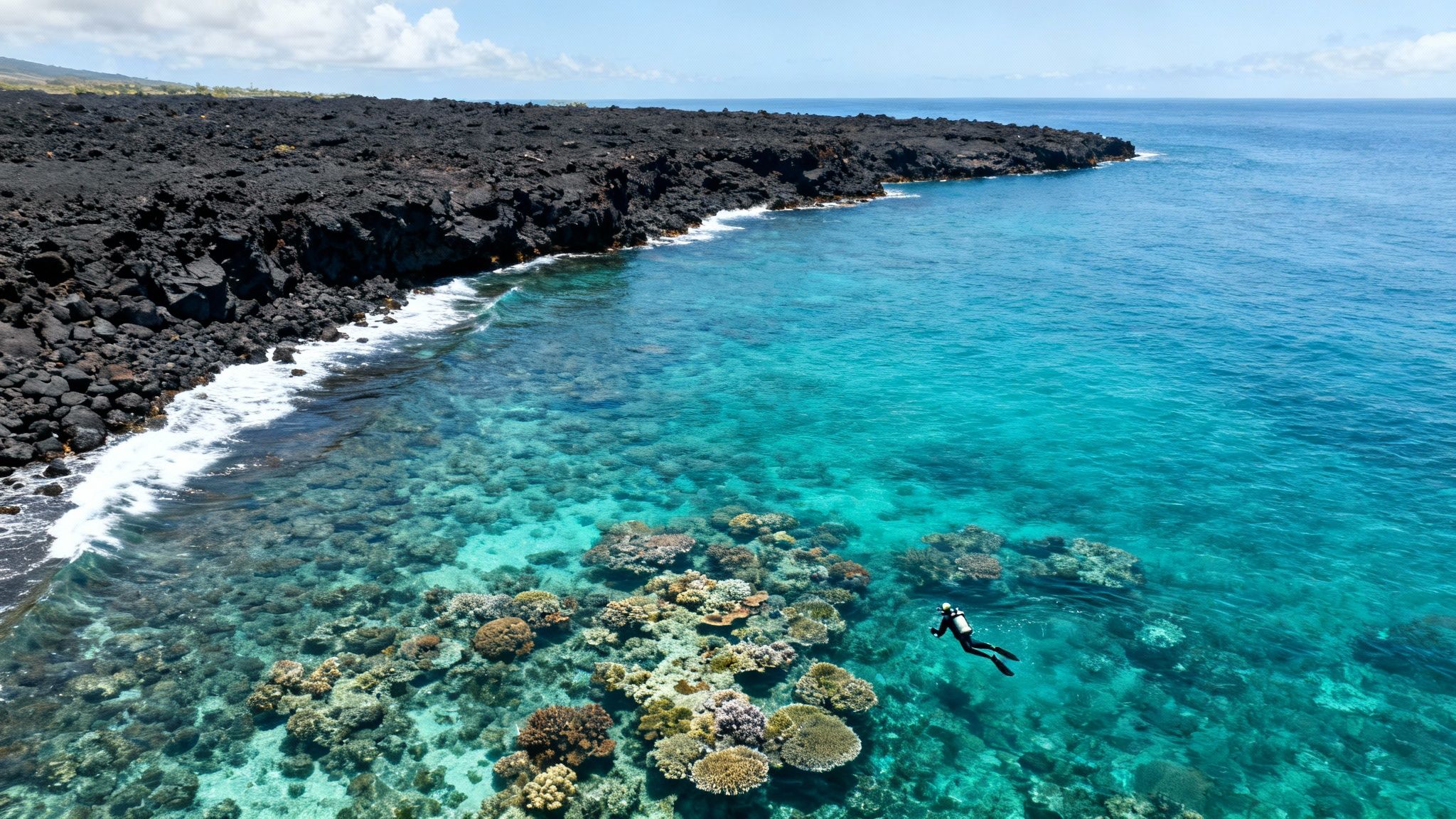
The Big Island is a world apart from the other Hawaiian islands, and the Kona coast is its crown jewel. The secret? Its unique geography. The massive volcanoes of Mauna Loa and Hualalai serve as giant, natural barriers, shielding the western coastline from the powerful trade winds that can stir up the waters elsewhere.
This protective effect creates exceptionally calm and clear conditions almost year-round. It’s not uncommon to have visibility exceeding 100 feet. For divers, that means less time struggling against currents and more time soaking in the incredible underwater scenery.
A Volcanic Underwater Playground
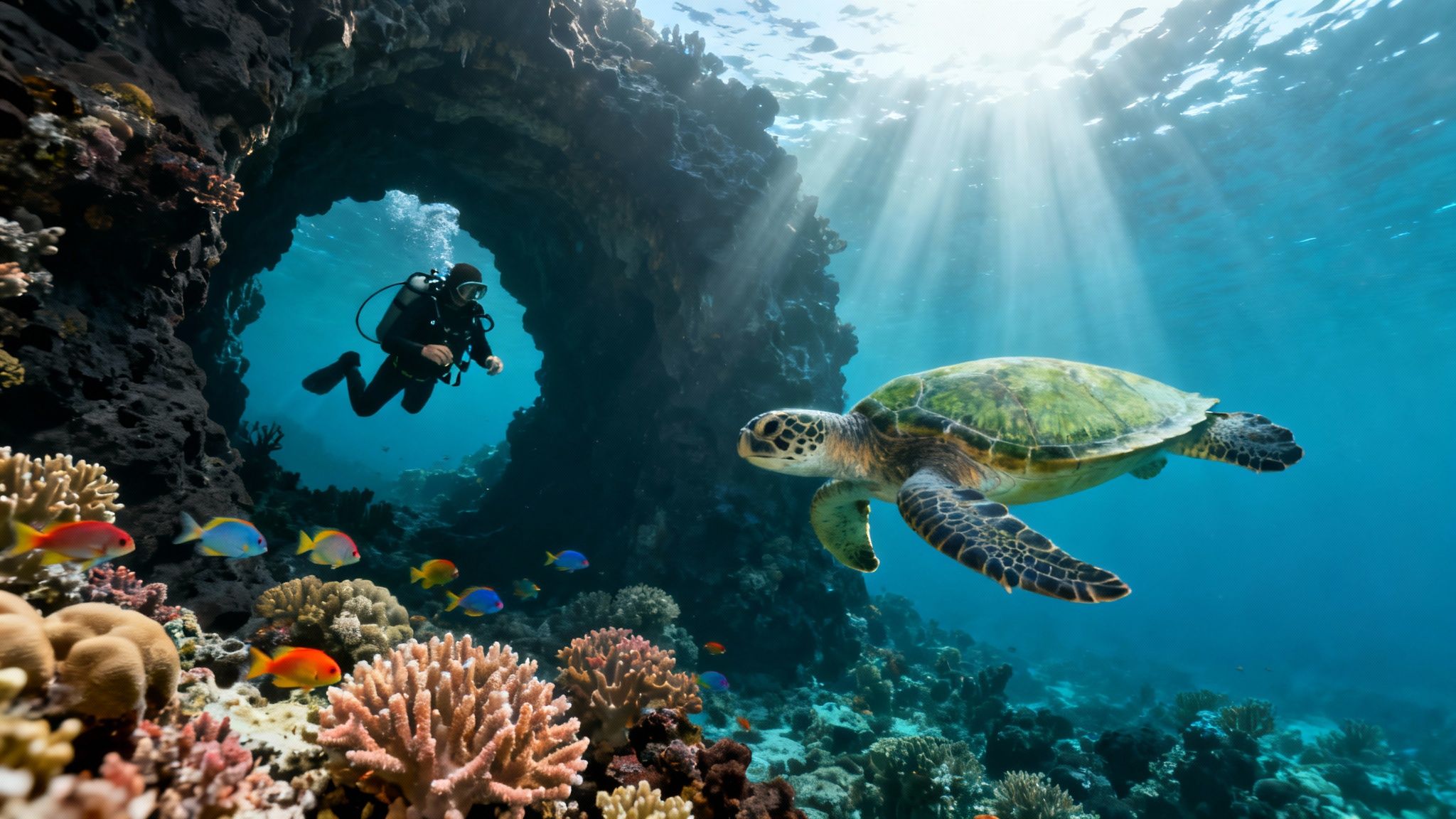
The same volcanic forces that shaped the island have created a spectacular world beneath the waves. Ancient lava flows have cooled into a maze of arches, caverns, and lava tubes, offering a dramatic, otherworldly backdrop for every dive.
These unique formations are now home to some of the healthiest and most vibrant coral reefs in the Pacific, which in turn support a dazzling array of marine life. This is why many experienced divers, from seasoned locals to globetrotting enthusiasts you'll find on forums like TripAdvisor, consistently rank the Big Island as Hawaii's best for diving.
To give you a clearer picture, here’s a quick breakdown of what makes Kona stand out.
Why Kona Offers a Superior Scuba Experience
| Feature | The Big Island (Kona) Advantage | Ideal For |
|---|---|---|
| Water Conditions | Protected from trade winds, resulting in calm seas and exceptional clarity (100+ ft visibility). | All divers, especially beginners, photographers, and those prone to seasickness. |
| Underwater Topography | Volcanic formations like lava tubes, arches, and caverns create unique and complex dive sites. | Explorers and divers who love dramatic landscapes and interesting swim-throughs. |
| Marine Life | Healthy coral reefs and deep offshore waters attract both reef fish and large pelagics. | Everyone! From macro life lovers to those hoping for big animal encounters. |
| Signature Dives | Home to world-famous, one-of-a-kind dives like the Manta Ray Night Dive and Blackwater Dives. | Thrill-seekers and divers looking for unforgettable, bucket-list experiences. |
These unique advantages mean Kona isn't just another dive spot; it's a destination that offers something truly special for every type of diver.
Unforgettable Signature Dives
Kona is famous for experiences you simply can't have anywhere else on earth. The most iconic is, without a doubt, the Manta Ray Night Dive. It’s a surreal, underwater ballet where these gentle giants glide just inches above your head.
For the truly adventurous, the Kona Blackwater Dive is a journey into the abyss. You drift in the deep open ocean at night, watching bizarre and beautiful deep-water creatures rise to the surface. It's like a trip to another planet.
These unique dives, combined with countless pristine reefs, make Kona a place that divers return to again and again. If you're still on the fence, check out our deep dive into what makes Kona a top-tier scuba diving spot.
We at Kona Honu Divers have been sharing these underwater wonders with people for years. But don't just take our word for it—see what fellow divers have to say about their adventures with us.
Ultimately, whether you're taking your very first breath underwater or you have hundreds of dives under your belt, the Kona coast delivers. The combination of calm conditions, volcanic scenery, and world-famous marine encounters creates a diving environment that is truly second to none.
Exploring Kona’s Most Unforgettable Dives
The Kona coast is home to a handful of truly world-class underwater adventures, each with its own distinct personality. These aren't just dives; they're powerful experiences. From mesmerizing nighttime ballets with gentle giants to thrilling deep-water drifts, these are the signature dives that define scuba diving Big Island Hawaii and bring divers here from all over the world.
The Legendary Manta Ray Night Dive
You can't talk about diving in Kona without starting with the famous Manta Ray Night Dive. It's consistently ranked as one of the best night dives on the planet, and for good reason—it’s absolutely magical.
Imagine dropping into the dark, warm ocean. Powerful lights on the seafloor illuminate a patch of reef, creating an underwater campfire that attracts clouds of plankton. And that plankton, in turn, brings in the main event: giant, graceful manta rays.
These gentle giants, with wingspans that can stretch over 12 feet, perform a silent, acrobatic ballet. They swoop and somersault through the beams of light to feed, gliding just inches over your head. It’s a humbling, awe-inspiring spectacle to see their massive shapes silhouetted against the light.
While there are a couple of spots to do this dive, we're convinced Garden Eel Cove offers the superior choice for the dive tour because of its protected location with a better viewing area and better reefs. The site, also known as Manta Heaven, is better protected from ocean swells, which means calmer conditions and a more comfortable dive for everyone. The viewing area is perfectly set up, and the surrounding reefs are healthier, making the whole thing unforgettable from start to finish.
The Kona Blackwater Dive: An Otherworldly Journey
For certified, experienced divers looking for something completely different—something almost otherworldly—the Kona Blackwater Dive is it. This isn’t a reef dive. It’s a pelagic drift dive miles offshore in the deep open ocean. You descend to about 50 feet, tethered to the boat, and just float in the inky blackness.
As your eyes adjust, a bizarre and beautiful world appears. You're witnessing the largest animal migration on Earth, as strange deep-water creatures—many of them bioluminescent—rise from the abyss to feed under the cover of darkness.
You'll see things that look like they belong on another planet: translucent larval fish, pulsating jellyfish, and weirdly wonderful cephalopods. It feels more like floating through outer space than scuba diving, giving you a rare peek into a hidden ecosystem.
This dive definitely requires a solid sense of adventure and being comfortable in the open ocean. But the payoff is an encounter with a part of our world that very few people will ever see. If you’re an advanced diver seeking a truly unique challenge, this is your dive.
Exploring Vibrant Reefs and Lava Tubes
Beyond the world-famous night dives, the daytime scuba diving Big Island Hawaii offers is just as spectacular. The Kona coastline is a stunning tapestry of pristine coral reefs, dramatic volcanic topography, and a ton of marine life. Our daytime diving tours are all about exploring this underwater paradise.
One of the coolest features here are the lava tubes. These ancient volcanic formations create incredible swim-throughs, caverns, and arches that are a blast to navigate. When sunlight filters through openings in the rock, it creates these breathtaking "cathedral" lighting effects.
Of course, the reefs themselves are absolutely buzzing with life. Here’s a little taste of what you can expect to see:
- Hawaiian Green Sea Turtles (Honu): You'll see these gentle reptiles everywhere, either cruising by gracefully or just chilling out on the reef.
- Spinner Dolphins: It’s common for pods of playful spinner dolphins to greet the dive boat on the way out to the site, and sometimes they'll even swim past during a dive.
- Endemic Fish: A huge percentage of Hawaii's reef fish are found nowhere else on the planet, so every dive is a chance to spot something truly unique.
- Eels, Octopuses, and Reef Sharks: The nooks and crannies of the volcanic rock are perfect homes for moray eels and octopuses, while white-tip reef sharks often cruise along the edges of the reef.
Every single dive along the Kona coast offers something new, whether you're navigating a complex lava tube or just watching a turtle get its shell cleaned by reef fish. The sheer variety of what you can see and do here makes Kona a destination you can return to again and again.
Ready to experience these unforgettable dives for yourself?
The World-Famous Manta Ray Night Dive

Picture this: you're kneeling on the sand in the quiet dark of the ocean, pointing your dive light up into the water column. Out of nowhere, a silent, shadowy figure with a wingspan of over 12 feet glides into the beam, performing a mesmerizing, weightless ballet. That's the magic of the Big Island's manta ray night dive, an experience that people travel the globe for.
This isn't some chance encounter. It's a brilliantly simple and sustainable spectacle that unfolds every single night. The experience starts as the sun sets, casting a golden glow over the Kona coast during the boat ride out. Once you descend, you and your fellow divers form what we call the "campfire"—a circle on the seafloor, all pointing lights up to attract clouds of plankton, the mantas' favorite meal.
This underwater buffet is what draws in these gentle giants. They feast by swooping and gliding through the illuminated water, often coming within inches of you. It's a peaceful, profound, and utterly unforgettable encounter with one of the ocean's most majestic creatures.
Why Garden Eel Cove Is the Premier Manta Dive Site
While there are a couple of spots for this dive, we've found that Garden Eel Cove (also known as Manta Heaven) consistently delivers a better experience and is the superior choice for the dive tour. Its location gives it natural protection from the open ocean swells, which means calmer, more comfortable, and safer conditions for everyone in the water.
The real secret to Garden Eel Cove's success, though, is its healthier, more robust reef ecosystem. This thriving environment supports a ton of marine life, which not only makes the dive more interesting but also contributes to a more consistent and spectacular gathering of mantas. Its protected location, better viewing area, and healthier reefs make it the superior choice.
The viewing area at Garden Eel Cove is also perfectly situated. It allows divers to settle on the sandy bottom without disturbing any of the delicate corals. This setup essentially gives you a front-row seat to the action for a truly immersive and respectful wildlife encounter.
The Science Behind the Spectacle
This incredible dive is a perfect example of a symbiotic relationship between tourism and nature. The process is simple but incredibly effective:
- Lights Attract Plankton: Powerful, stationary lights are placed on the ocean floor, or divers hold their own lights and point them upward.
- Plankton Attracts Mantas: These beams of light draw in dense clouds of phytoplankton and zooplankton, the primary food source for manta rays.
- A Reliable Buffet: The mantas, being the intelligent animals they are, have learned that this nightly gathering of lights means an easy and abundant meal.
This reliable "dinner bell" has created one of the most consistent big-animal encounters in the entire world. In fact, manta ray sightings on the Big Island happen on about 85-90% of night dives. Data shows encounters ranging from a few individuals to incredible gatherings of over 30 mantas on a single dive.
This incredible reliability is why so many divers consider this a must-do bucket-list adventure when scuba diving Big Island Hawaii. Want to learn more about this specific tour? Check out our complete guide to Big Island Manta Ray Tours.
Ready to experience this once-in-a-lifetime underwater ballet for yourself?
How to Plan Your Perfect Big Island Dive Trip
Alright, you're sold on the incredible diving Kona has to offer. Now for the fun part: making it happen. Planning a dive trip to the Big Island is pretty straightforward, but a little inside knowledge goes a long way. Let's walk through the key steps—from picking the right season to finding a great dive shop—to make sure your trip is smooth, safe, and utterly unforgettable.
A bit of planning up front means you get to maximize your time in the water, seeing the absolute best of what scuba diving Big Island Hawaii has in store.
When Is the Best Time to Visit?
Here’s one of Kona’s best-kept secrets: there's really no bad time to dive here. The island's massive volcanoes act as a natural shield, blocking the trade winds and keeping the coastal waters remarkably calm year-round. You can expect warm, clear water hovering between a comfortable 75-80°F (24-27°C) no matter when you visit.
That said, different seasons do bring their own unique magic.
- Summer (June-September): This is our peak season. The water is at its warmest, the seas are typically like glass, and the conditions are just about perfect for any diver, from novice to pro.
- Winter (December-March): The water might be a degree or two cooler, but this is humpback whale season. While you probably won’t see one on a dive, you will almost certainly hear them. There’s nothing quite like the sound of their songs echoing through the water around you—it’s an experience that will stay with you forever.
Honestly, you can't go wrong. The choice really boils down to whether you want the balmiest water temperatures or the chance to listen to a whale symphony.
Understanding Certification Requirements
Your dive certification is your passport to Kona's underwater world, and what's in that passport determines where you can go. It’s important to know what you’re qualified for before you get your heart set on a specific dive.
Never been diving before? No problem. An introductory experience, often called a "Discover Scuba Dive," is the perfect way to get your fins wet. You don't need any certification. You'll be with a certified instructor every step of the way in a shallow, calm spot. It’s a fantastic, safe way to see if you love the underwater world as much as we do.
For those who are already certified, an Open Water certification will unlock most of the stunning reef dives along the coast. But for some of our more famous dives, you’ll need to have a little more experience under your weight belt.
- Advanced Open Water: This certification is a must for some of our deeper sites and is what we strongly recommend for anyone wanting to do the world-famous Manta Ray Night Dive.
- Specialty Certifications: To join a truly unique dive like the Kona Blackwater Dive, you’ll need an advanced certification plus a good number of logged dives. It’s all about making sure you have the skills and comfort level for these more demanding environments.
If you’re an experienced diver looking for something truly special, check out our advanced charters. We design these trips specifically for seasoned divers who want to explore beyond the usual spots.
Choosing the Right Dive Operator
This is easily the most important decision you'll make. A great dive operator does so much more than just take you out on a boat. They are your safety net, your local guide, and your concierge for the ocean. The right crew can turn a good dive into the dive of a lifetime.
When you're looking for a dive company, you should be asking about:
- Impeccable Safety Records: This is non-negotiable. Safety should be their first, middle, and last name. Read reviews and don't be shy about asking about their emergency procedures.
- Small Group Sizes: You want to see fish, not a crowd of other divers. Smaller groups mean you get a more personal tour, more space, and more one-on-one attention from your guide.
- Experienced Guides: A great guide doesn't just lead the way; they know where the shy octopus hides, how to navigate the lava tubes, and can tell you all about the fascinating creatures you're seeing. Their passion is contagious.
- High-Quality Equipment: Whether you're renting a full set of gear or just tanks, make sure it’s from a reputable brand and looks well-cared-for. Good gear is safe gear.
Here at Kona Honu Divers, we live and breathe these standards. Our entire mission is to provide a premium experience that’s as safe as it is awe-inspiring.
Your Essential Packing Checklist
Packing for a dive trip is a familiar ritual for many of us. Even though we offer top-of-the-line rental equipment, there are a few things you’ll definitely want to bring from home.
- Certification Cards & Logbook: The classic "don't leave home without it" items.
- Dive Computer: Every diver should have one. If you don't own your own yet, you can always rent one from us.
- Reef-Safe Sunscreen: This is a big one in Hawaii. To protect our fragile coral, please only use mineral-based sunscreens (look for zinc oxide or titanium dioxide on the label).
- Reusable Water Bottle: Help us keep our island beautiful by reducing plastic waste.
- Camera: Trust us, you’re going to want proof of what you saw down there!
- Warm Jacket or Sweatshirt: Even on a warm day, it can get surprisingly chilly on the boat ride back, especially after a night dive.
Ready to turn this plan into a reality? Let us take care of the rest.
Why Kona Honu Divers Is Your Ideal Dive Partner
Choosing the right guide can make or break your dive trip. It’s easily the most important decision you'll make when planning your underwater adventure in Hawaii. A great operator doesn't just take you out on a boat; they ensure your safety, maximize your fun, and show you the hidden corners of the ocean you'd never find on your own.
When it comes to scuba diving Big Island Hawaii, we believe that partner is Kona Honu Divers. We aren't just a charter service. We're a team of passionate ocean lovers committed to giving you a world-class, safe, and genuinely awe-inspiring experience from the moment you step on board. Our goal is simple: to make sure every diver feels confident, looked after, and completely blown away.
Experience and Safety You Can Count On
Our crew is the heart and soul of our operation. With over 200 years of combined professional diving experience, our team has an incredible depth of knowledge about Kona’s unique underwater world. This isn't just trivia; it’s practical wisdom that means we know the best sites for the day's conditions, where to find that elusive octopus, and how to keep every single diver safe and comfortable.
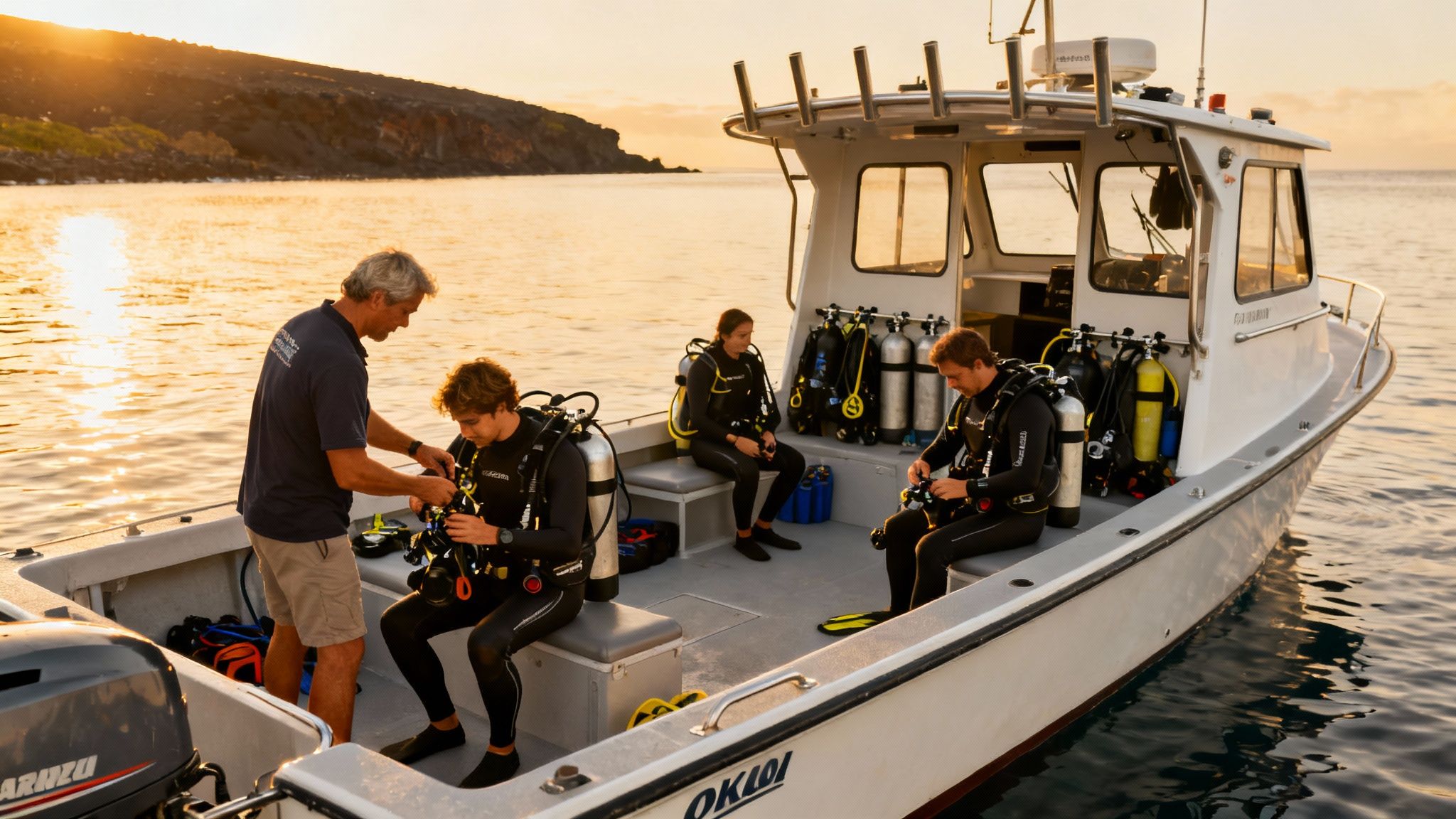
Safety isn’t just a buzzword for us—it’s baked into everything we do. We're proud of our impeccable safety record and are obsessed with maintaining our equipment and custom-built dive boats. Our vessels were designed from the ground up with diver comfort in mind, ensuring a smooth, easy ride out to the dive sites.
Choosing a dive operator is an act of trust. You are placing your safety and your precious vacation time in their hands. That's why we prioritize small groups, personalized attention, and unwavering safety standards above all else.
This commitment shows in what our divers have to say. But don't just take our word for it—see what fellow divers are saying about their time with us.
The Kona Honu Divers Difference
So, what really sets us apart? It’s our focus on the small details that add up to a huge impact on your dive day. We're all about providing value that goes way beyond just the dive itself.
- Small Group Sizes: We deliberately limit how many divers are on our boats. This means a personal, uncrowded experience where you have more space, more one-on-one time with your guide, and a better shot at seeing incredible marine life.
- Complimentary Nitrox: For certified divers, we offer nitrox completely free of charge. This lets you enjoy longer bottom times and shorter surface intervals, which means more time exploring Kona's amazing underwater landscapes.
- A Passionate, Knowledgeable Crew: Our guides aren't just punching a clock; they live and breathe the ocean. Their excitement for marine conservation and Kona's ecosystem is infectious and makes every single dive better.
The Big Island’s scuba scene is booming, and as part of Hawaii's growing tourism, the global diving market is set to expand significantly—with Hawaii's slice expected to hit $1,585 million by 2035. For us, this is a chance to share what we love with more people. Our commitment to a premium, personal experience is how we make sure we always stand out. You can learn more about why you should dive the Big Island with Kona Honu Divers.
Ultimately, we offer a complete range of Kona diving tours designed for every skill level and interest. Are you ready for an adventure you’ll never forget?
Your Kona Scuba Diving Questions, Answered
It's completely normal to have a few questions swirling around as you nail down the details of your trip. To make sure you feel totally prepared for your underwater adventure, we've answered some of the most common things people ask us about scuba diving Big Island Hawaii. Think of this as your final checklist before you pack your bags with confidence.
What Is the Best Time of Year to Scuba Dive in Kona?
Honestly, there’s no bad time to dive in Kona. We're incredibly lucky because the massive volcanoes on the Big Island act as a natural shield, protecting the Kona coast from the heavy trade winds. The result? Consistently calm, clear water pretty much year-round. The water temperature is always inviting, hovering between a comfortable 75-80°F (24-27°C).
That said, different seasons do have their own special perks. Summer brings the warmest water and seas that are often as flat as glass—perfect for any diver. But winter, from December through March, has a magic all its own. It's humpback whale season. You probably won't see one on a dive, but you will almost certainly hear their haunting, beautiful songs echoing through the water. It’s an experience that will give you goosebumps.
Do I Need to Be Certified to Scuba Dive in Kona?
Not at all! If you've never dived before, Kona is the perfect place to take your first breath underwater. We offer a "Discover Scuba Diving" experience just for beginners. You'll get paired up with an expert instructor who will walk you through the basics in a super clear, easy-to-understand way before guiding you on a beautiful, shallow reef dive. It’s the best way to test the waters and see if diving is your thing.
If you are already certified, your adventure options open up significantly. An Open Water certification gets you access to most of our incredible reef dives. For something more advanced, like the world-famous Manta Ray Night Dive, we recommend an Advanced Open Water certification. And for the ultimate thrill-seeker's experience, the Kona Blackwater Dive, you'll need to be a seasoned advanced diver.
What Kind of Marine Life Can I Expect to See?
Kona's underwater world is bursting with life, and what makes it extra special is that so many of the creatures here are found nowhere else on the planet. Our healthy volcanic reefs are like busy cities for marine animals.
On a typical daytime dive, you're very likely to come across:
- Hawaiian Green Sea Turtles (Honu): Seeing these gentle giants gliding gracefully by is a staple of Kona diving.
- Spinner Dolphins: We often spot pods from the boat, and if you're lucky, they might just cruise by during your dive.
- Endemic Fish: A huge number of Hawaii's reef fish are unique to our islands, so get ready for a vibrant, colorful show you can't see anywhere else.
- Eels, Octopuses, and Reef Sharks: The nooks and crannies of the lava rock formations are perfect homes for moray eels and clever octopuses. You'll often see white-tip reef sharks relaxing on the sand or cruising the reef edge.
And of course, there's the Manta Ray Night Dive, which offers a virtually guaranteed, up-close encounter with Kona's most iconic residents.
Is the Manta Ray Night Dive Safe?
Absolutely. We get this question a lot, and the answer is a resounding yes. The Manta Ray Night Dive is one of the most well-managed and safest wildlife encounters you can do anywhere in the world. The dive site is a shallow, protected bay where conditions are almost always calm. You simply kneel or sit on a sandy patch, so there's no complicated swimming or navigation to worry about.
Every single dive is led by experienced, certified divemasters. They give a detailed safety briefing before you even get in the water and are right there with you the whole time, making sure you feel safe and comfortable. Their top priority is your well-being, so you can just relax and soak in the incredible spectacle of the mantas.
Can My Non-Diving Friends or Family Join?
You bet! We made sure that some of our best tours, especially the Manta Ray Night Dive, are perfect for both divers and snorkelers. Everyone gets to be on the same boat and share the experience together.
While the divers are on the bottom looking up at the show, snorkelers can float on the surface. They hold onto a custom-made light board that attracts the plankton, bringing the mantas right up to them. It's an amazing way for groups with different comfort levels to create an unforgettable memory together. We believe everyone should have a chance to experience the magic of Kona's ocean.
Ready to see what makes scuba diving Big Island Hawaii a bucket-list experience?