
Welcome to the Big Island's volcanic underworld, where ancient lava tubes are now hideouts for moray eels and sunken craters cradle breathtaking coral reefs. If you're looking for the best scuba diving on the Big Island of Hawaii, you've found it. The Kona coast is a year-round diver's paradise, blessed with calm, clear water and an explosion of marine life.
Why Kona is a World-Class Diving Destination
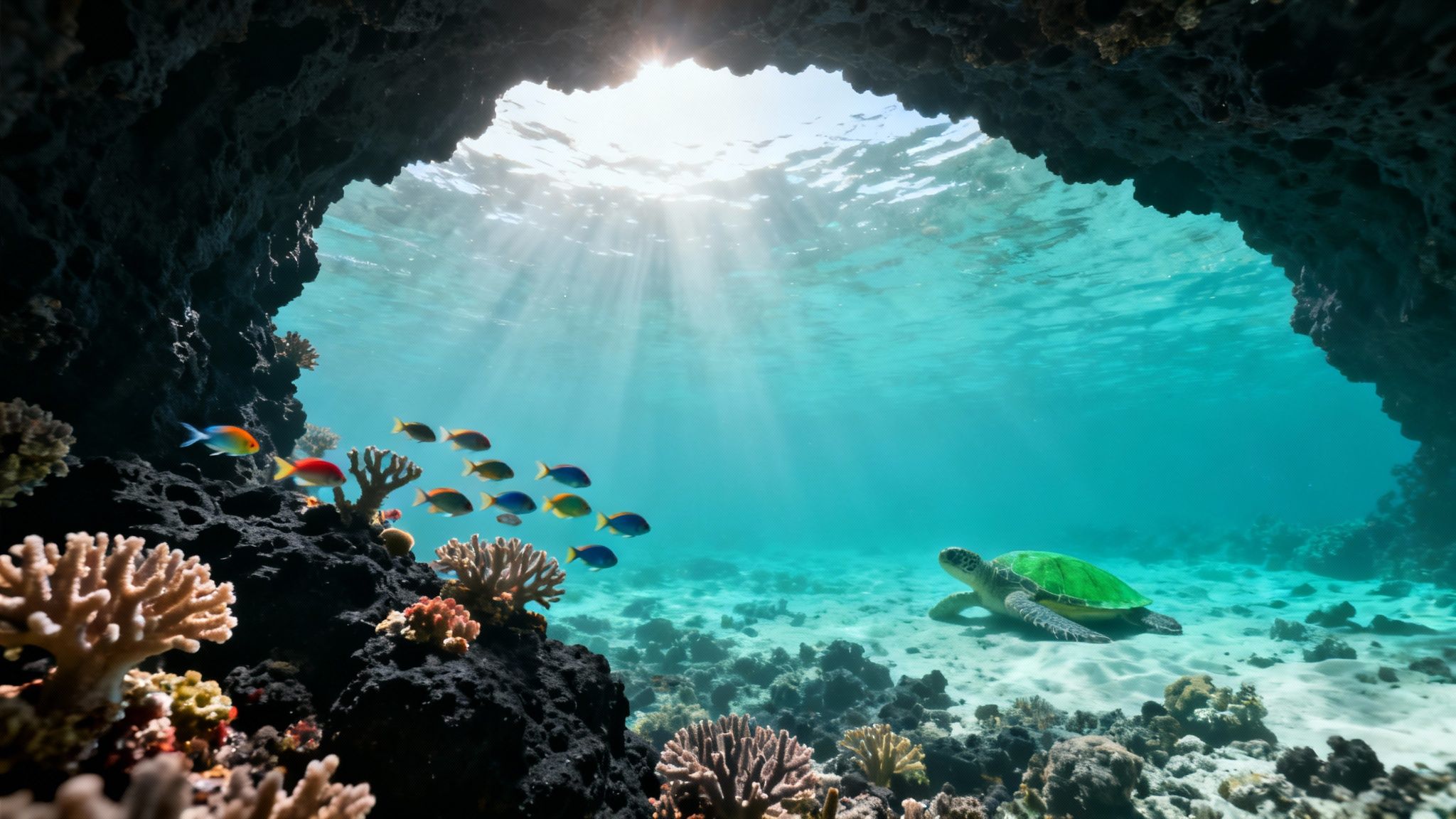
So, what’s Kona’s secret? It all comes down to geography. The immense volcanoes of Mauna Loa and Hualalai act as giant bodyguards, shielding the island's western coastline from the strong trade winds that churn up the waters elsewhere in Hawaii.
This natural protection gives us those famously calm and crystal-clear conditions that divers dream about. It’s not unusual for visibility to stretch beyond 100 feet, letting you soak in every vibrant detail of the underwater world.
The Kona coast isn't just a pretty dive spot; it's a geological masterpiece that has fostered some of the most unique underwater ecosystems on the planet.
This volcanic history has carved out a dramatic underwater landscape you won't find anywhere else. Picture yourself descending into a world sculpted by ancient lava flows. You'll explore intricate lava tubes, swim through massive archways, and drift over submerged craters. These formations are more than just scenery—they’re the perfect homes for an incredible variety of marine animals.
The Marine Life You'll Meet
While the underwater terrain is stunning, the real showstopper of Big Island diving is the sheer diversity of life. Hawaii's remote location in the middle of the Pacific means a huge chunk of its marine species are endemic—you literally can't find them anywhere else on Earth.
Here’s a sneak peek of who you might run into:
- Hawaiian Green Sea Turtles (Honu): You’ll see these gentle giants everywhere, either resting on the reef or gliding effortlessly through the water.
- Vibrant Reef Fish: The reefs are buzzing with colorful butterflyfish, parrotfish, schools of yellow tangs, and of course, the state fish—the humuhumunukunukuāpuaʻa.
- Fascinating Invertebrates: Keep your eyes peeled for octopuses blending into the rocks, moray eels peeking out from their dens, and tiny, psychedelic nudibranchs.
- Bigger Ocean Cruisers: Out on the edges of the reef, it’s common to spot pods of spinner dolphins, majestic eagle rays, and the occasional reef shark on patrol.
It's this blend of placid seas, incredible visibility, wild volcanic structures, and one-of-a-kind marine life that puts the Big Island in a league of its own. It doesn't matter if you're a brand-new diver or a seasoned pro; Kona's underwater world delivers an adventure you'll never forget.
Ready to jump in? Kona Honu Divers offers a whole range of diving tours designed to show you the very best of what the island has to offer.
Experience the Kona Manta Ray Night Dive
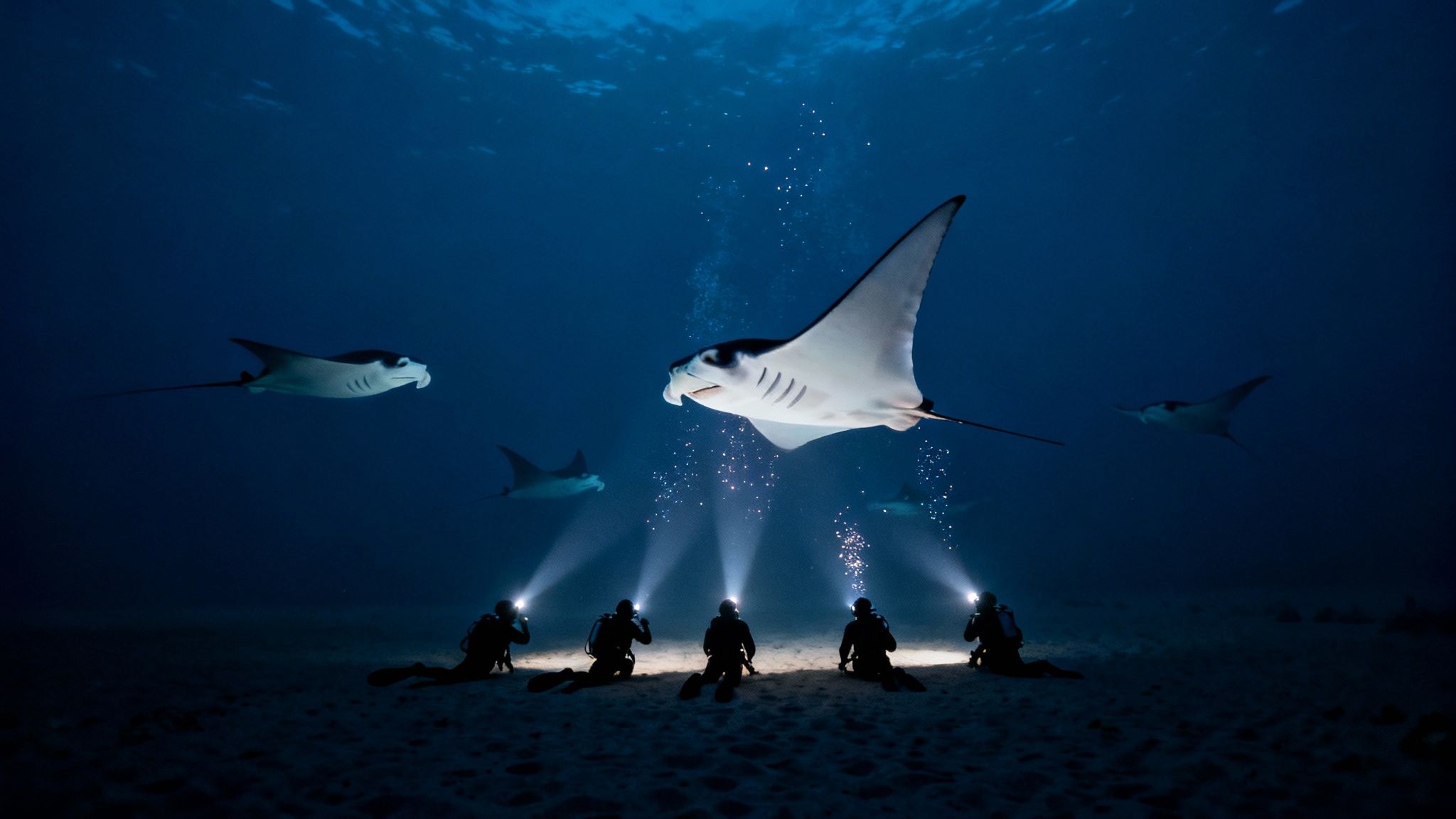
When you’re scuba diving on the Big Island, there are plenty of incredible moments. But one experience consistently tops everyone's list: the Kona Manta Ray Night Dive. It’s hard to put into words, but imagine this: you’re settled on the sandy ocean floor after sunset, pointing your dive light up into the darkness. Your beam illuminates a cloud of plankton, and then they appear—huge, silent shadows gliding through the water, performing a graceful ballet just inches above you.
This is so much more than just another dive. It's an intimate, almost spiritual encounter with some of the ocean's most majestic creatures. Divers often call it an "underwater campfire." We all gather in a circle on the bottom, our lights pointing up to create a beacon that attracts the mantas for their nightly feast. Photos just don't do justice to the sheer size and grace of these animals, whose wingspans can stretch over 15 feet.
Why Garden Eel Cove is the Superior Choice
While the manta ray dive is offered at a couple of locations, there's a clear reason why seasoned operators consider Garden Eel Cove the superior choice. Its unique geography creates a safer, more vibrant, and overall better experience for both divers and the mantas themselves.
First, Garden Eel Cove is naturally protected from open ocean swell, resulting in much calmer conditions. This means a more comfortable boat ride and, more importantly, a more stable and enjoyable dive without strong surge pushing you around.
Second, the viewing area is perfectly designed. A large, sandy amphitheater allows divers to settle in comfortably without impacting the surrounding coral. This setup provides an unobstructed, front-row seat to the action and gives the mantas ample space to perform their graceful feeding ballet above the group. The healthier, more vibrant reefs at Garden Eel Cove also support a richer ecosystem, ensuring a consistent food source that attracts the mantas reliably.
The combination of a protected location, a better viewing area, and healthier reefs makes Garden Eel Cove the undisputed best spot for the manta ray dive. It’s simply a higher quality and more reliable encounter.
A Truly World-Class Encounter
The Big Island's manta ray night dive isn't just a local favorite; it's one of the most iconic scuba experiences on the planet, drawing divers from over 50 countries every year. The local manta population is estimated at around 200 individuals, and sightings are incredibly reliable. Operators report seeing mantas on 85-90% of night dives, with most trips seeing between 6 and 14 of them.
Of course, your experience depends heavily on the crew you dive with. Choosing a top-tier operator like Kona Honu Divers for your manta ray dive tour means you'll have experienced guides who know exactly where to position everyone for the best views while putting the mantas' safety and well-being first. If you're curious about the technical details, we have a great guide on how deep the Kona Manta Ray Dive is.
For anyone scuba diving on the Big Island, this is an absolute must-do. It’s an evening of pure magic that will remind you just how much beauty is waiting right beneath the waves.
Exploring Kona’s Top Dive Sites
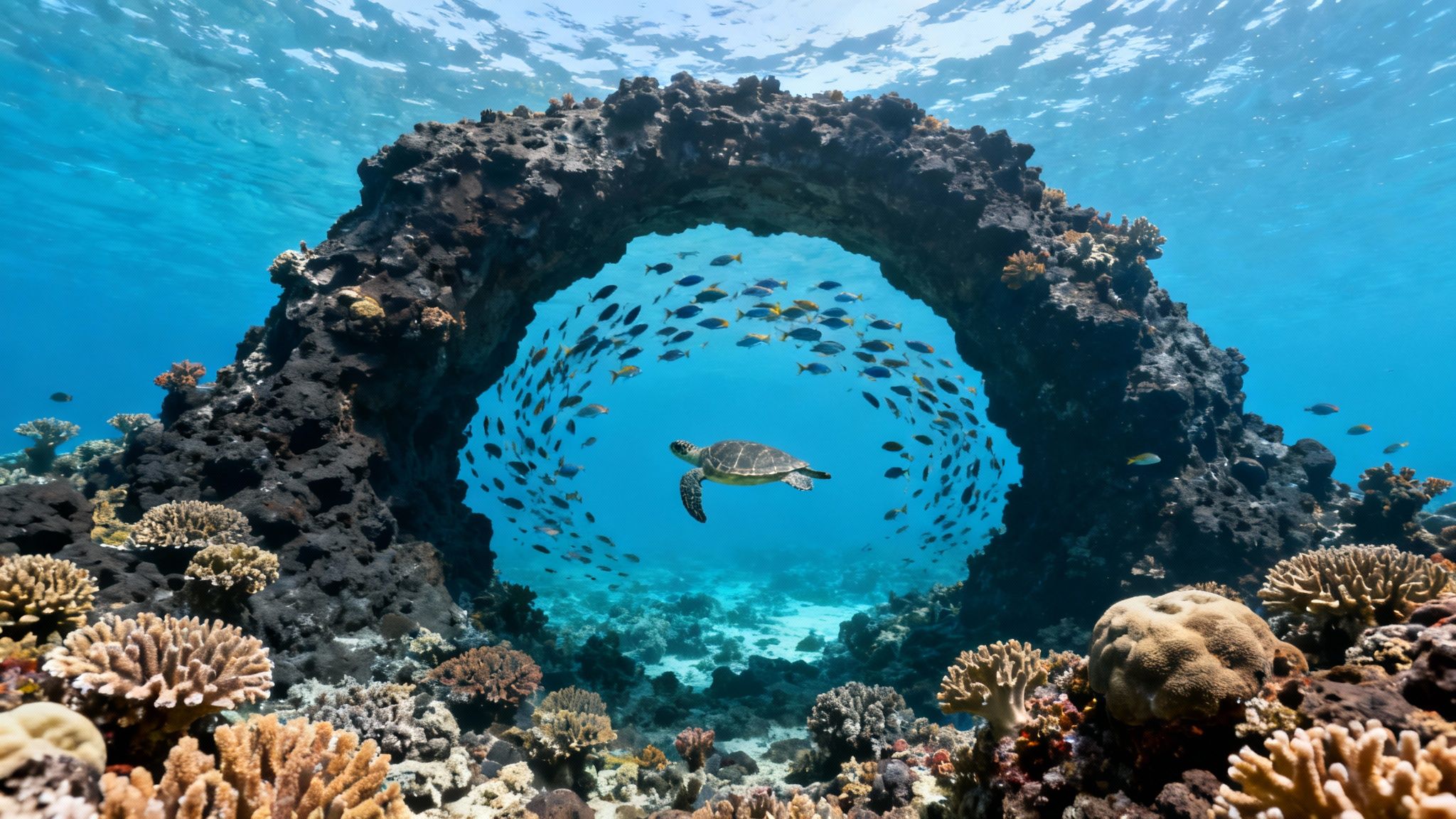
Sure, the manta ray night dive is an absolute showstopper, but it's just one chapter in the incredible story of Kona's underwater world. The Big Island's fiery volcanic past has carved out a diver's paradise beneath the waves. We're talking dramatic lava tubes, massive archways, and some of the most vibrant reefs you'll ever see.
Each spot offers a completely different adventure. From serene bays that have been protected for decades to dynamic, rugged topographies that thrill even the most seasoned divers, there's a perfect site waiting for you. The key is knowing what makes each one special so you can map out your ultimate scuba diving on the Big Island of Hawaii itinerary.
Kealakekua Bay: A Protected Paradise
If there’s one site that truly captures the historical and ecological heart of Hawaii, it’s Kealakekua Bay. Home to the iconic Captain Cook Monument, this bay is far more than a landmark—it's a world-renowned Marine Life Conservation District.
What does that mean for divers? It means you’re dropping into a thriving sanctuary where the marine life is off-the-charts abundant and refreshingly unafraid. The moment you descend into the crystal-clear water, you're surrounded by massive schools of fish. The coral gardens are pristine and seem to stretch on forever, painting a breathtaking underwater landscape.
Established way back in 1969, Kealakekua Bay is a stunning success story in marine conservation. It’s home to over 500 species of fish and more than 100 species of coral, with an incredible 129 of those fish species found nowhere else on Earth. Since the 1990s, the fish population has seen a 30% increase, and visibility often pushes past 100 feet. It’s the pinnacle of Hawaiian diving.
Pu'uhonua O Honaunau (Place of Refuge)
For divers who get a thrill from exploring incredible underwater architecture, Pu'uhonua O Honaunau is an absolute playground. Historically a place of refuge on land, its underwater realm offers a different kind of sanctuary—one carved from ancient lava flows.
The site is a maze of intricate lava tubes, exciting swim-throughs, and magnificent archways. Navigating these formations feels like exploring a submerged cathedral. It's a fantastic spot to find Hawaiian Green Sea Turtles (honu) resting in lava-carved crevices, and the dynamic layout is a magnet for eels, reef sharks, and huge schools of fish.
This dive site is the perfect example of how the Big Island's volcanic origins created a world-class diving destination. Every turn reveals a new structure, a hidden cavern, or a stunning natural archway.
Choosing Your Dive Adventure
With so many incredible options, how do you pick? To help you out, we’ve put together a quick guide to some of Kona’s most popular dive sites.
This table gives you a snapshot of what to expect, whether you're hunting for tiny critters at Kailua Pier or exploring the protected reefs of Kealakekua Bay. For a more in-depth look, check out our article on what is the best dive in Kona.
Big Island Top Dive Sites Overview
| Dive Site | Key Features | Common Marine Life | Best For |
|---|---|---|---|
| Kealakekua Bay | Pristine coral, excellent visibility, historical site | Spinner Dolphins, Turtles, large schools of fish | All Levels, Snorkelers |
| Pu'uhonua O Honaunau | Lava tubes, arches, dramatic topography | Turtles, Eels, Reef Sharks | Intermediate Divers |
| Kailua Pier | Easy shore access, macro life, night diving | Octopus, Frogfish, Nudibranchs | Beginners, Shore Divers |
| Garden Eel Cove | Sandy bottom, 'campfire' viewing area, healthy reef | Manta Rays, Garden Eels, Frogfish | All Levels, Night Dives |
No matter where you choose to splash in, you're in for an unforgettable dive. At Kona Honu Divers, our expert-led tours will make sure you experience the absolute best of Kona's underwater world.
Advanced Diving Adventures in Kona
If you're a certified diver with a good number of dives logged, you know the drill. You've seen beautiful reefs, probably explored a wreck or two, and are comfortable in the water. But for some of us, there comes a point where we start looking for what's next. That's where the Big Island really shines.
Once you venture beyond the stunning coastal reefs, you discover a whole different side of scuba diving on the Big Island of Hawaii. This is where things get truly wild. We’re talking about dives that push your boundaries and give you stories you’ll be telling for years.
The Ultimate Thrill: The Kona Blackwater Dive
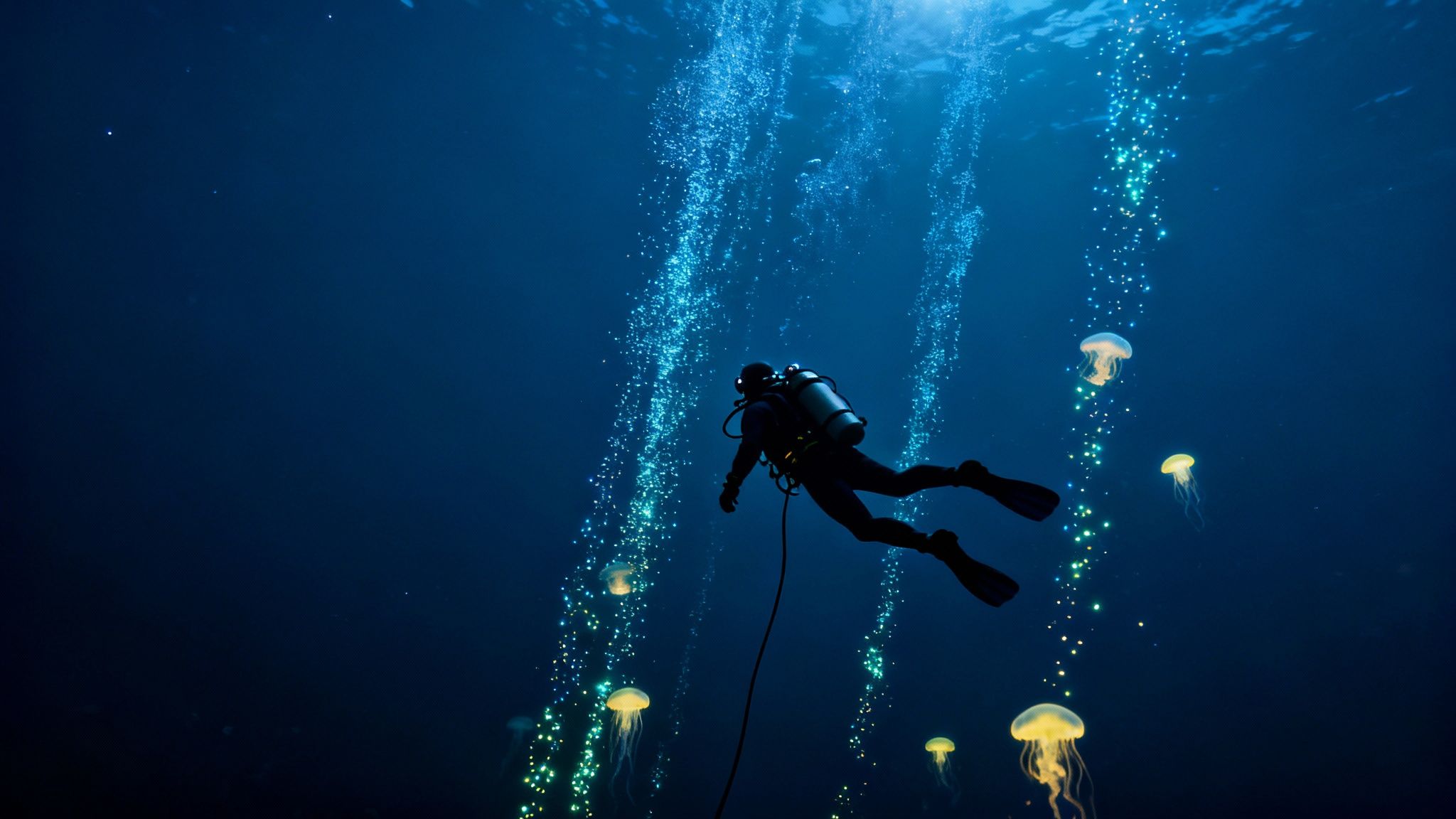
Picture this: you're miles offshore, floating in the dark over thousands of feet of water, tethered to a boat. The sun set hours ago, and below you is nothing but inky blackness. It sounds like something out of a movie, but it’s real. This is the Kona Blackwater Dive, and it’s hands-down one of the most mind-bending dives you can do anywhere on the planet.
Every night, the ocean's largest migration takes place. Tiny, strange, and often bioluminescent creatures rise from the deep to feed near the surface. You're not looking for sharks or mantas here. You're looking for the weird stuff—larval fish that look like aliens, glowing jellies, and invertebrates that seem to belong on another world.
The blackwater dive is often described as being an astronaut floating through inner space. It's a front-row seat to a part of the ocean's life cycle that’s completely hidden by day. You're witnessing a vertical migration of creatures, some just millimeters long, that are breathtakingly complex.
This isn’t about going deep; it’s about a completely unique environment. Think of it as a macro dive in the middle of the open ocean. To do it safely, you need a team that knows what they're doing. A specialized trip like the Blackwater Dive tour with Kona Honu Divers will get you set up with the right gear and safety protocols for this one-of-a-kind experience.
Exploring Deeper and More Remote Reefs
Beyond the thrill of blackwater, advanced divers can get their fill by exploring the deeper, less-trafficked sites around the island. These aren't your typical tour boat spots. They demand more from a diver—better buoyancy, comfort with depth, and sometimes dealing with a bit of current. The payoff? It’s huge.
You get to see underwater landscapes that few others ever will. The experience is totally different:
- Deeper Reef Systems: Drop down to reefs at 80-100 feet or more, where the light is different and new species of coral and fish start to appear.
- Encounters with Pelagics: Getting further from shore drastically improves your odds of bumping into big-ticket animals like eagle rays, oceanic whitetip sharks, or even the occasional pod of pilot whales.
- Untouched Environments: These sites see far less traffic, meaning the coral is often pristine and the marine life isn't as accustomed to seeing divers.
This is the kind of diving for those who feel at home in the water and are ready for a new challenge. It’s a chance to see the Big Island’s underwater world in its most raw and untamed state. Operators like Kona Honu Divers offer advanced dive trips specifically for smaller groups of experienced divers who are itching to explore these premier sites.
If you’re a certified diver ready for something more, Kona’s advanced diving scene is waiting for you.
How to Choose the Right Kona Dive Operator
Let's be honest, the dive site is only half the battle. Your entire scuba diving Big Island Hawaii experience really comes down to the crew leading the way. Picking the right dive operator is what separates an unforgettable, mind-blowing adventure from a day spent feeling like just another number on a crowded boat.
So, how do you spot the good ones? A top-notch operator puts your safety and your experience first, period. That means they intentionally keep their groups small. This isn't just a nice perk; it's a huge safety advantage that gives you personalized attention from your divemaster and creates a much more relaxed, intimate dive.
What to Look for in a Dive Shop
When you're vetting different dive shops, keep a few key things in mind.
First, get a feel for the crew's expertise and vibe. Are the guides genuinely passionate about the ocean and committed to protecting it? A great guide doesn't just lead you through the water; they make the dive come alive by pointing out camouflaged critters and sharing cool facts about the ecosystem you're visiting.
Next, look for a deep commitment to both safety and the environment. The best operators are crystal clear about responsible diving practices, like respecting marine life's personal space and protecting fragile coral. This isn't just about following rules; it's about making sure this incredible underwater world is still here for divers to enjoy for years to come.
The best dive operators aren't just running a business; they are stewards of the ocean. Their commitment to marine conservation is a clear indicator of their overall quality and professionalism.
We've got even more tips on this. For a more detailed guide, check out our article on how to choose a Kona dive shop and get the inside scoop on what to ask before you book.
Why Kona Honu Divers Stands Out
We're proud to say that Kona Honu Divers is consistently recognized for hitting all these marks. We're known for our small group sizes because we believe it’s the only way to ensure every diver feels safe and looked after. Our crew is professional, friendly, and always ready to go the extra mile—whether that means helping with your gear, finding that one elusive fish, or just sharing their love for Hawaii's oceans.
But don't just take our word for it. The best insights come from fellow divers who have been in your fins. See what people are saying in their live reviews:
When you choose an operator that puts quality, safety, and conservation at the forefront, you’re not just booking a dive—you're investing in an experience you'll never forget.
Planning Your Big Island Dive Trip: Your Questions Answered
Got questions about planning your dive trip to the Big Island? You're not alone. Here are the answers to some of the most common things we get asked, straight from divers who know these waters inside and out.
What’s the Best Time of Year to Dive on the Big Island?
Honestly, there’s no bad time to dive here. The Kona coast is wonderfully protected, giving us great conditions pretty much year-round.
That said, if you're looking for the absolute best, aim for the summer months between May and October. The water is at its warmest—a balmy 80°F (27°C)—and the seas are typically glassy and calm.
Winter, from November to April, is still fantastic. The water might dip to around 75°F (24°C), and we can get bigger swells, but the diving is excellent. The real treat of a winter trip? It’s whale season. Hearing humpback songs reverberating through the water on a dive is an experience you will never, ever forget.
Do I Need to Be Certified to Scuba Dive in Hawaii?
Nope, you don't need a certification to get a taste of the underwater world! Nearly every dive shop here, including us at Kona Honu Divers, offers a program called "Discover Scuba Diving."
It’s a fantastic introduction. You'll learn the essential skills from an instructor in a safe, controlled setting and then go on a real, shallow dive on the reef under their close supervision. It’s the perfect way to try out diving and see if it's for you before jumping into a full certification course.
What Kind of Marine Life Can I Expect to See?
The better question is, what won't you see? The Big Island's reefs are buzzing with life. On just about any dive, you'll cross paths with Hawaiian Green Sea Turtles, tons of colorful reef fish like butterflyfish and parrotfish, moray eels peeking out of crevices, and maybe even an octopus.
Depending on where we go, you could also spot pods of spinner dolphins, reef sharks cruising by, and graceful eagle rays. Of course, the manta rays are the undisputed superstars of the night dive, and the Kona Blackwater dive opens up a portal to a whole other dimension of bizarre, beautiful creatures that migrate from the deep sea every single night.
The sheer biodiversity here is staggering. What makes it truly special is the number of endemic species—animals found nowhere else on Earth. It means every single dive holds the potential for a new and unpredictable encounter.
What Should I Pack for My Dive Trip?
Aside from your usual shorts and sandals, there are a few must-haves for a dive trip. If you’re already certified, the most important thing to remember is your certification card and your logbook.
While we can rent you top-notch gear, many divers find that bringing their own mask makes a world of difference for comfort and fit. One non-negotiable item is reef-safe sunscreen; it protects you and our fragile coral at the same time. I also always recommend a light jacket or sweatshirt for the boat rides—it can get surprisingly cool out on the water, especially after a night dive.
With these questions answered, you're one step closer to an incredible dive vacation.
For a safe, professional, and unforgettable underwater adventure, book your next dive with Kona Honu Divers. Our experienced crew is ready to show you the best of what the Big Island's waters have to offer. Explore our full range of diving tours and find the perfect trip for you.