
Picture this: you descend into warm, turquoise water, the sunlight filtering down around you. Volcanic lava tubes twist into the depths, and vibrant coral reefs pulse with life. This isn't a dream—it's scuba diving on the Big Island of Hawaii, a truly world-class destination where every single dive is a new adventure. From the legendary Manta Ray Night Dive to quiet encounters at turtle cleaning stations, this guide is your first step into exploring these incredible waters.
Why Dive on the Big Island of Hawaii
The Big Island is far more than just another tropical dive spot; it’s an underwater world forged by the raw, creative power of volcanoes. The island's dramatic origins have sculpted a sub-aquatic landscape you simply won't find anywhere else on Earth. You'll get to navigate through ancient lava tubes, swim over submerged craters, and see how marine life has flourished on solidified lava flows.
This dynamic geology creates some of the most spectacular diving conditions imaginable. Visibility often stretches beyond 100 feet, offering crystal-clear views of the reefs and their inhabitants. The island is home to at least eight premier diving areas, with a mix of shore and boat dives. Each site offers something different, from the famous manta night dives and thrilling open-ocean blackwater dives to tranquil coral gardens. You can learn more about the Big Island's unique diving environments to get a better sense of the variety.
What Makes Kona Diving So Special
The Kona coast is the heart of the action, and for good reason. It’s naturally shielded from the strong trade winds by the island's massive volcanoes, which means the water here is consistently calm and clear all year round. This protection is what makes it the hub for the best scuba diving on the Big Island.
So, what can you expect?
- Once-in-a-Lifetime Marine Encounters: The Big Island is one of the most reliable places on the entire planet to dive with majestic manta rays. Beyond that, you'll swim alongside Hawaiian green sea turtles, spot pods of spinner dolphins, and marvel at a huge array of endemic fish species found only in these waters.
- A Dive Site for Every Skill Level: Whether you’re a brand-new diver or a seasoned pro, Kona has you covered. There are shallow, sunlit reefs perfect for a first-time experience, as well as challenging deep-water lava tubes and arches for advanced divers. The sheer variety is astounding.
- World-Class Dive Operators: Kona is home to some fantastic dive shops that are deeply committed to safety, education, and preserving the local marine environment. Leading the pack is Kona Honu Divers, a premier operator known for its expert guides and small group sizes that guarantee a personal and unforgettable adventure.
Before we dive deeper, here's a quick look at the experiences that truly define Big Island scuba diving.
Top Scuba Diving Experiences on the Big Island
| Dive Experience | What You'll See | Best For |
|---|---|---|
| Manta Ray Night Dive | Giant manta rays gracefully feeding on plankton under spotlights. | Everyone (it's a must-do!) |
| Blackwater Dive | Bioluminescent creatures and strange larval-stage animals in the deep open ocean. | Adventurous and advanced divers. |
| Lava Tube Exploration | Unique underwater caverns and archways formed by ancient lava flows. | Certified divers comfortable with overhead environments. |
| Turtle Cleaning Stations | Hawaiian green sea turtles lining up to be cleaned by reef fish. | Photographers and turtle lovers. |
These are just a few of the signature dives that make the Kona coast a bucket-list destination for divers from all over the world.
This guide will give you the inside scoop from local experts, so you can feel completely prepared for your underwater journey. We'll uncover the secrets of Kona's unique topography and introduce you to the incredible marine biodiversity that's waiting for you.
Ready to take the plunge? Kona Honu Divers offers a fantastic range of diving tours on the Big Island built for every skill level.
Experience the World-Famous Manta Ray Night Dive
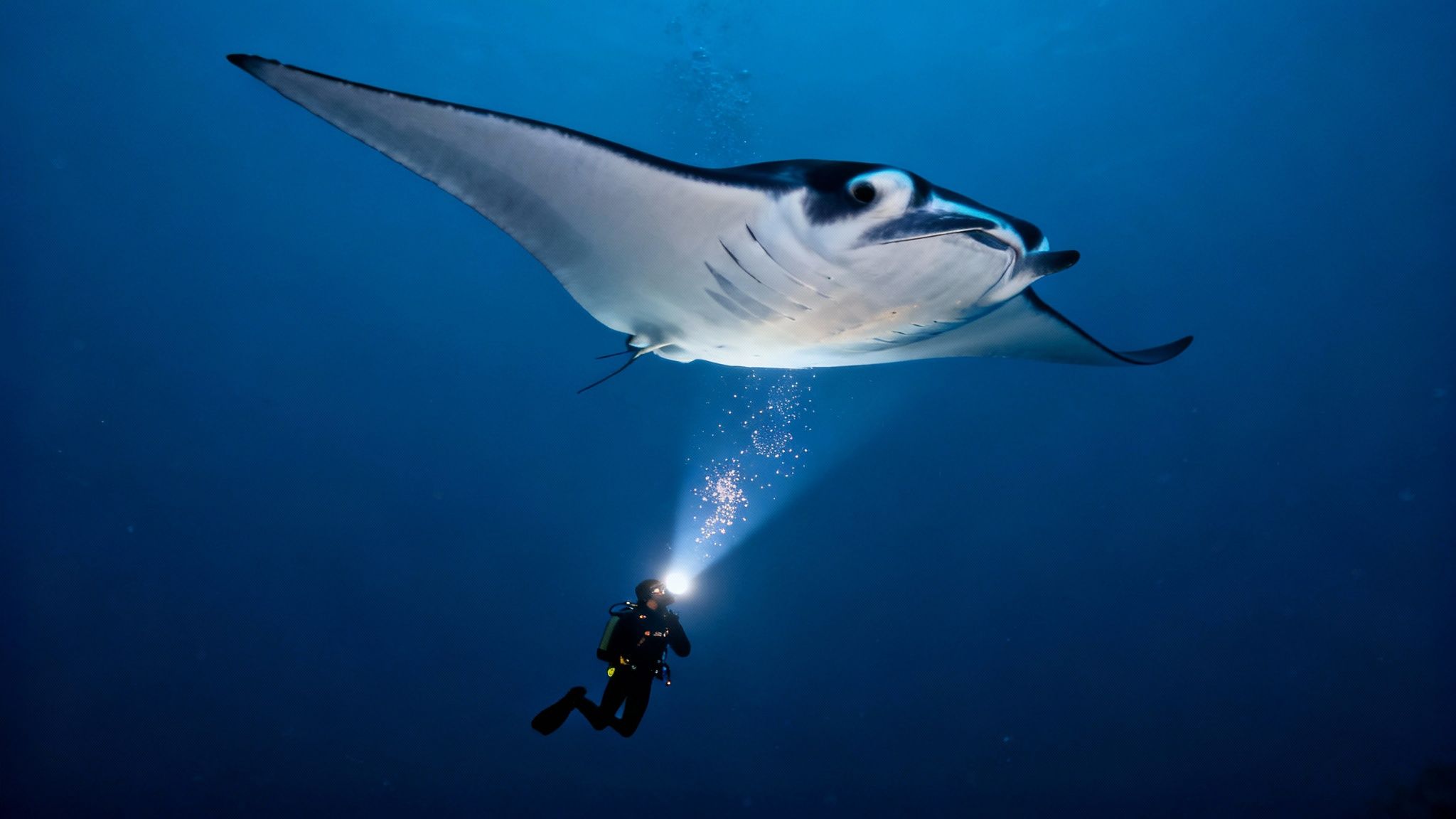
If you ask anyone about scuba diving on the Big Island, one dive will come up again and again: the Manta Ray Night Dive. This isn't just another dip in the ocean; it's a world-renowned underwater spectacle that feels like something out of a dream. It's truly the signature adventure of the Kona coast.
The idea behind it is beautifully simple. After the sun goes down, powerful lights are placed on the ocean floor. These lights act like a magnet for clouds of plankton, which just so happens to be a manta ray's favorite meal. Before you know it, the guests of honor arrive for dinner.
These gentle giants, with wingspans stretching over 15 feet, soar into the light beams to feed. They put on a show, performing effortless barrel rolls and graceful somersaults, often gliding just inches above your head. It’s a breathtaking display that connects you directly to the wild, untamed beauty of the ocean.
Why Garden Eel Cove Is The Premier Location
While you might see a few different sites offered for the manta dive, they are definitely not all the same. For the absolute best experience, Garden Eel Cove (fittingly nicknamed Manta Heaven) is the undisputed champion. It is the superior choice for a dive tour.
The cove itself is naturally protected from the open ocean, meaning calmer and more predictable conditions. This makes for a much safer and more comfortable dive for everyone. You spend less time fighting surge and more time enjoying the show.
On top of that, Garden Eel Cove just has a healthier, more vibrant reef. This thriving ecosystem supports a bigger population of plankton, which in turn attracts more mantas, more consistently. The sandy "viewing area" is also wider, giving every diver a front-row seat without feeling crowded.
Choosing a trip to Garden Eel Cove is your best bet for a truly spectacular and memorable dive. If you want to get into all the details, check out our guide on the Kona Manta Ray Night Dive.
Your Manta Ray Dive With Kona Honu Divers
When you book with us, you're getting a top-tier experience from start to finish. It all starts with a thorough briefing from our expert crew. They’ll run through all the safety procedures, explain how to interact with the mantas respectfully, and share some amazing facts about these incredible creatures.
Once you’re on the bottom, settled around the "campfire" of lights, the anticipation builds. But you won't be waiting long. Soon, the first dark shape glides into view, then another, and another. This isn’t a shot-in-the-dark experience; local sighting reports show that mantas appear on 85-90% of dives, putting on their incredible feeding display right in front of you.
There are no words to truly capture the feeling of a giant manta ray soaring silently overhead, so close you feel you could reach out and touch it. It's a humbling, awe-inspiring moment you will never forget.
Our experienced guides are passionate about what they do, and it shows. They expertly manage the dive, making sure everyone gets a fantastic view while giving the mantas plenty of space. Their love for the ocean is infectious and makes this incredible dive even more special.
Ready to see the magic for yourself? This is an incredibly popular trip that fills up fast, so it's always best to book well in advance. Check out our manta ray dive tours page for availability.
Exploring Kona’s Top-Tier Dive Sites
While the Manta Ray Night Dive gets a lot of the glory, the Kona coast is packed with an incredible variety of underwater worlds just waiting to be explored. Once you look past the mantas, you'll discover a playground of vibrant reefs, mind-bending geological formations, and marine life you won't find anywhere else. The Big Island's volcanic past has carved out a subaquatic landscape that’s truly one-of-a-kind.
Every dive here feels like a new adventure. One day you could be gliding through an ancient lava tube, and the next you’re watching Hawaiian green sea turtles get pampered at a natural cleaning station. It’s this sheer variety that puts scuba diving on the Big Island of Hawaii on the map as a world-class destination. Best of all, there’s something for everyone, from calm, shallow reefs perfect for new divers to intricate structures that will thrill even the most seasoned pros.
Kealakekua Bay: A Pristine Marine Sanctuary
Kealakekua Bay isn't just another pretty spot—it's a protected Marine Life Conservation District. That designation means its coral gardens are bursting with health and absolutely teeming with fish. As you drop into the clear, calm water, you’re immediately surrounded by massive coral fields and shimmering schools of reef fish.
The bay is also famous as the place where Captain James Cook first landed, and you can still see his monument on the shore. But for us divers, the real treasure is underwater. You can expect to see:
- Massive Coral Formations: Huge, intricate coral heads create a breathtaking underwater cityscape.
- Clouds of Fish: Keep an eye out for huge schools of yellow tang, parrotfish, and butterflyfish.
- Playful Spinner Dolphins: Pods of spinner dolphins often use the bay as a resting area, and it’s not uncommon to see them leaping and spinning at the surface.
Because the area is protected, the marine life is unbelievably bold and abundant. It's a photographer's paradise, and the typically calm conditions make it a fantastic and relaxing dive for any skill level.
Turtle Pinnacle and Unique Volcanic Features
The Big Island’s volcanic heart is what makes its underwater topography so dramatic and fascinating. You'll find everything from gently sloping reefs to submerged volcanic craters, like Au Au Crater, which drops from 30 feet to well over 200 feet. The terrain is always changing.
A perfect example of this unique geology is Turtle Pinnacle. If you want to get a sense of just how diverse the diving is here, check out some of the other top-rated Hawaiian dive sites.
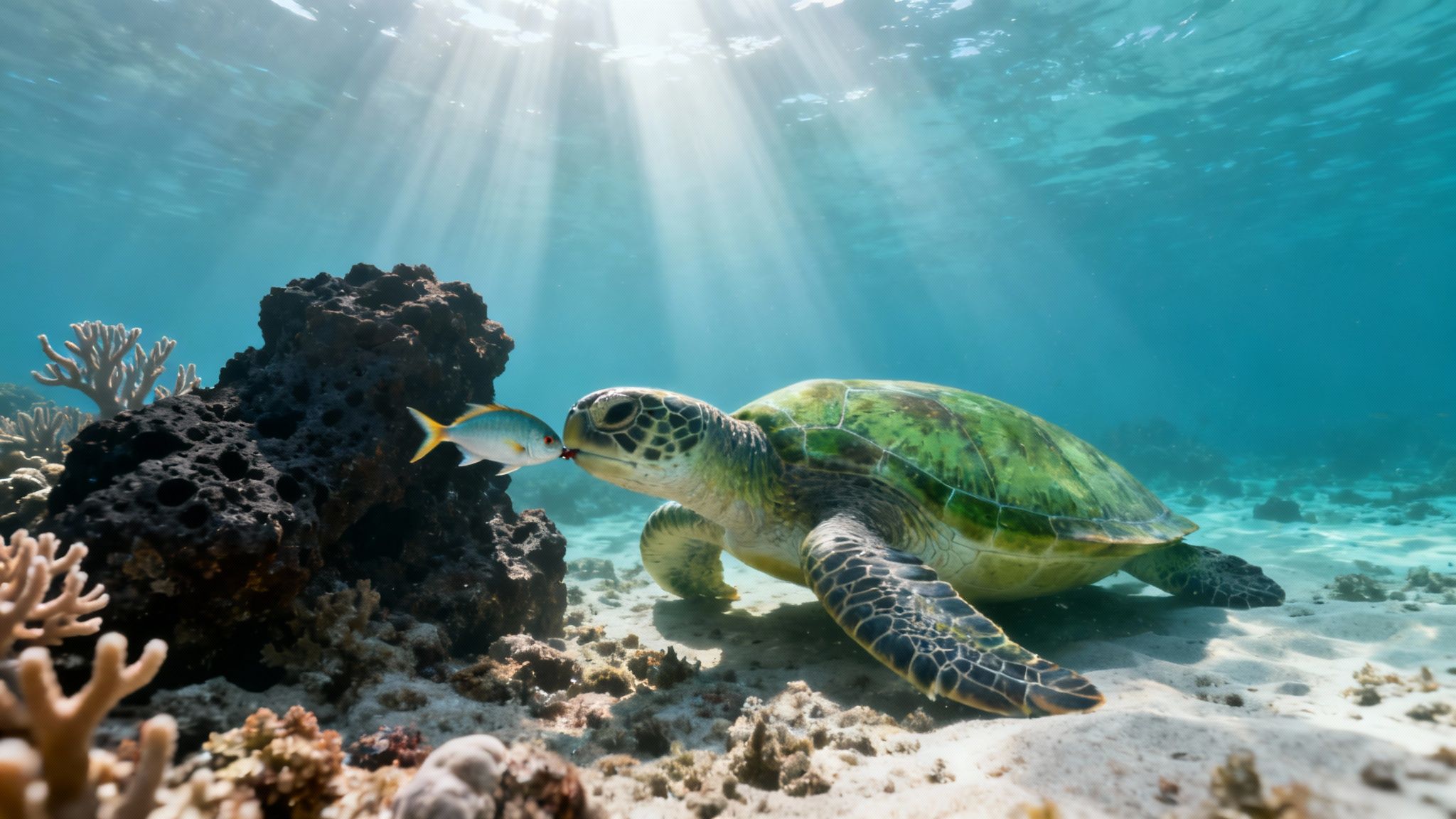
This particular spot is a famous "cleaning station"—think of it as a natural spa for Hawaiian green sea turtles, or honu. They patiently queue up while small fish, like the Hawaiian cleaner wrasse, swim over to nibble algae and parasites off their shells. Witnessing this incredible symbiotic relationship firsthand is pure magic.
Beyond the turtles, you have to experience the island’s signature lava tubes. These are underwater caverns and archways forged by ancient lava flows. Swimming through them feels like exploring another planet, with shafts of light piercing the volcanic rock to reveal critters hiding in the shadows.
Exploring a lava tube for the time is an unforgettable moment. The feeling of swimming through a passage carved by volcanic fire centuries ago connects you directly to the raw, creative power of the Big Island.
With such a variety of sites, there’s always a new adventure waiting just around the corner. Whether you’re looking for a relaxing drift with turtles or the thrill of a swim-through, the Kona coast has you covered. Ready to dive in? Kona Honu Divers offers a whole range of diving tours that hit all the best spots.
Ready for Something More? Advanced and Unique Diving Adventures
So, you're a certified diver, and you've got a good number of dives under your belt. The thrill of a standard reef dive is still there, but you’re starting to crave something… different. Something that gets your heart pumping a little faster.
Good news. Scuba diving on the Big Island of Hawaii is your ticket to adventures that feel like they're from another planet. These aren't your typical day trips; they're genuine expeditions for divers who are ready to step up their game.
When you're drifting in the deep, open ocean at night or navigating a labyrinth of underwater lava tubes, your trust in your guide is everything. These dives demand skill and confidence, which is why going with a top-tier, safety-obsessed crew like Kona Honu Divers is non-negotiable. Our experts know these waters like the back of their hands and have the technical chops to lead you through these incredible dives, making sure your adventure is as safe as it is exhilarating.
The Kona Blackwater Dive: A Trip to Inner Space
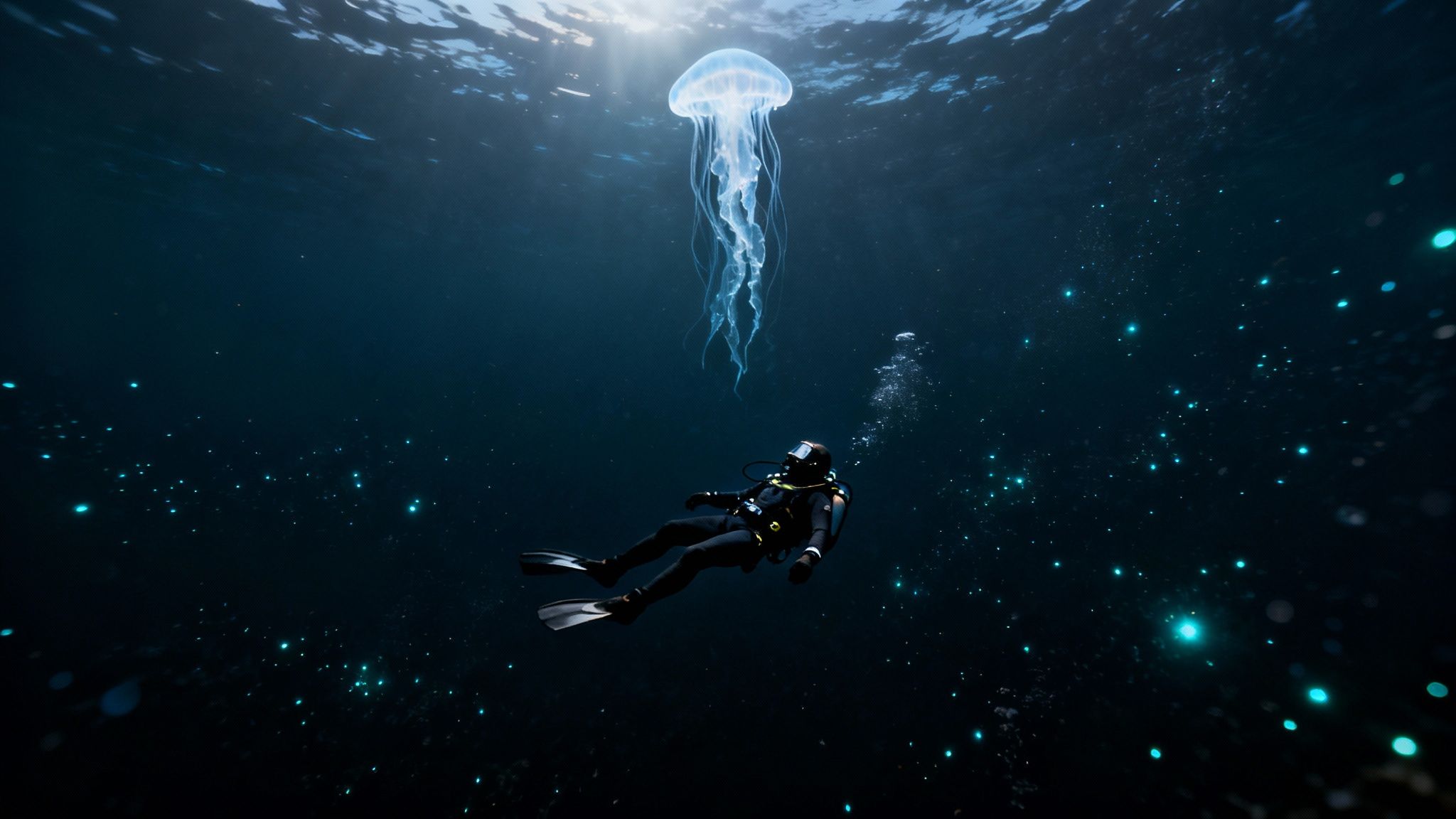
Picture this: you're floating in the deep, dark blue, miles offshore, with thousands of feet of ocean silently suspended below you. You're tethered to the boat, a tiny beacon of light in an immense, inky world. This isn't science fiction—it's the Kona Blackwater Dive, easily one of the most surreal and mind-blowing experiences you can have underwater. People often say it feels like floating in outer space, and they're not wrong.
You're there to witness one of the largest migrations on Earth. Every single night, a countless host of strange, bioluminescent creatures journeys from the crushing depths to feed near the surface. The things you see will redefine your idea of "weird."
- Bizarre Babies: You'll meet the larval forms of common sea creatures, many of which look absolutely nothing like their adult selves.
- Living Light Show: Alien-like jellyfish, sparkling ctenophores, and other glowing organisms put on a natural light show that no nightclub could ever match.
- Ghostly Creatures: See life forms so perfectly transparent you can look right through them, a perfect adaptation for a life spent in the open ocean.
The blackwater dive is a truly humbling experience. Drifting in that vast darkness, surrounded by tiny, twinkling life forms, you get a powerful sense of just how much of our own planet is still a complete mystery. It’s a dive that will stick with you forever.
This is a dive for the truly adventurous. To get a better feel for the logistics and what to expect, check out our complete guide to the Kona Blackwater Dive. Think you're ready to plunge into the abyss? You can book this one-of-a-kind trip directly on the Blackwater Dive tour page.
Mastering Deep Reefs and Lava Tubes
The Big Island’s volcanic origins have created another playground for advanced divers. We're talking deep reefs, ancient lava tubes, dramatic drop-offs, and stunning archways that shelter marine life you just won't find in the shallows. Dives like these require sharp skills—especially rock-solid buoyancy control and a cool head at depth.
There’s nothing quite like navigating these underwater structures. You might be descending a sheer wall to spot rare fish hiding in the crevices or slipping into the shadowy mouth of a lava tube, where beams of sunlight cut through cracks in the old volcanic rock. It’s a powerful reminder of the forces that built these islands.
If you have the certifications and the logbook to back it up, these advanced dives offer a whole new level of challenge and discovery. Kona Honu Divers runs a Premium Advanced 2-Tank Trip designed specifically for skilled divers who are eager to safely explore these deeper, more technical sites.
How to Plan Your Big Island Dive Trip
A little planning goes a long way in turning a good dive vacation into an unforgettable one. While the Kona coast offers spectacular scuba diving on the Big Island of Hawaii year-round, knowing the subtle seasonal shifts can help you craft the perfect trip.
Let's break down the logistics so you can focus on what really matters: the incredible underwater world waiting for you.
When to Visit the Big Island
Here’s the great news: there’s no bad time to dive in Kona. Thanks to the massive volcanoes shielding the coast from the trade winds, the water stays remarkably calm and clear most of the year. Still, the seasons do bring their own unique flavor.
The summer months, from about June to September, boast the warmest water, often reaching a balmy 79-82°F (26-28°C). This is peak season, and for good reason—the days are sunny, and the visibility is usually fantastic.
Then there's winter. From December through March, the water dips slightly to around 75-77°F (24-25°C), but you get a massive trade-off: it's humpback whale season. You’ll often see these majestic creatures breaching from the boat, and once you're underwater, you can sometimes hear their songs echoing through the reef.
Hearing the song of a humpback whale while you're submerged on a reef is a profound, almost mystical experience. It's a powerful reminder of the vibrant, living ocean all around you and a highlight of any winter dive trip.
To make it even easier, here's a quick look at what you can expect throughout the year.
Big Island Diving Conditions Throughout the Year
| Season | Average Water Temp | Visibility | Key Marine Life Sightings |
|---|---|---|---|
| Winter (Dec-Mar) | 75-77°F (24-25°C) | 60-100+ ft | Humpback whales (songs & surface activity), manta rays, turtles |
| Spring (Apr-May) | 76-78°F (24-26°C) | 80-120+ ft | Tiger sharks (offshore), pilot whales, dolphins, manta rays |
| Summer (Jun-Sep) | 79-82°F (26-28°C) | 100-150+ ft | Excellent visibility, calm seas, peak manta ray activity |
| Fall (Oct-Nov) | 78-80°F (26-27°C) | 70-120+ ft | Manta rays, eagle rays, large schools of fish, whale sharks (occasional) |
This table gives you a general idea, but remember, the ocean is always full of surprises!
What to Pack for Your Dive Trip
Packing for Kona is pretty simple, but a few items will make your dives much more comfortable and environmentally friendly.
- Wetsuit: A 3mm full wetsuit is the sweet spot for most divers, most of the year. If you tend to get chilly or you're planning on a lot of night dives (and you should!), you might be happier in a 5mm.
- Reef-Safe Sunscreen: This one is non-negotiable. Standard sunscreens contain chemicals like oxybenzone that are incredibly toxic to our coral reefs. Please, do your part to protect Hawaii’s fragile ecosystem by only packing mineral-based, reef-safe sun protection.
- Your Personal Gear: While you can rent everything, many divers prefer bringing their own mask, dive computer, and safety sausage (SMB). There's a lot of comfort and safety in using gear you're already familiar with.
- Dry Bag: A small dry bag is a lifesaver on the boat. It's perfect for keeping your phone, wallet, keys, and a towel from getting soaked between dives.
Certification and Gear Logistics
Most boat dives here require at least an Open Water Diver certification. If you aren't certified yet, Kona is a phenomenal place to learn! Dive shops like Kona Honu Divers offer everything from a "Discover Scuba Diving" experience for total beginners to full certification courses.
Already a certified diver? This is the perfect chance to level up your skills. You could get your Advanced Open Water, become nitrox certified, or try a specialty like the Manta Ray Diver course.
And the best part? You don't have to lug your heavy gear across the Pacific. Quality, well-maintained rental equipment is readily available, making the whole process a breeze. Just show up with your cert card and logbook, and let the pros handle the rest.
Ready to dive in? Kona Honu Divers offers a huge variety of diving tours that can fit any schedule or skill level.
Why Choose Kona Honu Divers for Your Adventure
Let's be honest, the dive operator you choose can make or break your trip. It's the difference between just getting wet and having an unforgettable underwater experience. This is where Kona Honu Divers really shines, and it all comes down to one simple, powerful idea: small groups.
When you scuba dive Big Island Hawaii with them, you’re not just a number on a packed boat. Their focus on intimate group sizes means you get real, personal attention from your guide. New divers feel more comfortable, and seasoned pros can get the inside scoop on the marine life they’re seeing. It’s a game-changer.
A Deeper Commitment to the Ocean
Kona Honu Divers is a proud PADI Green Star operator, and that's not just a fancy sticker. It’s a serious commitment to protecting the very reefs you’ve come all this way to explore.
This dedication shows in everything they do. They're all about reef-safe sunscreen and actively participate in local conservation projects. Diving with them means your adventure directly supports the health of Hawaii's marine ecosystem. Their guides don't just point things out; they share a genuine passion for the ocean, making every dive more meaningful. You can learn more about their approach to diving on the Big Island and see what sets them apart.
When your dive guide's passion for the ocean is as clear as the water you're descending into, it elevates the entire experience. It transforms a simple tour into a shared adventure.
Don't Just Take Our Word for It
At the end of the day, what really matters is the experience of divers just like you. Kona Honu Divers isn't afraid to show you what their guests are saying, which is why they feature their live Google Reviews right on their site.
You get transparent, unfiltered feedback from people who were once in your shoes, planning their dream dive trip. This kind of social proof speaks volumes and makes choosing them an easy call.
Your Kona Diving Questions Answered
Planning a dive trip always comes with a few questions. To make sure you feel completely ready for your Big Island adventure, we’ve put together answers to some of the most common things divers ask us.
Do I Need to Be a Certified Diver to Go Scuba Diving?
Not necessarily! While you’ll need a certification for most of our deeper reef and lava tube boat dives, you can absolutely get your feet wet (and the rest of you, too) without one.
We offer a fantastic "Discover Scuba Diving" experience. Think of it as a test drive for scuba. You'll be right there with a PADI professional in a calm, shallow reef, getting a real feel for breathing underwater. It's the perfect way to see if you love it before committing to a full course. Plus, for iconic experiences like the Manta Ray Night Dive, snorkeling is an incredible option that anyone can do.
What’s the Water Temperature Like?
One of the best parts about diving in Kona is how comfortable the water is year-round.
- Winter (Dec-Mar): The water is a pleasant 75-77°F (24-25°C).
- Summer (Jun-Sep): It warms up to a balmy 79-82°F (26-28°C).
For most people, a standard 3mm full wetsuit is perfect. That said, if you know you get chilly or you're planning on doing multiple night dives (like the manta or blackwater dives), you might be cozier in a 5mm wetsuit.
Is It Safe to Scuba Dive in Hawaii?
Yes, scuba diving on the Big Island of Hawaii is incredibly safe—as long as you’re with a professional, reputable operator. Safety is our top priority at Kona Honu Divers. We stick to strict standards, run detailed pre-dive briefings, and keep our gear in top-notch condition.
Our guides have been diving these waters for years; they know the sites and currents like the back of their hand. The golden rules are simple: always dive within your limits, listen to your divemaster, and never, ever be afraid to ask questions.
Can My Non-Diving Partner Come Along on the Boat?
Of course! We love it when divers bring their friends and family along. The Big Island is the perfect spot for groups with different interests.
Many of our trips, especially the Manta Ray Night Dive and tours to protected spots like Kealakekua Bay, are set up for both divers and snorkelers. Your non-diving companions can snorkel on the surface or just come along for the ride to soak up the amazing coastal views. Just make sure to check the specific options for your tour when you book.
Ready to jump in? See all the world-class diving tours on the Big Island we offer and find your perfect underwater adventure.