
Picture this: you descend into a world carved out by volcanoes, a place where ancient lava flows have created intricate tunnels and arches. Vibrant coral gardens cling to dark volcanic rock, teeming with life. This isn't a fantasy—it's what makes scuba diving on the Big Island of Hawaii an experience like no other. The Kona coast, in particular, is a stunning tapestry of geology that supports one of the most dynamic marine ecosystems on the planet.
Exploring the Big Island’s Underwater Volcanoes
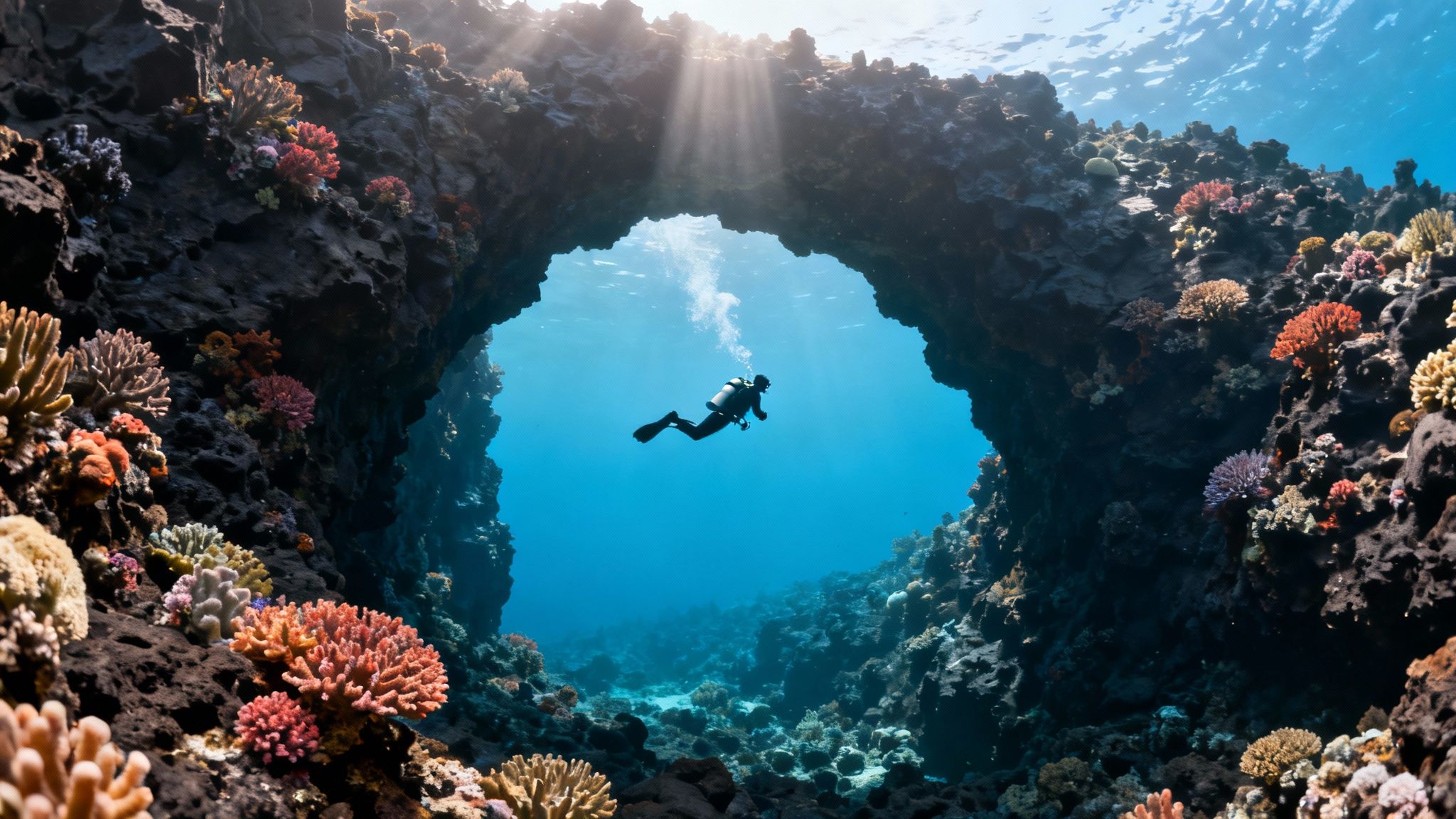
As the youngest of the Hawaiian islands, the Big Island's fiery, volcanic origins are on full display, both above and below the waterline. Unlike the older islands with their sandy, gentle seabeds, the Kona coast is defined by dramatic underwater lava formations.
This unique landscape is a diver’s dream. You’re not just swimming over reefs; you're exploring submerged craters, gliding through arches sculpted by molten rock, and meeting marine life that has made this complex, rocky world its home. The island's volcanoes, like Mauna Loa, are the architects of this entire experience. In fact, the recent Mauna Loa volcano eruption is a powerful reminder of how this geology is still actively shaping the island.
What Makes Kona Diving So Special?
The volcanic structure does more than just create a breathtaking backdrop—it’s the very foundation for incredible biodiversity. That rocky substrate is the perfect anchor for coral to flourish, which in turn creates a bustling metropolis for countless marine creatures.
Here’s what sets Kona apart:
- Lava Tubes and Arches: These incredible formations serve as natural swim-throughs and perfect hiding spots for eels, octopuses, and more reclusive reef fish.
- Pristine Water Clarity: The Kona side lacks major rivers, meaning there's very little sandy runoff to cloud the water. The result is crystal-clear conditions, where visibility often pushes past an amazing 100 feet.
- Rich Marine Life: From the gentle giants of the sea—the manta rays—to tiny, colorful fish found nowhere else on Earth, the volcanic reefs support a dense and vibrant ecosystem.
It's this incredible combination that turns every dive into an exploration of a living, breathing volcanic seascape.
Your Gateway to Adventure with Kona Honu Divers
To really get to the heart of what the Big Island has to offer, you need to go with people who know these waters like the back of their hand. That’s where Kona Honu Divers comes in. We have a deep, personal understanding of this unique environment and know exactly how to guide you safely through its most spectacular sites.
Our expertise is what transforms a great dive into an unforgettable adventure.
Whether you're taking your first breaths underwater or you're a seasoned pro, Kona Honu Divers provides expertly guided diving tours that truly showcase the magic of Kona’s underwater world. Our commitment to safety, small group sizes, and marine conservation ensures you get a premium experience every time you hit the water with us.
Witnessing the Manta Ray Night Dive Ballet
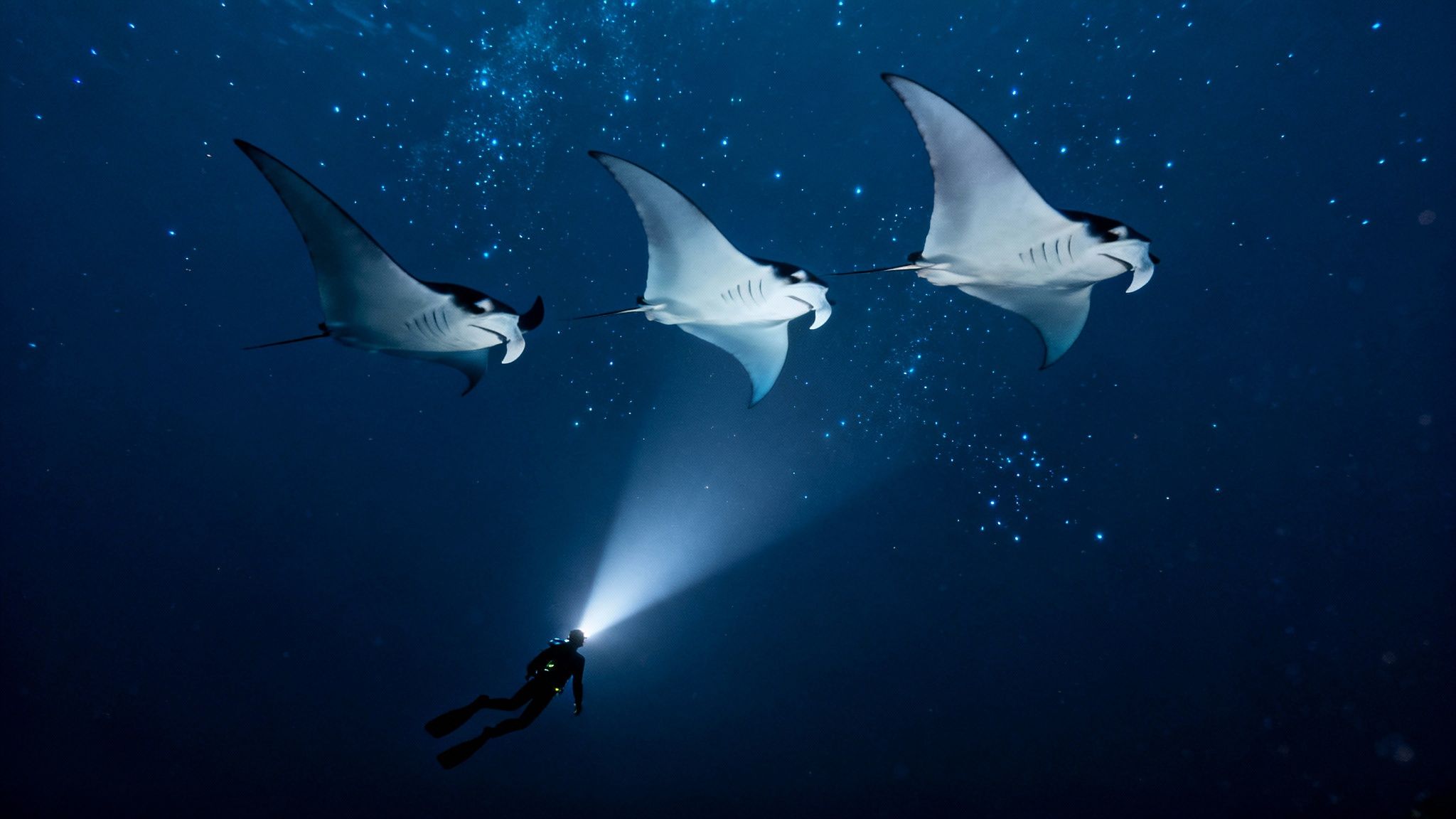
Out of all the incredible things you can do while scuba diving on the Big Island of Hawaii, one experience stands head and shoulders above the rest: the world-famous Manta Ray Night Dive. This isn't just another dip in the ocean; it's an underwater ballet. It’s a breathtaking spectacle where gentle giants perform an ancient feeding ritual, sometimes just inches away. The whole adventure kicks off just as the Kona coast goes dark.
Picture this: you descend into the warm, inky water and find a spot on the sandy ocean floor. Your guide gives the signal, and you point your dive light straight up, creating a brilliant column of light. Almost immediately, the ocean's tiniest organisms—plankton—are drawn to the beams. And where there's plankton, the mantas are never far behind.
They emerge from the darkness, impossibly huge and graceful, performing effortless somersaults and barrel rolls as they feast in the spotlight you've created.
Why Garden Eel Cove is the Superior Choice
While you can see mantas at a few spots, they are not all created equal. From our years of experience, the hands-down best choice for the Manta Ray Night Dive is Garden Eel Cove. This location is the superior choice because of its protected location, a better viewing area, and healthier reefs.
So, what puts it on top?
- Protected Location: Garden Eel Cove is nestled in a naturally sheltered bay, which means calmer water. This makes the dive much more comfortable, especially on nights when the ocean is a little restless.
- Better Viewing Area: The seafloor here is shaped like a natural amphitheater. Divers can settle in comfortably, creating a wide-open stage that allows the mantas to swim freely and safely right above.
- Better Reefs: The reefs around Garden Eel Cove are vibrant and thriving, which means a more robust ecosystem. This healthy environment supports the consistent plankton blooms that bring the mantas back, night after night.
Choosing Garden Eel Cove means you're not just getting a better show; you're participating in a more sustainable interaction that respects the animals and their natural habitat. It ensures the focus remains on the mantas, not on navigating a crowd of other divers.
What to Expect on Your Manta Dive Adventure
Your journey starts with a boat ride as the sun dips below the horizon. On the way out, our crew at Kona Honu Divers will give you a full briefing, explaining manta behavior, safety protocols, and how to respectfully interact with these protected creatures. Once we arrive at Garden Eel Cove, you'll gear up and descend to the designated viewing area.
This dive is famous for a reason: it's incredibly consistent. The Big Island is one of the best places on the planet for manta encounters, and we see success rates exceeding 85-90%. It’s pretty common to have several mantas show up, some with wingspans stretching up to 16 feet, gliding through the light beams.
The whole experience is just profound. The only sound is your own breathing as these majestic animals dance in the water above you. To get a better sense of this year-round spectacle, you can read more about the best times to see manta rays in Kona. It is truly a once-in-a-lifetime encounter that defines what scuba diving on the Big Island is all about.
Discovering Kona’s Top Daytime Dive Sites
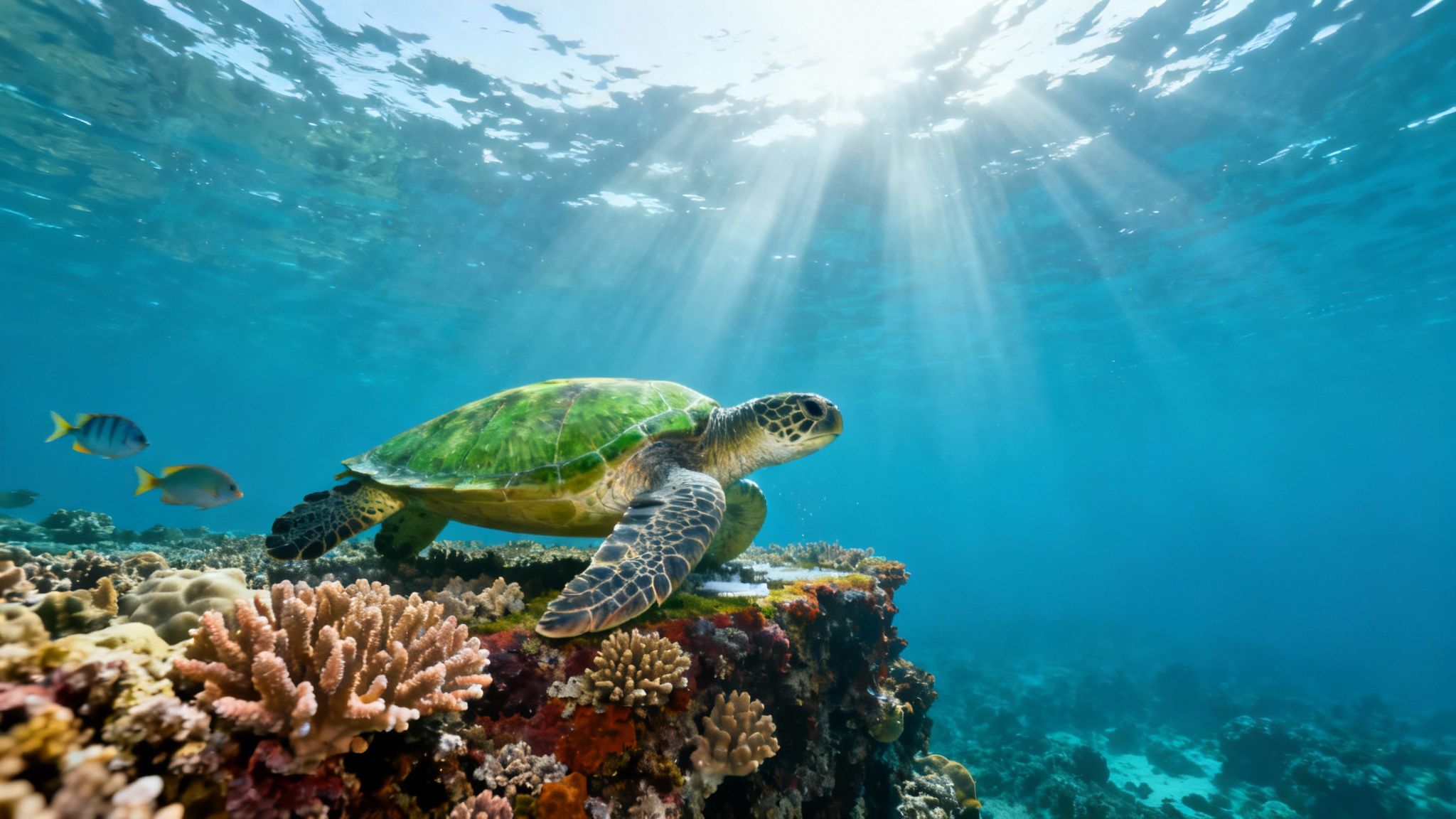
While the Manta Ray Night Dive gets a lot of the glory, don't let it overshadow what Kona's reefs have to offer during the day. When the sun is high, scuba diving on the Big Island of Hawaii reveals a completely different world—a vibrant kaleidoscope of color, life, and dramatic volcanic landscapes that you just can't see in the dark.
Daytime dives are where you can truly appreciate the intricate dance of the reef. Sunlight filters through the clear water, making schools of tropical fish shimmer as they move. It’s your chance to spot tiny macro critters hiding in plain sight and watch as sea turtles and eels go about their daily routines. The visibility in Kona is often so good it feels like flying, making it a paradise for photographers and explorers alike. It's a core part of any well-rounded Big Island diving tour.
Kealakekua Bay: A Pristine Marine Sanctuary
If there's one daytime spot you absolutely have to see, it’s Kealakekua Bay. This isn't just another pretty reef; it's a protected marine life conservation district. Think of it as a national park for fish. Because fishing is off-limits, the ecosystem here has flourished, becoming one of the healthiest and most vibrant in all of Hawaii.
The conditions are usually incredible. Visibility often stretches past 100 feet, giving you breathtaking, wide-angle views of the massive coral gardens that blanket the seafloor. This clarity is what makes diving here so special. You can learn more about the unique conditions of this special bay and see why it’s a must for any diver's logbook.
Kealakekua Bay offers more than just a dive; it’s an immersion into a thriving, protected ecosystem. The abundance and diversity of life here are a direct result of its conservation status, making it a powerful example of what is possible when we protect our oceans.
This historic bay, near where Captain Cook first landed, is fantastic for divers of all skill levels. The calm, clear water and gentle slopes make it a perfect classroom for new divers and a dream studio for seasoned photographers chasing that perfect shot.
Turtle Pinnacle: A Bustling Cleaning Station
Another favorite daytime dive is Turtle Pinnacle, which is basically a full-service spa for Hawaiian green sea turtles, or honu. This submerged pinnacle is a natural "cleaning station" where turtles line up to let reef fish, mostly surgeonfish, pick off algae and parasites.
It's truly fascinating to watch this symbiotic relationship in action. The turtles just hover patiently, completely serene, while the little fish get to work. It’s an amazing photo opportunity and a peaceful moment that connects you directly to the underwater world.
But it’s not just about the turtles. The pinnacle itself is alive with activity:
- Schools of Fish: You'll often find yourself surrounded by clouds of pyramid butterflyfish, raccoon butterflyfish, and Moorish idols.
- Hidden Creatures: Peer into the nooks and crannies to find moray eels, octopuses, and colorful little nudibranchs.
- Unique Topography: The pinnacle rises dramatically from the seafloor, creating interesting walls and ledges to explore.
Choosing Your Daytime Dive Adventure
Here's a quick comparison of our top daytime dive sites to help you choose your next adventure.
| Dive Site | Key Features | Best For | Typical Depth |
|---|---|---|---|
| Kealakekua Bay | Pristine coral, massive fish schools, exceptional visibility | All skill levels, photographers, marine life lovers | 30-80 ft |
| Turtle Pinnacle | Turtle cleaning station, high density of honu | Turtle enthusiasts, underwater photographers | 40-70 ft |
Ultimately, the beauty of daytime diving in Kona is the sheer variety available. Whether you want to explore the protected reefs of Kealakekua Bay, watch the gentle giants at Turtle Pinnacle, or simply drift along a sun-drenched reef, there’s a perfect dive waiting for you.
Here at Kona Honu Divers, we’ve spent years exploring these waters. We know the sites like the back of our hand and can take you where the conditions and marine life are best on any given day. Our guides are passionate about sharing the magic of Kona’s underwater world, and we’ll make sure your daytime dives are every bit as memorable as the famous night ones.
Advanced Diving Through Lava Tubes and Craters
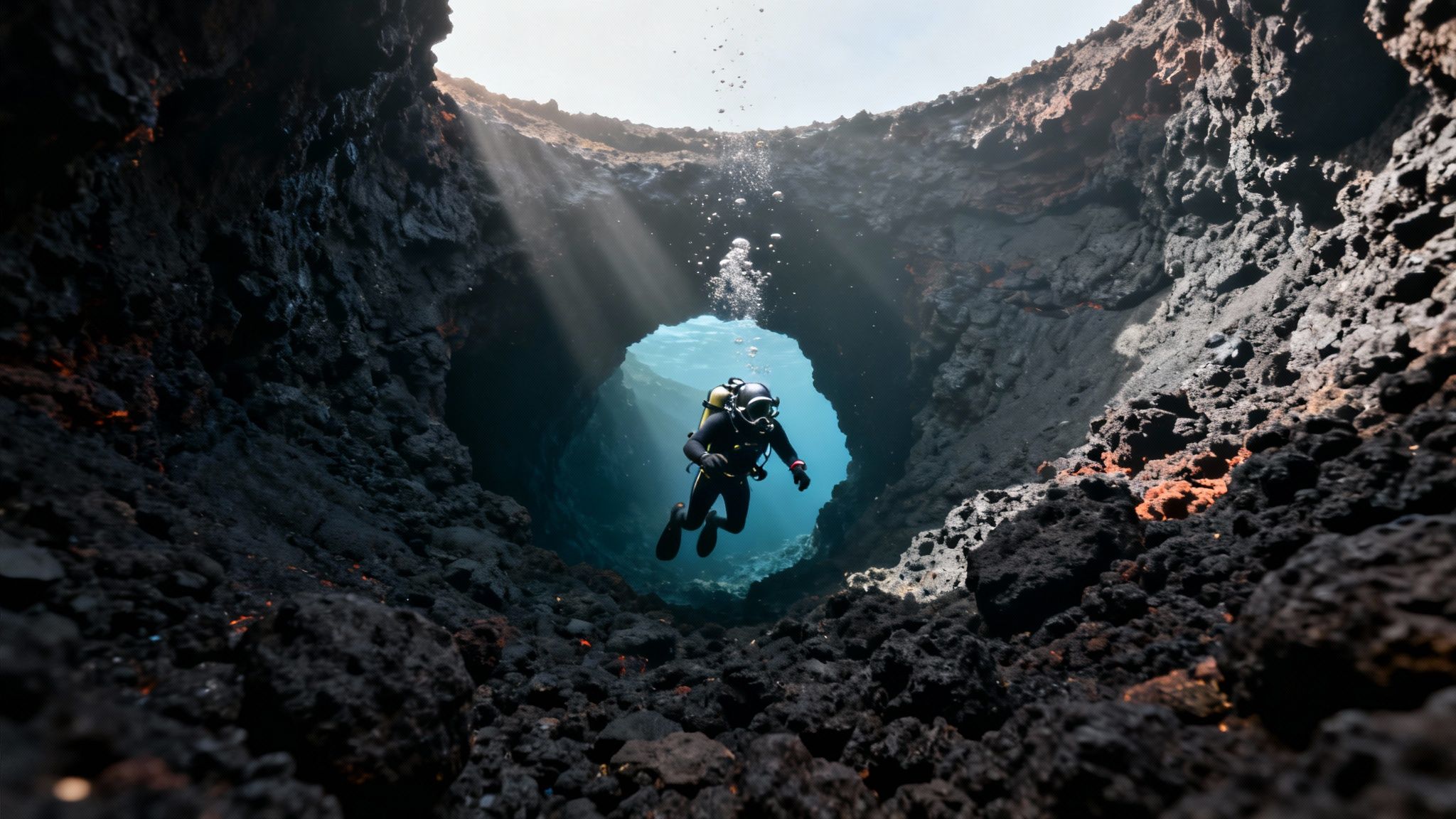
For certified divers looking to push their limits, the Big Island of Hawaii is a true playground. Once you move past the sun-drenched reefs, you discover the island's volcanic heart: a thrilling underwater frontier of ancient lava tubes, massive arches, and sunken craters. These dives aren't just about spotting fish; they’re about coming face-to-face with the raw, powerful geology that forged this place.
Exploring these formations demands a solid skillset. Your buoyancy has to be on point, and a calm, confident mindset is non-negotiable. But the reward is an experience most divers only dream of. Imagine the feeling of gliding through a tunnel carved by molten rock, your dive light dancing across the intricate textures of the volcanic walls. This is where you test your abilities and see a side of Kona that many will never witness.
Exploring Legendary Volcanic Dive Sites
The Kona coast is home to several dive sites that are legendary among seasoned divers for their topography. Places like Au Au Crater and Suck 'Em Up aren't just names on a map; they are dynamic environments where navigating the structure is as much a part of the dive as watching the wildlife.
- Au Au Crater: Dropping into this massive, submerged volcanic crater feels like entering another world. The sheer walls and dramatic drop-offs are breathtaking, and you never know what kind of pelagic life might cruise by in the blue.
- Suck 'Em Up: This isn't just a clever name. This famous lava tube has a gentle surge that can pull you through one section and push you out another. It’s a natural rollercoaster ride for divers with the right training.
- Catacombs: Living up to its name, this site is a complex network of swim-throughs and arches. It’s an exhilarating maze that’s an absolute blast to explore.
These dives are more than just a novelty; they're an immersion into the island's geological soul. The Big Island is in a constant state of creation, and these underwater structures are a direct link to its fiery past. Navigating them safely is an incredible feeling.
The Ultimate Challenge: The Kona Blackwater Dive
Then, for the truly adventurous, there's a dive that exists in a category all its own: the Kona Blackwater Dive. Forget the reef. This is a journey into the deep, open ocean, at night. You’re tethered to the boat, suspended over thousands of feet of inky black water, watching as bizarre, alien-like creatures rise from the abyss to feed.
You get a front-row seat to the largest migration on Earth, an event that happens every single night. The bioluminescent organisms you'll encounter are things most people will never see. It’s a humbling, mind-bending experience that is the ultimate test of a diver's composure and skill.
The Big Island is a diver’s paradise because its geology is so varied. You have sites like Au Au Crater, with depths ranging from 30 to 200 feet, and others like Devil’s Doorway that put the island's volcanic origins on full display. These advanced sites often attract pelagic species like oceanic whitetip and hammerhead sharks, while the sloping reefs host endemic species like raccoon butterflyfish and Moorish idols, making every dive a unique encounter. You can learn more about the topography of these incredible Hawaii Island dive sites to see what makes them so special.
Advanced diving in Kona is about embracing the wild, untamed nature of the ocean. It’s about challenging yourself and being rewarded with experiences that are as unique as the volcanic landscapes you explore.
If you’re a certified diver ready to see what you're made of, Kona Honu Divers offers an advanced dive tour designed just for you. Our expert guides will lead you safely through these remarkable environments, sharing their deep knowledge of the sites and the critters within. This is your chance to see a side of Kona few ever will.
How to Plan Your Big Island Dive Trip
A good dive trip doesn’t just happen—it starts with smart planning. And when you’re talking about scuba diving on the Big Island of Hawaii, getting the details right can turn a fun vacation into the adventure of a lifetime. From picking the perfect season to finding the right crew to dive with, a little bit of homework goes a long way.
The great news is that Kona offers world-class diving any day of the year. But there are subtle shifts in the seasons that can help you plan a trip that’s perfectly suited to what you want to see and experience. Are you hoping to hear the songs of humpback whales through the water? Or do you prefer the water to be as warm as a swimming pool? Knowing what each season brings is the key.
Best Time of Year to Visit
While Kona’s weather is famously consistent, the ocean has its own rhythm. Summer brings the warmest water, often getting up to a toasty 80°F (27°C), which is fantastic for divers who get chilly easily and love long, leisurely explorations of the reef. Winter, on the other hand, is the heart of humpback whale season, offering a completely different kind of magic.
You can have an amazing dive here any month you choose, but winter (December through March) is something special. It’s not uncommon to hear the haunting, otherworldly songs of humpback whales echoing through the water on your dives. It adds an unforgettable soundtrack to the whole experience.
To help you decide, here’s a quick look at what the diving conditions are like throughout the year.
Seasonal Diving Conditions on the Big Island
The Big Island’s waters are inviting all year, but here’s a breakdown of what you can generally expect during each season.
| Season | Water Temperature (Avg) | Visibility | Marine Life Highlights |
|---|---|---|---|
| Winter (Dec-Mar) | 75-77°F (24-25°C) | Generally Excellent | Humpback whales (songs & surface sightings), potential for larger pelagics. |
| Spring (Apr-Jun) | 76-78°F (24-26°C) | Consistently Clear | Calm seas, great all-around marine life activity. |
| Summer (Jul-Sep) | 78-80°F (26-27°C) | Excellent | Warmest water, perfect for long dives and enjoying the reefs. |
| Fall (Oct-Nov) | 77-79°F (25-26°C) | Can be Variable | Generally calm before winter swells, fewer crowds. |
This table is just a guide, of course—the ocean always has a few surprises in store!
Gear to Bring vs. Gear to Rent
The eternal diver's dilemma: what to pack and what to rent? Most seasoned divers will tell you to bring your "personal" gear. This means your mask, fins, snorkel, and dive computer. Nothing ruins a dive faster than a leaky mask, so having one you know fits your face perfectly is a game-changer.
For the bigger, bulkier items like BCDs and regulators, renting from a trusted dive shop is a fantastic way to lighten your luggage. At Kona Honu Divers, we provide top-of-the-line rental equipment that’s meticulously maintained by our in-house technicians. It’s a great way to dive with reliable, high-performing gear without the hassle of flying with it. Plus, it gives you a chance to try out different equipment if you're thinking about buying your own. Getting a handle on these costs is part of the planning, and you can learn more in our guide on how expensive scuba diving in Hawaii is.
Selecting the Right Dive Operator
This is probably the single most important decision you'll make for your trip. A great dive operator doesn't just drive the boat; they shape your entire underwater experience. They put your safety first, show deep respect for the marine environment, and share a contagious passion for the ocean.
Here’s what you should be looking for:
- Small Group Sizes: This is a big one. Smaller groups mean a more personal, relaxed experience where the guide can give everyone the attention they deserve.
- Uncompromising Safety Standards: Look for a shop with a stellar safety record, experienced guides, and boats and equipment that are clearly well-cared-for.
- Commitment to Marine Conservation: The best operators are guardians of the reef. They should be actively promoting and practicing responsible diving.
At Kona Honu Divers, these aren't just bullet points—they're the foundation of who we are. Our team lives and breathes Kona diving. We know these waters intimately, which means we can take you to the absolute best spots based on the day's conditions, giving you the best shot at those incredible wildlife encounters. Our dedication to small groups makes every trip feel less like a tour and more like a day out on the water with friends.
For those whose wanderlust extends across the ocean, you might be interested in planning luxurious expeditions to other Pacific Islands. But for a truly world-class dive adventure right here in Hawaii, we’ve got you covered.
Your Big Island Diving Questions, Answered
Planning a scuba trip to the Big Island of Hawaii is exciting, but it's totally normal to have a few questions pop up. We get it. To make sure you feel confident and ready, we’ve gathered the most common questions we hear from divers just like you.
Think of this as your final check-in before jumping into Kona's unbelievable underwater world. Our goal is to iron out any last-minute wrinkles so you can focus on the adventure ahead.
Do I Need to Be an Advanced Diver to Scuba Dive on the Big Island?
Not at all! One of the best things about Kona is that it has something for everyone. While we definitely have some incredible advanced dives—think lava tubes and deep volcanic craters—there are also dozens of calm, vibrant reefs perfect for beginners.
Sheltered spots like Kealakekua Bay are ideal for newer divers, with gentle conditions and amazing sea life just below the surface. And if you've never tried diving before? No problem. Most shops, including ours, offer a Discover Scuba Diving experience where a pro guides you every step of the way.
What Is the Best Time of Year to See Manta Rays on the Night Dive?
Here's the great news: the Manta Ray Night Dive is a year-round spectacle. The manta rays that grace us with their presence are local residents, not a migratory species, so they show up for their nightly plankton buffet with amazing consistency.
You really can't go wrong, but you might notice small seasonal shifts. The summer months bring warmer water, while winter can sometimes stir up bigger plankton blooms, which can attract an even more impressive crowd. But honestly, any night is a good night to witness this world-famous underwater ballet.
What Other Marine Life Can I Expect to See Besides Manta Rays and Turtles?
The Big Island’s underwater world is absolutely packed with life. The ancient volcanic structures have created a complex and thriving ecosystem that's a joy to explore.
Beyond our famous mantas and honu (turtles), you'll likely run into:
- Spinner Dolphins: We often see them playing near the boat, and sometimes they'll even buzz a dive site.
- Reef Sharks: Whitetip reef sharks are very common, usually found snoozing on the sandy bottom during the day.
- Moray Eels: Keep an eye on the reef's nooks and crannies—you'll often see them peeking out.
- Octopuses: These guys are masters of disguise, so spotting one is always a special treat.
- Endemic Fish: The Big Island is home to fish you won't find anywhere else on Earth, like the Milletseed Butterflyfish.
Here's a pro tip for winter visitors: From December to April, humpback whales are in town. Seeing one underwater is the holy grail for divers—it’s incredibly rare. But what isn't rare is hearing their haunting songs echo through the water during your dive. It's a powerful, full-body experience you'll never forget.
Is It Better to Dive From a Boat or From the Shore on the Big Island?
While you can certainly find some decent shore dives here, the sites that put Kona on the map are almost all accessed by boat. Hopping on a charter just opens up a whole different level of diving.
For starters, a boat gets you to pristine, uncrowded spots you simply can't reach from land, like the famous Manta Ray Night Dive location and the protected marine sanctuary at Kealakekua Bay. Plus, you have professional support, an easy way to get in and out of the water, and the ability to move if conditions aren't perfect at one site.
Boat charters are what we specialize in at Kona Honu Divers. We’ve designed our diving tours around diver comfort and safety, making sure you see the absolute best our coast has to offer. It’s truly the best way to experience everything the Big Island has underwater.
Ready to explore the volcanic underwater world of Hawaii? At Kona Honu Divers, we're passionate about sharing the magic of our oceans with you. Book your dive adventure today and create memories that will last a lifetime. https://konahonudivers.com