
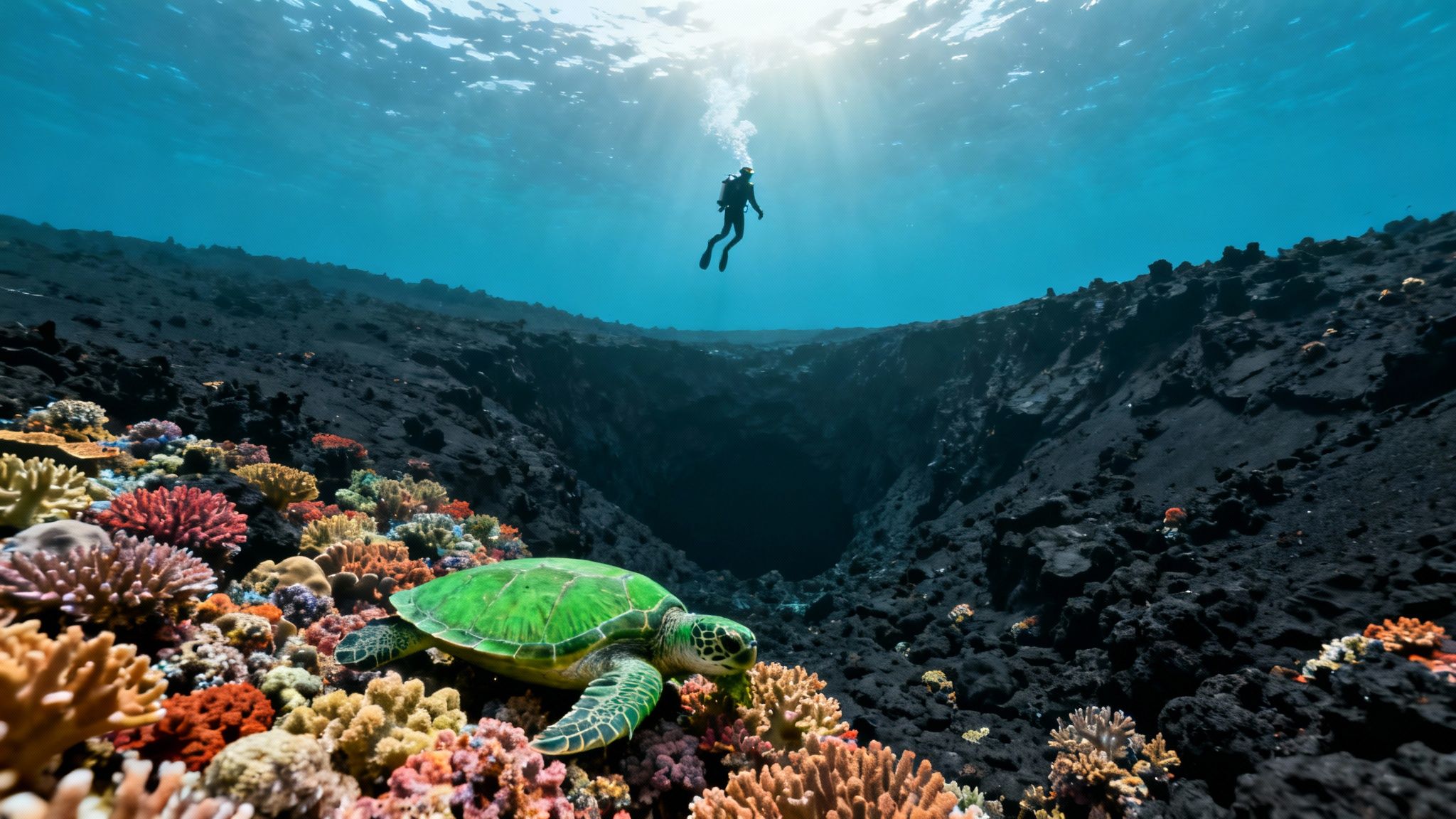
Scuba diving on Hawaii’s Big Island feels like slipping through a doorway into two worlds at once. Dark, jagged lava formations give way to lush coral forests bustling with life.
Every dive here tells a story written in fire and water. One moment you’re drifting over turtle-studded reef flats; the next, you’re sliding along sheer volcanic walls carved by ancient lava flows.
Beginners can practice buoyancy on gentle slopes like Turtle Gardens, while veteran divers chase deeper thrills along dramatic drop-offs.
Day dives bring sunlit reefs, revealing every color in the spectrum. At night, the seafloor transforms—bioluminescent plankton flare to life and nocturnal species emerge from crevices. Visibility can stretch beyond 120 ft on calm days, making each descent feel like flying through an underwater cathedral.
Bullet-list of Standout Experiences
- Turtle Gardens: Spot 100+ species of reef fish weaving through vibrant corals
- Lava Cliff Walls: Drift dives along sheer volcanic escarpments
- Bioluminescent Night Dives: Watch glowing plankton and active night-hunting fish
- Garden Eel Cove: Float in a sheltered bay, then drift with evening manta-ray feedings
Comparison Of Top Big Island Dive Sites
Below is a quick overview to help you match your skill level and wildlife interests with the perfect spot.
| Dive Site | Depth Range | Visibility | Difficulty | Key Species |
|---|---|---|---|---|
| Turtle Gardens | 20–60 ft | 60–100 ft | Beginner | Turtles, surgeonfish |
| Lava Cliff Walls | 30–80 ft | 50–90 ft | Intermediate | Eels, jacks |
| Submarine Canyon | 40–100 ft | 70–120 ft | Advanced | Groupers, manta rays |
| Garden Eel Cove | 15–50 ft | 80–110 ft | Beginner | Garden eels, mantas |
Use this chart to pinpoint which dive combines the scenery, depth, and creatures you’re most excited to encounter.
Tips For Choosing The Best Dive Site
- Match the depth range to your comfort level—shallow bays for newcomers, deeper canyons for seasoned divers.
- Consider visibility: clearer water spells better photo opportunities and easier navigation.
- Pick based on the marine life you want to meet: turtles, eels, mantas or a bit of everything.
- Keep an eye on the season—currents and animal activity shift throughout the year.
Ready to plan your next plunge? Discover why the Big Island is good for scuba diving in our detailed overview and start building your dream itinerary today. Explore our Diving Tours Page.
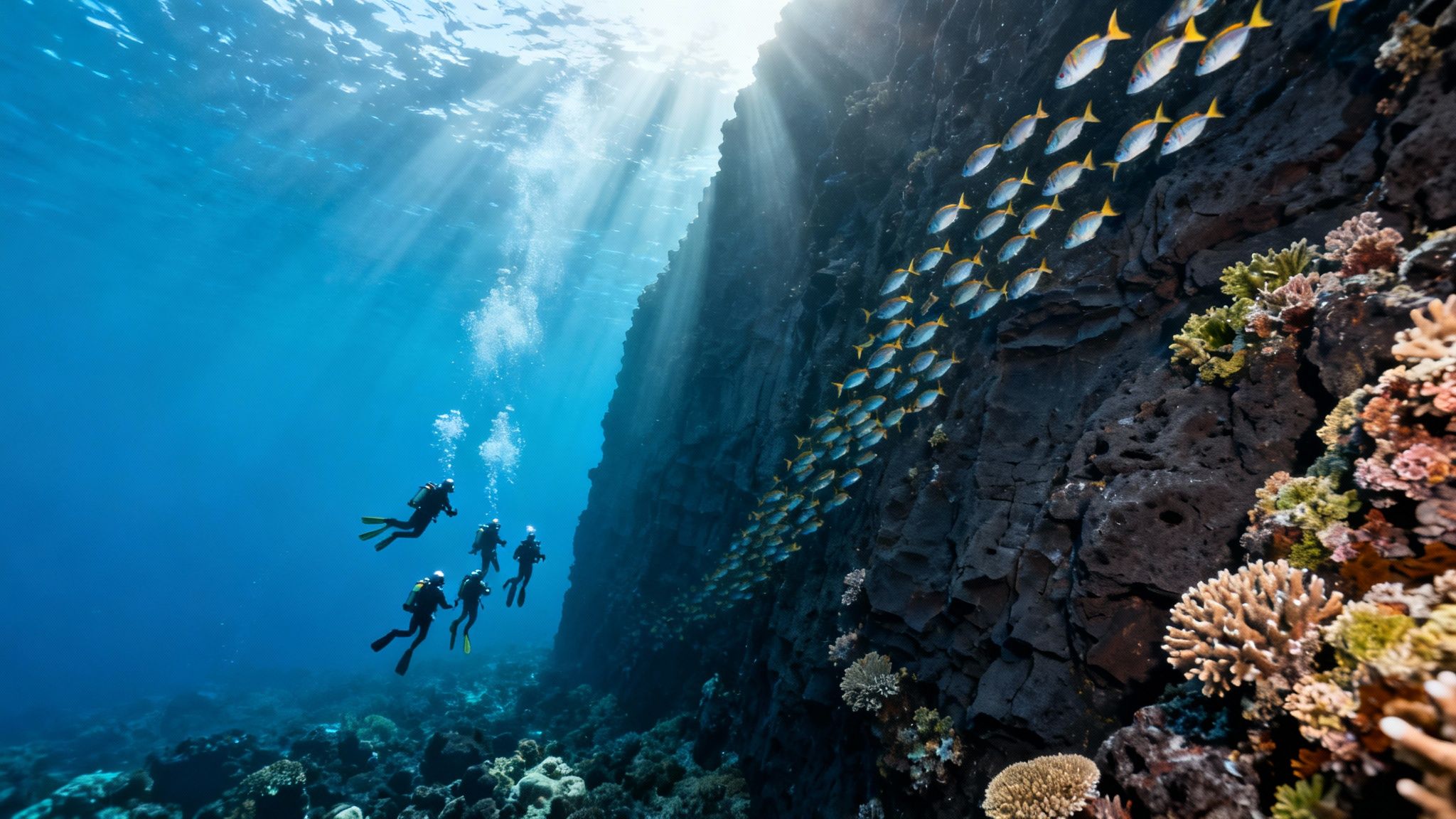
Exploring the Big Island’s underwater world is like leafing through a vivid storybook. Shallow coral gardens glow with color before dramatic walls and arches come into view.
Every site has its own personality. One moment you’re dancing with tropical fish; the next you’re slipping into a lava-formed tunnel.
At Kealakekua Bay you’ll often find 100-foot visibility and a healthy coral sanctuary suited for beginners. Dive the Suck ’Em Up lava tube for an otherworldly cave swim, or drop into Au Au Crater where depths plunge beyond 140 feet and pelagic species drift overhead.
This variety of seascapes helped the Big Island earn its place as Hawaii’s premier scuba destination, with eight exceptional dive sites waiting beneath the waves. Learn more about this recognition
“With visibility often exceeding 100 feet, diving here feels like exploring an underwater cathedral.” — Local Dive Instructor
Whether you’re a first-timer exploring sandy shallows or a seasoned diver chasing technical walls, there’s a site tailored to your skill level. Currents can range from gentle drifts to lively tunnels carved by ancient lava flows.
Shallow Marine Sanctuaries
Protected bays offer calm entry points where reef fish and turtles graze on algae patches. Spring months bring the gentlest currents and clearest waters.
- Turtle Gardens: Sloping reefs at 20–40 ft where green sea turtles forage.
- Garden Eel Cove: Quiet bay home to garden eels peeking from sandy burrows and rays gliding by.
- Kealakekua Bay: Gentle slopes from 15 ft with frequent manta visits and top-notch visibility.
These sites feel like underwater gardens—perfect for practicing buoyancy and snapping colorful photos.
Lava Tube Walls
Drifting through a lava tube is like exploring a submarine cavern. Shafts of light pierce cracks overhead as you glide under rock arches.
- Suck ’Em Up: A 60-ft long, 20-ft high tunnel at Makaluapuna Point.
- Submarine Canyon: Deep channel beyond 100 ft, frequented by groupers and migrating pelagics.
Strong shoulders and precise buoyancy control are must-haves here. Advanced divers love the thrill of slipping into this hidden realm.
Deep Drop-Offs
Vertical walls and nutrient-rich currents attract larger marine life at these sites. Expect stronger flows and darker ledges.
- Au Au Crater: Depths from 80–140 ft with 70–100 ft visibility.
- Alii Wall: Sheer drop beside Kona Harbor, patrolled by white-tip reef sharks.
- Alii Caves: Caverns around 60 ft where cuttlefish emerge at dusk.
By matching each site’s depth and flow to your comfort zone, you can plan dives that challenge you safely.
Depth And Visibility At Key Sites
Use the table below to compare depth ranges and typical visibility at some popular dive spots. This quick reference helps you plan each dive with confidence.
| Dive Site | Depth Range | Avg Visibility |
|---|---|---|
| Kealakekua Bay | 20–100 ft | 100 ft |
| Turtle Gardens | 20–40 ft | 60–90 ft |
| Suck ’Em Up | 40–100 ft | 50–80 ft |
| Au Au Crater | 80–140 ft | 70–100 ft |
This snapshot helps you match site conditions to your experience level, making your dive planning smoother.
Choosing a dive operator on the Big Island is like picking the perfect travel companion—you want someone you trust, who knows the local waters inside and out, and who shares your sense of adventure.
Some outfits focus on intimate, small-group runs. Others bring seasoned PADI teams with decades of experience. Either way, the goal is the same: unforgettable dives in Hawai‘i’s clear, warm waters.
Kona Honu Divers Details
Kona Honu Divers boasts over 200+ combined years of crew experience. Their safety routine never feels rigid—it’s practical, friendly, and designed to put you at ease. From the moment you step on deck, you’ll notice how smoothly everything flows.
“The Kona Honu team made every dive feel effortless and personal” – Repeat Guest
Key Features
- Small Groups (Max 6 Divers): Personalized attention on every dive
- Complimentary Nitrox & Gear: No upcharges for nitrox fills or basic rentals
- Expert Instructors: PADI-certified pros with deep local insight
Operator Comparison
If you’d like to compare a few more local favorites, here’s a quick rundown. Each entry links to real guest reviews and tour details.
-
Kona Freedivers
Specializing in shore dives across calm, sheltered bays, this crew emphasizes eco-friendly practices and gentle, patient instruction.Tour Page: [See Freedivers Tours](https://konahonudivers.com/diving-tours/?ref=blog)
-
Kohala Divers
From the quaint Kawaihae Harbor, they guide you to uncrowded reefs and dramatic lava tubes for a one-of-a-kind underwater tour.Tour Page: [Discover Kohala Trips](https://konahonudivers.com/diving-tours/?ref=blog)
-
Jack’s Diving Locker
A Kona staple since 1970, this outfit is known for advanced wall dives and a robust technical-training program.Tour Page: [Explore Jack’s Locker](https://konahonudivers.com/diving-tours/?ref=blog)
-
Big Island Divers
Veteran crew with deep local knowledge, offering everything from beginner shore dives to multi-tank offshore trips.Tour Page: [Diving Tours Page](https://konahonudivers.com/diving-tours/?ref=blog)
Choosing Your Best Fit
Picking the right operator often comes down to these factors:
- Trip Size & Atmosphere
- Skill Level & Certification Support
- Unique Site Access (lava tubes, night dives, manta-ray experiences)
Pro Tip: If you value one-on-one guidance, small-group charters like Kona Honu Divers or Kohala Divers will feel just right.
Before you lock in your reservations, check out our in-depth ranking of local outfits:
Top 10 Kona Diving Companies Ranked
The waters around the Big Island tell a different story each season. From powerful winter swells that reshape reef topography to laid-back summer seas glowing in sapphire light, understanding these shifts is key to planning a standout dive trip. Learn how storm-carved channels and sun-warmed bays can work in your favor.
Seasonal Currents And Temperature Shifts
Winter (December to February) ushers in strong northwest swells that constantly reforge shallow reefs. At Turtle Gardens, for instance, shifting sandbars open new drift routes perfect for intermediate divers.
Summer (June to August) delivers calm seas and surface temperatures around 82°F, making for crystal-clear explorations.
- Winter Swell Effects: Robust currents and water temperatures near 75°F in January
- Summer Calm Conditions: Sheltered bays at 82°F with visibility beyond 100 ft
- Spring & Fall Mix: Variable swells meet trade winds, creating surprisingly rewarding dive windows
Before you hit the boat, consult the complete Hawaii vacation packing checklist—it covers reef-safe sunscreen, dive paperwork, and other essentials.
Marine reserves around Kealakekua Bay have sparked a surge in biodiversity. Today’s divers glide alongside schools of 60+ fish species around thriving coral walls. For deeper insights, see Kealakekua Bay Marine Protection Details.
“Timing dives around currents and moon phases can transform a routine descent into a front-row seat for manta feedings and spawning aggregations.”
Timing Wildlife Encounters
Moon phase matters on night dives. A full moon bathes the seafloor in soft light, highlighting resting turtles and grazing parrotfish. During a new moon, the pitch-black backdrop amplifies bioluminescent plankton—and makes mantas stand out in your photos.
- Check Your Dive Calendar
- Flag new-moon windows for peak manta activity
- Note turtle nesting season (May to July) for daytime sightings
- Book Ahead
- Manta dive slots fill fast during winter holidays and summer crowds
- Explore Kona Honu Divers Tour Packages
- Pack Smart
- Reef-safe sunscreen and UV-protective rash guards are must-haves
- Stash spare batteries for dive lights and cameras
- Because winter currents can shift overnight, pack patch weights for drift stability
- Summer’s mild temps may let a 3mm wetsuit work wonders, but bring a 5mm for deeper, cooler dives
Booking And Crowd Avoidance
High season runs March through May, peaking again over the December holidays. In contrast, September and October often see fewer divers and quieter spots.
Opting for midweek charters usually means smaller groups and better rates. Always check boat capacity and departure times to sidestep crowds.
Staying flexible with dates can unlock discounted trips to less-visited reefs. Ready to lock in your adventure? Head over to Kona Honu Divers Tour Packages.
By syncing lunar rhythms, seasonal shifts, and smart booking strategies, you’ll drop into Kona’s underwater mosaic at the perfect moment—setting the stage for unforgettable encounters with mantas, turtles, and elusive nudibranchs.
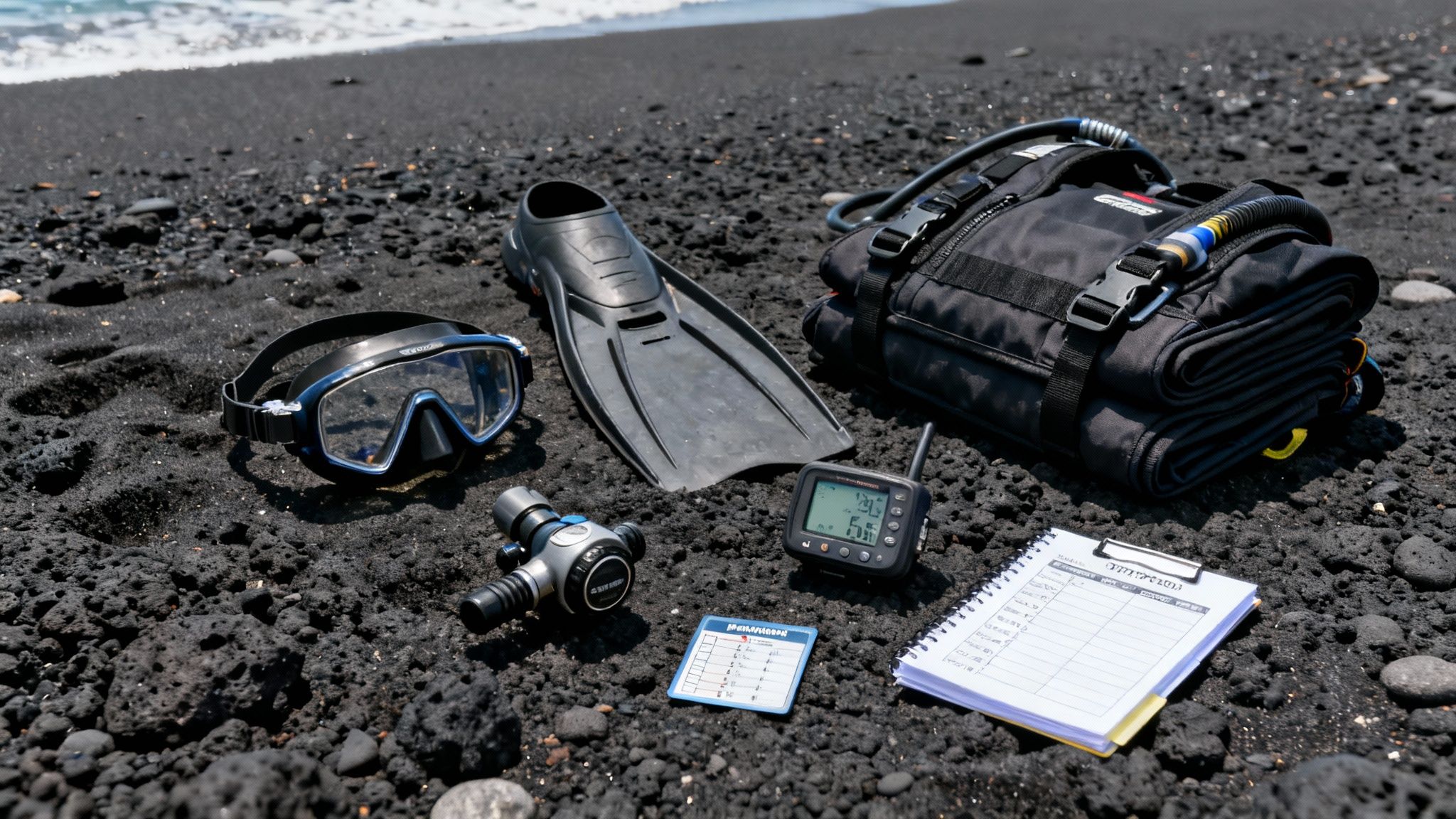
Diving on the Big Island starts long before you slip into the water. Laying out every piece of equipment on the shore is like a pilot running through a pre-flight routine—it builds confidence and cuts down surprises once you’re under the waves.
Your dive computer is essentially a fitness tracker for your dive, logging depth, bottom time, and safety stops. Fins act as your running shoes underwater, turning every kick into forward motion while easing leg fatigue.
Begin with the essentials: regulators, BCD, weights, mask, snorkel and exposure suit. Each item needs to move smoothly and seal properly. Even a tiny leak in your mask can turn a perfect current into a headache.
-
Regulator Maintenance
Scan hoses for cracks and test the mouthpiece for a snug fit. -
BCD Inspection
Inflate fully, watch for slow leaks, then deflate. -
Wetsuit Choice
A 3mm suit offers agility near the shore; 5mm keeps you warm on deeper walls. -
Mask and Fins Fit
Sit in the sun with your mask on—no red marks around your eyes—and kick in shallow water to confirm fin straps hold.
“Skipping a single gear check is like flying a plane without reviewing the pre-flight list.”
| Item | Recommended Spec | Purpose |
|---|---|---|
| Regulator | Balanced second stage | Smooth air delivery at depth |
| BCD | Jacket style | Ease of adjustment in currents |
| Wetsuit | 3mm–5mm | Thermal protection |
| Dive Computer | Air-integrated | Real-time depth and time data |
| Fins | Adjustable blade | Power and low energy use |
Additional Gear Essentials
Even the best core kit needs a backup plan. Tuck spare O-rings and defog solution into your pockets—small fixes that can save an entire dive.
A dive knife, a signal mirror and a whistle are lightweight additions that become real lifesavers if you drift off course or surface far from the boat.
-
Spare O-rings
Carry at least two sets for your mask and regulator. -
Defog Solution
Keep your vision clear in changing temperatures. -
Surface Marker Buoy
Wave it on the surface to flag down boats during a drift dive. -
Underwater Slate
Sketch dive plans or point out a hidden octopus when visibility drops.
Why Proper Certification Matters
Your qualifications decide which sites you can explore safely. Local guides often ask for specialty proof before you go past 80 ft. Adding a Deep Diver certification unlocks walls that plunge to 130 ft—and teaches you crucial decompression planning.
Signing up for a Night Diver course builds your confidence in low-light conditions, so you can meet the famous manta rays after sunset.
Certification isn’t paperwork—it’s your ticket to richer, safer adventures.
Ready to dive in? Explore our Big Island scuba diving tours with Kona Honu Divers for trips that fit every experience level.
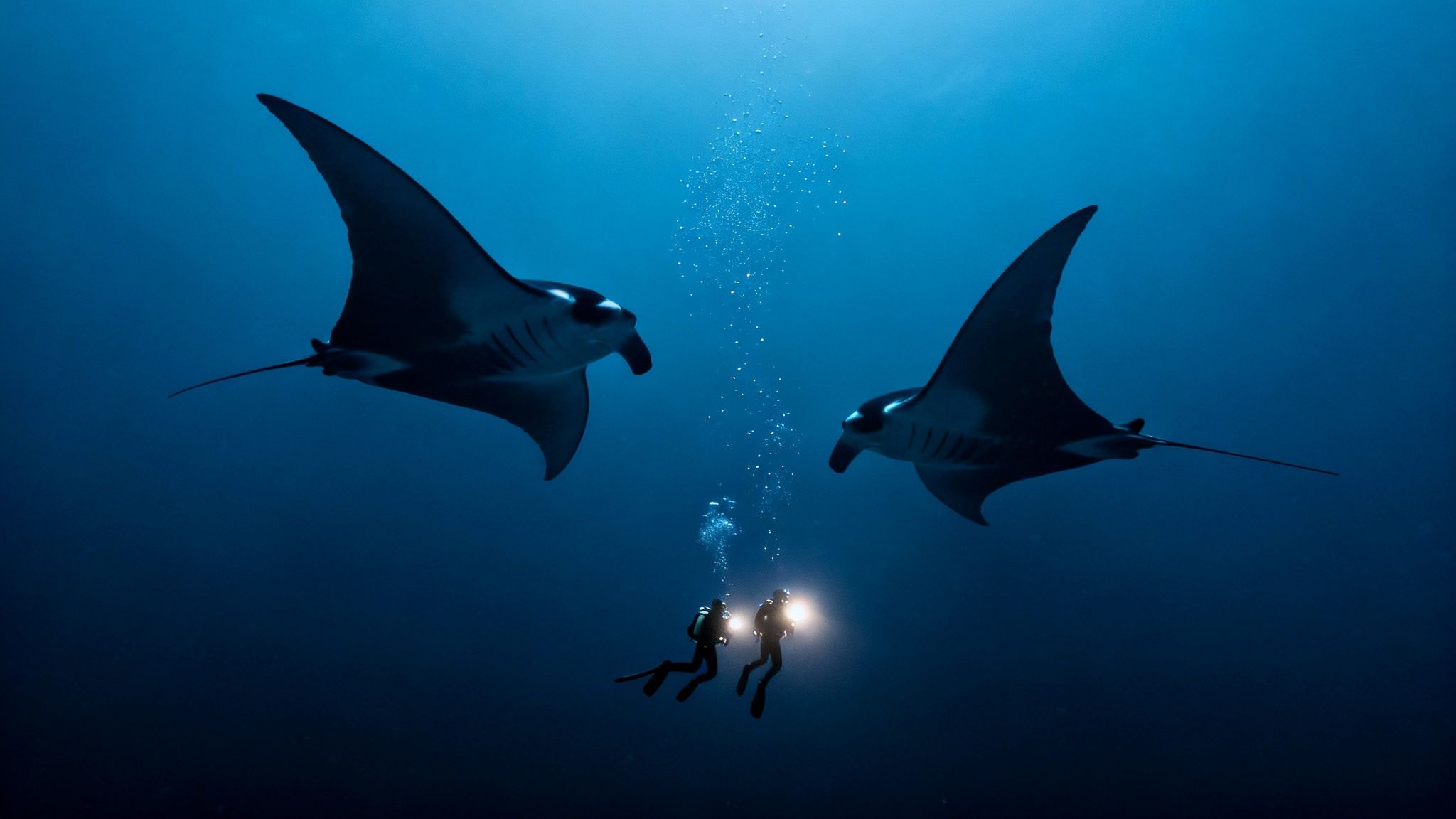
When the sun dips behind Kona’s shoreline, the reef erupts into a world of hidden life. Tiny organisms glow like stars in a midnight sky, and predators slip through coral shadows with silent grace.
For many divers, the ultimate “scuba diving Big Island Hawaii” treat is the manta ray night dive—an experience that feels more like a live performance than a regular scuba trip.
On the west coast, Garden Eel Cove stands out as a protected bay where reef formations and soft currents set the perfect stage. Divers here report success rates of 85–90%, often spotting up to 23 mantas per session—details are in the full Jack’s manta report.
Garden Eel Cove Manta Ray Night Dive
At Garden Eel Cove, a sandy bottom offers mantas room to spiral and somersault in front of your beam. Bright dive lights lure plankton upward, creating drifting curtains of food that the mantas glide through like ballet dancers.
This spot feels welcoming for photographers—plenty of space and clear sightlines—and gentle enough for those tackling their first night dive.
“The mantas glide just above your light beam—it feels like they’re putting on a private show,” recounts a night dive guest.
Before the mantas arrive, you might even spot a hawksbill turtle tucking into coral ledges. And thanks to steady currents, visibility stays high while sediment settles elsewhere.
Blackwater Night Adventures
Dive beyond the reef walls into open water and you’ll encounter a different universe. On a blackwater night drift, there’s no bottom in sight—just you, your light, and an endless procession of midwater life.
Highlights include:
- Bioluminescent critters pulsing in the beam
- Transparent plankton where you can see their organs glow
- Drifting shrimp and squid pirouetting without ever touching ground
This surreal drift dive pulls back the curtain on the open-ocean ecosystem that daytime reef trips never reveal. Read our guide on Blackwater Night Dives and start your drift here.
Premium Advanced Deep Wall Trip
Certified deep divers can level up with a premium two-tank adventure. You’ll follow steep lava escarpments festooned with soft corals and gorgonian fans.
Descending to 100–130 ft, you’ll need helium mixes, tight buoyancy control, and disciplined gas planning. Along the way, expect:
- Lava overhangs dripping with vibrant coral
- Pelagic visitors like tuna and white-tip sharks
- Complex topography that puts your navigation skills to the test
See the Premium Advanced 2-Tank Trip for details.
| Dive Type | Depth Range | Key Highlights |
|---|---|---|
| Manta Ray Night Dive | 15–50 ft | 85–90% success, up to 23 mantas, calm bay |
| Blackwater Night Drift | 100+ ft | Bioluminescent plankton, open-ocean creatures |
| Premium Advanced Deep Wall | 100–130 ft | Lava overhangs, pelagics, technical challenge |
Gear check for after-dark dives goes a bit further:
- A primary dive light and backup torch
- A low-volume mask and spare O-rings
- Reef-safe gloves and a potent defog solution
- A surface marker buoy for drift scenarios
“Skimp on your light or backup O-rings, and you risk turning a dream dive into a scramble,” cautions a Kona dive pro.
Wildlife You Can Expect
Typical night-dive encounters include:
- Manta rays performing feeding acrobatics
- Pulsing bioluminescent plankton trails
- Midwater jellyfish, shrimp, and squid on blackwater drifts
- Nocturnal reef dwellers such as octopus, lobsters, and shrimps
Read also our guide on special night dives in our detailed Big Island manta ray night dive experience to deepen your understanding of after-dark coastal wonders.
With thorough gear checks, experienced guides, and a mindful approach to marine life, your nocturnal journey will be both safe and spellbinding. Each blink of your light reveals a new layer of Big Island mystery—an unforgettable chapter in your diving story.
What Documents Are Required?
To dive around the Big Island, you’ll need a valid open water certification card (or digital proof) and a photo ID. No substitutions—operators check these before you ever hit the water.
When Is The Best Time For Manta Rays And Whales?
If you’re chasing manta rays, plan a night dive between December–February, when Kona’s seas quiet down. For humpback whales, March to May is prime—these gentle giants migrate past our shores during that window.
Equipment Choices
Should you rent or bring your own gear? Renting saves on heavy baggage fees, but using your own fins and mask often means a better fit—and more comfort underwater.
Can I transfer my certification from another agency? Yes. Most dive shops accept PADI, SSI, and NAUI cards, provided you verify in advance.
- Three Certification Tips:
- Check your card’s validity on the issuing agency’s website.
- Carry both digital scans and a paper copy.
- Confirm any specialty credits (nitrox, deep dive, etc.).
Are there age or health guidelines? Most outfits welcome divers 10 and up, as long as you complete a basic medical screening.
What safety measures protect divers? Every trip kicks off with a detailed pre-dive briefing, gear inspection, and an emergency plan.
Always dive within your training limits and follow your guide’s instructions.
How does weather affect schedules? Kona’s trade winds or unexpected swells can shift departure times. Operators keep an eye on conditions and adjust itineraries on the fly.
Booking Info
Who should I contact to book scuba diving big island hawaii tours? Kona Honu Divers offers day and night dive packages on the west coast. Explore all options at Diving Tours Page.
What happens if no mantas appear? Many operators will let you rebook for free or offer a discounted return dive before you head home.
Is weather ever a cancellation reason? Safety comes first; tours may be postponed or refunded if storms roll in.
What about guided snorkels? Combo dive-snorkel packages let non-divers join the manta ray show.
- Confirm rebook policies before booking.
- Book a dive + snorkel combo for mixed-experience groups.
Can I schedule private charters? Absolutely—private trips are available. Just ask about custom itinerary options.
Kona Honu Divers bookings: https://konahonudivers.com