
Scuba diving on the Big Island isn't just another tropical getaway; it's an encounter with one of the most unique underwater environments on the planet. Here, the raw power of volcanic creation meets the delicate beauty of marine life. The Kona coast, in particular, is a diver's dream, offering calm, crystal-clear waters that make it perfect for everyone from first-timers to seasoned pros looking to explore lava tubes, vibrant coral gardens, and incredible wildlife.
Why the Big Island Is a World-Class Diving Destination
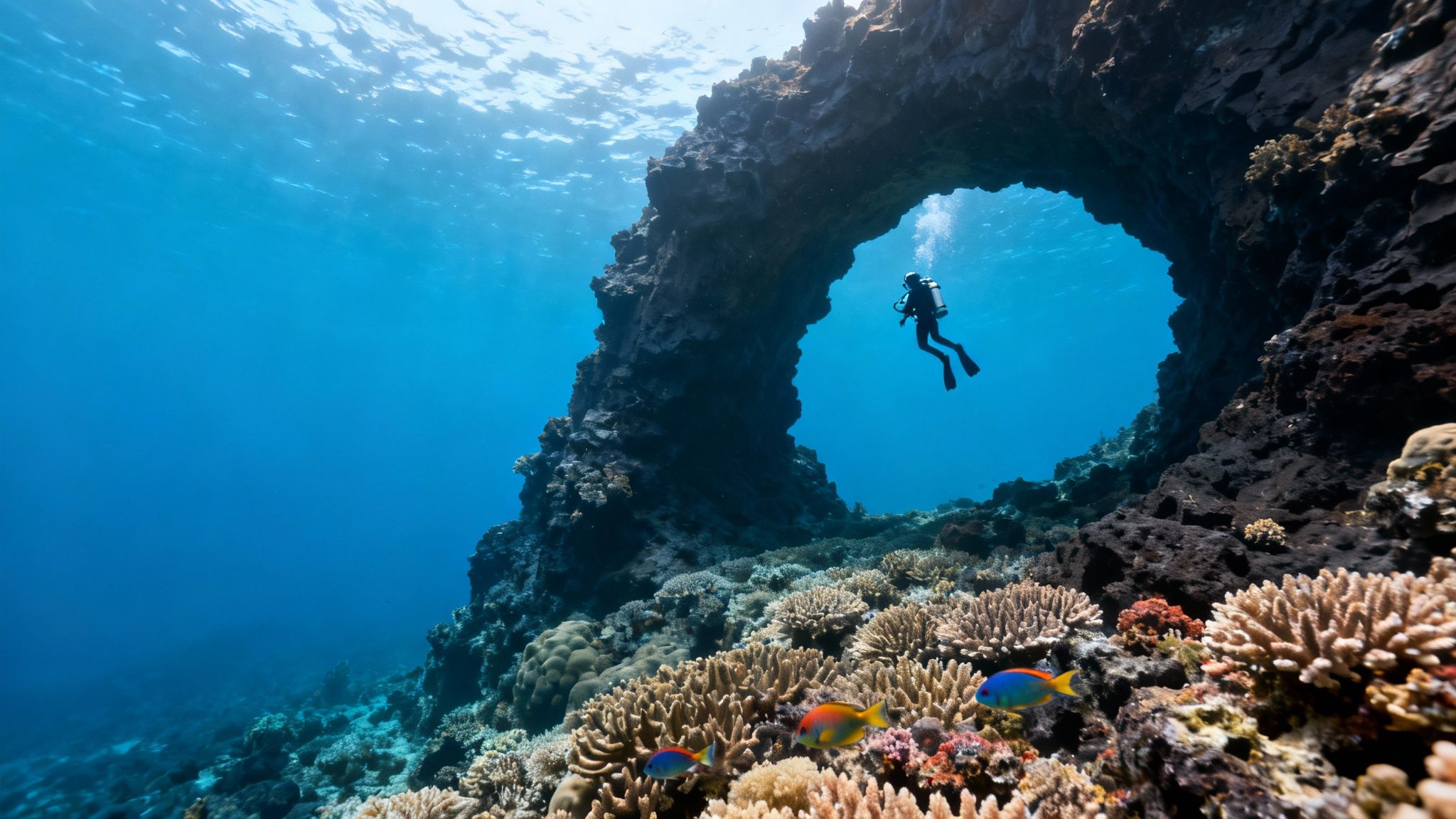
Picture this: you descend into a deep blue world where the geology is just as stunning as the fish. That's the heart of scuba diving Big Island Hawaii. The island’s volcanic past has carved out a spectacular underwater playground full of arches, caverns, and intricate lava formations you simply won't find anywhere else.
The real magic happens on the Kona coast. Thanks to the towering volcanoes of Mauna Loa and Hualalai, this side of the island is shielded from the strong trade winds. The result? Exceptionally calm and clear water all year long. This natural protection allows fragile coral reefs to thrive and gives divers phenomenal visibility, which often stretches beyond 100 feet.
Unique Topography and Abundant Marine Life
The underwater landscape here is a direct result of the island's fiery birth. You can glide through massive lava tubes, explore ancient submerged craters, and drift along breathtaking drop-offs. It's this complex structure that creates the perfect habitat for a staggering amount of marine life.
What makes Big Island diving so special?
- Volcanic Formations: The underwater architecture is incredible. Think lava arches, deep canyons, and swim-throughs all formed by ancient lava flows.
- Healthy Coral Reefs: The Kona coast boasts some of the most vibrant and sprawling coral gardens in all of Hawaii, which in turn support thousands of different species.
- Incredible Biodiversity: It’s almost a guarantee you'll run into green sea turtles (honu), playful spinner dolphins, and schools of colorful reef fish on nearly every single dive.
The World-Famous Manta Ray Night Dive
If there’s one dive the Big Island is known for, it’s the Manta Ray Night Dive. This isn't just a dive; it's a world-famous spectacle. The success rate for seeing mantas is a staggering 85-90%, and it's not uncommon to be surrounded by anywhere from a few to over 30 of these gentle giants in one evening. Dive operators set up underwater lights that attract plankton, which brings the mantas in for a graceful, silent feeding ballet that will leave you speechless. You can read more about what makes the Big Island’s biodiversity so special on the Kona Honu Divers' blog.
This one-of-a-kind combination of geology, protected waters, and bucket-list dives truly cements the Big Island's reputation as a top-tier global diving destination. Whether you're just getting certified or have hundreds of dives under your belt, the adventures waiting beneath the waves are unforgettable. For those ready to jump in, Kona Honu Divers offers a fantastic range of guided diving tours that hit all the best spots.
The Unforgettable Manta Ray Night Dive Experience
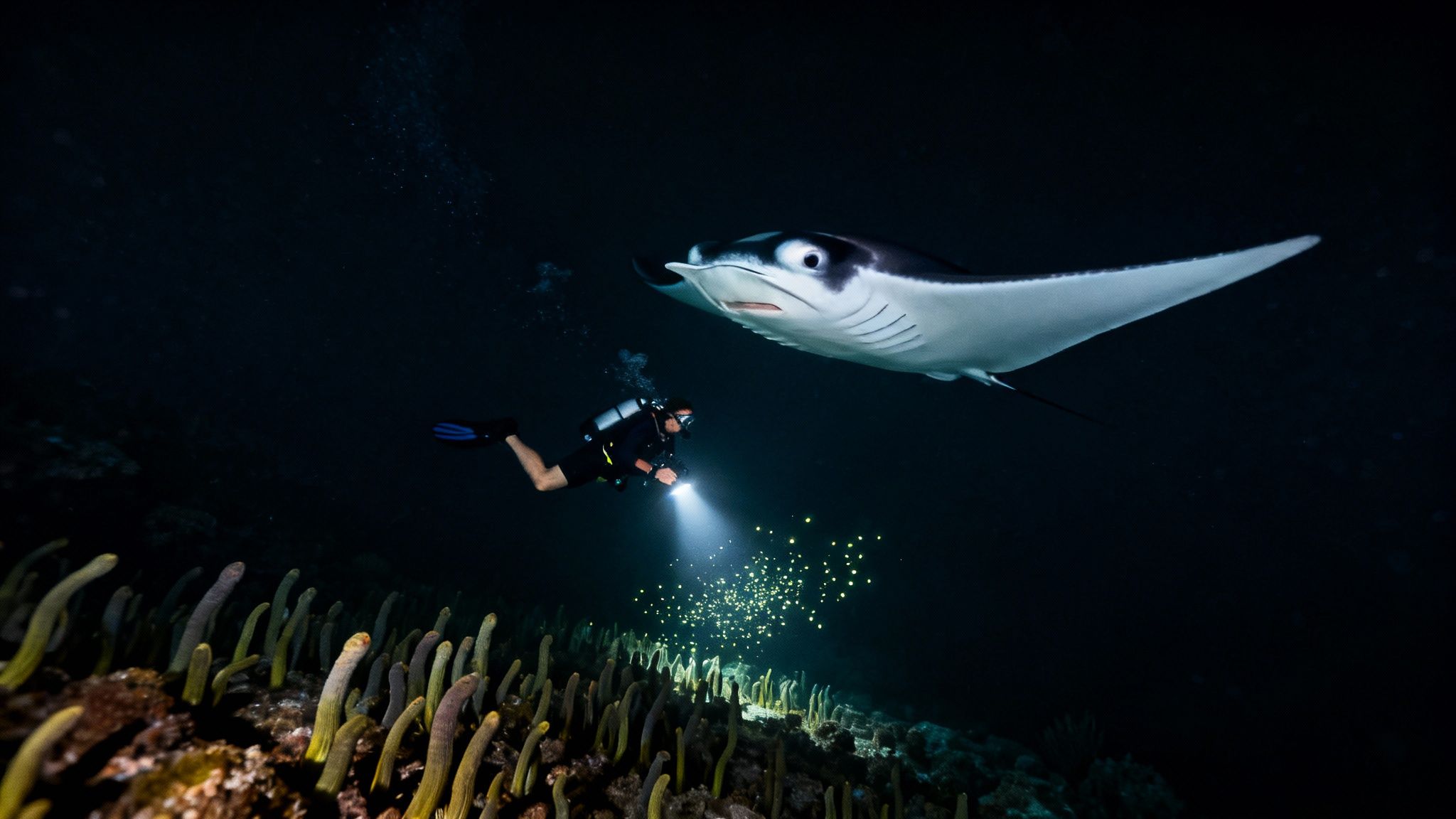
If there's one dive you absolutely must do on the Big Island, it's the manta ray night dive. It’s consistently called one of the best night dives in the world, and honestly, that might be an understatement. Imagine kneeling on the sandy ocean floor in the dark, watching giants with wingspans up to 16 feet swoop and soar inches from your face. It's nothing short of an underwater ballet.
So, how does this incredible spectacle happen? It’s a brilliant (and safe) bit of science. Dive operators set up powerful lights on the ocean floor that shine up toward the surface. These lights act like a magnet for tiny plankton, which swarm into the beams. The mantas, knowing dinner is served, show up for an all-you-can-eat buffet, performing graceful barrel rolls to filter the feast from the water.
This isn’t like watching fish behind glass at an aquarium. You’re right there, a quiet guest at their dinner table, immersed in their world. The experience is intimate, surreal, and something you'll talk about for years.
Why Garden Eel Cove is the Premier Manta Location
You might hear about a couple of spots for this dive, but for those in the know, one location is the undisputed champion: Garden Eel Cove. Just north of Kona, this site (aptly nicknamed Manta Heaven) delivers the definitive experience for a few key reasons.
- Calm and Protected: The cove’s natural geography shields it from the open ocean, which means calmer, more comfortable conditions for divers on the bottom. Less rocking and rolling makes a huge difference.
- A Natural Amphitheater: The seafloor here is shaped almost like a theater. This setup allows dive groups to settle in perfectly without obstructing anyone's view, giving everyone a front-row seat to the show above.
- A Healthier Reef: Even before the mantas arrive, the dive at Garden Eel Cove is fantastic. The surrounding reef is vibrant and thriving, and a healthy ecosystem means a more robust food chain to attract the mantas in the first place.
- More Mantas, More Often: While nature never offers a guarantee, Garden Eel Cove consistently attracts larger groups of manta rays. More mantas means a more dynamic and jaw-dropping performance.
Simply put, while other sites are good, Garden Eel Cove is truly world-class.
A Safe, Respectful, and Unforgettable Encounter
Being this close to these magnificent animals is a privilege, and every reputable operator is committed to protecting them. Manta rays have a delicate mucus coating on their skin that protects them from infection. Because of this, touching them is strictly forbidden.
By following a few simple rules—like staying on the bottom and avoiding blowing your bubbles right into a manta's path—you help ensure these gentle giants can continue to fascinate divers for generations to come.
It's hard to describe the feeling of a massive ray gliding overhead, making momentary eye contact before swooping back into its graceful dance. It’s a connection that stays with you. To experience it yourself, you'll need to book with a professional guide like Kona Honu Divers to ensure everything is safe and well-managed with their manta ray dive tours.
Not a certified diver? No problem. Snorkelers can watch the entire show from the surface, making this an incredible adventure for almost everyone. We break down the differences in our guide to the Big Island manta ray night snorkel.
Exploring the Top Dive Sites Along the Kona Coast

While the manta ray night dive often steals the spotlight, the daytime adventures along the Kona coast are just as breathtaking. This coastline is a diver's paradise, packed with dozens of world-class sites that tell the story of the island's volcanic past and vibrant marine life.
Thanks to the way the island shelters the coast, the water is often incredibly calm and clear. This means you can just relax and soak in the incredible biodiversity all around you. From dramatic lava tubes to peaceful coral gardens, there's an underwater world waiting for every diver. Let's explore a few of the must-see spots that make Kona so special.
Kealakekua Bay: A Protected Paradise
Kealakekua Bay isn't just another dive site; it's a living, breathing sanctuary. As a protected marine reserve with major historical importance, it’s famous for its pristine water and absolutely teeming reefs. The no-fishing rules have allowed marine life to flourish, creating an explosion of color and activity that feels like diving in a perfectly maintained aquarium.
The conditions here are typically calm and gentle, making it a fantastic spot for divers of all experience levels. It’s not uncommon for visibility to push past 100 feet, giving you some of the clearest views in all of Hawaii. You're not just exploring a reef; you're witnessing what a healthy Hawaiian ecosystem truly looks like. Historically, this is also where Captain James Cook first landed in 1779, adding another layer of significance to every dive.
Turtle Pinnacle: Where Honu Gather
Just like the name says, Turtle Pinnacle is the place to be for seeing Hawaiian green sea turtles, or honu. The centerpiece of the site is a large coral pinnacle rising from the ocean floor, which acts as a natural "cleaning station."
It's an incredible thing to witness. You’ll see turtles hovering almost motionless in the water while small fish, like the Hawaiian cleaner wrasse, swim up and pick algae and parasites right off their shells. It’s a beautiful, symbiotic dance and a dream for underwater photographers.
Besides the turtles, the reef is buzzing with other life:
- Schools of Butterflyfish: Bright yellow schools drift around the coral heads like confetti.
- Eels: Keep an eye out for moray and garden eels poking their heads out of rocky crevices.
- Frogfish: These guys are the ultimate masters of camouflage. Spotting one is a real reward for divers with a sharp eye.
Golden Arches: Lava Tubes and Swim-Throughs
If you're a diver who gets excited about unique underwater landscapes, Golden Arches is your spot. This site is a perfect showcase of the Big Island’s volcanic heart, with a whole network of lava tubes, huge archways, and fun swim-throughs to explore.
Gliding through these ancient lava formations feels like you're in an underwater cathedral, especially when sunlight streams down through openings in the rock. The site earned its name from two massive arches that are frequently home to schools of golden-hued fish, creating a scene that’s pure magic. This is a dynamic dive that beautifully illustrates how geology and marine life come together.
To help you get a quick sense of what each site offers, here's a simple breakdown.
Big Island Dive Site Highlights
| Dive Site | Key Features | Best For | Average Depth |
|---|---|---|---|
| Kealakekua Bay | Protected marine reserve, exceptional clarity, dense fish populations, healthy corals. | All levels, snorkelers, photographers. | 30-80 ft |
| Turtle Pinnacle | Turtle cleaning station, abundant honu, vibrant reef life. | All levels, turtle lovers. | 40-70 ft |
| Golden Arches | Lava tubes, archways, swim-throughs, unique volcanic topography. | Intermediate to advanced divers. | 50-90 ft |
Each site offers a unique chapter in the story of the island's underwater world. To get a better feel for the variety, this overview of Big Island diving is a great place to start.
Unique Underwater Adventures for Every Diver
Sure, the sunlit reefs and turtle cleaning stations are fantastic, but if you ask me, the real magic of scuba diving Big Island Hawaii begins when the sun sets or when you venture off the beaten path. Beyond the typical day dives, Kona has a few specialized experiences that completely redefine what underwater exploration can be, showing you a side of the ocean most people will never see.
These aren't your average dives. They're for anyone looking to turn a great dive trip into a truly unforgettable expedition, whether that means witnessing the bizarre creatures of the deep sea or putting your skills to the test in ancient volcanic formations.
The Legendary Kona Blackwater Dive
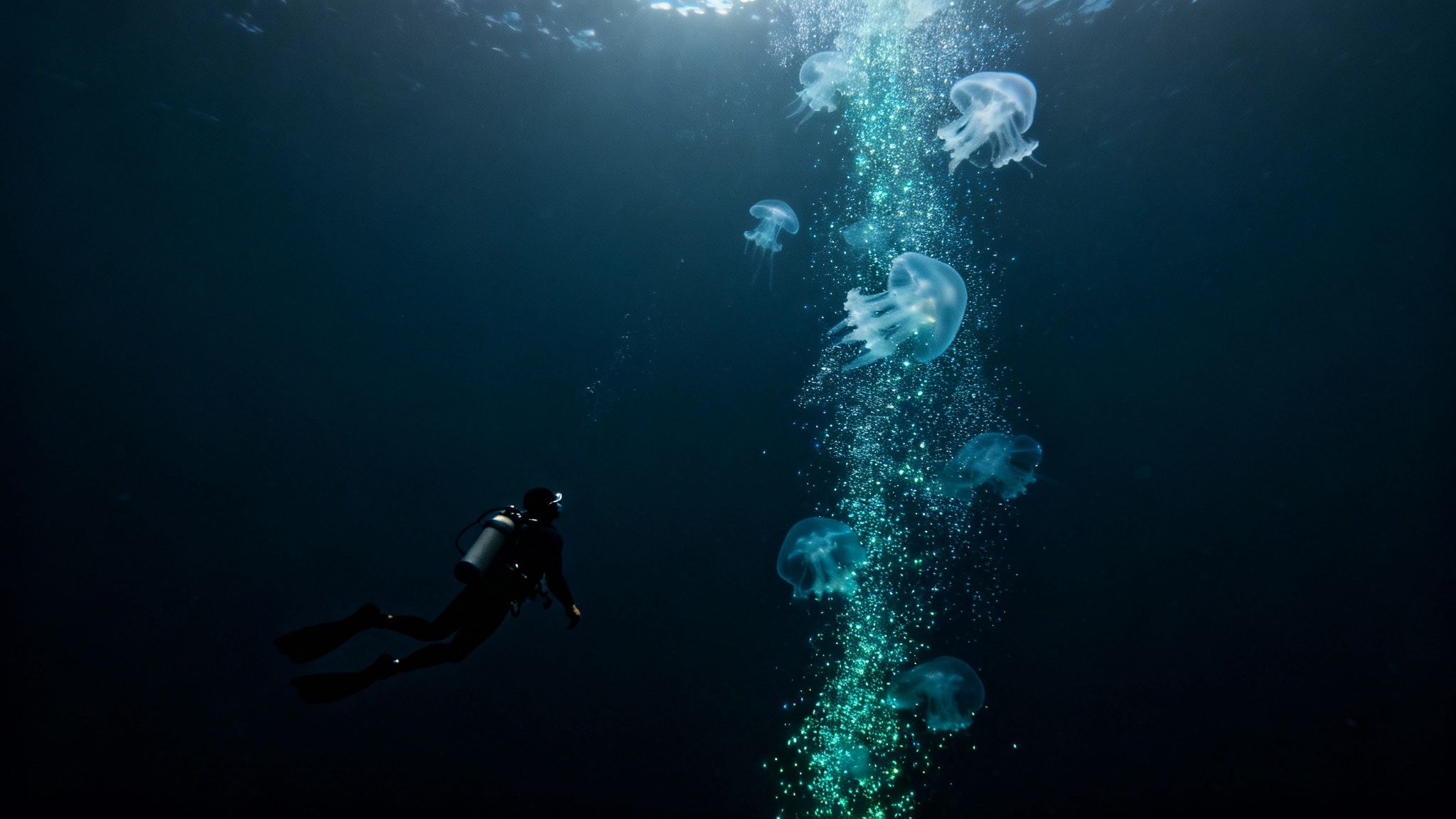
Picture this: you're miles offshore, floating in the deep blue—now pitch black—over thousands of feet of water. It's just you, your light, and the vast open ocean. This is the Kona Blackwater Dive, and it feels less like scuba diving and more like floating through outer space.
Here’s how it works. You’re tethered to the boat for safety, drifting in the dark. Every night, one of the planet’s largest migrations happens right here, as countless strange and mesmerizing creatures rise from the abyss to feed near the surface. The best part? Many of them are bioluminescent, creating their own light show in the darkness.
On a blackwater dive, you're not just an observer; you're an astronaut exploring inner space. It’s an encounter with creatures so alien and beautiful they defy description, a humbling reminder of how much of our planet remains undiscovered.
So, what might you see? The lineup is different every night, but you can often expect:
- Larval Creatures: Spot the tiny, transparent baby versions of eels, lobsters, and fish before they grow into their adult forms.
- Bioluminescent Jellies: Watch as pulsating jellies and long, stringy siphonophores drift past, glowing from within.
- Strange Squids and Octopuses: You'll have a chance to meet bizarre cephalopods that almost never come into shallow water.
This is definitely a dive for the more adventurous, and you'll need solid buoyancy control. To do it right, Kona Honu Divers offers an expertly guided Blackwater Dive tour with all the safety gear and know-how needed for this incredible open-ocean experience.
Advanced Dives for the Seasoned Explorer
If you’ve got a good number of dives under your belt, Kona's rugged volcanic coast is your playground. The underwater landscape here is practically built for advanced diving, with its deep drop-offs, winding lava tubes, and thrilling currents. These dives are less about sightseeing and more about skill, requiring sharp navigation and buoyancy control, often at greater depths.
Getting into these environments is a huge reward. One day you could be weaving through a complex lava tube system that feels like an underwater cathedral, the next you could be cruising on a drift dive along a sheer wall, letting the current do the work as you watch for bigger pelagic animals. These spots are usually further out and see fewer divers, so the experience feels much more personal and wild.
This is where all that training really comes into play, giving you the confidence to explore Kona's most dramatic underwater scenery. If you're ready for that kind of challenge, Kona Honu Divers runs a Premium Advanced 2-Tank Trip tailored for experienced divers who want to see the best of the best.
How to Plan Your Ultimate Big Island Dive Trip
A truly epic dive trip doesn’t just happen when you hit the water—it’s built on a foundation of smart planning. Getting the details right before you go is the secret to a smooth, stress-free adventure. Think of this as your pre-flight checklist for a flawless underwater vacation, so you can spend less time worrying and more time blowing bubbles.
First up, let’s talk timing. The great thing about the Kona coast is that you can find incredible diving pretty much year-round. That said, the prime season generally falls between April and October. The water is warmer, the seas are usually flatter, and the visibility can be absolutely stunning. This window is also the sweet spot for the manta ray night dive, as more plankton in the water means more reliable and spectacular manta encounters.
Budgeting for Your Underwater Adventure
Figuring out your budget ahead of time is a game-changer. Remember, the Big Island's dive industry is a huge part of the local economy and plays a vital role in marine conservation.
A typical two-tank boat dive will run you anywhere from $129 to over $200 per person. This usually covers the boat ride, tanks, weights, and a dive guide. For a much deeper dive into the numbers, check out this guide on the real costs of diving in Hawaii.
Don't forget to account for these other potential costs:
- Gear Rental: If you aren't packing your own full kit, renting BCDs, regulators, and wetsuits will add to your daily expenses.
- Certification Courses: Looking to get certified or tackle an advanced course? Make sure to budget for the tuition and course materials.
- Specialty Dives: Bucket-list dives like the Manta Ray or Blackwater dives are priced differently from standard day charters, and they are worth every penny.
The peak season for manta diving is April to October when plankton is most abundant. During this time, many operators report manta sighting success rates of over 85%—pretty incredible odds!
Booking and Packing Essentials
Here’s a piece of advice I can't stress enough: book your dives in advance. This is especially true if you’re visiting during peak season like the winter holidays, spring break, or summer. The most popular trips, particularly the Manta Ray Night Dive, can sell out weeks or even months ahead. Lock in your spot early so you don't miss out.
Choosing the right dive operator is just as crucial as picking the right dive site. Look for companies with a strong commitment to marine conservation, small group sizes, and excellent safety records. Your choice directly supports the protection of the paradise you've come to explore.
When it comes to packing, keep it simple. The absolute must-haves are your certification card, logbook, and any personal gear you can't dive without (your own mask and computer can make a world of difference). Also, throw in some reef-safe sunscreen, a reusable water bottle, and a light jacket for those breezy boat rides back to shore. For longer trips, it's worth looking into all aspects of the charter, including considerations for onboard comfort, such as boat water heaters.
Finally, think about where you'll stay. Basing yourself in or near Kailua-Kona puts you right in the heart of the action, close to the main harbors and dive shops. It makes those early-morning boat calls a whole lot easier to manage. With these details sorted, you’re all set for an unforgettable dive trip.
Common Questions About Scuba Diving in Hawaii
It’s only natural to have a few questions when you’re planning a dive trip to the Big Island. We get them all the time. To help you get squared away before you even pack your bags, here are the answers to some of the most common things divers want to know.
What Is the Best Time of Year to Scuba Dive?
Honestly, the diving here is incredible any time you can get in the water. That said, the prime season generally falls between April and October. This is when the ocean is at its warmest (a balmy 80°F/27°C), the seas are usually flatter, and the visibility can be absolutely spectacular.
This window is also the sweet spot for the manta ray night dive. Warmer water means more plankton, and more plankton means the mantas put on a truly unforgettable show. If you find yourself here in the winter, you’ll trade slightly cooler water for the chance to hear humpback whales singing during your dive—a genuinely magical trade-off.
Do I Need to Be an Advanced Diver to Dive in Kona?
Not at all! One of the best things about the Kona coast is how much it offers to divers of every skill level. There are countless protected coves with shallow, easy-going reefs that are perfect for beginners or anyone just getting their open water certification.
If you’re an experienced diver looking for a challenge, don’t worry, we’ve got you covered. There are deep lava tubes to explore, dramatic drop-offs, and some really fun drift dives. Any good operator, like Kona Honu Divers, will make sure to group divers by experience. Just be honest about your certification and when you last dove—it helps everyone have a better, safer time in the water.
What Marine Life Can I See Besides Manta Rays?
The mantas might be the headliners, but the supporting cast is world-class. The Big Island's reefs are teeming with life, and you’re almost guaranteed to see a few Hawaiian green sea turtles (honu) snoozing on the coral or gracefully swimming by.
Spinner dolphins often play in the boat's wake, and it's pretty common to spot whitetip reef sharks resting on sandy patches. You'll also be surrounded by a kaleidoscope of reef fish—butterflyfish, parrotfish, triggerfish, you name it. For the truly adventurous, the Kona Blackwater Dive reveals a whole different world of bizarre, bioluminescent creatures that come up from the deep after dark. It's a must-do.
Should I Bring My Own Dive Gear to Hawaii?
This really comes down to personal preference. A lot of seasoned divers won't go anywhere without their own mask, computer, and regulator because they know it fits and works for them. The downside, of course, is lugging it all through the airport and paying extra baggage fees.
If you're only planning a couple of days of diving, renting is a fantastic, hassle-free option. All the professional shops here have high-quality, well-maintained gear. You can easily reserve everything you need, from BCDs to wetsuits, when you book your diving tours.
Ready to experience the best scuba diving the Big Island has to offer? Kona Honu Divers has the expertise, top-rated boats, and friendly crew to make your underwater adventure unforgettable.