
Picture this: you descend into the deep blue, warm water enveloping you as sunlight dances through the surface. Below, an otherworldly landscape of ancient lava tubes and sprawling coral gardens unfolds. This isn't a dream—it's what scuba diving Big Island Hawaii is all about. For divers in the know, the protected waters of the Kona coast are a true underwater paradise.
Why Kona is a World-Class Diving Destination
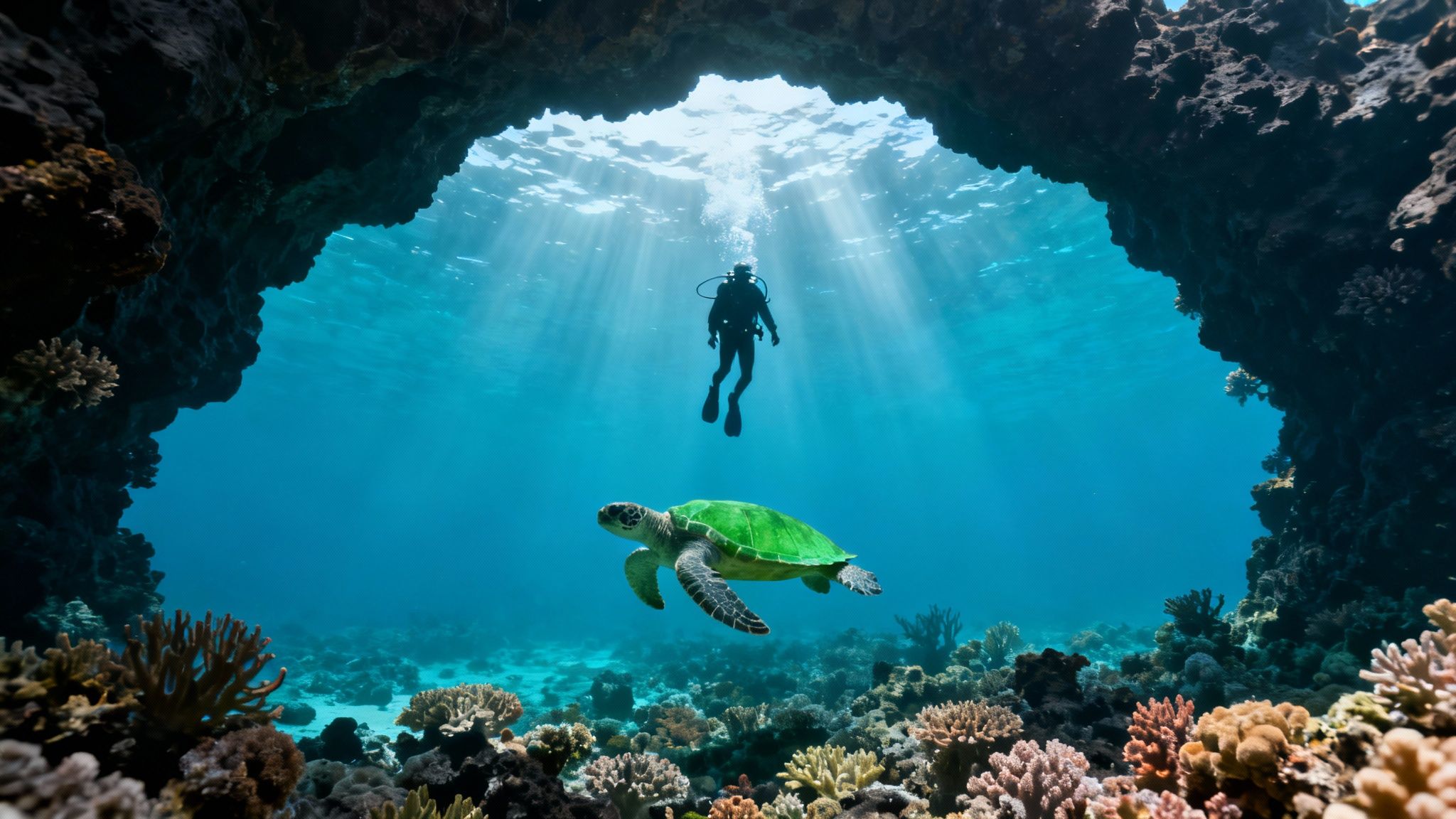
The Big Island has earned its reputation as a global diving hotspot, and it all comes down to the Kona Coast. The island's geography is the secret sauce. The colossal volcanoes, Mauna Loa and Hualālai, stand as massive shields, blocking the strong trade winds that batter other parts of Hawaii.
This natural protection creates astonishingly calm and clear conditions year-round. Seriously, the visibility here often pushes past 100 feet, letting you soak in every detail of the vibrant world below. It makes for comfortable, awe-inspiring dives nearly every single day.
An Unforgettable Underwater Landscape
What really makes Kona stand out is the dramatic volcanic terrain hidden beneath the waves. This isn't your typical sandy bottom. Ancient lava flows have sculpted an incredible underwater playground for divers, full of:
- Lava Tubes: Imagine swimming through massive, hollowed-out tunnels formed by molten rock centuries ago.
- Arches and Pinnacles: These breathtaking structures rise from the seafloor, covered in life.
- Craters: You can even explore submerged volcanic craters that have become their own unique ecosystems.
This rugged, alien-like landscape is the perfect home for an incredible diversity of marine life, including many species found only in Hawaii. If you want to dig deeper, you can explore the unique features of Kona diving.
Of all the amazing things to see, one experience is truly legendary. The Manta Ray Night Dive is the island’s signature attraction, offering a staggering 90% success rate for close encounters with these gentle giants. It's often called one of the greatest underwater shows on Earth, and for good reason.
Big Island Diving At a Glance
To give you a quick snapshot, here are the highlights that make diving on the Big Island so special.
| Feature | Description |
|---|---|
| Water Temperature | A comfortable 75-81°F (24-27°C) all year long. |
| Visibility | Regularly exceeds 100 feet (30m). |
| Key Attraction | The world-famous Manta Ray Night Dive. |
| Unique Topography | Lava tubes, arches, and dramatic volcanic formations. |
| Marine Life | Endemic fish, green sea turtles, spinner dolphins, and manta rays. |
Whether you find yourself gliding alongside a graceful sea turtle or watching the mesmerizing manta ray ballet, a dive trip here is more than just a vacation. It's an adventure into a truly spectacular aquatic world.
Experiencing the Famous Manta Ray Night Dive
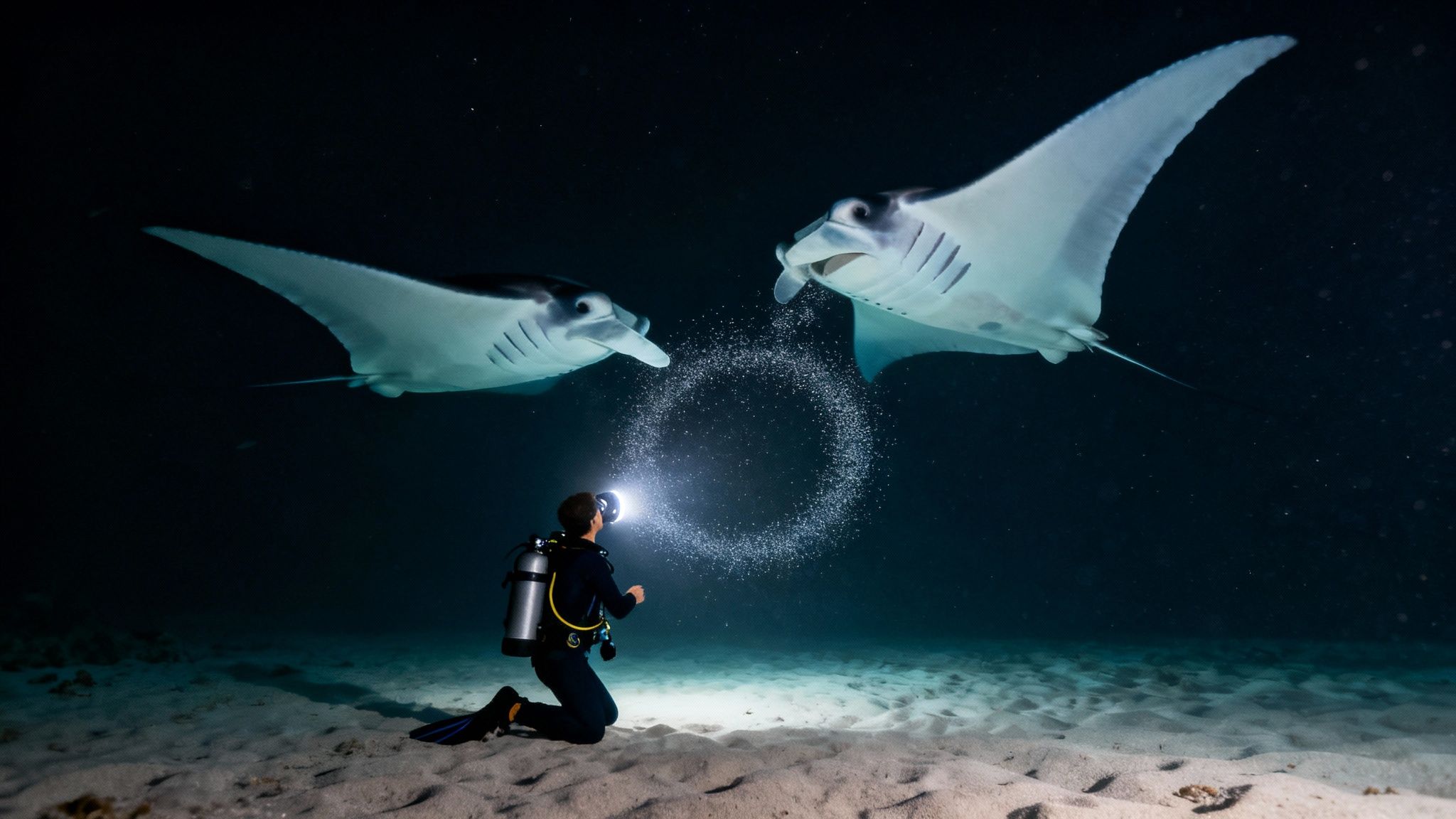
Of all the amazing things you can do while scuba diving on the Big Island, one experience consistently tops bucket lists around the globe: the Manta Ray Night Dive. This isn't just another dive. It's an otherworldly underwater ballet that has earned its reputation as one of the best dives in the world. It’s the kind of thing you see in nature documentaries, and it happens right off the Kona coast, every single night.
The setup is actually quite simple, but the result is pure magic. After the sun goes down, boats head out to specific feeding sites. Divers make their way down to a designated spot on the sand, usually around 30-40 feet deep, and gather around a powerful light array affectionately called "the campfire."
This light rig illuminates the water, which in turn attracts a massive cloud of plankton—dinner time for manta rays. What happens next is a natural spectacle you truly have to see to believe.
The Underwater Ballet Begins
Once the plankton buffet is ready, the stars of the show arrive. Enormous manta rays, some with wingspans stretching over 16 feet, materialize from the dark. They glide into the light, performing graceful barrel rolls and swooping just inches over the heads of the divers below.
There's really no way to fully describe the feeling of watching these gentle giants feed. They're completely wild, yet they move with a kind of choreographed elegance, creating a silent, mesmerizing performance that leaves everyone absolutely breathless.
It's a profound and humbling experience. You become a quiet visitor in their world, witnessing a natural behavior that feels incredibly intimate.
Why Garden Eel Cove is the Superior Choice
While this dive happens at a few locations, Garden Eel Cove (also known as Manta Heaven) is hands-down the best place to do it. There are a few key reasons why it’s the superior site:
- Protected Location: Tucked in near the Kona airport, the cove is sheltered from the open ocean. This usually means calmer surface conditions and a much more comfortable boat ride, especially at night.
- Better Viewing Area: The site's layout is perfect for a viewing party. The sandy bottom creates a natural amphitheater, giving everyone a front-row seat without crowding.
- Healthier Reefs: The surrounding coral is in great shape, supporting a rich ecosystem that keeps a consistent supply of plankton around. This makes manta sightings incredibly reliable.
Put it all together and you get clearer water, calmer dives, and more consistent manta action. It’s no wonder Garden Eel Cove is the most sought-after spot for this dive. Just be sure to book well in advance, as it’s incredibly popular for a reason.
What to Expect on Your Dive
Most manta ray dive tours are structured as a two-tank trip. You’ll start with a late afternoon reef dive, giving you a chance to get reacquainted with your gear and enjoy the beautiful coral before the main event.
As dusk settles in, you'll gear up for the second dive. Your guide will give you a detailed briefing on what to expect, how to position yourself, and most importantly, how to interact with the mantas passively and safely.
And don't worry, non-divers can join the fun too! Most operators, including Kona Honu Divers, welcome snorkelers who get to watch the entire show from the surface. For a deep dive into what that's like, check out the ultimate guide to the Kona Manta Ray Night Snorkel. You can also find specifics about the manta ray night snorkel experience to see if it’s a good fit for you or others in your group. This is one adventure the whole family can truly share.
Exploring Kona’s Top Underwater Dive Sites
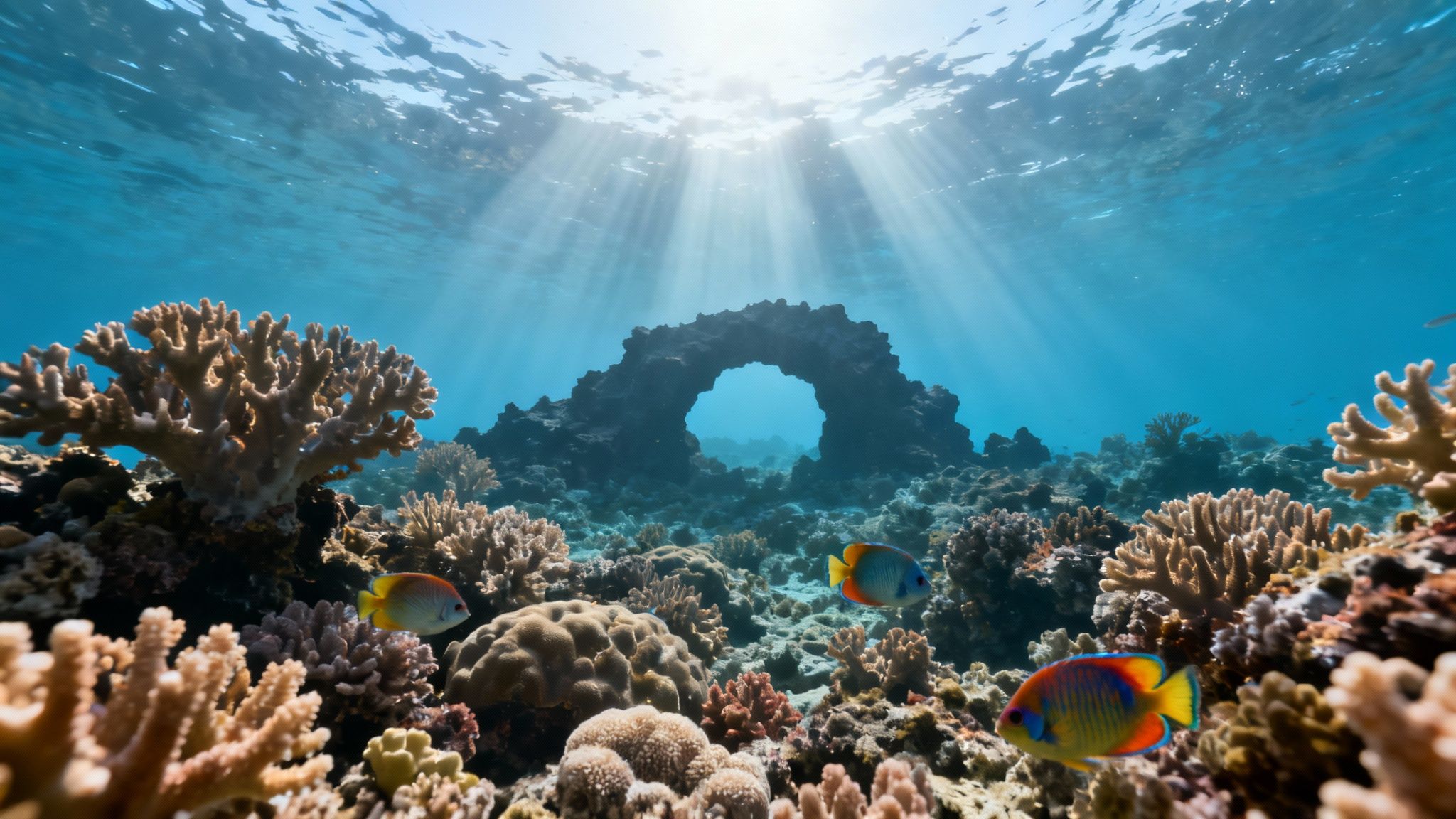
While the world-famous Manta Ray Night Dive gets a lot of the glory, it’s really just the beginning of the story when it comes to scuba diving Big Island Hawaii. The Kona coast is a diver’s dream, dotted with dozens of incredible sites that cater to every possible interest and skill level. The entire underwater world here was sculpted by volcanoes, leaving behind a dramatic playground of lava tubes, massive arches, and submerged craters just teeming with life.
Beyond the mantas, what really makes Kona diving special is the sheer variety. One day you might be drifting over a shallow, sun-drenched coral garden, and the next you're exploring an ancient lava tube that feels like a forgotten cathedral. It’s this diversity that keeps divers coming back year after year—there's always a new corner to discover. To get to the really pristine spots, boat diving is the way to go. You can explore all diving tours to get a feel for the incredible range of sites you can access.
Kealakekua Bay: A Protected Paradise
If I had to pick one daytime dive that perfectly captures Kona's magic, it would be Kealakekua Bay. This isn’t just another pretty spot; it’s a historically important landmark and a legally protected Marine Life Conservation District. That special status makes all the difference.
Because all fishing is strictly forbidden, the bay has become a true sanctuary. The fish populations have exploded, and the coral is some of the most vibrant and healthy you'll see anywhere in Hawaii. It’s not uncommon for visibility to push past 100 feet, creating those epic, wide-angle views that underwater photographers live for. You can get more insights on this world-class Big Island scuba diving site to see why it's a must-do.
Dramatic Lava Formations and Craters
One of the defining features of diving in Kona is getting to swim through its wild volcanic topography. These aren't just rocks; they're geological masterpieces that make for some unforgettable dive profiles. And when it comes to that, Au Au Crater is one of the all-time favorites.
Dropping into this submerged volcanic crater is an experience you won't forget. You can navigate through massive arches and swim-throughs carved out by ancient lava flows. The crater walls are painted with coral, and the whole structure acts as a magnet for all sorts of marine life.
Exploring sites like Au Au Crater feels like you're swimming through a natural sculpture park. The scale of the lava arches is awe-inspiring, and the way light filters through the openings creates a constantly changing, magical environment.
These formations are more than just pretty to look at—they create habitats. Always keep an eye out for moray eels tucked into crevices, octopuses camouflaged perfectly against the rock, and schools of fish using the structures for cover.
Accessible and Rewarding Shore Dives
For divers who love the freedom of gearing up and walking right into the ocean, the Big Island has some absolutely fantastic shore diving. Two of the most popular spots are Puako and Two Step.
- Puako: Found on the Kohala Coast, Puako has several easy entry points that lead to beautiful, sprawling reef systems. It’s well-known for its intricate lava formations just a short kick from shore and is a fantastic place to find Hawaiian green sea turtles.
- Two Step (Honaunau Bay): It gets its name from the natural lava rock "steps" that make for a super easy water entry. This spot is a local favorite for its calm conditions and stunning shallow reefs, making it perfect for a long, relaxed dive or a day of snorkeling.
While shore diving offers amazing convenience, it’s worth remembering that boat dives open up a whole other world of more remote and often more spectacular sites. A good operator like Kona Honu Divers knows exactly where to go based on the day's conditions, ensuring you get the safest and most memorable dive possible.
Finding Unique Dives for Advanced Divers
If you're a certified diver with a logbook full of reef tours and wreck explorations, you might be looking for something… different. The Big Island has you covered. Once you're ready to venture beyond the stunning coral gardens, Kona offers some truly heart-pounding adventures that can redefine what you think of as diving.
These aren't just deeper dives. They're unique experiences that will test your skills and reward you with sights that very few people ever get to witness.
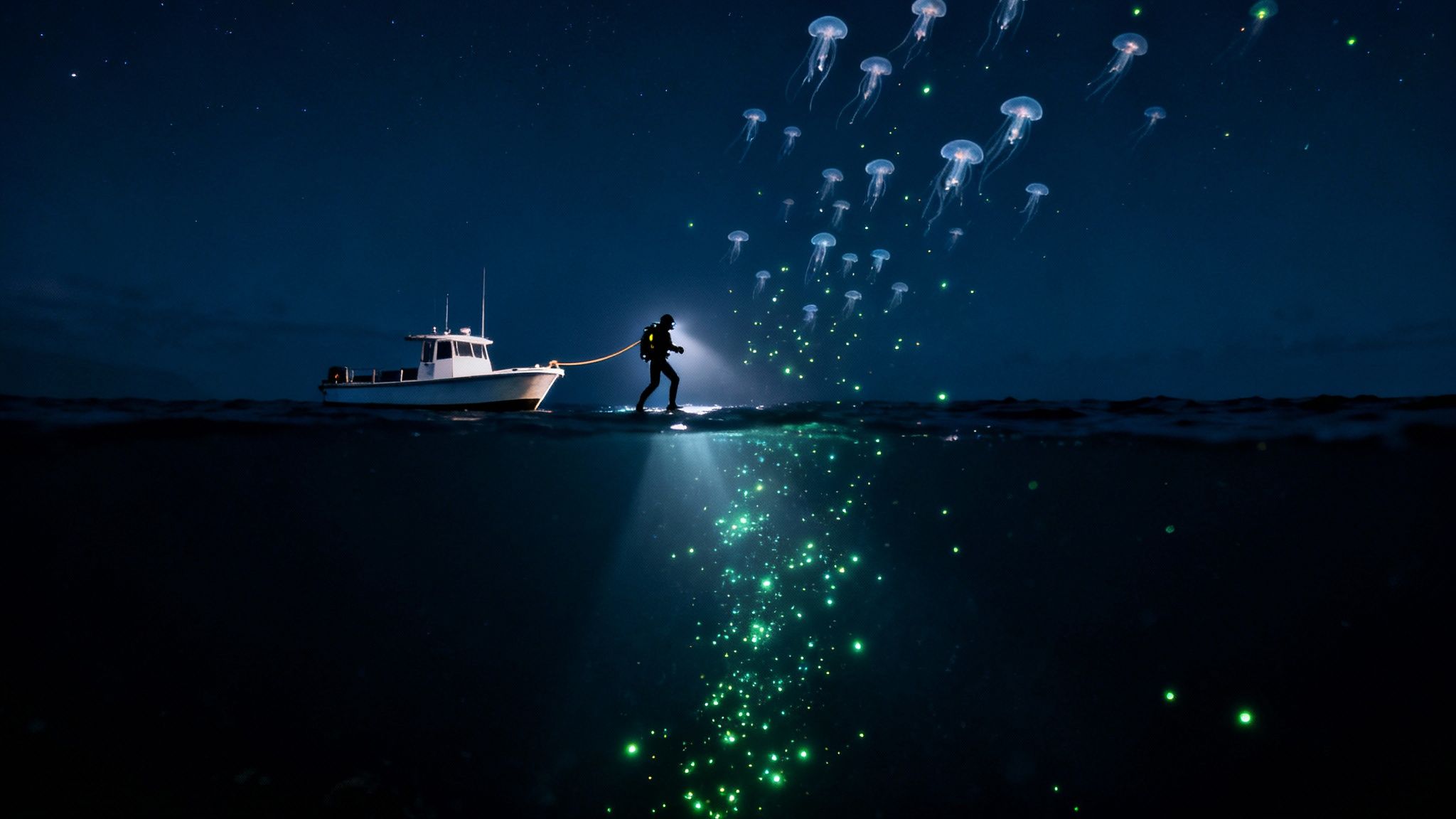
The undisputed king of thrilling dives here is the Kona Blackwater Dive. Let's be clear: this is not a reef dive. You're heading miles offshore, over thousands of feet of water, and dropping into the inky blackness of the open ocean. Tethered to the boat, you'll become a front-row spectator to one of the largest migrations on the planet.
Every single night, countless deep-water creatures swim up from the abyss to feed near the surface. You'll encounter lifeforms that look more alien than anything on land, all putting on a dazzling display of bioluminescence. Imagine floating weightlessly as see-through larval fish, glowing squid, and bizarre invertebrates drift right past your light. It's less like an ocean dive and more like a trip to outer space. If you're up for it, you can experience the Blackwater Night Dive for yourself.
Pushing the Boundaries of Exploration
Beyond the world-famous blackwater experience, advanced diving on the Big Island opens up a whole new set of possibilities. The island's volcanic past has left behind a maze of underwater structures perfect for those with the skills to explore them.
- Deep Lava Tubes: While there are plenty of shallow lava tubes for all divers, the deeper, more complex systems are where the real adventure is. These dives involve navigating intricate caverns and swim-throughs, revealing hidden chambers and incredible geological formations.
- Challenging Drift Dives: Some sites along the Kona coast are known for having a bit of a kick to them. Beginners steer clear, but experienced divers know that current often brings bigger marine life. An exhilarating drift dive could mean an encounter with large schools of fish, eagle rays, or even sharks cruising by in the blue.
These dives demand a higher level of confidence and skill in the water, which is what makes them so rewarding for divers looking to expand their horizons.
Specialized Training and Equipment
Jumping into these more challenging environments requires more than just your standard open-water certification. The right training and gear are non-negotiable for both safety and pure enjoyment.
Advanced dives are all about preparation. They require excellent buoyancy control, situational awareness, and the confidence that comes from proper training. The reward is access to a part of the underwater world that remains unseen by the vast majority of divers.
Getting certified in courses like Advanced Open Water, Deep Diver, or Night Diver will give you the knowledge base you need. For the most demanding adventures, your best bet is to book an advanced dive trip with a top-tier operator like Kona Honu Divers.
Their experienced guides know these sites inside and out and ensure every safety protocol is followed. They understand what these dives demand and provide the expert oversight you need for a successful and unforgettable trip. The fantastic reviews for Kona Honu Divers speak for themselves.
How to Plan Your Big Island Dive Trip
An incredible dive trip to the Big Island doesn't just fall into place—it's built on a bit of smart planning. Getting the logistics sorted out before you even pack your bags means you can spend your vacation focused on the amazing underwater world, not scrambling with last-minute details.
The great news is that Kona’s coastline is naturally sheltered, making for fantastic diving conditions pretty much year-round. Water temperatures are always inviting, hanging out around a comfortable 75°F (24°C) in the winter and warming up to a balmy 81°F (27°C) in the summer.
That said, there are definitely some seasonal perks. If you’re here between December and March, you might get an experience that will stick with you forever: the haunting, beautiful songs of humpback whales echoing through the water as you descend. It's pure magic.
Packing for Your Underwater Adventure
Figuring out what to bring can make all the difference between a smooth trip and a stressful one. While you can always rent excellent gear here, many divers just feel more comfortable and confident with their own equipment. The fit is familiar, and you know exactly how it all works.
Here’s a simple checklist to get you started:
- Your Dive Essentials: Don’t leave home without your certification card, mask, fins, snorkel, and dive computer. If you're in the market for a new computer, researching the best dive watches can be a great place to start.
- Staying Warm: A 3mm wetsuit is perfect for most people all year. If you tend to get chilled easily or are planning some night dives, you might be happier in a 5mm.
- Boat Day Basics: You'll want your swimwear, a quick-dry towel, a hat for the sun, and a good pair of polarized sunglasses. A dry bag is also a lifesaver for keeping your phone, keys, and wallet protected from splashes.
- Reef-Safe Sunscreen: This one is a must. Standard sunscreens contain chemicals like oxybenzone that are incredibly harmful to Hawaii’s fragile coral reefs. Always look for a mineral-based sunscreen that’s clearly labeled "reef-safe."
Budgeting is also a big part of planning. To get a clear picture of what to expect, take a look at our guide on how expensive scuba diving in Hawaii can be.
Choosing the Right Dive Operator
Picking your dive operator is probably the single most important decision you'll make for your trip. A truly great company does more than just ferry you to a dive site; they shape your entire experience from start to finish. They’re your guides, your safety net, and your key to unlocking the best the ocean has to offer.
When you start looking into different companies, here are a few things to keep in mind:
- Safety First, Always: A solid safety record isn't just a bonus—it's everything. Look for operators with consistently great reviews that mention professional, experienced, and safety-conscious guides.
- Smaller is Better: Small group sizes make a world of difference. With a lower diver-to-guide ratio, you get more personal attention, a less crowded dive, and a much better shot at spotting shyer marine life.
- The Boat Matters: You’ll be spending a good chunk of your day on the boat, so comfort is key. Are their vessels well-maintained? Is there shade, snacks, and a proper marine head (restroom)? These small details add up.
- Guides Who Know Their Stuff: A knowledgeable guide can turn a good dive into an unforgettable one. They're the ones who will point out that perfectly camouflaged octopus or share fascinating facts about the local ecosystem you’d never know otherwise.
When you dive with a top-rated company like Kona Honu Divers, you're putting yourself in the hands of seasoned professionals who live and breathe this stuff. We're dedicated to making your adventure safe, fun, and absolutely memorable.
Common Questions About Diving on The Big Island
Alright, let's wrap this up by tackling some of the most common questions divers ask when planning a trip to the Big Island.
What Is the Best Time of Year for Scuba Diving on the Big Island?
Honestly, there's no bad time to dive on the Kona coast. The diving here is phenomenal all year round.
Water temperatures stay comfortably warm, hovering around a pleasant 75°F (24°C) in the winter and climbing to a balmy 81°F (27°C) in the summer. Visibility is usually fantastic, often stretching out well past 100 feet.
If you have a preference, the winter months (December-March) offer a magical bonus: you can often hear the haunting songs of humpback whales echoing underwater. But if you're after the warmest water possible, summer is your best bet.
Do I Need to Be Certified for the Manta Ray Night Dive?
Yes, if you want to be on scuba for the world-famous manta ray night dive, you'll need to be certified. It's a real dive, and safety comes first.
The great news is that most tour operators have a snorkeling option on the same boat. This means any non-certified friends or family can still come along and witness the incredible manta ballet from the surface. It's truly a breathtaking experience for everyone, whether you're below or above.
What Marine Life Can I See Besides Manta Rays?
The Big Island is bursting with marine life! Beyond the majestic mantas, a typical dive will almost certainly bring you face-to-face with Hawaiian green sea turtles (honu), curious moray eels, and playful spinner dolphins.
You'll be surrounded by a massive variety of colorful reef fish found only in Hawaii. Keep an eye out for vibrant schools of yellow tang and the official state fish, the Humuhumunukunukuāpuaʻa (try saying that three times fast!). If you're really lucky, you might even spot an elegant eagle ray or a shy reef shark cruising by.
Is Shore Diving a Good Option on The Big Island?
Absolutely. The Big Island has some of the best and most accessible shore diving in Hawaii, especially along the Kona and Kohala coasts. Spots like Puako and Two Step are local favorites because of their calm waters and beautiful reefs that start just a few kicks from the beach.
While shore diving is fantastic for a DIY adventure, you’ll want to hop on a boat for the real showstoppers. The premier, more remote sites like Kealakekua Bay and the prime manta ray locations are only accessible by boat. Taking one of the diving tours is the only way to ensure you see the absolute best the island has to offer.
Ready to explore Kona's underwater world for yourself? The expert team at Kona Honu Divers is here to guide you on an unforgettable adventure, whether it's your first dive or your hundredth.