
Scuba diving on the Big Island isn't just another tropical getaway; it's a journey into an underwater world sculpted by volcanoes and brimming with life. The Kona coast, in particular, is a global hotspot for divers, and for good reason. It’s where you’ll find crystal-clear water, mind-blowing volcanic formations, and some of the most famous marine life encounters on Earth.
From the surreal Manta Ray Night Dive to pristine coral gardens, the Kona coast truly is a year-round diving paradise for everyone, no matter your experience level.
Your Essential Guide to Big Island Scuba Diving
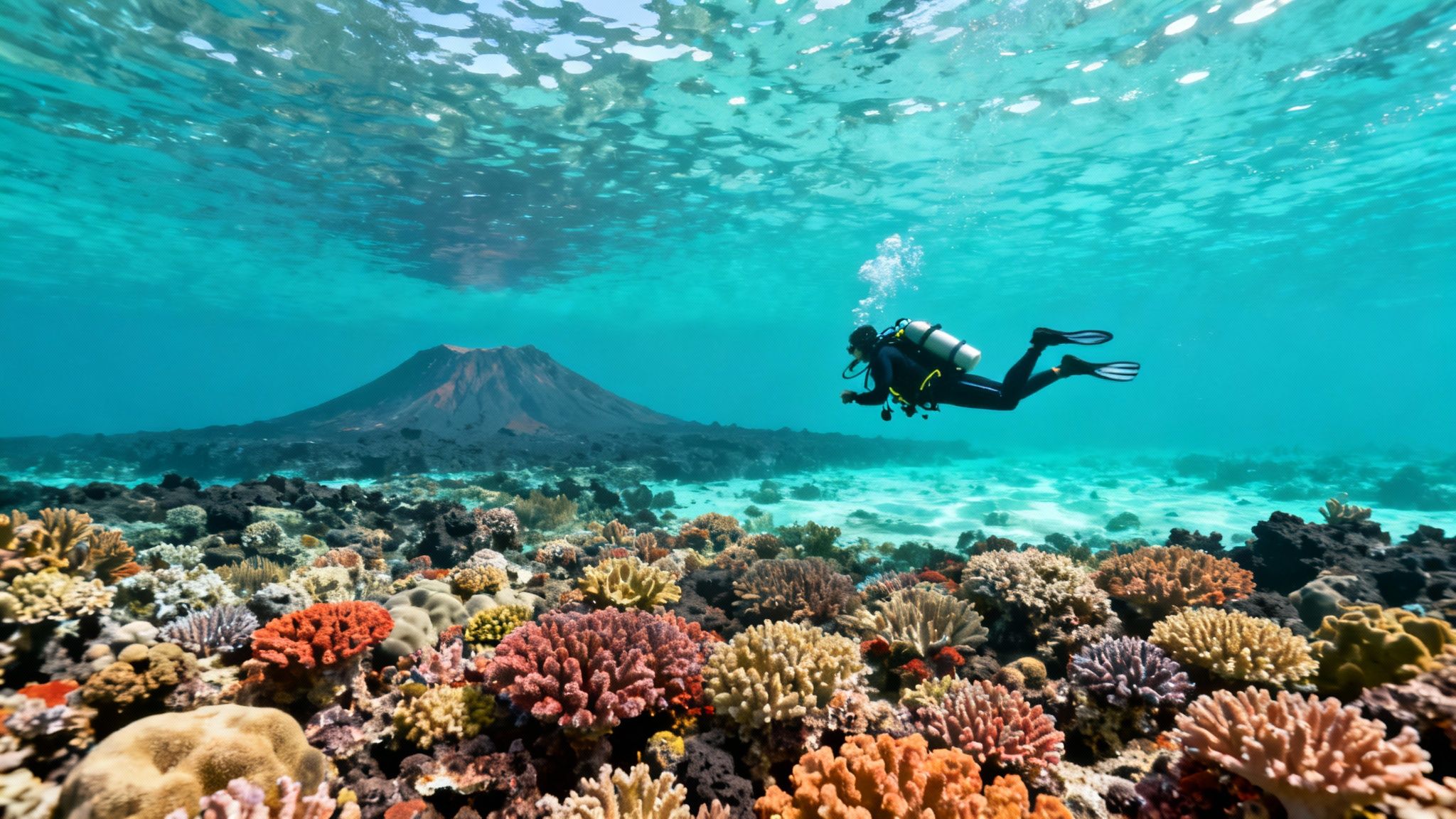
If the Big Island isn't on your dive bucket list, it should be. The island's western shore, the Kona district, is a diver's dream, shielded from the gusty trade winds by the sheer mass of its volcanoes. This natural barrier creates incredibly calm seas and water clarity that's hard to beat—visibility often stretches past an incredible 100 feet.
Think of this guide as your personal map to this aquatic wonderland. We'll get into everything you need to know for a trip you'll never forget, from what makes the Kona coast so unique to the must-see dives that define the scuba diving Big Island Hawaii experience.
What Awaits Beneath the Waves
The moment you dip below the surface, you'll see a landscape carved by ancient lava flows. It’s a world of dramatic drop-offs, winding lava tubes, and beautiful archways that have become a sanctuary for a thriving ecosystem.
Here’s a taste of the island's most legendary underwater attractions:
- The World-Famous Manta Ray Night Dive: Picture giant, graceful mantas swooping and gliding just inches above you. It's an otherworldly ballet you have to see to believe.
- Thrilling Blackwater Adventures: A truly unique night dive, this is where you drift in the deep open ocean and encounter the weird and wonderful bioluminescent creatures that rise from the depths.
- Vibrant Coral Reefs: The reefs here are healthy and full of energy, home to a huge variety of life, including green sea turtles, curious eels, and schools of colorful tropical fish.
An Adventure for Every Diver
Whether you just got your certification or you’re a seasoned pro looking for something new, the Big Island has you covered. The diving season never ends, and top-tier operators like Kona Honu Divers make exploring this underwater world both accessible and safe. As you plan your trip, it’s also a great time to think about protecting these amazing places; learning how to combat water pollution is a step we can all take for our oceans.
Ready to take the plunge? Check out some of the best diving tours the Big Island has to offer and start planning your adventure today.
Why Kona is the Holy Grail of Hawaiian Diving
If you've ever wondered why divers speak of the Kona coast in almost reverent tones, the secret isn't in the water—it's in the mountains. The sheer size of Mauna Loa and Mauna Kea, two of the world’s largest volcanoes, creates a massive natural barrier. They literally block the powerful trade winds that sweep across the Pacific.
This geological phenomenon leaves the western, or Kona, side of the island in a calm "wind shadow." The result? Astonishingly clear and placid waters, where visibility often pushes past 100 feet. For a diver, this means you spend less energy fighting the ocean and more time completely immersed in its wonders.
This unique protection is what makes Kona the epicenter for the best scuba diving the Big Island of Hawaii offers. It's a perfect combination of ideal conditions and a world-class marine environment that draws divers back year after year.
A World Forged by Fire
That volcanic influence doesn't stop at the shoreline. Below the waves, the Kona coast is a dramatic underwater landscape sculpted by ancient lava flows. It's a diver's playground, full of incredible structures you have to see to believe.
Imagine gliding through a world of:
- Sheer Drop-Offs: Walls that plunge into the deep blue, where you might spot larger pelagic species cruising by.
- Winding Lava Tubes: Natural tunnels and caverns that offer an exciting challenge for properly certified divers.
- Majestic Arches and Pinnacles: Towering formations that act as cleaning stations and magnets for marine life, creating one-of-a-kind photo ops.
These aren't just pretty rocks; they're the architectural foundation for a thriving ecosystem. Every crack and crevice provides a home for something, from a shy octopus to a colorful school of butterflyfish.
Protected Havens for Marine Life
On top of these natural advantages, the Kona coast benefits from smart conservation. Several areas are designated as Marine Life Conservation Districts (MLCDs), which are essentially underwater state parks.
In these protected zones, fishing and other disruptive activities are limited, giving marine life a chance to flourish without pressure. It’s a simple but powerful idea: leave it alone, and it will thrive. Diving in an MLCD means you're seeing a reef in its most pristine and vibrant state—a direct result of Hawaii’s commitment to preservation.
When you're trying to decide where on the Big Island to get your fins wet, understanding the fundamental differences between the two coasts is key.
Kona Coast vs. Hilo Side Diving Conditions
The table below breaks down what you can typically expect on the island's western and eastern shores.
| Feature | Kona Coast (West) | Hilo Side (East) |
|---|---|---|
| Water Conditions | Calm, protected from trade winds | Rougher seas, exposed to winds |
| Visibility | Excellent, often 100+ feet | Variable, often reduced by runoff |
| Dive Access | Plentiful boat and shore diving | Very limited, mostly shore diving |
| Dive Sites | Abundant, diverse, well-established | Fewer, less accessible sites |
| Marine Life | Dense coral reefs, high biodiversity | Resilient but less dense populations |
While both sides of the island have their own unique beauty, it's clear why Kona is the undisputed hub for diving. The conditions are simply more reliable and enjoyable for underwater exploration.
The Big Island's dive industry is a cornerstone of the local economy, anchored by exceptional PADI 5-Star dive centers that introduce hundreds of new divers to the sport each year. These operators run daily diving tours, rent gear, and guide unforgettable trips—including world-famous experiences like the manta ray night dive. To get a better sense of what makes this place so special, check out our guide on the foundations of Big Island diving.
Experiencing the Famous Manta Ray Night Dive

Of all the incredible underwater encounters you can have, very few come close to the magic of Kona's Manta Ray Night Dive. It’s consistently voted one of the best night dives in the world for a good reason. This isn't just another dive; it's the undisputed crown jewel of scuba diving on the Big Island of Hawaii and a true bucket-list adventure that turns the dark ocean into a mesmerizing underwater ballet.
Picture this: you descend into the warm, dark water just as the sun disappears. You get settled on the sandy ocean floor, turn on your dive light, and point the beam straight up. Within moments, you’ll see tiny specks swirling in the light—that’s plankton, the very foundation of the marine food web, and it’s the main course for tonight's dinner guests.
Then, a shadow emerges from the darkness. A massive, graceful manta ray with a wingspan that can top 12 feet glides effortlessly into the light. It performs a slow, elegant somersault, its huge mouth wide open to filter the cloud of plankton you’ve gathered. Soon, another joins, and then another, creating a silent, hypnotic spectacle just inches above your head.
Why Garden Eel Cove Is The Superior Choice
While you might hear about a couple of spots for this dive, one location is the superior choice: Garden Eel Cove. Situated just north of the Kona airport, this site is the premier destination for the manta ray night dive because of its protected location, better viewing area, and healthier reefs.
Its position in a sheltered cove means the water is almost always calmer than at more exposed sites. This makes for a more pleasant boat ride and a more stable, comfortable dive—a major advantage for a night dive. The reefs surrounding Garden Eel Cove are also noticeably more vibrant, enhancing the overall beauty of the experience.
Most importantly, the viewing setup is thoughtfully designed. Divers gather around a central area, often called the "campfire," where powerful lights are placed on the ocean floor. This creates a highly concentrated feeding zone that attracts the mantas, giving every diver a front-row seat to the action. This superior arrangement ensures a breathtaking, up-close encounter with these gentle giants. For a deeper dive into what makes this so special, check out our complete guide to the manta ray night dive in Kona.
Your Manta Dive Experience Step-By-Step
Knowing what to expect will help you relax and soak in every moment of this incredible dive. The entire process is carefully orchestrated to put both your safety and the quality of the encounter first.
- The Briefing: Your adventure starts on the boat with a comprehensive briefing. The crew will cover everything from manta ray biology to the strict "no-touching" rules and the overall dive plan.
- The Descent: Once you're geared up, you'll slip into the water around dusk. Your guide will lead the descent to a designated spot on the sandy bottom, usually around 30-40 feet deep.
- The "Campfire": Divers arrange themselves in a loose circle around the main lights. You’ll point your own light upward, adding to the giant column of light that acts like a dinner bell for the mantas.
- The Main Event: Now, you just sit back and watch the show. The mantas will swoop, glide, and barrel-roll right through the light beams, often coming breathtakingly close.
This is so much more than a dive; it’s an immersive performance. It's one thing to read about it, but it's another thing entirely to dive with a Kona Manta Ray and feel that humbling connection to the ocean.
Ready to see it for yourself? The award-winning team at Kona Honu Divers specializes in creating a safe and unforgettable manta ray dive tour.
Exploring the Top Kona Coast Dive Sites
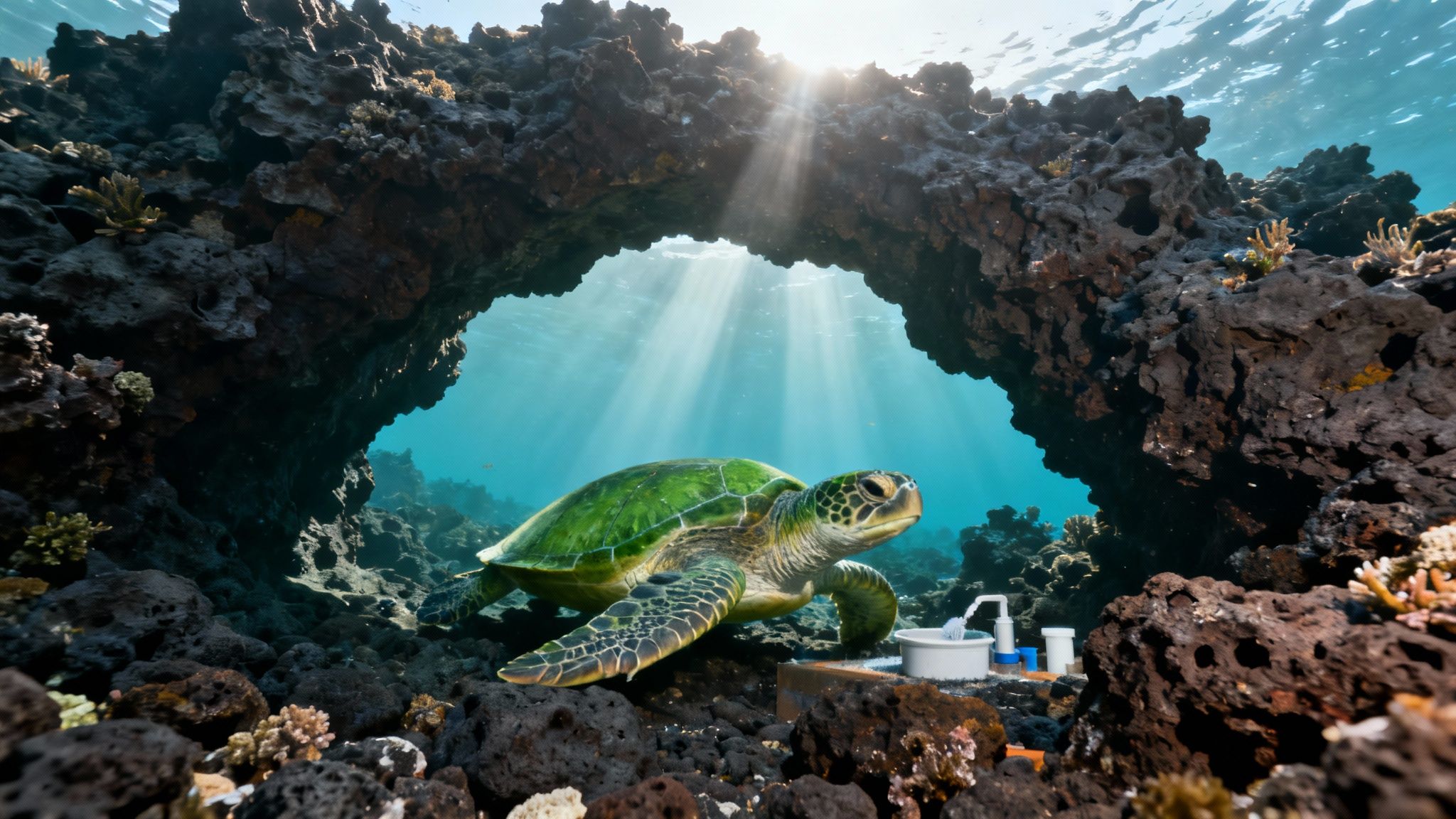
Alright, you get why Kona is legendary. Now, let's talk about the where—the specific spots that make scuba diving on the Big Island of Hawaii a bucket-list experience. The Kona coast is stacked with dozens of world-class dive sites, each one a unique chapter in the island's volcanic story and a showcase of its incredible marine life.
Whether you're looking for a gentle, sloping reef or a dramatic drop-off that gets your heart pumping, there’s a dive here with your name on it. These aren't just coordinates on a GPS; they're living, breathing ecosystems with distinct personalities. It’s the kind of place where local knowledge is everything. A great guide knows exactly which crevice a frogfish calls home or the secret entrance to a stunning lava tube.
Must-Visit Sites for Every Diver
While you could spend a lifetime exploring all of Kona's sites, a few are absolute must-dos. These are the classics that perfectly capture the magic of the region, giving you a real taste of what makes diving here so special.
- Golden Arches: This spot is a photographer’s playground, famous for its magnificent lava rock archways. Watching sunlight filter through the arches and light up the reef is just breathtaking. It’s also fairly shallow, which makes it perfect for divers of most skill levels.
- Turtle Pinnacle: No prizes for guessing what this site is famous for. It's the best place on the coast to see green sea turtles (honu) up close. The pinnacle serves as a natural "cleaning station," where turtles queue up for reef fish to nibble algae right off their shells. It's an amazing thing to witness.
- Au Au Crater: Imagine diving inside a collapsed lava dome. That’s Au Au Crater. The crater's walls create a massive, protected amphitheater teeming with marine life—moray eels, octopuses, and huge schools of fish are almost always hanging around. The topography alone makes it a dive you won't forget.
What’s so cool is that each of these sites tells a geological story. The arches, pinnacles, and craters are the direct result of ancient lava flows hitting the cold ocean, creating the perfect, complex structures for coral and marine animals to build a home.
What You Might See Down Below
The marine life along the Kona coast is just as varied and exciting as the dive sites themselves. Of course, you’ll see tons of beautiful reef fish on every dive, but the real thrill comes from spotting the more unusual residents. You just need to keep your eyes peeled.
You might be lucky enough to spot:
- Frogfish: True masters of disguise, these lumpy ambush predators look exactly like the sponges they sit on. Finding one feels like a real accomplishment.
- Moray Eels: From the big, intimidating yellowmargin morays to the beautifully patterned zebra morays, you’ll find these guys tucked into rocky crevices all over the reef.
- Octopuses: There’s nothing quite like watching an octopus instantly change its color and texture to melt into the background. It’s a highlight for any diver.
The sheer variety of habitats here—from sandy bottoms and coral gardens to intricate lava tubes—supports an incredible density of species. Every dive is a new opportunity to see something amazing, whether it's a tiny, rare nudibranch or a majestic eagle ray cruising by. This rich biodiversity is truly the heart and soul of the Kona diving experience.
Advancing Your Dive Adventure
If you’ve got some serious bottom time under your weight belt, the Big Island has plenty of challenges to test your skills and reward you with even more spectacular sights. We're talking deeper sites, complex lava tube networks, and exhilarating drift dives that will take your adventure to the next level.
Sites like Catacombs and The Hive are known for their intricate swim-throughs and overhangs. These dives demand excellent buoyancy control and a cool head in enclosed spaces. The payoff? You'll see life that stays hidden on shallower reefs, like sleeping whitetip reef sharks and rare crustaceans lurking in the shadows.
To explore these more demanding environments safely, going with a guide who knows the sites like the back of their hand is non-negotiable. If you're an experienced diver ready to see the best Kona has to offer, look for an advanced dive tour. Many shops, including us at Kona Honu Divers, run premium advanced dive trips that head to the most thrilling and less-visited locations.
For a deeper dive into all the possibilities, check out this comprehensive guide on Kona's top dive sites.
Discovering Unique Big Island Dive Adventures
Sure, the Big Island’s reefs are jaw-droppingly beautiful, but for some of us, diving is about chasing that next big thrill. If you're an adventurer or an underwater photographer looking for something truly different, the Kona coast has a few aces up its sleeve. These aren't your run-of-the-mill reef tours; they're bucket-list experiences.
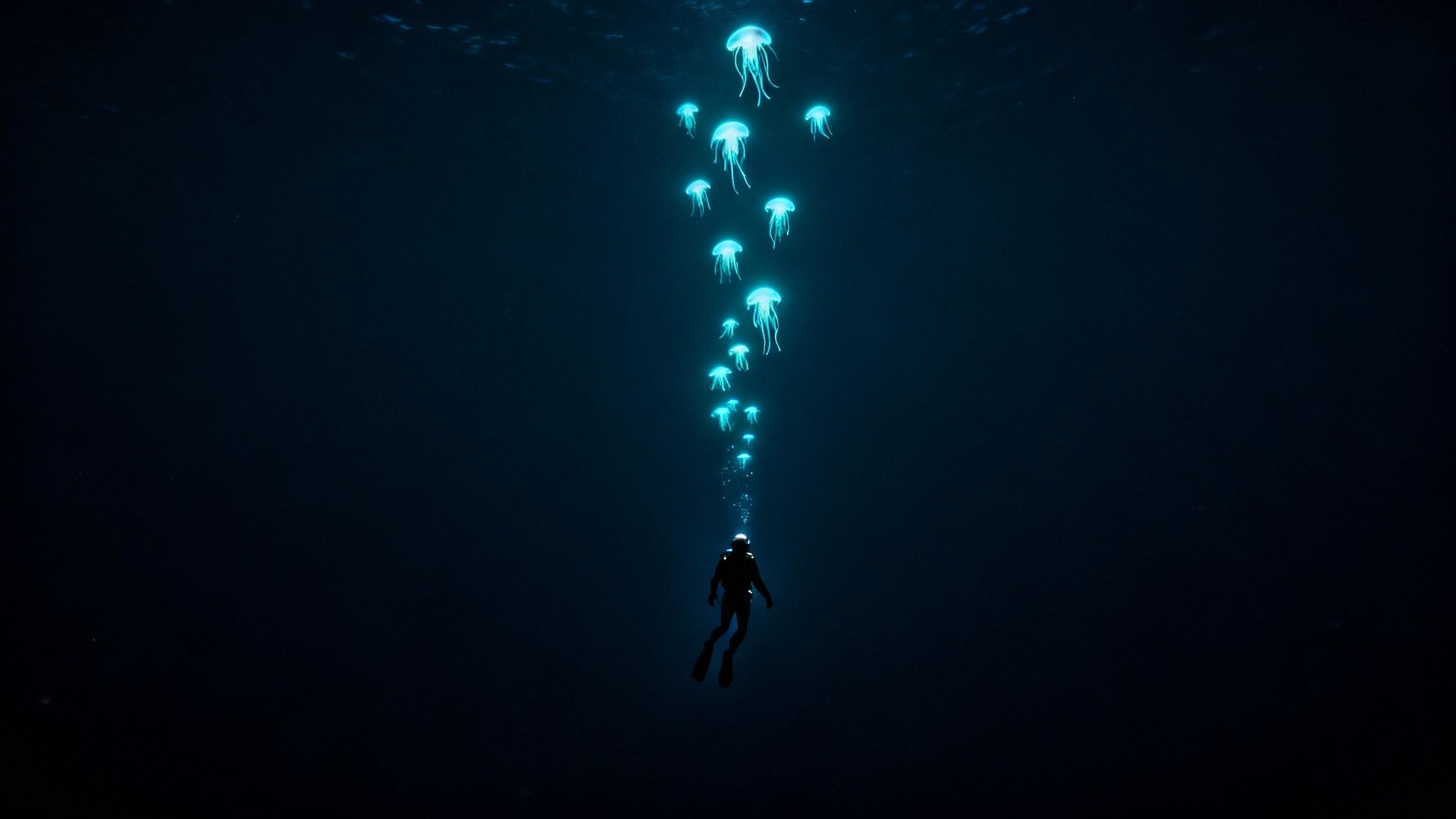
And the most famous one of all? The one-of-a-kind Kona Blackwater Dive. I've heard divers describe it as feeling like a spacewalk, and honestly, they're not wrong. This is where scuba diving on the Big Island of Hawaii completely flips the script, taking you from exploring a reef to floating through an alien world.
Plunging into the Abyss: The Kona Blackwater Dive
Picture this: you're miles offshore, floating in the dark over thousands of feet of water. You’re tethered to the boat, and the only light is the beam from your torch cutting through the inky blackness. It’s not just a night dive; you're dropping right into the middle of the largest migration on Earth.
Every single night, a staggering number of deep-sea creatures travel from the crushing pressure of the abyss toward the surface to feed. The blackwater dive puts you front and center for this incredible procession. You're not swimming over a static reef—you’re an observer in a constantly shifting, three-dimensional universe of bizarre and beautiful life drifting past your mask.
The experience is profoundly humbling. You are suspended in the planet’s largest living space, witnessing creatures that spend their entire lives in the deep ocean and are rarely, if ever, seen by human eyes. It’s an adventure that connects you to the raw, mysterious heart of the sea.
Creatures of the Deep
What makes this dive so utterly mind-blowing is the sheer weirdness of the animals you'll see. Many of them are bioluminescent, creating their own light that pulses and glows in the dark. Others are just babies—larval forms of familiar animals that look nothing like their adult selves.
On any given blackwater dive, you might see:
- Alien-like Jellyfish: These aren't your average jellies. Think pulsating bells with impossibly long tentacles, all glowing from within.
- Larval Squids and Octopuses: You'll spot tiny, see-through versions of cephalopods, some no bigger than your fingernail.
- Bizarre Pelagic Worms: Shimmering, iridescent creatures that look like ribbons of light drifting through the water.
- Deep-Sea Fish: Strange little fish covered in photophores (light-producing organs) that sparkle like constellations in the dark.
This is a dive for the curious and the steady-handed. You'll need excellent buoyancy control and a calm attitude, but the payoff is a peek into a hidden world that few ever get to see. It’s the ultimate night dive, and you’ll walk away with a profound sense of discovery and some of the most unique underwater photos imaginable.
Ready to take the plunge into one of the most unique dives on the planet? The expert team at Kona Honu Divers can guide you on this unforgettable journey. You can check out the Kona Blackwater Dive tour and get ready for an adventure you’ll be talking about for years.
Choosing the Best Dive Operator in Kona
Picking the right company for your scuba diving Big Island Hawaii adventure is just as critical as picking the right dive sites. The best operators don’t just ferry you to a location; they shape your entire experience, from the moment you step on the boat to the final logbook entry.
A great dive company truly makes all the difference. It’s about more than just a boat ride—it’s about the quality of the briefing, the expertise of your guide, and an unwavering commitment to both your safety and the health of the ocean.
What to Look for in a Dive Company
Before you book with anyone, it's smart to do a little homework. Here are the non-negotiables that separate the pros from the rest:
- Safety First, Always: This is the big one. Look for operators who are transparent about their safety protocols, have well-maintained gear, and staff their boats with experienced, certified dive professionals.
- PADI 5-Star Rating: A company with a PADI 5-Star Instructor Development Center (IDC) rating has hit the highest marks for training and professionalism. It’s a clear sign you’re in good hands.
- The Boat Matters: Think about it—you'll be spending a good chunk of your day here. A comfortable boat with amenities like a marine head (that’s a toilet), freshwater showers for rinsing off, and snacks can make a huge difference in your overall enjoyment.
- Small Groups: This is a game-changer. Smaller groups mean you get more one-on-one time with your guide, the dive site feels less crowded, and the whole vibe is just more relaxed and personal.
Premier Kona Dive Operators
The Kona coast has some fantastic dive companies, and they play a huge role in Hawaii’s $11 billion tourism industry. Diving is a big piece of that pie. In fact, studies from the University of Hawaii show that marine wildlife encounters alone generate hundreds of millions for the local economy each year. If you're interested in the details, you can learn more about the economics of Hawaii's recreational dive industry.
Kona Honu Divers is consistently at the top of the list for a reason. We're known for our experienced crew, custom-built boats designed specifically for Kona diving, and a deep dedication to ocean conservation. Our focus on small groups and top-notch safety makes every trip a premium experience.
Of course, there are other great outfits, too. Jack's Diving Locker and Big Island Divers have been part of the Kona community for years and have built solid reputations for providing excellent dive trips.
Ultimately, the best operator for you depends on your personal style and what you’re looking for. To help you decide, we put together a detailed guide on the top 10 Kona diving companies ranked.
Taking a little time to research upfront will pay off big time, ensuring your underwater adventure is safe, fun, and truly unforgettable.
Your Big Island Diving Questions, Answered
Getting ready for a dive trip to Hawaii’s Big Island is a thrill, but it’s completely normal to have a few questions bubble up as you plan. We've been there!
To put your mind at ease and help you get prepped, we’ve put together answers to the most common things divers ask us. Getting these sorted out now means you can hit the water ready for an incredible Kona experience.
What's the Best Time of Year to Dive in Kona?
Honestly, any time is a great time. That's one of the best parts about diving here. Kona’s coast is tucked away in the lee of massive volcanoes, which shield us from the prevailing trade winds. This gift from nature means we get calm, clear water pretty much year-round.
Of course, there are some subtle differences between seasons you might want to consider:
- Summer (June to October): This is when the water is warmest, usually sitting around a balmy 80°F (27°C). The surface conditions are often perfectly flat and glassy, making for beautiful days on the boat.
- Winter (November to May): The water cools down just a bit to a comfortable 75°F (24°C). The real highlight of winter is that it’s humpback whale season. There's nothing quite like hearing their haunting songs echo through the water on a dive!
Do I Really Need a Wetsuit for Diving in Hawaii?
Even with that warm water, the answer is a definite yes. Over the course of a 45-minute dive, your body will start losing heat, and you'll feel it even more on your second tank.
Most divers here are perfectly comfortable in a 3mm or 5mm full wetsuit. It’s the sweet spot for staying warm enough to enjoy the dive without feeling constricted. Plus, it gives you some nice protection from the sun on the boat and prevents any accidental scrapes on the lava rock formations.
What Kind of Marine Life Will I See?
Kona is teeming with life! While the manta rays get most of the spotlight, the reefs are a bustling city of fascinating creatures. Every dive offers a chance to see something new, so keep your head on a swivel.
Here are a few of our regulars you can almost count on meeting:
- Honu (Green Sea Turtles): You’ll find them everywhere—chilling out on the reef, getting a cleaning, or just gliding by.
- Spinner Dolphins: We often see pods of them from the boat, and sometimes they'll even cruise by underwater.
- Whitetip Reef Sharks: These guys are super chill. You'll usually spot them resting under ledges and in small lava tubes during the day.
- Eels: Peek into the reef's nooks and crannies to find moray eels, like the striking yellowmargin or the cool-looking zebra moray.
- Endemic Fish: A huge chunk of Hawaii's reef fish are found nowhere else on the planet. Look for the brightly colored Milletseed Butterflyfish—a true local!
Your unforgettable underwater adventure is just a click away. The team here at Kona Honu Divers is passionate about sharing the magic of our reefs and can’t wait to guide you.
Let's get you in the water and show you the best the Big Island has to offer.