
Welcome to an underwater world forged by fire and absolutely bursting with life. When people talk about world-renowned scuba diving on the Big Island of Hawaii, they’re talking about the incredible adventures waiting just off the pristine Kona coast. From the almost spiritual Manta Ray Night Dive to exploring hidden lava tubes and dazzling coral gardens, this is your complete guide to one of the most unique aquatic environments on the planet.
Why Scuba Diving on the Big Island Is Unforgettable
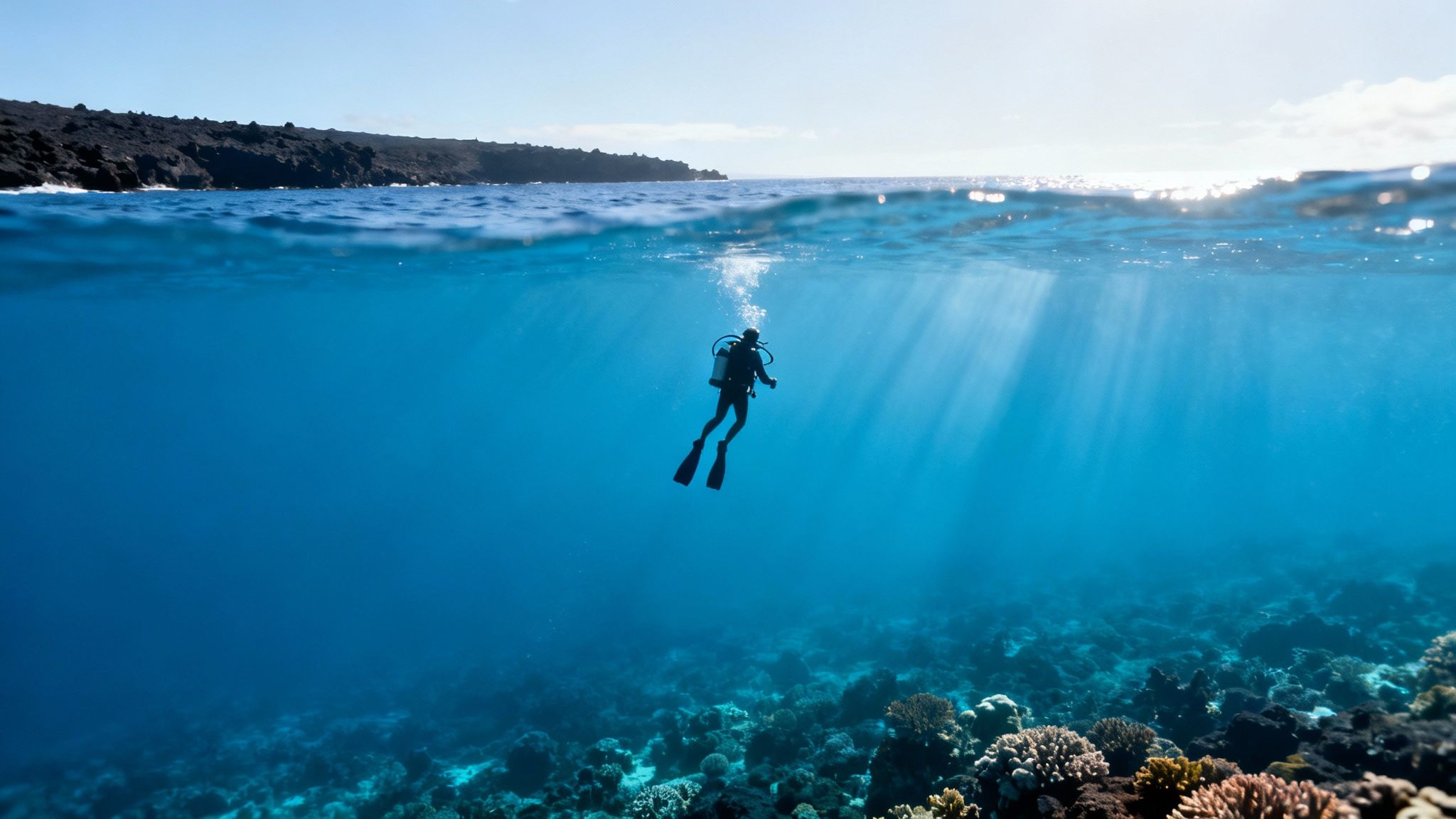
The Big Island isn’t just another pretty spot in the tropics; it's an underwater spectacle literally shaped by raw geological power. The same volcanoes that created the island also formed a dramatic submerged landscape of arches, caves, and lava tubes, creating a one-of-a-kind playground for divers. This volcanic foundation happens to be the perfect structure for healthy, vibrant coral reefs to take hold and flourish.
Something else makes this place special. Unlike many other destinations, the Kona coast is sheltered from the prevailing trade winds by the sheer size of volcanoes like Mauna Loa and Hualalai. This massive natural barrier results in remarkably calm and clear waters, where visibility often pushes past an incredible 100 feet. These consistently ideal conditions make for comfortable and breathtaking diving tours almost any day of the year.
A Thriving Sanctuary for Marine Life
One of the main reasons the Big Island is a bucket-list destination is its rich marine biodiversity, born from both its unique volcanic geology and a deep commitment to conservation. The Kealakekua Bay Marine Life Conservation District on the Kona coast is a perfect example. As a protected sanctuary where fishing is prohibited, the area has allowed marine life to flourish, creating an incredibly vibrant habitat.
For divers, this means crystal-clear water, stunning coral reefs, and an absolute abundance of marine species. This dedication to preservation fosters an environment where underwater encounters are not just possible, but frequent and spectacular. You can learn more about the island's incredible underwater terrain in our overview of Big Island scuba diving. It’s a place where you can truly feel immersed in a healthy, thriving ecosystem.
What Makes Kona Diving So Special
What really sets Kona apart is the sheer diversity of dive experiences available, often just a short boat ride from one another. One day you could be exploring ancient lava formations, and the next you could be drifting over a pristine reef.
- Volcanic Landscapes: Dive through intricate lava tubes and under dramatic archways that now serve as homes for countless marine creatures.
- Vibrant Reefs: Swim through colorful coral gardens teeming with endemic Hawaiian fish—species you literally won't find anywhere else on Earth.
- Big Animal Encounters: Always keep an eye on the deep blue. It’s not uncommon to spot spinner dolphins, eagle rays, or even migrating humpback whales during the winter months.
- Signature Dives: The island is famous for its bucket-list dives, including the legendary Manta Ray Night Dive and the surreal Blackwater Dive, offering mind-blowing adventures for every skill level.
To give you a better sense of what's waiting for you, here’s a quick look at some of the most sought-after diving experiences on the Big Island.
Big Island Diving Highlights at a Glance
| Dive Experience | Best For | Typical Marine Life |
|---|---|---|
| Manta Ray Night Dive | Unforgettable encounters | Giant manta rays, moray eels, jacks |
| Blackwater Dive | Advanced/Adventurous divers | Bioluminescent creatures, larval fish, jellies |
| Lava Tube & Cavern Dives | Exploring unique topography | Nudibranchs, shrimp, sleeping reef sharks |
| Daytime Reef Dives | All skill levels, photography | Butterflyfish, turtles, octopus, dolphins |
These highlights are just the beginning. The Kona coast is packed with dozens of world-class sites, each offering a window into a different part of this incredible underwater world. Ready to dive in?
Witness the Famous Manta Ray Night Dive
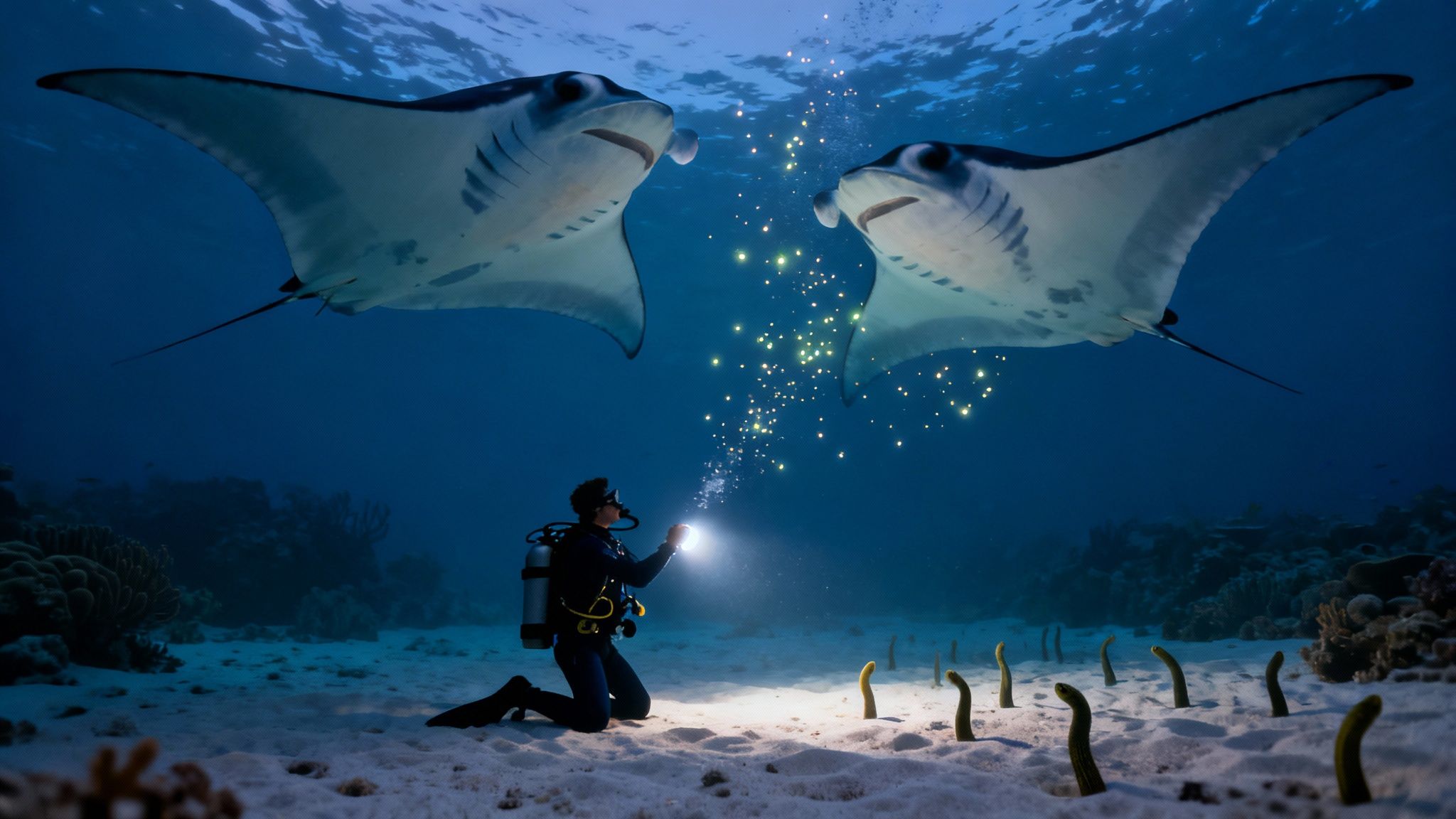
Picture this: you're kneeling on the sandy ocean floor as the last bit of daylight vanishes. The world around you melts into a deep, peaceful blue. Then, your dive guide flips a switch, and a powerful beam of light shoots up toward the surface. Within moments, massive, gentle shadows materialize from the darkness, swooping and gliding just inches above your head.
This is the Manta Ray Night Dive, and it’s the signature experience for anyone diving on the Big Island. Honestly, it’s more than just a dive—it's an otherworldly ballet that has earned its place on bucket lists worldwide.
The magic all comes down to a simple, brilliant concept. Dive operators create a "campfire" of bright lights on the seabed. These lights attract huge clouds of plankton, which just so happens to be the manta rays' favorite meal. As the plankton swarm, the mantas arrive for their nightly feast, performing effortless barrel rolls through the illuminated water in a stunning, natural spectacle.
Why Garden Eel Cove Is the Premier Location
You can do this dive at a few different spots, but they aren't all created equal. For the absolute best and most comfortable experience, Garden Eel Cove (also known as Manta Heaven) is the superior choice. Its location gives it a few key advantages that make a world of difference.
For one, the cove is naturally protected, which means the water is almost always calmer than at other sites. This creates a much more stable and pleasant environment for divers. You get to settle in and enjoy the show without being rocked around by surge or current.
That protected setting has also allowed a better, more vibrant reef to flourish. The surrounding coral gardens are richer, which makes for a beautiful dive and supports a greater diversity of marine life, contributing to the reliable presence of the mantas themselves.
The real game-changer at Garden Eel Cove is its underwater topography. The viewing area is like a natural amphitheater, letting divers get comfortable on the sandy bottom with a perfect, unobstructed view looking up at the "stage."
Ready to experience this for yourself? Kona Honu Divers provides a safe, respectful, and absolutely breathtaking manta ray dive tour. You can secure your spot and get ready for the show of a lifetime.
A Sustainable and Respectful Encounter
What makes this dive truly special is that it’s a natural feeding event—not some baited tourist trap. The local reef mantas here aren't migratory; they are residents of the Kona coast who have simply learned to associate the lights with an easy buffet.
Kona's dive operators take this responsibility seriously, following strict guidelines to ensure the well-being of these magnificent creatures. Divers are always instructed to stay on the bottom and never, ever touch the rays. Contact can damage the protective mucous coating on their skin. By being a passive observer, you allow the mantas to feel safe and behave completely naturally.
And for those who aren't certified divers, don't worry—you can have an equally amazing experience on a manta ray night snorkel.
The consistency of the sightings here is just incredible. The lights create such a dependable food source that the rays show up almost every single night. In fact, local operators report manta sightings on 85-90% of their trips, with some nights bringing 5 to over 20 individuals to the party. It's one of the most reliable megafauna encounters on the planet.
Exploring Top Dive Sites Along the Kona Coast
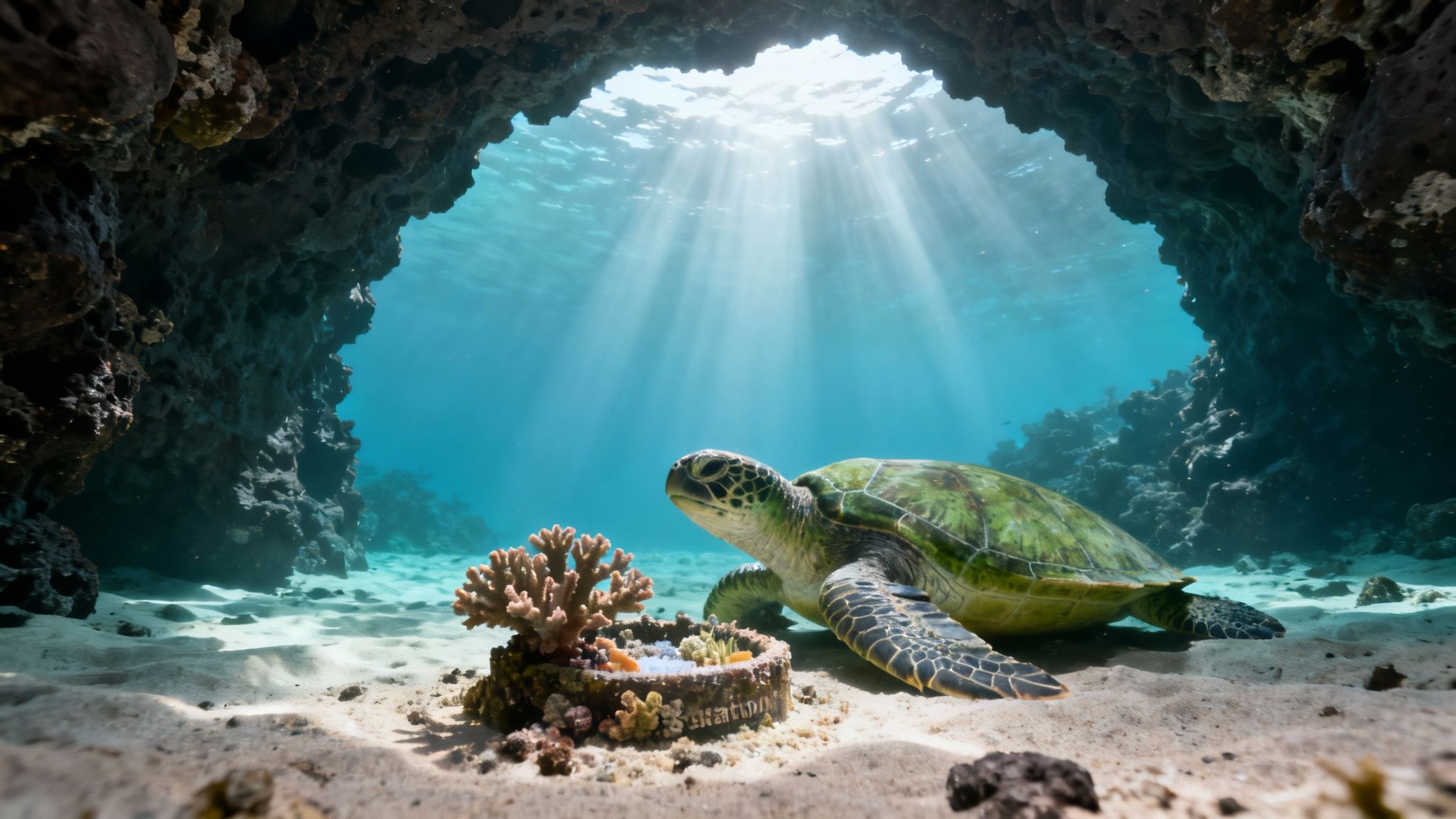
Sure, the manta ray dive gets all the headlines, but the true soul of scuba diving on the Big Island of Hawaii lies in its incredible variety of daytime dive sites. Think of the Kona coast as a diver’s treasure map, with dozens of spots just a quick boat ride from shore.
The underwater world here was literally forged by fire. Millennia of volcanic activity left behind a spectacular submerged landscape of arches, caverns, and twisting lava tubes. These ancient formations are now smothered in vibrant coral and buzzing with life, creating a natural playground for divers.
And the conditions? They're just about perfect. Visibility often pushes past 100 feet, making it easy to soak in all the detail of these healthy, thriving reef ecosystems. Each site has its own personality, from peaceful coral gardens to dramatic, volcanic drop-offs.
Must-See Dive Sites for Every Skill Level
One of the best things about diving in Kona is that there’s something for everyone, whether you’re just getting certified or you have hundreds of dives under your belt. The waters are typically calm and protected, offering consistently fantastic conditions all year.
Here are a few local favorites that really show off what makes Kona diving so special:
- Golden Arches: This site is famous for its massive lava tube swim-throughs—an underwater photographer's dream. It’s also a well-known "cleaning station," where Hawaiian green sea turtles (honu) line up to let little reef fish nibble algae off their shells.
- Crescent Beach: Known for its dramatic topography, this spot is filled with big archways and caverns. It’s a great place to peek into crevices for moray eels and shy crabs trying to stay out of sight.
- Turtle Pinnacle: No prizes for guessing what you’ll see here. This underwater pinnacle acts as another popular turtle cleaning station, and the whole area is a vibrant hub of reef fish activity.
- Pawai Bay: This protected bay is like several dive sites in one. You’ll find shallow coral gardens perfect for new divers, as well as deeper ledges for the more experienced. It’s a nursery for many fish species, so you’re often surrounded by clouds of colorful, endemic Hawaiian reef fish.
What really sets Kona’s reefs apart is the sheer number of creatures you won't find anywhere else on the planet. Many of the vibrant butterflyfish, angelfish, and wrasses you'll see are unique to the Hawaiian Islands.
The key to getting the most out of these sites is going with a local guide who knows them like the back of their hand. A good operator can pick the perfect spot based on the day's conditions and your experience. Kona Honu Divers runs great small-group trips that feel more like a private tour than a cattle call. You can check out their different diving tours to find an adventure that fits your style.
What You Can Expect to See Underwater
Beyond the turtles and unique fish, the marine life here is simply astounding. On any given day, you might be greeted by a pod of playful spinner dolphins on the boat ride out or hear the haunting songs of humpback whales echoing through the water in the winter.
Once you’re under, keep an eye out for:
- Octopus (heʻe), masters of camouflage hiding in plain sight.
- Moray eels of all shapes and sizes, poking their heads out from rocky dens.
- Eagle rays gliding effortlessly through the deep blue.
- Reef sharks (usually whitetips) napping on the sandy bottom.
Every single dive is a chance for a new and unforgettable encounter. It’s this rich, diverse tapestry of life that makes scuba diving the Big Island a truly world-class experience.
Advanced and Unique Diving Adventures
If you're an experienced, certified diver, the standard reef tour is just scratching the surface. The Big Island is hiding some truly wild underwater experiences that go way beyond the everyday dive, offering unforgettable challenges for those with the skills to match. Think of these less as dives and more as expeditions into entirely different worlds.
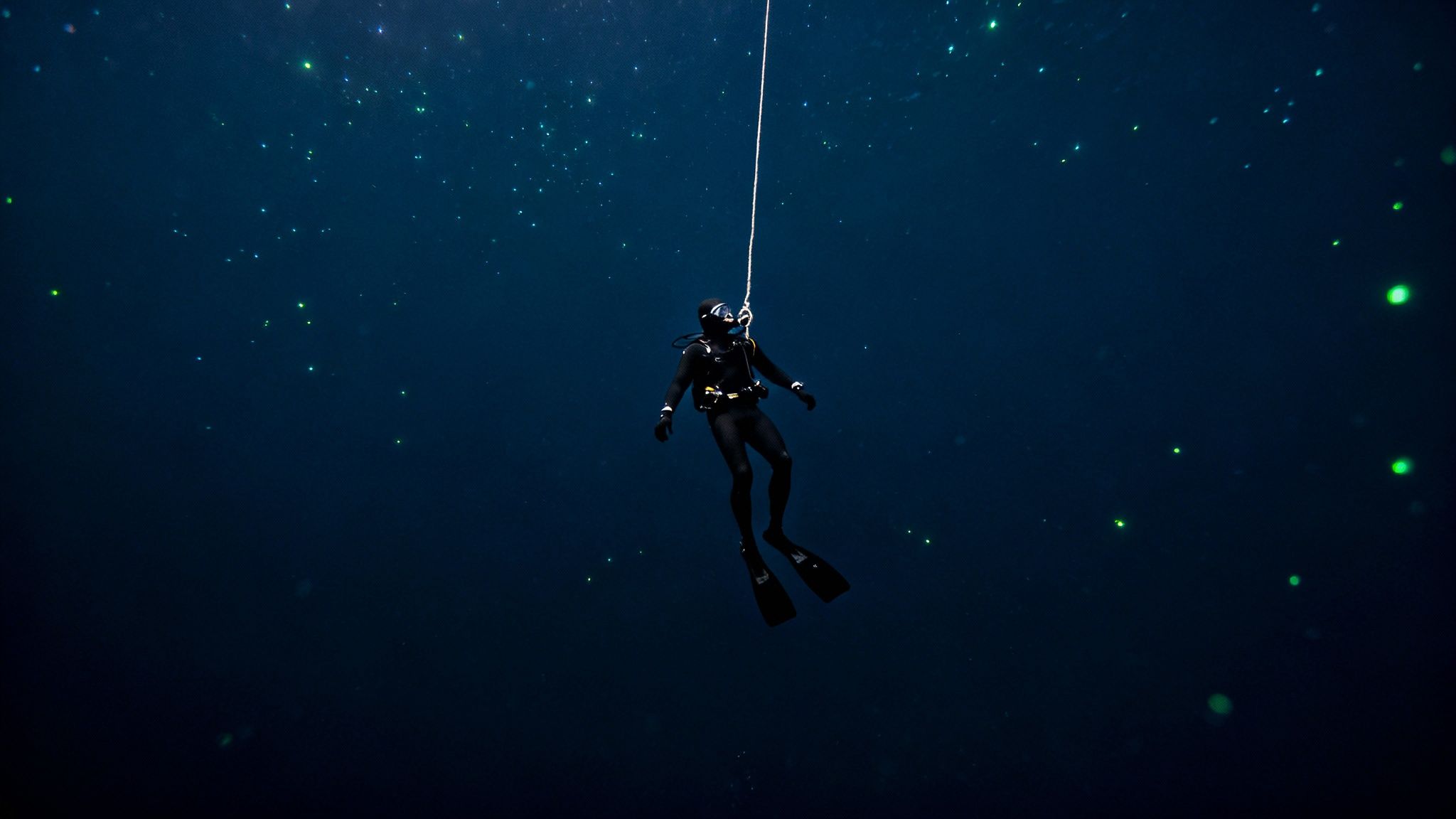
One of the most surreal of these is the Kona Blackwater Dive. I've heard it described countless times not as a dive, but as a spacewalk. The idea is both simple and wild: you head miles offshore at night, clip onto a tether, and drift in the dark over thousands of feet of open ocean.
The Kona Blackwater Dive: A Journey into the Abyss
As you sink into that deep, inky black, your dive light reveals a universe of creatures you've likely never seen before. You’re essentially intercepting the largest migration on Earth, as bizarre, deep-sea organisms—many of them glowing—ascend from the abyss to feed under the cover of darkness.
You’ll come face-to-face with life forms that seem ripped from a sci-fi film: transparent larval fish, shimmering jellies, and alien-looking squid that almost no one ever gets to see. With no reef or seabed for reference, your buoyancy has to be absolutely dialed in. It's a meditative and mesmerizing experience that tests your comfort in the water.
The Blackwater Dive is the ultimate test of a diver's calm and control. It’s humbling, a little mind-bending, and completely redefines what a "night dive" can be. You're getting a rare peek into an ecosystem that's still largely a mystery to science.
This is a highly specialized dive that requires a cool head and solid skills. If you're a seasoned diver looking for a truly unique adventure while scuba diving on the Big Island of Hawaii, you absolutely have to experience the Kona Blackwater Dive tour.
Pushing the Limits with Advanced Diving
Beyond the blackwater trip, the Big Island has plenty more to offer advanced divers. Its volcanic origins have carved out a complex maze of underwater caves and lava tubes that are far more intricate than the simple swim-throughs on shallower reefs.
Getting into these systems demands excellent buoyancy control, sharp navigation skills, and often, specific certifications. Inside, you can discover hidden rooms and unique micro-habitats that are home to rare species of shrimp, crabs, and other critters hiding from the light.
And for those who are all about big animal encounters, specialized charters will take you further offshore into the deep blue. These trips are entirely focused on finding the pelagic species that roam the open ocean.
Advanced diving opportunities include:
- Deep Lava Tube Exploration: Penetrating complex, cavernous systems that demand precision and advanced training.
- Pelagic Magic Dives: Heading "into the blue" to find larger marine life like oceanic whitetip sharks, silky sharks, and even pilot whales.
- Technical Dives: For certified tec divers, the deep ledges and dramatic drop-offs along the Kona coast offer incredible opportunities for exploration.
These high-adrenaline dives are incredibly rewarding and show you a side of Big Island diving that most visitors never see. If you’ve got the training and experience, these are the adventures you’ll be talking about for years to come. You can find options for these challenging dives on an advanced dive tour.
How to Choose the Best Big Island Dive Operator
Your dive operator is way more than just a boat ride. Think of them as your underwater guide, your safety crew, and your ticket to an incredible adventure all rolled into one. Picking the right company for your **scuba diving Big Island Hawaii** trip can be the difference between a decent dive and an absolutely unforgettable one.
With so many shops lining the Kona coast, it helps to know what separates the great from the good. Of course, safety is paramount—you want a company with a rock-solid reputation and experienced, certified guides. You'll also want to check out the quality of their gear and the comfort of their boats, because those little things really add up.
But here’s the inside tip, the one thing that truly changes the whole vibe of a dive: group size. A smaller group instantly means a more personal, relaxed, and less crowded experience. You get more one-on-one time with your guide, more space to explore freely, and a much better shot at amazing marine life encounters without a fleet of bubbles scaring everything away.
Why Small Groups and a Personal Touch Matter
When an operator deliberately keeps their groups small, it says a lot about their priorities. It shows they’re focused on the quality of your dive, not just the quantity of divers they can pack on a boat. Companies like Kona Honu Divers have built their entire reputation on this idea, making sure every single diver feels like a special guest, not just another name on the roster.
This personal approach is a huge reason why the island’s dive scene is so special. Most of the best operators run charters with six or fewer divers per boat. This commitment to a better experience is what earns them glowing reviews and keeps people coming back year after year. You can see what these more intimate diving tours look like for yourself.
Here’s what divers are saying about Kona Honu Divers and their focus on quality and safety.
Questions to Ask Before You Book
To help you feel confident in your choice, arm yourself with a few key questions before you book with anyone. The way they answer will tell you everything you need to know.
- What's your maximum group size per guide? Anything over six divers per guide is a red flag for a crowded dive.
- Can you tell me about your safety record and emergency plans? A professional shop will be happy to talk about this and should answer with confidence.
- How often do you service your rental gear? Well-maintained equipment is non-negotiable for safety and comfort.
- What are your environmental policies? The best operators are passionate about protecting the very reefs that make these dives possible.
A great dive operator doesn't just take you diving; they deepen your connection to the ocean. They share their knowledge, respect the marine environment, and put your safety and enjoyment above all else.
Comparing Top Kona Dive Operators
While we’re obviously partial to the small-group philosophy, it’s always a good idea to check out your options. The Kona coast has several fantastic, highly-rated dive companies, and it’s about finding the right fit for you. To make your research a bit easier, we’ve included the live reviews for a few other respected operators so you can see what fellow divers are saying.
Big Island Divers: A popular choice known for a huge variety of offerings, from beginner dives to technical courses. Their tours generally start around $129 per person and they consistently get great reviews. You can read more about their dive offerings on their site.
Jack's Diving Locker: A true Kona institution. They've been around for a long time and have a big retail shop and a full slate of PADI courses.
Kona Diving Company: Another well-loved local operator, known for their super friendly crews and smooth, well-run trips.
By doing a little homework and asking the right questions, you can book your trip with total confidence. You’ll know you’re in good hands, which is the first step to ensuring your Big Island diving adventure is safe, fun, and absolutely epic.
Your Big Island Scuba Questions, Answered
Planning a dive trip always brings up a few questions. To make sure you’re ready for an incredible adventure, we’ve tackled some of the most common queries we get about **scuba diving on the Big Island**.
When Is the Best Time of Year to Dive in Kona?
The simple answer? Anytime! The Big Island is a year-round diving paradise. The water is always inviting, hovering around a comfortable 75°F (24°C) in the winter and warming up to a balmy 82°F (28°C) in the summer.
If you prefer glass-calm seas, the summer months (April to October) usually deliver the flattest conditions for those boat rides. But diving in the winter, from November to March, has a magic of its own—you can often hear the haunting songs of migrating humpback whales echoing through the water on your dives. It's an unforgettable experience.
What Certification Level Do I Need to Dive on the Big Island?
Most of the amazing dive sites along the Kona coast are well within the range of Open Water Certified divers. A good dive operator will always choose the day’s spots based on the conditions and the experience of everyone on the boat, so you can be sure you're in for a great, safe time.
For some of the more unique dives, like the otherworldly Blackwater Dive or exploring deeper lava tube networks, you'll typically need an Advanced Open Water certification. And if you've never dived before? No problem. Almost every shop offers a Discover Scuba Diving program, which is the perfect way to get your fins wet for the first time.
What Kind of Marine Life Can I Expect to See?
The marine life here is truly spectacular. On any given dive, you're almost certain to see Hawaiian green sea turtles, moray eels, octopus, and a kaleidoscope of reef fish like butterflyfish and parrotfish. It’s also common to see pods of spinner dolphins from the boat—and sometimes, they’ll even swim by to say hello underwater.
Depending on where you dive, you might also find yourself swimming alongside elegant eagle rays or a few whitetip reef sharks resting on the seafloor. And of course, the Manta Ray Night Dive guarantees you an up-close-and-personal encounter with those gentle giants, while the Blackwater Dive reveals a hidden world of bizarre and beautiful bioluminescent creatures.
Should I Bring My Own Scuba Gear?
You're absolutely welcome to bring your own gear, but every reputable dive operator in Kona provides top-notch rental equipment. Renting is just plain easier—it saves you from lugging heavy, bulky bags through the airport. A full rental package typically includes your BCD, regulator, and a wetsuit.
That said, many seasoned divers prefer to bring their own mask for a perfect, no-leak fit, and their own dive computer. Just give your chosen dive shop a heads-up on what you need when you book your diving tours.